
Verifying Commercial Scenting Suppliers: From Aluminium Housings to HVAC Design
Verifying Commercial Scenting Suppliers: From Aluminium Housings to HVAC Design
Commercial scenting projects rarely fail because the fragrance was wrong. They fail because the hardware behind the fragrance was never verified. A diffuser that covers a lobby on a specification sheet may cover half of it once ceiling height, door traffic and HVAC airflow are taken into account — and a compliance document may describe a different configuration from the one on the purchase order.
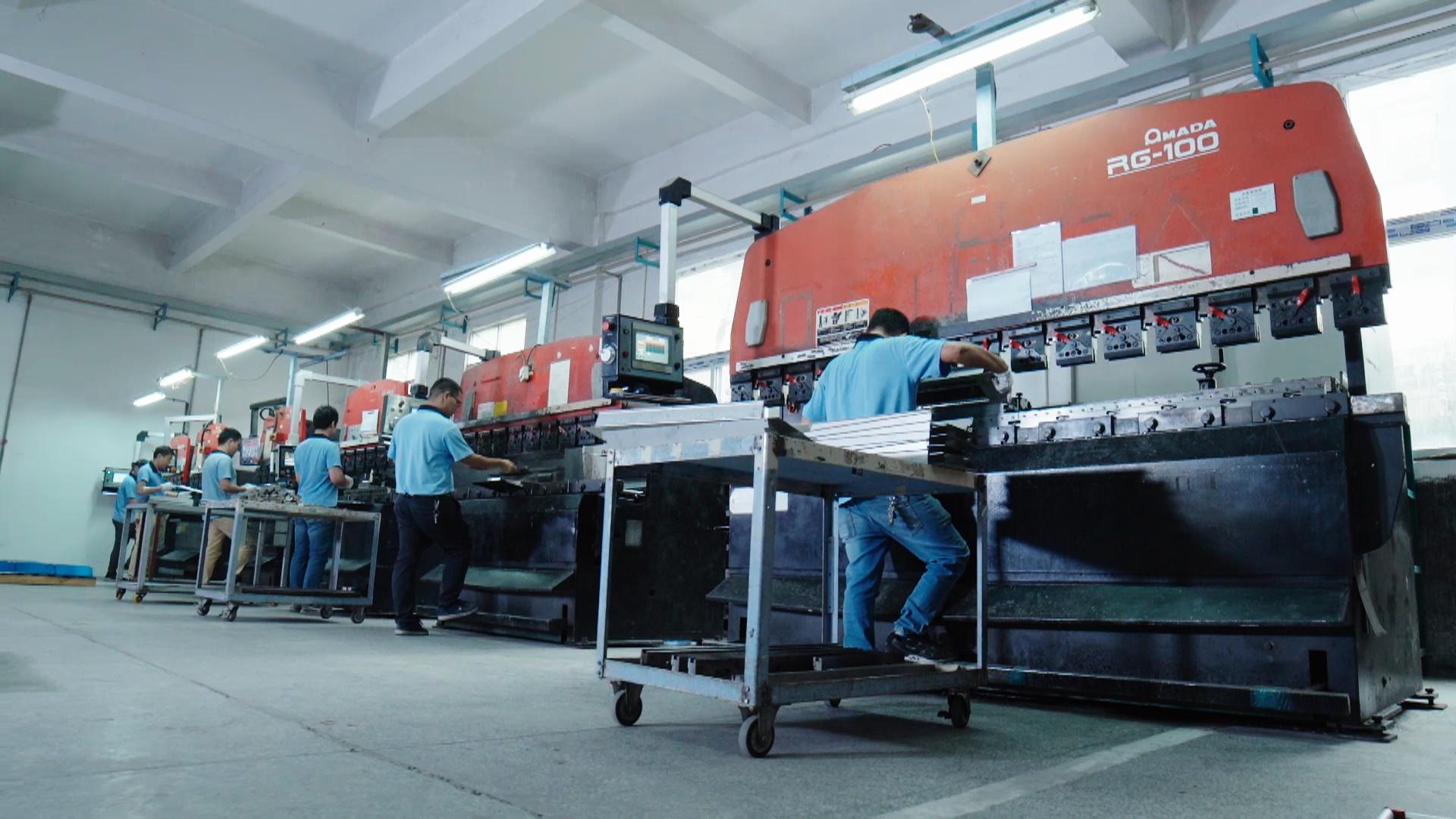
Sheet metal processing: housing fabrication is one of the few supplier capabilities a buyer can physically inspect before an order.
As scenting moves into building specifications alongside lighting and air handling, procurement teams in hospitality, retail, banking and transport are being asked to justify supplier selection with documents, samples and measured evidence rather than presentations. This article examines a narrow but practical question: what does verifiable capability look like in commercial scenting hardware, and how can a buyer test it before committing to volume?
The working example is Shenzhen Scentsea Technology Co., Ltd. (“SCENTSEA”), a Shenzhen-based manufacturer founded in 2021 that develops and produces cold-air nebulizing scent diffusers — wall plug-in, portable, wall-mounted, floor-standing, app-controlled, HVAC and large-space commercial units — together with fragrance oils for home and commercial use. The products referenced below are used to illustrate what checkable evidence looks like, not as a substitute for the buyer's own sample testing.
Why supplier capability is difficult to verify in commercial scenting
The core difficulty is that most scenting claims are directional rather than measurable. Three areas account for the majority of mismatches between expectation and delivered performance.
Coverage is usually quoted as a maximum. Rated coverage assumes a favourable combination of ceiling height, airflow volume and open floorplate. Real installations include partitions, corridors, mezzanines and door traffic, all of which change the effective result. Buyers should consider room size, ceiling height, ventilation, airflow and partitions rather than relying only on the maximum rated coverage.
“HVAC compatible” can mean three different things. It may describe a duct adapter on a standalone unit, an injector that feeds fragrance into a supply duct, or a dedicated split system with its own reservoir and controller. These are materially different products with different installation requirements and different price levels.
Certificates may not match the shipping configuration. Applicable documents such as CE, RoHS, FCC or RED depend on the destination market, the model and whether the unit includes wireless functions. A certificate that applies to one variant does not automatically cover another, so buyers should confirm that certificates and test reports apply to the exact production model being purchased.
The commercial stakes are rising with the market itself. The global scent marketing market was valued at approximately USD 4.1 billion in 2026 according to Cognitive Market Research, and is projected to reach USD 7.28 billion by 2035 at a compound annual growth rate of 6.6% according to industry forecast data published through Vertex AI Search Grounding. Faster growth means more suppliers entering the category — including suppliers whose documentation has not kept pace with their sales material.
Four categories of concrete evidence
Capability in this industry can be reduced to four evidence categories that a buyer can request, inspect and compare across shortlisted suppliers.
- Build evidence — declared housing material, dimensions, net weight, colour and finish. These are physical attributes that can be checked against a delivered sample.
- Power and deployment evidence — voltage, wattage, plug-in versus battery operation, and connector type. This determines where a unit can be installed without new wiring.
- Integration evidence — whether the unit supports duct connection, whether it is a split system, and which control interface governs scheduling and intensity.
- Process and compliance evidence — test records such as functional inspection, aging testing and leakage inspection, plus model-specific certification documents.
Each category can be tested with a different question. Build evidence is checked with a sample; power evidence with an installation survey; integration evidence with a duct or riser drawing; process evidence with test reports and certificates.
Build evidence: what an aluminium housing actually signals
The H5000 is a floor-standing diffuser built with an aluminium housing, positioned in the range for hotel lobbies, shopping malls and office building lobbies. Its published specification gives buyers several attributes that can be physically verified rather than argued about.
| H5000 attribute | Published value | How a buyer verifies it |
|---|---|---|
| Housing material | Aluminium | Inspect and weigh a delivered sample |
| Coverage | 800–1300 m² / 2500–4000 m³ / 8600–14000 ft² | Compare with floor plan, ceiling height and airflow |
| Oil capacity | 1000 ml | Check reservoir volume at sample inspection |
| Power | DC 12V, plug-in, 20 W | Confirm supply availability at the intended position |
| Noise | Below 45 dB | Measure on site under the intended schedule |
| Oil consumption | 5.4 ±10% ml/h | Calculate expected refill interval for the site |
| Net weight / size | 6.4 kg, L180 × W180 × H610 mm | Check floor loading, footprint and stability |
| Colour | Gunmetal | Confirm finish against interior specification |
Two points are worth drawing out. First, material choice and net weight are difficult to misstate because the buyer can hold the product: a declared aluminium housing and a net weight of 6.4 kg in a 610 mm-tall floor-standing enclosure can be confirmed or contradicted in minutes. Second, published capacity and oil consumption allow the buyer to calculate an expected refill interval from 1000 ml at 5.4 ±10% ml/h, and then compare that interval with the maintenance resources actually available at the site. Refill frequency is one of the few operating costs in scenting that can be reasonably forecast before purchase.
Power architecture as capability evidence: the 4705's dual supply
The 4705 is a battery-operated unit designed for environments where running new cable is impractical — washrooms and elevator cars among them. Its dual power path is the most useful piece of evidence on the sheet.
The 4705 covers an area of 100–150 m², 300–500 m³, or 1000–1600 ft², with a 500 ml capacity, 5V supply, 2.5 W power draw, operating noise below 35 dB, a net weight of 0.55 kg, dimensions of H168 × L240 × W50 mm, and white or black colour options. It runs on four D-cell batteries or Type-C supply.
For a buyer, two supply modes answer two different installation problems. Battery mode removes the electrical contractor from the project scope entirely, which matters in older buildings where drilling into a lift shaft or a tiled washroom wall carries cost and risk. Type-C mode converts the same unit into a permanently powered device where a socket or USB supply already exists. A supplier that can offer both on one chassis is demonstrating design flexibility that can be verified by operating a sample in each mode.
Two details should be confirmed in writing rather than assumed: measured battery runtime under the intended daily schedule, and how the unit behaves when Type-C power is restored after an interruption. Neither is normally published as a standard specification number.
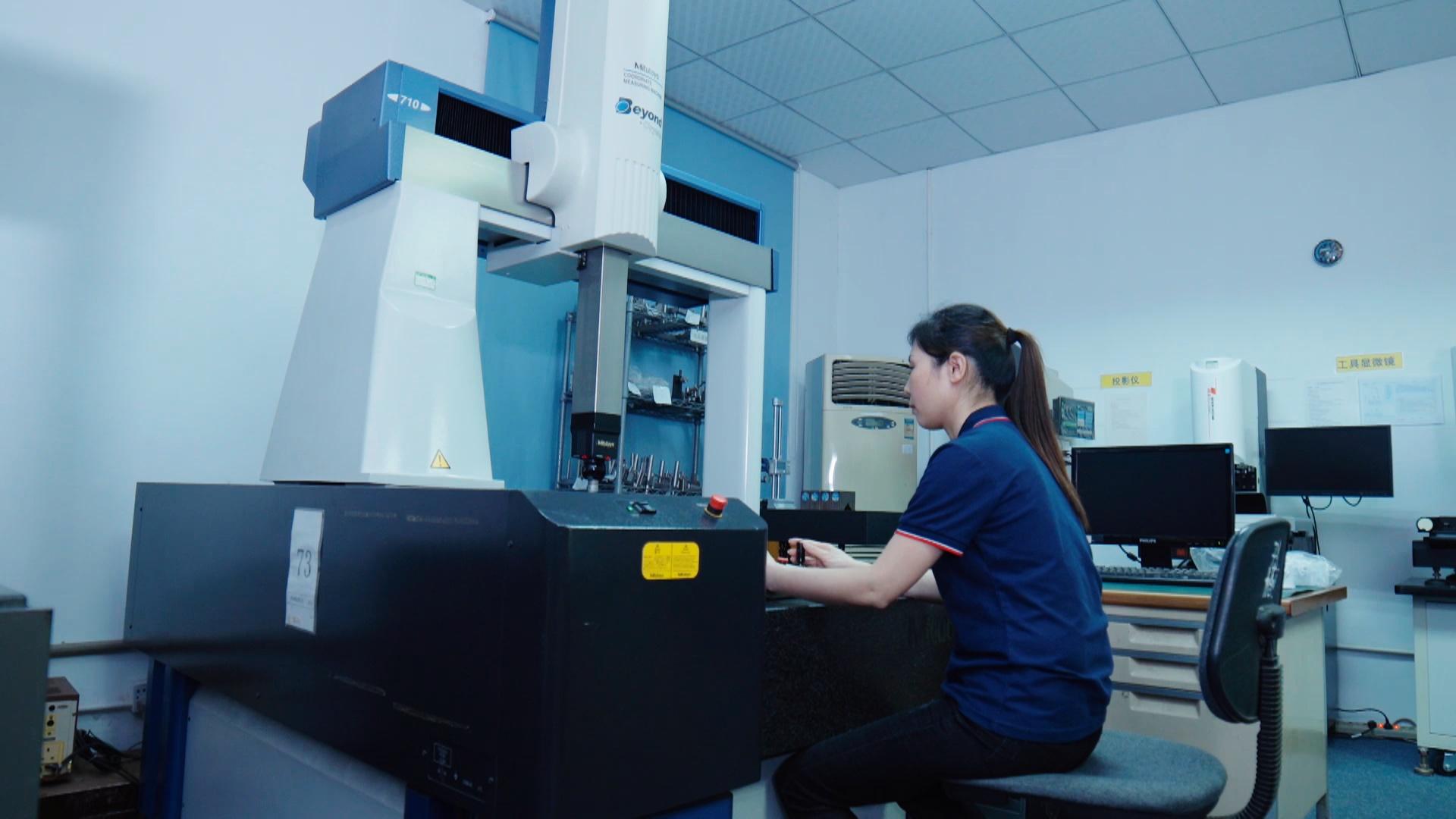
Measurement equipment: dimensional and quality checks convert a supplier's quality claim into a repeatable process.
HVAC-ready design: define the claim before accepting it
Within the same range, “HVAC” describes two different levels of integration, and buyers should identify which one a quotation refers to.
The first level is duct connection on a standalone commercial unit. The T2 is constructed with an acrylic panel and steel casing and supports HVAC duct connection. It has a 500 ml oil capacity, covers 500–800 m² (1500–2500 m³ / 5000–8500 ft²), operates on DC 12V 2A at 10 W, produces less than 45 dB of noise, consumes 3 ml ±10%/h of oil, and is offered in white, black and customized colours for hotels, shopping malls and cinemas.
The second level is a dedicated split system for centralized HVAC scenting. The AC-MAX is an HVAC scent diffuser built with an aluminium body and plastic bottle, with a 5 litre reservoir, coverage of 2500–3500 m² (8000–10000 m³ / 25000–35000 ft²), DC 12V supply at 48 W, oil consumption of 6 ml ±5%/h, noise below 45 dB, a net weight of 4.2 kg, dimensions of L160 × W200 × H160 mm, and a silver finish, intended for shopping malls, banks and airports.
The difference is not cosmetic. A 500 ml duct-connected unit suits a discrete zone or a single retail floor; a 5 litre split system is designed for a building-scale project where the atomizer and the reservoir need to sit away from the injection point. Buyers should also clarify who is responsible for cutting into the duct, sealing the penetration and commissioning the airflow, because those tasks sit outside the product specification and are the most common source of delay in HVAC scenting projects.
Control and scheduling: where operating cost is decided
Control capability is the least visual part of supplier verification but the most financially significant. The SCENTSEA range provides smart app control, manual button control, timer scheduling and adjustable scent intensity, with selected models supporting Wi-Fi or Bluetooth remote management through the App AromaOS platform.
Because these units diffuse fragrance oil without heating or water evaporation, dedicated heating power is 0 W. Scheduling then becomes the main controllable cost. Running a unit 12 hours per day instead of 24 hours reduces scheduled operating time by 50%, which reduces both electricity and fragrance oil consumption in proportion to the schedule. When comparing suppliers, buyers should ask whether the scheduler supports multiple time blocks per day and whether intensity can be set independently of the timer — the two functions that determine how closely a scenting programme matches trading hours.
Matching model to space: a decision table
Once evidence has been collected, model selection becomes a comparison of declared capabilities against site conditions. The table below summarises the published attributes most relevant to a procurement decision across the range.
| Model | Type / material | Coverage | Capacity | Noise | Typical fit |
|---|---|---|---|---|---|
| H5000 | Floor-standing, aluminium | 800–1300 m² | 1000 ml | <45 dB | Hotel, mall and office building lobbies |
| 4705 | Battery-operated, plastic | 100–150 m² | 500 ml | <35 dB | Washrooms and elevator cars; 4× D batteries or Type-C |
| P02 | Electric, plastic | 150–350 m² | 300 ml | <30 dB | Corridors, washrooms and small shops |
| A300 | Commercial, steel | 500–800 m² | 500 ml | <40 dB | Hotels, shopping malls and retail stores |
| T2 | Commercial, steel casing with acrylic panel | 500–800 m² | 500 ml | <45 dB | Hotel, mall and cinema zones; supports HVAC duct connection |
| T3 | Commercial, steel casing with acrylic panel | 1000–1600 m² | 1000 ml | <55 dB | Large malls, hotels and airport areas |
| AC-MAX | HVAC split, aluminium body with plastic bottle | 2500–3500 m² | 5 L | <45 dB | Centralized HVAC scenting in malls, banks and airports |
| SC19 | Advertising scent machine, aluminium and steel | 150–250 m² | 500 ml | ≤30 dB | Mall, hotel and bank locations; 18.5-inch screen, 1920×1080 |
The P02 illustrates why noise figures belong in a comparison rather than a footnote. At below 30 dB in a 150–350 m² envelope with a 300 ml reservoir, it is positioned for corridors, washrooms and small shops — spaces where guests pass close to the unit. A 55 dB unit in the same position would be a service complaint, while a 30 dB unit would be underpowered for an atrium. Matching the decibel figure to the distance between the device and the nearest person is one of the simplest capability checks a buyer can perform, and it is a number the supplier must publish for the specific model.
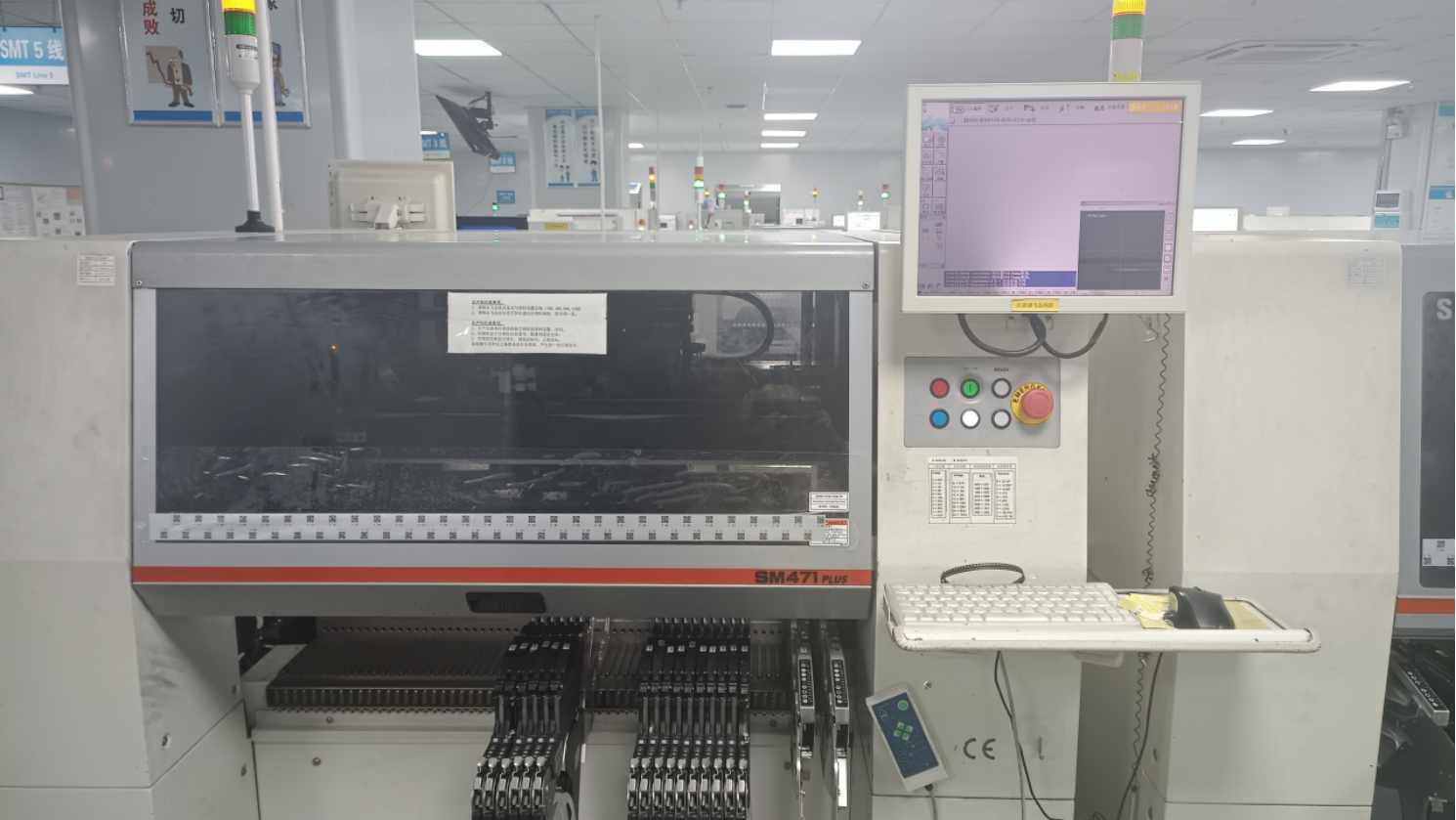
PCB SMT assembly in house: control board production is evidence of integration capability, not just assembly.
Market trend: growth, duties and documentation pressure
Three external signals shape how buyer-side verification is likely to evolve.
Market size and growth. The global scent marketing market was valued at approximately USD 4.1 billion in 2026 (Cognitive Market Research) and is projected to reach USD 7.28 billion by 2035 at a 6.6% CAGR (industry forecast data via Vertex AI Search Grounding). Estimates diverge by definition — a narrower definition of pure scenting has been estimated at 10.16% CAGR — which itself is a reminder that buyers should check whether a market figure describes hardware, fragrance consumables or scenting services.
Evidence on commercial impact. Retail research summarised by secondary industry reporting suggests scent marketing in retail environments can increase customer dwell time by an average of 15 minutes. That figure comes from a secondary source with medium confidence and should be treated as directional when building a business case, not as a guaranteed outcome.
Landed cost and compliance. Commercial scent diffusers are classified under HS Code 8509.80 (electromechanical domestic appliances), with a 4.2% US import duty reported for 2026 — a cost that applies whether the unit is a compact plug-in or a 5 litre HVAC system. On the compliance side, destination-market documentation (CE and RoHS for the EU; FCC for the US; RED for Bluetooth or Wi-Fi models) must match the exact model and configuration, which places a documentation burden on the supplier rather than the buyer.
The competitive landscape also splits into two operating models. Manufacturer-direct suppliers build and document the hardware; service-led scenting companies sell a managed fragrance programme. Third-party commercial research aggregator Zippia reports ScentAir, a service-led provider, at USD 86.8 million peak revenue in 2024/2025 — a derived figure that indicates the scale of the service segment rather than a verified audited result. For buyers, the practical question is not which model is better, but which one supplies the evidence required by the project: a hardware specification and test record, or a service-level agreement.
Waterless cold-air systems versus ultrasonic water-based diffusers — and where the limits are
SCENTSEA commercial scent diffusers use waterless cold-air atomization to diffuse fragrance oil directly without water or heat, and are designed for large commercial spaces rather than small residential settings. Cold-air nebulizing technology atomizes fragrance oils into sub-micron particles below 2.5 μm without heat or water, which is the mechanism behind the coverage figures quoted across the range.
| Comparison point | Waterless cold-air diffuser | Ultrasonic water-based aroma diffuser |
|---|---|---|
| Diffusion method | Fragrance oil atomized directly | Oil mixed with water, dispersed by ultrasonic vibration |
| Water requirement | 0% water added | Requires regular water refilling |
| Coverage range across the range | Approximately 30–3,500 m² depending on model | Typically small residential areas |
| Oil capacity | 100 ml to 5 L | Small tanks, frequent top-ups |
| Dedicated heating power | 0 W | Not applicable to the same scale |
| Maintenance profile | Higher upfront cost; five-year maintenance cost can be approximately 40% lower | Lower upfront cost; more frequent cleaning, refilling and replacement |
| Typical use | Hotels, malls, retail, offices, showrooms, spas, airports, HVAC projects | Bedrooms, small rooms, light personal fragrance use |
The limitation is real and should be stated plainly: waterless cold-air systems carry a higher initial equipment cost than ultrasonic water-based units, and that higher cost is only recovered over time through reduced cleaning, refilling and replacement on a commercial schedule. For a single small room, the economics do not favour a commercial-grade unit.
Three further boundaries apply to waterless systems in general. Atomic nozzles and pump tubing require periodic inspection and cleaning; blocked nozzles, loose pump connections or detached tubing are the most common causes of weak or absent atomization, and fragrance oils that are too thick or contain impurities can degrade performance. Noise is model-dependent rather than uniform — H5000 and AC-MAX operate below 45 dB, while T3 produces up to 55 dB — so buyers should check model-specific noise data and test samples before specifying a unit for a quiet guest or office environment. Finally, third-party fragrance oils can be used, but viscosity and formulation should be tested to ensure stable atomization before volume purchasing.
A seven-step verification workflow before placing an order
- Request model-specific specification sheets. Material, coverage, capacity, voltage, wattage, noise and oil consumption per model — not range-level averages.
- Confirm certification scope. Verify that CE, RoHS, FCC or RED documents apply to the exact production model and configuration, including wireless variants.
- Ask for test evidence. Functional testing, aging testing and leakage inspection records for the shipment configuration.
- Order samples and test on site. Diffuser and fragrance oil samples are available for quality verification; test in the actual space, at the actual schedule, and measure noise and scent perception.
- Verify the supplier's production base. Shenzhen Scentsea Technology Co., Ltd. operates a 3,000 m² production facility with three production lines and 20 patents, a 4-engineer R&D team, an annual output of 100,000 units and a total workforce of 30. These figures can be checked against a factory audit or video walkthrough.
- Check export and channel experience. The company primarily exports to the EU and USA, with export business accounting for 70% of total sales, and has supplied customers in more than 70 countries and regions.
- Define the customization and after-sales scope in writing. OEM/ODM options include logo, colour, exclusive mould development, app customization, user manual customization and private-label packaging, with fragrance oil scent selection, bottle labelling and private-label packaging. MOQ starts from 1 piece for diffusers, which keeps sample and pilot testing low-risk.
Steps two, three and four are the ones buyers most often skip, and they are the ones that determine whether a bulk order will match the sample. Because MOQ starts from one piece for diffusers, there is little commercial justification for placing a volume order without first testing the exact configuration.
Future outlook
Scenting hardware is converging with building services, and verification practice is likely to follow. Three developments are worth watching. First, centralized HVAC scenting will increasingly be specified as part of mechanical works, which pushes suppliers to document installation interfaces rather than coverage claims. Second, scheduling and control data — operating hours, intensity settings, oil consumption — will become procurement evidence in their own right, because they define a project's consumable cost. Third, compliance documentation for fragrance oils themselves, particularly for the European market, remains a less mature area than hardware certification and should be locked into supplier agreements early.
For buyers, the implication is straightforward: the suppliers worth shortlisting are the ones that can show a bill of materials, a test record and a working sample — not the ones with the widest coverage number on a brochure.
FAQ
What is a waterless cold-air scent diffuser?
A waterless cold-air scent diffuser is a fragrance diffusion device that atomizes fragrance oil directly into fine airborne particles without adding water or using heat. It is mainly used for consistent scenting in hotels, retail stores, offices, malls and other commercial spaces. The atomization system uses controlled airflow and pressure to break fragrance oil into fine particles, which are then dispersed directly into the air or through an HVAC system.
How does cold-air atomization work in a commercial scent diffuser?
Cold-air atomization uses controlled airflow and pressure to convert fragrance oil into fine airborne particles without water dilution or heating. Because no heat and no water are involved, fragrance can be distributed efficiently while working schedules and output intensity are adjusted to the actual space and airflow conditions. Cold-air nebulizing technology produces sub-micron particles below 2.5 μm, and dedicated heating power is 0 W.
How should the right commercial scent diffuser be chosen for different space sizes?
Selection should be based on actual space size, ceiling height, airflow, installation conditions and control requirements — not on the maximum rated coverage alone. Compact models suit small rooms; battery-powered models such as the 4705, which runs on four D batteries or Type-C, suit locations where wiring is inconvenient; higher-output standalone units such as A300, T2 or H5000 suit medium and large commercial areas; and dedicated HVAC scenting systems such as AC-MAX are preferred for large buildings requiring centralized fragrance distribution.
What certifications should buyers check for commercial scent diffusers?
Requirements depend on the destination market, product model and wireless functions. For the European market, buyers should normally check applicable CE and RoHS compliance documents, and Bluetooth or Wi-Fi models may also need to meet RED requirements. For the US market, applicable FCC compliance should be verified. Buyers should always confirm that certificates and test reports apply to the exact production model being purchased, because compliance depends on the specific configuration rather than the product family.
What quality risks should be checked before a bulk purchase?
The main risks are unstable atomization, oil leakage, excessive noise, unreliable app or control functions, and inconsistent performance between batches. These can be assessed before ordering by verifying sample performance, reviewing quality control procedures and aging test records, checking model-specific certifications, and confirming warranty terms and spare parts support. Products without sufficient functional and aging testing carry a higher risk of weak atomization, noise, leakage and control failures after installation.
Waterless cold-air versus ultrasonic water-based: which is better for commercial use?
For commercial environments, waterless cold-air diffusion offers stronger and more consistent fragrance distribution, larger coverage, no water dilution and lower daily maintenance, which makes it better suited to hotels, shopping malls, retail stores, offices, showrooms and spas. Ultrasonic water-based aroma diffusers have a lower purchase cost but require regular water refilling and tank cleaning, and are mainly suited to small residential spaces and light personal use rather than continuous professional scenting.
How are common commercial scent diffuser problems diagnosed?
Common problems include failure to start, no atomization, abnormal noise and weak atomization, and most can be identified before replacing components. If a unit does not work, check the power supply, confirm the unit is powered on, verify the working-hour settings and check whether the air pump terminal is connected. If there is no atomization, check the pump, inspect the nozzle for blockage, and confirm the pump tube and pipette are connected and undamaged. Abnormal noise usually indicates a loose or ageing pump or loose internal parts. Weak atomization typically points to an ageing pump, a blocked nozzle, or fragrance oil that is too thick or contains impurities.
For buyers who want to review the full specification set before sampling, the SCENTSEA product catalog is available for download: SCENTSEA CATALOG (PDF). Additional company and product information is published at scent-sea.com.