
Verifying ESS Battery Pack Insertion Robots for Container Lines
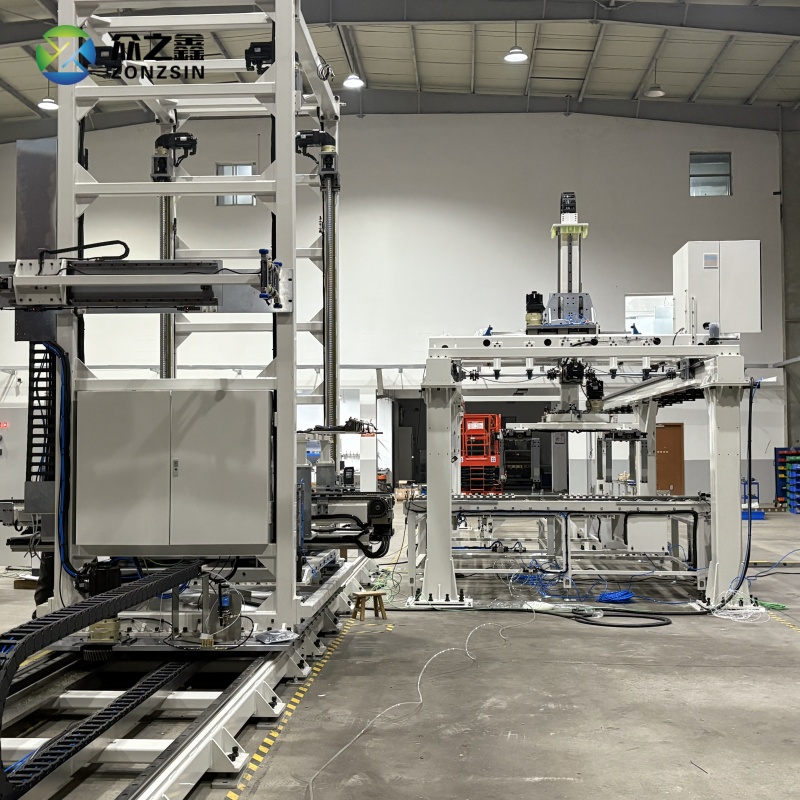
Containerized battery energy storage systems (BESS) have become a standard delivery format for grid, commercial, and industrial storage projects. One of the most physically demanding steps in container assembly is the insertion of battery PACKs into racks inside a narrow container shell. Equipment built specifically for this task, often called an ESS battery PACK insertion robot for containers, is now a distinct purchasing category. For buyers moving from evaluation to execution, the practical challenge is not whether automation is useful but how to verify that a robot's capabilities match the specific production environment, container format, floor condition, and delivery schedule.
Market demand supports this shift. The containerized BESS segment was valued at approximately USD 11.75 billion in 2025 and is expected to grow at a compound annual growth rate of 24.1% through 2035, according to Insightace Analytic. The broader battery energy storage system market was valued at roughly USD 50.81 billion in 2025 and is projected to reach USD 105.96 billion by 2030, based on MarketsandMarkets data. When container assembly volumes increase, the battery PACK loading step becomes a bottleneck, and equipment buyers need machines with verified load capacity, positioning behavior, and compatibility.
Why Container ESS Assembly Puts New Demands on Insertion Equipment
Battery PACK insertion robots exist because the physical constraints of a container make manual loading slow and inconsistent. Battery PACKs are heavy, container racks leave limited clearance, and the alignment tolerance between a PACK and a rack slot is small. Additionally, production sites are not uniform. A buyer may operate in a fixed indoor line, an outdoor yard, or on uneven ground near a project site. These differences determine which drive system and which level of automation are practical.
The capability evaluation starts with six variables:
- Load capacity and hoisting range
- Compatibility with container dimensions and PACK formats
- Drive system and floor condition requirements
- Positioning and docking accuracy
- Utility requirements, including power and compressed air
- Customization depth, delivery lead time, and acceptance procedures
A useful reference is Shanghai Zonzsin Intelligent Equipment Co., Ltd., a Shanghai-based manufacturer founded in 2019 that supplies intelligent battery PACK assembly equipment and container insertion robots. Its customers include lithium battery manufacturers, energy storage system integrators, and automotive OEMs. The company reports that around 60% of its output is exported, with Southeast Asia and the European Union as main markets. The product configurations below are drawn from Zonzsin's published specifications and deployment records.
The Main Capability Variables in Battery PACK Insertion Robots
Zonzsin's current container insertion robot line covers three drive forms: AGV-driven, rail-fixed, and crawler-driven. Each form addresses a different combination of mobility, stability, and floor adaptability.
| Drive form | Model | Verified specifications |
|---|---|---|
| AGV-driven | RD16 | Dimensions L3100 × W2600 × H3800 mm; compatible with 280/314/587Ah cells and 1P52S/1P104S PACKs; hoisting range 1.05–3.4 m (customizable); hoisting speed 100 mm/s; carbon steel construction |
| Rail-fixed | ZZX2508 | Compatible containers L6058–7000 mm, W2438–2700 mm, H2896–3000 mm; compatible PACKs L1100–2200 mm, W780–1260 mm, H230–260 mm; compressed air 0.5–0.8 MPa; power AC380V ±10%, 50 ±2 Hz; door opening angle ≥150° |
| Rail-fixed | ZZX2524 | Load capacity 1500 kg; door opening angle ≥150°; gripper changeover time <1 min; double-layer material rack |
| Crawler-driven | ZZX2522 | Hoisting range 0.8–3.4 m (customizable); all-terrain working floor; load capacity 1500 kg; manual handwheel leveling; Q235 steel |
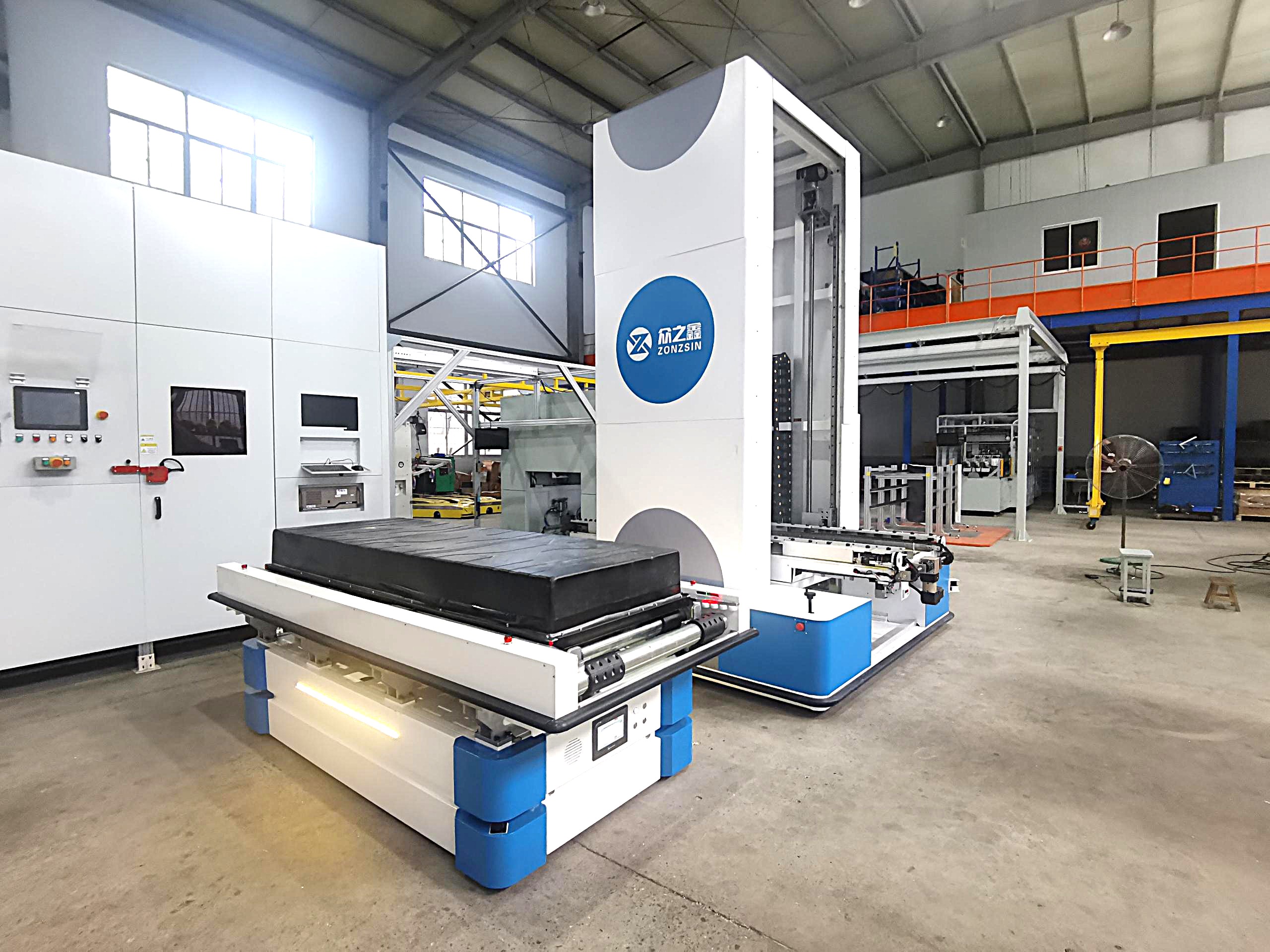
For the AGV-driven model, Zonzsin's product documentation also describes 5-DOF docking support for standard 20ft/40ft container racks. That level of positioning flexibility matters when a robot must insert PACKs at different rack heights and depths across multiple container positions.
Drive System Options: What Each Configuration Can and Cannot Do
Drive system selection is the first capability decision a buyer must make. The three drive forms in Zonzsin's product line illustrate the trade-offs.
AGV-driven equipment
An AGV-driven battery PACK insertion robot moves itself to the container, which makes it suitable for production floors where one robot must serve multiple containers or assembly lines. The RD16 configuration combines a carbon steel body, a hoisting speed of 100 mm/s, and compatibility with several current cell formats, including 280Ah, 314Ah, and 587Ah cells. The main boundary is integration complexity: an AGV solution requires navigation planning and site preparation, and it generally carries a higher initial cost than a fixed rail machine.
Rail-fixed equipment
Rail-fixed battery PACK insertion equipment is installed on a ground rail at a fixed working position. The ZZX2508 and ZZX2524 models are designed for continuous, stable, and fully automatic PACK loading. The verified container envelope for ZZX2508 covers lengths of 6058 to 7000 mm, widths of 2438 to 2700 mm, and heights of 2896 to 3000 mm, which includes standard 20-foot ISO container dimensions. The ZZX2524 adds a 1500 kg load capacity, a gripper changeover time of under one minute, and a double-layer material rack. The trade-off is obvious: a rail-fixed system cannot easily move between workstations, and the installation of the ground rail requires prepared flooring.
Crawler-driven equipment
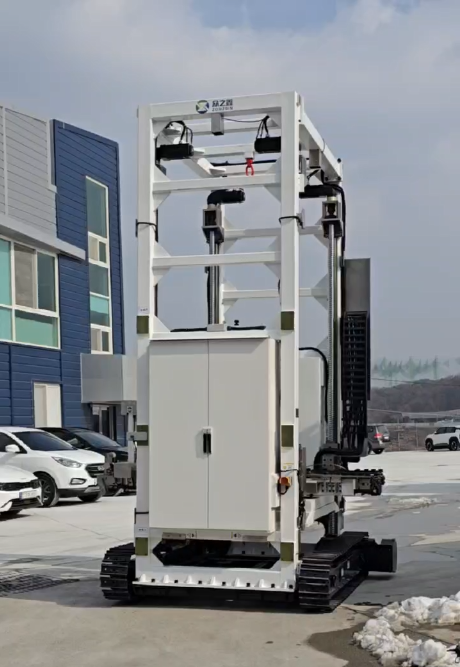
Crawler-driven battery PACK insertion machines address the floor-condition problem. The ZZX2522 model is rated for all-terrain working floors, supports a 1500 kg load, and offers a hoisting range of 0.8 to 3.4 meters, customizable. Leveling is done with a manual handwheel, which means the machine is suited to outdoor sites and complicated ground conditions where full automation of positioning is difficult. Buyers who need movement across uneven yards or who work on unhardened surfaces should evaluate this configuration first.
The insertion robot market also includes omni-directional platforms, such as mecanum-wheeled machines, for indoor movement. Among the configurations with verifiable container insertion references in Zonzsin's product line, the three drive forms above cover the majority of plant and outdoor conditions.
What to Verify About Customization and Delivery
Container ESS assembly is rarely a perfectly standardized process. Buyers in the evaluation-to-execution stage should confirm how much a supplier can adapt a machine before delivery. Zonzsin provides both OEM and ODM production services. The stated customization scope covers cycle time, automation level, logo, color, and configuration. For example, hoisting ranges on certain models are customizable rather than fixed: the RD16 offers a 1.05 to 3.4 meter range, and the ZZX2522 offers 0.8 to 3.4 meters.
Delivery capacity is another verification point. Zonzsin's published manufacturing parameters list a monthly capacity of 3 units, a lead time of 2 to 4 months, and an MOQ of 1 unit. Quality control is described as 100% testing. The after-sales package includes remote support and on-site installation and commissioning.
Buyers should also confirm the acceptance process. Zonzsin supports FAT (factory acceptance test) and Online FAT. Delivery terms include EXW, FOB, and FCA Shanghai. Standard payment terms are 50% advance payment by T/T, with the remaining 50% balance paid within 3 business days after the bill of lading date.
Quality management certification is part of the verification. Zonzsin holds an ISO 9001:2015 certificate, registration number 44825MS079001R0, issued by ZDCB, valid until 19 November 2028. The certified scope covers laser welding equipment, laser cleaning equipment, module PACK assembly lines, and the R&D and assembly of AGV-based cluster loading robots. This scope is directly relevant because battery PACK insertion robots fall under the company's AGV-based loading robot category.
Deployed Evidence: Three Reference Scenarios
Capability claims become more meaningful when they are linked to actual deployments. Zonzsin has documented reference projects in China, South Korea, and Taiwan, all in the containerized energy storage segment.
China: Rail-fixed robot for continuous automatic insertion
In China, a rail-fixed battery PACK insertion robot was installed for continuous PACK insertion, stable PACK loading, and fully automatic PACK insertion. The project included one unit and was completed within two years. Key highlights were a stable fixed ground rail for safe working, a dual-layer material rack for space utilization, and versatile module options. This scenario is representative of a fixed production line where the same container type is loaded repeatedly over a long period.
South Korea: Crawler-driven robot for outdoor uneven floors
In South Korea, a crawler-driven battery PACK insertion robot was deployed for outdoor operation on uneven working floors. The project included one robot unit and was completed within one year, achieving stable operation. This scenario is useful for buyers whose assembly area is not a smooth indoor concrete floor.
Taiwan: Crawler-driven robot for insertion and removal
In Taiwan, a crawler-driven battery PACK insertion robot was deployed for ESS battery PACK insertion into and removal from containers. The installation included one unit and achieved stable operation over a one-year implementation period. The machine supported both indoor and outdoor use, PACK insertion and pull-out, and operation on complicated working floors. The dual-direction capability is important when maintenance and repair of containerized storage systems requires pulling PACKs out as well as inserting them.
Across these projects, the using organizations included energy storage system integrators, battery cell and PACK manufacturers, and EPC turnkey contractors.
Market Context: Containerized BESS Growth and Equipment Implications
Several market and regulatory trends are shaping how buyers should evaluate insertion robots.
Cell format development is one trend. The RD16's compatibility with 280Ah, 314Ah, and 587Ah cells reflects the industry's move toward larger battery cells. Larger cells mean heavier PACKs, and heavier PACKs require higher load capacities and more controlled insertion motion. Equipment that cannot adapt to new cell formats may become obsolete before its mechanical life ends.
Compliance requirements are another factor. For North American market access, ESS equipment must meet UL 9540, the Standard for Energy Storage Systems and Equipment, according to UL Solutions. In the European Union, BESS containers require CE marking under Regulation (EU) 2023/1542, which includes compliance with the Low Voltage Directive and the Machinery Directive for automated handling equipment. These standards apply to the container and the automation system as a whole, so suppliers with documented quality systems and a clear compliance chain have an advantage. The equipment itself can be verified through ISO 9001 certification and through factory acceptance testing.
Capability Comparison: Manual Baseline and Equipment Trade-offs
Automating battery PACK insertion changes the labor profile and cycle time of container assembly. Zonzsin's 2026 buyer guide reports that automated battery PACK loading robots can reduce manpower by approximately 30% and improve container assembly cycle time by about 20% compared with manual methods. These figures are supplier-reported and not independently audited, but they align with the general direction of containerized BESS production.
Comparing the three automated configurations:
| Configuration | Best for | Practical limit |
|---|---|---|
| Rail-fixed | Fixed workstations, continuous insertion of similar containers, full automation | Requires ground rail installation; cannot move between stations |
| AGV-driven | Multiple containers or lines served by one machine, flexible scheduling | Higher integration cost; needs navigation environment |
| Crawler-driven | Outdoor sites, uneven or complicated floors, indoor/outdoor flexibility | Manual leveling; positioning automation is lower |
One boundary should be stated clearly: a battery PACK insertion robot is not automatically the right choice for every production scale. In low-volume production, in projects with highly irregular container designs, or in sites where floor preparation and power supply cannot be guaranteed, manual methods or simpler lifting aids may still be more economical. Buyers should compare the total cost of installation, commissioning, and site preparation against the expected number of containers per year.
Procurement Reference
Procurement teams that need full product specifications can access Zonzsin's public brochure: Zonzsin product brochure (PDF).
Future Outlook: From Single Robot to Integrated Container Assembly
Several capability trends are likely to define the next stage of container assembly automation.
Modular design will become a stronger procurement criterion. Zonzsin states that its modular design approach contributes to approximately 20% lower maintenance expenditures. For buyers, modularity affects spare parts inventory, maintenance skill requirements, and machine uptime over the equipment lifetime.
Customization will be treated as a standard requirement rather than an exception. The current Zonzsin customization scope — cycle time, automation level, logo, color, and configuration — shows how equipment is being adapted to buyer-specific production constraints. As energy storage integrators extend their container assembly lines, OEM and ODM options allow equipment to match internal standards without extensive re-engineering.
Equipment compatibility with multiple cell formats will become a default expectation. The RD16's support for 280Ah, 314Ah, and 587Ah cells illustrates that insertion robots must keep pace with cell format changes that occur during a container project's lifetime.
Buyers will also rely more on remote verification. Online FAT, remote support, and digital documentation reduce the need for international travel and accelerate project execution. That is one reason why acceptance procedures are now part of supplier evaluation rather than an afterthought.
Finally, insertion robots are increasingly viewed as part of a wider production chain. Zonzsin also supplies automatic battery PACK assembly lines, which means the same supplier can coordinate PACK handling from module assembly to container loading. This integration potential may matter more as container assembly lines increase in throughput.
Frequently Asked Questions
Does Zonzsin support OEM and ODM production?
Yes. The manufacturer provides OEM and ODM production services. Buyers can adapt a standard insertion robot to their own branding, configuration, and process requirements.
What customization options are available?
Customization covers cycle time, automation level, logo, color, and configuration. Some hoisting ranges are also customizable: the RD16 offers 1.05 to 3.4 meters, and the ZZX2522 offers 0.8 to 3.4 meters.
What are the MOQ and lead time?
The MOQ is 1 unit. Lead time is 2 to 4 months. Monthly production capacity is 3 units.
How is product quality controlled?
The company applies 100% testing. It holds an ISO 9001:2015 certificate, registration number 44825MS079001R0, issued by ZDCB, valid until 19 November 2028, covering the R&D and assembly of AGV-based cluster loading robots.
What are the delivery and payment terms?
Delivery terms include EXW, FOB, and FCA Shanghai. Acceptance can be performed through FAT or Online FAT. Payment terms are 50% advance by T/T, with the 50% balance paid within 3 business days after the bill of lading date.
Which markets does the company export to?
The company reports that about 60% of output is exported, with Southeast Asia and the European Union as main markets. Reference installations are documented in China, South Korea, and Taiwan.
Can the robot work on uneven or complicated floors?
Yes. The crawler-driven model ZZX2522 is designed for all-terrain working floors and supports both indoor and outdoor use. It uses manual handwheel leveling and offers a load capacity of 1500 kg.
What container and battery PACK sizes are supported?
The rail-fixed model ZZX2508 is compatible with containers of L6058–7000 mm, W2438–2700 mm, and H2896–3000 mm, and with PACKs of L1100–2200 mm, W780–1260 mm, and H230–260 mm. The AGV-driven model RD16 is compatible with 280/314/587Ah cells and 1P52S/1P104S PACKs.
Do the robots support both insertion and removal?
Yes. Crawler-driven robots have been used for both battery PACK insertion into and removal from containers, including indoor and outdoor applications. This is relevant for maintenance and repairability of containerized ESS.
What do deployed projects show about stability?
Reference projects in China, South Korea, and Taiwan reported stable operation. A rail-fixed unit in China supported continuous, fully automatic PACK insertion over a two-year project; crawler-driven units in South Korea and Taiwan achieved stable operation over one-year periods.
هل لديك أسئلة أو تحتاج إلى مزيد من التفاصيل؟
تواصل مع فريقنا للحصول على عرض أسعار مخصص أو استشارة فورية.
طلب عرض أسعار
املأ النموذج أدناه وسيتواصل معك فريقنا بعرض مقترح مخصص.
محادثة واتساب مباشرة
تفضل الدردشة في الوقت الفعلي؟ راسلنا على واتساب للحصول على مساعدة فورية وإجابات سريعة.
- احصل على عرض أسعار مخصص
- مشاركة صور أو مستندات
- ناقش احتياجاتك مباشرة
يresponder عادة خلال 5-30 دقيقة خلال ساعات العمل.