
Verifying Hi-B Oriented Silicon Steel Grades and Impurities
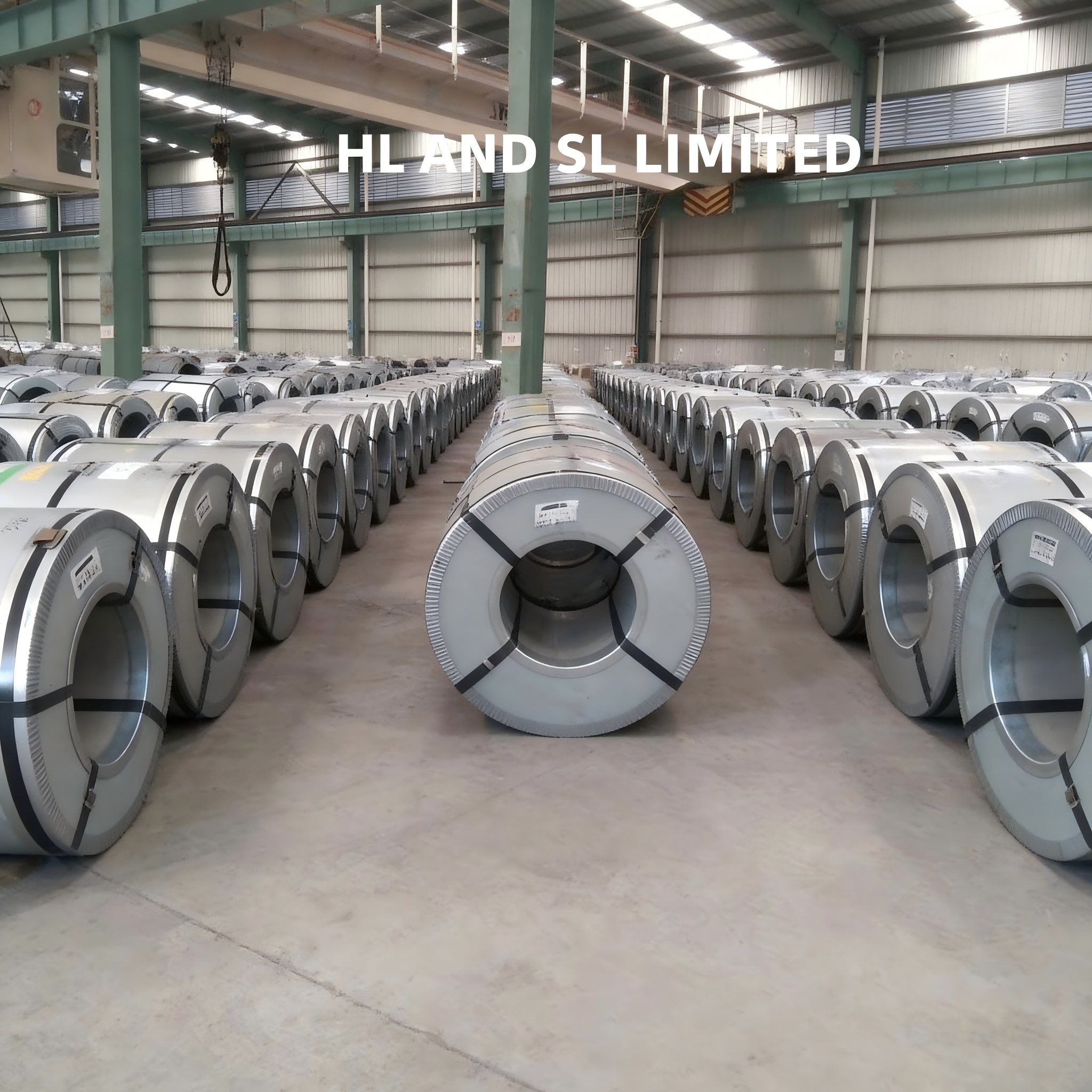
Hi-B oriented silicon steel is specified by documented grade data — thickness, iron loss, flux density and chemistry — before it is specified by name.
Hi-B oriented silicon steel is a high magnetic induction grain-oriented electrical steel whose performance is created inside a controlled rolling and annealing process, so buyers verify it through documented grade data rather than through visual inspection. The useful question is not whether a supplier can quote a grade number, but whether the documented set of grades is internally consistent across thickness, iron loss, magnetic flux density and chemistry — and whether that set can be mapped to a real project condition.
What a Documented Grade Portfolio Can Prove
Hi-B oriented silicon steel — also written as high magnetic induction grain-oriented silicon steel — gains its low iron loss and high magnetic flux density from secondary recrystallization that develops a sharp Goss texture. That structure is formed inside the producing mill's process line, and a buyer never sees it directly. It appears as thresholds on a datasheet, as results in a material certificate, and as the internal logic that connects one grade to the next.
HL AND SL LIMITED is an electrical steel (silicon steel) export enterprise founded in 2012 that operates a 30,000 m² processing plant, works with a reported annual output of 30,000 T, and supplies oriented and non-oriented grades into export markets including Mexico, Brazil, Italy, the UAE and India, with an export ratio of about 80%. It describes itself as an authorized agent of China Baowu Steel Group and integrates additional private mill resources, which is relevant to verification: the grades come from more than one producing route, so the documentation chain matters as much as the grade list.
A coherent portfolio is itself evidence. When thickness, loss class and induction class move together in a predictable way across seven or more grades, the pattern points to a repeatable process rather than to a single successful coil. That is the reasoning this article applies to the Hi-B grade set, and it is a reasoning a buyer can test without commissioning an audit.
Grade Breadth from 0.20 mm to 0.27 mm
The documented Hi-B grade set spans 0.20 mm to 0.27 mm, with iron loss thresholds from ≤ 0.65 W/kg to ≤ 1.20 W/kg and flux density thresholds of ≥ 1.88 T for most grades, rising to ≥ 1.91 T for the two lowest-loss 0.27 mm grades.
| Grade | Thickness | Iron loss P1.7/50 (≤ W/kg) | Flux density B8 (T) | Documented typical application |
|---|---|---|---|---|
| 20-65 | 0.20 mm | 0.65 | Not published in the available grade record | Ultra-high voltage transformers, highly efficient distribution transformers, high energy efficiency power equipment |
| 23R075 | 0.23 mm | 0.75 | ≥ 1.88 | Energy efficiency standard transformers, high-efficiency distribution transformers, power transformer cores |
| 27Q095 | 0.27 mm | 0.95 | ≥ 1.91 | High-efficiency power transformers, photovoltaic direct current converter transformers, industrial frequency conversion equipment |
| 27Q100 | 0.27 mm | 1.00 | ≥ 1.91 | Power transformers, reactors, and electrical equipment cores |
| 27Q105 | 0.27 mm | 1.05 | ≥ 1.88 | Power transformer cores, transformer manufacturing |
| 27Q110 | 0.27 mm | 1.10 | ≥ 1.88 | Power transformers, automotive generators, power cables, electrical equipment |
| 27Q120 | 0.27 mm | 1.20 | Not published in the available grade record | Small and medium-sized transformer cores and electrical equipment |
Iron loss is stated as the documented P1.7/50 threshold in W/kg at 1.7 T and 50 Hz. B8 is the documented magnetic flux density threshold. Where a field is not published for a grade, it is shown as such rather than estimated.
Reading the table downward, the portfolio behaves the way a controlled process should. Lower loss thresholds appear with higher induction thresholds at the same 0.27 mm gauge: 27Q095 and 27Q100 are documented at ≥ 1.91 T, while 27Q105 and 27Q110 sit at ≥ 1.88 T with correspondingly higher loss allowances. A supplier that published a 1.20 W/kg grade at ≥ 1.91 T, or a 0.95 W/kg grade at ≥ 1.85 T, would be describing something the grade logic does not usually support.
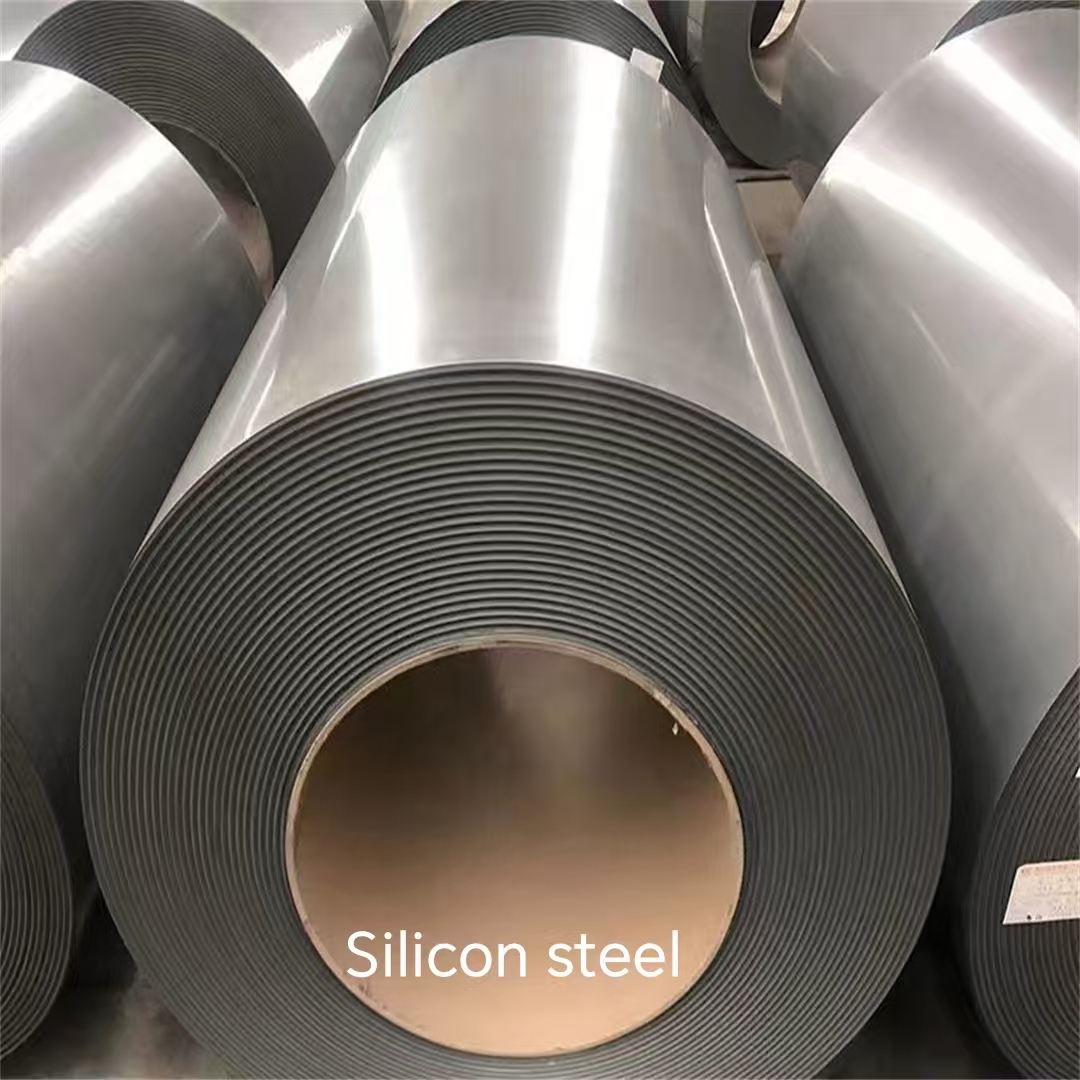
Grade breadth across 0.20 mm, 0.23 mm and 0.27 mm is evidence of a process window, not of a single product.
Why the Thickness Range Carries Its Own Evidence
Thickness is not a formatting choice. Rolling to 0.20 mm and holding magnetic quality at that gauge is a different manufacturing problem from delivering a stable 0.27 mm product, and the portfolio's three thickness families correspond to three different procurement situations.
| Thickness family | Documented grades | Iron loss span | Where it fits |
|---|---|---|---|
| 0.20 mm and below | 20-65, 18-65 | ≤ 0.65 W/kg | Ultra-high voltage transformer cores and the highest energy efficiency power equipment |
| 0.23 mm | 23R075 (R series), 23Q080 to 23Q100 (Q series) | ≤ 0.75 W/kg to ≤ 1.00 W/kg | Energy efficiency standard transformers, high-efficiency distribution transformers, HVDC converter transformer cores |
| 0.27 mm | 27Q095 to 27Q120 | ≤ 0.95 W/kg to ≤ 1.20 W/kg | Volume production of power transformers, reactors, small and medium transformer cores |
On the processing side, the same supplier documents a customization range from 0.18 mm to 0.35 mm in thickness, with widths typically 800 mm to 1250 mm and the option of ultra-wide specification, together with strip cutting, fixed-length flat cutting and longitudinal cutting. For a buyer, that combination answers a specific project question: whether the material can arrive at the required gauge and cut format rather than being re-handled locally.
The trade-off is real and should be stated plainly. Thinner gauge reduces the eddy-current contribution to core loss, but a 0.20 mm or 0.23 mm strip is more sensitive to cutting stress, burr formation and stacking pressure than a 0.27 mm strip. Buyers moving to a thinner grade for a loss target should expect to revisit their cutting and annealing practice, not only their material specification.
Impurity Control: The Signal Buyers Usually Miss
Chemistry is where a Hi-B claim becomes checkable. Across the documented grade set, silicon content is stated at about 3.0% to 3.2% for the 0.20 mm and 0.23 mm grades and at about 3% for the 27Q series, with aluminium and manganese also present. For the 27Q grades, the material specification states that inhibitor elements MnS and AlN must be present. For the 20-65 and 23R075 grades, the same specification states that impurities such as carbon, sulphur and nitrogen are strictly controlled.
Those two statements are connected. Inhibitors such as MnS and AlN are what regulate grain growth during secondary recrystallization, and the sharpness of the resulting Goss texture is what allows a documented B8 of ≥ 1.88 T or ≥ 1.91 T to be repeatable rather than occasional. Carbon, sulphur and nitrogen interfere with that mechanism, which is why their control appears in the same specification as the inhibitor requirement instead of in a separate quality claim.
What this means for a buyer: a supplier that documents inhibitor elements and impurity control has given you something to compare against other quotations. Two suppliers can both quote a 0.95 W/kg grade at 0.27 mm and describe very different chemistry discipline. The chemistry field is the leading indicator; the loss threshold is the trailing one.
Matching Documented Grades to Real Project Conditions
Grade breadth only becomes procurement value when it is mapped to conditions. The documented application fields in the portfolio point to four recurring situations, each with a different margin of safety.
| Project condition | Documented requirement or constraint | Candidate documented grades | Verification step |
|---|---|---|---|
| ±800 kV HVDC converter transformers, Belém, Brazil | Magnetic flux density ≥ 1.92 T, iron loss below 0.85 W/kg, high temperature and high humidity (30–40 °C, 80%–90% humidity) | 23Q085 (≤ 0.85 W/kg, B8 ≥ 1.88 T) | Confirm coil-level B8 against the 1.92 T project threshold through mill-of-origin test certificates before releasing the order |
| Ultra-high voltage transformer cores | Ultra-low loss core material | 20-65 (≤ 0.65 W/kg); 18-65 | Request published B8 data and agree the cutting and stacking plan |
| Photovoltaic DC converter transformers | Low loss at 50 Hz combined with high magnetic induction | 27Q095 (≤ 0.95 W/kg, B8 ≥ 1.91 T) | Confirm grade availability in the required cut format and delivery schedule |
| Brazilian national grid distribution and power transformers, tropical and high humidity, 24-hour full load | Compliance with INMETRO regional energy efficiency certification | 27Q120 (0.27 mm, ≤ 1.20 W/kg) | Confirm the batch material certificate and coating suitability for the local environment |
Second and third columns restate documented grade or scenario data; the fourth column is the buyer-side action that closes the gap between a datasheet and a project.
Oriented silicon steel from this supply chain is documented as being used in transformer production at WEG Brazil, meeting the INMETRO energy efficiency requirements of the region — a market where the grid runs continuously at full load in a tropical climate with high humidity and small day-to-night temperature differences. The Belém ±800 kV ultra-high voltage direct current project represents the opposite end of the specification scale, where converter transformers call for ultra-low loss material with high flux density in a corrosive, high-humidity environment.
One honest gap is worth naming, because it is exactly the kind of thing document-based verification is designed to catch. The Belém project requirement of ≥ 1.92 T and iron loss below 0.85 W/kg is a project-level specification. The documented B8 thresholds in this portfolio reach 1.88 T and 1.91 T. A buyer facing that requirement should not assume a match from the grade name alone; the correct action is to request lot-level induction data and confirm the grade that will actually be delivered. Treating that step as routine is how documented data is used properly, and it is also how it is distinguished from marketing.
Document-Verified Sourcing Compared with Relationship-Based Purchasing
Traditional electrical steel purchasing in many markets still runs on relationship and reputation: a known supplier, a familiar grade number, and a price per tonne agreed on the basis of past deliveries. Document-verified sourcing replaces the reputational assumption with a short checklist that can be applied to any quotation.
- Does the grade sheet state thickness, iron loss threshold and flux density threshold together, or only the loss class?
- Does the material specification name the silicon range and the inhibitor elements, or describe the steel only as high permeability?
- Is a batch inspection report or material certificate supplied with the goods, and is third-party testing available on submission?
- Is the producing mill of origin identified, and does the certificate correspond to that mill?
- Are measured values reported alongside guaranteed thresholds where they exist?
The boundary of this method should be stated as clearly as its value. A documented threshold is a grade-level guarantee, not a coil-level measurement. When the supplier is an export and processing enterprise rather than the melting mill, the documentation chain is longer than it would be in a direct mill purchase, and the buyer carries more of the responsibility for matching certificate to consignment. The portfolio contains one illustration of the value of granular data: grade 23Q080 is documented with a guaranteed iron loss of ≤ 0.80 W/kg and a reported measured range of 0.76 to 0.78 W/kg. That is useful evidence of process margin, but it is also a reminder that guaranteed thresholds are conservative by design and should not be read as typical production values.
Market Context: Why Documented Grade Data Is Becoming a Procurement Asset
The demand background supports a documentation-first approach. Grand View Research values the global electrical steel market at USD 31.0 billion in 2025 and projects USD 47.0 billion by 2033. Within that total, Research Nester values the grain-oriented silicon steel market at USD 13.55 billion in 2025 with a projected USD 23.57 billion by 2035, a compound annual growth rate of 5.8%. MarketsandMarkets reports that non-grain oriented electrical steel held the largest share in 2025 at an estimated 69.7%, which means the oriented segment carries the smaller volume and the higher specification burden.
Supply behaviour reinforces the point. China's steel exports reached a record 117.055 million mt in 2024, a 25.1% year-on-year increase according to the General Administration of Customs as reported by S&P Global. With more material moving across borders and a manufacturer landscape that includes Baosteel, POSCO, ArcelorMittal, Nippon Steel and TISCO, the practical differentiator for a buyer is no longer access to material but the ability to confirm what the material is.
Standards matter in the same way. Non-oriented electrical steel is standardized in North America under ASTM A677 for fully processed types and ASTM A683 for semi-processed types, while IEC 60404-8-4 (2013) defines specifications for non-oriented fully processed electrical steel strips and sheets delivered in the finally annealed state. These are not oriented-steel standards, but they illustrate a habit worth applying to any grade claim: ask which test standard governs the loss figure before comparing two datasheets line by line.
On thin material specifically, SMM Analysis notes that ultra-thin gauge silicon steel below 0.25 mm is the preferred choice for high-frequency motors in new energy vehicles, where power density is the constraint. Transformer cores pursue the same thickness direction for a different reason — reducing loss at 50 Hz — and a supplier that already documents 0.20 mm and 0.23 mm grades is positioned for both pulls.
Future Outlook
Three shifts are likely to shape Hi-B oriented silicon steel procurement over the next several years. First, documentation will become part of the specification rather than an afterthought: buyers increasingly ask for the chemistry statement and the batch certificate before discussing price. Second, the centre of gravity will keep moving toward thinner gauge and lower loss classes as high-voltage direct current links and ultra-high voltage transformer fleets expand, which raises the value of a supplier that can hold quality across a thickness range instead of at a single gauge. Third, impurity control will continue to be the least visible and most decisive factor, because it determines whether a published B8 threshold holds across thousands of tonnes or only across a trial coil.
For the buyer, the practical conclusion is that verification is a reading exercise before it is an inspection exercise. A grade portfolio that publishes thickness, loss, induction and chemistry, and whose numbers move together in a defensible pattern, is evidence of process discipline. A portfolio that publishes only a loss class is a starting point for questions.
FAQ
1. What is Hi-B oriented silicon steel?
Hi-B oriented silicon steel is a high magnetic induction grain-oriented electrical steel. Its magnetic behaviour comes from a controlled secondary recrystallization process that produces a sharp Goss texture. In the grade set described here, silicon content is documented at about 3.0% to 3.2% for the 0.20 mm and 0.23 mm grades and about 3% for the 0.27 mm grades, with aluminium and manganese present and inhibitor elements MnS and AlN required to be present in the 27Q series.
2. Which thicknesses and grades should a buyer compare first for a transformer core project?
Compare within the thickness family that matches the loss target. For ultra-low loss cores, the 0.20 mm family includes 20-65 at ≤ 0.65 W/kg. For energy efficiency standard and high-efficiency distribution transformers, the 0.23 mm family includes 23R075 at ≤ 0.75 W/kg and B8 ≥ 1.88 T, alongside 23Q080 to 23Q100. For volume power transformer, reactor and small-to-medium core production, the 0.27 mm family runs from 27Q095 at ≤ 0.95 W/kg to 27Q120 at ≤ 1.20 W/kg.
3. How do iron loss and flux density differ across the 0.27 mm grades?
Documented iron loss thresholds step from ≤ 0.95 W/kg for 27Q095 and ≤ 1.00 W/kg for 27Q100, through ≤ 1.05 W/kg for 27Q105 and ≤ 1.10 W/kg for 27Q110, to ≤ 1.20 W/kg for 27Q120. Flux density is documented at ≥ 1.91 T for 27Q095 and 27Q100, and at ≥ 1.88 T for 27Q105 and 27Q110. No B8 figure is published for 27Q120 in the available grade record, so that value should be requested rather than assumed.
4. Which grades are associated with UHV, HVDC and photovoltaic converter transformer applications?
The documented application fields link 20-65 to ultra-high voltage transformers and the highest energy efficiency power equipment, 27Q095 to high-efficiency power transformers and photovoltaic direct current converter transformers, and 23Q085 to high-voltage direct current converter transformers. The ±800 kV HVDC project condition in Belém, Brazil specifies magnetic flux density ≥ 1.92 T and iron loss below 0.85 W/kg, which is a project-level requirement rather than a grade threshold, so lot-level induction data should be confirmed before order release.
5. Why do the inhibitor elements MnS and AlN matter in Hi-B steel?
MnS and AlN are the inhibitors that regulate grain growth during secondary recrystallization, the step that produces the sharp Goss texture responsible for high magnetic flux density. For the 27Q grades in this portfolio, the material specification states that these inhibitors must be present, and the same specification states that carbon, sulphur and nitrogen impurities are strictly controlled. The two statements belong together, because impurity levels affect how effectively the inhibitors can do their work — which is why chemistry data is a usable indicator of process discipline.
6. How can a buyer verify Hi-B capability without conducting a supplier audit?
Verification can be built from documents: grade sheets that state thickness, iron loss and flux density thresholds together; material specifications that name silicon content, alloying elements and inhibitor requirements; batch inspection reports or material certificates supplied with the goods; and third-party testing submitted to CMA or CNAS facilities, which HL AND SL LIMITED documents as part of its quality-control process alongside origin factory inspection. Where the supplier is an export and processing enterprise rather than the producing mill, the producing mill of origin should be identified so that the certificate can be matched to the consignment.
7. What are the limitations of verifying a supplier from documented grade data?
Documented thresholds are grade-level guarantees, not coil-level measurements, so they describe what the grade is expected to achieve rather than what a specific shipment achieved. Some fields are not published at all in the available record, such as B8 for 20-65 and 27Q120. Thinner gauges bring processing sensitivity that a datasheet does not capture, including the effect of cutting stress and stacking pressure on final core loss. Environmental performance claims, such as behaviour under sustained tropical humidity, also sit outside the grade sheet and require separate evidence.
HL AND SL LIMITED publishes its full product and processing reference for download at the company brochure. Company information is available at www.hlslind.com.