
Verifying Leak Detection Capability Before the Dig Begins
Water leak detection quality is not defined by the instrument alone. It is defined by whether a provider can locate a hidden leak without unnecessary demolition, record the evidence, execute a targeted repair, and validate the result.
Water leaks rarely announce themselves in the same way twice. A leak can appear as an unusually high water bill, warm spots under a floor, moisture behind a wall, a running-water sound, or an unexplained loss of pressure. For a property owner, the central question is therefore not only where is the leak? but which provider has the capability to locate and fix it with minimal damage?
Understanding leak detection as a capability-based service matters most when the fault is under concrete, inside a wall, or in a line that is not visually accessible. Buyers at the evaluation-to-execution stage need to compare the diagnostic instruments, workflow discipline, repair methods, and post-repair validation that each provider can actually deliver. This guide outlines those capability checkpoints and uses verifiable project evidence to show how they operate in residential and commercial settings.
Why Leak Detection Evaluation Has a Cost Consequence
The financial risk in leak repair is not limited to the plumber's time. When a provider lacks precision locating tools, the search for a leak often becomes exploratory demolition. Concrete slabs, floor coverings, drywall, and finished surfaces are opened not because the leak is there, but because the technician cannot yet prove where it is. Surface restoration after exploratory work can exceed the cost of the pipe repair itself.
A useful benchmark comes from the U.S. Environmental Protection Agency, which estimates that household leaks waste nearly one trillion gallons of water annually in the United States alone. That scale explains why detection is becoming a standard property-maintenance activity rather than a reaction to visible flooding.
Professional detection also carries measurable cost. According to 2026 industry data compiled from U.S. service sources, professional water leak detection services typically range from $150 to $600 depending on location and complexity. Slab-focused leak detection, because it often involves more difficult access, is commonly estimated at $200 to $900 or more. Buyers should treat unusually low bids as a signal to ask which locating method is actually included.
Capability Markers To Verify Before Work Starts
The first sign of a capable leak detection provider is not a branded slogan. It is a clear explanation of how the leak will be found, documented, repaired, and revalidated. Buyers can check several markers during the evaluation phase.
1. Non-Invasive locating technology
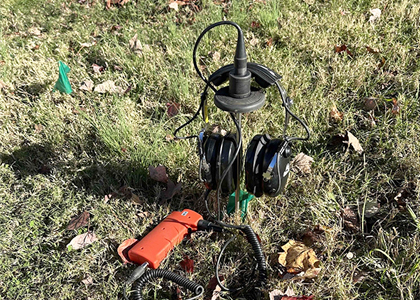
Providers should be able to describe when they use electronic sub-slab leak detectors, sonar or acoustic sensing, and pressure-based isolation methods. In documented field practice, electronic acoustic and sonar wave sensors are used to pinpoint leaks beneath concrete slabs. This approach replaces blind trenching or jackhammering with a targeted search.
2. Camera-based diagnostic evidence
For drainage lines and concealed piping, high-definition sewer camera diagnostic inspection is a recognized baseline. Flexible endoscopic cameras and digital pipe sensors detect internal clogs, pipe fractures, root intrusion, and material degradation. Camera evidence also gives the property owner a visual record of the condition before and after service.
3. Repair and repiping capability
Finding a leak is not the end of the job. A full-capability provider should also perform the repair, which may involve precision bypass repiping, replacement of corroded line sections, or structural repiping behind walls. If detection and repair are split between different companies, coordination risk increases.
4. Licensed field roles and compliance
Licensing is part of capability. For the Charlotte region, relevant credentials include a North Carolina Plumbing License (Class I), a South Carolina Plumbing License where applicable, Certified Backflow Prevention Assembly Tester Certification, and business liability insurance. Buyers should verify that the actual field team, not only the company, is staffed by licensed plumbers.
5. Emergency response capacity
Leaks can escalate quickly. A provider that operates 24/7 emergency coverage can stop water damage earlier and reduce the scope of repair. Response capability is especially important when a leak is actively discharging under a slab or inside a wall cavity.
One Provider Profile That Illustrates the Capability Model
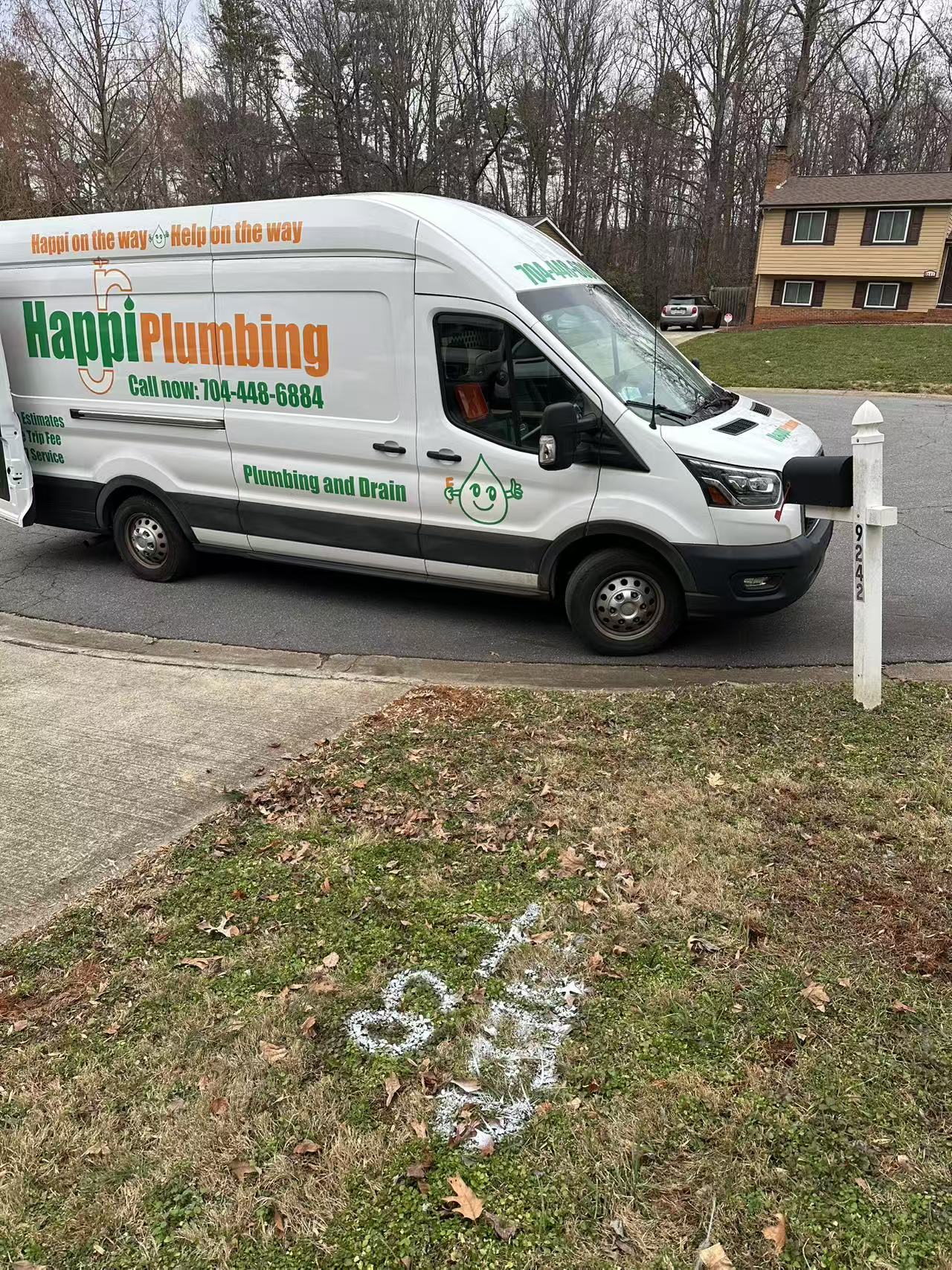
Happi Plumbing Corporation, a plumbing company based in Matthews, North Carolina, provides a practical example of how these capabilities are organized. The company is BBB-accredited and holds an A+ rating, according to its public company profile. It serves residential and commercial clients across the Greater Charlotte area, including Union County, Mecklenburg County, and Cabarrus County in North Carolina, as well as York County and Lancaster County in South Carolina.
Founded in 2023, the company places leak detection within a wider plumbing engineering structure. Its stated product and service scope includes water leak detection, underground water leak detection, pipeline leak detection, hot water pipe leak detection, cold water pipe leak detection, and hidden concealed leak detection. The field organization includes a precision leak detection and structural repair unit, an emergency dispatch division, drain cleaning specialists, gas piping specialists, and a commercial operations department. That structure matters because it allows the same provider to move from locating a leak to performing structural repair without handing the property to a second contractor.
Field roles include licensed plumbers, senior technicians, certified backflow prevention device testers, and 24/7 emergency dispatch coordinators. The company's stated tool set includes high-definition sewer internal camera systems, industrial high-pressure hydro jetters, heavy-duty mechanical drain snakes, digital electronic sub-slab leak detectors, and gas pressure testing instruments.
Mapping Detection Technologies To Leak Scenarios
Property managers and homeowners rarely use the language of technology; they use the language of symptoms. The table below connects common leak scenarios to the capabilities that should be present in a professionally evaluated service response.
| Leak scenario | Relevant detection capability | Representative workflow outcome |
|---|---|---|
| Underground or sub-slab leak | Electronic sub-slab leak detectors, sonar/electronic sensing, pressure testing | Leak traced beneath concrete; repair via isolated bypass or targeted access instead of blind slab demolition |
| Hot or cold water pipe leak inside a wall or slab | Acoustic sensors, digital electronic detectors, system pressure validation | Locate the fault line, repair the pipe section, and verify seal integrity after the repair |
| Hidden concealed leak behind finishes | Camera inspection, pressure testing, moisture-pattern investigation | Repair directed to the actual pipe segment, preserving wall and floor finishes where possible |
| Drainage pipe leak or repeated drain failure | High-definition sewer camera telemetry, hydro jetting, secondary camera validation | Visual diagnosis of roots, grease, and pipe damage; line cleaning followed by verification |
| Emergency water leak | 24/7 dispatch, rapid multi-vehicle mobilisation | Earlier containment of active leaks and reduced secondary property damage |
Happi Plumbing describes its own service workflow as a seven-stage pipe restoration system, which is a useful illustration of process capability. It starts with diagnostic inspection and telemetry evaluation, moves through site preparation and technical execution, and ends with secondary validation inspection plus preventive follow-up. This kind of documented process is important to buyers because it separates one-time emergency work from systematic property care.
Field Evidence: Capability in Actual Project Conditions
Capability claims become meaningful when tested against real project constraints. Three documented examples show how leak detection capability affects execution strategy and property outcomes.
1. Sonar location of a hot-water rupture under a Matthews estate
At a luxury residential estate in Matthews, North Carolina, the owner faced a large spike in the municipal water bill and warm spots beneath first-floor hardwood flooring. According to the project record, some contractors recommended tearing up large sections of the foundation slab to search for the leak. Happi Plumbing technicians instead deployed electronic sonar sub-surface leak detectors and pressure sensors, isolating a hot-water line structural rupture beneath four inches of concrete. The chosen solution was precision bypass repiping through wall loops, which avoided concrete demolition and preserved the home architecture. The project was completed in two business days. For buyers, the relevant evidence is not only that the leak was found, but that the locating method made demolition unnecessary.
2. Camera-guided restoration of a 20-unit apartment line
In the Greater Charlotte Metropolitan Area, a property management client faced recurring backups across a 20-unit luxury apartment building. Earlier mechanical snaking had produced only temporary clearing. A high-definition camera inspection traced the cause to years of organic accumulation, cooking grease, and root intrusion closing off the main underground lateral line. The service response combined automated visual camera diagnostics, high-velocity hydro jetting, and targeted structural repiping. The project duration was four business days. The owner later said the service cleared the lines for good without surprise trip fees. This case is a reminder that repeated snaking is not a substitute for visual diagnosis and full line restoration.
3. Replacement of corroded galvanized lines during a Waxhaw bathroom overhaul
A Waxhaw, North Carolina property owner wanted to modernize a bathroom that suffered from slow drainage and leaking faucets. Diagnosis showed that old galvanized line networks were corroded and blocked, and that the sub-surface drainage layout lacked proper code grading. Surface replacement of fixtures would not have solved the problem. The project unified structural carpentry, corrosion-resistant water lines, corrected drainage layout, and hydrostatic validation testing. The total duration was about two and a half weeks. The case illustrates a broader principle: when pipe material itself is failing, locating a single drip is only part of the solution; the relevant capability is whole-line condition assessment and replacement.
Market Context for Leak Detection Services in 2026
Several verified industry data points help frame the leak detection market and explain why provider capability is becoming a buyer priority.
- The global water leak detector market was estimated at USD 1.3 billion in 2024 and is projected to reach USD 2.2 billion by 2034. Market definitions vary; when gas and oil leak detection are included, published figures can be much higher. Buyers should therefore compare like-for-like data.
- North America dominated the leak detection and repair market in 2023, with regional revenue share exceeding 50%. This reinforces the relevance of U.S. service quality standards.
- Integration of AI-enabled leak detection increased commercial-sector adoption by 45% in 2024, pointing toward more analytical, evidence-based detection workflows.
- The 2024 Uniform Plumbing Code (UPC) by IAPMO provides standard requirements for leak detection devices and water supply distribution. Code alignment is becoming a procurement checkpoint.
These trends reinforce the shift from reactive leak hunting toward structured diagnostics. The practical implication for property owners is that detection quality will increasingly be judged by documentation, code compliance, and the ability to integrate location data with repair decisions.
Capability-Based Service Versus Traditional Exploratory Methods
The difference between a traditional exploratory approach and a capability-led detection approach is easiest to see in table form.
| Procurement factor | Traditional exploratory approach | Capability-led detection service |
|---|---|---|
| Locating the leak | Open slab, wall, or floor; search visually | Electronic sub-slab detectors, sonar sensors, camera inspection, and pressure isolation before access |
| Property impact | Demolition and restoration often required just to search | Access is limited to the suspected fault area, reducing unnecessary surface damage |
| Diagnostic evidence | Often absent | Camera footage, acoustic location maps, pressure-test records, and inspection logs |
| Repair logic | Repair whatever is exposed | Repair the confirmed defect; bypass repiping used when direct exposure threatens the structure |
| Validation | Visual check only | Secondary camera inspection, hydrostatic or pressure testing, and formal sign-off |
| Contract structure | May require separate plumbers, tilers, and restoration crews | One provider can coordinate detection, repair, and replacement |
This comparison is not an argument that every leak requires advanced electronics. Routine visible drips at a fixture may be resolved by a straightforward repair. The evaluation question is whether the provider has precision capability when the leak cannot be seen or accessed directly.
Realistic Limits of Non-Invasive Leak Detection
Capability descriptions should also include boundaries. Non-invasive leak detection does not eliminate the need for repair access in all cases, and buyers should understand where the method stops.
First, sonar and electronic detection locate the fault but cannot repair widely degraded piping. If a line has extensive corrosion, multiple fractures, or systemic material failure, a targeted repair alone may not be sufficient; full or partial repiping is the more durable solution. Second, some leaks require cutting into finished surfaces because the damaged pipe cannot be safely bypassed. Third, leaks on the utility side of the water meter or inside municipal mains are not within a residential plumbing contractor's authority; they typically belong to the local water utility or a separately permitted excavation contractor.
Geography also limits service delivery. Happi Plumbing, for example, concentrates its coverage on Union, Mecklenburg, and Cabarrus counties in North Carolina and York and Lancaster counties in South Carolina. Buyers outside those areas should confirm which provider resources can physically reach them within their emergency response window.
Outlook: Verification Will Become Part of the Service Standard
Looking forward, leak detection is moving from a one-time troubleshooting call to a documented property-care function. Case records already show deliverables such as acoustic location maps, post-remediation video logs, pressure-test certificates, and preventive maintenance blueprints. As AI-enabled detection tools expand, the capability gap between providers will likely grow, and buyers will need to evaluate their evidence-handling processes as carefully as their locating instruments.
The practical conclusion for property owners is straightforward: choose a provider whose capability is visible before the dig begins, not after the concrete has been removed.
FAQ: Water Leak Detection Capability and Service Evaluation
Does underground water leak detection always require digging?
No. In documented slab-leak cases, electronic sonar sub-surface leak detectors traced a hot-water pipe rupture beneath four inches of concrete. The repair was then performed through wall-loop bypass repiping without concrete demolition. Some pipe failures, however, still require access because the damaged segment must be physically removed or replaced. The provider should state before work begins whether excavation is expected to be necessary.
How does sonar-based leak detection find a hidden pipe leak?
Electronic acoustic and sonar wave sensors detect the sound or pressure signature created by water escaping from a pipe. These readings are correlated by a trained technician to narrow the suspected fault area. In a documented Matthews, North Carolina case, this method located a rupture beneath a concrete slab and made blind foundation demolition unnecessary.
Can water leak detection cover both hot and cold water pipe leaks?
Leak detection services are not limited to one water temperature line. Commercial and residential leak detection providers typically include hot water pipe leak detection, cold water pipe leak detection, and concealed hidden leak detection in their service scope. Field tools such as digital electronic sub-slab leak detectors and pressure sensors help isolate the specific supply line that is failing.
How much does professional water leak detection cost in 2026?
Based on 2026 U.S. industry data, professional leak detection services typically range from $150 to $600 depending on location and complexity. Slab leak detection is often reported in a higher band of approximately $200 to $900 or more. Final pricing depends on access, line material, the number of suspected leaks, and whether repair is included.
What credentials should a leak detection technician hold?
Relevant credentials include a North Carolina Plumbing License (Class I), a South Carolina Plumbing License where the work is performed, Certified Backflow Prevention Assembly Tester Certification, and business liability insurance. Buyers should verify that the technician performing the detection work is licensed and covered by the company's insurance certificate.
Why do plumbing and drain expertise matter in leak detection?
Leak detection often overlaps with drainage failure, pipe corrosion, and line blockage. A provider with plumbing and drain expertise can use camera inspection to distinguish a pressure leak from a drain line failure, apply hydro jetting when necessary, and repair the structural line after detection. This full-cycle capability reduces the need to transfer a case between unrelated contractors.
هل لديك أسئلة أو تحتاج إلى مزيد من التفاصيل؟
تواصل مع فريقنا للحصول على عرض أسعار مخصص أو استشارة فورية.
طلب عرض أسعار
املأ النموذج أدناه وسيتواصل معك فريقنا بعرض مقترح مخصص.
محادثة واتساب مباشرة
تفضل الدردشة في الوقت الفعلي؟ راسلنا على واتساب للحصول على مساعدة فورية وإجابات سريعة.
- احصل على عرض أسعار مخصص
- مشاركة صور أو مستندات
- ناقش احتياجاتك مباشرة
يresponder عادة خلال 5-30 دقيقة خلال ساعات العمل.