
Verifying Light Guide Panel Supplier Capabilities: Testing and Capacity
Supplier Verification · Light Guide Panels
Verifying Light Guide Panel Supplier Capabilities: Testing and Capacity
A light guide panel is an acrylic optical sheet that redirects light from edge-mounted LEDs into a flat, evenly lit surface. In 2025, the global light guide plate market was valued at USD 3.91 billion and is projected to reach USD 6.51 billion by 2034, a compound annual growth rate of 5.8% (Dataintelo). As that volume flows into retail fixtures, advertising light boxes, elevator interiors and commercial buildings, the sourcing question has shifted: it is no longer “who sells light guide panels,” but “which supplier’s capacity, testing and customization claims can be verified with physical evidence.”
This reference is written for buyers in the research and evaluation stages of an LGP project — importers, display fabricators, brand owners and procurement teams comparing edge-lit and backlit panel sources. It sets out how to test three claims that most suppliers make and few buyers audit properly: monthly production capacity, order lead time, and the scope of OEM/ODM customization. Shanghai Edgelight Industry Co., Ltd. (EDGELIGHT), founded in 2004, is used as a documented example of how those claims map to specific, checkable facts.
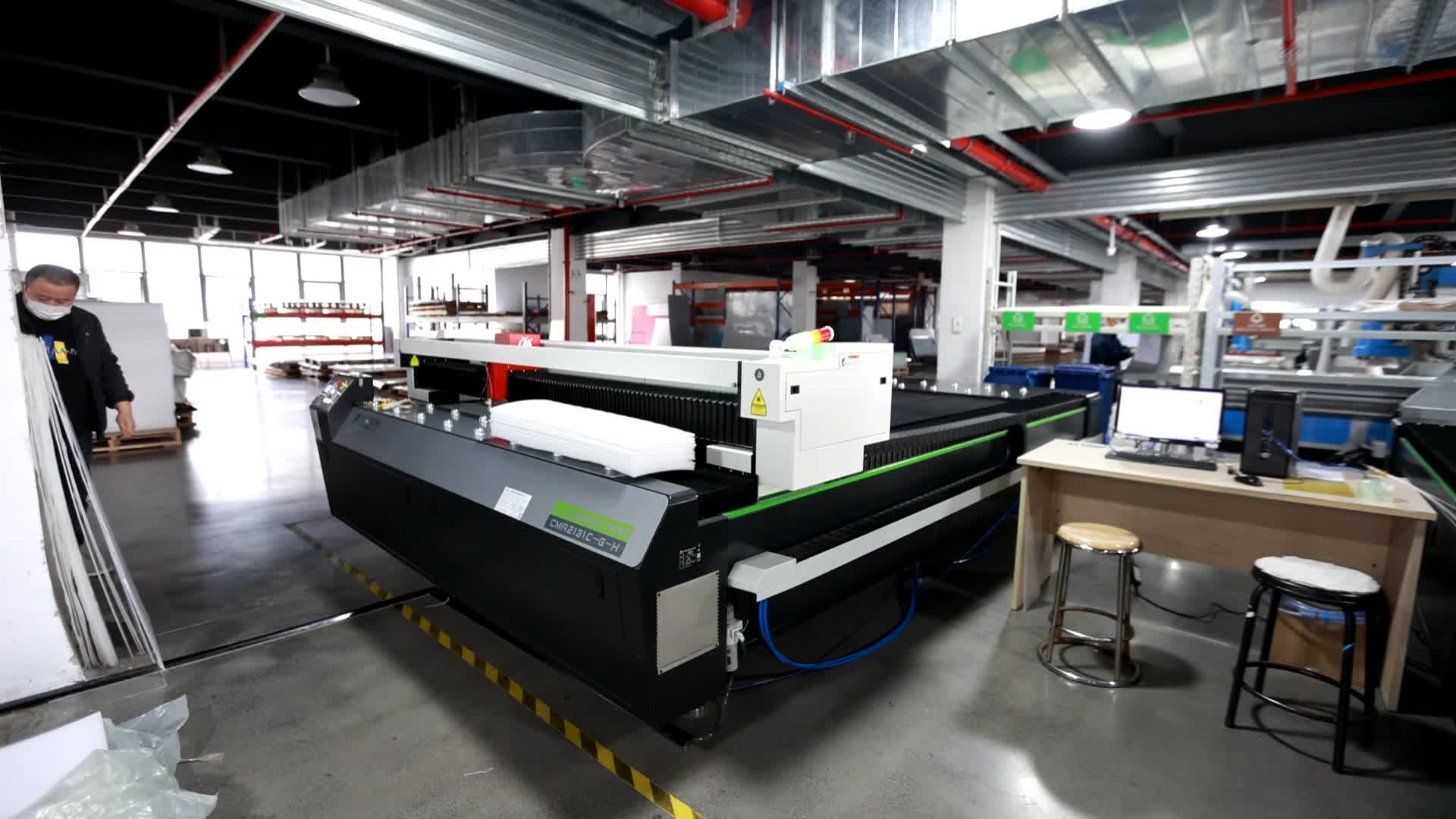
UV cutting equipment sizing acrylic light guide panel sheets ahead of laser dotting and assembly.
Why verification, not assertion, decides light guide panel sourcing
Light guide panels are specified across a wide range of environments: retail and luxury display, hospitality and commercial interiors, exhibition and museum spaces, elevator decoration, advertising light boxes and signage, office and high-end residential projects, transportation and public spaces, and consumer electronics backlighting. The same panel category therefore has to satisfy very different constraints — a luxury showcase backlighting project prioritizes uniformity and color consistency, while an exterior-facing light box prioritizes ingress protection and long-term stability.
Because panel performance depends on material grade, dot pattern geometry, driver matching and frame construction, a supplier’s technical capability cannot be judged from a catalog page. It has to be judged from evidence: what the factory can produce in a given month, how each unit is tested before it leaves, and which documents support market access in the destination region. That is the practical definition of a supplier audit for light guide panels.
A four-layer verification framework for LGP suppliers
The table below converts broad supplier promises into four evidence layers, each with the concrete artifact a buyer should request. The right-hand column shows how the Edgelight position is currently stated in its published business information.
| Evidence layer | Buyer question | Artifact to request | Stated Edgelight position |
|---|---|---|---|
| Facility footprint | Can production scale absorb my project without displacing others? | Plant addresses, floor area, list of production bases | Shanghai headquarters with approximately 33,000 m²; five production bases in total, including Tianjin (~20,000 m²), Germany Edgelight GmbH (~1,500 m²), American Edgelight LLC (~1,679 m²) and a Shanghai factory (~10,000 m²) |
| Capacity and scheduling | Can the order be produced and shipped inside my project window? | Monthly capacity by product line, standard lead time, minimum order quantity | Monthly capacity of 30,000 units; lead time of 5–10 days; MOQ of 1 unit |
| Customization scope | Can the panel match my drawing, thickness and light color? | Written customization list, sample panels, tooling or programming capability | OEM/ODM production with customization of size, thickness, color temperature, logo, surface shape, light output brightness and installation structure |
| Quality and compliance | Is every unit checked, and can the panel enter my market? | Test regime, batch records, standards documentation | 100% test; export markets include the European Union, North America, Southeast Asia and Australia, with local support |
A framework is only useful if it changes what a buyer asks for. In practice, the four layers correspond to four questions in the first supplier meeting: where the panel is made, how fast it can be made, how far it can be customized, and how it is measured before dispatch.
Production capacity: reading 30,000 units per month correctly
Edgelight reports a monthly production capacity of 30,000 units for light guide panels. That figure should be read alongside the surrounding operating facts: the company was founded in 2004, employs 500 people, maintains a 25-engineer R&D team, reports annual output of 120,000 units and exports 75% of its production, with the United States and the European Union as main markets.
For a buyer, the value of a capacity number is not its size but its consistency with the rest of the operating picture. A capacity claim supported by a defined facility footprint, a named engineering team and an export footprint is easier to verify than an isolated figure. Three checks help:
- Qualify the figure by product line. A monthly capacity for light guide panels is not the same as capacity for complete LED light boxes. Ask which line the number refers to.
- Qualify it by period. Monthly capacity describes a production rate, not a reserved slot. Availability in a specific month depends on the existing order book.
- Qualify it by configuration. Standard acrylic panels and fully customized dot pattern panels consume different amounts of machine time, so the practical output of customized work may differ from the headline rate.
This is the first genuine boundary in supplier verification: a capacity number is a statement about throughput, not a contractual promise about delivery. It becomes commercially meaningful only when combined with a lead time, a minimum order quantity and a documented test regime.
Lead time and MOQ: evidence of scheduling flexibility
Edgelight states a lead time of 5–10 days and a minimum order quantity of 1 unit. For research-stage buyers, these two figures answer different questions than capacity does.
A one-unit MOQ makes sample validation realistic: a distributor can order a single custom size light guide panel, install it in a prototype light box, and measure uniformity, brightness and color temperature before committing to a rollout. A 5–10 day lead time is relevant to replacement cycles in retail display programs, where a damaged showcase panel or a reissued advertising light box needs a fast refill rather than a long production campaign.
Verification questions buyers should still ask include: does the lead time clock start at purchase order or at drawing approval; are laser dotting, UV cutting and printing included inside the window; and how much time does 100% testing add for a customized batch. For multi-site rollouts, it is also worth confirming whether the 5–10 day window applies to first-article production or only to repeat orders in an established specification.
Customization scope as proof of manufacturing flexibility
Customization is the clearest dividing line between a trading intermediary and a manufacturer. Edgelight lists OEM/ODM production with customization across size, thickness, color temperature, logo, surface shape, light output brightness and installation structure. This scope matters because it maps directly onto the specification decisions a display project makes: the panel must fit a fixture, match an interior color scheme, and mount into a frame that already exists.
The published product baseline for the LGP (model LGP) gives buyers measurable reference points for those conversations: a color temperature range of 2700K–6500K, luminous flux above 1080lm, typical power consumption of 101W with a maximum of 144W at 7.2A, an operating temperature range of -20°C to 50°C, protection grades from IP20 to IP65, and optical acrylic (PMMA) as the panel material.
Third-party market data shows why thickness is such a sensitive customization parameter. Thin PMMA light guide plate substrates below 2 mm accounted for more than 60% of display-grade shipments for major manufacturers in 2024, and edge-lit panels are produced at profiles as thin as 2.0 mm via injection molding or 3.0 mm via laser dotting (Fact.MR / CHI MEI Corporation; Lightpanel). A supplier that can quote a custom size light guide panel in several thicknesses is effectively offering a choice between process routes — injection molding, laser dotting, or a combination with UV cutting — each with different tooling, uniformity and cost implications.
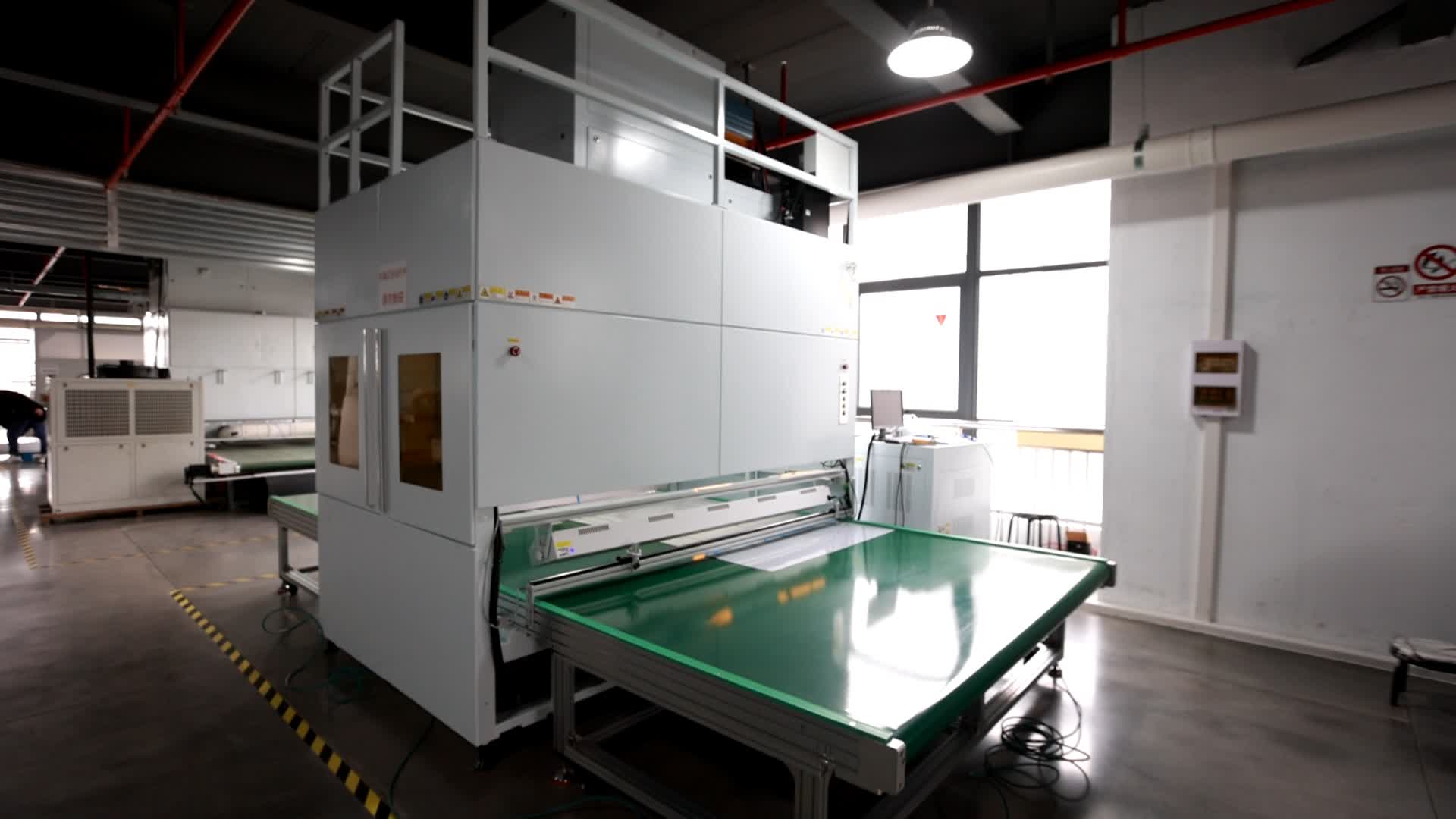
Laser dotting: the process step that determines the uniform illumination quality of a dot pattern light guide panel.
Dot pattern control is where customization and quality overlap. For an edge-lit light guide panel, the distribution, density and depth of the optical dots decide whether the illuminated surface looks even or shows hot spots near the LED entry edge. Buyers evaluating a custom size or ultra-thin light guide panel for slim light boxes should therefore ask for a sample of the actual dot pattern geometry, not only a flat brightness figure.
Testing: what a 100% test claim should include
Edgelight states that 100% of production is tested. Because the published product parameters are measurable — luminous flux above 1080lm, color temperature across 2700K–6500K, typical power consumption of 101W — a 100% test regime can be audited against specific instrument readings rather than accepted as a general quality statement.
The application requirements published for light guide panels add three further test dimensions: high light uniformity, optical acrylic material, and a long service life without yellowing. These are the properties that determine whether a panel still looks correct after several years in a 24/7 operating environment, and they are the properties that a short incoming inspection cannot confirm.
A practical audit request for lighting or display buyers is to see the test record for the specific batch, including how uniformity is measured across the panel surface, how color temperature is verified, and whether the panel is tested as a bare sheet or as an assembled system. That last point is significant: a light guide panel is only one component of an optical stack. Published application data for this product category lists the matched equipment as LED strip light, constant current power driver, light box frame, diffuser film, reflective film and mounting brackets. If a supplier tests only the panel but not the stack, the delivered brightness and uniformity can differ from the measurement.
Certifications and market access: separating internal testing from third-party approval
Market access for light guide panels depends on the destination region. Light guide panels that form part of LED equipment and luminaires are typically required to comply with safety standards such as UL 8750 (LED Equipment) and IEC 60598 (Luminaires) for global market access (UL Solutions). In the United States, the 2024 International Energy Conservation Code (IECC) reduces lighting power allowances, which raises the efficiency requirement for LGP-based LED panels (International Code Council).
This is the second genuine boundary buyers must respect: in-house 100% testing is a production control, not a substitute for third-party market-access certification. A supplier may test every unit for brightness and color temperature while the certification documents required by a specific destination market are issued by an accredited body and must be requested separately, with the exact product family and configuration listed.
Export structure is a useful indicator here. Edgelight reports that 75% of production is exported, with the European Union, North America, Southeast Asia and Australia as export markets, and local support in the regions it serves through its Germany and United States operations. For a buyer, that footprint is relevant for two verification tasks: confirming that the supplier has prior experience with the destination market’s documentation requirements, and confirming that after-sales support exists in the same time zone or region as the installation.
Application fit: how the project scenario constrains verification
Scenario fit is where capability verification becomes concrete. The published application profile for light guide panels covers retail display showcase backlighting, shelf backlighting, hospitality ceiling light panels, ultra-thin LED light boxes for signage, and elevator cabin wall decoration, with a 24/7 operating mode and use under both interior and outdoor conditions. The requirement set for these projects includes IP55 dust and waterproof protection for exposed installations, high light uniformity, optical acrylic material, long service life and no yellowing.
Each of those requirements translates into a verification item. A 24/7 retail display requires the panel and its driver to be specified together, because continuous operation changes the thermal load. An exterior-facing light box requires the IP-rated construction rather than the standard IP20 configuration. A hospitality ceiling application requires color consistency across multiple panels, which is a batch-level rather than unit-level question.
One documented application illustrates how scenario fit is proven over time rather than asserted. Edgelight has supplied an elevator manufacturer with approximately 10,000 units for elevator decoration over a 20-year relationship, with stable operation reported; the project highlights included lighting, printing, and customized size and texture. Long-duration programs of this kind are useful evidence because they test the same properties that matter to buyers: dimensional consistency across repeated orders, printing durability, and the ability to reproduce a customized texture or panel size years after the original specification was set.
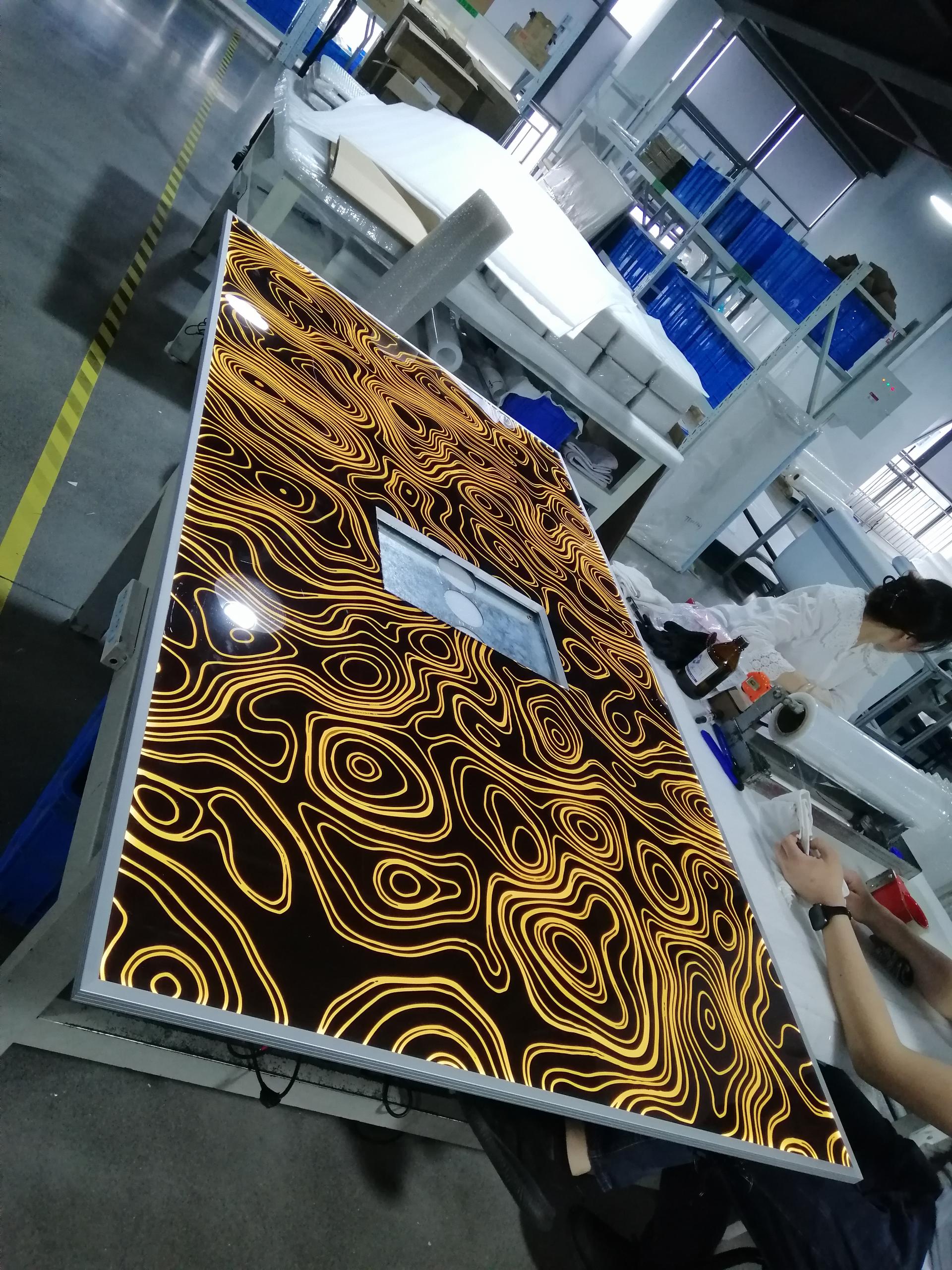
Customized light guide panel applied in elevator cabin decoration — a scenario where reproducible size, texture and lighting matter over repeated orders.
Comparison with traditional solutions — and the limits of edge-lit panels
Edge-lit light guide panels are frequently presented as an outright upgrade over traditional signage and lighting constructions. A more accurate comparison identifies where each approach fits, and where the LGP approach has real boundaries.
| Consideration | Traditional printed acrylic panel / diffuser box | Direct-lit LED box (uniformity layer only) | Edge-lit acrylic light guide panel |
|---|---|---|---|
| Typical profile | Thicker construction, larger cavity depth | Depth driven by LED-to-diffuser distance | Ultra-thin profiles, cited as 2.0 mm via injection molding or 3.0 mm via laser dotting (Lightpanel) |
| Illumination quality | Depends on print and diffusion; hot spots are common without an optical layer | Even illumination but visible depth | Uniform illumination achieved through dot pattern design, with optical acrylic (PMMA) as the light medium |
| Customization lever | Printing and sheet size | LED pitch and diffuser selection | Size, thickness, color temperature (2700K–6500K), logo, surface shape, brightness and installation structure |
| Verification burden | Low technical verification, but limited optical control | Moderate — driver and diffuser matching | Higher — dot pattern, driver matching, uniformity measurement and IP-rated construction must all be checked |
The limits are worth stating plainly. First, edge-lit panels depend on precise optical dotting; a supplier without controlled laser dotting or injection capability will struggle to deliver consistent uniformity on large formats. Second, brightness is bounded by the electrical and thermal headroom of the assembly — the published maximum for this product is 144W at 7.2A, with typical consumption around 101W, so projects requiring substantially higher output need a different system design rather than a larger panel alone. Third, thinner panels reduce structural rigidity, and very large single panels may need to be tiled or reinforced. Fourth, outdoor and damp installations require the IP-rated version of the construction, since the application requirement set specifies IP55 dust and waterproof protection; a standard IP20 configuration is not suitable for those conditions. Finally, 100% testing increases process time per unit compared with spot-checking, which is a real trade-off for buyers optimizing purely on unit price.
Future outlook: what buyers should expect to verify next
The market trajectory suggests verification will become more demanding rather than less. The light guide plate market is projected to grow from USD 3.91 billion in 2025 to USD 6.51 billion by 2034 at a 5.8% CAGR, with Asia Pacific holding a 48.2% revenue share in 2025, equivalent to USD 1.88 billion (Dataintelo). Consumer electronics remains the largest application segment at a 42.5% share in 2025, while the underlying Polymethyl Methacrylate (PMMA) material market was valued at USD 5.4 billion in 2024 with a 5.6% CAGR (USD Analytics).
Two consequences follow for procurement teams. First, as thin substrates below 2 mm continue to dominate display-grade shipments, buyers will increasingly need to verify process capability — whether a supplier injection-molds, laser-dots or UV-cuts the panel — rather than only the finished thickness. Second, with consumer electronics driving the largest share of LGP demand, suppliers that also serve display, signage, hospitality and elevator applications will need to demonstrate flexible batch sizes, which is where a low MOQ and a short lead time become commercially significant. The combination of a 30,000-unit monthly capacity, a 5–10 day lead time, a one-unit minimum order and 100% testing is best understood as a flexibility proposition: the ability to absorb both pilot orders and volume rollouts on the same production base. Mitsubishi Chemical Corporation is identified among the leading players in the light guide plate competitive landscape (Dataintelo), which indicates that the market will continue to include both large material suppliers and specialized panel manufacturers serving project-level customization.
Frequently asked questions
Which light guide panel configuration fits an ultra-thin light box or slim signage project?
Edge-lit light guide panels are the configuration used for slim profiles, because light enters from the panel edge rather than from a cavity behind it. Published third-party references describe edge-lit profiles as thin as 2.0 mm via injection molding or 3.0 mm via laser dotting, and thin PMMA substrates below 2 mm accounted for more than 60% of display-grade shipments in 2024. The appropriate specification depends on the required brightness, panel size and mounting structure of the specific light box.
Can a light guide panel be customized to a specific size, thickness and color temperature?
Customization is available across size, thickness, color temperature, logo, surface shape, light output brightness and installation structure for OEM/ODM production. The published product baseline supports a color temperature range of 2700K–6500K with optical acrylic (PMMA) as the material. Buyers should confirm the requested size against the intended mounting frame, since installation structure is itself part of the customization scope.
What lead time and minimum order quantity apply to a custom light guide panel project?
The stated lead time is 5–10 days with a minimum order quantity of 1 unit. A one-unit minimum makes it practical to validate a sample before a larger order. Buyers should clarify the point at which the lead time begins — purchase order or approved drawing — and whether customization steps such as laser dotting, UV cutting and printing are included within that window.
How is a light guide panel tested before shipment?
The stated quality-control practice is 100% testing of production. Testable parameters for this product include luminous flux above 1080lm, color temperature within 2700K–6500K, typical power consumption of 101W and a maximum of 144W at 7.2A. Application requirements add high light uniformity and resistance to yellowing over a long service life. Because a panel operates within an optical stack, buyers may also request confirmation of how the panel behaves with its matched LED strip, constant current driver, diffuser film and reflective film.
Which standards should a light guide panel supplier document for market access?
Light guide panels used in LED equipment and luminaires are typically subject to safety standards such as UL 8750 (LED Equipment) and IEC 60598 (Luminaires) for global market access, and the 2024 International Energy Conservation Code reduces lighting power allowances in the United States, affecting efficiency requirements for LGP-based LED panels. In-house testing and third-party market-access certification are separate: certification should be requested for the specific product family and destination market.
What operating conditions should a light guide panel support for continuous retail display use?
Retail display showcase and shelf backlighting projects typically operate on a 24/7 basis and may be installed in interior or outdoor conditions. The published product operating temperature range is -20°C to 50°C with protection grades from IP20 to IP65, while exposed or damp installations specify IP55 dust and waterproof protection. Buyers specifying continuous operation should match the panel, driver and frame as a system rather than selecting the panel in isolation.
How can a buyer verify a supplier’s monthly production capacity claim?
Capacity claims are best verified against the surrounding operating facts rather than the figure alone. For reference, the stated monthly capacity is 30,000 units, supported by a Shanghai headquarters of approximately 33,000 m², five production bases in total, 500 employees, a 25-engineer R&D team and an export ratio of 75%. Buyers should also confirm which product line and which period the figure covers, since capacity is a throughput statement rather than a reservation of production time.
Reference material: the Edgelight LED product catalogue is available for download at LED product catalogue (PDF). Company information: en.edgelight.com.