
Verifying Manufacturer Claims With Import Export Data
How sourcing teams turn declared trade activity into capability evidence they can actually check
Why a Supplier Description Is Not Capability Evidence
Every sourcing decision begins with a set of claims. A manufacturer states that it exports to Europe and North America, that it supplies a specific product category at consistent volume, and that it works with buyers of a certain size. At the moment those claims are made, most of them cannot be checked. Websites and brochures are self-published, B2B directory profiles are created by the companies listed in them, and reference customers are selected by the supplier.
Import and export data reverses the direction of that evidence. Because the underlying records originate in customs declarations and shipping documentation, they describe what a company actually moved, in which product categories, to or from which markets, and how often. For a buyer moving from evaluation into execution, that changes a supplier conversation from assertion into comparison.
The distinction matters more than it sounds. Procurement teams are trained to check financial statements, certificates, and samples. Those instruments answer real questions, but none of them answer the question that most often decides a sourcing decision: is this company actually trading in my product, in my market, at a scale that matches what it told me?
The Gap Between What Suppliers Say and What Buyers Can Check
The evidence gap is structural rather than a matter of bad faith. Suppliers present their strongest case; buyers have limited time and no independent view of trade activity. The result is a familiar sequence: shortlists built from exhibitions and directories, first contact based on a company profile, and due diligence compressed into the weeks before a purchase order.
Two changes have made this sequence increasingly expensive to keep. First, supply chains have become easier to switch and harder to predict, so the cost of a wrong supplier is measured in months rather than orders. Second, the volume of available trade information has grown to the point where the constraint is no longer access but interpretation. The practical question is no longer whether a buyer can find trade data, but which parts of a supplier's record actually function as evidence for which claim.
That is the shift described in trade-data workflows as moving from experience-based screening to data-assisted decision-making — a change in method rather than in judgment. Experienced buyers still decide; they simply decide against records rather than against impressions.
What Import and Export Data Can Establish
Import and export data is a structured record of cross-border transactions — customs declarations, bills of lading, and related shipping documentation — aggregated at company level. It is not a certificate, a rating, or a guarantee. It is evidence of market participation, and it becomes useful the moment it is read against a specific claim.
Three properties determine whether a data point qualifies as capability evidence:
- It is produced independently of the supplier's own marketing materials.
- It is specific enough to test a claim — a product category, a destination market, a time window.
- It is standardized enough to compare one supplier with another, or the same supplier across years.
Trade records satisfy the first two conditions by design. The third depends entirely on how the data provider cleans, normalizes, and integrates its sources — which is why data quality, not data volume, is the variable that separates one platform from another.
Five Signals Buyers Should Read in a Supplier's Trade Record
1. Export or import continuity
A single shipment establishes that a company exists in a trade record. Repeated shipments across multiple periods establish that it operates as a trading entity rather than appearing once through an intermediary. Continuity matters because most supplier failures show up first as gaps — a company that was active in a category two years ago and is not active today is telling a different story from one with an unbroken record.
2. Product and HS code alignment
Product names vary between a supplier's website, a purchase order, and a customs declaration. HS codes are the standardizing layer. Reading a supplier's record by HS code rather than by marketing language removes most of the ambiguity about what a company actually ships, and it exposes the difference between a manufacturer whose exports concentrate in one product family and a trader whose record spans unrelated categories.
3. Counterparty and supply chain relationships
A trade record can indicate who a company sells to and who it buys from. For a buyer, those relationships reveal a supplier's position in the chain: whether it sells directly to distributors and end users, whether it is a second-tier supplier to other manufacturers, or whether it appears mainly on the purchasing side of a category it claims to produce. Supply chain visibility of this kind is usually the most difficult evidence to obtain through conversation alone.
4. Frequency and volume patterns
Purchase frequency and trade volume indicate the rhythm of a supplier's business — whether shipments are steady, seasonal, or spiking. They are useful for checking a claim such as continuous supply to a region, and useful for planning, since a supplier with an established cadence in a destination market is easier to integrate into a buyer's schedule. Volume figures describe activity, not production capacity.
5. Company-level context and reachable contacts
Trade activity becomes more meaningful when it sits beside company intelligence: business operations, financial information, product scope, supply chain relationships, news and public sentiment, intellectual property, litigation and risk information, and trade show participation. Verified contact details close the loop — job titles, phone numbers, email addresses, and professional profiles that let a buyer reach the person responsible for the decision rather than a generic inbox.
Read together, these five signals convert a supplier's narrative into a set of testable statements. The table below shows the mapping.
| What the supplier claims | What the trade record can show | What it does not show |
|---|---|---|
| We export this product to a given region | Shipments in the matching HS code and destination market, with dates | Product quality, conformity, or certification |
| We supply buyers of a certain type | Counterparties and supply chain relationships visible in the record | Contract terms, pricing, or service performance |
| We ship at consistent volume | Trade frequency and recorded volume over time | Installed production capacity or reserve capacity |
| We are an established, stable business | Continuity of activity plus company-level intelligence fields | Financial solvency or future trading continuity |
How Trade Records Are Built, Normalized, and Made Checkable
The credibility of any capability assessment rests on the data layer underneath it. Tendata (Shanghai Tendata Tech Co.,ltd) is a trade intelligence platform founded in 2005 and headquartered in Shanghai, China, specializing in global trade data and AI-powered analytics. Its trade data is sourced from customs authorities, commercial databases, and internet databases, and the company describes the resulting records as authentic and verifiable, with updates that can be as frequent as every three days.
Coverage is the first constraint on what can be verified. Tendata's import and export data covers 228+ countries and regions, with more than 10 billion accumulated trade transaction records, spanning 230+ industries and more than 500 million importers and exporters. Where a market does not publish comparable records, no amount of analysis can manufacture them — a boundary discussed later in this article.
The second constraint is normalization. Customs records arrive with inconsistent company names, quantity units, and field structures. Tendata regularly standardizes company names, quantity units, and other data fields to reduce duplicate or inconsistent records, which is what makes cross-record comparison possible at all. The company also applies deep cleaning and integration to its trade data and explicitly distinguishes logistics companies from actual importers and exporters — a detail that matters when a shipment list appears to show a manufacturer exporting when it is in fact a freight forwarder appearing in the documentation.
The third constraint is the analytical layer. Tendata integrates its underlying trade data with large language models, an approach reflected in products including Tendata AI, T-Info, T-Insight, and T-Discovery. T-Info offers 17 report models and supports intelligent searches by HS code, product name, or company name, generating buyer lists, supplier lists, country-of-origin lists, and destination-country lists on demand. T-Insight produces market analysis reports from a product name or HS code across four perspectives — customers, competitors, markets, and products — with more than 100 interactive visualizations.
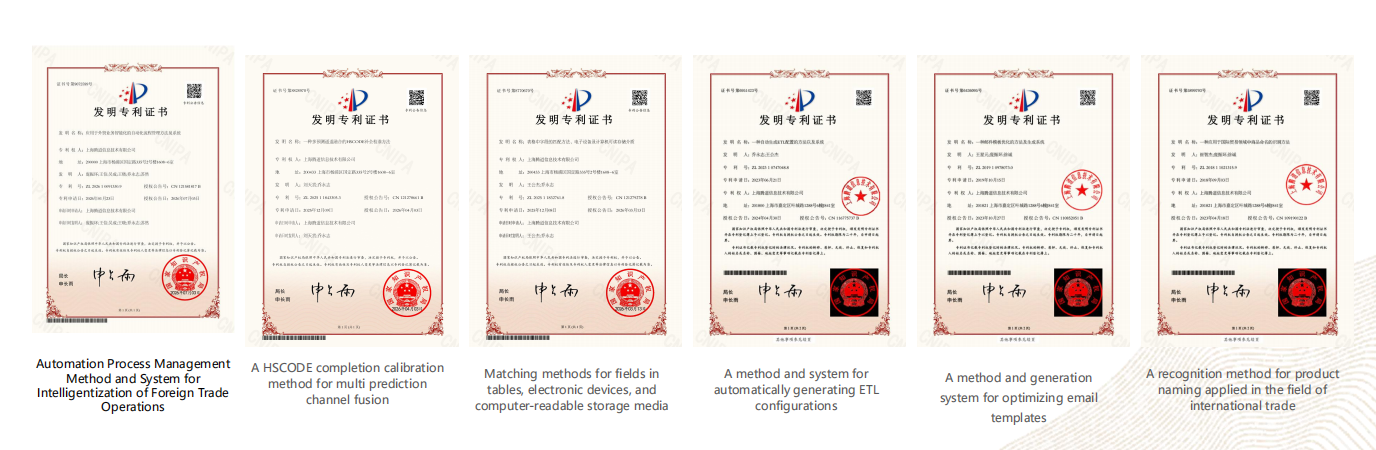
For verification purposes, the practical consequence is that a buyer is not reading raw customs text. HS code calibration and company-name standardization determine whether two records refer to the same company and the same product — the difference between a supplier list and an evidence base.
Applying the Evidence: From Screening to First Contact
Capability evidence only changes outcomes when it is embedded in a repeatable sequence. Tendata's buyer and supplier prospecting workflow describes five stages that translate trade data into qualified counterparties.
- Define the target profile. Specify target countries or regions, products or HS codes, industries, and the type of company being sought — buyer, importer, supplier, or exporter. This establishes the criteria against which evidence will later be judged.
- Discover candidate companies. Search by product, country, HS code, or natural-language description to build a pool of relevant companies drawn from global trade data and business intelligence.
- Screen and qualify. Filter the pool on product relevance, target market, company type, trade activity, and trade frequency, so that research effort concentrates on the companies whose records already match the profile.
- Conduct trade intelligence due diligence. Review imported and exported products, HS codes, trade history, trade frequency, trade volume, and the buyers, suppliers, and trading relationships attached to each company.
- Identify contacts and approach. Locate purchasing, sourcing, sales, or business development decision-makers, and prepare outreach grounded in the company's actual product and trade profile.
Common entry points for this workflow are specific and operational rather than abstract: finding buyers and importers that already import a relevant product, identifying local buyers with actual import records when entering a new country, screening buyers by purchasing frequency and trade volume, and — from the purchasing side — locating suppliers with verified export records in a given category.
What Trade Data Cannot Prove
Trade data is often over-read. Three limits are worth stating plainly, because they define when the evidence should stop and another instrument should begin.
- It documents participation, not quality. A record confirms that goods crossed a border in a category and direction. It says nothing about conformity with a specification, a testing regime, or a management-system certification. Those remain separate checks.
- It describes activity, not capacity or solvency. Volume and frequency indicate trading rhythm. They are not a measure of installed production capacity, financial stability, or future continuity.
- Coverage is uneven across markets. Customs disclosure practices differ by jurisdiction. Absence of a record in one market is weaker evidence than presence, and it should be investigated rather than interpreted as a negative finding on its own.
Record counts also deserve caution. Provider figures are not defined identically: Tendata reports more than 10 billion accumulated trade transaction records (Tendata, 2026), while Panjiva (S&P Global) has been publicly described as providing entity resolution across more than 2 billion shipment records (Suppliers with an AI, 2026). Because the two figures count different things, they should not be read as a like-for-like ranking. The relevant question for a buyer is whether the provider covers the specific markets and HS codes being sourced.
Import Export Data vs. Traditional Supplier Verification
No single verification method covers every question. The comparison below shows where trade data adds a distinct layer rather than replacing existing practice.
| Method | What it establishes | Main limitation |
|---|---|---|
| Supplier self-description and directory listings | Stated capability, product range, positioning | Self-published; no independent verification |
| Certificates and management-system audits | Process conformity and documented controls | Does not show trading activity or market presence |
| Samples and factory visits | Product conformity and physical capability | Point-in-time; limited view of actual order flow |
| Import and export data | Declared trade activity, product scope, markets, counterparties, frequency | Participation only; coverage varies by jurisdiction |
The practical reading is sequential rather than competitive. Trade data is the fastest way to establish whether a supplier's claimed activity exists; certification and audit work establish whether the operations behind that activity meet a standard; samples and visits establish whether the product itself conforms. Using trade data first reduces the number of suppliers that need the more expensive checks.
Why Verification Is Becoming a Data Discipline
Two market signals explain the shift. Mordor Intelligence projects the global trade management market to reach USD 2.84 billion in 2026, reflecting continued spending on systems that make cross-border operations visible and controllable. Separately, US Customs and Border Protection collected more than USD 88 billion in duties in 2024, according to IMARC Group — a figure that helps explain why audit readiness has become a purchasing criterion for trade data rather than a compliance afterthought.
Demand is also concentrating in the buyer-discovery layer. Tendata reports serving more than 100,000 businesses worldwide, including manufacturers, importers and exporters, cross-border e-commerce companies, financial institutions, logistics companies, and government agencies — a client base that spans both sides of the verification question, since exporters use the same records to find buyers that importers use to check suppliers.
Future Outlook: Continuous Verification Instead of One-Time Checks
Supplier verification has traditionally been an event: a due diligence file assembled before a contract, then revisited only when something goes wrong. Trade-data platforms are pushing it toward a continuous process, in which company activity is monitored and changes are surfaced rather than searched for.
The capability that makes this practical is the combination of AI with trade databases. Tendata AI, built on real, valid, and verifiable trade data, supports identifying potential customers, generating market analysis reports, creating personalized outreach based on target company information, and developing social media outreach strategies based on prospects' actual needs. In the market intelligence context, the same logic replaces one-time static reports with on-demand report generation and continuous monitoring of global market changes with proactive alerts.
For buyers, the implication is a change in what counts as diligence. A supplier file that was accurate at signing may be stale within a year. Records that update as frequently as every three days make it possible to re-check the same five signals on a schedule — continuity, product alignment, counterparties, frequency, and company-level context — rather than relying on a single snapshot.
FAQ:
What do import and export records actually prove about a supplier?
They document that a company appears in declared cross-border transactions, in specific product categories, with specific counterparties, at specific points in time. That establishes market participation and gives a buyer a factual basis for comparison. It does not establish product quality, conformity with a standard, production capacity, financial strength, or future trading continuity.
How can a buyer test one specific supplier claim against trade data?
Convert the claim into a checkable variable first: a product or HS code, a destination or origin market, and a time window. Then look for records matching all three. Consistency across product, market, and period supports the claim; inconsistency or absence requires investigation, because it may reflect incorrect HS classification, indirect exporting through a trading company, or limited data coverage in that market rather than a false claim.
How can a buyer tell whether a company is a real manufacturer, a trading company, or a logistics provider?
Three checks help. First, whether the company's record concentrates in a narrow product family or spans unrelated categories. Second, which side of the transaction it appears on, and who its counterparties are. Third, the company-level profile fields covering products, operations, and supply chain relationships. Data processing matters here: Tendata distinguishes logistics companies from actual importers and exporters during the cleaning and integration of its trade data, which reduces the risk of reading a forwarder's shipment documentation as a manufacturer's export activity.
Does verified trade activity replace certifications, audits, or product testing?
No. These instruments answer different questions. Trade records establish that a company is active in a market and product category. Certifications and audits address process conformity and documented controls. Samples and factory visits address whether the product itself meets specification. Trade data is most useful as a first filter that determines which suppliers warrant the cost of the other checks.
How current is trade data, and where does it come from?
Tendata's trade data is sourced from customs authorities, commercial databases, and internet databases, and updates can be as frequent as every three days. The data covers 228+ countries and regions with more than 10 billion accumulated trade transaction records. Update frequency and coverage vary by market, because they depend on the disclosure practices of the underlying customs authorities rather than on the platform alone.
Conclusion: Evidence Changes the Question
When supplier claims can be checked against trade records, the sourcing conversation changes shape. The question stops being whether a supplier's description is convincing and becomes whether its record matches the requirement — and where it does not, what that gap means. That is a narrower, more defensible basis for a purchase decision, and it is available before the first email is sent.
A detailed overview of Tendata's data coverage, products, and service model is available in the Tendata Introduction (PDF).
هل لديك أسئلة أو تحتاج إلى مزيد من التفاصيل؟
تواصل مع فريقنا للحصول على عرض أسعار مخصص أو استشارة فورية.
طلب عرض أسعار
املأ النموذج أدناه وسيتواصل معك فريقنا بعرض مقترح مخصص.
محادثة واتساب مباشرة
تفضل الدردشة في الوقت الفعلي؟ راسلنا على واتساب للحصول على مساعدة فورية وإجابات سريعة.
- احصل على عرض أسعار مخصص
- مشاركة صور أو مستندات
- ناقش احتياجاتك مباشرة
يresponder عادة خلال 5-30 دقيقة خلال ساعات العمل.