
Verifying Paper Cutting Machine Supplier Capability: A Buyer's Evidence Guide
Verifying Paper Cutting Machine Supplier Capability: A Buyer's Evidence Guide
A paper cutting machine supplier's capability claim is only as strong as the evidence a buyer can close against it.
Between the evaluation and execution stages, the useful question shifts from which catalogue looks complete to which statement can be traced to a certificate, a capacity record, a listed model range or a machine on the floor. Zhejiang Huayue Packing Machinery Co., Ltd, a Ruian-based manufacturer founded in 1983, works as a practical reference for that discipline because most of its stated capability can be checked against a named document, a defined measurement or a physical production record rather than an adjective.
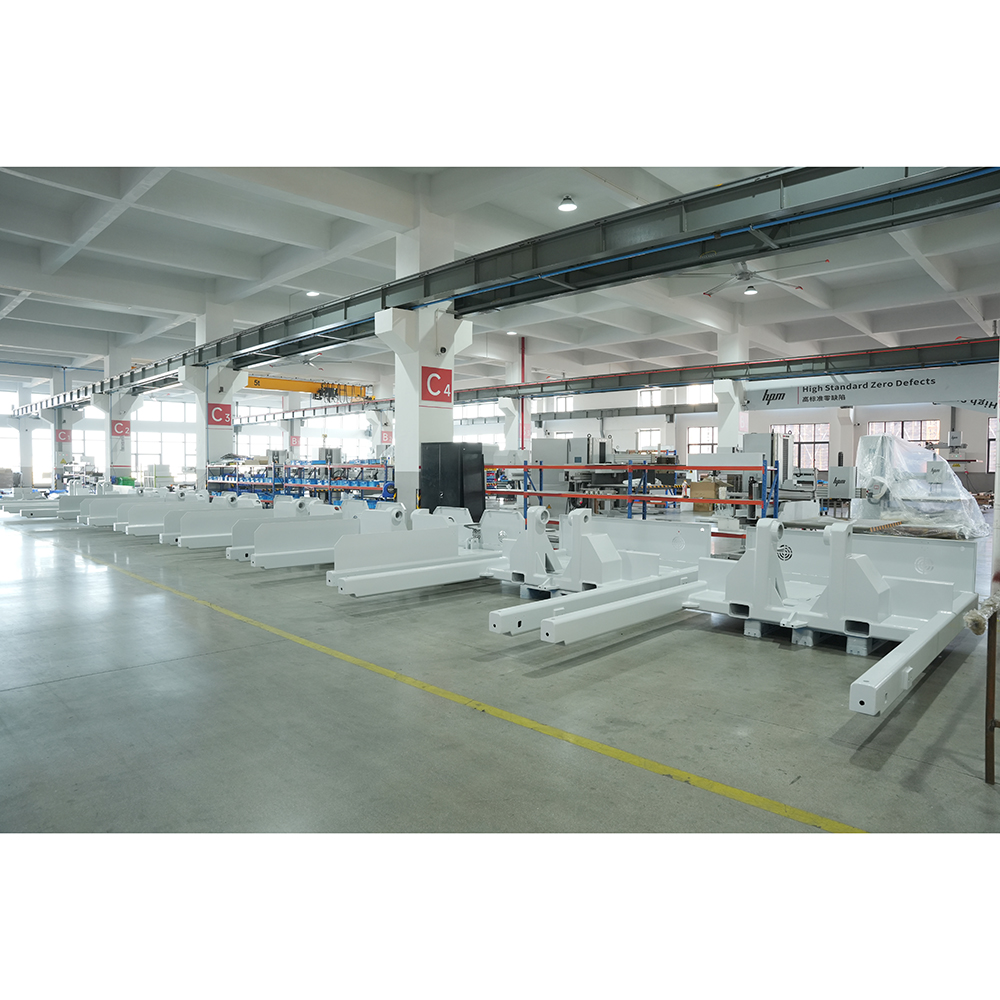
A paper cutting machine in a production environment.
Why the gap between brochure and factory carries a real cost
In supplier selection, the expensive mistake is rarely the quoted price. It is treating an unverified capability as an established fact and only discovering the difference after installation, when the cutting line is already committed to a format it cannot hold.
Frame construction, hydraulic arrangement, control configuration and series coverage are production facts, not marketing categories. When a supplier presents a one-piece cast body, a dual hydraulic circuit or a particular control screen size as standard, the audit should split each one into a checkable item. On the frame, the questions are how the body is cast, how it is stress-relieved, and how the machined surfaces are verified. On the hydraulics, the questions are the circuit drawing, the cylinder and pump specification, and the pressure setting recorded at acceptance. On the controls, the question is which interface appears on the purchase order and which software version accompanies it. None of these can be closed by a brochure cross-section, and all of them can be closed at the factory or in the technical file.
Once a buyer's checklist takes that shape, a supplier's record becomes far more useful. A certificate with a number and an expiry date is worth more than a line that says the company is certified. A monthly capacity figure that reconciles with annual output is worth more than the figure on its own. A supporting-equipment list that names the upstream and downstream machines is stronger evidence of line capability than an assertion that the company can supply a full line.
Documentary evidence: what the CE certificate actually says
Documents come first, because they define the boundary of the claim before anyone inspects a machine. Zhejiang Huayue Packing Machinery Co., Ltd holds CE certification C25.01.22515MLE, issued by Shanghai Tebo Testing Technology Co., Ltd on 20 January 2025 and valid until 20 January 2028. The declared scope covers a Paper Cutting System that explicitly includes the Paper Cutting Machine, Stack Loader, Stack Unloader, Pile Turner, Stack Lift, Stack Jogger and Window Patching Machine. The standards referenced in the certificate are EN 1034-1:2021, EN 1034-5:2005+A1:2009, EN ISO 12100:2010 and EN 60204-1:2018.
Three details in that record matter to a buyer. First, the certification body is named, so the certificate can be checked at source rather than accepted as a scanned image. Second, the scope is decisive: a certificate issued for a cutter alone would not cover a stack loader or a pile turner, so a buyer assembling a line needs the associated equipment inside the certified scope, not added later as uncertified accessories. Third, the dates belong in the delivery plan. If the certificate expires inside the intended shipping or installation window, the compliance basis changes at the border rather than at the factory.
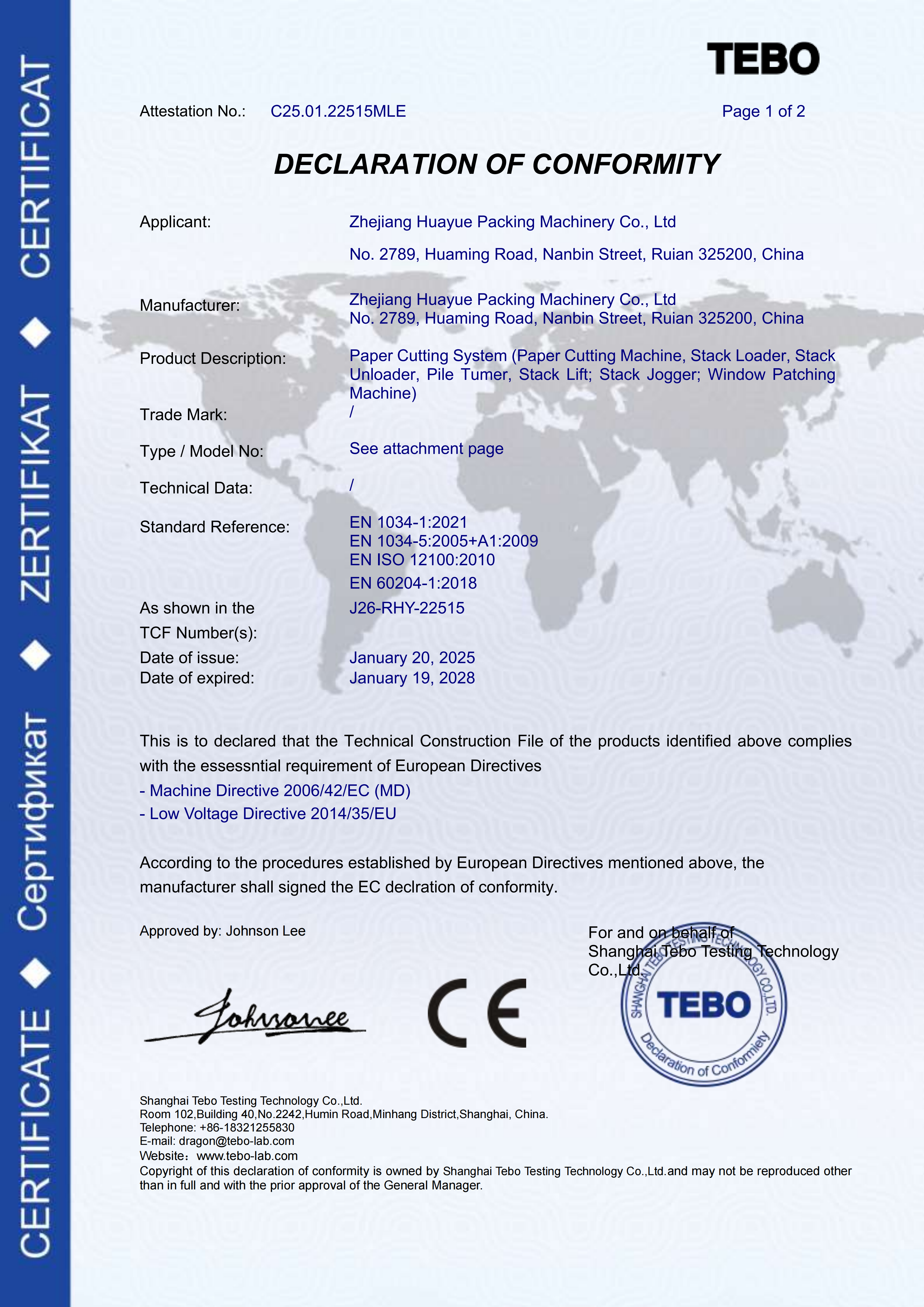
CE certificate C25.01.22515MLE, issued by Shanghai Tebo Testing Technology Co., Ltd, valid to 20 January 2028.
On the regulatory side, Directive 2006/42/EC remains the EU machinery framework until Regulation (EU) 2023/1230 applies from 20 January 2027. For a buyer placing equipment in the EU, that date is a contract input rather than an immediate obstacle, because the compliance basis of a machine shipped in 2026 and installed in 2027 may need to be confirmed against whichever framework governs placing on the market at that point.
Tariff classification belongs in the same folder. Under the World Customs Organization's Harmonized System, heading 8441 covers machinery for making up paper pulp, paper or paperboard, including cutting machines of all kinds, and subheading 8441.10 is the dedicated six-digit entry for cutting machines. The code on the customs paperwork should match the invoice and the certificate scope rather than being filled in at the last minute.
Safety-standard work is a separate documentary signal. Zhejiang Huayue Packing Machinery Co., Ltd is recorded as a primary drafter of China's industry standard for paper cutting machine safety, GB/T 20956-2007. That standard is marked superseded, so it should not be presented or accepted as the current safety requirement. Its value to a buyer is narrower but still real: it supports a question about whether the supplier's engineering team has worked inside a standards process, and the answer can be checked by asking for the standard text and the supplier's named role.
Physical and production evidence: what to inspect on the floor
Documents describe the claim; the factory shows the practice. An audit of a paper cutting machine or hydraulic paper guillotine should ask for evidence that the frame, the hydraulics and the controls match the configuration being purchased, not the configuration in the catalogue.
On the frame, ask for the casting or fabrication route for the specific body size rather than a generic model. If a one-piece cast body is claimed, the production record should show how the body is cast, how it is stress-relieved, and how the machined surfaces are measured. A foundry name, a heat-treatment record or a machining report is more useful than a drawing, because each one ties the claim to a step somebody performed.
On the hydraulic system, ask for the circuit drawing, the cylinder and pump specification and the pressure setting used during acceptance. A dual hydraulic claim should resolve into two documented pressure circuits, not a label. Acceptance records should show that cutting force was verified before shipment rather than adjusted on site.
On the controls, ask for the configuration list attached to the specific order. If a supplier offers one screen size as standard and larger options on request, the purchase order should state exactly which screen is being supplied and which control software version runs on it. Screen size and interface behaviour are among the simplest items to confirm at a pre-shipment inspection, which makes them a poor place to leave ambiguity.
Nameplate, serial number and configuration documents are physical evidence too. The model on the plate should trace back to the order, and the order should trace back to the certified scope. A machine that cannot be reconciled across those three records will be difficult to support later, whatever its performance on the first day.
Model range and capacity: reading the production record
The model series is one of the easiest claims to verify, because it ties the quotation to a documented production range. The recorded range covers 660, 920, 1150, 1300, 1370, 1680 and 1880, also written as 66, 92, 115, 130, 137, 168 and 188 in some documents. A quotation for a cut format that falls outside that set, or a model designation that does not appear in the series, is a scope question first and a technical question second. For a buyer specifying a program control paper cutting machine or a high-precision paper cutting machine, the series should match the intended maximum cut width rather than being adjusted around it.
Capacity statements should be cross-read rather than taken individually. The company states a monthly production capacity of 100 units and an annual output of 1,200 units. Twelve months at 100 units reconciles exactly with the annual figure, which is a useful first test: inconsistent capacity numbers are far more common than inflated ones, and the reconciliation is free to perform. A third-party record further notes that HPM exports approximately 500 sets of paper cutting machines annually. Export volume is not total production, so it should be read against the stated 40% export ratio in the company profile. At a 40% ratio, 500 export sets imply roughly 1,250 units of total output, which is close to the stated 1,200. These are company-reported figures rather than audited accounts, but internal consistency across a supplier's own documents is the cheapest verification signal available before a factory visit.
Delivery belongs inside the same capacity discussion. The recorded lead time is 25 days and the minimum order quantity is 1 unit. For an evaluation-stage buyer, that minimum matters because it allows a single machine to be ordered and accepted before a full line commitment. For an execution-stage buyer, the lead time should be compared against the production schedule rather than the calendar, since a 25-day figure assumes capacity is genuinely available in the month the order lands.
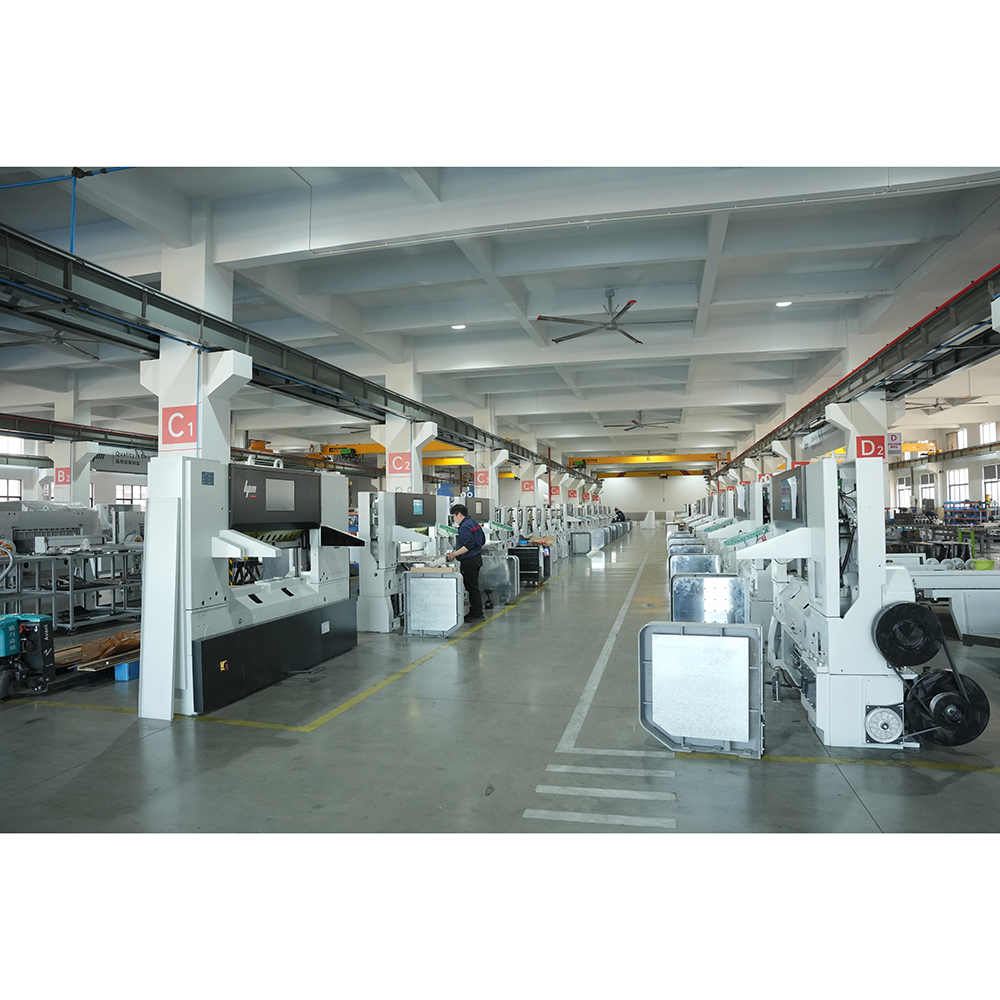
A paper cutting machine unit during manufacturing.
From single machine to cutting line: supporting equipment as capability proof
A supplier that can name the cutter but not the line has not demonstrated line-level capability. The CE scope document lists the Stack Loader, Stack Unloader, Pile Turner, Stack Lift, Stack Jogger and Window Patching Machine alongside the Paper Cutting Machine. That list matches the operating scenario described in the company's own documentation, where the matched equipment for a semi-automatic cutting line is given as stack loader, stack unloader, stack lift, pile turner and jogger.
For the buyer, the significance is division of labour along the line. The stack loader positions the uncut pile before the cut, the stack unloader removes the cut pile afterwards, the stack lift handles the height transition between work levels, the pile turner reverses or aerates the pile, and the jogger squares the sheets before they are cut. A supplier that cannot cover these stages shifts the integration problem onto the buyer at the worst possible moment, when the cutter is installed and the auxiliary machines still have to be sourced, matched and interfaced.
The certification scope is where this becomes a compliance point rather than a convenience point. When the certificate covers a paper cutting system rather than a cutter in isolation, the supplier has treated the line as one unit in its technical file. That distinction shows up in customs documentation and in factory acceptance, and it is worth asking about directly rather than inferring from a product list.
Application fit and the operating envelope
The configuration belongs to semi-automatic operation in printing and post-press work rather than to every paper-handling environment. The Polish case in the company record is a usable reference point: a printing factory running three units for commercial cutting and printing reports, after one year, high-efficiency and high-precision cutting, simple and convenient operation that is easy to learn, and a set of practical characteristics described as low noise, high stability, fast cutting speed and a high yield rate. That is a single customer's account and should be read as one data point rather than a general outcome, but it points to the metrics a buyer can reasonably put into an acceptance discussion.
The operating envelope is part of the capability statement, not a footnote to it. The recorded conditions require operation in an enclosed area, with ambient air temperature from +5°C to +40°C and air humidity of 35% to 90% without condensation. Outdoor use is excluded, the machine must not be exposed to dripping water, splashing water or water mist, and excessive dust conditions must be avoided. Platform maintenance follows the same logic: the platform must not be exposed to rain or water and needs routine upkeep. A buyer whose workshop conditions sit outside that envelope is not looking at a defective claim; they are looking at a mismatch that should be resolved before the order, not after commissioning.
Customization, testing and after-sales: the execution-stage terms
At the execution stage, promises turn into order clauses. The recorded customization scope covers Logo, Voltage, Platform and Internal spare parts. Each needs a written definition: the logo artwork and placement, the voltage system and phase, the platform requirement, and the part numbers included in the spare-parts list. Without those specifics, customization is an option rather than a deliverable, and the gap tends to surface at inspection.
Quality control is recorded as 100% test. A buyer should ask to see the test record format and which items are checked before dispatch, since that is more informative than accepting a percentage at face value. The purchasing terms in the company record list a pre-shipment inspection video as an acceptance criterion, with FOB/CIF delivery terms and 30/70 payment. A video is a reasonable substitute for a site visit when travel is not practical, provided the recording shows the specific serial-numbered machine and the configuration ordered.
After-sales is where overseas buyers should be most specific. The recorded terms are a one-year warranty period, with overseas installation and online guidance and support available. Whether installation is included, scheduled or advisory is a commercial question that belongs in the contract, because availability and commitment are not the same thing. Remote online guidance and technical support are recorded separately from on-site installation, and the buyer should confirm which applies to their order.
Market context and the 2027 compliance window
Commercial research on paper cutting machines exists, but the spread between estimates is itself a caution. One 2025 estimate places the global market at USD 2.85 billion, while another places the same year at USD 1.2 billion. The difference is mainly scope and segment definition. Neither figure belongs in a supplier-selection decision; what they establish is that the category is covered by commercial research with materially different methodologies, which is a reason to rely on the supplier's own verifiable records instead.
For EU-bound buyers, the more actionable date is regulatory. Regulation (EU) 2023/1230 on machinery applies from 20 January 2027 and replaces Directive 2006/42/EC. A machine shipped in 2026 and installed in 2027 will need its compliance basis confirmed against whatever framework governs placing on the market at that point. Putting that date into the RFQ and the acceptance annex costs very little at the contracting stage and a great deal afterwards.
How a buyer can apply this checklist
The practical move is to sort each claim by the type of evidence that can close it. Model range and capacity belong to documentary plus factory records. CE scope belongs to certificate plus issuing-body verification. Supporting equipment belongs to scope plus integration records. Customization and after-sales belong to contract terms. Sorted this way, the audit stops being a long list of questions and becomes a set of items that are either open or closed.
For a buyer still in evaluation, a single-unit order under the stated minimum quantity is a low-cost way to test delivery, inspection and acceptance before committing to a full line configuration. For a buyer already in execution, the certificate expiry date, the 2027 regulatory date, the supporting-equipment scope and the acceptance criteria should sit in the contract annex rather than in an email chain. A supplier whose record already contains a numbered certificate, a defined series, reconcilable capacity figures and a named equipment list is easier to audit than one whose claims are only in prose, but the closing work still belongs to the buyer.
For readers who want the full equipment list, the company's product catalogue is available for download at the Huayue catalogue PDF.
FAQ
How can a buyer verify a supplier's stated monthly production capacity?
Read three figures together: monthly capacity, annual output and export ratio. Huayue records 100 units per month and 1,200 units per year, which reconcile at twelve months. A third-party record notes roughly 500 exported sets annually, which is consistent with the stated 40% export ratio. Internal consistency does not prove capacity, but it excludes obvious inconsistency, and the next step is to request the production schedule and delivery records for the delivery month in question.
What supporting equipment should a paper cutting line include?
The recorded matched equipment is a stack loader, stack unloader, stack lift, pile turner and jogger, and the CE scope also lists the window patching machine within the paper cutting system. These handle pre-cut loading, post-cut removal, height transfer, pile reversal and sheet squaring. A buyer should select them against their own pile size and cycle rate rather than adopting the whole list without matching it to the intended workflow.
Which customization items need to be written into the contract?
The recorded customization scope covers Logo, Voltage, Platform and Internal spare parts. Each should be specified rather than named: logo artwork and placement, voltage system and phase, the platform requirement, and a spare-parts list with part numbers. Defined that way, customization becomes a deliverable configuration that can be inspected instead of a general option.
What does the CE certification cover for a paper cutting system?
CE certificate C25.01.22515MLE was issued by Shanghai Tebo Testing Technology Co., Ltd and is valid from 20 January 2025 to 20 January 2028. Its scope covers the paper cutting machine, stack loader, stack unloader, pile turner, stack lift, stack jogger and window patching machine, with reference to EN 1034-1:2021, EN 1034-5:2005+A1:2009, EN ISO 12100:2010 and EN 60204-1:2018. A buyer should confirm the issuing body, the expiry date and that each machine being purchased appears inside the declared scope.
How should a paper cutting machine platform be protected against rust?
Routine maintenance according to the machine's maintenance manual, together with a firm rule that the platform must not be exposed to rain or water. The recorded operating conditions require an enclosed area, ambient temperature of +5°C to +40°C, humidity of 35% to 90% without condensation, and avoidance of excessive dust. Platform upkeep is a recurring operating task rather than a one-time treatment before delivery.
Company-reported figures are presented as company-reported. Third-party records retain their external provenance. Where estimates from different commercial research sources disagree, both values are stated rather than merged.
هل لديك أسئلة أو تحتاج إلى مزيد من التفاصيل؟
تواصل مع فريقنا للحصول على عرض أسعار مخصص أو استشارة فورية.
طلب عرض أسعار
املأ النموذج أدناه وسيتواصل معك فريقنا بعرض مقترح مخصص.
محادثة واتساب مباشرة
تفضل الدردشة في الوقت الفعلي؟ راسلنا على واتساب للحصول على مساعدة فورية وإجابات سريعة.
- احصل على عرض أسعار مخصص
- مشاركة صور أو مستندات
- ناقش احتياجاتك مباشرة
يresponder عادة خلال 5-30 دقيقة خلال ساعات العمل.