
Verifying Safety Clear Film Specs: SF12 and SF02 Compliance
Safety clear film is specified for a narrow purpose: holding glass in place and adding a protective transparent layer without changing how the glazing looks. For buyers, the qualification decision is therefore rarely about appearance. It is about which document proves which claim — and about whether the UV, IR and VLT numbers on a specification sheet are being read as marketing descriptors or as performance evidence.
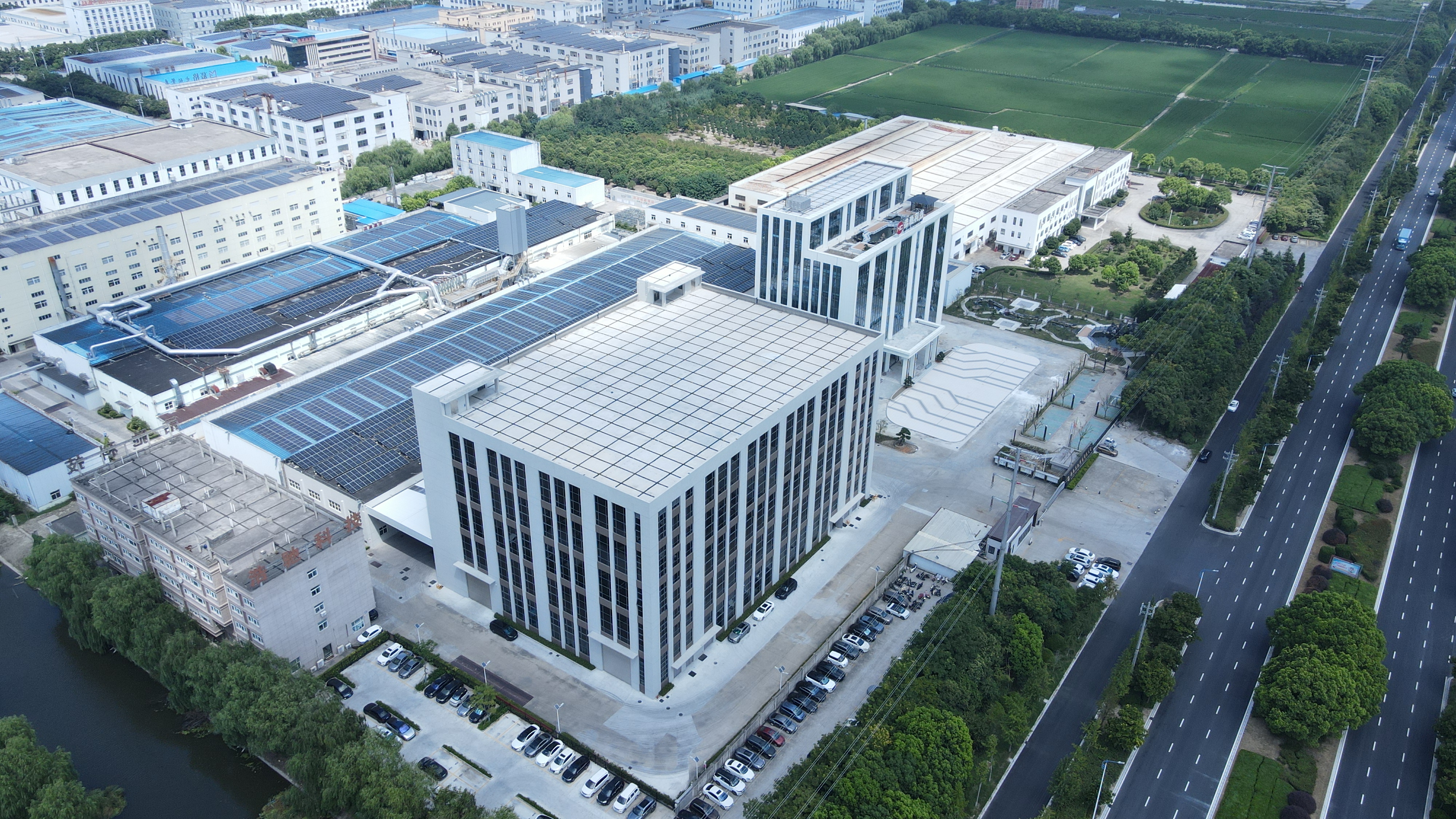
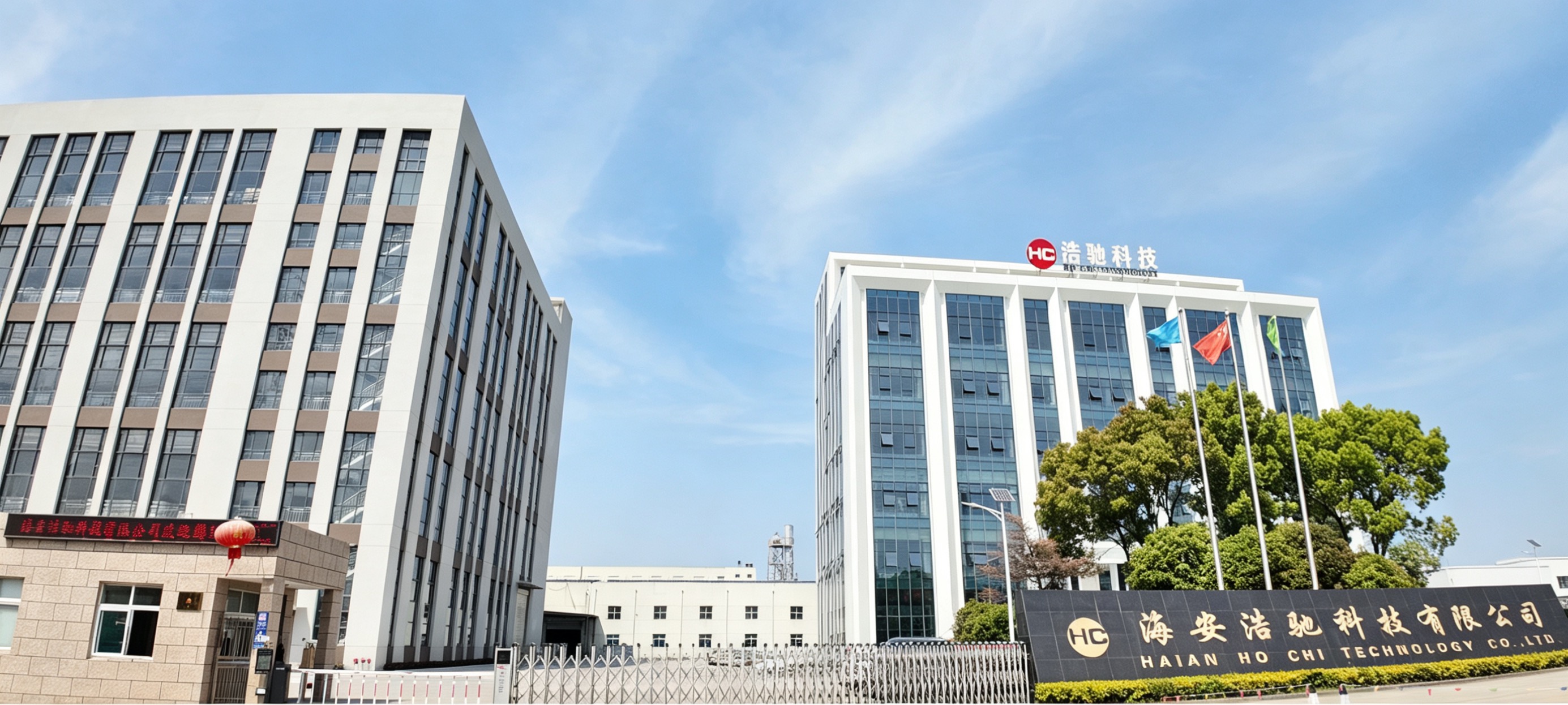
HOCHI PPF & Window Film, the brand of Haian Ho Chi Technology Co., Ltd. — a functional film manufacturer based in the Haian Economic and Technological Development Zone, Nantong City, Jiangsu Province, China, founded in 2009 — lists two safety clear architectural films in its published range: SF02 and SF12. Both are classified as SAFETY CLEAR architectural film built on optical grade PET, both carry the descriptions SECURITY PROTECT and STRONG ADHESIVE, and both declare the same optical values: VLT 90%, IR cut 10%, UV rejection 88%, clear color, and a six-year quality warranty. The declared difference between them is thickness: 1PLY 2.0 mil for SF02 and 1PLY 12.0 mil for SF12.
This article explains how a buyer can qualify SF12 and SF02 using the specification data that is genuinely available, why a manufacturer specification sheet and a compliance certificate are not interchangeable, and what to ask when UV, IR and VLT performance is the primary qualification evidence.
1. What "Safety Clear Film" Actually Commits a Supplier To
In window film terminology, a safety clear film is a transparent PET-based film with an adhesive system strong enough to be specified for glass retention and surface protection rather than for solar control. The product data for SF02 and SF12 supports that reading directly: both are listed under the product type SAFETY CLEAR, both are made of optical grade PET film, both are assigned to the construction industry and architectural window film category, and both are described with the attributes SECURITY PROTECT and STRONG ADHESIVE.
That classification creates three separate qualification obligations, and buyers frequently collapse them into one:
- Optical declaration — the film's declared VLT, IR cut and UV rejection values.
- Physical declaration — thickness, ply structure, material, and the adhesive claim behind strong adhesive.
- Verification — the test report, standard reference, or certificate that converts a declaration into evidence.
The published HOCHI data covers the first two completely for SF02 and SF12. The third depends on documents the buyer must request, which is the central point of this article.
2. The Verified Specification Set for SF02 and SF12
The specification lines below are the available declared data for both models. Every value is reproduced as published; nothing has been estimated or rounded.
| Attribute | SF02 | SF12 |
|---|---|---|
| Product type | SAFETY CLEAR | SAFETY CLEAR |
| Thickness (Mil) | 1PLY 2.0 | 1PLY 12.0 |
| Visible light transmission (VLT) | 90% | 90% |
| Infrared cut (IR cut) | 10% | 10% |
| UV rejection | 88% | 88% |
| Color | CLEAR | CLEAR |
| Quality warranty | 6 Year | 6 Year |
| Declared attributes | SECURITY PROTECT / STRONG ADHESIVE | SECURITY PROTECT / STRONG ADHESIVE |
| Material | Optical grade PET film | Optical grade PET film |
| Applicable industry | Construction industry and architectural window film | Construction industry and architectural window film |
Two observations follow immediately from this table. First, SF02 and SF12 are optically identical in the published data — a buyer choosing between them is choosing a thickness and structural class, not a heat-rejection or UV-rejection performance level. Second, both films carry a six-year quality warranty rather than the longer 7–10 year warranty period associated with the company's advanced nano-ceramic and sputter-based automotive films.
3. Specification Sheet vs Compliance Certificate: What Each Document Proves
A manufacturer specification sheet records what the supplier declares about a product. It is the correct document for comparing models, confirming ply structure, and setting the baseline for a purchase order. It is not, by itself, independent verification: a specification sheet does not tell the buyer which standard was applied, which sample was tested, which laboratory performed the work, or whether the result applies to the same production batch.
A compliance certificate or third-party test report answers those different questions. To be usable in a qualification file, it should identify the standard or test method, the testing organization, the sample identification, the test conditions, and the date of issue. Without that structure, a document may still be genuine but will not be defensible in a project submittal or a warranty dispute.
The standards landscape for safety and solar films gives buyers a concrete reference point. The International Window Film Association publishes a Visual Quality Standard that requires window film inspection from 6 feet (approximately 2 meters) under natural daylight — this governs appearance and workmanship, not strength. Separately, ASTM D882 is the method identified as mandatory for measuring tensile strength, break strength and elongation of safety films under IWFA policies, which makes it a relevant reference when a supplier is asked to evidence the mechanical behavior of a thick safety film.
4. Reading VLT 90%, IR Cut 10% and UV Rejection 88% Correctly
Each of the three headline values on SF02 and SF12 has a specific meaning, and each is easy to misinterpret when the film is compared with a solar control product.
VLT 90%
A VLT of 90% means the film retains most visible light and remains close to optically invisible on glass. That is the intended behavior for a safety clear film applied to storefronts, office partitions, or residential glazing where the appearance of the glass must not change. The trade-off is explicit: at 90% VLT the film provides almost no glare reduction and no privacy effect. Buyers who need glare control or privacy should be evaluating a different product line, such as the silver reflective or sputter films in the same portfolio, where declared VLT values are far lower.
IR Cut 10%
An infrared cut of 10% is a modest value and should be read as such. It signals that SF02 and SF12 are not heat-rejection films. For context, within the same published range, films such as SILVER/BLUE 15, SILVER/GREEN 10 and SILVER 5% declare IR cut values of 90%, 90% and 95% respectively. A buyer who selects SF02 or SF12 expecting summer heat-load reduction is selecting against the specification.
UV Rejection 88%
An 88% UV rejection value means the film is not claiming to be a near-total UV barrier. Numerous films in the same published range — including CLASSIC35P, SV0595 and the silver reflective architectural films — declare 99% UV rejection. The difference matters where interior fading control, artwork protection or UV-sensitive materials are part of the project brief. For a safety-first specification, 88% is a declared attribute to be accepted knowingly, not a value to be compared loosely with 99% products.
Thickness: 2.0 mil vs 12.0 mil
The gap between SF02 and SF12 is a factor of six in declared thickness, and it is the substantive difference between the two models. For reference, technical comparison guidance places paint protection film thickness typically in the 6.5–10 mil range, a band chosen to balance impact resistance against installation flexibility. SF12's declared 12.0 mil sits above that band, which is consistent with a glass-retention application rather than a surface-wear application.
That said, thickness alone is not proof of a performance class. The available HOCHI data does not publish an impact, penetration or glass-retention test result for SF02 or SF12. A buyer who needs to demonstrate a specific safety class in a submittal must obtain the corresponding test documentation rather than inferring performance from the mil value.
5. Questions to Ask When UV, IR and VLT Are the Primary Evidence
When a purchase decision rests on declared optical performance, the qualification conversation should be structured. The following questions convert a specification sheet into a verifiable file:
- Which test method produced the VLT, IR cut and UV rejection figures? The method, and not only the number, determines whether two suppliers' values are comparable.
- Over which infrared wavelength range was the IR cut value measured? A single percentage without a stated band cannot be compared across suppliers or instruments.
- Was the sample taken from the same ply structure and thickness as the purchased article? For SF02 and SF12 this matters, because they share optical values but differ by a factor of six in thickness.
- Which document supports the "strong adhesive" description? Adhesion claims should be tied to a named method and a recorded result, not to a product attribute label.
- Is the visual quality reference the IWFA Visual Quality Standard? If so, confirm that inspection at 6 feet under natural daylight is the agreed acceptance criterion for appearance.
- Does the mechanical evidence reference ASTM D882 for tensile strength, break strength and elongation? This is the method identified as mandatory for safety film mechanical testing under IWFA policies.
- Has a glass compatibility or thermal stress assessment been performed for the specified glass type? This is a documented requirement before installing film on certain laminated, insulated or treated glass.
- What is the warranty scope and duration in writing? SF02 and SF12 are declared with a 6-year quality warranty; the buyer should confirm the conditions under which it applies.
6. Application Fit: Where Safety Clear Film Belongs
The published application profile for HOCHI safety clear architectural film points to glazing where appearance preservation and glass protection are the priorities. In practice that covers commercial storefront and curtain wall glazing where the glass must remain visually unchanged, interior office partitions, and residential glazing where glass replacement would be disruptive and a transparent retrofit is preferred.
The same qualification logic extends to the automotive side of the portfolio. HOCHI lists two automotive security films, NEX4MIL05 and NEX8MIL05, both classified as GLUE TINT SECURITY FILM with a declared STRONG ADHESIVE attribute, thicknesses of 2PLY 4.0 mil and 2PLY 8.0 mil respectively, VLT 5%, IR cut 11%, UV rejection 99%, and a 5-year quality warranty. The structural parallel with SF02 and SF12 is clear: thickness and adhesive behavior, not heat rejection, define the product class. A buyer qualifying a safety film for either a building or a vehicle is asking the same core question — what evidence supports the thickness and adhesion claim — even though the optical values are different.
One installation-stage boundary applies to architectural film generally and should be part of the qualification checklist for SF02 and SF12. Architectural window film should be selected according to glass type, building orientation, solar exposure, privacy requirements and local regulations, and a glass compatibility or thermal stress assessment is recommended before installing film on certain laminated, insulated or treated glass. Even for a clear, low-IR film, the glass itself is part of the system.
7. Comparison with Traditional and Advanced Film Constructions — and the Honest Limits
Film constructions across the HOCHI range differ in ways that are documented at the portfolio level. Compared with traditional dyed window film and low-grade PVC/TPH film, the company's advanced constructions use nano-ceramic and magnetron sputtering technology instead of chemical dyes, and 100% pure aliphatic TPU instead of PVC/TPH for paint protection. The published comparison states that infrared heat rejection improves by 50%–75% with rejection rates up to 95% or higher, that UV rejection reaches 99.9% in those advanced constructions, that service lifespan extends by 3–5 times with a 7–10 year warranty versus 1–2 years, that maintenance requirements fall by roughly 50%, and that total lifecycle cost is over 60% lower despite an initial purchase cost 20%–30% higher.
Those figures describe the advanced nano-ceramic, sputter and aliphatic TPU product families. They should not be transferred onto SF02 and SF12. The honest comparison for a buyer is the following:
| Dimension | SF02 / SF12 (published data) | Advanced solar control / TPU constructions (published data) |
|---|---|---|
| Primary function | Safety clear / security protect | Heat rejection, UV protection, surface protection |
| IR cut | 10% | Up to 95%+ in sputter and silver constructions |
| UV rejection | 88% | 99% to 99.9% in advanced constructions |
| VLT | 90% (clear) | 5%–50% typical in tint and sputter lines |
| Declared warranty | 6 years | 7–10 years typical for advanced constructions |
| Thickness focus | 2.0 mil to 12.0 mil | 1.5 mil to 3.0 mil typical, 4.0–8.0 mil for security variants |
The boundary is straightforward and worth stating plainly: SF02 and SF12 are safety clear films, and their UV and infrared values sit below the portfolio's heat-rejection products. Selecting them for a cooling-load reduction objective would be a specification error. Their value lies in glass protection and appearance neutrality, and the qualification effort should be directed at thickness verification, adhesion evidence and glass compatibility rather than at solar performance.
A second limit concerns documentation depth. The published data for SF02 and SF12 provides declared values and product attributes; it does not include certificate identifiers or independent test reports. Where a project requires certificate-level evidence, that gap must be closed through a direct document request rather than through inference from the specification sheet.
8. Market Context: Why Spec Verification Is Becoming a Procurement Step
Film spend continues to grow, which raises rather than lowers the need for disciplined verification. The global automotive tinting film market is projected to reach USD 14.7 billion by 2033, according to Grand View Research. Within the protection segment, thermoplastic polyurethane dominates the paint protection film material category, valued at US$ 437.1 million in 2025 according to Business Research Insights. Volume growth on the demand side is documented as well: China's motor vehicle production exceeded 31 million units in 2024, which supports demand for cabin thermal management films.
These figures describe the automotive tinting and PPF categories, not the safety clear architectural film segment specifically, and they should be read with that scope in mind. What they indicate for procurement is a market in which more suppliers, more constructions and more declared performance numbers are competing for the same specification slots. In that environment, the differentiation between a supplier's declaration and a verifiable record becomes the buyer's main protection.
9. Future Outlook
Three shifts are plausible for safety clear film procurement over the next planning cycle. First, buyers are likely to require wavelength-banded IR reporting rather than single percentages, because a 10% IR cut value and a 95% IR cut value cannot be compared responsibly without a stated measurement band. Second, document packs — specification sheet plus test method plus sample identification plus warranty terms — are likely to become a standard attachment to purchase orders, particularly for glazing projects with submittal requirements. Third, glass compatibility assessment is likely to be treated as a pre-installation gate rather than an optional step, given the documented thermal stress risk on certain laminated, insulated and treated glass.
On the supply side, manufacturing transparency supports this direction. HOCHI operates a Class 1000 dust-free coating workshop covering 3,000 square meters, and the company reports a 133,333 m² factory, 220+ employees, a 100-engineer R&D team, more than 50 patents including 14 invention patents, and nine consecutive years as a national high-tech enterprise. Those are production-capability facts rather than performance proof for SF02 or SF12, but they are relevant when a buyer assesses whether a supplier can hold a specification consistently across repeat orders.
10. FAQ
What is the difference between SF12 and SF02?
The published difference is thickness. SF02 is a 1PLY 2.0 mil safety clear architectural film and SF12 is a 1PLY 12.0 mil safety clear architectural film. Both are made of optical grade PET, both declare VLT 90%, IR cut 10%, UV rejection 88%, clear color, a 6-year quality warranty, and the attributes SECURITY PROTECT and STRONG ADHESIVE. Buyers are therefore choosing between two thickness classes with identical declared optical performance.
Is a manufacturer specification sheet enough to qualify a safety clear film?
A specification sheet is sufficient for comparing declared values, confirming ply structure, and defining a purchase order. It is not sufficient as independent verification, because it does not identify the standard applied, the testing organization, the sample, the test conditions, or the issue date. Where a project requires verified evidence, the specification sheet must be supported by a test report or certificate that contains those elements.
What do VLT 90%, IR cut 10% and UV rejection 88% mean for SF02 and SF12?
VLT 90% means the film preserves most visible light and stays close to invisible on glass, which suits appearance-sensitive glazing but provides no meaningful glare or privacy control. IR cut 10% means the film is not a heat-rejection product; other films in the same published range declare IR cut values of 88% to 95%. UV rejection 88% means the film does not claim near-total UV blocking; several films in the same range declare 99%. Together these values describe a safety clear film rather than a solar control film.
Which standards should be referenced when requesting test evidence for safety film?
Two references are relevant. The IWFA Visual Quality Standard requires window film inspection from 6 feet (approximately 2 meters) under natural daylight and governs appearance and workmanship. ASTM D882 is identified as the mandatory method for measuring tensile strength, break strength and elongation of safety films under IWFA policies, making it the appropriate mechanical reference to request. Buyers should also confirm the test sample corresponds to the purchased thickness, which differs between SF02 and SF12.
Can SF02 or SF12 replace a heat rejection film?
No, based on the published values. With an IR cut of 10%, SF02 and SF12 do not deliver the infrared rejection required for cooling-load reduction. Films in the same range such as SILVER/BLUE 15, SILVER/GREEN 10 and SILVER 5% declare IR cut values of 90%, 90% and 95%. For a combined requirement, the correct approach is to separate the safety function from the solar control function and specify each against its own performance evidence rather than assigning both duties to one film.
The published HOCHI window film specification document, which carries the specification lines for the film range including the safety clear models, can be accessed and downloaded here: WINDOW FILM HC SPECIFICATIONS (PDF).