
Verifying Schuko Socket 6765's CE Certificate for EU Tenders
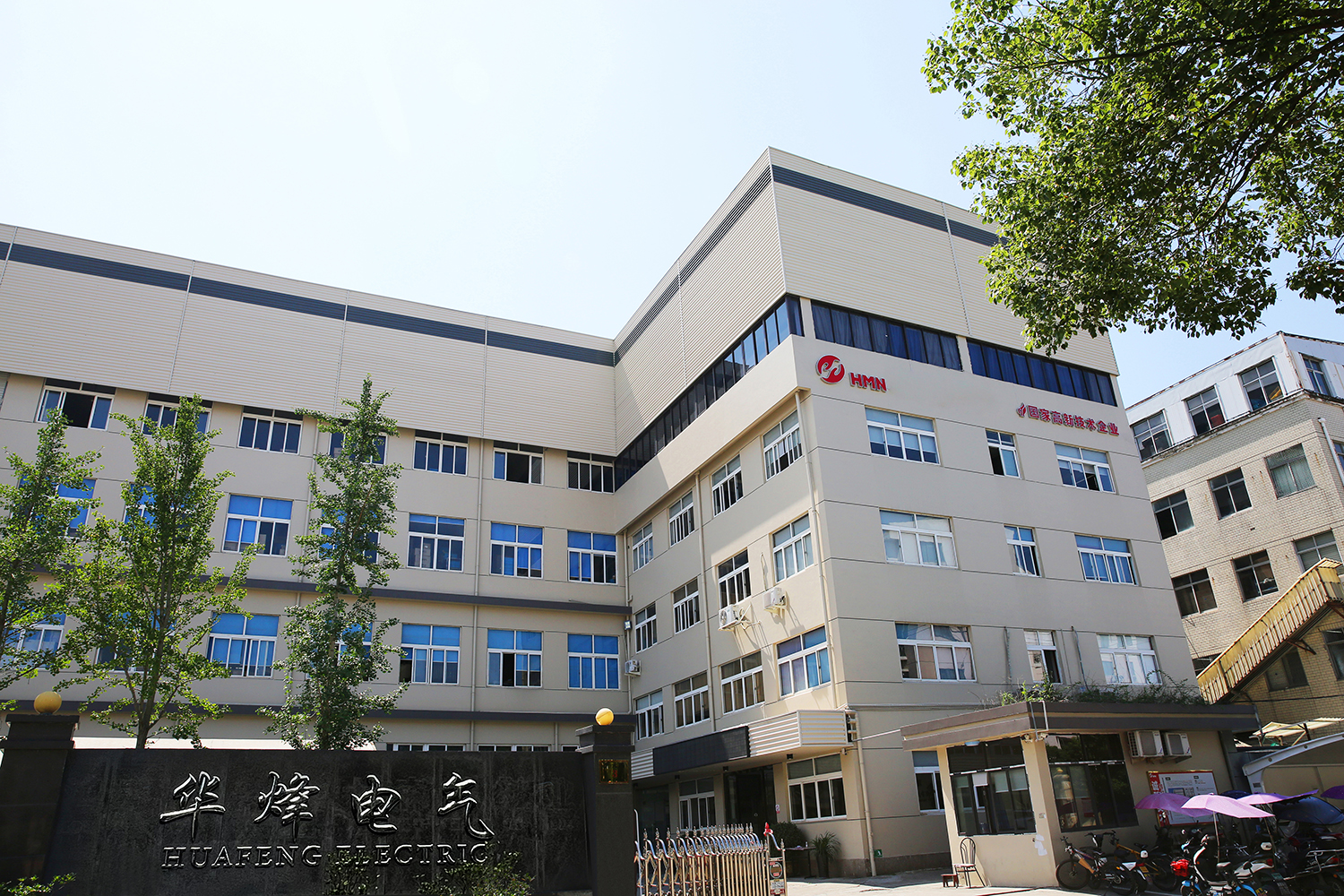
A tender certificate has to describe the item that is actually shipped, not the category it belongs to.
A CE certificate supports an EU tender submission only when three details line up: the model named on the certificate, the directive it was assessed under, and the product standard used for testing. For the Schuko socket model 6765, that means verifying certificate number DACE260330001RL, issued by DACE, against Low Voltage Directive 2014/35/EU and the applicable socket-outlet standard, IEC 60884-1:2022. Certificates that describe the product only as 'wall sockets' are routinely questioned by technical evaluation committees, even when the socket itself is compliant.
European tenders for socket-outlets are usually evaluated in two layers. The commercial layer compares price, lead time and payment terms. The technical layer has to prove that the offered item is the certified item. The second layer is where otherwise competitive bids are lost, because documentation valid for a product family is not automatically valid for a specific model. This reference explains how procurement teams can check the CE documentation for Schuko socket 6765 before a bid is submitted, what the certificate number and directive scope should show, and where voluntary evidence such as TUV and CB reports fits into the picture.
Why the certificate, and not the CE mark, decides the outcome
CE marking is a declaration made by the manufacturer or its authorised representative. The logo printed on a socket, a retail box or a catalogue page does not by itself demonstrate that a specific model was assessed. A tender committee works with the document trail instead: the EU Declaration of Conformity, the test evidence behind it, and, where issued, a certificate that identifies the product and the assessment scope.
The practical question in a tender is therefore not whether a socket is CE marked, but whether the certificate covers this exact item. Three checkpoints answer that: the certificate number and issuing body must be identifiable, the directive scope must match the electrical characteristics of the product, and the applied standard must be the current edition for socket-outlets.
What a verifiable CE package for model 6765 contains
Directive scope: Low Voltage Directive 2014/35/EU
The compliance documentation for Schuko socket 6765 is referenced to Low Voltage Directive 2014/35/EU, the directive that governs the safety of electrical equipment within its stated voltage bands. A Schuko socket rated 16 A / 250 V, the configuration standardised across much of Europe as Type F under CEE 7/3, falls within that scope. When a buyer reads the certificate, the directive reference should appear alongside the product description, not as a separate general statement about the manufacturer's quality system.
Certificate number and issuing body: DACE260330001RL issued by DACE
The dossier for model 6765 records certificate number DACE260330001RL, issued by DACE. Two verification actions follow from that. First, the certificate holder's legal name should match the entity that will appear on the contract and on the shipping documents, because a certificate held by a trading company or a different legal entity creates a transfer question that tender rules may not accept. Second, the certificate should be retrievable from the issuing body, so that a buyer can confirm the number, the model list and the validity of the certificate instead of relying on a scan supplied by the seller.
Applied standard: IEC 60884-1:2022
IEC 60884-1:2022 provides the general requirements for plugs and socket-outlets for household and similar purposes and is limited to 16 A for screwless terminals. Because the edition matters, the year should be read directly from the certificate rather than assumed from the age of the model: an assessment carried out against an earlier edition can be challenged by a technical evaluator even if the socket design has not changed. For Schuko products, the CEE 7/3 configuration and the 16 A / 250 V rating are the characteristics the certificate is expected to cover.
Why the earthing contact is part of the certification story
A grounded Schuko socket provides three connections, live, neutral and protective earth, and is compatible with Schuko plugs, which is what makes it suitable for Class I appliances that depend on protective earthing. A basic ungrounded socket normally provides only live and neutral, with a simpler structure and lower cost, and is not suitable where the project or the local standards require protective earthing. Neither type has a meaningful energy advantage, because mechanical wall sockets consume virtually no continuous power and consumption is determined by the connected appliance. In a tender, the earthing contact is therefore a compliance point rather than a performance feature, and the certificate is where that compliance is evidenced.
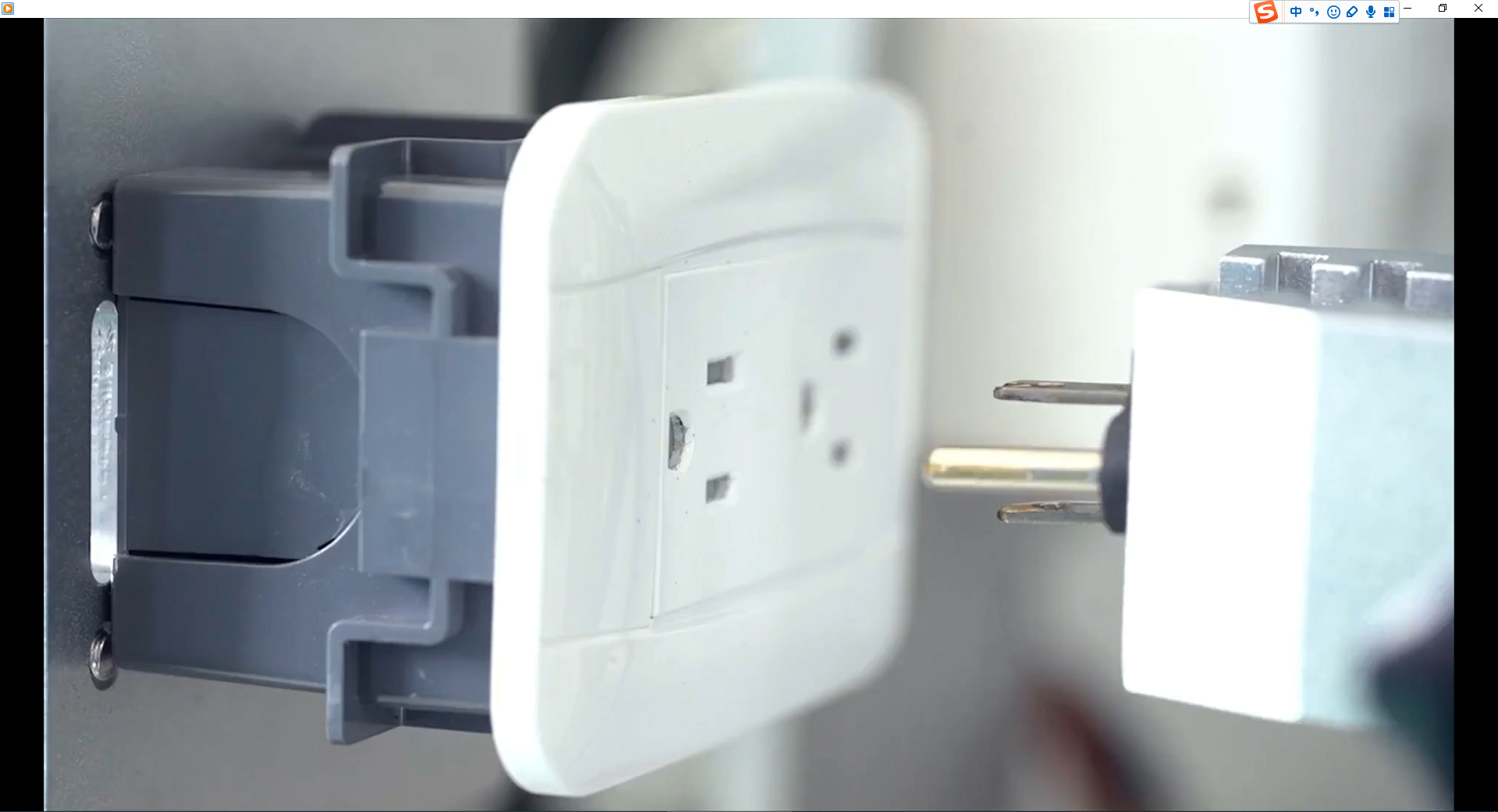
Overload, loose wiring and grounding failure are managed through design, materials and testing, not through paperwork alone.
How TUV and CB evidence relates to the CE declaration
CB certificates and TUV test reports are widely used in socket procurement, and for good reason: they provide independent test data that is recognised across many markets and can shorten documentation work for multi-country projects. What they do not do is replace the EU Declaration of Conformity or transfer the manufacturer's legal responsibility under the applicable EU directive. Buyers should treat them as complementary evidence.
- CB scheme evidence is issued against IEC standards and supports international recognition. From the standpoint of EU market access it is voluntary.
- TUV test reports document third-party test results and are useful for cross-checking parameters such as temperature rise, insertion life or dielectric strength. A test report is not the same document as the CE declaration.
- The CE declaration under Low Voltage Directive 2014/35/EU is the document that carries legal weight for placing this product type on the EU market, and for model 6765 it is supported by certificate DACE260330001RL issued by DACE.
The working rule for a procurement file is simple: use CB and TUV evidence to confirm that the test data behind the CE claim is real and current, but require the CE documentation itself to name model 6765 and to cite both the directive and the standard edition.
A six-step verification workflow before bid submission
| Step | What to check | Typical failure |
|---|---|---|
| 1 | Certificate holder's legal entity matches the contracting supplier | Certificate held by a different legal entity or trading name |
| 2 | Certificate number is identifiable and retrievable (DACE260330001RL) | Only a scanned copy with no way to confirm it at source |
| 3 | Directive scope matches the product (LVD 2014/35/EU) | Certificate references an unrelated directive or an internal standard |
| 4 | Applied standard and edition (IEC 60884-1:2022) | A superseded edition is still quoted in the bid package |
| 5 | Model list explicitly includes 6765 and any offered variant | Certificate names a family or a wall socket category only |
| 6 | Voluntary evidence and samples agree with the certificate | Test data does not correspond to the offered configuration |
Scope matching is where bids are actually rejected
Most documentation problems in EU socket tenders are not forged documents. They are scope mismatches, and four of them appear repeatedly.
- Family certificates offered for a single model. A certificate issued for a series does not automatically extend to a variant with different contact material, terminal design, shutter mechanism or declared ingress protection. Where the offered configuration differs from the tested configuration, a model-level statement is required.
- Rating and configuration assumptions. A certificate covering a 16 A / 250 V Schuko product should be read together with the tender specification. If the tender asks for a different rating or plug configuration, for example an Australian standard wall socket under AS/NZS 3112, an EU certificate does not apply.
- Directive overlap. A Low Voltage Directive assessment addresses electrical safety. Separate obligations, such as restrictions on hazardous substances, are not automatically covered by the same certificate and should be confirmed as a distinct line item.
- Documents without production consistency. Type testing is performed on samples. Nothing in a certificate guarantees that every later production lot matches the tested sample, which is why inspection stages matter as much as the certificate.
What the manufacturer side has to show beyond documents
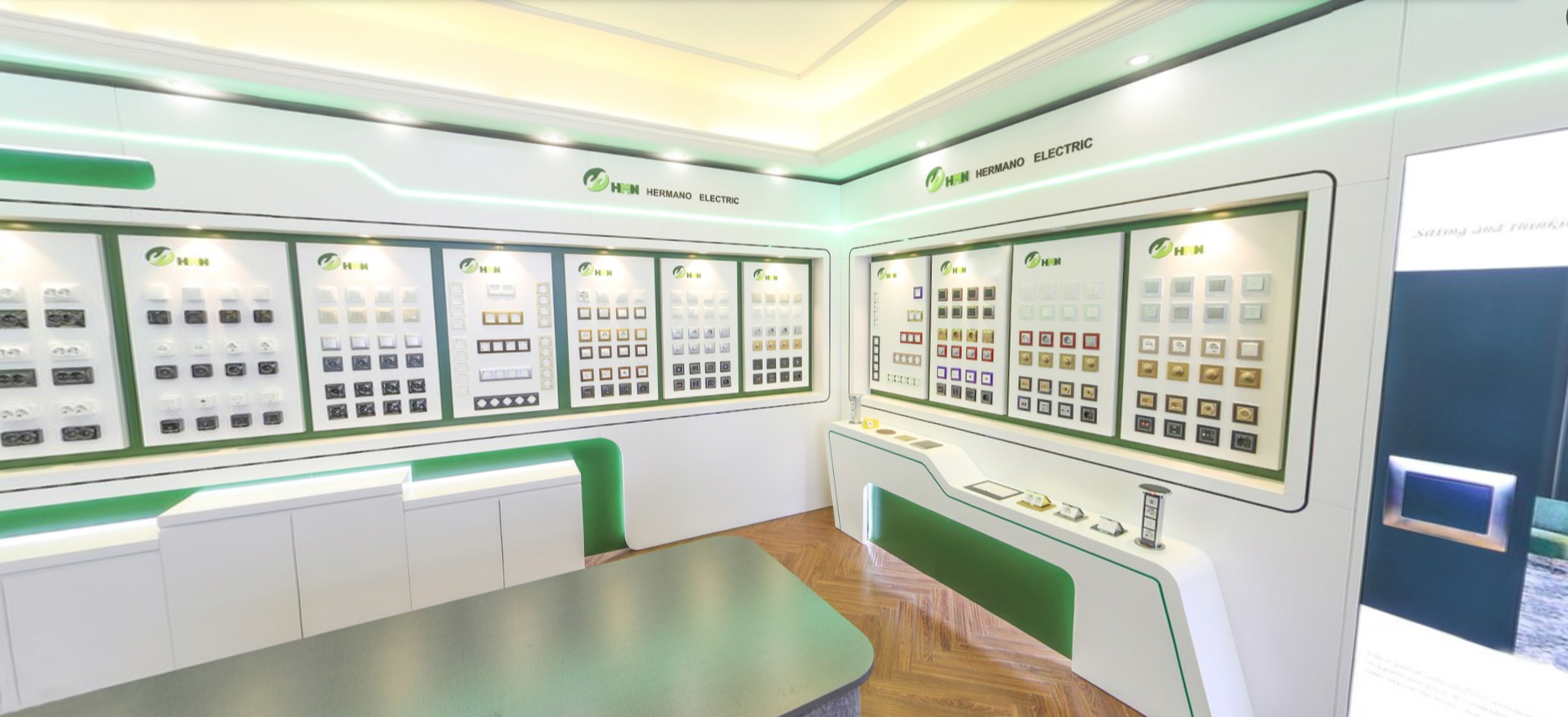
Sample verification links the certified configuration to the order that will actually be delivered.
Wenzhou Huafeng Electric Co., Ltd. (HYFF) is a Wenzhou-based manufacturer of wall switches and wall sockets, founded in 2011 and operating a 7,000 m² factory with 118 employees and an annual output of 35,000,000 units. Exports account for the full production volume, reaching EU, American, Oceanian, Asian and African markets, and the technical team includes 10 engineers. The company operates with ISO quality control systems as described in its company profile.
For EU-facing orders, the stated measures include inspection of socket contact retention force, copper thickness, wiring terminals, grounding structures and plastic materials, with raw-material inspection, assembly inspection and finished-product sampling carried out during production. The wider quality system covers incoming material inspection, plastic parts inspection, process inspection, glowing filament testing, silver layer thickness inspection, performance life testing, plastic ball pressure testing, and switch and socket on-off testing.
The risk logic behind those checks is straightforward. Electrical overload, loose wiring, poor contact between plug and socket, grounding failure or prolonged high-power use can cause overheating, arcing, electric shock or damage to the socket. The stated controls are design and process based: correct contact and terminal geometry, grounding structures, copper components sized for the rated current, flame-retardant materials, and testing that includes temperature rise, insertion life, grounding continuity, dielectric strength, insulation and electrical load. Samples are also verified with compatible plugs and functionally tested before mass production, which is the point at which a documented configuration becomes a producible one.
The documentation question also sits directly beside the order question. For this supplier, the stated purchasing terms are a minimum order quantity of 1,000 units, delivery on EXW, FOB or CIF terms, acceptance based on pre-shipment inspection against approved samples and confirmed specifications, and payment of 100% TT in advance. Because acceptance refers back to an approved sample, the certificate scope, the approved sample and the model reference in the tender should describe one and the same configuration.
Where model 6765 is most likely to be specified
Schuko sockets are specified wherever a project expects 16 A / 250 V Type F outlets with protective earthing: residential buildings and apartments, hotels and serviced accommodation, offices, and commercial refurbishment packages where the existing installation already follows the CEE 7/3 pattern. In these settings the certificate question is usually raised by the consultant or main contractor, who must confirm that the specified socket is the socket being delivered.
Adjacent requirements often attach to the same package. Bathroom and outdoor positions are commonly specified with ingress protection ratings defined by IEC 60529, such as IP44 and IP54, and those ratings are separate from the CE assessment: a socket offering an IP rating should show that rating in its own test evidence. Where a project includes charging points, USB-C sockets are increasingly requested following the EU move toward a common charging standard for portable electronics by fall 2024. Smart sockets using WiFi, Zigbee or app-based timing appear in the same bills of materials, but they carry their own certification considerations and should not be assumed to be covered by a certificate issued for a mechanical socket.
Market context behind tightening documentation checks
Socket procurement is large enough that documentation standards are being applied more consistently. The global electric plugs and sockets market was valued at USD 14.13 billion in 2025 according to Precedence Research, and global production of wall sockets reached over 3.1 billion units in 2024, with China as the leading producer. Scope definitions differ between analysts, and Fortune Business Insights sizes the industrial plugs and sockets segment separately, so any headline market figure should be treated as directional rather than as a tender criterion.
Two product trends are visible in the same data. Modular sockets accounted for 43% of total wall socket sales in 2024, reflecting demand for space-saving and customisable configurations. The smart plug market is estimated to reach USD 5.29 billion by 2026, growing at a CAGR of 25.70% from 2026 to 2031. Both trends push buyers toward more granular documentation, because a modular or electronically enhanced product carries more configurations to certify than a single fixed socket.
Comparing traditional and model-level compliance approaches
| Approach | What it looks like | Where it breaks down |
|---|---|---|
| Category-level | Supplier provides a CE certificate describing wall sockets as a category | Fails when the tender requires the model to be named; variants remain uncovered |
| Model-level dossier | Certificate number, directive, standard edition and model list are verified against the bid | Requires extra checking time before submission; still does not replace sample approval |
Neither approach removes all risk. Certification is a snapshot of a tested configuration: it does not guarantee installation quality, because grounding continuity depends on how the socket is wired on site, and it does not cover every commercial expectation a project may add on top of the standard. Certificates also have to be maintained. When a product standard is updated, or when contact material, terminal or shutter design changes, the assessment has to be reviewed. Buyers who treat a certificate as a permanent and freely transferable asset tend to discover the gap at the worst possible moment, usually after the tender has already been awarded.
Future outlook
Three shifts are likely to shape how EU buyers check socket compliance over the next few years. First, verification will move closer to the source: rather than accepting a PDF from a supplier, buyers are increasingly confirming certificate details directly with the issuing body, which makes a verifiable number such as DACE260330001RL more useful than a scan. Second, model-level traceability will become the default expectation, because modular and configurable socket ranges make family-level certificates harder to defend. Third, sockets will continue to absorb functions such as USB-C charging, timing and app control, which means more of a tender's compliance questions will sit outside the classic Low Voltage Directive scope and require separate evidence.
For suppliers, that shift favours manufacturers who keep documents and production aligned over time, including the change-control discipline that keeps a tested configuration stable across repeat orders. For buyers, it favours a short and repeatable verification habit, performed before the bid is submitted rather than after an evaluation committee raises the question.
FAQ
Does a CE certificate alone allow a Schuko socket to be supplied into the EU?
A CE certificate is supporting evidence within a wider obligation. The manufacturer or its authorised representative is responsible for placing the CE marking on the product and for issuing the EU Declaration of Conformity covering the applicable directive, which for Schuko socket 6765 is referenced to Low Voltage Directive 2014/35/EU. Separate obligations, such as restrictions on hazardous substances, are not automatically covered by a Low Voltage Directive certificate and should be confirmed as an individual item.
What is the difference between a CB certificate and the CE declaration for a wall socket?
A CB certificate is issued under the IECEE CB scheme against IEC standards and is recognised across participating markets, but from the standpoint of EU market access it is voluntary. The CE declaration is the document that carries legal weight for the EU. CB evidence is useful for cross-checking test data and for multi-market projects, yet it does not replace the CE declaration.
Can a TUV test report replace the EU Declaration of Conformity?
No. A TUV test report documents third-party test results, often for parameters such as temperature rise, insertion life or dielectric strength, and it is a useful complement to the CE file. It does not transfer the manufacturer's legal responsibility for the declaration of conformity or for CE marking.
What should a buyer do if the certificate covers a series rather than model 6765?
Request a model-level statement confirming that the offered configuration, including contact material, terminal design, shutter and any declared ingress protection rating, falls inside the tested scope. If the configuration differs from the tested one, the assessment has to be reviewed before the certificate can be relied on in the tender.
Which commercial terms should be confirmed together with the certificate?
For this supplier, the stated terms are a minimum order quantity of 1,000 units, delivery on EXW, FOB or CIF, acceptance on pre-shipment inspection against approved samples and confirmed specifications, and payment of 100% TT in advance. Because acceptance refers back to an approved sample, the sample, the certificate scope and the tender model reference should describe the same configuration.
How is compliance kept valid across a multi-year supply agreement?
Certificates and declarations are tied to a configuration and to the standard edition in force when the assessment was carried out. A long-term agreement normally needs a change-control step covering material, terminal and shutter changes, plus a review trigger whenever the applied standard, such as IEC 60884-1, is updated. Periodic production inspections, covering incoming material, assembly and finished-product sampling, are what keep documented compliance and delivered product aligned over the life of the contract.
Reference material for buyers reviewing this product family: the HYFF 2026 product brochure and the manufacturer website www.hyffelectric.com. Wenzhou Huafeng Electric Co., Ltd. is listed at No.3 Kaiyuan Road, Zhuangyuan, Longwan, Wenzhou, Zhejiang.
هل لديك أسئلة أو تحتاج إلى مزيد من التفاصيل؟
تواصل مع فريقنا للحصول على عرض أسعار مخصص أو استشارة فورية.
طلب عرض أسعار
املأ النموذج أدناه وسيتواصل معك فريقنا بعرض مقترح مخصص.
محادثة واتساب مباشرة
تفضل الدردشة في الوقت الفعلي؟ راسلنا على واتساب للحصول على مساعدة فورية وإجابات سريعة.
- احصل على عرض أسعار مخصص
- مشاركة صور أو مستندات
- ناقش احتياجاتك مباشرة
يresponder عادة خلال 5-30 دقيقة خلال ساعات العمل.