
Verifying Shredder Manufacturing: What a Plant Audit Reveals
Verifying Shredder Manufacturing: What a Plant Audit Reveals
Industry data places the global industrial shredder market at approximately USD 1.28 billion in 2024, with a projected value of USD 1.65 billion by 2032 (Intel Market Research). As the supplier field widens, the decisive evaluation question is less about what a catalog lists and more about what a production floor can actually prove.
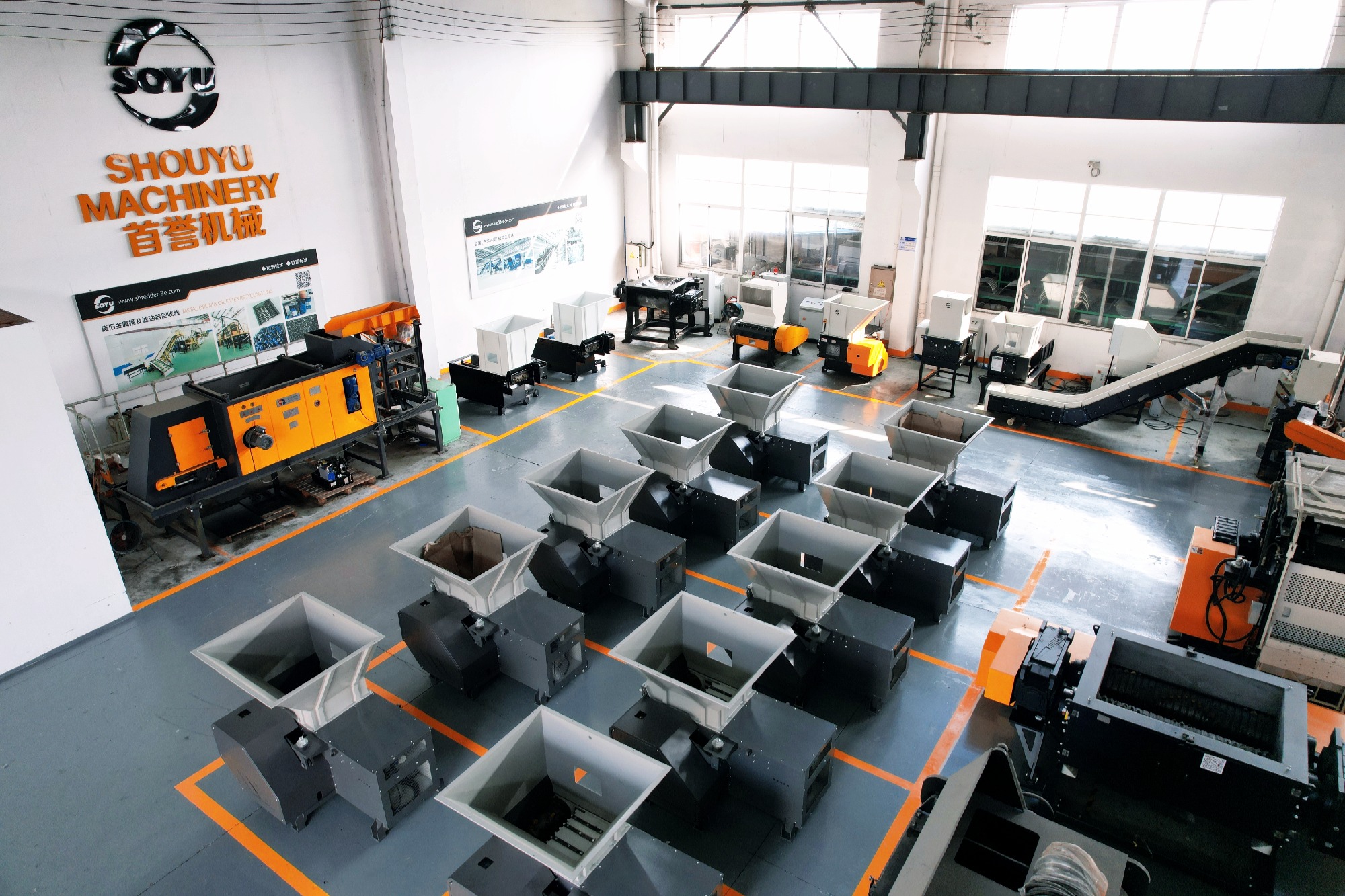
Why Plant Verification Has Become a Procurement Criterion
A shredder specification sheet is a document. A production floor is a system of machines, jigs, heat-treatment equipment, welding stations and test benches. The distance between the two is where most sourcing risk is created, because a quotation can describe a capability that the supplier does not own.
For procurement teams working in the evaluation stage, that gap matters in three practical ways.
- Performance risk. The service life of an industrial shredder is decided by its blades, shafts and frame. If those components are subcontracted to unknown third parties, the buyer cannot trace the material grade or the heat-treatment record behind them.
- Compliance risk. CE marking for shredders rests on a chain of design and manufacturing evidence. A CE certificate issued by a body such as UDEM covers a defined scope, and that scope has to be matched against the model the buyer intends to purchase.
- Continuity risk. A supplier that owns its core component production controls lead time, spare parts and rework. A supplier that assembles from externally purchased components cannot always make the same commitment.
Verifying the plant is therefore not an audit for its own sake. It is the step that turns a supplier's claims into evidence a procurement team can defend internally.
What Verifiable Manufacturing Capability Looks Like: A Reference Case
Changshu Shouyu Machinery Co., Ltd, which trades as SOYU Machinery, is an industrial shredder manufacturer founded in 2009 and based in Changshu, China. The company operates a 15,000 m² manufacturing facility with approximately 200 employees and a 25-engineer R&D team, and it reports an annual output of around 2,000 sets. Export sales account for roughly 70% of the business, with the EU and the USA as its main markets.
Three features of this operation are relevant to a plant audit, because each one is directly checkable.
Catalog breadth. The product range spans more than 40 models, from double-shaft shredders through single-shaft and four-shaft shredders to application-specific machines for metal, plastic, aluminium, fibreglass, RDF, solid waste, e-waste, wood and waste paper. For a buyer, breadth is not simply a marketing statement — it is a testable signal, because supporting many machine architectures requires corresponding design, fabrication, heat-treatment and testing capacity. On the floor, four-shaft platforms such as the FS6650, FS8080, FS100120, FS130140 and FS160160 sit alongside single-shaft models from the SR600 through to the SRD3000, and double-shaft units including the SYU26100, SYU41100, SYU50180 and SYU61210.
Defined component engineering. SOYU Machinery specifies a material and process chain for its core crushing components. Rotary blades use DC53 or CrMoV high-alloy wear-resistant steel; fixed blades use D2 or SKD11 tool steel, with a stated hardness of HRC 58–62 on several single-shaft and general-purpose lines. Four-shaft moving blades are described as reaching HRC 60–62 after vacuum deep cryogenic treatment. Shafts are made from 42CrMo high-strength alloy steel and processed through quenching and tempering, dynamic balancing and surface hardening. Frames use heavy-gauge carbon steel plates — Q345B on several single-shaft and double-shaft lines and Q355B on four-shaft platforms — joined by heavy-duty welding, overall stress-relief annealing and a reinforced rib design.
A stated production and quality routine. The company reports a monthly capacity of 15–20 complete recycling lines or 50–100 single shredders, with lead times of 45–60 days for standard models and 60–90 days for customized projects. Its quality sequence includes material inspection, CE and ISO compliance testing, and a 100% factory acceptance test (FAT) before shipment. The documentation set includes ISO 9001 quality management system certification from Beijing Head International Certification Co., Ltd., covering the production and service of shredding machinery and accessories, together with CE certificates issued by UDEM that cover single-shaft, double-shaft and four-shaft shredders as well as conveyor, screw squeezer, crusher and hammer mill equipment.
Taken together, these are claims a buyer can test. The value of the reference case is not that a particular company makes them, but that each claim maps to a physical location in a plant where evidence should exist.
Reading a Production Floor: What to Inspect and Why
A plant audit works best when it is component-led rather than tour-led. Instead of walking the plant in the order the host suggests, follow the material through the process.
Start with blades
Blades are the consumable that determines operating cost. On the floor, a buyer should be able to see blade blanks, machining or grinding operations and the heat-treatment route. Where a supplier states a hardness range — HRC 58–62 on several single-shaft and general-purpose lines, and HRC 60–62 after vacuum deep cryogenic treatment on four-shaft moving blades — the corresponding furnace, quenching and tempering records should be traceable. Multi-face reversible blade designs, such as those used on four-shaft machines, permit repeated sharpening and are stated to extend service life by roughly 30% compared with conventional blades.
Then follow the shafts
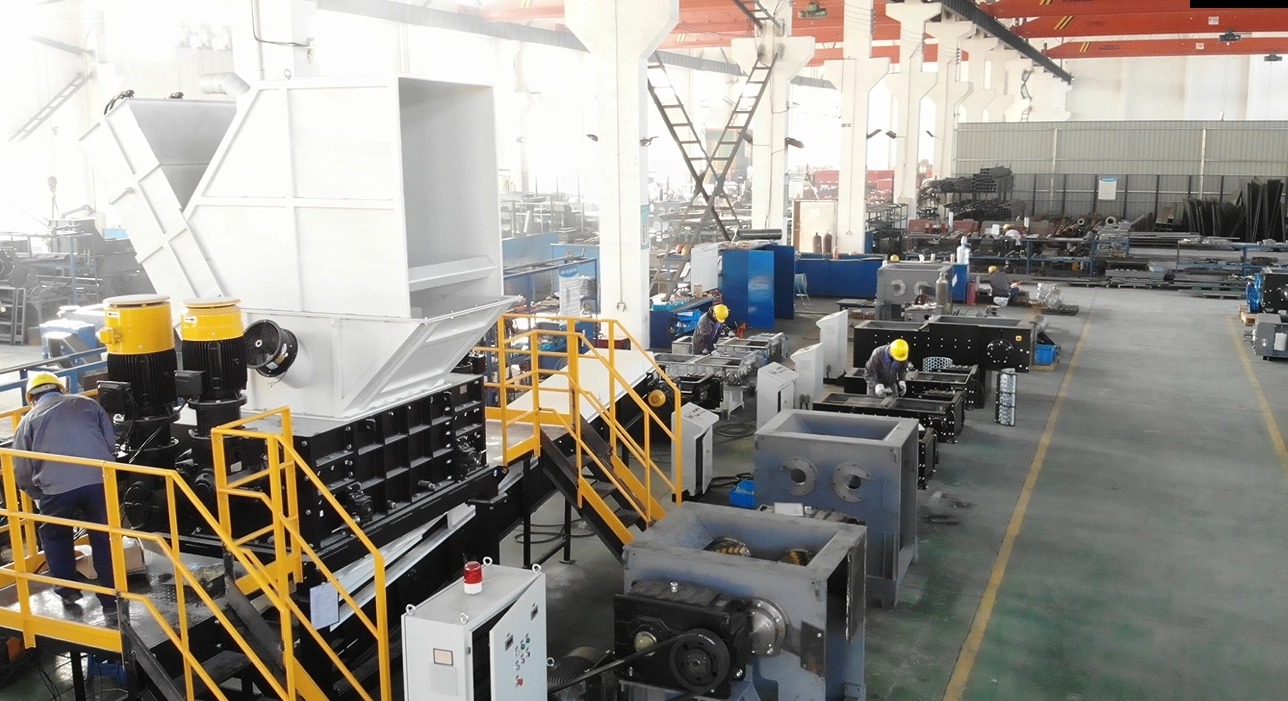
Shafts carry the torque. A 42CrMo shaft that has been quenched, tempered, dynamically balanced and surface hardened requires heat-treatment furnaces, balancing equipment and inspection instruments. These are large, fixed assets. Their presence, or absence, is one of the clearest answers to the question of whether a shredder maker produces core components in-house rather than purchasing them.
Then examine frames and welding
Frame rigidity governs vibration behaviour under load. SOYU four-shaft frames use 20–30 mm plate thickness with dense reinforcement ribs, while several double-shaft frames use 16–25 mm carbon steel plate with welded reinforcement ribs and replaceable wear plates made from imported HARDOX™ wear-resistant steel. A buyer can verify weld quality, rib layout, stress-relief annealing capacity and corrosion-resistant coating directly on site.
Finally, watch a test
A 100% factory acceptance test is only meaningful if the buyer can see what is tested and how the result is recorded. Ask to attend the FAT or to receive the completed FAT record for the exact model ordered.
| Component | Stated specification | Evidence to look for on site |
|---|---|---|
| Rotary / moving blades | DC53 or CrMoV high-alloy wear-resistant steel; four-shaft blades at HRC 60–62 after vacuum deep cryogenic treatment | Blade blank stock, grinding or machining station, heat-treatment furnace, hardness verification records |
| Fixed blades | D2 or SKD11 tool steel; Cr12MoV on double-shaft lines | Tool-steel stock, precision grinding, adjustable blade-gap control (down to 0.5 mm on four-shaft machines) |
| Shafts | 42CrMo high-strength alloy steel | Quenching and tempering line, dynamic balancing equipment, surface hardening, inspection records |
| Frames | Q345B heavy-gauge carbon steel (single/double shaft); Q355B (four shaft); 16–25 mm and 20–30 mm plate ranges | Heavy-duty welding stations, overall stress-relief annealing, reinforcement rib design, coating line |
| Wear protection | Replaceable wear plates in imported HARDOX™ wear-resistant steel | Incoming material identification and replacement-part stock |
| Finished machine | 100% factory acceptance test; CE and ISO compliance testing | Assembly bay, test bench, FAT documentation, CE certificate scope matched to the model |
From Production Evidence to Field Performance
A production floor audit answers whether a supplier can build a machine to specification. Field records answer whether the machine holds up once it is fed real material.
Among the documented installations in SOYU Machinery's reference set, a battery crushing system installed in China has operated stably for four years, with engineered battery crushing, minimal downtime and integration into an existing battery recycling line. That is a useful data point for a plant audit, because battery feed is abrasive and demands consistent blade and shaft condition — the same components a buyer inspects during an audit.
Comparable long-run records appear across other material streams. End-user installations handling e-waste report stable operation for six years in Australia, four years in the United States and five years in the United Kingdom. RDF shredding installations in South Korea and Taiwan each report five years of stable operation. Further long-service records include six years for aluminium scrap recycling in India, six years for OCC paper dry pulping in Malaysia, and six years for plastic shredding in New Zealand.
For a procurement team the connection is straightforward: the components that decide service life — blades, shafts and frames — are the same components the audit examines. Field records do not replace a plant audit, but they give the audit a performance baseline to test against.
Market Trend Analysis: Why Verification Matters in 2026
Three market signals make plant verification more relevant today than it was several years ago.
Scale. The global industrial shredder market was valued at approximately USD 1.28 billion in 2024 and is projected to reach USD 1.65 billion by 2032 (Intel Market Research). Larger markets attract more suppliers, and a wider supplier field increases the value of a verification routine that separates manufacturers from assemblers.
Regional concentration. Asia Pacific dominated the global metal shredder machine industry with a 39.0% revenue share in 2024, led by China's scrap generation (Grand View Research). Buyers sourcing from this region therefore face a large and varied supplier field, which raises the importance of plant-level evidence.
Product-mix shift. Twin shaft shredders held a 35.0% revenue share of the metal shredder market in 2024 (Grand View Research), while the global commercial four shaft shredder segment is estimated at USD 0.51 billion in 2025 and is forecast to grow at a CAGR of 5.8% through 2034 (Dataintelo). Multi-shaft machines demand tighter blade-gap control and more rigid frames — capabilities that are visible in a plant and difficult to fake in a brochure.
Downstream demand reinforces the trend. The Refuse Derived Fuel (RDF) market, which relies on industrial shredders to process municipal solid waste, reached a value of USD 4.6 billion in 2023 (Market.us). RDF operators buy shredders as production equipment rather than general-purpose machinery, and their qualification routines tend to include component traceability.
Traditional Catalog-Led Evaluation vs. Verified Production Evaluation
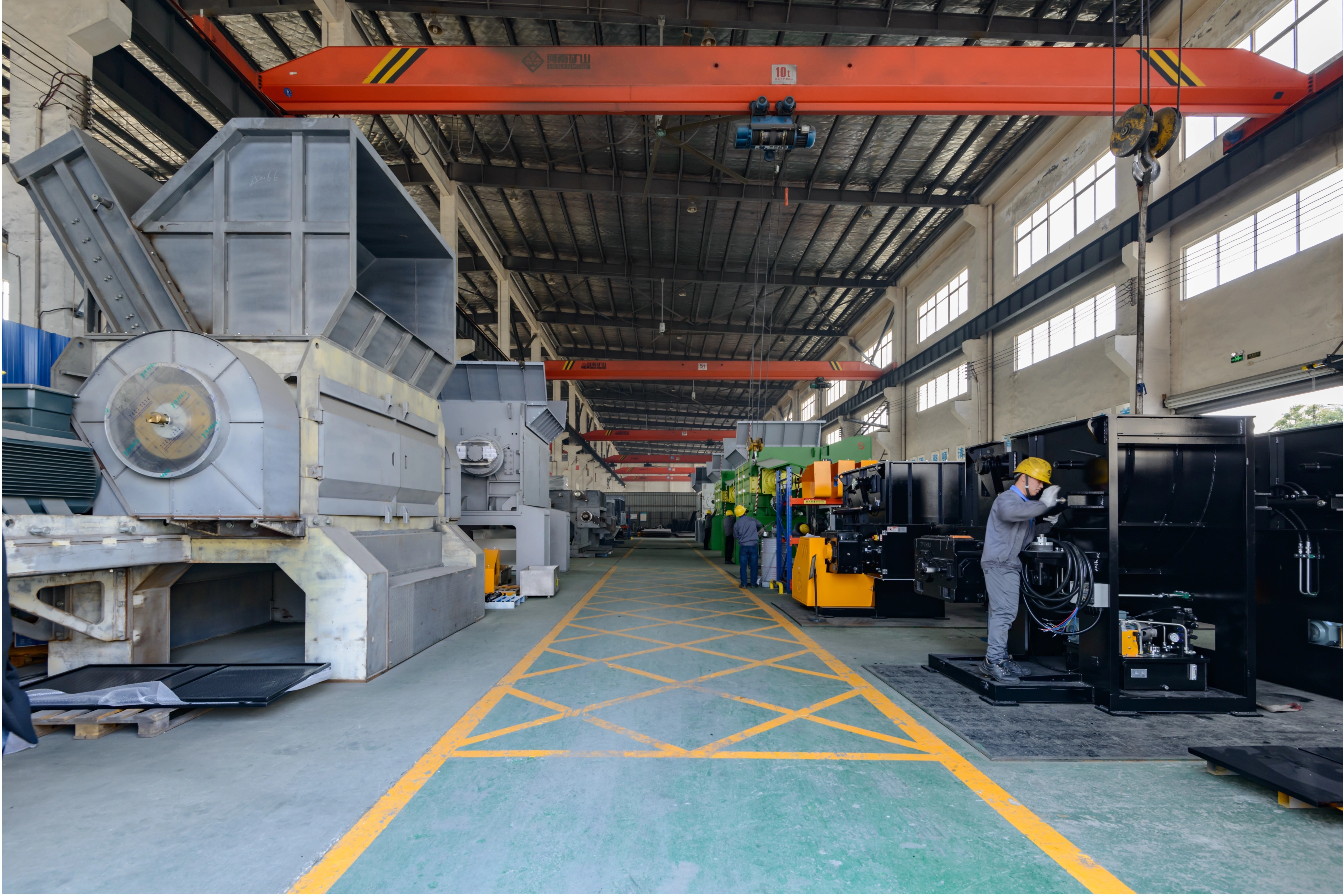
Many procurement teams already run a catalog-led evaluation. It compares specifications, price, delivery time and certificates. It is fast and it is necessary, but it evaluates documents, not capability. A verified production evaluation adds a second layer: it asks whether the supplier owns the processes behind the specification.
| Evaluation dimension | Catalog-led evaluation | Verified production evaluation |
|---|---|---|
| Blade material claim | Reads the stated steel grade and hardness range | Inspects blade stock, machining and the heat-treatment record behind the stated HRC range |
| Shaft production | Accepts the stated material and process | Confirms furnaces, dynamic balancing equipment and surface hardening are on site |
| Frame and welding | Reviews the drawing and plate thickness | Observes welding, stress-relief annealing and rib layout on the shop floor |
| Certification | Collects certificate copies | Matches each CE certificate's declared scope to the specific model being ordered |
| Capacity and lead time | Compares quoted figures | Cross-checks monthly capacity against the work in progress visible on the floor |
| Quality assurance | Reviews the QC policy | Reviews a completed factory acceptance test record and the test bench used |
| Delivery risk | Assessed from the quotation | Assessed from owned versus subcontracted processes |
Boundaries worth stating plainly.
- A plant audit is a snapshot. It confirms conditions on the day of the visit, not permanently.
- In-house production of shafts and blades does not mean every item in a catalog is fabricated to equal depth in-house. Peripheral equipment such as conveyors and auxiliary systems may still be integrated from other suppliers, and CE certificate scopes should be checked accordingly.
- Not every buyer can travel. Remote verification relies on documents, video walkthroughs and third-party inspection — all weaker substitutes for direct observation.
- Verification carries a cost. Audit travel, witness testing and documentation review consume procurement time, and the effort is usually only justified where component failure would disrupt an operating line.
A Practical Verification Checklist
Scope and documents first
- Confirm the legal entity, founding year and factory address against the certificate holder's name.
- Collect the CE certificates that apply to the specific model and confirm the scope declared by the issuing body.
- Collect the ISO 9001 certificate and confirm the certification body and scope of registration.
On site
- Ask to see blade material stock and confirm the stated grades, for example DC53 or CrMoV rotary blades and D2 or SKD11 fixed blades.
- Confirm heat-treatment capacity and ask how hardness is verified against the stated HRC range.
- Ask to see shaft machining and confirm 42CrMo stock, quenching and tempering, dynamic balancing and surface hardening.
- Inspect frame welding, rib layout, plate thickness and stress-relief annealing.
- Review incoming inspection records for wear materials such as imported HARDOX™ wear plates.
- Observe the FAT test bench and review a completed FAT record.
- Cross-check monthly capacity and quoted lead time against work in progress.
Commercial and lifecycle
- Confirm spare-parts availability for blades and shafts over the expected service window.
- Confirm the after-sales scope, including on-site installation and commissioning, operator training, remote support, spare parts supply and annual maintenance.
Future Outlook
Two directions are likely to shape how buyers verify shredder manufacturing over the next several years.
The first is documentation depth. As multi-shaft shredders take a larger share of the market, buyers will ask for more than a steel grade on a datasheet. Heat-treatment records, balancing reports and factory acceptance documentation are likely to become routine attachments to a purchase order, in the same way that CE documentation already is.
The second is standardisation of verification. Safety standards such as EN ISO 13857:2019, which defines safety distances that keep hazard zones out of reach, already shape how shredders are designed for the EU market. The same logic — verify against a published standard rather than a supplier's description — is gradually being applied to manufacturing claims.
For manufacturers, the practical implication is that capability has to be demonstrable. For buyers, it means the plant audit is no longer an optional step reserved for very large orders; it is becoming the mechanism that connects price and specification to actual production.
Frequently Asked Questions
- What should a procurement team inspect first during an industrial shredder supplier factory audit?
- Start with the components that determine machine life: blades and shafts. Confirm blade material stock and heat-treatment capability against the stated grades, then trace shaft production through quenching and tempering, dynamic balancing and surface hardening. Frame welding and stress-relief annealing follow. An audit that begins with the finished machine and works backwards is less reliable than one that begins with raw material and follows it through to assembly.
- How does product line breadth indicate a shredder manufacturer's specialization?
- Breadth is a meaningful signal when it corresponds to physical production. A manufacturer supporting single-shaft, double-shaft and four-shaft platforms must maintain design, fabrication, heat-treatment and testing capacity for each architecture. A catalog spanning more than 40 models, from double-shaft shredders to four-shaft shredders such as the FS130140 and FS160160, implies corresponding tooling, jigs and test benches. Buyers should still confirm that the specific models they intend to order are built in the plant they audit.
- How can buyers verify in-house production of core shredder components such as shafts and blades?
- In-house production leaves fixed assets and records that subcontracting does not. For blades, look for tool-steel stock, grinding or machining stations, heat-treatment furnaces, and hardness verification against the stated range — HRC 58–62 on several lines, and HRC 60–62 after vacuum deep cryogenic treatment on four-shaft moving blades. For shafts, look for 42CrMo stock, quenching and tempering equipment, dynamic balancing machines and surface hardening. Ask to see the records behind a specific production batch rather than a generic capability statement.
- What documentation should support a shredder maker's manufacturing capability claims?
- At minimum, a buyer should collect the ISO 9001 quality management system certificate with its certification body and scope, the CE certificates that apply to the specific model (confirming the scope declared by the issuing body), material inspection records, and a completed factory acceptance test record. For suppliers exporting to the EU and USA, documentation should also confirm that CE and ISO compliance testing forms part of the stated quality routine.
- Does a larger shredder catalog always mean stronger manufacturing capability?
- No. Catalog size demonstrates design range, but it does not prove that every model is fabricated to equal depth in-house. A manufacturer may produce core components such as blades, shafts and frames internally while integrating peripheral equipment from other suppliers, and the CE certificate scope for any given model should be checked accordingly. A plant audit, not a catalog page count, is what confirms capability.