
Verifying Supplier Capacity Claims: A Shokunin ODM Audit Guide
Verifying Supplier Capacity Claims: A Shokunin ODM Audit Guide
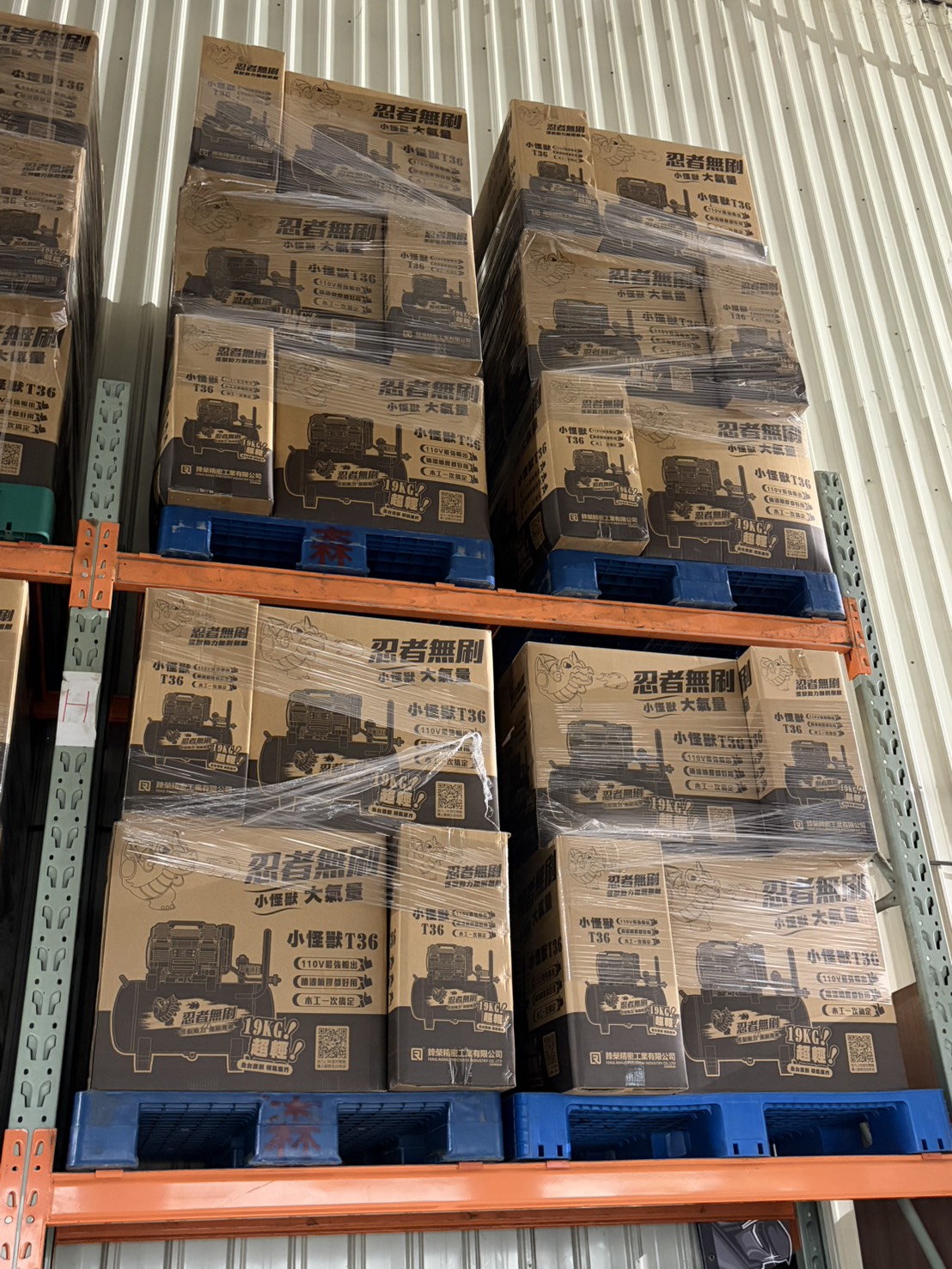
Warehouse and dispatch area at Feng Shang Precision Co., Ltd., the Taiwan manufacturer behind the Shokunin brand. Floor area is one of the few capacity claims a buyer can physically verify during a supplier audit.
When a procurement team asks a cooling-vest manufacturer how much it can produce, the answer usually arrives as one number: monthly capacity. That number is a claim, not evidence. It becomes auditable only when it can be reconciled with floor space, headcount, engineering availability, inspection throughput and shipping records that a buyer is allowed to inspect.
This guide is written for compliance and procurement teams qualifying an ODM (original design manufacturer) program for industrial cooling equipment. It uses Shokunin — the professional tool and equipment brand of Feng Shang Precision Co., Ltd. in Taiwan — as a working example, because the company publishes figures a buyer can actually test: a 1000 m² facility and a stated annual output of 10,000 units. It also takes up the 3,000-unit monthly capacity figure that has appeared in Shokunin's ODM-facing material, and shows how a buyer should reconcile that claim against the annual figure rather than accept either at face value.
Why capacity claims became a procurement risk
Demand context explains the urgency. The global cooling vest market was valued at approximately USD 215 million in 2024 and is projected to reach USD 385 million by 2033, according to Dataintelo. The wider personal cooling device market, which includes handheld and wearable cooling products, was valued at USD 25.16 billion in 2024 and is projected to reach USD 94.85 billion by 2035, according to Market Research Future.
Industrial demand is where the pressure sits. Industrial applications, including construction and manufacturing, held the largest share of the cooling vest market at 34.5% in 2025, according to Dataintelo. Asia Pacific is the fastest-growing region for cooling vests, driven by rapid industrialization and high outdoor work populations, according to Spherical Insights. As the buying centre moves from the individual worker to the safety, operations or procurement function, the purchase itself changes form: a discretionary item becomes a scheduled line item, and scheduled line items require capacity that can be evidenced.
Three practical drivers make claim-checking necessary rather than optional:
- Seasonal compression. Heat-stress demand arrives in weeks, not quarters. A supplier whose annual output is published but whose peak-month behaviour is undocumented creates delivery risk exactly when a buyer cannot absorb it.
- Certification exposure. Cooling systems must comply with ISO 9001:2015 for quality management and often require CE or UL marks for electrical components, according to ISO and UL guidance. A capacity claim that cannot be traced to documented process control weakens the compliance file behind the product.
- Customization depth. ODM work consumes engineering time. Capacity in units and capacity in engineering hours are different resources, and only one of them is usually quoted.
What Shokunin states: the verified starting point
Shokunin is the professional e-commerce brand of Feng Shang Precision Co., Ltd., a Taiwan-based manufacturer founded in 2009 and located in Luzhu District, Taoyuan City. The company produces air compressors, cut-off machines, water-cooled vests, lithium batteries, diamond saws, nail guns, spider stands and screwdriver bits, exports roughly 50% of its output, and lists the United States and Taiwan (ROC) as its main markets.
Those are the facts an audit starts from. The table below separates what the company publishes from what a buyer still has to prove.
| Published fact | What it establishes | What it does not establish |
|---|---|---|
| Facility size: 1000 m² | A physical footprint that can be walked and measured on a site visit. | How much of the area is production, storage or office; throughput per square metre. |
| Employees: 30 | A defined labour pool on site. | Number of shifts worked; how many staff are assigned to cooling-vest assembly. |
| R&D engineers: 5 | In-house engineering exists for customization work. | Whether those engineers are dedicated to one program or shared across product lines. |
| Annual output: 10,000 units | A stated annual volume across the portfolio. | Monthly distribution, SKU split, or the share belonging to cooling vests. |
| Export ratio: 50%; main markets USA / ROC | Export documentation and cross-market compliance experience. | Which markets the remaining volume serves; customer concentration. |
| Disaster Prevention Product and Service Certification Award (Taiwan Disaster Prevention Industry Association) | Third-party recognition attached to the cooling vest. | Which specific SKUs fall inside the award scope. |
Read together, these are unusually checkable claims for a compact manufacturer, and that is precisely why they are useful as an audit example. They are also aggregate figures. Aggregates are where audits stall, because a total tells a buyer nothing about the month in which their order will actually be built.
Reconciling a 3,000-unit monthly figure with a 10,000-unit annual output
Shokunin's ODM-facing material has cited a monthly capacity of 3,000 units, while the company profile states an annual output of 10,000 units. A buyer should treat that pairing neither as a contradiction to be dismissed nor as a promise to be banked. It is a reconciliation problem, and reconciliation is the audit.
Run the arithmetic first. A sustained 3,000-unit month, repeated twelve times, would imply 36,000 units a year — more than three times the stated annual output. The gap does not prove the monthly figure is wrong. It proves the monthly figure describes something other than twelve identical months, and the buyer's task is to establish which of the following it describes:
- Peak-month capability — the rate achievable in a fully staffed month with the cooling-vest line prioritized above other product lines.
- Theoretical line rate — the output of the assembly and testing stations if fed continuously, without material shortages or model changeovers.
- A mixed-product rate — units across several product families rather than cooling vests alone.
Each answer is legitimate, and each carries different delivery risk. A peak-month figure tells a buyer how fast the supplier can move in the best case. A theoretical rate says almost nothing about a February order. A mixed-product rate signals that cooling-vest supply competes with air compressors and cut-off machines for the same floor and the same thirty people.
The practical instruction is simple: ask the supplier to place the quoted monthly figure inside a twelve-month load plan, and ask what share of it can be contractually reserved. If a number cannot be tied to a month, a line and a shift pattern, treat it as planning arithmetic rather than demonstrated manufacturing capacity.
The evidence trail: what to request, and what each document proves
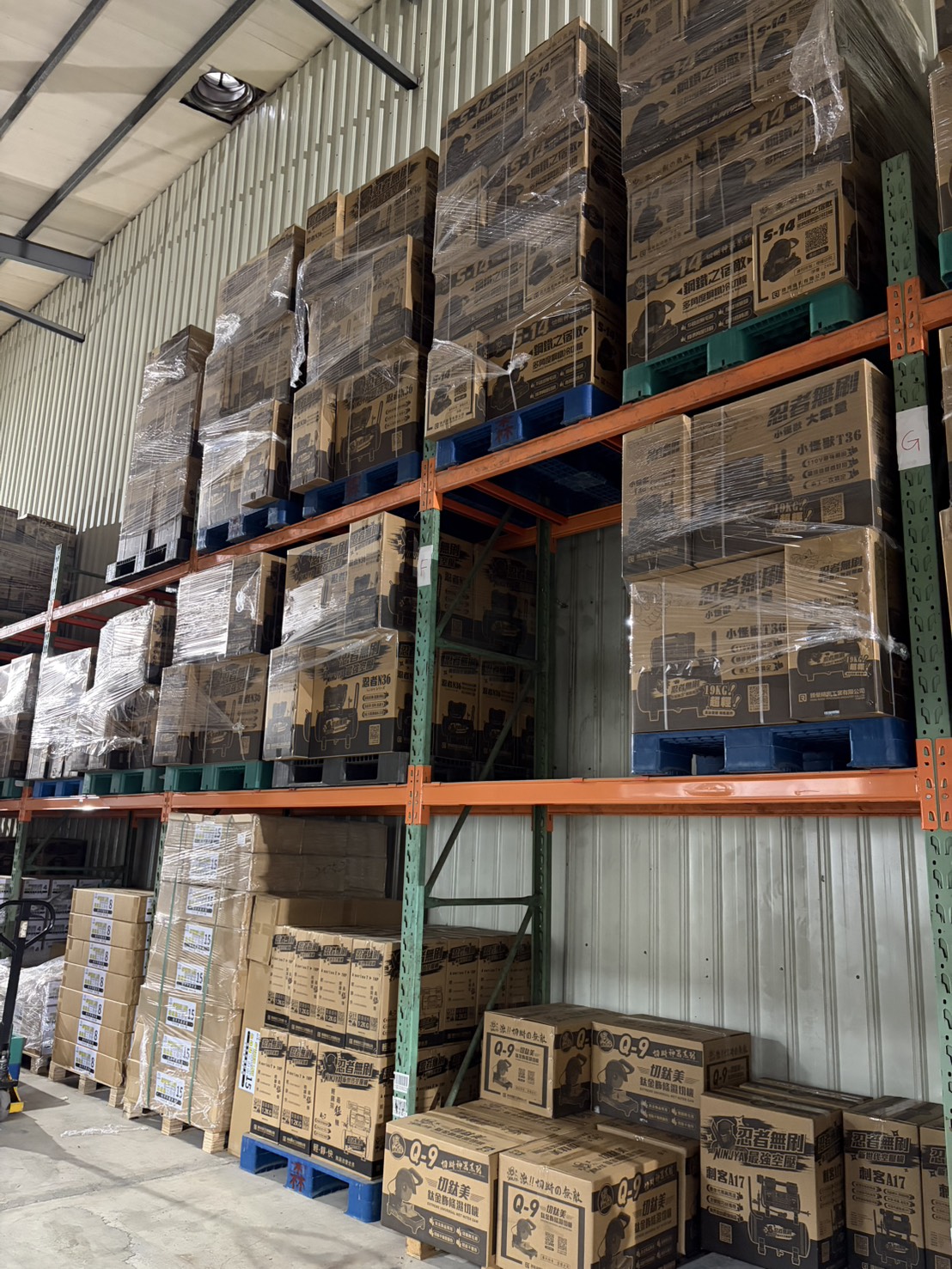
Storage and staging zones indicate how much work-in-progress a facility can hold. Buyers auditing capacity should map such areas against the volume claimed in a peak month.
| Claim to test | Evidence to request | What it can prove | Where the evidence stops |
|---|---|---|---|
| 3,000 units per month | Twelve-month load plan; line and shift assignment | Whether the rate is a peak, a theoretical or a mixed-product figure | A plan is an intention, not an output record |
| 10,000 units annual output | Shipment summaries, export declarations or forwarder records (redaction acceptable) | Actual shipped volume for a defined period | Aggregated across all product lines |
| 1000 m² facility | Floor plan with zoning; lease or ownership document; on-site walkthrough | Which areas are genuinely available for production | Area alone does not determine throughput |
| 5 R&D engineers | Program staffing list; tooling and fixture inventory; sample change records | Whether engineering time is allocated to the ODM program | Allocation shifts with concurrent projects |
| Ice pack quality control | Material specification; per-unit leak or pressure test; sampling plan | How leakage risk is controlled before shipment | Sampling does not certify every individual unit |
| Compliance claims | Certificates with scope and validity dates; accredited laboratory test reports | Which standards apply, and to which models | Scope may not cover every variant or SKU |
Production schedules and load plans. These are the only documents that convert a monthly number into a delivery commitment. Ask for a dated plan that shows which weeks carry which volumes, which line builds the cooling vest, and how the plan changes if a second ODM customer books the same line. A schedule that exists only as a single total figure is not a schedule.
Engineering staff availability. Shokunin's profile lists 5 R&D engineers. The audit question is not the total but the allocation: how many of those engineers are assigned to the cooling-vest program, what tooling and fixtures exist for customization, and how a specification revision moves through design review and sampling. A headcount without an allocation statement does not demonstrate ODM bandwidth.
Unit-level quality records. For a water-cooled product, inspection throughput is a capacity constraint in its own right, and the records that show it — material specifications, leak or pressure tests, sampling plans — are the same records that support the compliance file for CE or UL marked electrical components.
Technical explanation: why cooling-vest capacity is not simply garment capacity
A dual cooling water cooling vest is an active circulating system rather than a passive garment. Ice water is circulated through the vest, cooled by reusable ice packs, and held in a durable fabric assembly. That architecture changes what the word "capacity" means at the factory gate.
Two consequences follow for an audit. First, each unit carries a fluid path, so leak control becomes a per-unit verification step rather than a batch-level check. Shokunin states that ice pack leakage is managed through a reinforced ice pack material, with 100% quality assurance before shipment. In practice, a buyer should ask how that assurance is executed: an incoming material specification for the pack, a per-unit leak or pressure test, and a defined sampling plan where test capacity is below production volume. Second, verification time scales with unit count. Assembly of a circulating vest can be fast; testing it is slower. When a supplier quotes monthly unit capacity, the useful follow-up question is how many of those units can pass leak and function testing in the same period.
The performance claim attached to the design is also specific and testable: Shokunin states a cooling duration of 3–4 hours for its water-cooled vest, compared with roughly 30 minutes for other water-cooled vests before cooling is lost. Maintenance differs accordingly — reusable ice packs and durable fabric with minimal upkeep, against frequent ice pack replacement and higher wear on other water-cooled designs.
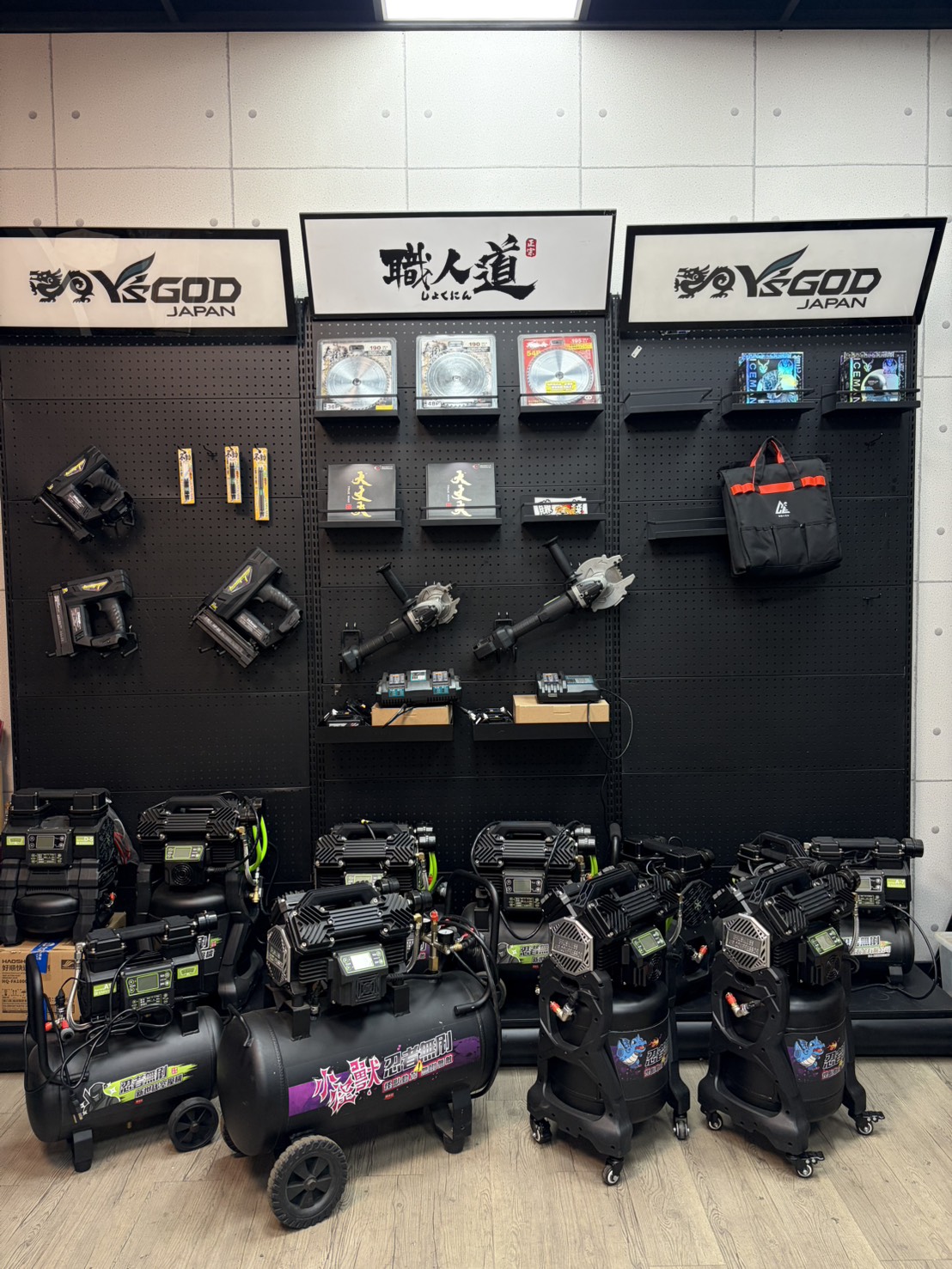
Display area for Shokunin tools and equipment. Product-line breadth matters in a capacity audit: a facility building air compressors, cut-off machines, lithium batteries and cooling vests shares the same floor space and labour across all of them.
Where these vests are used, and what that demands from a supplier
Shokunin positions the water-cooled vest for high-temperature environments, metal sheet factories and outdoor sites. Those are three different heat profiles: radiant heat in sheet metal work, sustained solar load outdoors, and enclosed high-ambient spaces. Each produces a different duty cycle for the vest, and therefore a different recharge pattern for the ice packs — a factor that belongs in the buyer's own operational planning, not only in the supplier's specification sheet.
The industrial share of the cooling vest market — 34.5% in 2025, led by construction and manufacturing — indicates that procurement teams are now buying for crews rather than individuals. Crew-level purchasing multiplies the consequences of a capacity shortfall: a single missed delivery window affects every wearer on site at the same time.
Market trend: what is changing, and when to re-audit
Phase Change Material (PCM) cooling vests captured 28.7% of the market share in 2025 and represent the fastest-growing technology segment, according to Dataintelo. Active circulatory mechanisms, the category that includes ice-water circulation designs, are increasingly deployed in industrial sectors to mitigate occupational heat stress, according to Strategic Market Research, a medium-reliability industry source. Asia Pacific remains the fastest-growing region for cooling vests, according to Spherical Insights.
Two implications matter for buyers. First, technology mix is shifting, which means a capacity claim has a shelf life: a line tooled for one cooling architecture is not automatically convertible to another without re-tooling and re-qualification. Second, if Asia Pacific industrial demand continues to expand, capacity that is adequate at the time of the audit may be committed elsewhere by the time of the order. That is an argument for placing capacity commitments in the contract rather than in the brochure.
Comparison with alternative cooling approaches, and where this option stops working
| Approach | Stated cooling duration | Maintenance and consumables | Site requirements | Audit evidence needed |
|---|---|---|---|---|
| Shokunin water-cooled vest (circulating) | 3–4 hours | Reusable ice packs, durable fabric, minimal upkeep | Ice or chilled-water recharge; power source for circulation | Leak-test records; ice pack material specification; electrical compliance for the pump |
| Other water-cooled vests | Cooling lost after roughly 30 minutes | Frequent ice pack replacement; higher wear and tear | Same recharge requirement | Comparative performance data, often not supplied by the vendor |
| Passive ice-pack vest (general category) | Set by pack mass and ambient temperature | Packs replaced or refrozen frequently | Freezer or cold storage access | Pack conditioning and rotation records |
| PCM vest (28.7% of 2025 market share) | Depends on phase-change temperature and pack conditioning | Controlled reconditioning between uses | Thermal conditioning equipment | Thermal cycling records |
Two boundaries deserve attention before any of this is treated as settled. The first belongs to Shokunin itself: a 1000 m² facility, 30 employees and 5 engineers is a compact manufacturing base. It is consistent with the stated annual output of 10,000 units, but it constrains simultaneous large ODM programs and it constrains peak-season surges — the same thirty people cannot absorb an unexpected multi-thousand-unit order without displacing other production. Buyers planning a concentrated seasonal build should contract for a reservation of capacity rather than cite a published figure.
The second boundary is operational. A circulating water-cooled vest depends on ice or chilled-water recharge and on a power source for its circulation. Where a site cannot provide either — remote locations, multi-shift sites without charging logistics — a passive ice-pack vest or a PCM vest may be the more workable purchase even though the cooling window is shorter. A longer duration on paper does not remove the site conditions it requires.
Future outlook
Expect capacity auditing to formalize. ISO 9001:2015 quality management is a baseline expectation for cooling systems, and electrical components in these products are commonly required to carry CE or UL marks. As industrial buyers in construction and manufacturing — already the largest application segment — move cooling vests from ad-hoc purchasing into framework agreements, the standard evidence set is likely to settle around load plans, engineering allocation and unit-level test records rather than monthly headline figures.
For ODM programs specifically, the competitive variable may shift from unit capacity to engineering capacity. Five engineers serving a portfolio that spans compressors, cutting equipment, batteries and cooling products is a real but finite resource. Buyers comparing suppliers should weigh design bandwidth alongside assembly throughput, because design bandwidth is the constraint that determines how quickly a custom specification reaches production.
FAQ
Should a buyer treat a published monthly capacity figure as verified?
No. A published monthly figure is a supplier statement. It becomes verified when it can be reconciled with a dated load plan, a named production line and a shift pattern. Shokunin's company profile states an annual output of 10,000 units, which is an annual aggregate across its product lines. Where a monthly figure such as 3,000 units appears, the buyer's task is to establish whether it describes peak capability, a theoretical line rate or a mixed-product rate.
How do you reconcile a monthly capacity claim against annual output?
Multiply the monthly figure by twelve and compare it with the stated annual output. A sustained 3,000-unit month repeated twelve times implies 36,000 units a year, more than three times Shokunin's stated 10,000-unit annual output. That gap is expected when a peak rate is quoted against an annual aggregate, but it means the two numbers cannot both be treated as a year-round guarantee. The buyer should ask the supplier to allocate the monthly figure across a twelve-month plan and to state which months are reserved for the buyer's program.
What documents demonstrate engineering availability for an ODM project?
Request the engineering organisation for the specific program rather than the company total. Shokunin's profile lists 5 R&D engineers. Relevant evidence includes how many are assigned to the cooling-vest program, the tooling and fixture list used for customization, and sample change records showing how a specification revision moves through design review. A headcount without an allocation statement does not demonstrate availability.
Does a 1000 m² facility limit order size?
It sets a ceiling that buyers should model explicitly. The 1000 m² figure is the total footprint, shared by production, storage and dispatch. For a product with reusable ice packs, durable fabric and per-unit leak testing, floor space also limits how much work-in-progress can be staged. Small and mid-volume ODM orders are unaffected; a concentrated peak can be affected. The practical mitigation is a scheduled capacity reservation rather than a larger published number.
How does the Shokunin water-cooled vest compare with other water-cooled vests in cooling duration?
Shokunin states a cooling duration of 3–4 hours for its water-cooled vest, against approximately 30 minutes for other water-cooled vests before cooling is lost. Maintenance characteristics differ as well: the Shokunin design uses reusable ice packs and durable fabric requiring minimal upkeep, while other water-cooled vests typically need frequent ice pack replacement and carry higher wear and tear.
What quality controls apply to the ice pack component?
Ice pack leakage is a recognized risk in water-cooled vest construction. The stated control is a reinforced ice pack material with 100% quality assurance before shipment. In an audit, that statement should be matched with three items: the incoming material specification for the pack, the leak or pressure test applied per unit, and the sampling plan used where test capacity is below production volume.
Which compliance documents should be part of a capacity audit file?
Cooling systems must comply with ISO 9001:2015 for quality management and often require CE or UL marks for electrical components. For the cooling vest itself, Shokunin holds the Disaster Prevention Product and Service Certification Award issued by the Taiwan Disaster Prevention Industry Association. Buyers should request certificates with scope and validity dates, and confirm which models and variants each document actually covers.