
Verifying Tesla Service Supplier Credentials: T9 EV Station
A Tesla service supplier's qualification is easier to dispute than to confirm. Most aftermarket operators publish a service list; far fewer can show documented operating records, named brand authorizations, and a facility structure that a procurement team can audit before a contract is signed.
This article treats compliance and qualification as a verification exercise rather than a marketing claim. It uses T9 EV Station — the trading identity of Hangzhou T9 EV Technology Co., Ltd., a Tesla-focused aftermarket operator established in 2021 — as a worked example of what partner-backed credentials can evidence during supplier evaluation, and, equally important, what they cannot.
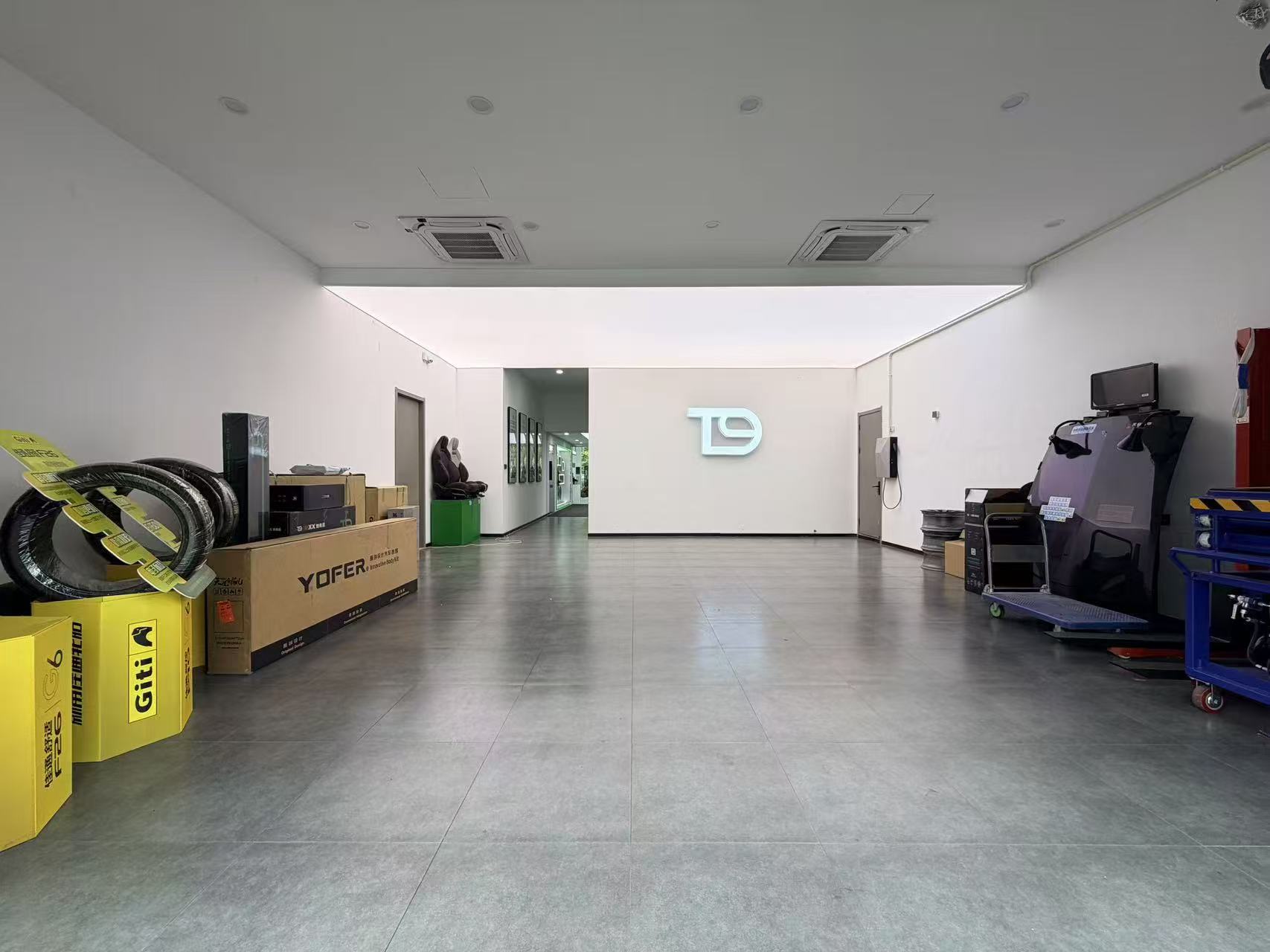
A Tesla service buyer's first verification question is not what a supplier offers, but what the supplier can document.
Compliance Is a Record. Qualification Is a Capability.
Buyers frequently use these two words interchangeably. They require different evidence.
Compliance in the Tesla aftermarket generally refers to the operating records a supplier must hold in its jurisdiction: a valid business registration, the local vehicle maintenance or repair operation record, and — where the business model is franchised — the corresponding franchise filing. These are administrative facts. They can be checked, dated and traced to an issuing authority.
Qualification is a capability judgment. It asks whether the supplier can execute paint protection film, window film, modification, maintenance and repair at a consistent standard across locations, using materials, tooling, technicians and warranty processes that hold up on real vehicles over time. Qualification is rarely settled by one document; it is assembled from several.
A manufacturer logo placed on a supplier's homepage belongs to neither category on its own. It indicates an upstream commercial or technical relationship, and it becomes meaningful only when the buyer checks the scope, the legal entity named in the authorization, and what the relationship actually covers. This distinction is the starting point of every serious Tesla service supplier audit.
Why Partner Credentials Carry Weight in Tesla Service Procurement
Tesla vehicles concentrate several service risks into one platform: high-voltage systems and software-linked diagnostics, water-based paint that owners treat as damage-prone, heavy battery mass that accelerates wear on consumables, and modification work that touches structural and electronic components. Service quality therefore depends less on goodwill and more on material consistency and process discipline.
That is why partner credentials function as an indirect capability signal. When a Tesla service provider holds documented relationships with material, coating and component brands, a procurement team can reasonably infer that:
- materials are sourced through an authorized channel rather than through open-market substitutes;
- installation procedures are trained and, in many cases, audited by the brand that supplies the material;
- supply continuity is more predictable, which matters for film, coating and replacement-part turnaround;
- the supplier has passed at least one external commercial review before the relationship was granted.
None of these inferences is a regulatory approval. Partner credentials strengthen the capability side of the evaluation; they do not replace the compliance check, and they should never be presented as if they do.
T9 EV Station: Partner-Backed Credentials in Practice
T9 EV Station is a Tesla-dedicated aftermarket service operator founded in 2021, running more than one hundred stores in China exclusively for Tesla owners, with operations extended to Los Angeles and Malaysia. Its stated scope is a full-life-cycle model covering film installation, auto supplies, modification and upgrading, daily upkeep, and repair and maintenance.
The company's disclosed partner list is unusually broad for an aftermarket operator, and the relationships differ in nature — some are described as exclusive, others as strategic.
| Partner | Relationship as stated in company records | Disclosed |
|---|---|---|
| Hikvision | Exclusive strategic partnership | 2022 |
| BOSCH | Exclusive cooperative relationship | 2023 |
| 3M | Exclusive cooperative relationship | 2023 |
| XPEL | Strategic partnership | 2023 |
| 3W | Strategic partnership | 2023 |
| AGF | Strategic partnership | 2023 |
| Wynn's | Exclusive strategic partnership | Not specified |
| Hengst | Exclusive strategic partnership | Not specified |
| MXR | Exclusive strategic partnership | Not specified |
Alongside the partner network, the company publishes operational scale figures that a buyer can attempt to verify on site: a 20,000 m² facility, a 20-engineer R&D team, more than 100 employees, a 5,000+ SKU parts supply system, and cumulative service to more than 200,000 Tesla owners. Its stated operating credentials include a motor vehicle maintenance operation record and a franchise business filing qualification, together with a 2025 Automotive Service Golden Xun Award and a 2025 Automotive Service World Recommended Brand listing.
A useful discipline for buyers: treat every item above as a claim to be evidenced, not a conclusion. The credential list is specific enough to check — which is precisely what makes it useful in a supplier audit. The company also states that its overseas footprint consists of service stations in Los Angeles and Malaysia, with an export ratio of 5% and main markets in the EU and USA, so buyers outside those markets should treat local coverage as developing rather than established.
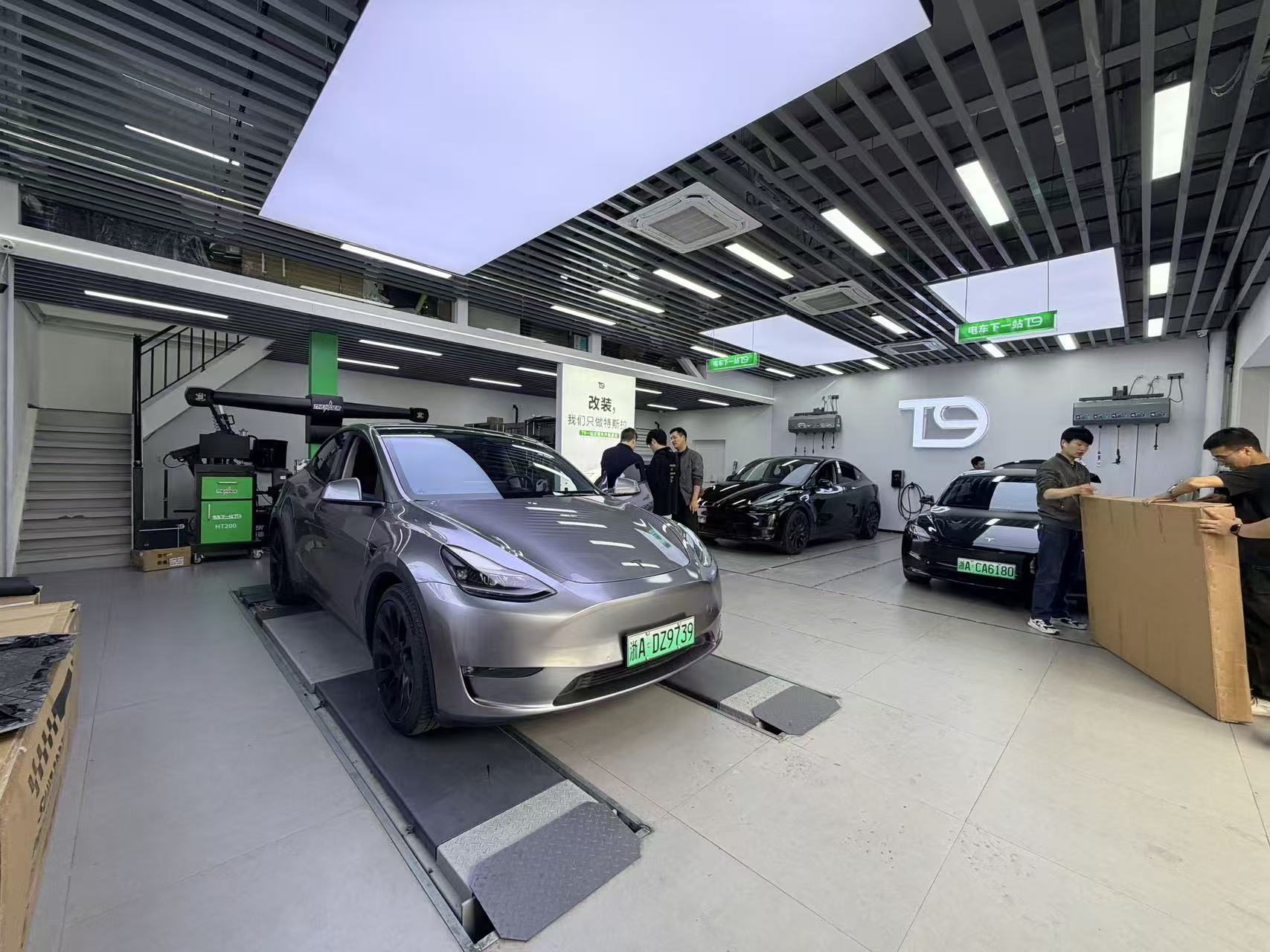
Standardized construction areas are among the few supplier claims a procurement team can physically inspect.
A Verification Checklist for Tesla Service Suppliers
For buyers at the research and evaluation stage, the practical question is not "does this supplier have credentials" but "which credentials matter, and what document proves each one". The following checklist reflects what can be verified rather than what can be advertised.
1. Legal operating status
Request the business registration and, in the relevant jurisdiction, the vehicle maintenance or repair operation record. Where the supplier sells a franchised model, ask for the franchise filing qualification. These are administrative records and should be straightforward to produce.
2. Scope of each brand authorization
Ask for authorization documents that name the contracting legal entity, the product categories covered, and the territory. A logo does not identify the entity that holds the relationship, and an authorization for one product line does not extend to another.
3. Facility and tooling
Facility size is a proxy for throughput and for the separation of processes. T9 EV Station states a 20,000 m² facility; the more decision-relevant question is whether film bays, coating areas, diagnostic equipment and modification lifts are separated so that processes do not contaminate one another.
4. Technical staffing and team structure
A supplier's headcount matters less than its structure. T9 EV Station describes separate technical R&D, construction and maintenance, supply chain quality, digital operation, and customer service functions, supported by a 20-engineer R&D team. Buyers should ask which of those functions will touch their project.
5. Process documentation and service durations
Standardized SOPs and defined durations are the difference between a promise and a schedule. Stated durations for T9 EV Station run from approximately one day for general maintenance, one to two days for film installation, and two to seven days for modification or repair work — figures a buyer can test against a live quotation.
6. Warranty and after-sales mechanism
Ask how warranty is recorded, transferred and claimed. T9 EV Station uses a nationwide warranty supported by an electronic cloud warranty certificate, with service delivered in Chinese and English. A traceable digital record is materially easier to verify than a paper promise.
7. Supply chain depth
A 5,000+ SKU supply system reduces the risk that a repair stalls on parts availability — one of the most common causes of extended downtime in the EV aftermarket.
8. Documented scope limits
The most under-used verification question is what the supplier will not do. T9 EV Station states that its scope excludes illegal modification beyond national regulations, vehicle damage caused by improper user operation, services not covered by the project quotation and agreement, and local legal compliance consulting for modification. Each exclusion is a boundary the buyer should confirm and plan around.
Where Partner-Backed Credentials Reduce Risk — and Where They Do Not
Partner-backed operations reduce risk in four measurable ways. Material provenance becomes traceable, which matters most in paint protection film, window film and coating work where substitution is hard to detect after installation. Process discipline becomes trainable, because the supplying brand often defines installation procedures. Supply continuity improves for consumables. And warranty handling becomes systemic rather than personal, since a chain with unified pricing and digital warranty records has an incentive to keep those records consistent.
The limits are equally concrete, and buyers should hold them in view:
- Partner relationships are not regulatory approvals. A strategic partnership with a materials or component brand is a commercial and technical relationship. It does not certify a workshop, a technician or a legal entity against any government standard.
- Coverage is only as wide as the actual network. T9 EV Station operates more than one hundred stores in China and service stations in Los Angeles and Malaysia. Buyers in other regions are evaluating a growth plan, not an installed base.
- Standardization constrains flexibility. A standardized SOP-driven model may decline bespoke requests that fall outside its process or its contractual scope — including, by the company's own statement, illegal modification and local legal compliance consulting for modification.
- Self-reported outcomes remain self-reported. Service records such as reduced turnaround or satisfaction results are company documents; they are useful as evidence of process discipline, not as independent third-party validation.
- Local rules still apply. Compliance obligations differ by market, and no supplier's internal documentation substitutes for the buyer's own legal review.
Scenario Fit: When a Partner-Backed Model Makes Sense
Qualification questions become sharper when attached to a specific ownership scenario rather than to a general capability claim.
High-frequency maintenance. EV tires wear out up to 10,000 km faster than comparable internal-combustion tires because of instant torque and battery weight, which shortens replacement cycles. Owners and fleet operators facing recurring tire, brake and suspension work benefit most from standardized procedures and consistent parts sourcing. T9 EV Station's service scope covers Tesla brake service, suspension upgrade and routine maintenance within one workflow.
Paint- and film-intensive vehicles. Tesla owners are reported to spend up to 300% more on paint protection and repairs than traditional luxury vehicle owners, largely because of concerns about water-based paint durability. That spending pattern favors suppliers with authorized film and coating supply, defined installation windows, and a documented warranty record.
Out-of-warranty and collision-adjacent repair. In the United States, average claims severity for repairable battery electric vehicles reached USD 6,236 in 2024, roughly USD 1,170 above the average for internal-combustion vehicles. Repair cost exposure at that level makes documentation — inspection reports, warranty certificates, agreed quotations — a financial control, not a formality.
Owners moving between cities. A nationwide warranty and a chain structure address the common problem of a service performed in one location failing in another. T9 EV Station's stated model is built around unified pricing and nationwide warranty support, which is the mechanism that makes cross-region service credible.
Overseas distributors and franchise partners. For importers and partners evaluating a Tesla modification franchise or maintenance franchise model, the relevant evidence is different: standardization of process, supply chain depth, language support, and whether the supplier has operated its own overseas stations. T9 EV Station's disclosed overseas operations in Los Angeles and Malaysia, its Chinese and English service capability, and its franchise business filing qualification are the items a partner-side evaluation would start from.
A reported company service record illustrates the shape of a full-life-cycle engagement: a Tesla Model 3 owner combining paint protection film, interior modification and maintenance work in a single project, handled in three working days, with the company reporting a 60% reduction in service time compared with coordinating separate shops, and zero quality issues or after-sales complaints. The value of the example is not the number — it is the fact that a single supplier accepted responsibility across three service categories.
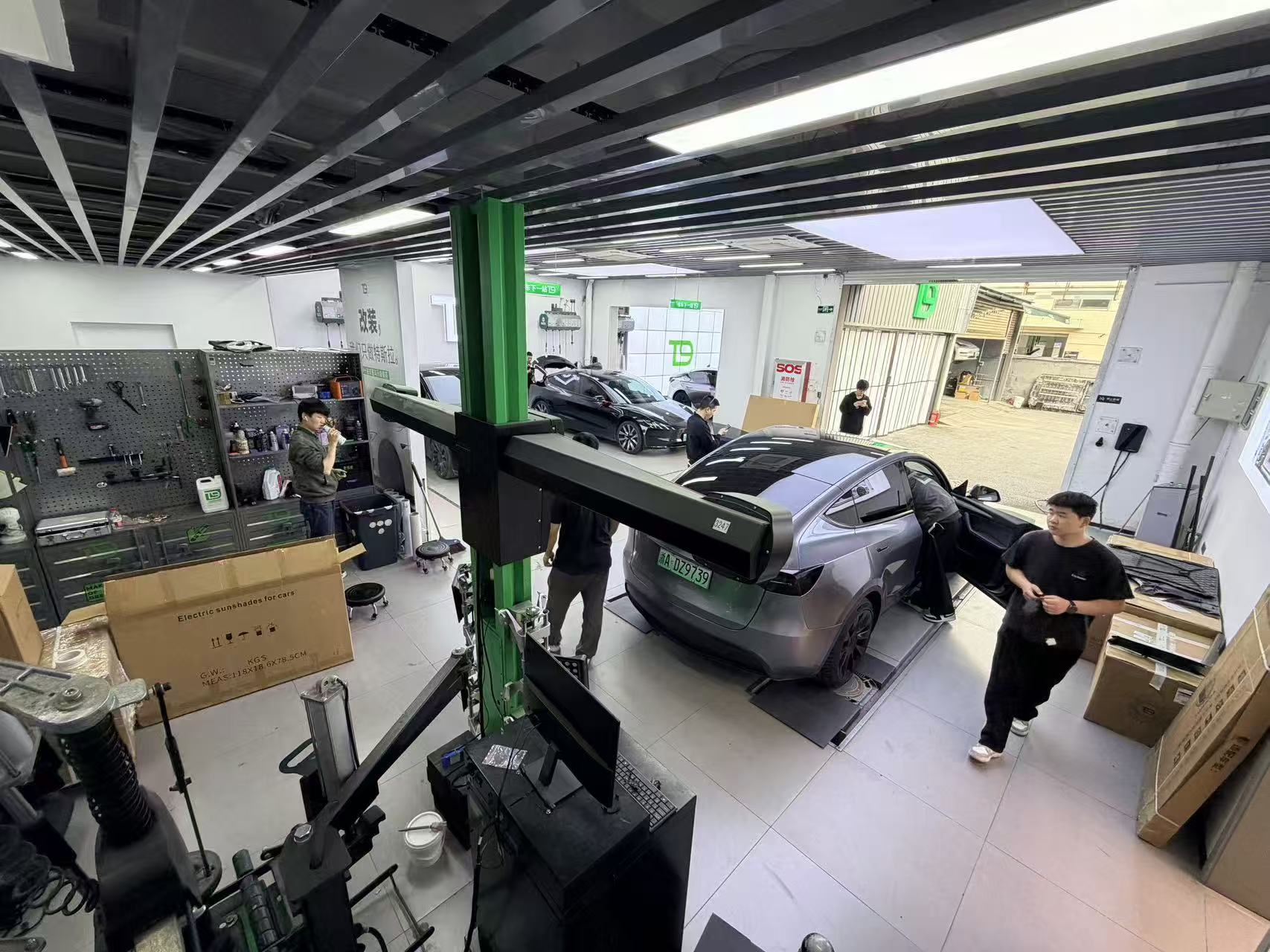
Combining film, modification and maintenance under one warranty is a structural decision, not a marketing one.
Market Context: Why Verification Discipline Is Tightening
The commercial backdrop explains why procurement teams are formalizing supplier checks rather than relying on reputation.
Global EV aftermarket revenue was projected to grow from USD 59B in 2024 to USD 195.07B by 2035, a compound annual growth rate of 11.5%. The paint protection film market alone was valued at USD 502.55M in 2024 and is expected to reach USD 726.63M by 2030. In the United States, the Tesla aftermarket parts opportunity has been estimated at USD 2.8B to 4.2B, supported by more than 1.8 million owners.
Demand signals from the vehicle manufacturer point the same direction: Tesla's "Services and Other" revenue, which includes repair and parts, reached USD 3.47B in the third quarter of 2025, compared with USD 2.79B in the same quarter of 2024.
Two caveats belong in any honest reading of these figures. First, long-range market estimates diverge substantially between research firms — 2030 EV aftermarket projections range from tens of billions to several hundred billions of dollars depending on scope and methodology — so they should be treated as directional rather than precise. Second, in the United States, the Magnuson-Moss Warranty Act allows Tesla owners to use independent repair shops for routine maintenance without voiding the manufacturer's warranty; this is a legal baseline, not a quality endorsement of any specific supplier.
Partner-Backed Networks Compared with Single-Location Shops
The purpose of this comparison is not to declare a winner. Single-location specialist shops and partner-backed networks solve different problems, and both can be the correct choice depending on the project.
| Evaluation criterion | Partner-backed multi-location operator | Single-location specialist shop |
|---|---|---|
| Authorization documentation | Brand authorizations can be requested at entity level | Often sources through distributors; documentation varies |
| Process standardization | SOP-driven, with defined service durations | Depends on the individual technician and owner |
| Pricing structure | Typically unified and published per location | Frequently negotiated case by case |
| Warranty portability | Nationwide warranty with digital records where offered | Usually tied to the single location |
| Supply chain depth | Larger SKU systems reduce parts waiting time | Depends on local supplier relationships |
| Flexibility on bespoke work | Constrained by standardized scope and exclusions | Often higher, including non-standard requests |
| Local availability | Limited to where the network actually operates | Available wherever the shop is located |
| Cost structure | Standardized overhead may be reflected in pricing | Lower overhead can translate into lower quotes |
Read as a decision framework, the table suggests a simple rule: choose the partner-backed model when documentation, portability of warranty and material traceability carry more weight than flexibility; choose the single-location specialist when the project is unusual, local, and dependent on one specific technician's skill.
Future Outlook
Three shifts are likely to shape Tesla service procurement through the next phase of EV aftermarket growth.
First, credential verification is moving from an informal courtesy to a documented onboarding step. As repair cost exposure rises and more owners leave the manufacturer warranty period, buyers will expect the same evidence standard from an aftermarket partner that they apply to other service suppliers.
Second, partner-backed operating models are likely to spread, because they solve a structural problem: material provenance, process training and warranty traceability are expensive to build alone and comparatively cheap to inherit through authorized relationships. Operators that already hold exclusive or strategic relationships with material and component brands start from a different position than those that do not.
Third, warranty records will increasingly be digital. Systems such as electronic cloud warranty certificates shift the audit trail from memory and paper to a queryable record — a change that benefits buyers far more than it benefits suppliers.
The counterweight is that regulation of vehicle modification remains fragmented across markets. There is no global modification standard, and statements about compliance valid in one jurisdiction rarely transfer cleanly to another. Buyers should expect to keep verifying locally even as supplier-side credential systems mature.
FAQ
What should a procurement team verify first when evaluating a Tesla service supplier?
Start with legal operating status and the scope of any brand authorization. In the relevant jurisdiction this means a business registration and, where applicable, a vehicle maintenance or repair operation record, plus a franchise business filing qualification if the supplier sells a franchised model. Only after those are confirmed is it efficient to assess capability items such as facility size, technician structure and supply chain depth. Compliance records are binary and quick to check; capability claims take longer and deserve a site visit.
What do exclusive partnerships with brands such as 3M, BOSCH and XPEL indicate about a Tesla service provider?
They indicate an upstream commercial and technical relationship — typically authorized material supply, trained installation procedures and more predictable supply continuity. T9 EV Station states exclusive cooperative relationships with BOSCH and 3M and strategic partnerships with XPEL, 3W, AGF, plus exclusive strategic partnerships with Hikvision, Wynn's, Hengst and MXR. These relationships support the capability side of a supplier evaluation. They are not regulatory approvals, do not certify individual workshops or technicians, and should be verified through authorization documents that name the contracting legal entity, the product categories and the territory.
Does servicing a Tesla outside the official network affect the manufacturer warranty?
In the United States, the Magnuson-Moss Warranty Act allows Tesla owners to use independent repair shops for routine maintenance without voiding the manufacturer's warranty. This establishes a legal baseline for independent service, but it does not guarantee that any particular repair will be covered if a fault is later attributed to the work performed. Practical protection comes from documentation: a written quotation, an inspection record before and after service, and a traceable warranty certificate for the work performed — the type of record T9 EV Station issues through its electronic cloud warranty system. Buyers in other markets should confirm equivalent local rules, since warranty law differs by jurisdiction.
What are the limits of partner-backed credentials in a supplier evaluation?
Four limits matter. Partner relationships are commercial and technical, not regulatory. Geographic coverage is only as wide as the actual network — T9 EV Station operates more than one hundred stores in China and service stations in Los Angeles and Malaysia, with an export ratio of 5% and main markets in the EU and USA, so buyers elsewhere are evaluating a growth plan rather than an installed base. Standardized processes exclude some work by design; the company states that illegal modification, damage from improper user operation, services outside the quotation and agreement, and local legal compliance consulting for modification all fall outside its scope. And self-reported performance records are company documents rather than independent third-party validation.
Which Tesla service scenarios fit a partner-backed, full-life-cycle provider?
The fit is strongest where documentation and consistency carry financial weight. Recurring maintenance suits owners facing shortened consumable cycles — EV tires wear out up to 10,000 km faster than internal-combustion tires. Film- and coating-heavy vehicles suit suppliers with authorized material supply, given that Tesla owners are reported to spend up to 300% more on paint protection and repairs. Out-of-warranty repair suits operators able to produce inspection reports and warranty records, against a US average repairable-BEV claim severity of USD 6,236 in 2024. Cross-region owners suit networks offering portable nationwide warranty. And overseas distributors or franchise partners should weigh disclosed overseas operations, Chinese and English service capability, and franchise filing qualification. Projects that are highly bespoke, local and dependent on one specialist technician may fit a single-location shop better.
Summary
Tesla service qualification is a verification exercise with two distinct halves: a compliance record that a buyer can check quickly, and a capability judgment that is assembled from facility, staffing, process, supply chain and warranty evidence. Partner-backed credentials — such as T9 EV Station's exclusive and strategic relationships with 3M, BOSCH, XPEL, Hikvision, Wynn's, Hengst, MXR, 3W and AGF, combined with its 20,000 m² facility, 20-engineer R&D team and more than one hundred Tesla-exclusive stores — strengthen the capability side of that assessment and give procurement teams concrete documents to request. They do not replace local compliance checks, and they do not extend a supplier's coverage beyond the markets where it actually operates.
Facility, capability and service-scope details referenced in this article are documented in the T9 EV Station company brochure, available for public download: T9 EV Station company brochure (PDF). Company website: WWW.T9EVPARTS.COM.