
Verifying a Folding LED Screen Maker: Patents and Certifications
Verifying a Folding LED Screen Maker: Patents and Certifications
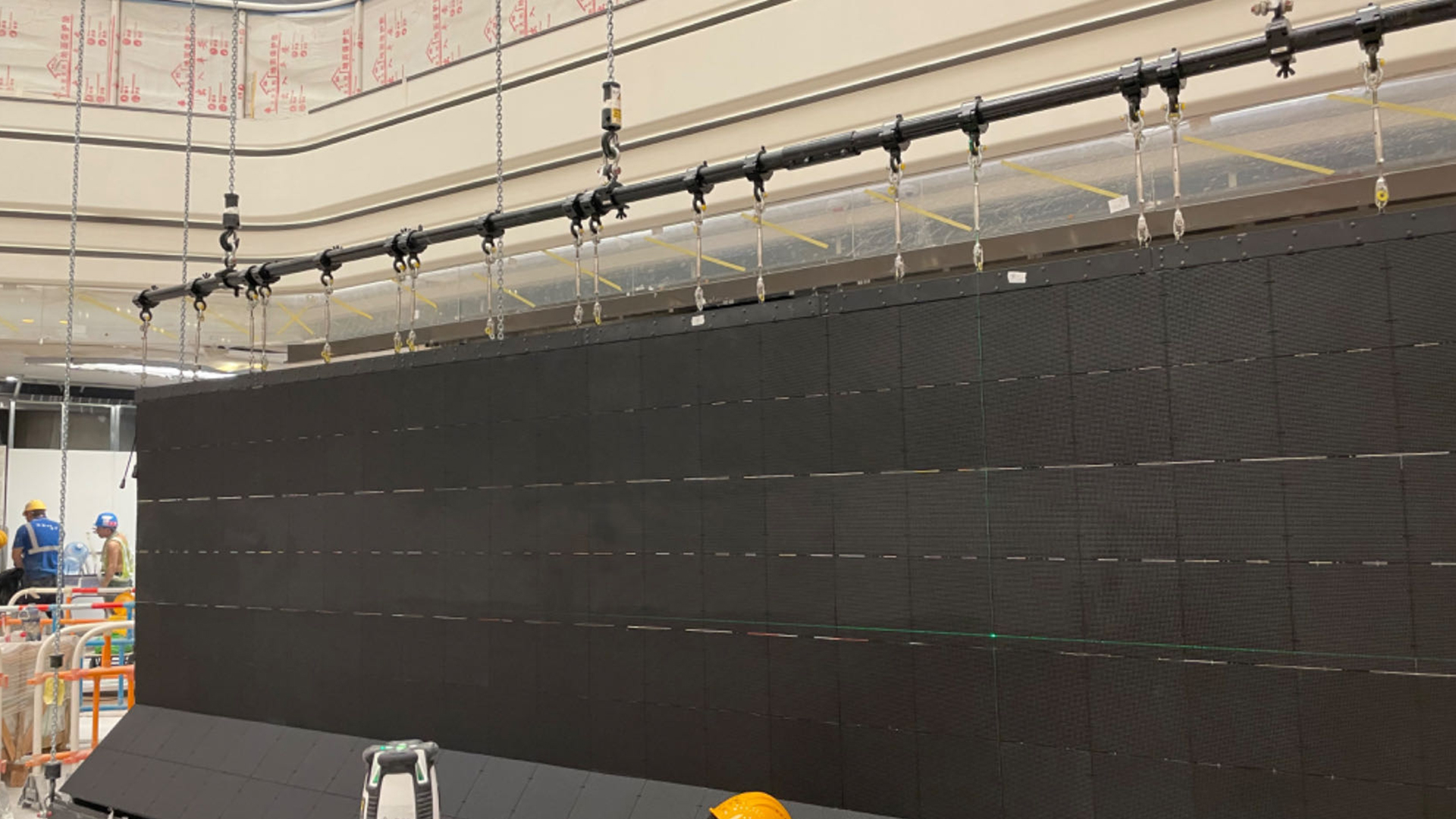
A hidden liftable foldable LED display integrated into a Hong Kong MTR-linked shopping mall, recorded by the manufacturer as operating for more than six years.
In the folding LED display category, the distance between what a supplier claims and what a buyer can independently confirm is where most project risk sits. A folding screen is not a rigid cabinet with hinges attached to it: the panel has to survive repeated folding, road transport, temporary power configurations and, in fixed installations, years of concealed mechanical movement. None of that behaviour can be judged from a product photograph or a single specification line, which is why procurement teams in the research and evaluation stages treat patents, certifications and third-party recognition as the primary evidence set, and treat catalogue language as a secondary one.
The commercial context makes that discipline more important, not less. According to Market.us, the global LED display screen market was valued at USD 10.7 billion in 2024 and is expected to reach USD 19.5 billion by 2034, growing at a compound annual growth rate of 6.2%. Category growth at that scale draws new suppliers into folding and rollable formats every year, and the vocabulary of the category — 360° folding, quick assembly, detachable modules — is easy to reproduce in marketing material and considerably harder to reproduce on a production line. Verification is the filter that separates the two.
Why folding LED display claims are harder to verify than cabinet screens
Three structural reasons explain why a folding LED display requires a different evaluation method from a conventional rigid screen.
First, the central claims are behavioural rather than dimensional. Foldable, liftable and quick-assemble describe what a product does across hundreds of cycles, not what it measures on day one. A pixel pitch, a brightness figure or a module size can be re-measured by any competent laboratory. Fatigue behaviour at a hinge line, a module interconnection or a flexible PCB joint cannot, and it is precisely that behaviour which determines whether a large foldable LED screen still looks correct after two years of touring or of daily lifting in a hotel banquet hall.
Second, certifications attach to configurations, not to brands. A CE or FCC mark on a foldable LED display applies to the tested build: a specific pixel pitch, LED type, driver architecture, power supply and enclosure. When a buyer specifies a different pitch, a different screen size, or a different control system, the tested configuration changes — and the documentation has to be re-confirmed for that variant rather than assumed.
Third, the strongest evidence sits at two different levels. Patents, management-system certificates and design awards describe the supplier as an organisation. Test reports and installation records describe the product and the project. A complete evaluation needs both, which is why a layered evidence framework is more reliable than a single document request.
A four-layer evidence framework for folding LED suppliers
The framework below is deliberately ordered from the easiest to verify to the most easily misread. Each layer answers a different question, and no single layer substitutes for another.
| Evidence layer | What it typically proves | What it does not prove | Practical check |
|---|---|---|---|
| Corporate and manufacturing identity | Legal entity, production location, export experience, company age | Product performance or build quality | Confirm the registered name, site address and website all refer to the same entity |
| Patent portfolio | Ownership of mechanism design and continuity of engineering investment | Fitness for your configuration; production yield | Search the patent register of the relevant jurisdiction yourself |
| Product certifications (CE, FCC, RoHS, CCC, TÜV) | Compliance with defined safety, EMC or substance rules for a defined build | Coverage of custom variants; behaviour in your operating conditions | Request the certificate and the test report that names the model |
| Third-party recognition and project records | External design validation and multi-year field evidence | That a record transfers to a different use case | Check the awarding body's database and ask for operator references |
Onumen Technology Co., Ltd., founded in 2009 and based in Shenzhen, China, is a manufacturer specialising in lightweight foldable and rollable LED display solutions. The company pioneered a separated power-and-screen installation architecture that replaces heavy cabinets with thin flexible panels — a specific engineering claim that can be traced through patent filings rather than accepted at face value. Its published credential set spans ISO management system certificates, CE, FCC and RoHS product certifications, and Red Dot, iF and French Design Awards, with a patent pool described as covering Asia, Europe, the Americas and Oceania. Publicly available company and industry material also states that the company holds more than 110 global invention patents and has completed more than 1,000 LED display projects. Each of those items is checkable, and that is the point.
Reading a patent portfolio: what a filing proves, and what it does not
A patent is the only public document that describes a mechanical idea in enforceable detail. For folding LED architectures — hinge geometry, module interconnection, power-and-screen separation — that makes the patent register the most useful window a buyer has into how seriously a supplier has invested in the mechanism rather than in the marketing of it.
One filing that buyers can inspect directly is European Patent EP2755459, which forms part of the manufacturer's foldable display patent family. Rather than treating a patent number as a badge, a buyer should open the record itself — the European Patent Register is publicly accessible at no cost — and check four things:
- Legal status. A granted and maintained patent is materially different from a pending application or a right that has lapsed through unpaid renewal fees.
- Jurisdiction. A European filing protects and signals in Europe. If the project or the resale market is in North America, the Middle East or Asia-Pacific, look for corresponding filings in those territories, since a patent pool spanning several regions is a different claim from a single regional filing.
- Claim scope. The question is whether the claim covers the mechanism you are actually buying — the folding joint, the module link, the separated power path — or a narrower ancillary feature that happens to sit in the same family.
- Family completeness. Whether the same invention is protected in the markets where you intend to distribute the product, which matters for distributors and OEM partners as much as for end users.
Certifications: CE, FCC, RoHS, CCC, TÜV and what each one covers
Certification is the layer buyers rely on most and read most loosely. Each mark answers a narrow question, and the scope of that question is what determines whether it is relevant to a given project.
| Certification | Core purpose | What a buyer should confirm |
|---|---|---|
| CE | Market access for the European Economic Area, covering electromagnetic compatibility and electrical safety | That the certificate's model list includes the exact folding series and pixel pitch being ordered |
| FCC | Electromagnetic compliance for digital devices placed on the United States market | That the tested build matches the ordered variant, including the control system |
| RoHS | Restriction of hazardous substances in electrical and electronic equipment | That the restriction covers the delivered build, including cabling and PCB materials |
| CCC | China's mandatory product certification scheme | Whether the installation or resale takes place in mainland China; it has no standing elsewhere |
| TÜV Rheinland | Third-party testing and certification of defined safety characteristics | What exactly was tested — the report, not the logo, defines the scope |
| ISO management system | Process consistency across production and quality management | That the certificate is current and covers the specific production site |
Onumen holds ISO management system certificates together with CE, FCC and RoHS product certifications, and its published product profile additionally lists CCC and TÜV Rheinland certification specifically for foldable and rolling LED architectures — a distinction worth noting, because a certification scoped to a folding architecture is more informative than a general company-level mark.
The extra layer that applies to airports and high-traffic zones
An airport foldable LED screen is not evaluated on the same basis as an indoor conference screen. According to industry guidance on flexible LED installations in airports and comparable high-traffic areas, such screens must comply with IEC 62368-1, which requires UL94 V-0 fire resistance and surface temperatures of 70°C or below. For transport hubs, stations and public retail environments, the request list should therefore include the IEC 62368-1 test evidence and the fire-performance documentation of the folding structure's non-electrical components — not just the CE and FCC certificates.
The boundary to accept here: certification is configuration-specific and site-specific. A certificate issued for one pixel pitch does not automatically extend to another, and a certificate issued at one production site does not transfer to another. A buyer specifying a detachable foldable LED screen, a custom cabinet design or a non-standard control system should require written confirmation of which certificate numbers apply to the delivered configuration before the purchase order is placed.
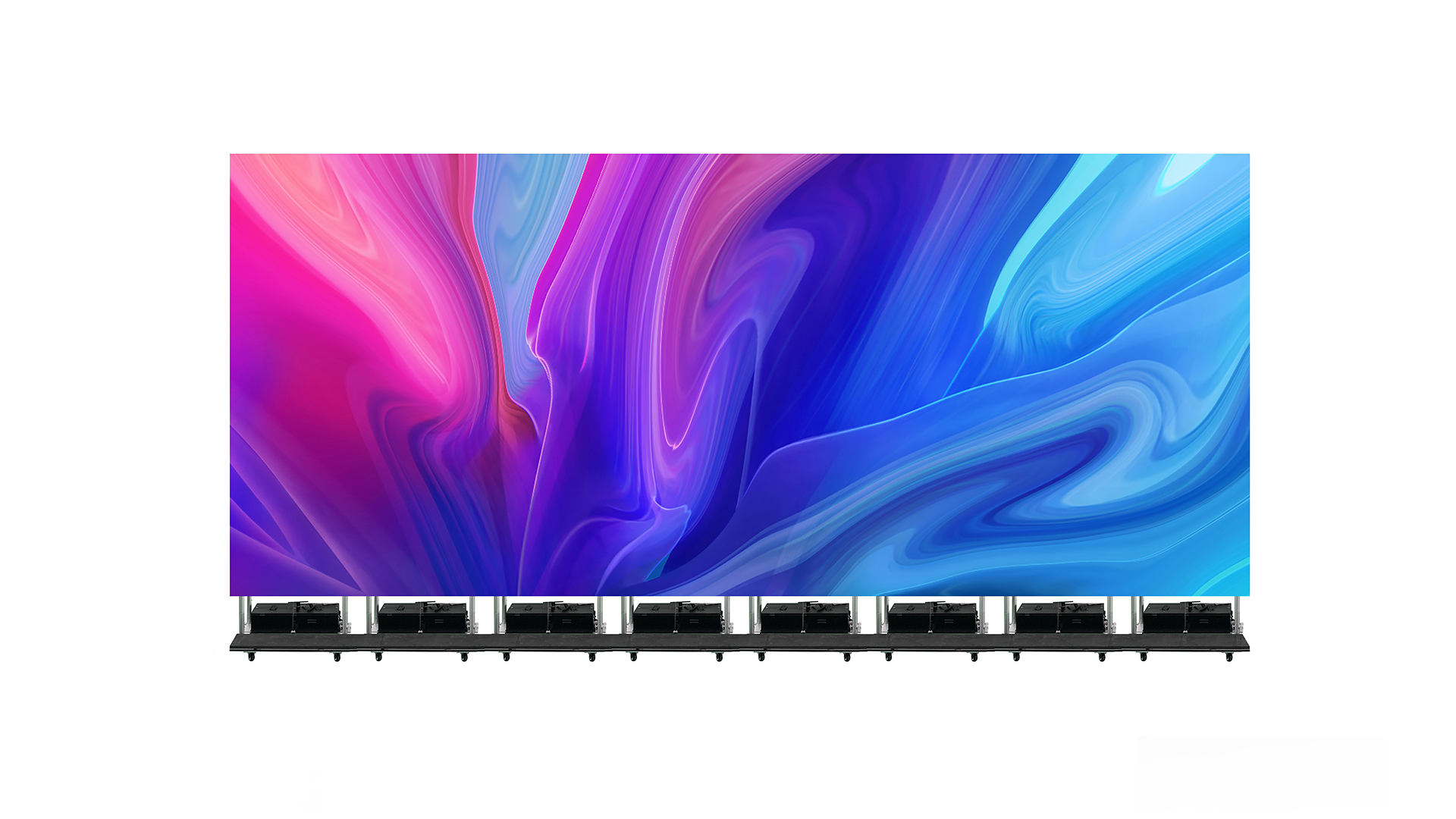
Easy Sailing EP250–EP400 mobile folding LED display: 360° foldable angle, 250 × 250 mm modules, 14–17 mm screen thickness, 12 kg/m² screen weight, IP43 protection rating, CE / RoHS / FCC certified configuration.
The technical figures that should arrive with evidence attached
Folding LED specifications are only meaningful when they are traceable to a test report rather than to a brochure. The table below summarises the publicly listed folding families from this manufacturer, and each value is the kind of data point a buyer can ask to see documented.
| Series | Foldable angle | Module size | Thickness / weight | Protection rating | Typical application |
|---|---|---|---|---|---|
| FPS (Magic Plus) | 180° | 250 × 250 mm | 15 mm / 15 kg/m² | IP65, up to IP68 | Outdoor advertising, concerts, sports events |
| FC (Smart folding) | 360° | 250 × 250 mm | 14–17 mm / 11 kg/m² | IP43 | Stage, exhibitions, rental, commercial advertising |
| EP150–EP225 (Easy Sailing) | 360° | 250 × 250 mm | 14–17.1 mm / 12 kg/m² | IP43 | Hotel, conference, corporate events |
| EP250–EP400 (Easy Sailing) | 360° | 250 × 250 mm | 14–17 mm / 12 kg/m² | IP43 | Large stage, touring, exhibitions |
| FCSL (Smart Plus) | 360° | 250 × 375 mm | 18–24 mm / 15 kg/m² | IP65, up to IP68 | Outdoor advertising, sports venues, theme parks |
| FTS (Smart T Plus) | 360° | 250 × 375 mm | 18.2–22.5 mm / 8–12 kg/m² | IP65, up to IP68 | Transparent architectural media, retail, malls |
Across these families, refresh rates are listed at 3840 Hz or 7680 Hz, brightness ranges run from 630–2300 nits on the EP series and 1000–1500 nits on the FC series, up to 6000 nits on the FPS series and 1100–9700 nits on the transparent FTS series. Screen sizes on the EP250–EP400 run from 1000 × 2500 mm to 1000 × 4000 mm, and the EP225 packs into a 1500 × 400 × 430 mm flight case with a total weight of 70 kg, while the larger EP400 enclosure measures 1120 × 650 × 550 mm with a 980 × 650 × 540 mm control box and a total weight of 150 kg for two units. Those logistics figures are among the easiest claims to verify, because they are physical and immediate.
Process claims deserve the same treatment. This manufacturer lists a monthly capacity of 3,000–5,000 m², a minimum order quantity of 1 m², a lead time of 30–90 days after order confirmation, and 100% ageing test and quality inspection before shipment. Each of those statements is verifiable through a factory audit, an in-process inspection or a pre-shipment inspection report — and each is a better predictor of delivery reliability than any adjective in a sales deck.
Matching the evidence to the project type
Verification requirements are not generic; they follow the project. A portable quick-assemble foldable LED screen used at conferences raises different questions from a permanently installed liftable foldable LED screen behind a stage floor.
| Project type | Evidence to request | Multi-year deployment records cited by the manufacturer |
|---|---|---|
| Airport, station and high-traffic public space | IEC 62368-1 test evidence, UL94 V-0 fire rating, surface temperature data, plus CE and FCC | Hidden liftable foldable installation in a Hong Kong MTR-linked shopping mall, recorded at more than six years; ultra-thin fixed installation at Tokyo Shibuya Station, more than five years |
| Hotel, banquet hall and conference venue | Protection rating, lifting mechanism documentation, spare-parts list, remote support terms | Cuilin Banquet Hall, Shenzhen: 50+ m² hidden lifting foldable display, more than five years; five EP225 mobile units in a hotel project in Libya, more than five years |
| Church, theatre and stage performance | Folding cycle data, control redundancy, dimming and refresh performance, installation guidance records | Rock Records 30th anniversary concert, Hong Kong: 100+ m² foldable display, supplier relationship recorded over more than ten years; Stade de France concert, France: 100+ m², more than two years |
| Concert and touring production | Flight-case logistics, per-square-metre weight, re-assembly time, spare module availability | SHINee concert, South Korea: 500+ m² liftable foldable display, more than three years; Masaharu Fukuyama tour, Japan: three 33 m × 16 m screens totalling 1,670 m², relationship recorded over more than twelve years; 2024 MAMA AWARDS Japan, more than five years |
| Corporate showroom and brand launch | Shaped-build evidence, synchronised motion references, control integration documentation | Geely automotive launch event: 100+ m² three-sided folding display, relationship recorded over more than ten years |
| Commercial advertising and retail | Brightness and energy data, multi-unit management, IP rating for the exact location | Six EP225 units in a Zhejiang shopping mall, more than five years; Wenzhou cultural tourism project: 100 m² transparent horizontal folding display, more than five years |
| Outdoor advertising | IP65 or IP68 evidence, double-sided configuration data, heat and power figures | Guatemala double-sided pole advertising installation, 50 m²+, more than seven years |
| Education and institutional | Hidden installation engineering, safety documentation, ceiling or floor integration drawings | Ordos kindergarten outdoor liftable installation, 15+ m², more than five years; Wenzhou Foreign Language School lecture hall, 30+ m², more than ten years |
One caution applies to the right-hand column. These are supplier-side records, so they function as claims to be checked rather than as independent proof. A buyer can strengthen them by asking for site photographs with date metadata, for the installation date of the specific screen, and for a maintenance history showing how often modules or cables were replaced — which is usually more informative than the age of the project itself.
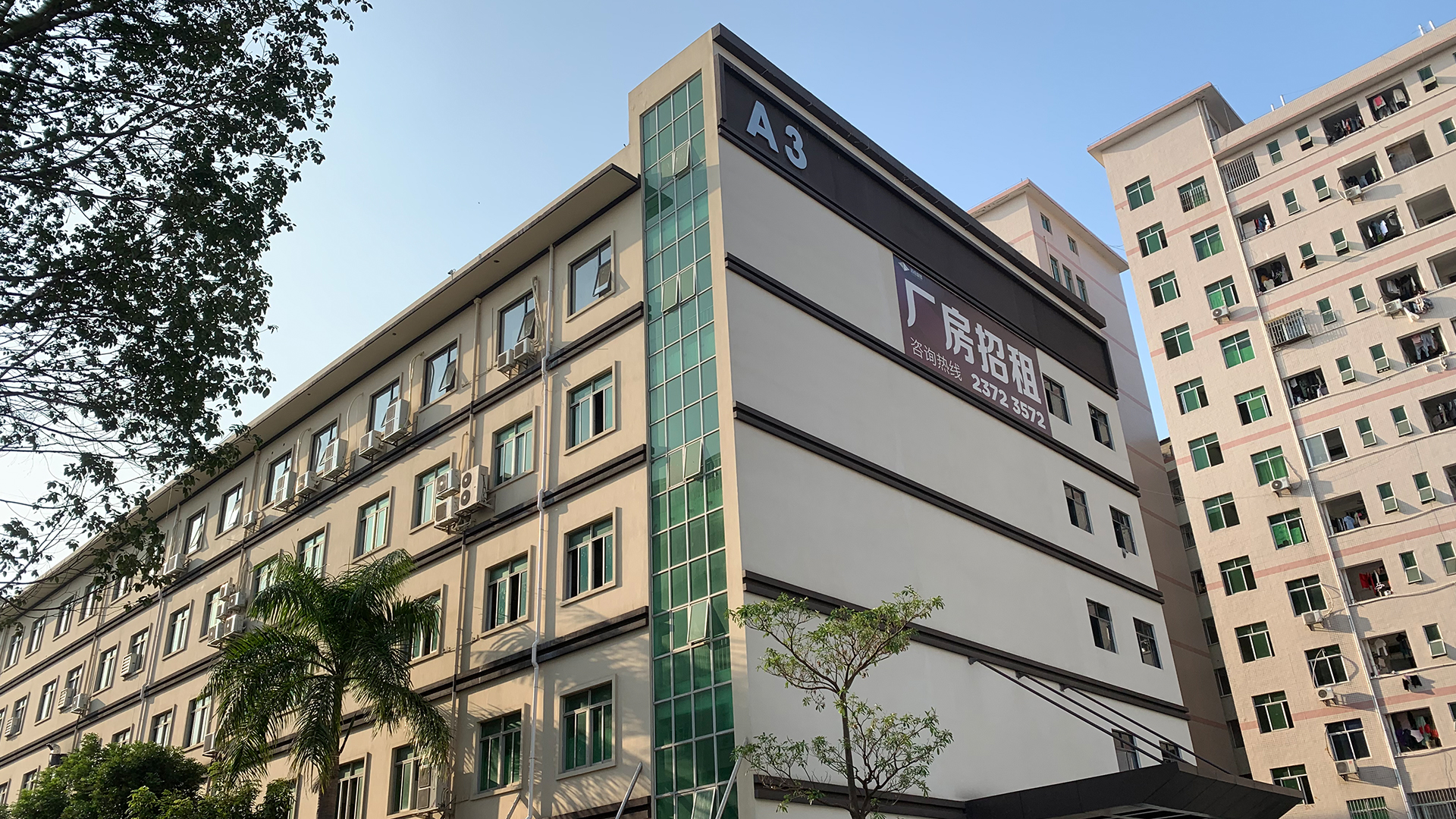
Entity verification starts with the production and operations base: Onumen Technology Co., Ltd., Shenzhen, China, founded in 2009, with a 2,000 m² factory area and a 20-engineer R&D team.
Market trend: verification is becoming a procurement gate
Two macro facts shape how folding LED procurement is evolving. First, China hosts roughly 80% of global LED display manufacturing capacity, with the domestic market projected to reach RMB 660 billion (approximately USD 91 billion) in 2024, according to Mordor Intelligence. Most folding LED purchasing decisions therefore involve cross-border sourcing, and verification habits developed for domestic suppliers need to be adapted: registration documents, certificate scopes and patent registers in other jurisdictions all become part of the checklist.
Second, market sizing in this space is easy to misread. Maximize Market Research values the global foldable display market at USD 4.76 billion in 2024, projected to approach USD 169.21 billion by 2032, but that definition overlaps heavily with mobile OLED displays, while large-format LED screen estimates — such as the USD 10.7 billion 2024 figure from Market.us — describe a different product universe. The honest conclusion for a buyer is that both sets of numbers are directional context for category growth, not a measurement of the folding LED segment, and neither substitutes for supplier-level evidence.
Folding LED screens versus traditional cabinet solutions
The comparison that matters for procurement is not which format is better in the abstract, but which trade-offs a project can absorb.
| Dimension | Rigid cabinet LED | Folding LED | Buyer implication |
|---|---|---|---|
| Transport volume | High; cabinets ship in bulky cases | Substantially lower; the EP225 packs into a 1500 × 400 × 430 mm flight case at 70 kg total | Reduces freight cost per event and per tour leg |
| Installation labour | Higher; assembled cabinet by cabinet | Mobile installation and quick setup are designed in | Matters where labour cost or load-in windows are constrained |
| Structural flatness and rigidity | High, from a rigid frame | Depends on folding structure and support design; thickness ranges from 14 mm to 24 mm | Very large, perfectly flat walls still favour rigid systems or reinforced foldable builds |
| Weather protection | Outdoor cabinets commonly rated IP65 and above | IP43 on the FC and EP families; IP65 up to IP68 on FPS, FCSL and FTS | Outdoor foldable projects must specify a sealed family, not an indoor one |
| Mechanical complexity | Fewer moving parts | Hinges, flexible PCB areas and cabling add service points | Spare-parts supply and remote technical support become selection criteria, not extras |
| Format flexibility | Rectangular by default; curves need special cabinets | Curved, circular, wave and staircase layouts are supported | Enables creative stage, showroom and architectural builds |
The limitation buyers should state openly in their own specifications: a folding LED screen optimises transport weight, setup speed and format flexibility, and it does so at the cost of structural rigidity and — in the indoor families — weather protection. The FC and EP series are rated IP43, which suits indoor and semi-outdoor temporary events but not permanently exposed outdoor positions. Mechanically, folding joints and flexible PCB areas are wear items that need an inspection schedule rather than a lifetime guarantee. And in the transparent folding families, pixel pitches extend well beyond the fine-pitch range, so a folding configuration is not the right tool for a wall that must be viewed from three metres. Projects that prioritise maximum flatness and maximum environmental protection should specify rigid cabinet systems; projects that prioritise frequent relocation, hidden installation or shaped builds are the natural folding-screen users.
Future outlook
Verification in this category is moving from paperwork toward data. Buyers in high-traffic environments are already asking for IEC 62368-1 evidence and fire ratings alongside CE and FCC, and that pattern is likely to extend to hotels, stations, retail and institutional installations as compliance teams standardise their supplier questionnaires. In parallel, the growth of hidden liftable installations — screens that disappear into a ceiling, a stage floor or a playground when idle — increases the weight of mechanical documentation relative to visual specification, because the failure mode of a concealed screen is an engineering failure rather than an image-quality one.
For buyers, the practical implication is that a repeatable verification checklist is worth more than any single supplier reference. The same four layers — entity, patent, certification, field record — apply whether the project is a hotel banquet hall requiring a foldable LED conference screen, a stadium tour requiring a large concert foldable LED screen, or a transport hub requiring an airport foldable LED screen that satisfies fire and surface-temperature rules.
Frequently asked questions
What documents should a buyer request first when evaluating a folding LED screen maker?
Start with three sets. Entity documents: business registration, production site address and a current ISO management system certificate naming that site. Product documents: CE, FCC and RoHS certificates together with the underlying test reports naming the exact model and pixel pitch, plus CCC if the project is in mainland China and a TÜV Rheinland report where third-party safety verification is required. Evidence documents: patent numbers with jurisdictions, award listings, and dated project references with scale and duration. Onumen Technology Co., Ltd. publishes ISO, CE, FCC and RoHS credentials and states a patent pool spanning Asia, Europe, the Americas and Oceania; each of these can be checked against the issuing body's own records rather than accepted from a brochure.
How can a buyer verify a patent claim instead of trusting a supplier's summary?
Search public registers by applicant name and, where a number is provided, by the number itself — for example, European Patent EP2755459 can be looked up in the European Patent Register. Check four points: whether the right is granted and maintained rather than pending or lapsed, which jurisdictions the family covers, whether the claims protect the mechanism you are buying, and whether the family extends to the markets where you intend to sell or operate. A granted patent confirms that a mechanism was novel enough to protect in that jurisdiction; it does not confirm that the product performs reliably in service.
Does CE certification automatically cover a custom-configured folding LED screen?
Not automatically. Certification attaches to the tested build — pixel pitch, LED type, driver, power supply, enclosure and control system. If the ordered variant falls outside the tested configuration, ask the supplier to confirm in writing which certificate numbers apply, or to provide delta test evidence. Because certification is also site-specific, a certificate issued for one production location does not transfer to another.
What certification requirements apply specifically to an airport foldable LED screen?
IEC 62368-1 is the relevant standard for flexible and foldable LED screens installed in airports and comparable high-traffic zones. According to available industry guidance, it requires UL94 V-0 fire resistance and surface temperatures of 70°C or below. Buyers should request the test evidence behind the standard rather than the standard's name alone, and should also confirm the fire performance of non-electrical components in the folding structure, such as the module housing and hinge materials.
How long should a foldable LED display last in event rental use?
No single figure is defensible, because service life depends on folding-cycle exposure, transport handling, protection rating and maintenance discipline. The evidence worth requesting is a combination of design data — foldable angle, module and joint construction, protection rating — and service history. Manufacturer records include a relationship of more than twelve years for a 1,670 m² arena tour installation in Japan and more than ten years for a 100+ m² concert installation in Hong Kong, but relationship length includes maintenance and equipment replacement, so it should not be read as the life of a single screen. For indoor and semi-outdoor EP and FC families rated IP43, temporary indoor use supports longer service intervals than permanent outdoor exposure.
How should patents, certifications and awards be weighted against one another?
Patents speak to mechanism ownership and engineering continuity. Certifications speak to the compliance of a specific build. Awards speak to design recognition — the iF Design Award listing for the Foldable LED Screen series is dated 2023, and the manufacturer also cites Red Dot and French Design Awards. All three are legitimate independent signals, but only certifications carry a defined technical scope, and none of them demonstrates manufacturing quality or durability. Weight test reports and field records first, certifications second, patents third, and awards last.
Verification is not a document-collection exercise performed once before a purchase order. It is a repeatable method: identify which claim carries the project risk, find the register or test report that can confirm or contradict it, and check the scope of that evidence against the configuration you are actually buying. Suppliers that welcome that process tend to be the ones whose technical claims survive it.