
Verifying a Painting Line Supplier's Claims: What Physical Evidence Matters
Verifying a Painting Line Supplier's Claims: What Physical Evidence Matters
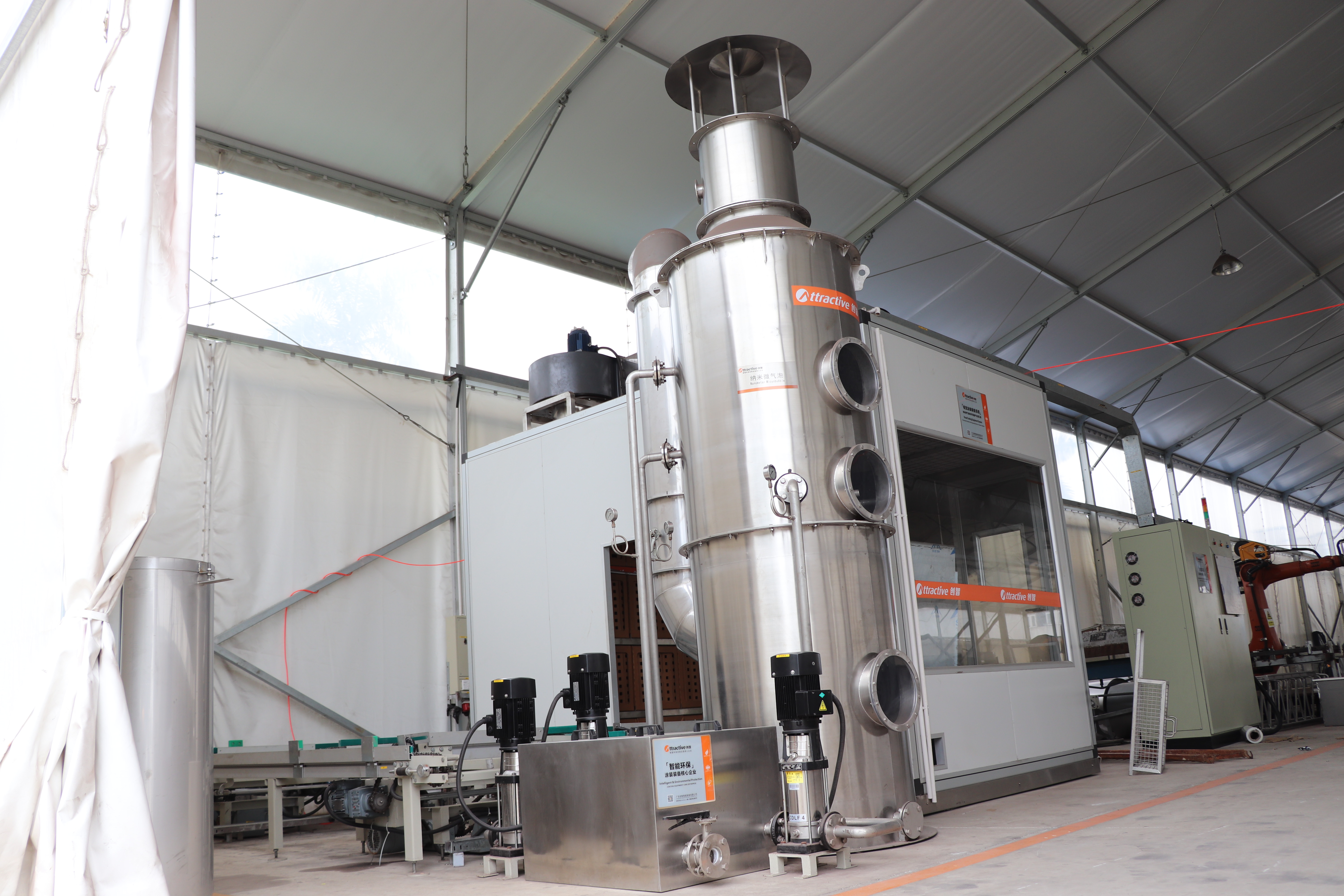
Fabrication workshop at a coating line manufacturing site in Zhaoqing, Guangdong Province — the physical starting point for supplier verification.
Industrial coating projects are awarded on evidence, not adjectives. A painting line is a capital asset that an operator expects to run for a decade or more, and every performance claim attached to it — hourly output, film thickness consistency, paint consumption, corrosion resistance — has a physical counterpart somewhere in the supplier's organisation: a test report, a machine nameplate, a commissioned reference plant, or a service log. The practical question for a buyer at the decision and execution stage is not whether a supplier makes strong claims, but which of those claims can be traced to something that can be inspected.
The market context makes this more urgent rather than less. The global industrial paint process automation market, which includes robotic and conveyorised systems, was valued at USD 5.3 billion in 2024 and is projected to reach USD 8.9 billion by 2030 (Strategic Market Research). China's industrial coating equipment market is projected to reach 45 billion CNY by 2026, driven by automotive, cookware, and furniture demand (EIN Presswire). As installed capacity grows, the number of suppliers quoting automated lines grows with it — and so does the volume of claims that are difficult to check from a distance.
This guide sets out what physical evidence matters when verifying a painting line supplier's claims, how to read reference lists and test data rather than accept them, and where documented limits should appear in any credible proposal. It uses the published documentation of Attractivechina (Guangdong Chuangzhi Intelligent Equipment Co., Ltd.), a coating equipment manufacturer based in Zhaoqing, Guangdong Province, as a working example of the type of evidence a buyer can request from any supplier.
Why Painting Line Claims Are Difficult to Check
A painting line is not a catalogue product. Two systems that both advertise "800–1,000 pieces per hour" can differ in workpiece envelope, substrate material, coating chemistry, curing method, conveyor type, and energy source. Attractivechina's cookware coating line, for example, is specified around non-stick pans, rice cooker liners and cake pans made of aluminium alloy or composite materials, with a standard workpiece of Φ220 × 160 mm (H) and a maximum workpiece of Φ300 × 160 mm (H), four inner pots or twenty lids per hanger, a workpiece pitch of 450–900 mm, an anodising line speed of 1,200 mm/min, and a curing oven running at 1,000 mm/min with an adjustable range of 0.5–1.5 m/min. Those parameters are only meaningful in combination: output depends on hanger density, pitch, and oven speed at the same time.
The same configuration logic applies across industries. An automotive parts line may run ABS+PC bumpers, door trim, instrument panels, wheel arches and switch panels at a 45-second tray cycle; a metal line may handle aluminium panels and profiles up to 7,000 × 2,000 × 2,200 mm on a power-and-free conveyor; a wood line may run solid wood and MDF chair components at 4,000 mm/min; an industrial equipment line may be built around rail cars and heavy fabricated structures. Because the specification is project-specific, generic performance statements cannot be compared directly — but the underlying evidence can be requested and reviewed in the same way every time.
The Evidence Hierarchy: Six Categories of Verifiable Proof
A useful way to structure a supplier review is to sort every claim into one of six evidence categories, then test whether the supplier can supply the matching artefact.
- Reference installations. Country, part family, substrate, line type, commissioning status, and a contactable end user. A country name alone is not a reference.
- Test and inspection records. Film thickness, adhesion, corrosion (salt spray), and — for food-contact products — migration and food-grade compliance data.
- Nameplate and drawing data. Installed power, conveyor type and speed range, oven temperature profile, workpiece envelope, and hanger arrangement as built.
- Consumption and utility records. Paint or powder consumption per part, and electricity and gas consumption per production shift.
- Facility evidence. In-house machining, welding and fabrication, assembly capability, and pre-shipment testing arrangements.
- Contractual acceptance. The pre-shipment test criteria, inspection documentation, and the payment milestones tied to them.
| Claim area | Typical supplier statement | Physical evidence to request | Why it matters |
|---|---|---|---|
| Output capacity | "Up to 1,000 pieces per hour" | Hanger drawing, workpiece pitch, line speed range, shift pattern | Output is a function of hanger density and oven speed, not a standalone number |
| Coating quality | "Uniform film, excellent adhesion" | Film thickness logs, adhesion test records, defect categories | Uniformity claims are only checkable against measurement records |
| Consumption | "30% less paint" | Consumption per part or per m² over a defined production period | Savings depend on part geometry, transfer efficiency and utilisation |
| Corrosion and food contact | "97–98% salt spray pass rate" | Test standard, exposure hours, acceptance threshold, sample size, raw report | A pass rate without test conditions cannot be reproduced or compared |
| Capacity and lead time | "Fast delivery, ready capacity" | Configuration-specific production schedule and workspace allocation | Customised lines are scheduled against the specific configuration |
| After-sales | "Comprehensive support" | Response time commitment, remote diagnostics, spare-part arrangements, training scope | Service claims become measurable only when written into the contract |
Verifying Multi-National Project References
A reference list with country names is not the same thing as a verified reference. Attractivechina publishes an export share of 20% and a market list that includes Vietnam, Iran, Indonesia, Brazil, the United Arab Emirates, Turkey, Thailand, Saudi Arabia, Argentina, Mexico, Pakistan, Bangladesh, India, the United States, Russia, and Singapore. For a buyer, the useful next step is to convert that list into checkable facts about the references closest to the project — typically automotive parts lines and metal or hardware lines, where coating performance and throughput are most tightly tied to the process.
Questions that produce verifiable answers include: which part family does the reference line coat, and on what substrate? What is the workpiece envelope and hanger arrangement? When was the line commissioned, and has it run continuously since? Which sections were manufactured in-house and which were integrated from third parties? Can the end user be contacted, or can a site visit be arranged when travel allows? Buyers working on regulated products should also ask for references in comparable regulatory environments, because a line supplied into Europe or North America has to be documented differently from one supplied into markets with lighter equipment-safety requirements.
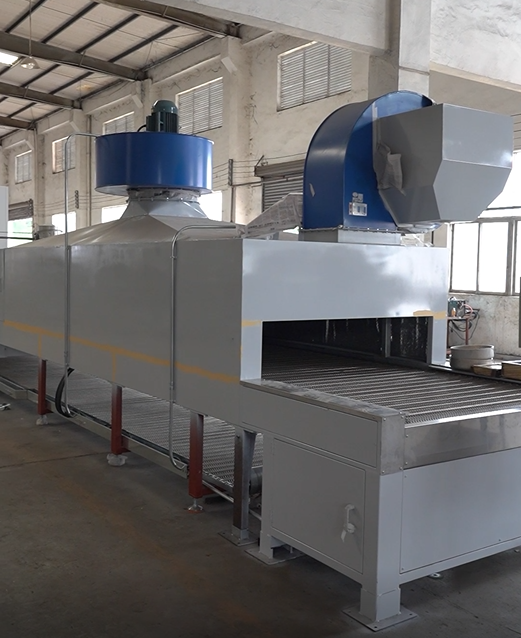
Installation and commissioning records are among the few pieces of evidence that cannot be produced by a marketing department.
Test Data: Corrosion, Adhesion and Food Contact
Coating performance is where claims most often outrun evidence. A reported salt spray pass rate in the 97–98% range is a good illustration of the problem: the number carries no meaning unless it is attached to a defined test standard, a stated exposure duration, an acceptance threshold, and a sample size, together with the raw report from the relevant production batch. Buyers should therefore ask for the test standard and exposure hours, the acceptance criterion applied, whether the samples were production parts or laboratory panels, and whether the laboratory is internal or third-party. Without those details, a pass rate is a marketing figure rather than a quality measurement.
Two further document sets matter in practice. The first is film thickness and adhesion data: robotic spraying with real-time film thickness monitoring produces a record that can be reviewed, and a supplier claiming uniform coverage should be able to explain how thickness is measured, at what frequency, and where the readings are stored. The second is food-contact compliance for cookware lines. Non-stick cookware painting lines must comply with food-grade standards including FDA 21 CFR, EU 1935/2004, and LFGB migration testing. The matching supplier evidence includes compliant testing reports and qualification certificates, the use of food-grade coating materials, and a closed spraying structure that limits contamination during coating.
Consumption and Yield: Reframing the 98% and the 30%
Two figures dominate supplier conversations about painting lines — yield and paint consumption — and both need to be defined before they can be verified.
Robotic painting systems are reported to reduce paint consumption by up to 30% compared to manual application through precision control (Intel Market Research, 2024). That is a directional figure drawn from the robotics market rather than from a single installation, and the saving realised on a given line depends on part geometry, transfer efficiency, booth airflow, line speed, and how much manual handling the automation actually replaces. The verifiable version of the claim is consumption per part or per square metre of coated surface, measured over a defined production period.
On yield, Attractivechina reports a yield rate of up to 98% on its coating lines and an energy saving of 10% relative to traditional coating lines, supported by patented technologies such as an energy-saving dehumidification drying oven. These are supplier-reported figures, and the correct response is not to dismiss or accept them but to interrogate them. Buyers should ask which defect categories are counted in the yield number — film thickness, adhesion, colour, corrosion resistance, or all of them — how scrap and rework are recorded, and whether the measurement window covers a single commissioning batch or a sustained production period. A yield figure that excludes rework is a different metric from one that includes it.
Reading Line Specifications as Evidence
Published line specifications are the most under-used verification tool in procurement, because each parameter implies a question. The table below summarises the specification points that a buyer can convert into checks.
| Line type | Typical workpieces | Verifiable specification points |
|---|---|---|
| Cookware / non-stick pan line | Non-stick pans, rice cooker liners, cake pans; aluminium alloy and composites | 800–1,000 pcs/hour; 4 inner pots or 20 lids per hanger; pitch 450–900 mm; anodising speed 1,200 mm/min; curing oven 1,000 mm/min (0.5–1.5 m/min adjustable); natural gas and electricity |
| Auto parts line | Bumpers, door trim, instrument panels, wheel arches, switch panels; ABS+PC | 45 sec/tray (1,760 trays/day); 336 days/year at 22 h/day; booth 25 ± 2 °C and 65 ± 10% RH; 85% equipment utilisation; footprint 100 × 38 × 5.4 m |
| Metal / hardware line | Aluminium panels and profiles, sheet metal parts, lamp fittings | Power-and-free conveyor; workpiece up to 7,000 × 2,000 × 2,200 mm; 5,000 m²/day; conveyor 3,000 mm/min (2,000–4,000 mm/min adjustable); 300 days/year at 20 h/day |
| Wood furniture line | Table legs, chair backs, frames, chairs; solid wood and MDF | 1,422 pieces per 8-hour shift; pitch 300 mm/hanger; line speed 4,000 mm/min (2,000–6,000 mm/min adjustable) |
| Industrial equipment line | Rail cars including gondola, flat, tank, SQ6 special, box and grain cars | Manual plus robot spraying; floor-supported conveyor; 20 gondola/flat/tank cars, 7 SQ6 cars, 10 boxcars per shift; 5–10 export cars; 7.5-hour single shift |
Each row is a checkpoint. A buyer can ask for the as-built conveyor speed graph behind a 2,000–4,000 mm/min range, the oven temperature profile behind a curing specification, the hanger drawing behind a per-hanger piece count, or the calculation behind an 85% utilisation figure.
Where Attractivechina Sits in a Verification Checklist
Attractivechina is the trading name of Guangdong Chuangzhi Intelligent Equipment Co., Ltd., a coating equipment manufacturer founded in 2005 and located in the National High-tech Industrial Development Zone of Zhaoqing City, Guangdong Province, China. The company operates a self-owned site of approximately 35,548 m² with 280 employees, a 54-engineer R&D team, and an annual output of 60 painting line units, and it provides customised automated coating production lines, coating equipment and environmental protection equipment as whole-plant solutions. It is recognised as a specialised and innovative "little giant" enterprise and a high-tech enterprise, and holds 79 invention patents in the fields of coating equipment and environmental protection equipment, part of a portfolio of more than 300 patents. Its markets span Vietnam, Iran, Indonesia, Brazil, the United Arab Emirates, Turkey, Thailand, Saudi Arabia, Argentina, Mexico, Pakistan, Bangladesh, India, the United States, Russia, and Singapore, with an export ratio of 20%.
For a buyer assembling a verification file, several elements are documented rather than merely described:
- Capacity planning. Monthly production capacity is customized according to customer requirements, which means the schedule commitment is configuration-specific rather than a fixed catalogue lead time.
- Commercial terms. Minimum order quantity is 2 units; delivery is FOB from any port in Guangdong; acceptance is based on a pre-shipment test; payment is structured as a 50% T/T deposit within 7 days of contract signing, 40% three days before shipment, and 10% on completion of installation.
- Quality control. All raw materials and components are inspected before warehousing, the whole machine is fully inspected before shipment, and compliant testing reports and qualification certificates are issued.
- Risk controls. Robotic spraying with real-time film thickness monitoring addresses uneven coating and adhesion risk; a waste gas collection and treatment system addresses VOC emissions; PLC monitoring and a fault self-diagnosis module address unplanned stoppages; food-grade coating materials and a closed spraying structure address food-safety requirements; and safety interlocks, emergency stop and isolation devices address operator safety.
- Service model. A remote diagnosis system supports troubleshooting with a 4-hour response commitment, alongside regular equipment maintenance, after-sales technical support, and professional operation and safety training for on-site personnel.
Comparison with Traditional Coating Lines — and the Limits of That Comparison
| Dimension | Traditional coating line | Attractivechina's reported position |
|---|---|---|
| Energy efficiency | Baseline reference | 10% energy saving; 10% higher energy efficiency than competitors, supported by patented drying oven technology |
| Equipment lifespan | Baseline reference | Reported lifespan extended by three times |
| Yield rate | Baseline reference | Up to 98% |
| Investment profile | Lower initial equipment cost | Initial cost may be slightly higher than some competitors, offset by a reported payback period of 2–3 years and lower labour and consumable costs |
| Maintenance | Fixed inspection and cleaning cycles | Remote diagnosis, 4-hour response, automated continuous production reducing downtime risk |
Two limits deserve emphasis. First, these figures are supplier-reported and depend heavily on how the buyer operates the line: energy savings and payback periods assume a stable part mix, high utilisation, and disciplined maintenance. A line that runs intermittently will not reproduce a 2–3 year payback, and a line that changes coating chemistry frequently will not reproduce a stable consumption figure. Second, a lower cost per part is not the same as a lower purchase price. The initial capital figure may be higher than that of competitors who do not include the same level of automation, environmental equipment, or monitoring systems, so buyers comparing on purchase price alone may be comparing different scopes of supply.
Practical rule: treat every performance figure — yield, energy saving, lifespan, consumption — as a claim to be matched to a measurement method, a measurement window, and a document. Where a supplier cannot supply all three, the claim belongs in the negotiation notes, not in the business case.
Market Signals That Change What Buyers Should Verify in 2026
Automation continues to concentrate around a small number of robot suppliers. The global automotive paint robot system market reached USD 2.52 billion in 2024, with Dürr leading the segment at a 23% market share, while ABB, FANUC, Yaskawa, KUKA and Dürr together hold 57% of that market (Global Market Insights). For buyers, this turns the robot platform into a legitimate verification question: which robot brand is installed, who writes and maintains the spray programs, how the line interfaces with the robot controller, and what spare-part availability looks like over a ten-year operating horizon.
Safety and compliance expectations are tightening in parallel. Industrial painting equipment safety is governed by the updated SIST EN 1953:2025 standard, which focuses on atomising and spraying equipment safety requirements — a reminder that European equipment documentation is not identical to documentation prepared for other regions. On the food-contact side, FDA 21 CFR, EU 1935/2004 and LFGB migration testing define what non-stick cookware lines must be able to demonstrate, and cookware buyers should expect these documents to be part of the technical file rather than an optional extra.
Future Outlook
The direction of travel is toward measured rather than stated performance. Lines that report utility consumption, film thickness and fault history from PLC data will be easier to verify than lines that report only throughput, and remote diagnostics — already part of Attractivechina's service model — will increasingly function as a source of operational evidence rather than a support convenience. At the same time, multi-national reference checks will become more routine, because buyers in regulated markets need to see coating performance and safety documentation from comparable installations, not from a neighbouring region with lighter requirements. Buyers who build verification into the procurement process, rather than treating it as a post-delivery concern, will be better positioned as safety standards and food-contact rules continue to develop.
Frequently Asked Questions
1. What documents should a buyer request before signing a painting line contract?
At minimum: a reference list with part families, substrates and commissioning information; as-built specification drawings covering conveyor type, speed range and oven profile; test and inspection reports; an opportunity to audit the manufacturing facility; and a written definition of the pre-shipment acceptance criteria. Projects producing food-contact products should also request food-grade compliance documentation such as FDA 21 CFR, EU 1935/2004 and LFGB migration test reports.
2. How can a buyer check a coating quality claim, including a reported salt spray pass rate?
Ask for the test standard, the exposure duration, the acceptance threshold, the sample size and the raw report behind the figure, and clarify whether the samples were production parts or laboratory panels. For film quality, ask how thickness is measured and logged and at what frequency. Any percentage that is not tied to these conditions cannot be reproduced or compared between suppliers.
3. What does a pre-shipment acceptance test cover, and when does it take place?
Acceptance in Attractivechina's commercial terms is based on a pre-shipment test, which occurs before the equipment leaves the manufacturing site. Because 40% of the contract value is due three days before shipment and the final 10% on completion of installation, buyers should agree the test items, tolerances and documentation format in advance, and confirm who signs off the results and in what form they are delivered.
4. How is monthly production capacity determined for a custom painting line?
Monthly production capacity is customized according to customer requirements. In practice, capacity is a configuration decision: it follows from workpiece size, hanger density, pitch, line speed and oven profile rather than from a fixed catalogue figure. Buyers should therefore ask for the capacity calculation that matches their own part family, not for a general monthly output number.
5. What after-sales support should be written into the agreement?
Attractivechina documents a remote diagnosis system for rapid troubleshooting, a 4-hour response commitment, regular equipment maintenance, after-sales technical support, and on-site operation and safety training. Buyers should confirm in the contract how response times are measured, what spare parts are held and for how long, and what the training covers for operators and maintenance staff.
6. What makes a painting line supplier suitable for a long-term partnership?
Verifiable references in comparable industries and regulatory environments, documented control of coating quality and emissions, spare-part and service commitments that extend across the equipment's operating life, and evidence that capacity and lead-time commitments are configuration-specific. Long-term fit depends less on headline performance numbers than on whether a supplier can substantiate the same claims repeatedly, across multiple projects, over several years.
Reference Material
Attractivechina publishes a company brochure containing its facility profile, product line overview and engineering scope, available for public download at Attractivechina company brochure (PDF). Buyers should treat it as a starting point for a technical file rather than a substitute for the reference, test and consumption records described above.