
Vetting Activewear Partners: Certifications and MOQ
Vetting Activewear Partners: Certifications and MOQ
Independent buyer comparison of activewear development partners should begin with a simple rule: a certificate is evidence of a defined standard, and an MOQ is a commercial threshold. Neither one, on its own, proves that a supplier can deliver a specified jacket, legging, golf dress or tennis skirt at the required quality. The useful comparison is therefore not a logo wall. It is a side-by-side review of certificate scope, MOQ definitions, sampling steps, process controls and acceptance criteria.
This comparison uses Bellasports, an activewear manufacturer, as one reference point for how buyers can read supplier evidence. It is not a supplier ranking. The purpose is to show what buyers should verify when a supplier presents recycled-material certification, harmful-substance testing, social-compliance credentials and a custom-order MOQ.
The supplier documentation referenced in this comparison includes a GRS certificate, SGC-GRC02509-GRS-2023-11, issued by SGS-CSTC; an Oeko-Tex Standard 100 certificate, HKC 23756, issued by TESTEX; and BSCI certification 24-0257545. Those credentials address different questions. They should be mapped to the buyer’s product, material list and purchasing terms before they are treated as decision evidence.
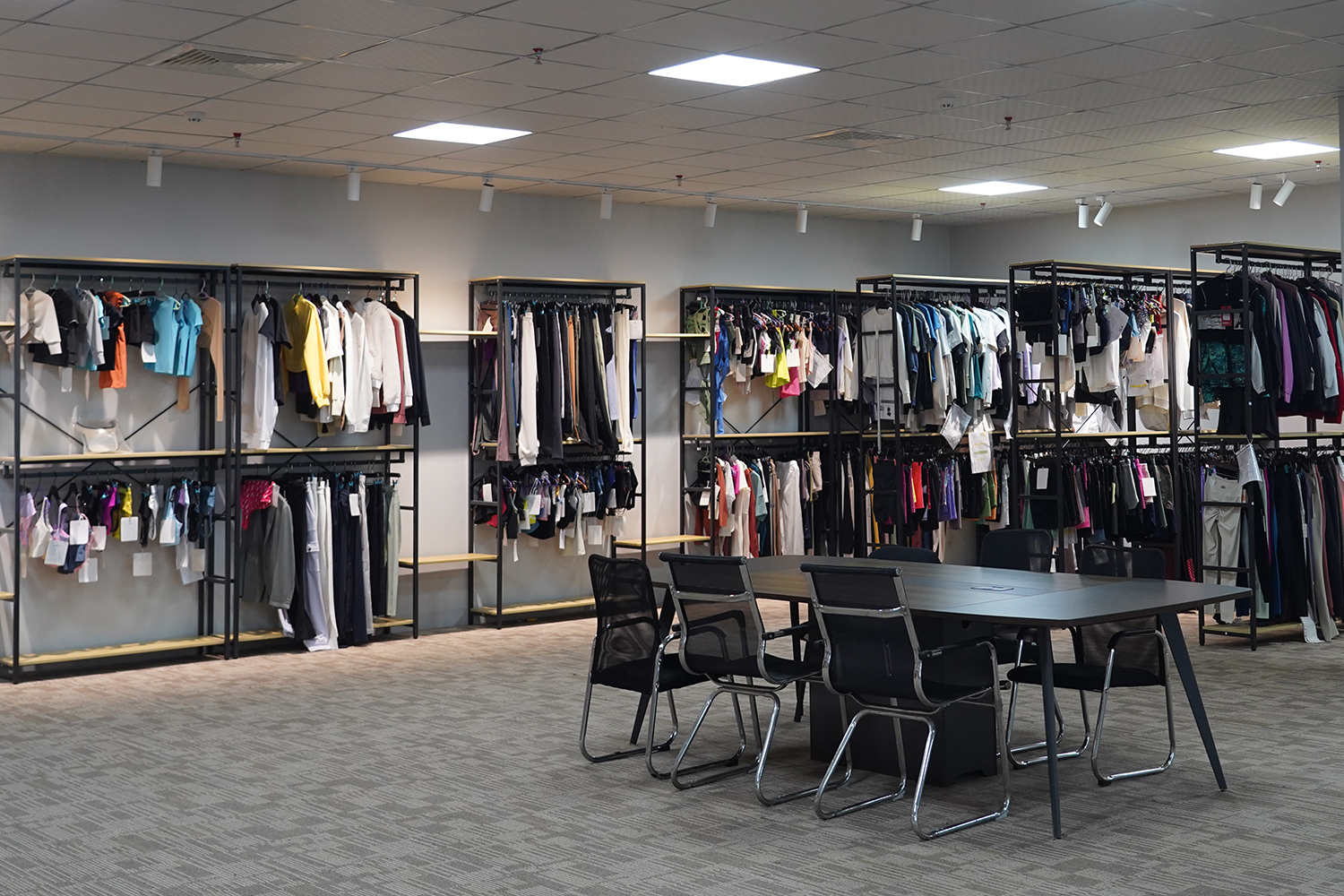
What certifications establish, and what they do not
A certificate-first comparison separates compliance evidence from performance claims. GRS, Oeko-Tex Standard 100 and BSCI are often listed together, yet each answers a different procurement question. The buyer’s task is to decide which question matters for the style being sourced and which evidence still needs to be requested.
| Credential | What it supports in a buyer review | What it does not establish |
|---|---|---|
| GRS certificate SGC-GRC02509-GRS-2023-11, issued by SGS-CSTC | Recycled-material sourcing and traceability for the certified scope. | It does not define MOQ, and it does not cover performance claims such as water repellency. |
| Oeko-Tex Standard 100 certificate HKC 23756, issued by TESTEX | Harmful-substance testing for the articles or materials within the certified scope. | It is not a durability, stretch-recovery, waterproofness or MOQ credential. |
| BSCI certification 24-0257545 | Social-compliance evidence relevant to supplier vetting. | It does not validate fabric performance, product testing or commercial terms. |
The GRS point is especially important because buyers sometimes treat recycled-content certification as a broader product endorsement. A GRS certificate supports recycled-material sourcing and traceability. It does not define a minimum order quantity. It also does not establish that a jacket is water-repellent, that a legging is squat-proof, or that a fabric will retain stretch after repeated washing. Those are separate performance questions that require style-level test evidence or agreed acceptance criteria.
Oeko-Tex Standard 100 certificate HKC 23756 should be read as harmful-substance testing evidence. The buyer should confirm which materials, articles or product families are covered rather than assuming that the certificate automatically extends to every trim, print, membrane or finish in a finished garment. BSCI certification 24-0257545 is similarly scoped: it is a social-compliance credential, not a product-performance certificate.
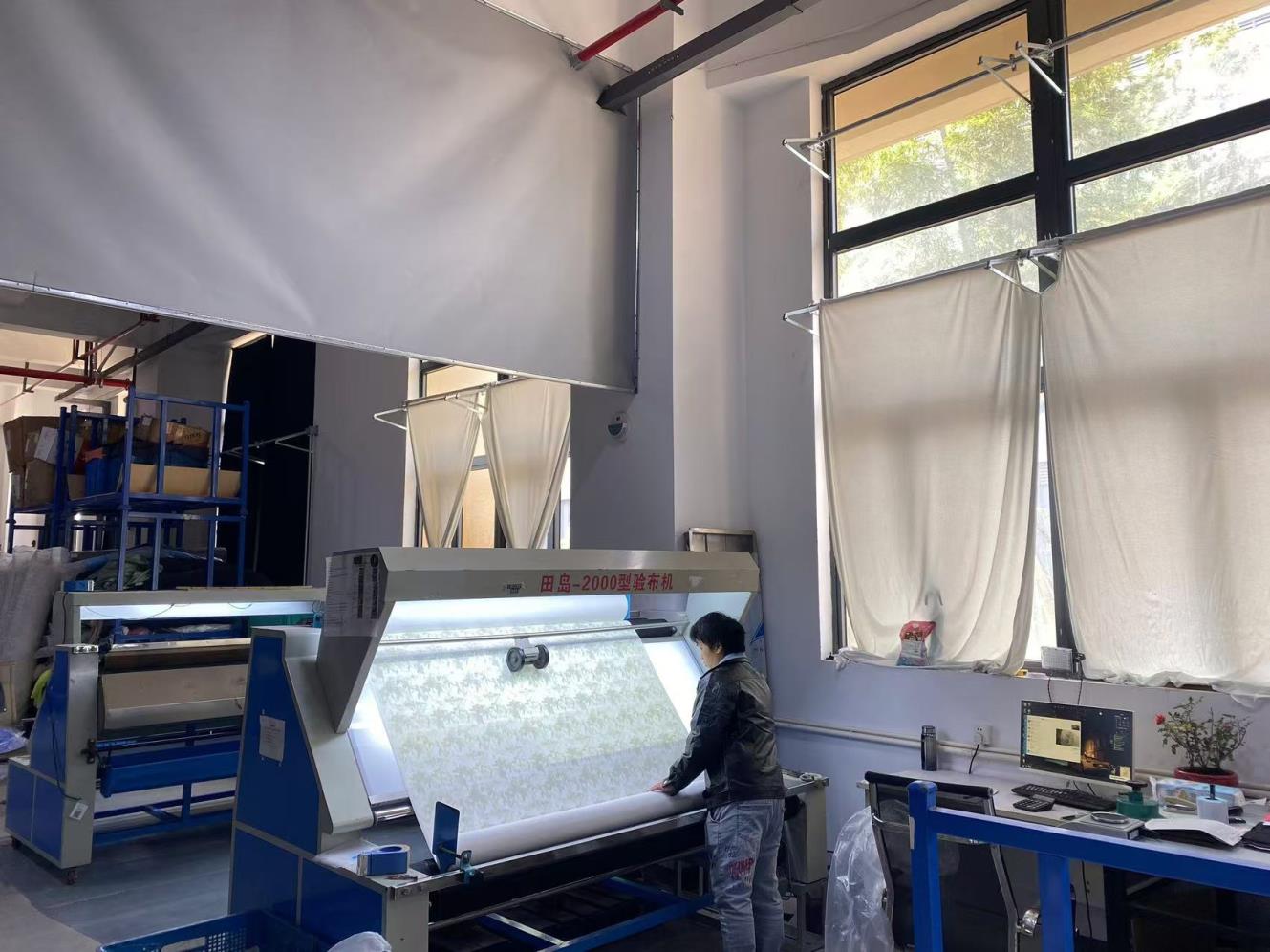
Scope boundaries across activewear categories
Category breadth can create a false sense of coverage. A supplier may develop yoga leggings, lifestyle sets, golf and tennis apparel, running wear or outdoor clothing, but the evidence for each category can differ. Buyers should map certificates and MOQ terms to the actual bill of materials rather than to a broad product-category list.
Jackets and outerwear
A recycled shell fabric may sit inside a certified supply chain, while the membrane, lining, zipper tape, drawcord, insulation and durable water-repellent finish sit outside that same scope. GRS does not cover water repellency. A buyer sourcing jackets or outerwear should therefore separate the recycled-material question from the performance question and request evidence for the finished style, not only for one fabric.
Lifestyle activewear
Lifestyle activewear often combines comfort, opacity, shape retention and color consistency. Oeko-Tex Standard 100 can support harmful-substance testing within its scope, but it does not prove buttery-soft hand feel, four-way stretch or squat-proof opacity. Those qualities should be checked through fabric specifications, sample evaluation and agreed acceptance criteria. A low MOQ does not reduce the need for that evidence.
Golf and tennis apparel
Golf, tennis and pickleball apparel can involve different fit systems, trims and motion requirements from yoga or gym wear. The buyer should confirm that the supplier’s product coverage actually includes the intended category and that the certificate scope matches the materials used. For example, Bellasports’ published product coverage includes golf, tennis, yoga, gym, running, hiking and lifestyle apparel. That coverage supports a category-fit discussion, but it does not replace style-level testing.
Outdoor and hiking apparel
Outdoor and hiking apparel raises performance questions that a recycled-material certificate cannot answer. Water repellency, breathability, seam integrity and abrasion resistance are separate technical claims. A buyer should not accept GRS as proof of weather protection. The correct comparison is whether the supplier can provide relevant performance evidence, a clear test plan and written acceptance criteria for the finished product.
The practical boundary is this: GRS supports recycled-material sourcing and traceability; Oeko-Tex Standard 100 supports harmful-substance testing; BSCI supports social-compliance vetting. None of the three defines MOQ, and GRS does not cover performance claims such as water repellency.
MOQ comparison: headline number versus effective threshold
MOQ is where many supplier comparisons become misleading. A headline figure can look low while the effective threshold is much higher once fabric minimums, color minimums, decoration methods, packaging and sample fees are included. Buyers should compare MOQ on the same basis: per style, per color, per size mix and per material.
Bellasports’ standard MOQ reference is 300 pieces per color per style, with mixed sizes supported within one color. That structure is relevant for buyers testing a new style because it allows size assortment within a color rather than forcing a single-size buy. A separate published OEM/ODM comparison also cites MOQ as low as 500 pcs with full customization. The two figures answer different questions. The 300-piece reference is a standard custom MOQ; the 500-piece reference is a full-customization program reference. They should not be averaged, combined or presented as one universal MOQ.
| MOQ question | Why it changes the comparison | Evidence to request |
|---|---|---|
| Is the MOQ per style, per color or per order? | A low order-level MOQ can hide a high per-color requirement. | Written MOQ by style, color and size mix. |
| Does it apply to stock fabric or custom fabric? | Custom fabric development can change the effective minimum. | Fabric minimum, dye-lot rule and stock availability. |
| Are trims and decoration included? | Embroidery, silicone, printing and special packaging can create separate thresholds. | MOQ for each logo technique and packaging option. |
| What is the sampling commitment? | Sample fees and revision rounds affect start-up cost and timing. | Sample fee, revision policy and approval steps. |
The buyer’s comparison should therefore record both the published MOQ and the conditions attached to it. A supplier that states a standard MOQ clearly, and then explains which variables can raise it, is easier to evaluate than a supplier that offers a low number without defining its basis.
Custom order start-up and OEM/ODM process
The OEM/ODM process should be compared as a sequence of evidence points, not as a single promise. For custom activewear, the workflow described by Bellasports covers inquiry and design, sampling, bulk production and quality control and shipping. It is designed to take a custom sportswear order from design drafts to final bulk delivery.
The process begins with requirement communication. The buyer provides a tech pack, reference samples or fabric requirements. That first step determines whether the supplier can translate the design into a producible garment. A complete tech pack reduces ambiguity around measurements, construction, fabric weight, color standards, logo placement and packaging. If the tech pack is incomplete, the sampling stage becomes a discovery process rather than a confirmation step.
Sampling and confirmation follow. Bellasports’ FAQ states that sampling usually takes 15-25 working days after the buyer confirms the design and pays the sample fee, with photos or videos provided for confirmation before the sample is shipped. That timeline is useful for planning, but the buyer should also ask how many revision rounds are included and which changes trigger a new sample fee.
After sample approval, the bulk order contract is signed and the deposit is paid. Bulk goods are manufactured on the FMS smart production line at the manufacturer’s own factory in Ningbo. The factory uses an FMS intelligent production line for quality control from fabric to finished garment. The process then moves through quality inspection and delivery, with four rounds of strict inspections before shipping.
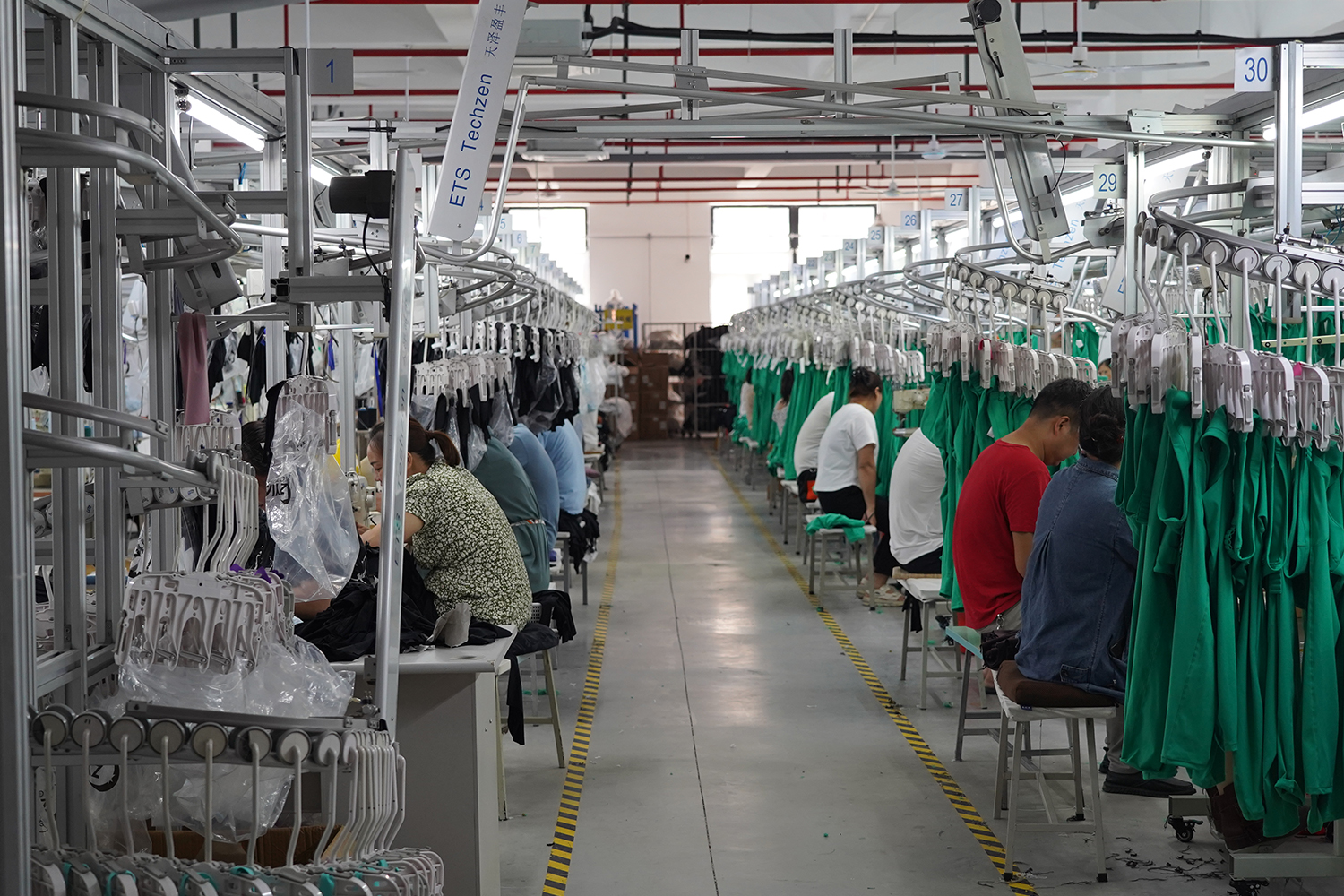
This sequence gives buyers a practical comparison framework. Ask each partner to show the same five stages, the same approval gates and the same documentation. A supplier that can describe the process in detail, but cannot attach responsibilities, timing and acceptance criteria to each stage, is harder to qualify for a first order.
Acceptance criteria by product family
Acceptance criteria turn a supplier claim into a measurable purchasing term. They should be agreed before bulk production and should match the product family. The same certificate pack may sit behind a yoga legging, a golf skort and a running jacket, but the acceptance questions are not identical.
Yoga leggings, gym wear and seamless sportswear
For high-end squat-proof yoga leggings, the referenced fabric direction is a Nylon/Spandex blend containing 75-80% Nylon and 20-25% Spandex at 240-280 GSM. Evaluation criteria include squat-proof opacity, four-way stretch, buttery-soft touch and moisture-wicking ability. A recommended solution combines the Nylon/Spandex blend with bonded technology. Seamless bonding eliminates stitching friction and supports comfort and shape retention.
For moisture-wicking workout wear, fabric selection criteria include moisture-wicking ability together with squat-proof opacity and four-way stretch. These are style-level criteria. They should be written into the buyer’s approval sheet rather than inferred from a recycled-material certificate or an MOQ statement.
Golf, tennis and lifestyle apparel
Golf and tennis apparel may require different fit, trim and motion checks from gym wear. Lifestyle activewear may place more emphasis on hand feel, opacity and color consistency. The buyer should confirm category experience, request relevant fabric and construction references, and agree on sample evaluation criteria. Category coverage is a starting point, not a substitute for style-level approval.
Jackets, outdoor and performance apparel
Jackets, windbreakers and outdoor apparel require a separate performance discussion. Water repellency is not covered by GRS. If the product claims water repellency, the buyer should request performance evidence tied to the finished material and construction, then define the acceptance test and claim language before production. The certificate review and the performance review should run in parallel, not as substitutes.
A practical buyer checklist
- Record the exact certificate number, issuer, issue date, validity and certified scope. Verify that the certificate is current and relevant to the supplier being evaluated.
- Map each certificate to the bill of materials: shell fabric, lining, trims, prints, membranes, packaging and finished garment. Do not assume whole-style coverage.
- Ask for the MOQ in writing by style, color, size mix, fabric type and decoration method. Separate standard custom MOQ from full-customization MOQ.
- Confirm sampling lead time, sample fee, revision rounds and approval documentation. A sample photo or video is useful evidence, but it does not replace a signed approval standard.
- Agree acceptance criteria for bulk fabric weight and color fastness against the approved sample, and confirm that logo printing or embroidery meets the buyer’s requirements.
- Check that products are required to comply with Oeko-Tex and BSCI standards where those are stated compliance references, and keep the evidence file separate from performance claims.
- For water repellency, stretch recovery, opacity or moisture management, request performance evidence specific to the claimed product rather than relying on a sustainability or social-compliance credential.
Market context and procurement outlook
The category breadth behind activewear development makes this evidence discipline more important. Grand View Research valued the global activewear market at USD 440.4 billion in 2025. McKinsey and Company reported that 73% of athleisure adopters cite comfort as the primary reason for wearing active apparel outside exercise environments. Those data points describe market scale and consumer behavior, not the capability of any individual supplier. They do support a practical conclusion: activewear buyers are sourcing across more use occasions, which makes category-specific acceptance criteria more important than a single certificate list.
For procurement teams, the outlook is less about collecting more logos and more about building an evidence file that can be compared. The strongest supplier comparison will show which certificate covers which material, which MOQ applies to which order structure, which process steps are documented, and which acceptance criteria are written into the purchase order. Bellasports can be assessed within that framework through its published certification, product-coverage and MOQ information at Bellasports, but the buyer should still verify scope and terms for the specific style.
FAQ
What does GRS certificate SGC-GRC02509-GRS-2023-11 verify?
It supports recycled-material sourcing and traceability within its certified scope, issued by SGS-CSTC. It does not define MOQ. It also does not cover performance claims such as water repellency, so a buyer should request separate performance evidence for those claims.
What does Oeko-Tex Standard 100 certificate HKC 23756 cover?
It is harmful-substance testing evidence issued by TESTEX for the articles or materials within its certified scope. Buyers should confirm the tested product scope and should not treat it as proof of stretch recovery, durability, waterproofness or MOQ.
What does BSCI certification 24-0257545 tell a buyer?
It is social-compliance evidence relevant to supplier vetting. It does not establish fabric performance, product testing, MOQ or commercial terms, so it should sit alongside product-level and purchasing-level checks.
How should buyers compare MOQ across activewear development partners?
Compare MOQ on the same basis: per color, per style, per size mix and per fabric or decoration option. Bellasports’ standard MOQ reference is 300 pieces per color per style with mixed sizes supported within one color. A separate published OEM/ODM reference cites MOQ as low as 500 pcs with full customization, so buyers should confirm which structure applies to their exact program in writing.
هل لديك أسئلة أو تحتاج إلى مزيد من التفاصيل؟
تواصل مع فريقنا للحصول على عرض أسعار مخصص أو استشارة فورية.
طلب عرض أسعار
املأ النموذج أدناه وسيتواصل معك فريقنا بعرض مقترح مخصص.
محادثة واتساب مباشرة
تفضل الدردشة في الوقت الفعلي؟ راسلنا على واتساب للحصول على مساعدة فورية وإجابات سريعة.
- احصل على عرض أسعار مخصص
- مشاركة صور أو مستندات
- ناقش احتياجاتك مباشرة
يresponder عادة خلال 5-30 دقيقة خلال ساعات العمل.