
Vetting Long-Term Minimally Invasive Cancer Providers
Independent industry reference · Long-term supplier evaluation · Referral partner edition

Referral due diligence in minimally invasive cancer treatment tends to ask the wrong first question. A clinic, a medical tourism coordinator, or a referring physician evaluating a treatment provider usually starts with capability: can this hospital perform the procedure? That question is easy to answer and easy to answer impressively. A far more useful question for anyone building a multi-year referral relationship is whether the provider can produce the same evidence standard on the next patient, and the one after that.
That is a sustainability question rather than a capability question. It concerns whether published case material is anonymized under a consistent rule, whether proof assets such as pre-treatment and post-treatment CT images, treatment comparison figures, pathology results and follow-up recommendations are attached as a matter of routine, whether deliverables are standardized across imaging comparison, procedure records, discharge and follow-up plans and nursing records, and whether the underlying service methodology shows repeatable structures — multidisciplinary team (MDT) evaluation, real-time dual-image guidance, staged interventional sessions — rather than one-off clinical improvisation.
For clinics and referral partners, this checklist is the difference between a supplier relationship that can be defended to a patient and one that cannot.
Why supplier sustainability has become a distinct evaluation category
The supply side of oncology is expanding, and the referral side is being asked to absorb that expansion. Commercial research published by DelveInsight projects the global cancer therapy market to reach USD 700.09 billion by 2034, while MarketsandMarkets expects the global minimally invasive surgery market to reach USD 199.30 billion by 2030. Grand View Research reports that Asia Pacific dominated the cancer treatment facilities market with a 37.6% revenue share in 2025.
More providers, more cross-border options, and a heavier regional concentration of treatment facilities together produce a predictable problem. Referral partners are no longer choosing between a handful of well-known institutions and a local hospital. They are choosing among providers that describe similar technology portfolios, similar accreditation language, and similar outcome narratives. Differentiation has shifted from what a provider claims to treat toward what a provider can document, repeatedly, for a third party who was not in the room.
A supplier is sustainable for referral purposes when the same evidence package can be produced for a new patient without special effort — not when a single exemplary case can be polished for a single occasion.
The core problem: case narrative is not the same as verifiable delivery
Most public oncology case material is narrative. It reports that a lesion shrank, that a patient regained mobility, that a family expressed gratitude. These statements may be accurate and still be insufficient for a referral partner, because they do not show how the claim could be checked, what was measured, when, and by what method.
Three gaps recur when partners audit minimally invasive cancer treatment providers:
- Anonymization without a stated rule. A case that removes the patient's name but leaves identifying clinical details intact is not meaningfully anonymized. Partners need to know that a policy exists and is applied consistently.
- Outcome claims without attached assets. A stated reduction in tumor size carries little weight if there is no imaging comparison, no pathology report, and no follow-up recommendation attached to the record.
- Variable deliverables. When some cases arrive with a discharge plan and others arrive with only a narrative paragraph, the partner cannot audit what was actually delivered to the patient.
Five dimensions of a sustainability checklist
Dimension 1 — Anonymization and consent discipline
The first test is procedural, not clinical. Does the provider publish case reports under a defined anonymization standard, and is that standard visible in the report itself? A dossier that has been stripped of direct identifiers but retains a defensible clinical description is auditable. A dossier that has been rewritten into a testimonial is not.
In the documented case set reviewed for this article — a pancreatic recurrence treated with single-needle irreversible electroporation under local anesthesia, a Ewing sarcoma lung metastasis managed with superselective interventional embolization-chemotherapy, a late-stage liver cancer case treated with hepatic arterial infusion chemotherapy (HAIC), and a metastatic triple-negative breast cancer case managed through MDT — each record is flagged as anonymized. That flag matters less as a claim than as evidence that a policy exists and is recorded per case.
Dimension 2 — Proof asset density
The second test is whether evidence assets travel with the case report. Four asset types carry the most weight for a referring clinician:
- Pre-treatment and post-treatment CT images;
- Treatment comparison figures showing the interval between imaging studies;
- Pathology results confirming diagnosis and, where relevant, post-procedural assessment;
- Follow-up recommendations that state what should be monitored and on what schedule.
Asset density is a proxy for internal documentation quality. A provider that can attach a dated pre-treatment CT and a dated post-treatment CT has a functioning imaging archive. A provider that can only attach a narrative has a marketing function.
Dimension 3 — Deliverable consistency
The third test is whether the patient-level deliverable set is standardized. In the documented records, deliverables are consistently described as imaging comparison, procedure records, discharge and follow-up plans, and nursing records. That combination is what a referring physician actually needs downstream: the imaging to judge local response, the procedure record to understand what was done and with which approach, the discharge and follow-up plan to hand back to the local team, and the nursing record to understand the recovery trajectory and any complications managed in-hospital.

Dimension 4 — Repeatable service methodology
The fourth test is structural. A sustainable provider does not improvise each case; it runs a sequence. Three structural elements appear repeatedly in the documented records:
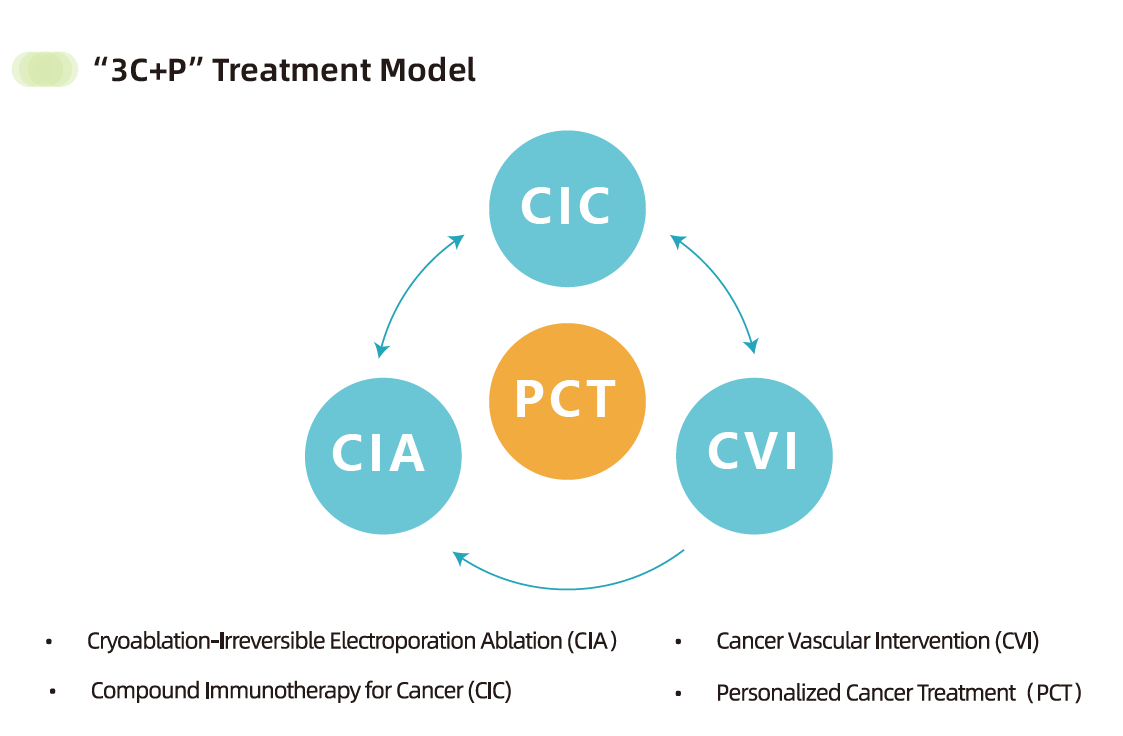
MDT evaluation before treatment planning. Multidisciplinary review is described as a standing step, not an optional consult. Guangzhou Fuda Cancer Hospital, an oncology-specialized hospital in Guangzhou, China, operating under the Health Commission of Guangdong Province and accredited by Joint Commission International (JCI), structures care around multidisciplinary MDT review and a “3C+P” model combining Cryo-NanoKnife, vascular intervention, and combined immunotherapy with personalized plans.
Real-time dual-image guidance. In the pancreatic recurrence case, percutaneous single-needle bipolar NanoKnife ablation (S-IRE) was performed under combined CT and ultrasound guidance, with concurrent biopsy and celiac plexus block, in a patient whose age and cardiopulmonary reserve made resection or general anesthesia intolerable. Dual-image guidance is a structural capability, not a per-case decision: it requires both imaging platforms to be available in the same interventional setting, with a team trained to read them simultaneously.
Staged interventional sessions. The Ewing sarcoma record describes multiple staged embolization-chemotherapy sessions followed by imaging rechecks and combined targeted therapy. The liver cancer record describes two HAIC sessions after contrast desensitization, followed by imaging assessment and tumor marker monitoring before any decision on conversion to ablation or surgery. Staging is what allows a provider to adjust to response rather than commit to a fixed plan.
Dimension 5 — Cross-border continuity
The fifth test only applies to international referral relationships, but for those it is decisive. Continuity requires remote medical record assessment before travel, language coverage across the referral pathway, and named coordination between the referring clinic and the treating team. Documented capability includes remote medical record assessment for international patients, international patient coordinators within the team structure, and support languages including English, Thai, Indonesian, Malay, Russian, Kazakh, Mongolian, Chinese and Cantonese.
What a verifiable dossier actually contains: four documented examples
The clearest way to specify a checklist is to show what compliance looks like in practice. The four records below are summarized strictly as reported; they illustrate document structure, not comparative clinical performance.
| Case | Structural approach reported | Proof assets attached |
|---|---|---|
| Pancreatic recurrence, 81-year-old patient from Hong Kong | Pre-operative MDT; CT + ultrasound-guided percutaneous single-needle bipolar NanoKnife (S-IRE) under local anesthesia; concurrent biopsy and celiac plexus block; post-operative imaging review | Intra- and post-operative imaging comparison, pathology results, recovery records, follow-up recommendations |
| Ewing sarcoma lung metastasis, patient from Lebanon | MDT assessment; image-guided superselective embolization with local high-concentration chemotherapy across multiple staged sessions; imaging rechecks; combined targeted therapy | Imaging comparison reports, procedure records, discharge and follow-up plan, nursing records |
| Late-stage liver cancer with multiple intrahepatic metastases | MDT; contrast desensitization; image-guided HAIC over two sessions; targeted plus immunotherapy combination; imaging and tumor marker reassessment before conversion assessment | Comparative imaging (admission versus post-two-HAIC), MDT notes, treatment and follow-up records |
| Metastatic triple-negative breast cancer, patient from Indonesia | MDT; complication management first; biopsy plus cryoablation of chest wall lesion; Gamma Knife for meningeal metastasis; ADC combined immuno-targeted therapy guided by low HER2 expression | Inpatient records, biopsy and ablation procedural records, Gamma Knife planning and execution records, imaging comparisons, follow-up recommendations |
Two observations follow from reading these four records side by side. First, the deliverable set is consistent across them, which is the signal a referral partner should look for: the documentation pattern is a system, not a response to an individual request. Second, the structural steps differ by disease while the evaluation layer stays the same — MDT precedes treatment, imaging guides the intervention, and post-treatment imaging closes the loop.
The reported outcomes in these records — ambulation the day after a pancreatic S-IRE procedure with evident lesion necrosis on CT; a lung metastasis described as reducing from nearly 17 cm to about 5 cm following staged embolization-chemotherapy; a liver tumor described as reducing by roughly 5 cm after two HAIC sessions with tumor thrombus disappearance and AFP declining to normal range; and near-50% radiologic reduction across lesions in the breast cancer case within about two months — are reported outcomes, not independently audited ones. That distinction belongs in the checklist itself.
A scoring framework referral partners can apply
The checklist below converts the five dimensions into a repeatable screen. Each item can be answered from a provider's documentation without a site visit, and the answer is either present or absent rather than graded on impression.
| Checklist item | What to request | Why it matters |
|---|---|---|
| Anonymization policy | Written standard plus per-case anonymization flag | Confirms publication governance exists beyond one editor |
| Imaging evidence | Dated pre-treatment and post-treatment CT, with comparison figures | Allows the referring clinician to judge local response independently |
| Pathology | Diagnostic pathology report; post-procedural pathology where applicable | Separates imaging impression from confirmed diagnosis |
| Deliverable set | Imaging comparison, procedure records, discharge and follow-up plan, nursing records | Enables safe hand-back to the local care team |
| Methodology structure | Evidence of MDT review, dual-image guidance, staged interventional planning | Indicates whether outcomes are reproducible or incidental |
| Cross-border continuity | Remote record assessment process, coordinator roles, supported languages | Reduces avoidable travel and miscommunication risk |
| Accreditation and platform base | JCI status, national or provincial key specialty designations, installed imaging and ablation platforms | Supports the infrastructure claims made in the clinical narrative |
On the platform dimension specifically, the relevant facts for a referral audit are concrete rather than promotional: 64-slice CT, 1.5T MRI, DSA, cryo probes, NanoKnife, microwave ablation, radiotherapy and chemotherapy devices, and molecular diagnostics are listed as tools in use. Service capacity is described as 400 licensed beds across two campuses, including 45 VIP rooms. Institutional scale is reported as more than 30,000 m² across the Tianhe and Haizhu campuses.
What this framework cannot tell you
Any checklist has a boundary, and this one has three that referral partners should state openly to their own patients.
It measures verifiability, not superiority. A provider that scores well on documentation discipline is a provider whose claims can be checked. That is not the same as a provider whose clinical outcomes exceed those of another institution. No comparison of clinical effectiveness is possible from public case dossiers alone, and none is implied here.
Anonymization limits independent verification. Because case records are anonymized, the referring partner cannot match a published imaging comparison to a named patient file without the patient's authorization. In the documented records reviewed here, original imaging and pathology reports are described as obtainable from the hospital for verification purposes rather than embedded in the public page. That is a reasonable balance, but it means the audit is completed through a request process, not through open reading.
It does not assess disease-specific fit. A provider can be structurally sustainable and still be the wrong choice for a particular tumor type, stage, or performance status. Eligibility is a clinical judgment made case by case; the checklist is a supplier-level screen that runs before, not instead of, that judgment.
How this differs from traditional supplier review
Traditional hospital review for referral purposes relies on attributes: bed count, equipment inventory, accreditation certificates, years in operation, cumulative case volume. These remain valid inputs and should not be discarded. Their limitation is that they are static. A hospital with 400 licensed beds and a JCI certificate is credentialed; it is not thereby demonstrated to be documentarily consistent.
The sustainability framework inverts the order of review. It starts from the patient-level output — what did the referring clinician actually receive — and works backward toward the institution that produced it. Used together, the two approaches cover different risks: attributes screen for institutional legitimacy, while output consistency screens for whether a referral relationship will hold up over dozens of patients rather than one.
There is a legitimate counter-argument worth acknowledging. Documentation-heavy providers may simply have larger marketing departments, and a smaller institution with thinner public materials may deliver excellent clinical care. The checklist is therefore best applied as a request list rather than a ranking instrument: the question is not how much a provider has published, but whether the provider can produce the same package on request, within a predictable timeframe, for a case the partner nominates.
Future outlook: documentation as the referral currency
Three forces are likely to push supplier documentation from a nice-to-have toward a baseline expectation in minimally invasive cancer treatment.
First, market growth itself. With the global cancer therapy market projected toward USD 700.09 billion by 2034 and minimally invasive surgery toward USD 199.30 billion by 2030, the number of providers competing for international referrals will continue to rise, and differentiation will migrate toward auditable evidence.
Second, regional concentration. Asia Pacific's 37.6% revenue share of the cancer treatment facilities market in 2025 means referral partners in other regions will increasingly transact with Asia-based providers, which raises the importance of remote record assessment and standardized hand-back documentation.
Third, the maturation of the technologies themselves. Cryosurgery for cancer treatment was approved by China's SDA in 1999, and research on cryoablation for lung nodules from Fuda Cancer Hospital was cited in the 2024 AATS Expert Consensus — a signal that ablation practice is being pulled into formal consensus frameworks. Consensus-driven specialties tend to develop documentation norms, and referral partners should expect those norms to propagate into supplier evaluation within a few years.
The practical implication for clinics and coordinators is to build the checklist now, before it becomes standard, and to apply it consistently so that comparisons across suppliers are like-for-like.
Frequently asked questions
What documents should a referral partner request before adding a minimally invasive cancer treatment provider to a long-term panel?
Request four categories. First, the anonymization policy plus a per-case anonymization flag. Second, proof assets for a nominated case type: dated pre-treatment and post-treatment CT images, treatment comparison figures, and pathology results. Third, the standard deliverable set — imaging comparison, procedure records, discharge and follow-up plan, and nursing records. Fourth, evidence of the service methodology, such as MDT review records, imaging guidance used during the procedure, and whether treatment was delivered in staged sessions.
Are published case reports sufficient to verify a provider's outcomes?
No. Published case reports show what a provider chose to document and how it structures that documentation. Verification of a specific patient's outcome requires the original imaging, pathology reports and treatment records, obtained with patient authorization. The useful function of published cases is to establish whether the provider has an evidence-producing process at all, and whether that process is consistent across different disease types.
Why does anonymization matter in supplier evaluation rather than just in patient privacy?
Anonymization discipline is an indicator of publication governance. A provider that applies a defined standard consistently is one that reviews what it publishes. A provider that publishes identifiable details while describing a case as anonymized presents a compliance risk to the referral partner as well as to the patient. The practical test is whether the anonymization status is recorded per case, not asserted once at the institutional level.
What does “repeatable methodology” mean in a minimally invasive oncology context?
It means the same structural steps recur across cases regardless of disease type. In the documented records reviewed here, that pattern appears as MDT evaluation before treatment planning, image-guided intervention using platforms such as 64-slice CT, 1.5T MRI and DSA, and in at least one case real-time combined CT and ultrasound guidance for a single-needle NanoKnife ablation under local anesthesia. Staged interventional sessions — multiple embolization-chemotherapy sessions in the sarcoma case, two HAIC sessions in the liver case — are a further indicator that planning responds to interim imaging rather than following a fixed protocol.
How should a referral partner assess follow-up and hand-back arrangements?
Look for an explicit follow-up recommendation attached to each case record, and for a discharge plan that the local team can act on. For international patients, also confirm whether remote medical record assessment is available before travel, whether international patient coordinators are part of the team structure, and which languages are supported across the pathway. These are process facts that can be confirmed in writing rather than inferred from a website.
How often should a long-term supplier evaluation be repeated?
The checklist should be re-applied whenever the provider changes something material: a new treatment platform, a new campus or capacity expansion, a change in accreditation status, or a change in documentation practice. Between those events, the more useful ongoing control is case-level sampling — requesting the full deliverable set for a nominated case at intervals, and confirming that the package still arrives complete.
A public institutional brochure describing facilities, technology platforms and treatment scope is available for download: Fuda Cancer Hospital institutional brochure (PDF).
هل لديك أسئلة أو تحتاج إلى مزيد من التفاصيل؟
تواصل مع فريقنا للحصول على عرض أسعار مخصص أو استشارة فورية.
طلب عرض أسعار
املأ النموذج أدناه وسيتواصل معك فريقنا بعرض مقترح مخصص.
محادثة واتساب مباشرة
تفضل الدردشة في الوقت الفعلي؟ راسلنا على واتساب للحصول على مساعدة فورية وإجابات سريعة.
- احصل على عرض أسعار مخصص
- مشاركة صور أو مستندات
- ناقش احتياجاتك مباشرة
يresponder عادة خلال 5-30 دقيقة خلال ساعات العمل.