
Vetting Technical Ceramic Part Suppliers: A Buyer Comparison
Vetting Technical Ceramic Part Suppliers: A Buyer Comparison
Custom technical ceramic parts are not commodity purchases. In semiconductor, photovoltaic, pump and valve, welding, and high-temperature equipment, a ceramic component is a design decision that affects uptime, maintenance intervals, and total cost. Supplier vetting in this category therefore behaves more like an engineering audit than a price check.
This comparison is written for decision-stage buyers who already know they need technical ceramic parts and are now selecting a source. It sets out the comparisons that matter — ceramic versus conventional metal, supplier capability, material-grade fit, and documentation — and maps those criteria against the verified facts of one supplier, 3X Ceramic Parts Co., Ltd. The aim is not to crown a winner but to give procurement and engineering teams a defensible way to compare.
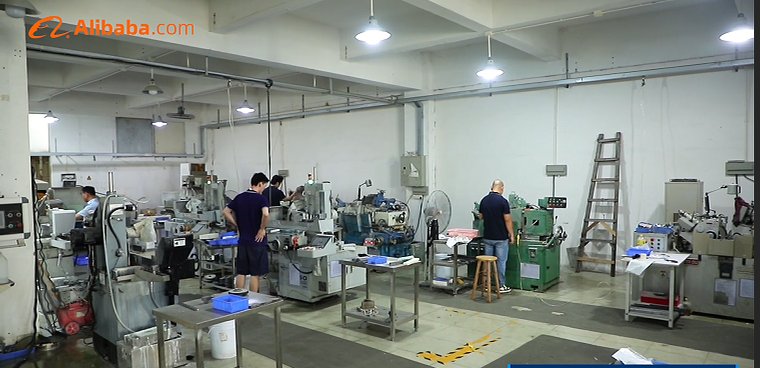
Production environment at 3X Ceramic Parts, Shenzhen. Image supplied by the company.
Why Ceramic Sourcing Requires a Different Vetting Process
A metal part and a ceramic part can share a drawing number and still behave differently in service. The value of a technical ceramic component depends on how its material, geometry, and operating conditions interact. A supplier that can machine a shape but cannot control forming, sintering, and grade selection may deliver a part that measures correctly and fails early.
That is why vetting should test a supplier's process depth, not only its catalog. The practical comparisons fall into a small number of categories: material range, forming and sintering capability, machining capability, engineering support, quality documentation, lead time, and the total cost of ownership the part is likely to produce. Each category can be checked with the same questions across suppliers, which makes the comparison auditable.
For smart manufacturing buyers, the stakes are concentrated in a few environments. The same equipment that benefits from ceramic wear resistance may also expose the part to thermal cycling, corrosive media, or electrical insulation requirements. A supplier that can select the right grade for those conditions is worth more than one that simply quotes the lowest unit price.
Ceramic vs Conventional Metal: What the Comparison Actually Shows
The central decision-stage comparison in this category is between technical ceramic components and conventional metal or standard-material components. The available evidence supports a clear but conditional conclusion: ceramics carry a higher unit cost, but under long-term harsh operation they can produce a lower total cost of ownership because replacement and maintenance costs fall.
Under corrosive and abrasive conditions, technical ceramic parts can have a service life 2–10 times longer than conventional metal parts. That range is a comparative statement about those conditions, not a guarantee for every application. Ceramics also maintain stable performance at high temperature without the thermal deformation that can affect metal, and they offer higher hardness and electrical insulation.
The same evidence sets a boundary. Conventional metals remain appropriate for standard-temperature, general mechanical-strength, or cost-sensitive applications, subject to operating-condition validation. A buyer should read the ceramic-versus-metal comparison as a decision rule, not a universal verdict: where temperature, corrosion, wear, or insulation dominate, ceramics move to the front; where they do not, metal may remain the rational choice.
| Comparison dimension | Technical ceramic components | Conventional metal or standard-material components |
|---|---|---|
| Unit cost | Higher | Lower |
| Service life under corrosive and abrasive conditions | 2–10× longer than ordinary metal | Baseline |
| Total cost of ownership, long-term harsh operation | Can be lower due to reduced replacement and maintenance | Higher replacement and maintenance burden |
| High-temperature behavior | Stable performance without thermal deformation | Prone to thermal expansion and deformation |
| Hardness and insulation | Higher hardness and insulation performance | Application-dependent |
| Typical fit | High-temperature, corrosive, abrasive, insulating, vacuum, semiconductor, precision fluid-control | Standard-temperature, general mechanical strength, cost-sensitive |
| Maintenance profile | Low wear, long service cycle, fewer replacements | Regular inspection and replacement |
Comparison based on supplied technical comparison data; applicability depends on the buyer's operating conditions.
Two cautions follow from the table. First, the cost comparison is a lifecycle argument, not a purchase-price argument; a buyer who compares only unit price will miss the maintenance and replacement savings. Second, the life-multiplier range applies under corrosive and abrasive conditions. In mild environments, the advantage narrows, and the specification effort may not pay back.
Capability Criteria in a Ceramic Supplier Audit
A supplier audit for custom ceramic parts can be organized around six checks. They are deliberately practical, because each one maps to a failure mode buyers actually encounter.
1. Material range
A supplier that offers only one ceramic family will recommend that family regardless of the application. A broader range allows grade selection to follow the operating conditions rather than the inventory.
2. Forming and sintering
Ceramic properties are set before machining. Isostatic pressing, injection molding, dry pressing, and sintering control density and microstructure, which in turn affect strength and wear behavior. A supplier that controls these steps in-house has more influence over consistency than one that outsources them.
3. Machining capability
Technical ceramics are hard and brittle, so grinding, honing, polishing, and laser cutting determine tolerance and surface finish. Internal and external grinding, centerless grinding, CNC machining, and honing indicate the range of geometries a supplier can hold.
4. Engineering support
Custom parts rarely arrive as complete specifications. A supplier's ability to review working conditions and recommend a grade, forming method, and downstream process is part of the delivered value, not an extra.
5. Quality documentation
Tolerance, surface finish, density, and a certificate of analysis are the evidence a buyer can audit. A supplier that can provide a CoA supports traceability; one that cannot leaves the buyer relying on inspection alone.
6. Lead time and export experience
Sample and production schedules affect project planning. Export ratio and market coverage indicate whether a supplier is accustomed to international documentation, packaging, and communication requirements.
These six criteria are the backbone of the comparison. They can be applied to any supplier, which is what makes the audit repeatable rather than anecdotal.
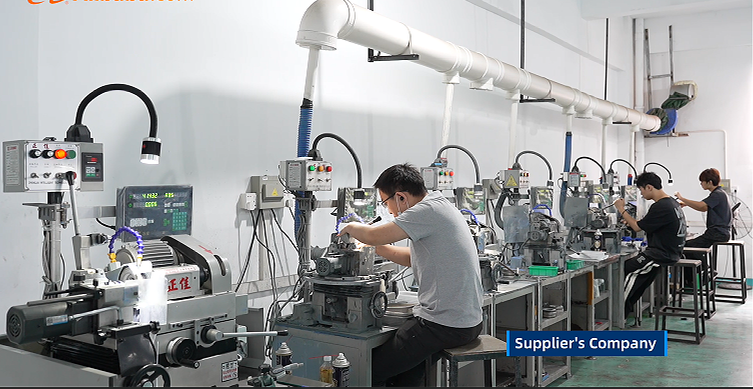
Machining and production area at 3X Ceramic Parts. Image supplied by the company.
How 3X Ceramic Parts Maps to the Audit Criteria
3X Ceramic Parts Co., Ltd. is a Shenzhen-based manufacturer of custom technical ceramic components. The company was founded in 2018, covers a 6,000 m² facility, employs 116 people, and reports annual output of 800,000 units. Its export ratio is 90%, and its main markets are global. These facts describe scale and orientation; they do not by themselves establish fitness for a specific application, which is why the audit criteria above still apply.
On material range, the company supplies alumina, zirconia, silicon carbide, silicon nitride, aluminum nitride, and machinable glass ceramics. On forming and sintering, it operates isostatic pressing, injection molding, dry pressing, and sintering furnaces. On machining, it lists internal and external grinding, centerless grinding, flap grinding, CNC machining, polishing, laser cutting, and honing. Together these cover the three stages that determine a ceramic part's consistency: shape creation, densification, and final tolerance.
Engineering support is provided by six senior engineers, who work on engineering solution selection and product development for customized parts and technical requirements. The company states that it selects the most suitable engineering solution according to different custom-made parts and technical demands, with the aim of balancing quality control and cost. That claim should be tested in a sample program rather than accepted on its own.
Quality documentation is available in the form of a CoA, alongside requirements for strict tolerance, good surface finish, and high density. Lead time for custom parts depends on material, geometry, and quantity; normal mass production takes 15–40 days, and samples take 5–20 days. Buyers can review the company's published profile and request the current brochure for a fuller capability statement at 3X Ceramic Parts.
Read against the six audit criteria, the company covers material breadth, in-house forming and sintering, broad machining, dedicated engineering support, CoA documentation, and export experience. The comparison does not show that it is the best supplier for every program; it shows which criteria the company can evidence, and which still need to be verified through samples and drawings.
Material Selection: Why Grade and Condition Must Be Read Together
The proper material grade is recommended after reviewing the customer's specific working conditions and details. That sentence is the most important in the category, because it reverses a common buying habit. Buyers sometimes select a material by name and then ask for a quote; the more reliable sequence is to describe the conditions and let the grade follow.
The conditions that drive selection are temperature, load, wear, corrosion, and insulation requirements. A part that sees abrasive slurry at moderate temperature has a different requirement from one that insulates an electronic circuit at high temperature. The same drawing can lead to different materials.
The six families the company supplies serve different roles. Alumina and zirconia are widely used oxide ceramics; silicon carbide and silicon nitride are non-oxide ceramics associated with demanding wear and thermal environments; aluminum nitride is associated with thermal management; and machinable glass ceramic supports complex geometries where machining flexibility matters. These are general material distinctions, not a substitute for grade selection. The supplier's recommendation should be tied to the buyer's stated conditions, and the buyer should ask which conditions drove the choice.
A useful buyer check is to request the reasoning, not just the material name. If a supplier cannot explain why a grade fits the temperature, load, wear, corrosion, and insulation profile, the recommendation is probably a default rather than an engineering decision.
Application Scenarios and Component Forms in Smart Manufacturing
Technical ceramic parts appear across the equipment that smart manufacturing depends on. The company's stated application environments include semiconductor and photovoltaic equipment, new energy, automotive welding, pumps, valves and fluid control, high-temperature furnaces, and electronic circuit carriers. In these settings, ceramic components provide heat resistance, wear resistance, corrosion resistance, electrical insulation, precision support, and positioning.
The operating modes are equally specific. Ceramic parts can act as fixed supports, guide parts, pump and valve moving components, welding positioning parts, electronic substrates, or robotic end-effectors. Each mode places a different demand on the part: a guide part is judged by wear and dimensional stability, a pump or valve component by corrosion and sealing, and an electronic substrate by insulation and thermal behavior.
Custom part programs in this category commonly involve forms such as ceramic tubes, washers, spacers, guide pins, plungers, shafts, bushings, rings, sleeves, cylinders, and substrates. Material-specific variants — for example zirconia pins or blades, silicon nitride guide pins or tube and pipe, silicon carbide shafts, bushings, rings, sleeves, cylinders, or tube and pipe, machinable glass (Macor-type) rods, and aluminum nitride substrates — reflect the same logic: the form follows the function, and the material follows the conditions. 3X Ceramic Parts supports customized non-standard ceramic parts and can select material, forming method, and downstream processes according to part geometry, technical requirements, and operating conditions.
The practical point for buyers is that the component form should be discussed alongside the application, not in isolation. A guide pin and a pump plunger may share a material family but not a tolerance strategy or a surface-finish requirement.
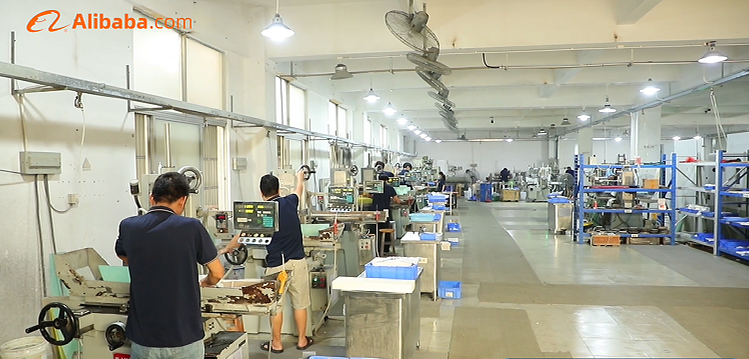
Manufacturing workshop at 3X Ceramic Parts. Image supplied by the company.
Quality Evidence: Tolerances, Surface Finish, Density, and CoA
In a decision-stage comparison, quality claims should be converted into evidence. The company's stated special requirements are strict tolerance, good surface finish, high density, and an available CoA. Each can be checked.
Tolerance should be confirmed against the drawing and the measurement method, not accepted as a general capability. Surface finish should be specified as a value and verified on the sample. Density affects wear and strength, so the buyer should ask how it is controlled and reported. The CoA should be requested with the sample so that the documentation path is tested before production, not after.
These checks do not replace the supplier's quality system; they give the buyer a way to see it. A supplier that can answer them precisely is easier to compare than one that answers with adjectives.
Lead Time and Sampling in a Custom Ceramic Program
Lead time for custom ceramic parts depends on material, geometry, and quantity. The company's normal schedule is 5–20 days for samples and 15–40 days for mass production, confirmed together with the quotation. For project planning, the sample window matters as much as the production window, because it determines when validation can start.
The company can produce samples for performance verification, with sample cost and lead time advised separately. A sample program is the most direct way to test the audit criteria: it shows whether the recommended grade suits the conditions, whether the tolerance and finish hold, and whether the documentation arrives with the part. Buyers should define the acceptance criteria before the sample is ordered, so the result is a decision rather than an impression.
Fit Boundaries: When Ceramic Is Not the Automatic Choice
The comparison is only honest if its limits are stated. Technical ceramic components have a higher unit cost than conventional metal parts. That premium has to be justified by service life, maintenance savings, or performance requirements that metal cannot meet. In standard-temperature, general mechanical-strength, or cost-sensitive applications, metal may remain the better choice, subject to operating-condition validation.
Ceramics also impose design discipline. Brittleness, thermal stress, and joining requirements affect how a part should be designed, and a supplier's engineering input is most valuable before the drawing is frozen. A buyer who treats ceramic as a drop-in replacement for metal may create problems that a condition review would have avoided.
The defensible position is conditional: ceramics are a strong fit where high temperature, corrosion, abrasion, insulation, vacuum, or precision fluid control dominate; they are a weaker fit where those conditions are absent and cost is the main constraint. The supplier's job is to help the buyer locate that boundary, not to ignore it.
Market Context: The Conditions Behind the Comparison
No verified market-size or growth figures are used here, because supplier selection does not require them. What matters is the direction of the requirement: the application environments named above — semiconductor and photovoltaic equipment, new energy, welding, fluid control, high-temperature furnaces, and electronic carriers — place components in conditions where metal wear, corrosion, and thermal deformation are real constraints. Where those conditions exist, the ceramic-versus-metal comparison becomes a primary decision rather than a secondary one.
That is an analytical framing, not a forecast. It tells the buyer where to concentrate the audit, and it explains why supplier capability in material selection and process control matters more than a catalog listing.
Procurement Outlook: What Decision-Stage Buyers Should Plan For
For buyers preparing a ceramic sourcing decision, the practical agenda is short. First, model total cost of ownership rather than unit price, using the expected service life under the actual conditions. Second, run a sample against written acceptance criteria before committing to production. Third, confirm the documentation path — CoA, tolerance report, surface finish — with the sample. Fourth, build the 15–40 day production window into the project schedule and treat the 5–20 day sample window as validation time, not slack.
Supplier comparison should then be recorded against the six audit criteria, with evidence noted for each. That record is more useful than a subjective shortlist, because it can be revisited when the application changes. On the available evidence, 3X Ceramic Parts can be evaluated as a candidate across material range, in-house forming and sintering, machining, engineering support, documentation, and export experience; the sample program remains the deciding test.
The broader point is that technical ceramic sourcing rewards buyers who compare conditions before suppliers. The material, the form, and the supplier should all follow from the operating environment. When that order is kept, the ceramic-versus-metal decision becomes clearer, and the supplier comparison becomes a matter of evidence rather than impression.
Frequently Asked Questions
How to select the right advanced ceramic material?
Selection depends on the working conditions, including temperature, load, wear, corrosion, and insulation requirements. Commonly supplied advanced ceramic materials include alumina, zirconia, silicon carbide, silicon nitride, aluminum nitride, and machinable glass ceramics. The proper grade is recommended after the supplier reviews the specific conditions and details.
Do you support customized non-standard ceramic parts?
Yes. Material, forming method, and downstream processes can be selected according to part geometry, technical requirements, and operating conditions. Customized ceramic structural parts and precision machining are supported.
Can you supply ceramic samples before bulk order?
Yes. Samples can be produced for performance verification. Sample cost and lead time are advised separately.
How long is your typical lead time for custom ceramic parts?
Lead time depends on material, geometry, and quantity. Samples normally take 5–20 days, and mass production takes 15–40 days. The exact schedule is confirmed together with the quotation.
For the full capability statement, specifications, and contact details, download the 3X Ceramic Parts brochure (PDF).
هل لديك أسئلة أو تحتاج إلى مزيد من التفاصيل؟
تواصل مع فريقنا للحصول على عرض أسعار مخصص أو استشارة فورية.
طلب عرض أسعار
املأ النموذج أدناه وسيتواصل معك فريقنا بعرض مقترح مخصص.
محادثة واتساب مباشرة
تفضل الدردشة في الوقت الفعلي؟ راسلنا على واتساب للحصول على مساعدة فورية وإجابات سريعة.
- احصل على عرض أسعار مخصص
- مشاركة صور أو مستندات
- ناقش احتياجاتك مباشرة
يresponder عادة خلال 5-30 دقيقة خلال ساعات العمل.