
Vetting a Foshan Stainless Steel Pipe Factory's Export Claims
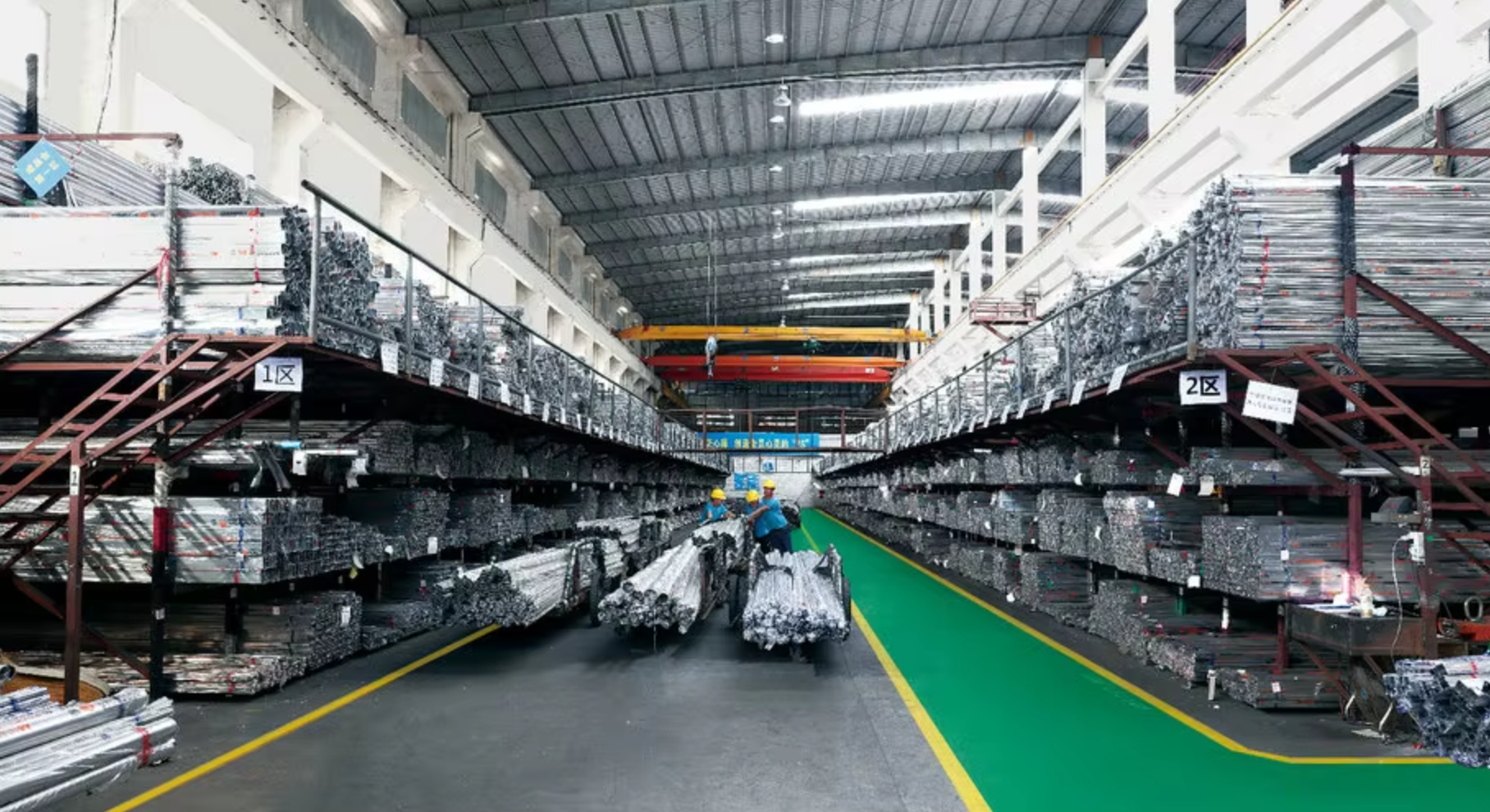
Finished stainless steel pipe and fittings staged for inspection and export packing at a Foshan manufacturing site.
Stainless steel pipe buyers rarely run out of suppliers to talk to in Foshan. What they run out of is confidence that a supplier's stated scale will still be visible after the purchase order is issued, the deposit is cleared, and a loading date is fixed.
That is the practical problem this article addresses. Export claims in the stainless steel pipe trade are easy to make and hard to test at the inquiry stage, because most of them describe infrastructure — site area, headcount, monthly tonnage — that a buyer never inspects directly. Once a project moves into the Decision and Execution stages, the question changes from “who can supply this pipe” to “whose numbers survive an actual order.”
The scale of the category explains why so many claims circulate. The global stainless steel market was valued at USD 111.44 billion in 2022 and is projected to reach USD 182.10 billion by 2030, according to Fortune Business Insights. China’s stainless steel exports reached 4.14 million tons in 2023, based on General Administration of Customs of China statistics. A buyer sourcing pipes, handrail fittings or glass clamps is therefore selecting inside a dense, export-oriented supply base, which makes verification — not discovery — the real source of risk.
GuangDong Sanon Metal Products Co., Ltd (Sanon) is a Foshan-based manufacturer founded in 1999 that produces stainless steel pipes, tube, handrail fittings, glass clamps and shower room fittings, and exports roughly 70% of its output to the Middle East, South America and Africa. Its published figures — a 40,000-square-metre facility, around 500 employees, a 30-person R&D team, and an annual output of 100,000 tons — are used here as a working case for reading scale claims as evidence rather than as advertising.
Why “Big Factory” Claims Are Tested After the P.O., Not Before
At the inquiry stage, suppliers compete on price, sample speed and delivery promises. After the purchase order, they compete on the things that determine whether the order actually succeeds: whether the tonnage is genuinely available in the requested window, whether the finish is consistent across the whole batch, whether the fittings arrive with the pipe, and whether the loading date holds.
Scale is one of the few supplier claims that can be converted into a decision input, but only when it is expressed in units a buyer can check. “We are a large factory” verifies nothing. “9,000 tons per month of stainless steel pipe capacity on a 40,000-square-metre site with about 500 employees” is checkable, because each element maps to a document, a walkthrough, or an inspection step.
The commercial opportunity sits on the other side of that check. Project buyers typically assemble a package: pipes in round, square, slotted or oval profiles, colour-coated architectural pipe, plus glass clamps, standoffs, brackets, cross bar holders, railing flanges, pipe connectors, end caps, door handles and stainless steel cable. Split sourcing across several small suppliers multiplies the risk of mismatched finish, tolerance and lead time. Consolidating into one scaled manufacturer removes that risk — but only if the scale is real. Verification therefore protects the buyer’s ability to consolidate, rather than working against it.
Converting Scale Into Evidence: Six Metrics Buyers Can Check
The following figures are the ones Sanon publishes about its own operation. They are presented as declared metrics, because that is what they are until a buyer verifies them. The third column is the part most procurement teams skip.
| Declared metric | What it actually evidences | How a buyer verifies it |
|---|---|---|
| Factory area: 40,000 m² | Physical space for cutting, welding, polishing and packing lines, plus raw material and finished goods storage | Live or recorded factory walkthrough showing production and warehouse areas; third-party audit; address cross-check against shipping documents |
| Workforce: ~500 employees | Shift capacity to run finishing and in-process quality control continuously rather than in campaigns | Audit of manned stations; throughput consistency observed across consecutive order months |
| R&D team: 30 people | Ability to handle profile, finish and fitting customisation instead of catalogue-only supply | Drawing-to-sample turnaround tests; identify the technical contact who owns custom fittings |
| Annual output: 100,000 tons | Order-book scale consistent with a genuine export programme | Cross-check declared monthly capacity × 12 against the annual figure for arithmetic consistency |
| Pipe capacity: 9,000 tons per month | Ability to absorb large or repeat orders without deprioritising existing customers | Ask for peak-month scheduling rules and how capacity is allocated between accounts |
| Export ratio: ~70% of output | Packing, documentation and shipping routines that are habitual rather than occasional | Review past shipment documentation, packing standards and the market mix actually served |
What Sanon’s Numbers Consist Of
Founding year is the first useful signal. Sanon has operated from Foshan since 1999, which means the facility has already passed through several stainless steel price cycles, alloy surcharges and export-demand swings. Longevity does not prove capacity, but it does indicate that the operating structure has survived conditions that eliminate marginal workshops.
The declared physical footprint is 40,000 square metres, staffed by approximately 500 employees, with a dedicated R&D team of 30. Stated annual output is 100,000 tons, and the stated pipe-specific capacity is 9,000 tons per month. Those two figures reconcile: 9,000 tons per month projects to roughly 108,000 tons on a full 12-month run, which is consistent with a declared annual output of 100,000 tons once normal downtime is allowed. Reconciliation is exactly the kind of arithmetic check a buyer can perform on any supplier before requesting an audit.
Product scope matters as much as tonnage in the architectural segment. Sanon’s declared range covers stainless steel pipes and tube, stainless steel accessories, staircase handrail, glass clamps, elbow pipe, coil and sheet. Fittings are made in stainless steel 304, stainless steel 316 or zinc alloy, with either a satin or a mirror finish. For a project buyer, that combination means the pipe, the elbow, the bend and the glass clamp can be specified in a single finish family rather than sourced from separate vendors and reconciled on site.
Market mix completes the picture: about 70% of output is exported, primarily to the Middle East, South America and Africa. That is a documentation statement as much as a sales statement — a supplier shipping to those regions at that ratio has established loading, packing and export paperwork routines, which is often where smaller factories fail a first international order.
From Facility Size to Process Control
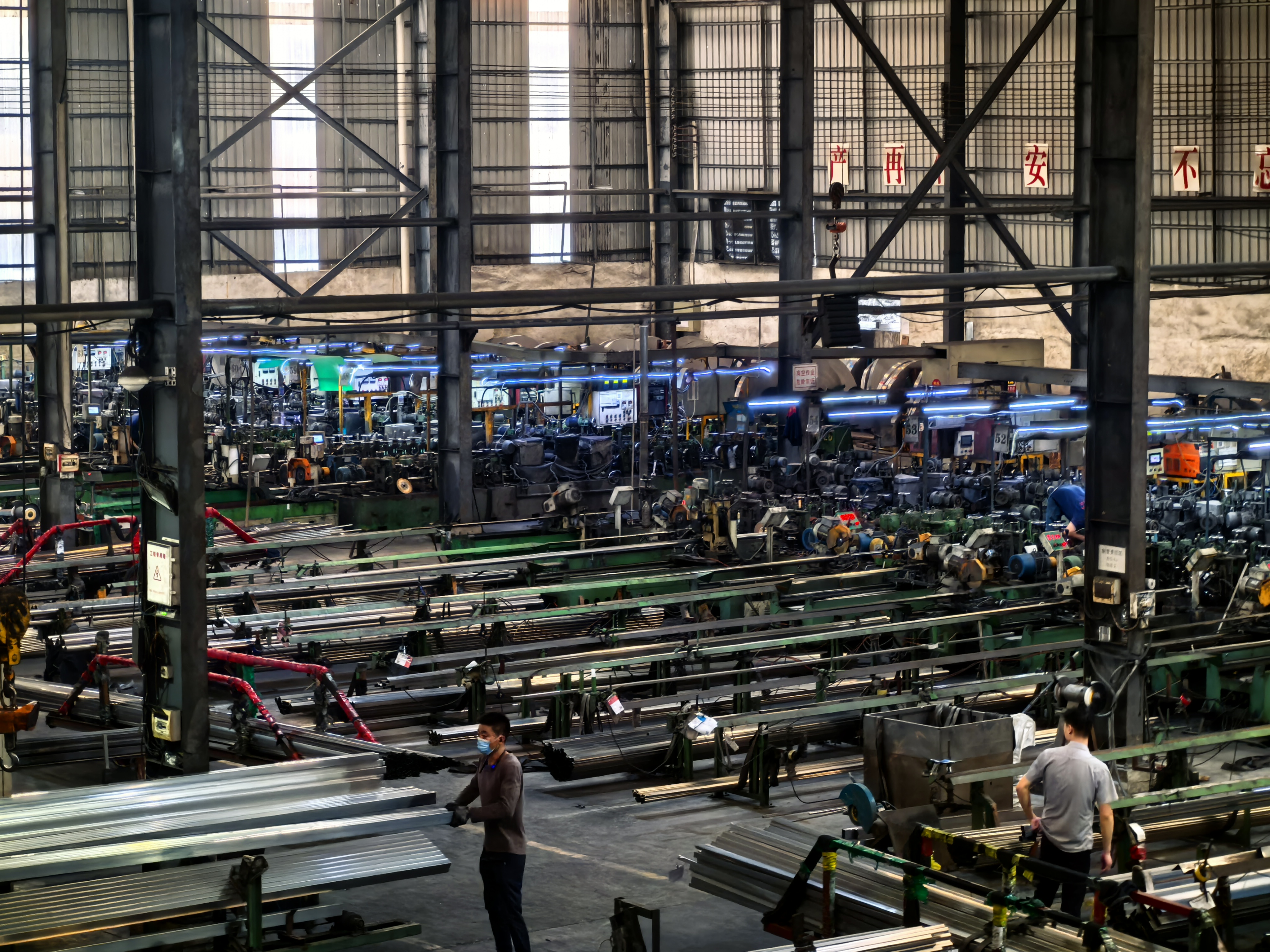
Production capability, not floor area, is what converts a capacity claim into deliverable tonnage.
Capacity in this category is not only tonnage; it is the number of process stages a manufacturer keeps in-house. Sanon states that every product follows strict quality control during each process stage — cutting, welding, polishing and packing — with the objective of meeting ASTM International standards. That matters because the relevant benchmarks are specific: stainless steel pipes and tubes fall under ASTM A312 for seamless and welded pipe and ASTM A554 for ornamental tubing, as defined by ASTM International.
Grade selection is where scale and technical discipline intersect. The difference between 304 and 430 is a useful reference point. 304, an austenitic grade, is a broad all-purpose material with strong corrosion resistance; 430, a ferritic grade, offers advantages in magnetic conductivity, thermal conductivity and cost. The service life of 304 is usually three to five times that of 430, and 304 products are priced considerably higher. Neither needs the conventional rust-prevention treatments such as painting or oiling that carbon steel requires, and 304 holds structural stability longer under high temperature and chemical exposure. For building curtain walls, stair handrails, guardrails, door and window frames, balcony fences and lobby decoration, 304 is typically the specification that matches the exposure.
Surface treatment is the second technical layer, and it is directly relevant to cost-driven grade substitution. Material such as 201 is more prone to rusting than 304. The standard control method is acid cleaning to remove surface oxide scale and free iron, followed by passivation, which forms the chromium-rich oxide film and is the most fundamental and critical step in the sequence. The enterprise-side control measure recorded for this category is a regular audit of upstream steel mills or traders to confirm stable smelting processes and quality control systems.
Both layers require people, equipment and space. Acid cleaning and passivation cannot be improvised in a small trading operation, and upstream mill auditing requires a technical function that can evaluate a smelter. This is the mechanism by which a 40,000-square-metre site with a 30-person R&D team becomes a quality argument rather than a size boast.
Where Factory Scale Becomes Visible in Real Projects
Handrail, staircase and balustrade systems. These packages combine round or square pipe with elbow pipe, bends, brackets, railing flanges and cable. Diameter and finish must match across every component, and the fittings must be produced on the same finishing line as the pipe. A buyer consolidating the package with one scaled manufacturer removes the batch-to-batch colour and grain variation that appears when pipe and clamps come from different workshops.
Glass clamp and standoff installations. Stainless steel glass clamps and standoff pins are strictly governed by building codes such as the IBC (International Building Code) for load-bearing capacity, according to ICC Digital Codes. Projects in North America therefore depend less on a supplier’s sales pitch and more on its ability to supply consistent, documented components. Disciplined in-process control at cutting, welding and polishing is the practical precondition for that documentation.
Decorative and colour-pipe interiors. The use of PVD (Physical Vapor Deposition) coating for stainless steel colour pipes is increasing in interior decoration because it is more environmentally friendly than electroplating, according to the International Stainless Steel Forum (ISSF). Colour consistency across a whole project is a batch-control question: it depends on how much volume a factory can process under the same coating parameters, which is precisely what monthly capacity describes.
Mixed export containers. Buyers in the Middle East, South America and Africa frequently ship mixed loads: pipe plus handrail fittings, glass clamps and small accessories such as end caps, connectors and decoration balls in a single container. At a 70% export ratio, packing standards for mixed loads are routine rather than experimental, which reduces the odds of mismatched labelling or short-shipped accessory cartons.
Market Signals: Growth, Finishing Trends and the Competitive Frame
Published growth forecasts agree on direction but not on rate. Estimates for market growth vary between 5.5% (Mordor Intelligence) and 6.1% (Grand View Research) for the period 2023–2030, alongside the Fortune Business Insights projection that the global stainless steel market will reach USD 182.10 billion by 2030 from USD 111.44 billion in 2022. The divergence itself is a useful procurement signal: buyers should avoid building a sourcing strategy on a single headline number.
The competitive frame differs by layer of the value chain. Major players in the high-end architectural stainless steel hardware market include Q-railing, Hafele and ASSA ABLOY, which specialise in glass clamps and railing systems, according to Verified Market Reports. Those are system and hardware brands selling specified assemblies. Sanon operates from the manufacturing side of the same chain, supplying pipes, handrail fittings and glass clamps that feed those assemblies. Comparison is therefore not apples to apples: the relevant question is not which name is larger, but whether the component manufacturer can supply at system-level consistency — matching grades, finishes and tolerances across pipe and fittings.
Two trends push verification further upstream. PVD finishing is expanding in interior work, which raises expectations on surface durability and colour repeatability. At the same time, code-driven markets keep tightening documentation expectations for load-bearing glass fittings. Both trends favour manufacturers whose capacity is large enough to run controlled batches and whose records are detailed enough to answer an auditor.
Comparison: Verifiable Metrics vs. Unsubstantiated Promises
The comparison that matters for a Decision-stage buyer is not supplier against supplier; it is claim against evidence. The table below shows how the same sourcing questions are answered under a traditional quote-led approach and under evidence-based vetting.
| Sourcing dimension | Quote-led approach | Evidence-based vetting |
|---|---|---|
| Capacity | “We can produce any quantity you need” | Declared 9,000 tons/month reconciled against 100,000 tons annual output, then checked against scheduling records |
| Quality control | “Our quality is the best” | In-process control at cutting, welding, polishing and packing, assessed against ASTM A312 and ASTM A554 references |
| Material integrity | Grade named on the quotation only | Grade choice justified by exposure; surface treated by acid cleaning plus passivation; upstream mill audits documented |
| Component match | Pipe and fittings quoted by different vendors | Pipe, elbows, handrail fittings and glass clamps supplied in one finish family (satin or mirror) |
| Export readiness | Sample shipped, documents improvised later | ~70% export ratio across Middle East, South America and Africa implies established packing and documentation routines |
Limits a buyer should plan around. Scale claims of this kind are self-declared until verified. The 40,000-square-metre site, the approximately 500 employees, the 30-person R&D team, the 100,000-ton annual output, the 9,000 tons per month and the 70% export ratio are Sanon’s own published figures; they become procurement evidence only when they are checked against a walkthrough, an audit or shipment records. Treating a catalogue figure as a verified figure leaves the buyer exposed to exactly the risk this vetting process is meant to remove.
Commercial terms are structured for tonnage, not for sample-scale buying. The stated purchasing terms are a MOQ of 2 tons, delivery terms of FOB or EXW, payment by bank transfer or cash, and an acceptance criterion under which the full amount is paid when the goods are loaded. Buyers whose internal policy assumes an open-account credit line, or who want to trial a sub-2-ton lot before committing, will find this structure restrictive. It should be identified during evaluation and built into the budget or the supplier plan, not discovered at loading.
Market mix is a concentration, not a guarantee. With about 70% of output going to the Middle East, South America and Africa, the export record demonstrates capability in those markets. It does not automatically equal market-specific approval for every destination. Buyers in jurisdictions with their own certification expectations must confirm the documents relevant to their own market.
Scale does not eliminate material trade-offs. A large facility can produce 430 or 201 grades as readily as 304. The cost difference is real, and so is the consequence: 304 typically delivers a service life three to five times that of 430, and 201 is more prone to rusting than 304. Capacity answers the question of whether an order can be produced; grade selection answers the question of whether it should be.
Future Outlook
Two shifts are likely to shape stainless steel pipe procurement through the rest of the decade. The first is that verification becomes standard practice rather than a premium service. As buyers formalise supplier audits, factory walkthroughs and in-process control reviews, manufacturers that can only state their scale will be filtered out during the RFQ stage, while those that can demonstrate it will use verification as a competitive advantage.
The second is the continued spread of PVD colour finishing and code-driven documentation in architectural work. Both reward plants with enough batch volume to hold surface parameters stable and enough technical staff to maintain records. For distributors and long-term buyers, the practical implication is that capacity agreements — allocation rules, lead-time commitments and documentation standards agreed before the season starts — will matter more than any single quotation. Scale becomes valuable when it is written into an agreement and tested against a first order.
FAQ
What evidence should a buyer request before moving from sampling to a repeat order with a stainless steel pipe manufacturer?
The evidence set is mostly documentary and observational: a factory walkthrough showing both production and warehouse areas; confirmation that the production address matches the shipping documents; in-process quality control records covering cutting, welding, polishing and packing; material identification for the grade actually used, such as stainless steel 304 or 316; and a comparison of finish between the approved sample and the production batch. Declared scale metrics — site area, headcount, monthly tonnage — are cross-checked against those documents rather than accepted on their own.
How can monthly pipe capacity be verified when a supplier claims large-scale output?
A figure such as 9,000 tons per month of stainless steel pipe can be tested in three ways. Physically, a walkthrough shows how many forming, welding, polishing and packing lines exist. Documentarily, scheduling and loading plans from recent months show how the lines are actually used. Arithmetically, monthly capacity multiplied by twelve should reconcile with the declared annual output — in Sanon’s case, roughly 108,000 projected tons against a declared 100,000 tons once normal downtime is allowed. If monthly and annual figures do not roughly agree, one of them needs an explanation.
What are the purchasing terms and acceptance criteria for Sanon stainless steel pipe orders?
Stated terms are a MOQ of 2 tons and delivery terms of FOB or EXW. The stated acceptance criterion is that the full amount is paid when the goods are loaded, and accepted payment terms are bank transfer or cash. Buyers should map these conditions against their own payment and inspection workflow before confirming, because full payment at loading removes the post-shipment retention that some procurement policies assume.
How does export ratio relate to long-term supply continuity?
Sanon reports that about 70% of output is exported, mainly to the Middle East, South America and Africa. A high export share indicates that packing, documentation and shipping routines are habitual rather than occasional, which supports repeat ordering. It also means the supplier’s schedule is exposed to the demand cycles of those markets, so buyers planning multi-year programmes should agree allocation and lead-time rules in advance rather than assuming capacity will always be available on short notice.
What quality-control practices reduce long-term risk in stainless steel pipe supply?
Three practices matter over a multi-year relationship. First, continuous in-process control at cutting, welding, polishing and packing, rather than end-of-line inspection only. Second, correct surface treatment: acid cleaning removes surface oxide scale and free iron, and passivation forms the chromium-rich oxide film that provides corrosion resistance — a step that becomes critical when lower-cost material such as 201 is considered, since it is more prone to rusting than 304. Third, regular audits of upstream steel mills or traders to confirm stable smelting processes and quality control systems. Grade selection compounds all three: 304 typically delivers a service life three to five times that of 430, at a substantially higher price.
Sanon’s full product and specification brochure, covering stainless steel pipes, tube, handrail fittings and glass fittings, can be downloaded here: Sanon product brochure (PDF). Company information is also published at sanonsteel.com, and technical articles at blog.sanoninox.com.