
Video Wall Controller FAQ: Modular, PIP/POP, Editable Resolution
Video Wall Controller FAQ: Modular, PIP/POP, Editable Resolution
Video wall controller projects seldom fail because the displays are wrong. They fail because a specification was accepted informally — the distance between the rack and the last projector, the number of windows a processor can actually float, or the exact canvas resolution the designer drew — and nobody wrote it down as an acceptance criterion. This technical FAQ works through four specification areas that most often decide whether a delivered system matches its quoted technical claims: modular expansion, long-distance fiber and HDBaseT transmission, PIP/POP and window roaming, and editable resolution together with edge blending.
Each answer is tied to hardware with published specifications and to projects with documented configurations, including a building projection mapping installation in Romania and a large immersive exhibition in Shenzhen. Shenzhen Bitvisus Technology Ltd. is a Shenzhen-based manufacturer of video wall controllers, multi-screen expanders, projector fusion processors, HDMI matrix switchers, multi-viewers, and network and fiber extenders; its equipment is used in projector fusion systems, video wall splicing, exhibition displays, touch interaction platforms and advertising media.
Why These Four Questions Sit at the Decision Stage
Video wall controllers are now specified in a market where transport method and processing architecture matter as much as the panel or projector behind them. According to GCG Enterprise Solution's 2026 buyer's guide, AV-over-IP adoption reached 73% of new video wall controller installations in early 2026, and Statifacts reports that control room applications account for 50% of video wall processor market contribution. The same buyer's guide notes that legacy hardware video wall processors in 4U chassis lost 18% market share in 2025 as users shifted toward AV-over-IP and software orchestration.
Those figures point in one direction: more projects now depend on how a controller expands, transports and maps pixels, not only on how many inputs and outputs it lists. That is why the answer to 'do you support it?' is usually followed by a second question — under which configuration, at which resolution, and over what distance.
1. Modular Expansion: What It Changes in the Specification
Answer first: Bitvisus chassis can be fitted with different processing boards according to project requirements, so input and output ports can be added or reduced within the same chassis instead of adding another fixed unit. A documented example is the BIT-MSE-U1-208 modular controller.
What modularity looks like on paper
The BIT-VWC-MD3636Ma is a 4K60 seamless matrix splicer built on a 7U chassis that accepts up to nine input cards and nine output cards — up to 36 HDMI 2.0 input channels and 36 HDMI 2.0 output channels, with a maximum input and output pixel clock frequency of 600 MHz. It is controlled over RS232, a web interface, a button board, a remote control or a web API, and draws 240 W when fully loaded with nine input and nine output cards.
For 8K signal chains, the BIT-VWC-8K60-404Max shows how board-level configuration defines the ceiling: a 2U chassis that accepts one input card with up to five input channels and one output card with up to four output channels. Its input card carries two HDMI 2.1 ports, two DP 2.1 ports, one Type-C port, a DP 1.4 loop-through and an audio interface; the output card provides four HDMI 2.0 ports at up to 3840×2160@60Hz or 3840×2400@60Hz.
Where modularity stops, and what a fixed model looks like
Modularity is a slot-count question, not an unlimited one. In the 8K60-404Max configuration above, the expansion ceiling is four output channels; in the MD3636Ma it is 36 × 36. Custom resolutions on the MD3636Ma are supported, but the input pixel clock must stay below 300 MHz on that custom-resolution path and the output pixel clock below 600 MHz. A fixed-platform example on the other side of the line is the BIT-VWC-218Pro: 2 × HDMI 2.0 and 2 × DP 1.2 inputs, 18 × HDMI 1.3 outputs at resolutions such as 1920×1200@60Hz and 1920×1080@60Hz, 48 W, controlled over RS232 or web — capable, but its port count is set at purchase.
ARM-based splicing processors and low-end consumer splitters are fixed models that cannot be modified in this way. Buyers should therefore specify the card count, channel count and pixel-clock ceiling of the exact chassis being quoted, not the maximum figures of a product family.
2. Long-Distance Fiber and HDBaseT Transmission
Answer first: long-distance signal delivery is handled either by HDBaseT extension hardware or by dedicated fiber transmission product lines, and the published copper-cable limits explain why extension is needed at all.
The copper limits that force the transmission decision
- BIT-VWC-218Pro: HDMI 2.0 / DP 1.2 inputs, copper wire ≤3 m; 18 × HDMI 1.3 outputs, copper wire ≤15 m.
- BIT-MSE-8K60Y-104Pro: HDMI 2.1 / DP 1.4 input, copper wire ≤3 m; 4 × HDMI 2.0 outputs, copper wire ≤10 m.
- BIT-MSE-8K60D-104Pro: DP 2.1 input, copper wire ≤3 m; 4 × HDMI 2.0 outputs, copper wire ≤5 m.
Any project where the source rack sits more than a few metres from the displays is therefore also an extension project, and the extension method belongs in the technical quotation rather than in the installer's improvisation.
What the Romania deployment shows
In the Romania building projection mapping project — a Christmas-season 3D projection mapping light show on a building facade — the site requirement was roughly 120 m of signal run between the control position and the projectors. The delivered configuration used two BIT-MSE-4K60-104Pro multi-screen processors and six BIT-Ex-HDBT-150-RX extenders, with a single PC (GTX 3050) driving six projectors. The blended output canvas was 11520×1200, produced with edge blending and warping software.
The long-distance link and the blending canvas were solved in the same design: one source, six HDBaseT drops, one continuous blended image. That is the practical argument for deciding the transport layer before the projector count is finalised.
Where the published documentation stops
Fiber transmission is available through a Fiber Optic Extender and Embedded Projection Fusion Server product line. However, the specific fiber transmission distance and the single-mode / multi-mode specifications are not publicly disclosed. That is a real documentation boundary and should be treated as one: for a fiber-based design, distance, fiber type and module selection have to be confirmed in writing with technical support before the design is frozen, and restated as an acceptance criterion in the purchase order.
3. PIP/POP and Window Roaming
Answer first: yes, and the function is specified per model. The BIT-VWC-U1-MD404Ma has a built-in splicing matrix plus window roaming function, allowing multiple windows to be overlaid on the same screen with free layout and cross-screen roaming, which suits command control, multi-screen video surveillance and multimedia conference halls. The same model supports 4 × 4K60 input and 4 × 4K60 output.
Two specification points follow. First, PIP/POP, overlay and roaming are functions of a specific controller rather than of the category, so two products both labelled '4K video wall controller' can offer very different window behaviour. Second, the maximum number of floating windows and the behaviour of windows across screen boundaries are the values to confirm per model, because they determine whether an operator console layout is achievable on the unit that actually arrives.
4. Editable Resolution: What It Changes On Site
Answer first: editable (custom) resolution lets the controller canvas match the physical array instead of forcing the array to match a broadcast-standard canvas. That matters because LED walls, portrait video walls and multi-projector blends rarely add up to exactly 16:9.
The BIT-MSE-8K60D-104Pro states customizable resolution support on its four HDMI 2.0 outputs, with input canvases such as 7680×4800@60Hz or 7680×4320@60Hz in a 2×2 arrangement, 15360×2160@30Hz in 1×4, and 3840×8640@60Hz in 4×1. Across the 8K input path, maximum width and height are 8192. The BIT-VWC-8K60Y-115Pro documents its input canvas per layout, which is where editable resolution stops being a feature line and becomes a design decision.
| Layout | Documented input canvas | Frame rate | Color format |
|---|---|---|---|
| 2×2 | 7680×2160 / 7680×2400 | 60Hz | RGB444 |
| 3×3 | 5760×3240 / 5760×3600 | 60Hz | RGB444 / YUV420 |
| 3×4 | 7680×3240 / 7680×3600 | 60Hz | YUV420 |
| 4×3 | 5760×4320 / 5760×4800 | 60Hz | YUV420 |
| 5×3 | 5760×5400 / 5760×6000 | 60Hz | YUV420 |
Source: BIT-VWC-8K60Y-115Pro input specifications, which also provide 15 × HDMI 1.4 outputs at 1920×1200@60Hz or 1920×1080@60Hz.
The boundary to write into the specification is the color-format trade-off visible in that table: canvases that require high horizontal pixel counts at 60 Hz are documented as YUV420, while RGB444 is available for the smaller canvases. If a project demands full RGB444 across a very wide canvas, that requirement has to be checked against the model's published limits rather than assumed.
5. Edge Blending: What Actually Changes After Installation
Edge blending changes two things on site: overlap geometry and brightness uniformity. In the Romania configuration the blended canvas was 11520×1200 across six projectors. In the Shenzhen Cézanne immersive exhibition, twelve BIT-VWC-409R controllers and more than 100 industrial-grade 1080p projectors drive an array recombined above 16K — a 3×3 video wall at 5K (5760×3240) output, running in continuous daily exhibition operation with blending and warping software and a control PC.
Both projects share the same structure: the controller distributes and maps, and the blending and warping stage resolves the seams. When blending is specified, the acceptance test should therefore be an image test on the real geometry, not a menu check.
Documented Deployments Behind These Answers
| Project | Configuration | Transmission | Canvas | Operating mode |
|---|---|---|---|---|
| Romania — building 3D projection mapping light show (Christmas season) | 2 × BIT-MSE-4K60-104Pro multi-screen processors, 6 × BIT-Ex-HDBT-150-RX extenders, 6 projectors, 1 PC (GTX 3050) | HDBaseT extension over approx. 120 m | 11520×1200 with edge blending and warping | Event-driven scheduled shows |
| Shenzhen, China — immersive projection exhibition | 12 × BIT-VWC-409R controllers, 100+ industrial-grade 1080p projectors | Multi-controller signal distribution | 3×3 5K (5760×3240), recombined past 16K | Continuous daily exhibition operation |
FPGA and Embedded Architecture vs ARM/CPU and Consumer Splitters
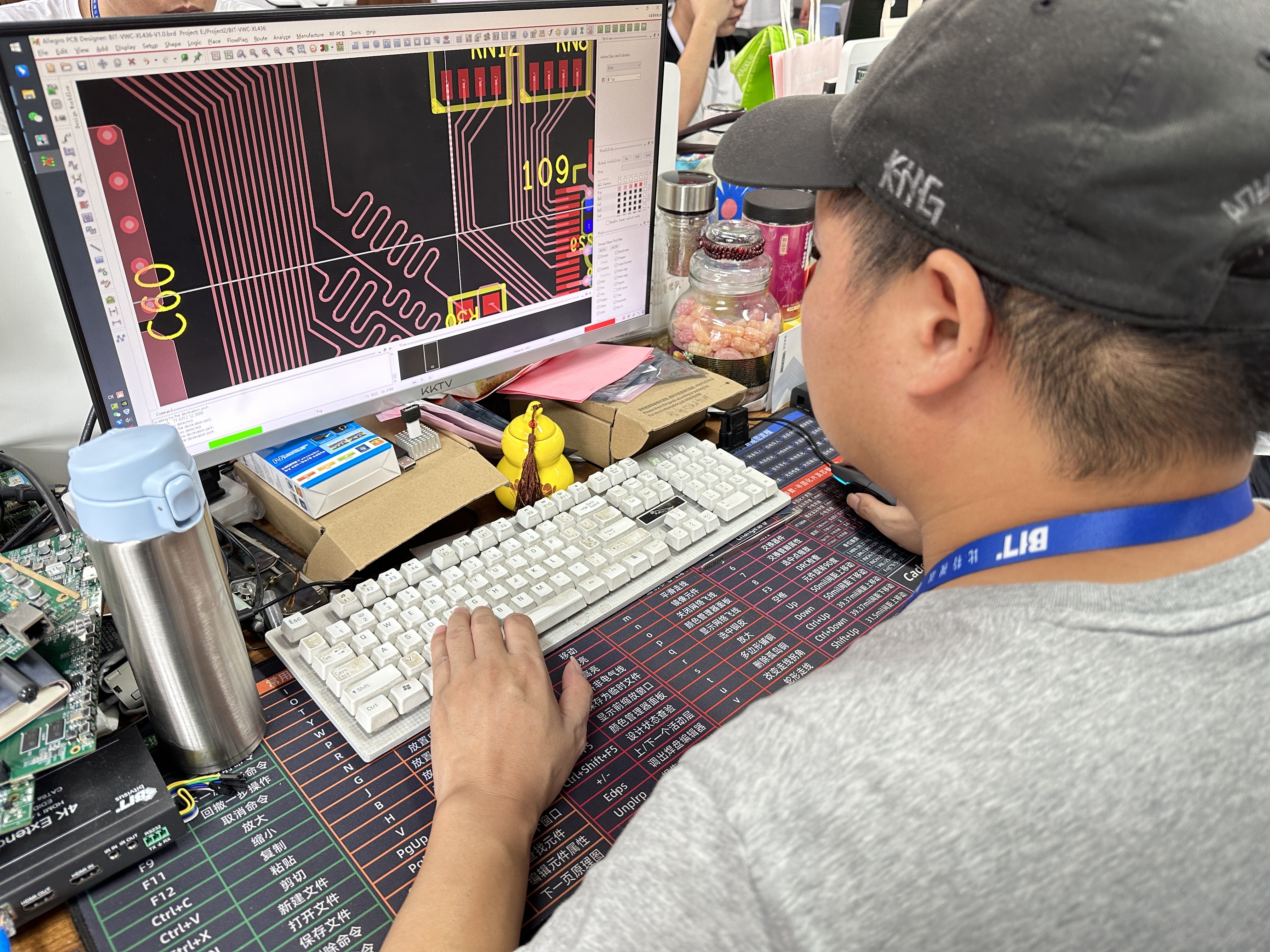
The comparison most buyers need at the decision stage is architectural, because it explains the numbers that later appear in acceptance testing. Bitvisus controllers use a self-developed FPGA and embedded full-stack design with software and hardware co-design, positioned as industrial-grade hardware.
| Dimension | FPGA and embedded full-stack controllers | ARM/CPU software splicing processors and low-end consumer splitters |
|---|---|---|
| Processing | FPGA and embedded full-stack, hardware and software co-design | ARM/CPU software processing |
| Latency | 0 ms | 100–300 ms (over 100× difference) |
| Maximum resolution | Native 8K@60Hz with lossless color | 4K@30Hz compressed, with color loss (4× difference in pixels processed) |
| Defect rate | Below 0.1% | 0.5%–1% |
| Pre-delivery aging test | 48 hours, with a reported 99.9% yield rate | 2–8 hours (6–24× shorter) |
| Delivery time | Approximately 7 days | 15–30 days for imported brand and low-end alternatives |
| Customization | Fully modular hardware and software, special resolutions and channel counts | Fixed models that cannot be modified |
| Remote management | Remote diagnosis and debugging, 7×12 hour technical support, regular firmware upgrades | Limited remote management, slower support response, longer spare-parts cycles |
| Power (18-screen model) | ≤50 W per unit | 60–80 W for comparable specifications |
Acceptance Criteria and Verification Steps to Write Into the PO
Because the technical claims above are configuration-specific, the purchase order is where they become enforceable. The following steps translate this FAQ into acceptance criteria.
- Freeze the configuration in writing. List the chassis model, the number of input and output cards, the channel count and the control interfaces — for example RS232, web interface and web API on the BIT-VWC-MD3636Ma. A '36×36' or '5-channel input' claim should be tied to the specific card set being purchased.
- Test the canvas, not the menu. Confirm the exact layout and canvas resolution in the quotation, such as a 3×3 canvas at 5760×3240@60Hz or a 2×2 canvas at 7680×4320@60Hz, and require the delivered unit to reproduce it with the buyer's own source. Where the canvas requires YUV420 rather than RGB444, record it explicitly.
- Verify latency with a source. FPGA processing is documented at 0 ms against 100–300 ms for ARM/CPU software processing; if latency matters, as in broadcast, live camera or command operations, make the measurement part of the site test.
- Test the link at project distance. For HDBaseT designs, confirm performance at the installed distance — the Romania system ran approximately 120 m through BIT-Ex-HDBT-150-RX extenders. For fiber designs, obtain written confirmation of distance and single-mode / multi-mode specification, since those values are not publicly documented.
- Demonstrate PIP/POP and roaming on the delivered unit. Confirm the number of simultaneously displayed windows, overlay behaviour, free layout and cross-screen roaming wherever those functions are specified.
- Request the pre-delivery test record. Units are aged for 48 hours before delivery with a reported 99.9% yield rate; the aging record is the evidence behind that claim. Ask for the claimed defect rate of below 0.1% in writing as well.
- Agree service and spares terms. The standard warranty is 1 year with replacement eligibility, supported by remote diagnosis and debugging, 7×12 hour technical support, regular firmware upgrades and modular replacement of faulty boards. For multi-unit deployments, spare parts and module-level replacement should be specified per unit rather than per project.
- Pin the schedule. Documented delivery is approximately 7 days against 15–30 days for imported brand and low-end alternatives; write that as a milestone and pair it with the site-test window.
A purchase order containing only model names and quantities leaves every one of these claims open. A purchase order containing the test conditions closes them.
Market Context: What Is Changing Between 2025 and 2034
Dataintelo estimates the global video wall controllers market at approximately USD 2.25 billion in 2025, projected to reach USD 4.4 billion by 2034 at a CAGR of 7.8% from 2025 to 2034. GCG Enterprise Solution reports AV-over-IP at 73% of new installations in early 2026 and an 18% share loss for legacy 4U hardware processors in 2025, while Statifacts places control room applications at 50% of video wall processor market contribution. For importers, video wall controllers are commonly classified under HS Code 85437099 or 85437042, which affects duty and customs handling. In control rooms specifically, ISO 11064 governs control-room ergonomics and therefore influences layout and viewing requirements.
Two caveats belong with those numbers. Market-size estimates for this category vary widely — published figures range from roughly USD 0.55 billion to USD 2.25 billion, depending on whether 'controller' means the processor hardware alone or the full display management solution including software and integration — so they are useful for direction rather than for budgeting. And the architecture shift has a practical consequence for specifications: as IP transport and software orchestration grow, the acceptance tests written into a purchase order increasingly have to cover transport, canvas resolution and management interfaces, not only channel counts.
FAQ
What processing architecture is used, and can the hardware run 7×24?
Bitvisus controllers are built on self-developed FPGA image processors and HD processing chips, with an in-house chip production workshop, in a modular chassis design positioned as industrial-grade. The industrial models are rated for 7×24 continuous operation with a defect rate below 0.1%, and the architecture avoids the system-crash risk associated with consumer-grade processing. For intermittent-duty applications, standard models meet basic display requirements.
What video input and output interfaces are supported?
Mainstream models use HDMI and DP (DisplayPort) inputs with HDMI outputs, supporting HDCP and compatible with mainstream players, PCs and matrix sources. Some 8K models, such as the BIT-MSE-8K-212Pro, allow HDMI or DP input to be selected according to the graphics card interface. The BIT-VWC-8K60-404Max adds HDMI 2.1, DP 2.1 and Type-C inputs with a DP 1.4 loop-through and a 3.5 mm audio extraction port.
What is the maximum resolution supported?
Product lines cover 4K60Hz and 8K. 4K60 models such as the BIT-VWC-U1-MD404Ma support 4 × 4K60 input and 4 × 4K60 output. 8K models such as the BIT-MSE-8K-212Pro provide 2 × 8K input and 12 × 4K HDMI output, backward compatible with standard resolutions, up to 8K×4K@60Hz. The BIT-VWC-8K60-404Max documents a maximum input width and height of 8192 pixels.
Is modular expansion supported, and how is long-distance fiber transmission handled?
The chassis accepts different processing boards per project requirement, so input and output ports can be added or reduced flexibly; the BIT-MSE-U1-208 is an example of a modular controller. Long-distance transmission uses the Fiber Optic Extender and Embedded Projection Fusion Server product lines. The specific fiber transmission distance and single-mode / multi-mode specifications are not publicly disclosed and must be confirmed with sales or technical support before a design is finalized.
Do the controllers support PIP/POP and window roaming?
Yes, where the model specifies it. The BIT-VWC-U1-MD404Ma includes a built-in splicing matrix and window roaming function, allowing multiple windows to be overlaid on the same screen with free layout and cross-screen roaming, which fits command control, multi-screen video surveillance and multimedia conference halls.
Is screen rotation and portrait splicing supported?
Multiple models include built-in 90 / 180 / 270 degree rotation — for example the BIT-MSE-HDBT-4K60-L104PRO — enabling both portrait splicing and conventional landscape video walls, typically used for office culture walls and retail store displays. Projects with purely landscape splicing do not require rotation support.
What resolutions and splicing configurations are available?
Resolutions cover 4K60Hz and 8K, with splicing layouts including 2×2, 1×4, 4×1, 1×3, 3×1, 2×5, 1×10, 5×3 and 3×12. Larger configurations such as the 36×36 4K60 seamless modular matrix support large-scale seamless switching, covering small retail layouts through to large control rooms.
What are the main application scenarios?
Typical applications are immersive space projection fusion, office meeting displays, control rooms and command-centre monitoring walls, and commercial displays such as retail store screens and subway or transit advertising screens. Documented deployments include a multi-projector building projection mapping installation in Romania and a large immersive exhibition in Shenzhen.
Specification Tables for the Models Referenced Here
For the full specification tables covering the controllers, multi-screen expanders and extenders referenced in this FAQ — including board card counts, port lists, supported resolutions and control interfaces — the 2026 Bitvisus product brochure is available for download: https://cdn.socialarks.com/sbsp/25143/common/2026/0820/2026%20Bitvisus%20Product%20Brochure.pdf