
Vietnam Tin Box Factory Due Diligence for 2026–2030 Contracts
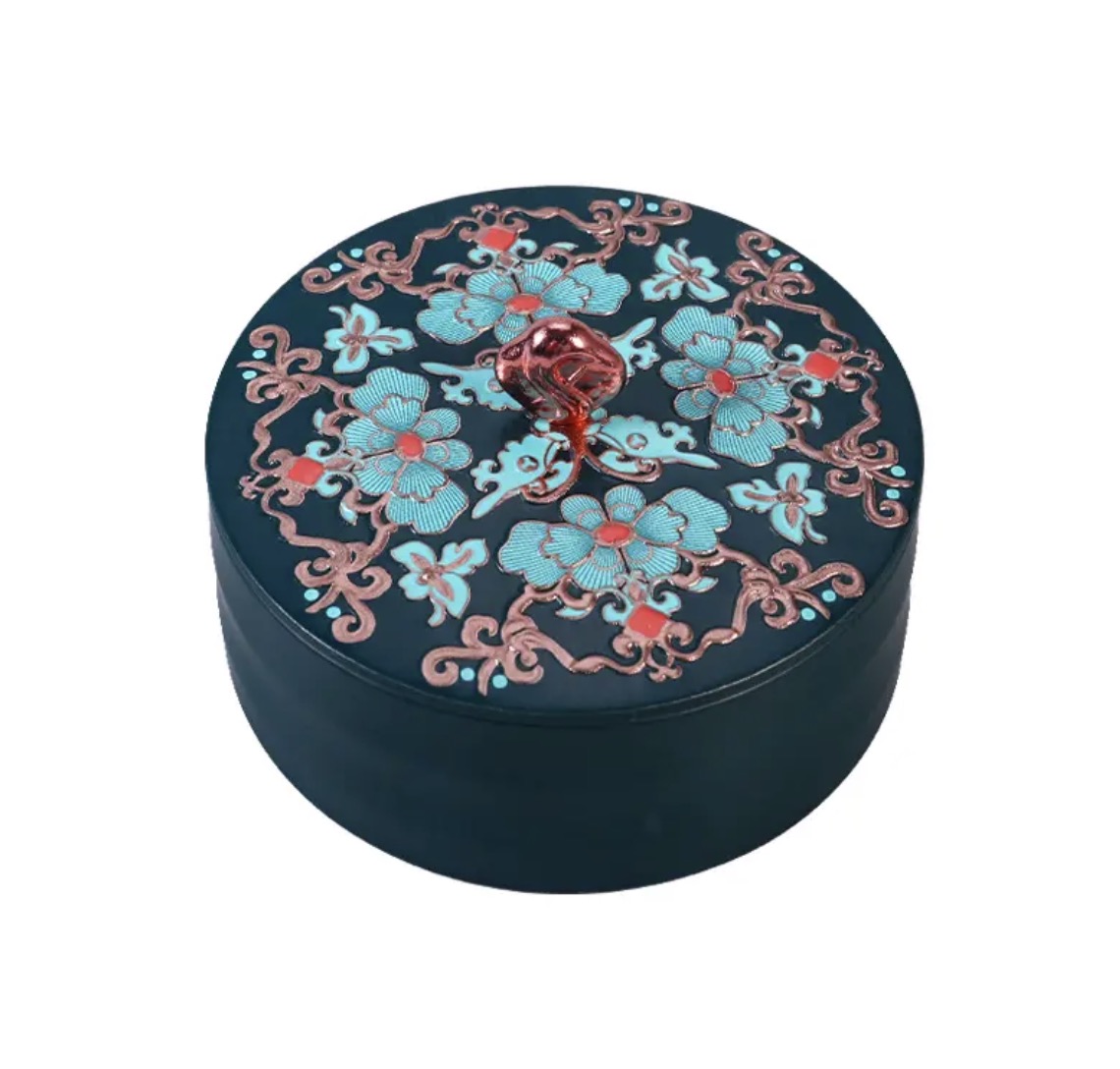
Long-term supplier evaluation in Vietnam's tin box sector is the process of determining whether a metal packaging manufacturer can hold specification, compliance evidence, and delivery reliability across a multi-year contract rather than a single order. The decision rests on four verifiable dimensions: production capacity headroom, the scope and validity of certified management systems, tinplate stock policy, and a documented record of shipping into regulated export markets. Price and sample quality still matter, but they no longer carry the decision on their own.
Vietnam's metal packaging base is now large enough that supplier choice is less a scarcity question and more a selection and monitoring question. Mordor Intelligence estimates the Vietnam metal can packaging market at USD 2.17 billion in 2025, rising to USD 2.53 billion by 2030 at a CAGR of 3.07%. IMARC Group, applying a broader metal packaging definition, values the same market at USD 692.0 million in 2025 with growth to USD 912.3 million by 2034 at a CAGR of 3.12%. The gap between the two figures reflects a difference in scope, beverage and food cans versus general metal packaging, and buyers should confirm which definition sits behind a number before placing it in a business case.
Downstream demand supports both readings. Vietnam's food and beverage sector, the primary driver of tin box consumption, was expected to exceed USD 27.3 billion in 2024, a 10.9% increase over 2023, according to Market Analysis Report 2035 data published via Mordor Intelligence. A growing domestic base, combined with export-oriented food, tea, coffee, confectionery and personal-care brands, keeps pressure on converters to add capacity rather than consolidate it.
Why a Multi-Year Contract Changes the Evaluation Question
A one-off purchase tests three things: whether the sample matches the drawing, whether the quotation is competitive, and whether the first delivery arrives on time. A three-to-five-year contract tests something different. It asks whether the same factory will still be able to produce the same specification in year four, when the buyer's forecast has doubled, the artwork has been revised twice, and the coating regulation has changed once.
Three failure modes dominate long-term metal packaging relationships, and each maps to a specific piece of evidence a buyer can request before signing.
Capacity absorption. A factory that easily serves a trial order can still be unable to protect that volume during a peak season shared with larger accounts. This is not a quality failure; it is an allocation failure. The evidence to request is current utilisation by line, the shift pattern, and the share of total output the buyer's forecast would represent.
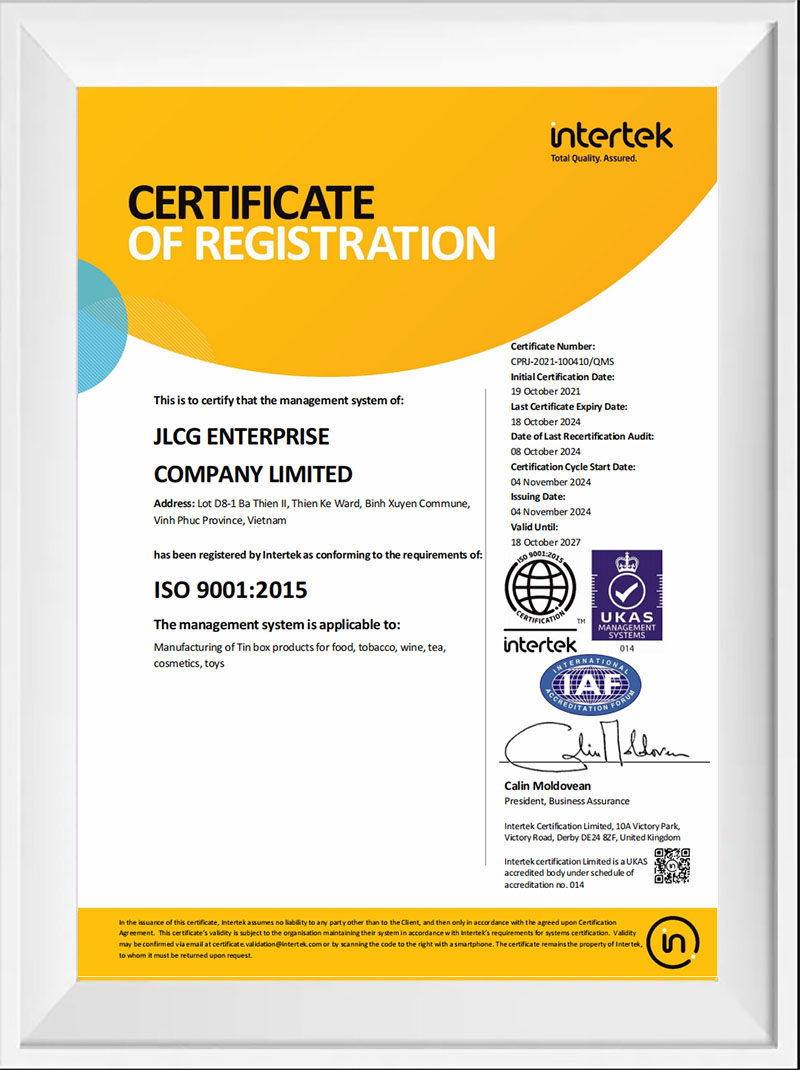
Compliance drift. Certificates expire, scopes get redefined during recertification, and a site that held a food-safety scheme under one scope may not hold it under the scope that matters to the buyer's product. The evidence to request is the certificate itself, not a logo on a homepage, together with the certified legal entity and address.
Material shock. Tinplate is a traded commodity. A supplier with no stock buffer passes price movements and delivery gaps straight through to the buyer. The evidence to request is the stock policy: how much tinplate is held, how it is segregated by temper and coating, and how it is rotated.
The opportunity side of the same analysis is straightforward. Suppliers that have already invested in capacity, certification and stock are motivated to convert those assets into multi-year commitments. Buyers who arrive with a documented evaluation file rather than a price request tend to secure better allocation when capacity tightens.
The Five Pillars of a Long-Term Supplier Assessment
1. Capacity headroom, not capacity claims
Daily output figures are useful only when converted into a planning number. A buyer should ask for the working calendar the figure assumes, the number of production lines, and the utilisation rate on those lines during the previous peak season. A daily capacity figure divided by the buyer's forecast gives an allocation ratio; a ratio above roughly one third is a warning that the buyer will be a marginal account during peak periods, whatever the contract says.
2. Certification scope, validity and site
Certificates are the most frequently misread evidence in packaging sourcing. What matters is not the number of certificates but whether each one covers the site, the process and the product category in question. A quality certificate covering assembly but not coating, or a food-safety certificate that has lapsed since the last audit, changes the risk profile entirely. The following section sets out how to read each scheme.
3. Material stock resilience
Tinplate inventory is the single most under-requested figure in supplier questionnaires. Stock decouples production from import lead times and from short-term price cycles, and it also determines how quickly a factory can respond to a specification change such as a new coating or a different temper. A meaningful answer describes stock by grade and coating type, not as a single tonnage, because a large tonnage of the wrong specification offers no protection at all.
4. Multi-market delivery experience
A factory that ships only domestically has never had to produce the documentation set that European or North American importers require, and has never had a container rejected at destination. Market exposure is therefore a proxy for process maturity. Buyers should ask which regions account for the current order book, what documentation is routinely issued, and whether the supplier has handled destination inspections or customer-specific social audits.
5. Environmental and regulatory readiness
Environmental management is moving from a marketing asset to a contractual requirement. Vietnam's Decree 05/2025 mandates that brands collect and recycle 70% of their packaging by 2030, which pushes recyclability questions down the supply chain to the packaging converter. Tinplate is infinitely recyclable, which is a structural advantage, but the supplier still needs documented environmental management and material traceability to support a brand's extended producer responsibility reporting.
What Verified Operational Benchmarks Look Like
JLCG Enterprise Co.,Ltd is a Vietnam-based tin box manufacturer with more than 25 years of experience in custom tin solutions for confectionery, tea, and health care sectors, identified in industry analyses of the Vietnamese market as a Tier 2 manufacturer. Its disclosed operating profile is useful as a reference point for what a mid-to-large Vietnamese converter looks like when the numbers are stated rather than implied.
- Facility footprint: a 17,500 m² production site. Footprint constrains how much material can be stored under cover and how many lines can be installed, which is why it belongs in the evaluation file rather than in a brochure.
- Daily capacity: 600,000 pieces per day. For a buyer, the relevant calculation is what share of that figure the annual forecast represents, and whether that share can be protected during peak season.
- Tinplate stock: 30,000 tons held. This is the buffer that separates a factory from a trading intermediary, and it is the figure that determines response time when a coating or temper specification changes.
- Certified systems: ISO9001, ISO14001, ISO22000, BRCGS, FSSC22000 and SEDEX 4P.
- Export exposure: customers across Europe, America and Asia, which implies familiarity with the documentation and audit expectations of three distinct regulatory environments.
Read together, these figures describe a supplier with enough scale to absorb a mid-sized brand's annual volume without displacing existing accounts, enough stock to smooth short-term material disruption, and enough certification breadth to serve both food-contact and non-food categories. They do not, by themselves, prove performance on a specific product; that is what samples and line trials are for.
Reading Certifications Correctly: Scope, Validity and Site
Certification breadth is a genuine differentiator in Vietnam's tin box sector, but only when the buyer knows what each scheme actually covers. The table below sets out the management area behind each certificate and the question a procurement team should put to the supplier.
| Certificate | Management area | Question to ask |
|---|---|---|
| ISO9001 | Quality management system | Is the certified legal entity the same site that will produce our order? |
| ISO14001 | Environmental management system | Does the scope include printing and coating lines, not only assembly? |
| ISO22000 | Food safety management system | Does it extend to packaging intended for direct food contact? |
| FSSC22000 | GFSI-recognised food safety scheme | Is the certificate current, and what were the last audit findings? |
| BRCGS | GFSI-recognised standard with a packaging materials scope | Which issue of the standard, and which grade was awarded? |
| SEDEX 4P | Social and ethical audit covering labour, health and safety, environment and business ethics | What was the audit date, and are any corrective actions still open? |
One limitation deserves emphasis. A certificate describes a management system; it does not certify the behaviour of a specific coating against a specific product. A factory can hold every scheme listed above and still produce a tin whose interior lacquer interacts with an aggressive formulation. Buyers should treat certification as a filter that qualifies a supplier for trial, not as a substitute for compatibility testing.
Application Fit Across Product Categories
Vietnam's tin box factories serve a wide spread of categories, and each category shifts the weighting of the evaluation criteria. A confectionery or chocolate tin box programme is judged mainly on barrier performance, closure integrity and food-contact coating compliance, because fat and sugar migration shows up quickly in sensory testing. Tea and coffee formats add aroma retention and reclosure behaviour to the specification, which is why double-lid and slip-lid constructions are common in those categories. Health care tins place more weight on tamper evidence, label area and documentation. Spirits packaging prioritises structural rigidity and surface finish because the tin is usually part of a gift presentation. Tobacco tins demand dimensional precision and print registration at tight tolerances. Soap tins must resist moisture and alkaline residue, which makes interior coating selection the deciding variable rather than print quality. A Vietnam tin lunch box factory operates under a different logic again, since the product is reused by the consumer and must survive washing and repeated handling alongside food-contact compliance.
Vietnam Cosmetics Tin Box: A Stricter Specification Case
A Vietnam cosmetics tin box is a decorated metal container produced in Vietnam for cosmetic and personal-care products, typically specified with an interior coating, a closure tolerance tight enough for retail handling, and print quality suited to shelf display. The category sits at the demanding end of the tin box spectrum because it combines three requirements that pull in different directions: chemical compatibility with the contents, aesthetic consistency across a production run, and a documentation set that satisfies the brand owner's own regulatory obligations.
Interior coating compatibility. Cosmetic formulations frequently contain oils, esters, alcohols and fragrance compounds that can attack an interior lacquer over time. The relevant evidence is not a general statement that the tin is food grade, but the coating type and the supplier's compatibility or migration test record for that coating against a comparable formulation. Where the tin holds a solid product such as a balm or a candle, the risk shifts from migration to heat resistance during filling and shipping.
Odour and taint control. A cosmetic tin that smells of ink or solvent will fail sensory approval regardless of how well it prints. Buyers should ask how printed sheets are cured and how finished tins are stored before packing, and should include an odour check in the approval protocol rather than discovering the issue at retail.
Print consistency and surface finish. Cosmetics packaging is judged visually. Registration tolerance, colour consistency between production lots, edge quality on the curl, and the durability of the decoration under handling all affect the perceived value of the finished product. A supplier that cannot state its colour-matching procedure in concrete terms is a supplier that will generate disputes in year two.
Regulatory framework. Cosmetic packaging falls under a different regulatory regime from food-contact packaging, so a supplier's food-safety certificates do not automatically answer a cosmetics buyer's questions. The practical course is to confirm which framework the supplier's documentation actually supports and to obtain coating declarations in writing. This matters more than usual in the 2025 to 2026 window, because Commission Regulation 2024/3190 restricts bisphenol A in metal packaging coatings, and buyers specifying coated tins for sensitive applications should confirm the coating declaration rather than assume it.
The same discipline applies to soap tins and personal-care gift sets, where moisture resistance and fragrance neutrality carry the same weight as print quality. JLCG Enterprise Co.,Ltd's stated custom tin scope covers confectionery, tea and health care categories, and the tooling, coating and print controls that support those categories are the same controls a cosmetics programme depends on. Buyers should therefore treat food-grade process discipline as the baseline for a cosmetics tin programme and add the cosmetic-specific checks on top of it.
Market and Policy Trends Shaping 2026–2030 Sourcing
Three trends will shape long-term contracts over the next five years, and all three favour suppliers that already hold documented systems.
Extended producer responsibility in Vietnam. Decree 05/2025 requires brands to collect and recycle 70% of their packaging by 2030. For metal packaging this is a structural advantage, since tinplate is infinitely recyclable, but the obligation flows down as a documentation requirement. Suppliers holding ISO14001 and a recognised food-safety scheme are better placed to supply the material composition and recyclability data that brand owners will need for compliance reporting.
Coating regulation in export markets. All food-contact materials in the EU, including tin boxes, must comply with Regulation (EC) No 1935/2004, and Commission Regulation 2024/3190 prohibits BPA in metal packaging coatings from 2025 to 2026. Vietnamese exporters shipping into Europe will need coating declarations that reflect the new rule, and buyers should build a transition checkpoint into any contract that runs past 2026.
Gradual market growth with regional reallocation. The 3.07% CAGR projected for Vietnam's metal can packaging market to 2030 describes steady rather than explosive expansion. The more significant movement is likely to be within the market, as capacity concentrates in factories able to meet certification and documentation requirements while smaller converters serve domestic and less regulated demand.
Where Tin Box Packaging Is the Wrong Choice
A balanced evaluation has to acknowledge the boundaries of the format. Metal packaging carries a higher unit cost than folding cartons at comparable print quality, which makes it uneconomic for low-price, high-volume fast-moving products where the pack is discarded immediately. Its weight also raises freight cost per unit, and for small cosmetics or confectionery runs shipped by air the freight penalty can exceed the packaging cost difference entirely.
Tooling and minimum order quantities add a second constraint. Short-run or test-market launches are usually better served by digitally printed cartons or stock tins than by a dedicated tool, and buyers should not assume a supplier will absorb tooling cost in exchange for a forecast that has not yet been validated. Lead times for custom tins are also longer than for printed cartons, which matters for brands operating short promotional cycles.
There is a compliance boundary as well. During the 2026 to 2027 coating transition, specifying a BPA-free interior for a new tin programme adds verification time that a paper-based pack does not require. Where the product does not need barrier protection, reclosure or a reusable secondary life, the tin box is a premium choice rather than an efficient one, and buyers should say so in their own evaluation documents.
A Practical Scorecard for Long-Term Contracts
| Dimension | Evidence to request | Warning sign |
|---|---|---|
| Capacity | Daily output, line count, shift pattern, peak-season utilisation | Only a headline daily figure with no utilisation context |
| Certification | Certificate copies with legal entity, scope, issue and expiry dates | Logos on a website with no certificate documents |
| Material stock | Stock by temper and coating type, rotation policy | A single tonnage figure with no grade breakdown |
| Export record | Destination mix, standard documentation set, audit history | No experience outside the domestic market |
| Coating compliance | Written coating declaration and compatibility test record | Verbal assurance that the tin is food grade |
Future Outlook, 2026–2030
Sourcing strategies built now will run through at least one full regulatory cycle. Three developments are worth planning for. First, documentation will become a larger share of the supplier relationship than it has been, driven by Vietnam's packaging recycling obligations and by coating rules in export markets; buyers should budget internal resource for annual certificate and declaration review rather than treating onboarding as a one-time event. Second, capacity in Vietnam is likely to concentrate among converters that can serve regulated export markets, which means allocation for compliant suppliers may tighten even while headline market growth stays modest at around 3% annually. Third, the premium end of the market, cosmetics, spirits, gift confectionery and specialty tea, will keep rewarding suppliers that can combine decoration quality with coating discipline, since those categories are where the tin box competes directly with rigid boxes and high-end cartons.
For a buyer, the practical conclusion is that the evaluation file assembled in 2026 will still be in use in 2030. Building it around verifiable capacity, certified scope, material stock and export record is more durable than building it around a quotation.
FAQ
What certifications should a Vietnam tin box factory hold for food-contact packaging?
At minimum, a quality management system such as ISO9001 and a food-safety scheme such as ISO22000, FSSC22000 or BRCGS. ISO14001 and a social audit such as SEDEX 4P are increasingly requested by European and North American buyers. The decisive point is not the count of certificates but whether each one covers the producing site, the coating and printing processes, and the product category in question.
How much production capacity should a long-term contract require?
There is no universal threshold, but the buyer's annual forecast should be a minority share of the supplier's total capacity. A daily output figure only becomes useful when converted with the supplier's actual working calendar and compared against peak-season utilisation. If the buyer's volume would represent a large share of output, allocation risk during peak periods rises regardless of contractual terms.
Why does tinplate stock matter in supplier evaluation?
Tinplate inventory determines how quickly a factory can respond to specification changes and how insulated its production is from material price cycles and import lead times. JLCG Enterprise Co.,Ltd, for example, reports 30,000 tons of tinplate stock alongside a 600,000 pieces per day capacity at its 17,500 m² facility. Buyers should ask for stock broken down by temper and coating type, because a large tonnage of an irrelevant grade provides no resilience.
What does SEDEX 4P tell a buyer?
SEDEX 4P refers to a SMETA audit covering four pillars: labour standards, health and safety, environment, and business ethics. It indicates that a site has been assessed against a recognised social compliance framework, and it is commonly requested by European and North American brand owners. Buyers should check the audit date and whether any corrective actions remain open, since membership alone does not indicate a clean result.
How should buyers evaluate a Vietnam cosmetics tin box supplier?
Cosmetics tins require three checks beyond standard tin box evaluation: interior coating compatibility with the specific formulation, odour and taint control across the print and curing process, and print consistency between production lots. Buyers should also confirm which regulatory framework the supplier's documentation supports, because cosmetic packaging sits under a different regime from food-contact packaging. Food-safety certification is a reasonable baseline but does not by itself answer cosmetics-specific questions.
What are the limits of tin box packaging compared with cartons or plastics?
Metal carries a higher unit cost than folding cartons at comparable print quality, and its weight increases freight cost per unit, which is significant for small air-freighted runs. Custom tins also require tooling and longer lead times, making them less suitable for short promotional cycles or unvalidated test launches. Tin boxes make most sense where barrier protection, reclosure, long shelf life or a reusable secondary life justifies the cost premium.
How will EU and Vietnamese packaging rules affect sourcing between 2026 and 2030?
Two rules dominate. Vietnam's Decree 05/2025 requires brands to collect and recycle 70% of their packaging by 2030, which increases demand for recyclable formats and for material data from suppliers. In the EU, Regulation (EC) No 1935/2004 governs food-contact materials, and Commission Regulation 2024/3190 prohibits BPA in metal packaging coatings from 2025 to 2026. Together they make coating declarations and environmental management documentation standard contract items rather than optional extras.
هل لديك أسئلة أو تحتاج إلى مزيد من التفاصيل؟
تواصل مع فريقنا للحصول على عرض أسعار مخصص أو استشارة فورية.
طلب عرض أسعار
املأ النموذج أدناه وسيتواصل معك فريقنا بعرض مقترح مخصص.
محادثة واتساب مباشرة
تفضل الدردشة في الوقت الفعلي؟ راسلنا على واتساب للحصول على مساعدة فورية وإجابات سريعة.
- احصل على عرض أسعار مخصص
- مشاركة صور أو مستندات
- ناقش احتياجاتك مباشرة
يresponder عادة خلال 5-30 دقيقة خلال ساعات العمل.