
Villa Windows by Setting: Coastal Wind, Cold Climate and Tropical Comfort
A villa window specification becomes meaningful only when it is matched to the site. Coastal wind loads, winter energy codes, monsoon rain and roadside noise push buyers toward different glazing, framing and hardware choices, even when the architectural style is similar.
Global market estimates put the windows and doors sector at roughly USD 229.9 billion in 2025, with further expansion expected in the coming decade. Within that volume, the high-end residential segment is behaving less like a catalogue business and more like an engineering business. The question buyers ask in 2026 is no longer only “which window looks premium” but “which window system can prove that it fits my project’s environmental conditions.”
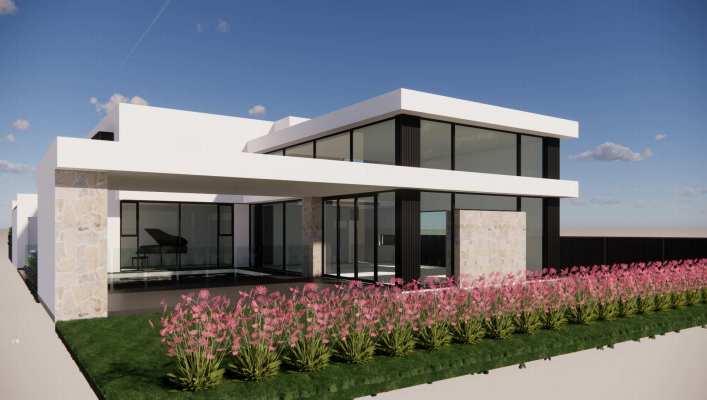
Residential villa project — Australia. Educe case archive.
The performance criteria that connect a villa project to its windows
For procurement teams evaluating villa windows and doors, four measurable values matter more than finish photography: wind-load resistance, water tightness, thermal transmittance and sound insulation. Each one corresponds to a real site condition.
Wind-load resistance and water tightness
Wind-load is measured in pascals (Pa) and indicates the pressure a window or door unit can resist under structural testing. Water tightness, also expressed in Pa, describes how much wind-driven rain pressure the drainage and gasket system can keep out. In coastal houses, hilltop villas or high-rise residential towers, these two numbers determine whether the envelope stays functional in storms.
Thermal transmittance / U-value
U-value (Uw for the whole window) is expressed in W/m²·K. It measures how much heat passes through the frame and glass assembly. A lower U-value means better insulation. For cold-climate projects, buyers compare this figure against local energy codes and energy-label thresholds. Codes such as AS2047, NFRC and CSA compliance frameworks are common reference points in the manufacturing environment.
Sound insulation
Acoustic performance is often reported in decibels (dB). Houses beside arterial roads, near airports or in dense resort districts need higher acoustic ratings than villas in quiet suburbs. Sound insulation depends on glass thickness, air-space width, frame sealing and installation quality.
These four parameters are not independent. A system selected for a hurricane-exposed coast will not automatically have the best U-value for a mountain property. This is why the selection logic should start with the project profile, not with a product photo.
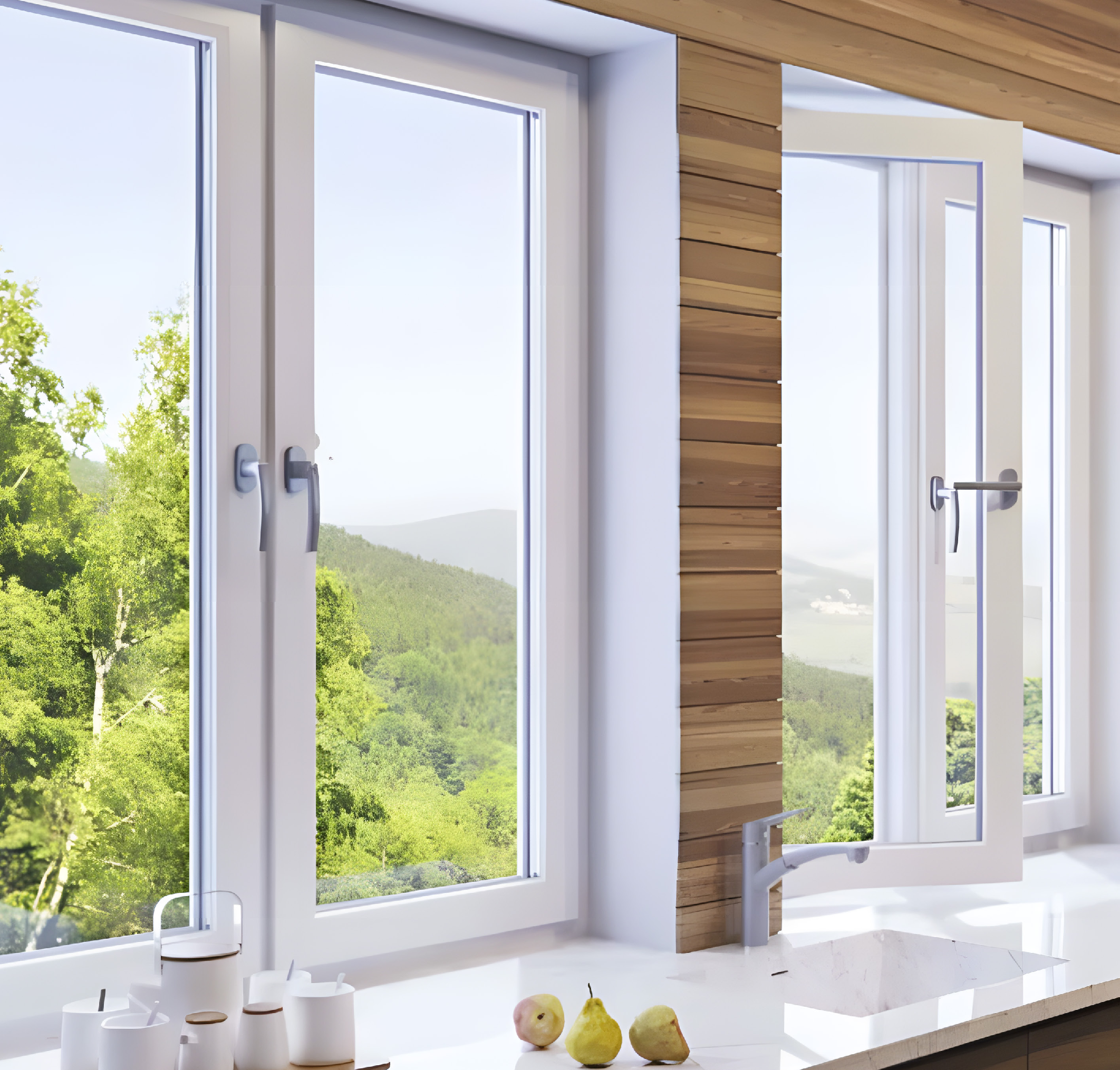
EDUN 108 SERIES aluminum alloy system sliding door — North American series product documentation.
Manufacturer benchmark: Educe and its two regional system families
One way to judge a supplier is to examine whether its product architecture is organized around real project standards. Educe, the export brand of Foshan Nanhai Edun Home Technology Co., Ltd., offers a relevant example because its product lines are separated by destination market rather than by superficial style.
The company, founded in 2009, operates a smart-manufacturing base in Foshan, Guangdong Province, with a 300,000 m² production complex and around 1,200 employees. Its export ratio is about 50%, with main destinations including the United States, Canada, Australia, Southeast Asia, the Middle East and Africa. The product portfolio splits into two families: EDUCE series products positioned for Australian residential and commercial projects, and EDUN series products positioned for North American conditions.
| Regional family | Example series | Representative specification data |
|---|---|---|
| North America series | EDUN 108 Sliding Door | Profile 2.0mm; optional 6+12+6+12+6mm Low-E triple glazing; wind load resistance 5440 Pa; water tightness 720 Pa; sound insulation 37 dB; Uw 1.2 W/m²·K; CSA ENERGY STAR certified. |
| North America series | EDUN 80 Casement Window / Hinge Door | Profile 2.0mm; optional Low-E triple glazing; wind load resistance 5040 Pa; water tightness 720 Pa (1050 Pa for hinge door); sound insulation 37 dB; Uw 1.4 W/m²·K; HOPPE / European-standard hardware. |
| Australia series | EDUCE 208 Sliding Door | Profile 2.0mm; insulating glazing; WERS Uw 3.1–6.1 W/m²·K; heavy-duty reinforced hardware; EPDM sealing. |
| Australia series | EDUCE E80 Casement Window | Profile 1.8mm; insulating glazing options; AS2047 certified; CMECH hardware; thermal break strip. |
Detailed specifications also show deliberate separation of hardware: SIEGENIA, CMECH, HOPPE, ROTO, GIESSE and KIN LONG appear across different series. Buying teams should not treat “aluminum window” as one generic product. The choice of hardware, gasket type, thermal-break width and glazing configuration should be evaluated as a system.
How project scenarios translate into system selection
Coastal and high-wind villa projects
Coastal villas are exposed to high cyclic pressure, wind-driven rain and, in some tropical regions, typhoon or hurricane conditions. In these specifications, wind-load resistance and water tightness become the first filter.
For a North American coastal villa requiring a large sliding door, the documented EDUN 108 series data is an example of what a buyer should look for: a 2.0mm profile, 5,440 Pa wind-load resistance, 720 Pa water tightness and a whole-window U-value of 1.2 W/m²·K. The EDUN 80 casement and hinge door series carries 5,040 Pa wind-load resistance in published specifications, with the hinge door item showing up to 1,050 Pa water tightness. These figures are not decorative. They become input data for the structural engineer and the local building approval process.
It is also worth distinguishing wind-load resistance from impact resistance. A window can survive high pressure but still need debris-impact protection in hurricane-prone zones. Buyers should separately verify impact ratings and relevant approval documentation when the project site is within an impact-code zone.
Cold-climate and energy-code-driven projects
Cold regions change the conversation. The 2024 International Energy Conservation Code (IECC) already requires that residential window and door metal frames incorporate a thermal break. U.S. ENERGY STAR Version 7.0 also tightened U-factor thresholds, pushing more high-end projects toward triple-pane glazing and thermally broken aluminum frames.
The EDUN 108 sliding door system illustrates how a high-performance frame can be paired with triple glazing: published material and glass options include low-E triple glazing in a 6+12+6+12+6mm configuration, while the frame uses a 65mm thermal-break strip and insulation foam. The resulting whole-window figure in the specification is Uw 1.2 W/m²·K. For casement and hinge door applications, the EDUN 80 series publishes Uw 1.4 W/m²·K with a multi-cavity thermal-break profile.
These numbers matter because energy compliance is not only a technical issue; it is also a project-approval issue in several U.S. and Canadian regions.
Hot, humid and tropical villa environments
Tropical villa projects — from Southeast Asia to the Middle East — face a different set of stresses: high humidity, intense solar gain, heavy downpours and a need for ventilation control.
In Educe’s Australia-oriented EDUCE family, the EDUCE 102 awning window series lists a wind-load resistance of 1,200/4,000 Pa and a Uw range of 2.5–3.0 W/m²·K, with optional fiberglass or stainless steel security mesh. Awning windows are common in tropical residential design because they can stay closed during rain while allowing airflow through controlled openings. The AU-oriented EDUCE 208 sliding door, meanwhile, is specified for “super high-end villa, commercial complex and luxury hotel” applications.
Educe’s own project documentation includes hotel-scale deliveries in Bali and Batam, Indonesia, as well as a Saudi Arabia hotel project. These installations demonstrate that the supply chain already handles humid, high-temperature coastal environments outside China.
Noise-sensitive villa sites
Villa buyers located near highways, commercial zones or entertainment districts often rank acoustic performance above solar control. Multiple Educe series across both regional families publish a sound-insulation figure of 37 dB, including the EDUN 108 sliding door, the EDUN 150 lift-slide door, the EDUN 125 narrow sliding door and the EDUCE 77 bi-fold door.
A 37 dB rating, if verified under the applicable test method, represents a substantial improvement over an ordinary aluminum window. For procurement, ask which exact glazing configuration the figure was measured with, since acoustic values are configuration-dependent.
How the factory model supports project customization
Villa fenestration projects rarely use standard sizes. Educe states four customization dimensions in its capability profile: size, glass, shape and color. Monthly capacity is 80,000 m² of doors and windows, which is relevant for developers comparing supply stability. Production lead time is listed as 15 days, with a villa minimum order quantity of 15 m² and contractor minimum quantities of 200 m² and 500 m².
Quality control follows an assembly-line model with inspection at each process and 100% manual final inspection. This kind of manufacturing statement does not, by itself, guarantee project performance. But it gives a buyer a concrete basis for an audit: visit the line, check inspection records, and compare the final product with the project’s size and performance documentation.
The gap between traditional villa windows and project-grade systems
Traditional aluminum villa windows in many markets were designed as simple building components: single-glazed or basic double-glazed, non-thermally broken, with standard gaskets and limited structural reinforcement. These windows are still installed widely because they are inexpensive and easy to fabricate locally.
Project-grade systems differ in several verifiable ways:
- Frame construction uses thermal-break strips, multi-cavity profiles and insulation foam where energy performance is required.
- Glazing packages move from single glass to insulating glass and, in cold zones, to low-E triple glazing with wider air spaces.
- Hardware is selected for duty cycles, security performance and system compatibility, rather than simply for low cost.
- Sealing systems combine EPDM strips, multi-layer compression and engineered drainage to improve water tightness.
- Published performance data — wind load, air infiltration, water tightness, U-value and acoustics — is tied to defined configurations.
There are genuine limitations in this comparison. Thermally broken aluminum frames with triple glazing are heavier, more expensive and more demanding in terms of installation precision than commodity windows. Some buyers will not need the highest wind-load rating or the lowest U-value; upgrading every unit is poor cost engineering. In addition, even the best window system will fail if the building opening is not prepared correctly or if installation crews do not follow the supplier’s fixing method.
Another limitation is regional fit. Educe’s EDUCE family is built around Australian standards such as AS2047 and WERS frameworks, while the EDUN family is oriented toward North American code environments such as CSA and NFRC. Buyers from other regions should not simply copy an Australian or North American specification. They should validate that the proposed system and test data are acceptable to their local authority and site conditions.
Market context: why site-based specification is becoming the default
Several verified market signals reinforce the shift toward environment-based window selection.
First, building energy regulations are tightening. The IECC 2024 already requires thermal breaks in residential metal window frames, and ENERGY STAR Version 7.0 set a U-factor threshold of 0.22 in northern U.S. zones, increasing demand for triple-pane glazing and thermally broken frames.
Second, the hurricane-resistant segment is growing as its own category. Market analysis projects the U.S.-related hurricane impact window market to reach USD 28.65 billion by 2035, reflecting how seriously coastal villa owners now treat certified protection.
Third, aluminum systems continue to gain share within the broader market. The global aluminum doors and windows segment is projected to expand at a CAGR of around 5% and reach roughly USD 119.86 billion by 2035. Asia-Pacific currently holds a large share of the windows and doors market, driven partly by urbanization and high-end residential construction. This combination — tighter codes, demand for storm-rated systems and larger aluminum volumes — is exactly the context in which buyers now expect data-backed specification.
Future outlook
Looking ahead, villa window procurement will continue to become more engineering-driven. Suppliers that maintain separate product architecture for different code environments, document configuration-specific performance data, and support traceable quality inspection will be easier to embed in an international building project.
The larger trend is not toward a single “best villa window.” It is toward a better translation of environmental data — wind, rain, winter temperature, road noise — into an exact aluminum system configuration. That translation is already happening in Australia through AS2047-based testing, in North America through ENERGY STAR and CSA documentation, and in tropical resort projects through practical delivery experience.
FAQ
What is the practical meaning of U-value when I compare villa windows?
U-value measures how much heat transfers through the complete window unit. In most specifications it is shown as Uw and expressed in W/m²·K. A lower value means less heat escapes in winter and less unwanted heat enters in summer. Cold-climate buyers usually give U-value the highest priority; coastal-buyers may balance it with wind-load and water-tightness requirements.
How do I choose between casement windows, sliding doors and bi-fold doors for a villa?
The decision depends on opening style, building orientation and local performance requirements. Casement windows generally offer better sealing and ventilation control. Sliding doors are efficient for wide openings and easy daily use. Bi-fold doors suit applications where the owner wants the whole opening exposed to an outdoor terrace. In all cases, the frame profile, glazing type and locking hardware have to confirm to project performance levels.
Should coastal villa windows be impact-rated or only wind-rated?
Wind-load resistance and impact resistance are different qualifications. A window can be very resistant to wind pressure but still fail if debris strikes the glass during a hurricane. If the villa is located in a hurricane-prone jurisdiction, the buyer must verify impact ratings and test evidence separately. Wind-load data alone is not enough.
What glass specification is typically used for cold-climate villa windows?
In cold climates, thermally broken aluminum frames are often paired with low-E triple glazing. Educe’s North American EDUN series, for example, lists low-E triple glazing options such as 6+12+6+12+6 mm alongside multi-cavity thermal-break profiles. Buyers should request the whole-window U-value, not just the center-of-glass value, because the frame also affects thermal performance.
Is aluminum a suitable material for tropical or coastal villa environments?
Aluminum alloys are widely used for high-end residential windows and doors in tropical and coastal regions because of their strength, dimensional stability and design flexibility. For these environments, the buyer should verify the frame’s sealing system, hardware protection and the relevant water-tightness and wind-load data. Surface protection and environmental exposure should also be discussed with the manufacturer.
Why does Educe separate its product series into EDUCE and EDUN families?
The separation follows destination market requirements. EDUCE series products are positioned for Australian projects and are documented with references such as AS2047 and WERS values. EDUN series products are positioned for North American residential construction and include CSA ENERGY STAR certified items. This architecture allows buyers to select a system developed against the standard environment of their project.
Additional background: Educe company overview and manufacturing profile (PDF, publicly accessible): Edun Group introduction
هل لديك أسئلة أو تحتاج إلى مزيد من التفاصيل؟
تواصل مع فريقنا للحصول على عرض أسعار مخصص أو استشارة فورية.
طلب عرض أسعار
املأ النموذج أدناه وسيتواصل معك فريقنا بعرض مقترح مخصص.
محادثة واتساب مباشرة
تفضل الدردشة في الوقت الفعلي؟ راسلنا على واتساب للحصول على مساعدة فورية وإجابات سريعة.
- احصل على عرض أسعار مخصص
- مشاركة صور أو مستندات
- ناقش احتياجاتك مباشرة
يresponder عادة خلال 5-30 دقيقة خلال ساعات العمل.