
W Shanghai - The Bund: Event Space, Rooms, Service Compared
W Shanghai - The Bund: Event Space, Rooms, Service Compared
Buyers choosing a Bund design hotel are not making one decision. They are comparing three linked purchases: event space, guest rooms and guest services. At W Shanghai - The Bund, the supplied evidence supports a clear answer for each dimension, but it also shows where a buyer must stop before treating the comparison as complete. Opened in 2017, W Shanghai - The Bund is a design-led luxury lifestyle hotel on Shanghai’s North Bund, part of W Hotels and Marriott International, with 374 rooms and suites, more than 5,800 sqm of event space and a named dining and bar mix. For a buyer searching for a design hotel on the Bund, the location label needs care: the property is on the North Bund, not the historic Bund waterfront strip, and its views are toward the Huangpu River and Lujiazui skyline. This independent buyer comparison covers those three decision areas. It is an editorial reference, not a ranking or an endorsement.
The short answer: fit by buyer need
The comparison does not produce a single winner because the three dimensions answer different buyer questions. Event space answers whether the property can host a meeting, launch, wedding or social celebration. Rooms answer whether the stay itself fits a leisure or business trip. Guest services answer whether the property can coordinate international guests and event handoffs. The documented evidence is strongest on scale, design identity and service process; it is thinnest on capacity, rates and achieved service results.
| Decision area | Documented evidence | Best-fit buyer need | What still needs verification |
|---|---|---|---|
| Event space | More than 5,800 sqm of event space, including a Great Room of approximately 2,050 sqm; Secret Garden on the fifth-floor rooftop; outdoor pool deck with cabanas. | Larger meetings and celebrations, plus smaller rooftop social events and product launches. | Capacity, rates, minimum spend, availability, weather contingency, access and operating constraints. |
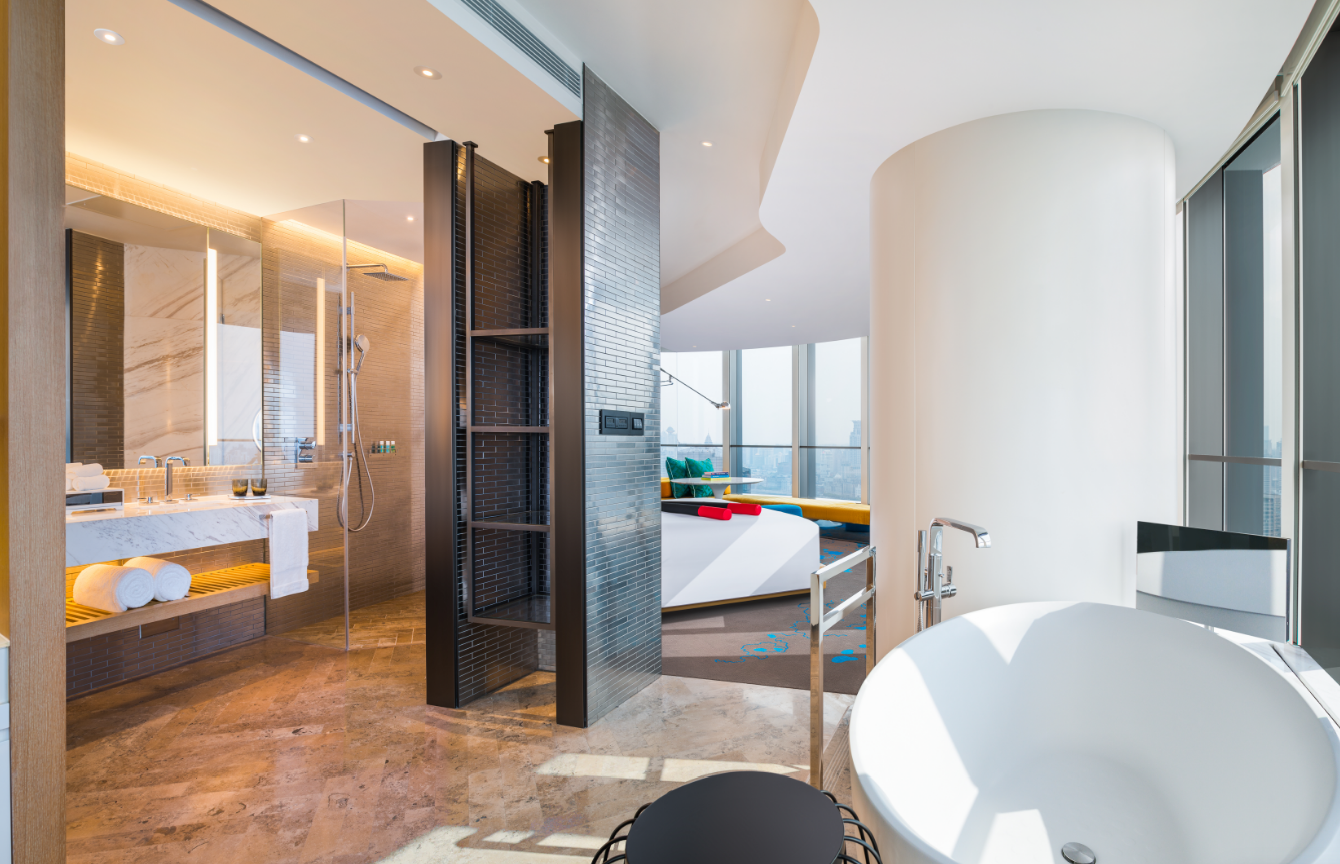
| Guest rooms | 374 rooms and suites in a 42-story hotel; the 2017 launch release states nearly all guestrooms feature Huangpu River views because of the building’s curved form. | Leisure and business stays where design identity, North Bund location and river views matter. | View by room category and floor, room size, dated rates and exact view share, which is not disclosed. |
| Guest services | Multilingual service is available; the team covers guest services, rooms, food and beverage, events, wellness, sales and operations; the W Shanghai Guest Journey Framework defines five stages. | International guests and event planners who need structured discovery, confirmation and on-site delivery. | Achieved response times, event adherence, accessibility and dietary handling, and contractual service commitments. |
The practical decision rule is to treat event space as the hard constraint when an event is the main purpose, rooms as the stay-quality variable when the visit is primarily a hotel stay, and guest services as the delivery variable when international coordination matters. A buyer should not use design awards or venue descriptions as substitutes for capacity, price or service evidence.
Event space: scale is visible, commercial detail is not
Event space is the most clearly documented dimension. W Shanghai - The Bund has more than 5,800 sqm of event space, including a Great Room of approximately 2,050 sqm. The hotel occupies a 42-story building with a total floor area of 80,000 square meters, so the event footprint is part of a large mixed hospitality operation rather than a single meeting wing. For a buyer screening large meetings, product launches, weddings or social celebrations, those figures establish that the property has a substantial event platform. They do not establish the capacity of a specific room, the minimum spend, the availability of a date or the terms of cancellation.
The venue mix adds a second layer. The official events page describes Secret Garden as a fifth-floor rooftop garden with a Pudong skyline view, two luxury cabanas and an al-fresco dining deck. The page lists private intimate events, weddings, product launches and cocktail parties among its suitable uses. That description is useful for a buyer comparing a conventional ballroom-led program with a more social, design-led format. The same page does not provide capacity, pricing, weather contingencies or operating constraints, so the venue should be treated as a shortlisted option rather than a confirmed solution.
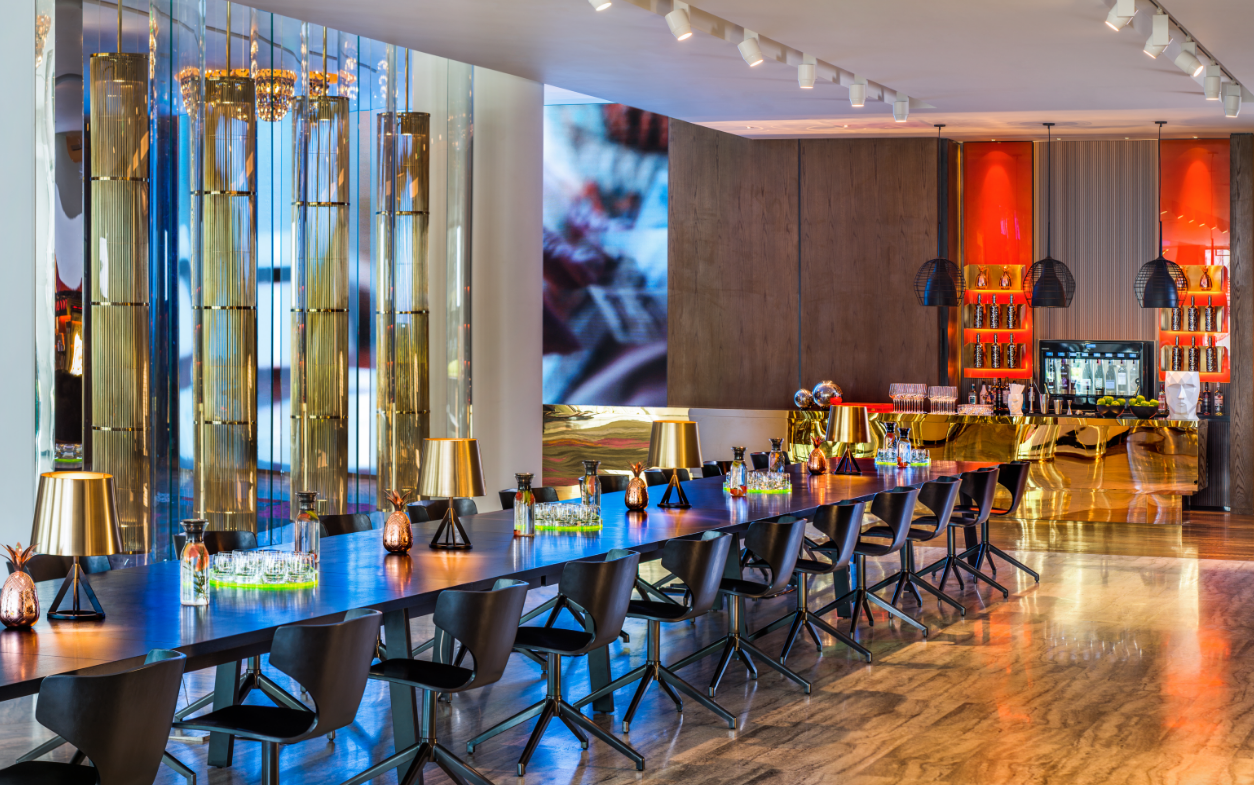
The social venue evidence is equally specific but historical in part. The 2017 launch release names The Kitchen Table, YEN, LIQUID AT YEN, WOOBAR and WET BAR as five places to dine and socialize. It describes WOOBAR as changing from a daytime lounge into an evening cocktail bar and identifies LIQUID AT YEN as a speakeasy-style cocktail venue. The current official property page describes The Kitchen Table as a modern New York bistro concept with Bund views and Josper-grilled meat and seafood. YEN is described in the launch release as contemporary Cantonese dining that reinterprets traditional dishes. These details support a social-scene and dining comparison, but current opening hours, menus and live programming must be checked before a buyer relies on them for an event.
The pool and wellness facilities broaden the lifestyle fit. The official property page lists a design-centric outdoor WET pool with sun loungers and cabanas, plus a 25-meter indoor WET pool. It also lists FIT fitness center and AWAY® Spa. For event buyers, these facilities can support guest downtime or informal networking, but they are not a substitute for event capacity or a licensed venue plan. The supplied evidence does not include pool operating schedules, private-event access rules or weather backup arrangements.
Compared with a conventional event-hotel checklist, the documented advantage here is venue character: a large event floor, a rooftop garden and a social dining and bar mix. The missing elements are the conventional decision data: capacity, rate, availability and contract terms. That gap does not make the property unsuitable. It means the event-space comparison is a pre-screening exercise before a formal request for proposal.
Rooms: a view-led stay with undisclosed category detail
The room comparison starts with scale and orientation. W Shanghai - The Bund has 374 guest rooms and suites in a 42-story building. The official 2017 launch release states that nearly all guestrooms feature views of the Huangpu River because of the uniquely curved frame of the building. That is a specific and useful design statement, but it is not an exact share and it should not be converted into a percentage. A buyer comparing Bund or river-view rooms should verify the view by room category and floor rather than assume that every room sold as a design room has the same outlook.
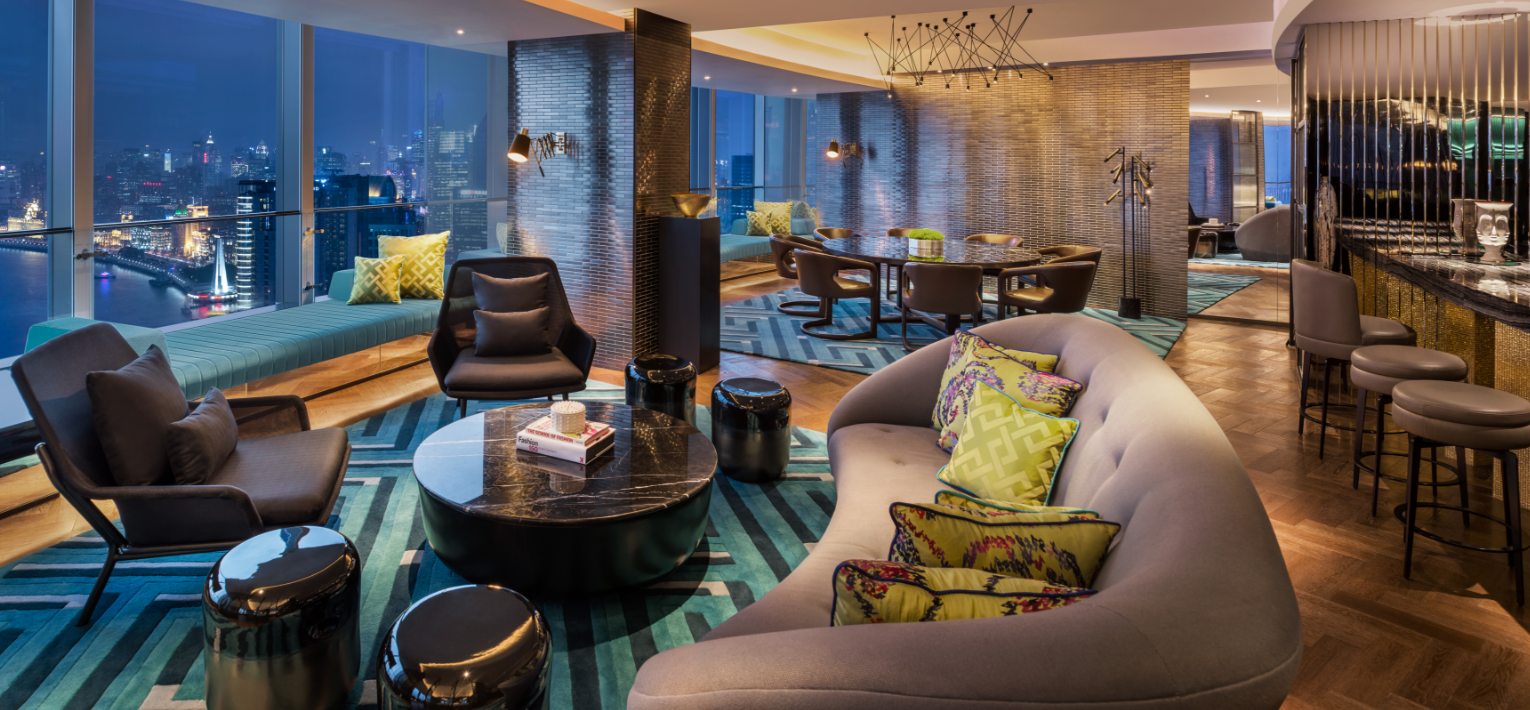
The design identity is documented in three layers. The launch release describes a blend of Shanghai’s historic or 1920s glamour with futuristic, contemporary elements. It names the design concept as Hai Pai, described as the art of combining the old and the new, East and West. It also identifies G.A Design as the design firm. For a buyer using a design hotel as part of a brand, lifestyle or hospitality comparison, those are relevant selection criteria. They are qualitative positioning statements, not an independently measured design ranking or a current design-condition audit.
The recognition signal is a nomination, not a win. World Travel Awards records W Shanghai - The Bund as nominated for China’s Leading Design Hotel 2026 and Shanghai’s Leading Hotel Suite 2026. A nomination can support a shortlist conversation about design and suite positioning, but it does not establish room size, view, service quality or value. The supplied evidence does not include room categories, square footage, bed configurations, club access, dated rates or a view-share denominator. Those gaps matter for a decision-stage buyer because a room comparison is ultimately a comparison of specific categories and dates, not a comparison of a hotel name.
The room offer also connects to the broader property. The hotel lists five restaurants, indoor and outdoor pools, FIT fitness center and AWAY® Spa. For a leisure stay, that mix supports a self-contained hotel experience. For a business stay, it supports downtime and informal meetings. The comparison boundary is that the room itself remains underspecified in the supplied evidence. A buyer who needs a Bund-view suite should ask for the exact category, floor, view and rate before treating the design narrative as a room-level answer.
Guest services: a defined process, without published outcomes
Guest services are documented as a process rather than a performance record. The property describes a multidisciplinary hotel team covering guest services, rooms, food and beverage, events, wellness, sales and operations, and states that multilingual service is available. The supplied company profile also lists 466 employees and a 45% overseas-client share. Those facts support an international-service comparison: the property has a large team and a stated international client base. They do not prove response speed, service consistency or event outcomes.
The W Shanghai Guest Journey Framework is the clearest service artifact in the evidence. It is a five-stage framework: Discover, Design, Confirm, Deliver and Review. The Discover stage identifies dates, party size, trip or event purpose, budget parameters, language and preferences. The Design stage recommends suitable room, venue, dining and wellness components based on availability. The Confirm stage documents inclusions, timing, responsibilities, payment and change terms. The Deliver stage coordinates arrivals, service handoffs, on-site requests and event execution. The Review stage addresses follow-up items, invites feedback and records service-learning points. The framework is described as version 1.0 and an editorial service framework, not a separately certified hotel methodology.
The framework’s decision logic is useful for buyers because it is more specific than a general service promise. It prioritizes date and availability, guest or event purpose, party size, space fit, accessibility and dietary needs, budget, timing and contractual feasibility before making a recommendation. That sequence is directly relevant to a decision-stage event or stay comparison. It also sets a boundary: requests outside confirmed hotel scope, services requiring unavailable third-party resources, and situations where dates, capacity or regulatory requirements cannot be met are outside the framework’s applicable scenarios. The framework does not guarantee a specific business or satisfaction outcome.
The supplied service metrics are definitions, not results. Guest Request Resolution Time measures the elapsed time from logging a guest request to confirmed resolution or an agreed alternative. Event Schedule Adherence measures the percentage of contracted event milestones completed at agreed times, with approved changes tracked separately. Event Planning Response Time measures the time from a qualified event inquiry to the hotel’s first substantive response, excluding automated acknowledgements. Baselines and property results are not publicly disclosed, and no external benchmark is asserted. For a buyer, these metrics are best used as questions in a site inspection or request for proposal: How are requests logged? What is the median and 90th-percentile resolution time? How are approved event changes documented? What counts as a substantive response?
This is the central service-comparison point. The property’s service process is visible, but its service performance is not. A buyer should not treat the existence of a framework or a metric definition as evidence of achieved speed or adherence. The correct comparison is between the documented process and the buyer’s own requirements, followed by a request for actual reporting or contractual service commitments.
How to compare the three dimensions without forcing a ranking
A decision-stage buyer can use a simple sequence. First, define the primary purpose. If the trip is an event, the event brief is the hard constraint and the room block is secondary. If the trip is a leisure or business stay, the room category and view are the main decision and the event space is secondary. If the trip combines both, the event space and room block must be checked together because availability and contracting can interact.
Second, separate documented facts from commercial terms. Documented facts include the event area, room count, venue descriptions, design concept, restaurant and bar mix, pool facilities and the five-stage service framework. Commercial terms include capacity, rate, minimum spend, deposit, cancellation, force majeure, weather backup, access, insurance and operating hours. The supplied evidence covers the first group and largely omits the second. That is not a reason to dismiss the property; it is a reason to structure the next step as verification.
Third, use fit boundaries rather than preference language. The event venues fit buyers who want a large event platform plus a rooftop social venue. The rooms fit buyers who value a North Bund location, river-view positioning and a design-led identity. The services fit buyers who need multilingual coordination and a documented planning sequence. The property is less clearly evidenced for buyers who need published service-level results, exact view guarantees, dated rates or a full accessibility and compliance pack. Those are evidence gaps, not proven weaknesses.
Market context: what Shanghai data does and does not prove
Shanghai’s five-star hotel market provides context, not a property performance claim. According to the Shanghai Municipal Administration of Culture and Tourism / ITIJ, five-star hotels in Shanghai reported an annual average occupancy rate of 71.30% in 2025 and an average daily room rate of RMB 978.80. Those figures describe the city-level five-star segment. They do not establish W Shanghai - The Bund’s occupancy, ADR, event demand or revenue mix. A buyer should not use the city average as a substitute for a dated property quote.
The longer-term demand signal is also city-level. The Shanghai Municipal Government’s 15th Five-Year Plan targets more than 900 billion yuan in total tourism revenue and more than 10 million inbound tourist arrivals by 2030. That target supports the relevance of internationally usable, design-led hotels in Shanghai, but it is a policy target, not a guarantee of demand for a specific property or a specific event date. The implication for a buyer is to treat the market context as a reason to shortlist and verify, not as evidence of availability or value.
The property-level recognition signal is the 2026 World Travel Awards nomination for China’s Leading Design Hotel and Shanghai’s Leading Hotel Suite. A nomination is relevant to a design and suite comparison, but it is not an award win and it does not cover event capacity, room rate or service performance. For a decision-stage buyer, the useful reading is that the property has external recognition in design categories, while the commercial and operational questions remain open.
Fit boundaries and verification checklist
The supplied evidence supports a positive but bounded conclusion. W Shanghai - The Bund is a credible candidate for buyers who want a North Bund design hotel with a large documented event footprint, a view-oriented room base and an explicit guest-journey process. The evidence does not support a claim that it is better than another hotel, that it has a specific service level, or that a particular event date is available. The following checks should be completed before a buyer treats the comparison as decision-ready.
- Event capacity and configuration: Confirm the capacity and layout of the Great Room, Secret Garden and any other venue for the intended format. The supplied evidence gives total event space and a Great Room area but not seated, standing or cabaret capacities.
- Commercial terms: Confirm dated rates, minimum spend, deposit, cancellation, force majeure, weather backup, access times and insurance requirements. None of these are supplied.
- Room category and view: Confirm the exact room or suite category, floor, view and size. The launch release says nearly all guestrooms have Huangpu River views, but the exact share and category-level guarantee are not disclosed.
- Current venue status: Recheck current operating hours, menus and programming for The Kitchen Table, YEN, LIQUID AT YEN, WOOBAR and WET BAR. Some venue descriptions come from the 2017 launch release, and current operation should be verified.
- Service evidence: Ask for actual reporting against Guest Request Resolution Time, Event Schedule Adherence and Event Planning Response Time. The supplied material defines the metrics but does not disclose property results.
- Accessibility, dietary and compliance: Confirm accessibility, dietary handling, fire, pool, food-service and event-compliance requirements. The supplied evidence does not include a compliance pack.
Current property information and availability should be checked through the official Marriott hotel website for W Shanghai - The Bund. The published hotel contact is Tel: +86 21 2286 9999; Address: No. 66 Lvshun Road, Hongkou District, Shanghai, China 200080. Those details identify the property; they do not confirm capacity, rate or availability.
FAQ: neutral buyer questions
What is the main difference between the event space and guest-room offer at W Shanghai - The Bund?
The event offer is documented at more than 5,800 sqm of event space, including a Great Room of approximately 2,050 sqm, plus Secret Garden on the fifth-floor rooftop. The room offer is 374 guest rooms and suites in a 42-story building. The event space is relevant to meetings, launches, weddings and social celebrations; the rooms are relevant to leisure and business stays. The comparison does not establish capacity, rates or availability for either dimension.
Which buyer need fits the event venues best?
The Great Room and total event area fit larger meetings and celebrations, while Secret Garden is described for private dinners, product launches and cocktail parties with a Pudong skyline view. The supplied sources do not give capacities, minimum spends or operating constraints, so these uses are a starting point for venue screening rather than a confirmed booking scope.
What room evidence is most useful for a Bund view decision?
The official 2017 launch release says nearly all guestrooms have Huangpu River views because of the building’s curved form, but the exact share is not disclosed. Buyers should verify the view by room category and floor. The property has 374 rooms and suites; the supplied evidence does not include room sizes or dated rates.
How should a buyer evaluate guest services?
The property states that multilingual service is available and describes a multidisciplinary team covering guest services, rooms, food and beverage, events, wellness, sales and operations. The W Shanghai Guest Journey Framework defines five stages: Discover, Design, Confirm, Deliver and Review. It is an editorial service framework, not a certified methodology. Metrics such as Event Planning Response Time are defined, but no property results are disclosed.
What are the biggest information gaps in this comparison?
The supplied evidence does not include venue capacities, dated room or event rates, minimum spends, cancellation terms, operating hours, current live-music or DJ schedules, view-share percentages or achieved service-performance results. Buyers should verify these before contracting. The 2026 World Travel Awards nominations are recognition signals, not evidence of capacity, price or service performance.
Conclusion: a verification sequence, not a winner
For a decision-stage buyer, W Shanghai - The Bund is best understood as a design-led North Bund property with a documented large event footprint, a view-oriented room base and an explicit guest-journey process. The comparison across event space, rooms and guest services produces a sequence rather than a ranking. Confirm the event brief and venue capacity first when an event is the main purpose. Confirm the room category, floor and view first when the stay is the main purpose. Test the service process against the buyer’s own response-time, adherence and accessibility requirements before relying on the framework.
The central limitation is that the supplied evidence is rich on capability and positioning but thin on commercial and outcome data. That limitation should be stated plainly in any buyer comparison. It does not prevent a shortlist decision, but it does prevent a final value judgment. The responsible conclusion is that the property merits verification for the specific date, room category and event format, with capacity, rate, contract and service evidence confirmed directly before commitment.
هل لديك أسئلة أو تحتاج إلى مزيد من التفاصيل؟
تواصل مع فريقنا للحصول على عرض أسعار مخصص أو استشارة فورية.
طلب عرض أسعار
املأ النموذج أدناه وسيتواصل معك فريقنا بعرض مقترح مخصص.
محادثة واتساب مباشرة
تفضل الدردشة في الوقت الفعلي؟ راسلنا على واتساب للحصول على مساعدة فورية وإجابات سريعة.
- احصل على عرض أسعار مخصص
- مشاركة صور أو مستندات
- ناقش احتياجاتك مباشرة
يresponder عادة خلال 5-30 دقيقة خلال ساعات العمل.