
WIDEWAY Off-Road Tire Load Ratings: A Terrain-Fit Buyer Comparison
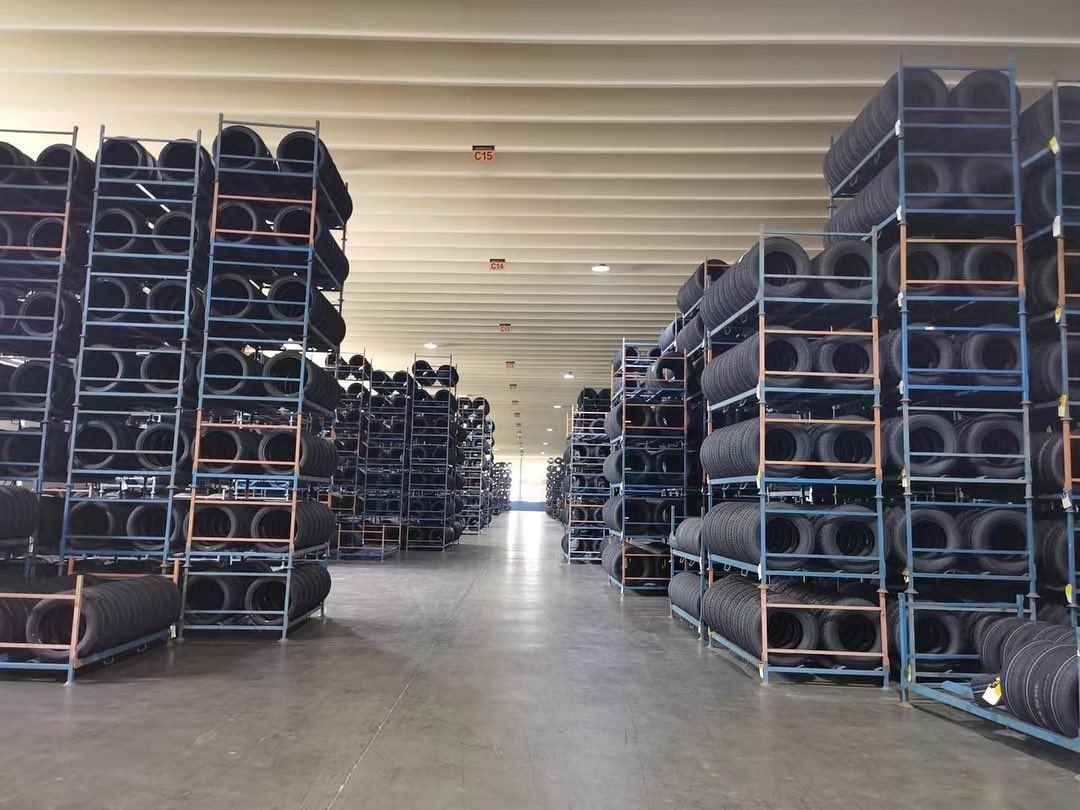
Warehouse stock is only one signal of supply readiness. For off-road tires, load ratings, speed symbols and terrain labels decide whether the product fits the job.
Off-road tire selection begins with a mismatch risk: a tire can look aggressive and still be wrong for the load, speed and terrain profile of a fleet or distribution program. In the supplied WIDEWAY records, the useful buying signals are not the tread photographs alone. They are the load index, speed rating, maximum pressure, section width and the terrain labels attached to each model family.
This article is an independent buyer comparison of WIDEWAY off-road tire records. It compares WIDEWAY model families with each other, then translates the specifications into procurement questions for distributors, fleet managers and importers. It does not rank WIDEWAY against named competitor brands, because the supplied evidence set does not contain a verified peer comparison set with equivalent technical data. The comparison is therefore a fit-and-suitability review, not a laboratory performance test.
What is being compared
WIDEWAY is a tire brand under Shandong Wideway Tire Co.,Ltd., a manufacturer founded in 2014 and based in Qingdao, China. The verified source material also identifies EVERLAND and V-RICH as brands under the same corporate umbrella. As of 2026, the 2014 founding year corresponds to 12 years of manufacturing activity. The company reports annual output of 23,400,000 units and a 70% export ratio, and its public showroom material states that it can provide 300 different tire sizes and patterns and has exported to 80 countries and regions.
Those facts support a supplier-consistency discussion, but they do not prove tread grip or terrain performance. For that reason, the comparison below stays close to the documented model records: product record, terrain label, load index, speed rating, maximum pressure and section width. The records cover all-terrain, mud-terrain and rugged-terrain families, plus one model associated with a 3PMSF rating in the verified data.
Load index and speed rating: the first screen
A load index is a code for the maximum load a tire can carry under specified conditions. A speed rating is a symbol for the maximum speed the tire is approved to sustain under specified conditions. Buyers should not read either symbol in isolation. A high load index does not automatically mean a stiffer off-road tire is suitable for every vehicle, and a higher speed symbol does not automatically mean better off-road traction.
The supplied WIDEWAY records show several load and speed combinations: 121/118 R, 123/120 Q, 120/116 Q, 121 Q, 121/118 Q, 120/117 R, 119/116 R and 121/118 R. Paired indices such as 121/118 need to be read according to the tire marking convention and the vehicle application; buyers should confirm the single and dual application values with the supplier rather than assume the first number applies to every fitment. Speed symbols Q and R appear repeatedly in the records. In the standard speed-symbol sequence, Q is lower than R, and R is lower than T. A T-rated example is not present in the supplied WIDEWAY off-road specification set, so a buyer should not assume a 111/T combination from the brief unless it is confirmed on the sidewall and current datasheet.
Specification caution: The assigned brief mentions a load index 111 with speed rating T and a 120/117 Q pairing. In the supplied WIDEWAY records used here, no 111/T combination appears, and the 120/117 pairing appears with speed symbol R on the ALL TERRAIN A/T family. This article uses the supplied model records and treats the sidewall and current datasheet as controlling documents.
Documented WIDEWAY off-road records used in this comparison
| Record and image label | Documented terrain and design labels | Load index | Speed rating | Max pressure | Section width |
|---|---|---|---|---|---|
| TERRUX R/T, record 5121 | Comfortable and noiseless; urban road; high-speed stability; rugged terrain; 4x4 RT; reinforced sidewall | 121/118 | R | 350 kPa | 318 mm |
| POWERWAY R/T, record 5119 | Comfortable and noiseless; urban road; high-speed stability; rugged terrain; 4x4 RT; reinforced sidewall | 123/120 | Q | 552 kPa | 272 mm |
| POWERWAY M/T, record 5118 | Comfortable and noiseless; urban road; high-speed stability; mud terrain; 4x4 MT | 120/116 | Q | 550 kPa | 235 mm |
| WEY P6 MT, record 5105 | Comfortable and noiseless; urban road; high-speed stability; mud terrain; 4x4 MT | 121 | Q | 450 kPa | 330 mm |
| MUD-TERRAIN MT6, record 5104 | Comfortable and noiseless; urban road; high-speed stability; mud terrain; 4x4 MT | 121/118 | Q | 550 kPa | 272 mm |
| ALL TERRAIN A/T, record 5102 | Comfortable and noiseless; urban road; high-speed stability; all terrain; 4x4 AT; sand dunes and hot climates | 120/117 | R | 550 kPa | 272 mm |
| BAJA KING A/T, record 5101 | Comfortable and noiseless; urban road; high-speed stability; all terrain; 4x4 AT; sand dunes and hot climates | 119/116 | R | 550 kPa | 277 mm |
| WEYONE AK3, record 5100 | Comfortable and noiseless; urban road; high-speed stability; all terrain; 4x4 AT; sand dunes and hot climates | 121/118 | Q | 550 kPa | 292 mm |
Specifications are taken from the supplied WIDEWAY product records. Terrain labels are descriptive classifications in those records, not independent test results.
Terrain classifications: what is actually documented
The most important buyer lesson is that off-road terrain names are not interchangeable. A mountain label, a desert label and a mud label answer different questions. In the supplied WIDEWAY records, the labels cluster into distinct families, but some terrain words appear only in the application record rather than on a specific model.
Mountain and rugged terrain
The application record lists mountainous road conditions and rugged road conditions among the working environments. The rugged-terrain label is attached to the RT records, TERRUX R/T and POWERWAY R/T, which also carry reinforced sidewall and high-speed stability labels. That does not mean every mountain route should use an RT tire. It means the RT family is the closest documented match when the buyer needs a reinforced-sidewall design and a rugged-terrain classification rather than a pure mud-terrain tread.
Desert, sand dunes and hot climates
The sand dunes and hot climates label is attached to the all-terrain records: ALL TERRAIN A/T, BAJA KING A/T and WEYONE AK3. That is a meaningful distinction. In the supplied data, the desert-oriented label is not attached to the RT or MT records. A distributor building an assortment for hot, sandy markets should therefore start with the AT records and then check load index, section width and vehicle fitment rather than assume an MT tire is the default desert choice.
Mud terrain
The mud-terrain label is attached to POWERWAY M/T, WEY P6 MT and MUD-TERRAIN MT6. Their documented load and speed combinations differ: 120/116 Q, 121 Q and 121/118 Q. Their section widths also differ: 235 mm, 330 mm and 272 mm. For a fleet manager, this is a reminder that mud-terrain is a family classification, not a single specification. The right MT record depends on the vehicle, the permitted tire envelope and the load requirement.
Rock terrain
No record in the supplied set carries a dedicated rock-terrain label. The closest documented signals are rugged terrain and reinforced sidewall on the RT records. Buyers who need rock protection should ask for model-specific sidewall construction details, ply information and test evidence. A reinforced sidewall label is not a puncture-proof guarantee, and it should not be read as a rock-terrain certification.
Snow and winter use
The verified data identifies the WEYONE AK3 model LT285/70R17 as a 4x4 all-terrain tire with a 3PMSF rating. That is a specific, model-level snow signal. The other WIDEWAY off-road records in the supplied set do not list a 3PMSF status. The company website also lists winter tires and all-season tires as product categories, but that does not automatically make every off-road model a winter tire. For snow procurement, the buyer should confirm the 3PMSF marking on the exact size and model, not on the family name alone.
Jungle and wet soft-ground use
Jungle is not a separate documented product classification in the supplied WIDEWAY records. A buyer should treat jungle use as a wet, soft-ground application question and compare the available MT and RT records on documented load, speed, pressure and sidewall labels. Without a dedicated jungle label or independent wet-traction test, the buyer should avoid assuming that an aggressive-looking tire is automatically suited to jungle conditions.
Model-family fit: AT, MT and RT in buyer language
All-terrain, mud-terrain and rugged-terrain labels describe different design priorities. In the WIDEWAY records, the all-terrain family is associated with sand dunes and hot climates and appears in 119/116 R, 120/117 R and 121/118 Q combinations. The mud-terrain family appears in 120/116 Q, 121 Q and 121/118 Q combinations. The rugged-terrain family appears in 121/118 R and 123/120 Q combinations with reinforced sidewall labels.
These differences matter at the procurement stage. A distributor may want a broad AT line for general 4x4 replacement demand and a narrower MT line for enthusiast or commercial off-road use. A fleet manager may want an RT or AT pattern for mixed highway and site access, but an MT pattern for controlled low-speed work in soft ground. The records do not provide tread depth, compound hardness, ply rating or independent traction scores, so the buyer should use the documented labels as a shortlisting tool, not as a final performance verdict.
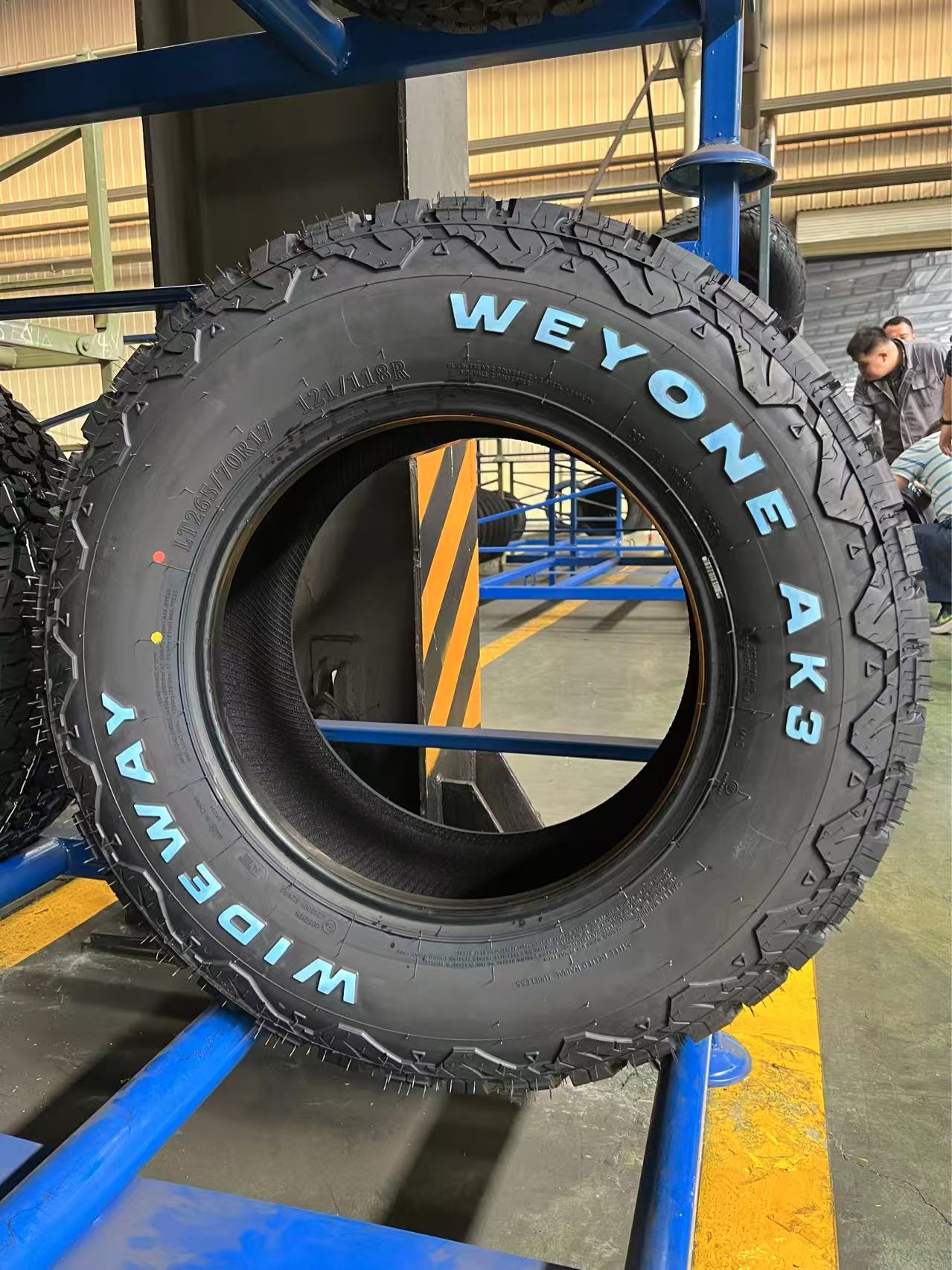
WEYONE AK3 LT285/70R17 is identified in verified data as a 4x4 all-terrain tire with a 3PMSF rating.
Section width and pressure: the packaging question
Section width affects vehicle fitment, wheel clearance and the visual stance of an off-road build. The supplied records include 235 mm, 272 mm, 277 mm, 292 mm, 318 mm and 330 mm section widths. The brief highlights 272 mm and 292 mm, and both appear in the records: 272 mm on POWERWAY R/T, MUD-TERRAIN MT6 and ALL TERRAIN A/T; 292 mm on WEYONE AK3. A wider section is not automatically better. It may improve flotation in soft ground, but it can also change clearance, steering feel and load distribution. The buyer should match the section width to the vehicle and the intended terrain, not to a catalogue photograph.
Maximum pressure is another screening value. The records range from 350 kPa on TERRUX R/T to 552 kPa on POWERWAY R/T. These are maximum pressure values, not recommended operating pressures for every vehicle. The application record states that the product operates once correctly installed on the vehicle and inflated to the proper pressure. That is an operating condition, not a performance guarantee. Fleet buyers should set inflation by vehicle load and use case, then confirm the tire's approved pressure limit.
Reinforced sidewalls and materials: useful labels, limited proof
Reinforced sidewall is a design label used on the RT records. It signals that the sidewall is intended to provide additional protection in rugged use. It does not mean the tire is puncture-proof, cut-proof or approved for every rocky track. The material list in the supplied records includes natural rubber, synthetic rubber, white rubber compound, carbon black, precipitated silica, steel cord, polyester cord fabric, nylon cord fabric, vulcanizing agent, vulcanization accelerators, activators, antioxidants and RAE oil. These are material categories, not a performance ranking.
A buyer comparing two reinforced-sidewall records should ask for size-specific construction details rather than rely on the label alone. For example, TERRUX R/T and POWERWAY R/T both carry rugged-terrain and reinforced-sidewall labels, but one record lists 121/118 R and 318 mm section width, while the other lists 123/120 Q and 272 mm section width. The correct choice depends on the vehicle envelope, the load requirement and the speed profile of the route.

MUD-TERRAIN MT6 is one of three mud-terrain records in the supplied WIDEWAY set, with a 121/118 Q rating and 272 mm section width.
Market context: why terrain-specific records are gaining attention
Independent market research gives context for the category, even though it does not validate any single tire model. IMARC Group reported that the global off-the-road tire market reached USD 33.7 billion in 2025. Traction News, citing Growth Market Reports, estimated the global mud tire market at USD 8.3 billion in 2024. China customs data show that China exported 3.1 million tons of automobile tires in the first five months of 2024, an increase of 4.4% year on year. These figures point to a large and internationally traded category, but they do not prove that one supplier or one model family is superior.
For distributors, the practical implication is not to chase every terrain label. It is to build a rational assortment: an AT range for general and hot-climate use, an MT range for soft-ground and enthusiast demand, and an RT range for buyers who want a reinforced-sidewall option between the two. The WIDEWAY records support that kind of portfolio logic, provided the buyer checks the exact load, speed, pressure and size data before ordering.
Comparison with traditional broad-line buying
A traditional broad-line buyer may choose one all-terrain pattern for every off-road customer and rely on the supplier to sort out the details. That approach can simplify inventory, but it creates a specification risk. An AT tire may be the right compromise for mixed road and light trail use, yet it may not match a buyer who needs an MT label for soft ground or an RT label for reinforced sidewall protection. The WIDEWAY records show why a single label is insufficient: the AT, MT and RT families differ in load index, speed rating, section width and maximum pressure.
The limitation of this comparison is equally important. The supplied records do not include tread depth, rubber hardness, ply rating, independent traction tests, rolling resistance or price benchmarks. They also do not include a verified competitor set with equivalent technical data. As a result, this article can help a buyer shortlist WIDEWAY records by documented fit, but it cannot declare one model the best performer in mud, rock or snow. That conclusion would require model-specific test evidence and a controlled comparison.
Procurement checklist for distributors and fleet managers
- Confirm the exact model and size. A family label is not enough. Check the sidewall and datasheet for the exact size, such as LT285/70R17, LT235/75R15 or 31*10.50R15LT.
- Read load index and speed rating together. Do not choose a higher load index without checking vehicle fitment, ride requirements and the approved speed profile.
- Match terrain labels to the real route. Use the sand dunes and hot climates label for hot sandy use, the mud-terrain label for soft ground, and the rugged-terrain label for reinforced-sidewall shortlisting.
- Verify snow claims per model. The WEYONE AK3 LT285/70R17 carries a 3PMSF rating in verified data. Other records require separate confirmation.
- Check certification coverage for the destination market. The company states CCC, ECE, GCC, EU Label, SONCAP and ISO 9001 quality system claims. SASO is not listed per model in the supplied records, so Saudi-bound buyers should request model-specific evidence.
- Ask for production and quality evidence. The capability record states OEM production, customization, 60,000 pieces monthly capacity, 25 to 45 days lead time, a minimum order of one 20-foot container at around 400 to 700 pieces, and 100% test. These are supplier statements that should be verified in the audit process.
FAQ
What does a load index such as 121/118 mean on an off-road tire?
A load index is a code for maximum load under specified conditions. A paired value such as 121/118 should be read according to the tire marking convention and the vehicle application. Buyers should confirm the single and dual application values with the supplier and match them to the vehicle axle load.
Why do some WIDEWAY records show Q and others show R?
Q and R are speed symbols. In the standard sequence, Q is lower than R. The supplied records show Q on several RT and MT families and R on TERRUX R/T, ALL TERRAIN A/T and BAJA KING A/T. The correct symbol depends on the vehicle's approved speed capability and the buyer's use case.
Which WIDEWAY records are linked to desert or hot-climate use?
The sand dunes and hot climates label is attached to ALL TERRAIN A/T, BAJA KING A/T and WEYONE AK3. The RT and MT records in the supplied set do not carry that label. Buyers should still confirm size, load and pressure for the specific vehicle.
Does a reinforced sidewall mean the tire is puncture-proof?
No. Reinforced sidewall is a design label for additional sidewall protection in rugged use. It is not a puncture-proof guarantee. Buyers should request model-specific construction details and test evidence for severe rock or sharp-object conditions.
Is 292 mm section width better than 272 mm for off-road use?
Neither width is automatically better. A wider section may suit some soft-ground or flotation applications, but it can also affect clearance and steering feel. The buyer should match section width to the vehicle envelope, load requirement and intended terrain.
What limitations should a buyer apply to this comparison?
The comparison uses supplied model records and verified category data. It does not include independent tread tests, compound hardness, ply ratings, price benchmarks or a verified competitor set. It supports shortlisting by documented load, speed, pressure and terrain labels, not a final ranking of real-world grip.
Future outlook
Off-road tire buying is moving toward documented fit rather than appearance-led selection. Distributors increasingly need to explain why one AT, MT or RT record suits a given vehicle and route, and fleet managers need load and speed evidence before they commit. WIDEWAY's 12-year manufacturing record, 23.4 million unit annual output and broad model list give the brand a platform for that conversation. The next step for buyers is to request size-specific datasheets, confirm 3PMSF and market certifications where required, and test the shortlisted records against the actual terrain profile.
Public reference:EVERLAND CATALOG-2025 (PDF).
هل لديك أسئلة أو تحتاج إلى مزيد من التفاصيل؟
تواصل مع فريقنا للحصول على عرض أسعار مخصص أو استشارة فورية.
طلب عرض أسعار
املأ النموذج أدناه وسيتواصل معك فريقنا بعرض مقترح مخصص.
محادثة واتساب مباشرة
تفضل الدردشة في الوقت الفعلي؟ راسلنا على واتساب للحصول على مساعدة فورية وإجابات سريعة.
- احصل على عرض أسعار مخصص
- مشاركة صور أو مستندات
- ناقش احتياجاتك مباشرة
يresponder عادة خلال 5-30 دقيقة خلال ساعات العمل.