
WINTIME Sawing Blades vs Global Benchmarks in Cleanroom Cutting
Precision cutting decisions made inside a cleanroom are rarely settled by a product brochure. When a semiconductor line or an optical-module plant evaluates a sawing blade, the questions that actually decide a purchase order are narrower: can the supplier hold dimensional tolerances, does the blade behave predictably at very thin kerf widths, and does the documentation behind the tool survive an audit. This reference evaluates WINTIME Semiconductor Technology Co., Ltd. against the global benchmark set that defines high-precision dicing blades, using only publicly attributable figures and the manufacturer's own documented capabilities, and it states plainly where the comparison runs out of evidence.
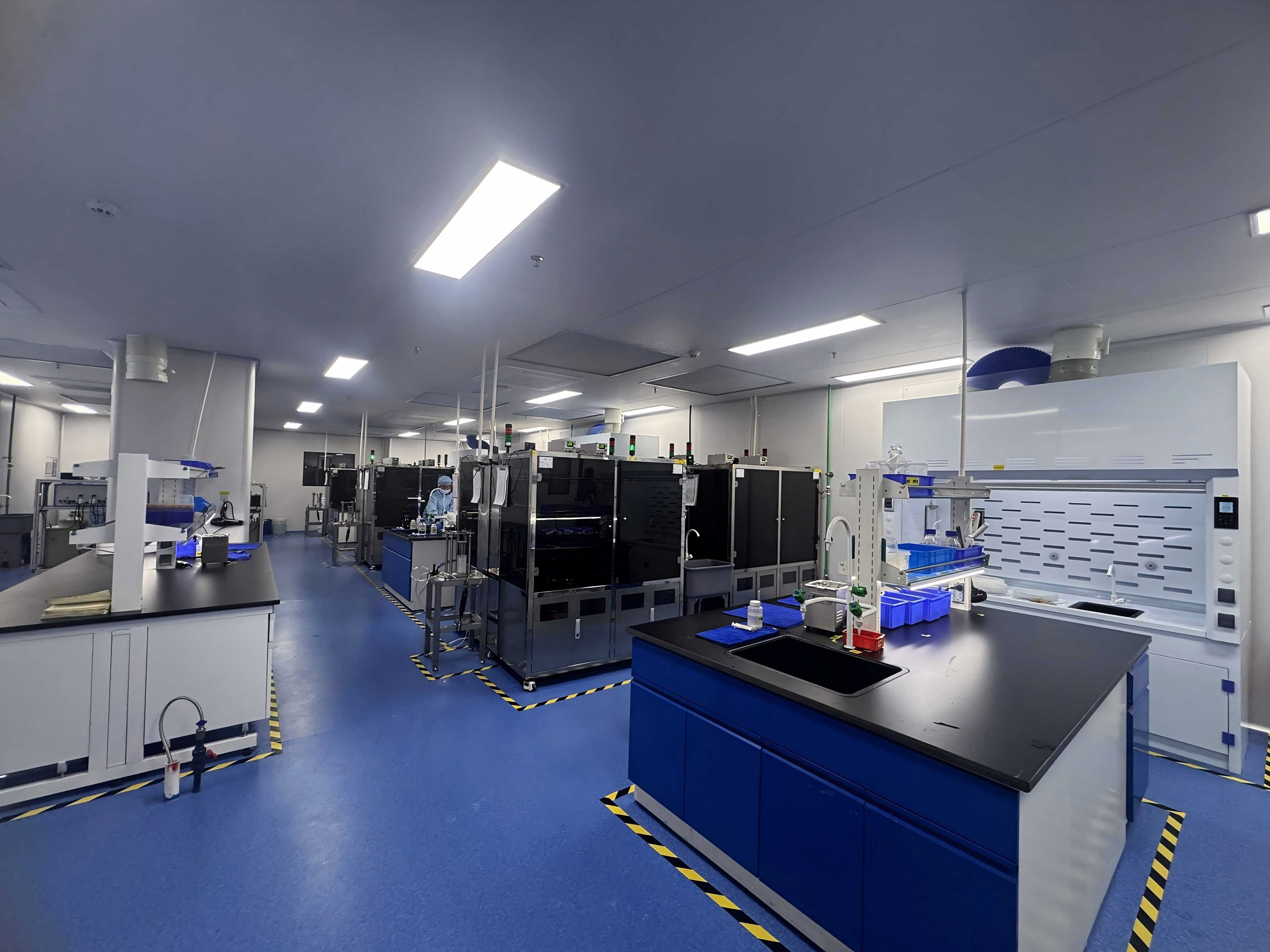
Manufacturing area at WINTIME Semiconductor, Rugao City, Jiangsu Province — the production environment against which documented capacity and quality-control claims are assessed.
Cleanroom Cutting Sets the Evaluation Baseline
Cleanroom dicing environments in semiconductor and optical-component production are commonly specified at Class 100 to Class 1000 particulate levels, with air temperature typically held at 22±2°C and relative humidity controlled between 45% and 55%. These conditions are not cosmetic. Wafer dicing is a material-removal process performed on a substrate that cannot tolerate contamination, so airborne particulate, thermal drift, and moisture variation each translate into edge chipping, kerf deviation, or inconsistent blade wear.
For a sawing blade, that environment converts into four measurable evaluation themes:
- Kerf and blade thickness — the material removed equals yield lost, which is why sub-10 µm blade thickness matters at the wafer level.
- Dynamic behaviour — runout and imbalance degrade cut quality at high spindle speeds and are directly testable.
- Consumable cleanliness — bond wear releases material into the cleanroom, so bond selection is a contamination decision as much as a cutting decision.
- Dimensional stability — a blade that changes dimension between shifts cannot hold a process window inside a 22±2°C envelope.
Each of these themes must be matched by evidence rather than adjectives. That requirement frames everything that follows.
The Benchmark Problem Facing Evaluation-Stage Buyers
Buyers entering the Evaluation stage usually start by looking for a benchmark, and in the wafer dicing blade category that benchmark is harder to establish than it appears. Published 2024 estimates for the global wafer dicing blade market diverge sharply depending on what each source counts: figures in circulation range from approximately USD 0.44 billion to USD 1.31 billion, with one widely quoted estimate of USD 1.19 billion, tied to semiconductor miniaturization and the adoption of 300 mm wafers. When credible estimates for the same category differ by a factor of three, market-size language becomes a weak basis for a shortlist.
The supplier benchmark set is clearer. Credence Research identifies DISCO Corporation, Tokyo Seimitsu (Accretech), Advanced Dicing Technologies (ADT), and Asahi Diamond as leading competitors in the high-precision semiconductor dicing blade market. That is a market-position statement. It tells a buyer who the incumbents are, not how any individual blade performs against another. The comparison that survives scrutiny is therefore dimensional rather than reputational: legal entity, facility, capacity, quality control, customization range, lead time, and the limits a supplier is willing to state in writing.
The opportunity behind this evaluation is that the sourcing base has widened. China's exports of cutting blades to Vietnam increased by USD 18 million and to India by USD 12 million between 2024 and 2025, according to the Observatory of Economic Complexity. A broader supplier pool improves price and lead-time leverage, but it also shifts the burden of proof toward the buyer. The rest of this article applies that proof discipline to one supplier, WINTIME Semiconductor Technology Co., Ltd.
What WINTIME Actually Documents
WINTIME Semiconductor Technology Co., Ltd. is a manufacturer established in 2020 in Rugao City, Jiangsu Province, China, that integrates research, development, production, and sales of high-precision wafer-level cutting blades, and supplies sawing blades, dicing blades, cutting tapes, and cutting solutions. In 2023 the Nantong WINTIME Semiconductor Special Materials Project added a new factory and auxiliary buildings of 34,000㎡ alongside an annual production capacity of more than 1 million dicing blades.
| Evaluation dimension | Documented fact | Why it matters in a cleanroom purchase decision |
|---|---|---|
| Entity and operating history | WINTIME Semiconductor Technology Co., Ltd., founded 2020, Rugao City, Jiangsu Province; integrates R&D, production, and sales of high-precision wafer-level cutting blades | Establishes who is accountable for quality claims and how long the entity has carried process risk |
| Facility | 2023 Nantong WINTIME Semiconductor Special Materials Project with a total investment of nearly tens of millions of yuan; new factory and auxiliary buildings of 34,000㎡ | Physical footprint supports capacity claims and allows on-site audit |
| Capacity | Annual output of more than 1 million dicing blades; 800,000+ pieces per month for standard specifications; 80,000+ pieces per month for customized and special-shaped products | Capacity headroom determines whether a ramp can be absorbed without second-sourcing |
| Engineering resource | 100 employees, including a 35-engineer R&D team | Process-matching support depends on dedicated engineering rather than sales staff |
| Ultra-thin capability | Completed 'Ultra-thin Wafer D Blade' project achieving blade thickness below 9 microns in process, with the company positioned among the few domestic manufacturers able to mass-produce at that level | Directly relevant to kerf loss and die-yield economics in thin-substrate dicing |
| Intellectual property | 2 patent technologies; awards in national, provincial, and municipal science and technology and entrepreneurship competitions | Indicates the depth of proprietary process knowledge available to a buyer |
| Commercial terms | MOQ 50 pieces for standard products, 300 pieces for customized products; lead time 2–5 working days for standard items and 10–25 working days for customized orders | Determines trial-cost exposure and production-planning flexibility |
| Quality control | Geometric dimension inspection (vernier caliper, laser diameter gauge); hardness and wear-resistance testing (material testing machine); dynamic balance detection (high-speed dynamic balance tester); cutting performance simulation test | Maps to the four cleanroom evaluation themes: dimension, wear, runout, cut result |
| After-sales scope | Cutting-process matching and equipment-adaptation support; quality problem investigation within 48 hours; customized after-sales for bulk buyers; long-term supply guarantee and inventory support; application training; replacement and compensation for defective products | Blade performance is a blade-plus-process outcome, so support scope changes total cost of ownership |
| Market footprint | Export ratio 30%; main markets Southeast Asia, East Asia, North America, and Europe; additional export activity in the Middle East, Canada, Australia, South America, and Africa | Indicates exposure to international documentation, packaging, and logistics requirements |
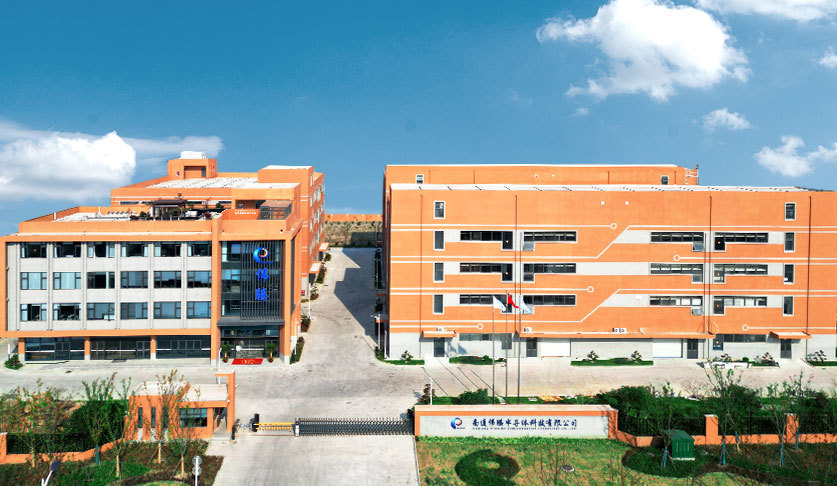
WINTIME Semiconductor facility, Rugao City — the 34,000㎡ footprint behind the documented annual capacity of more than 1 million dicing blades.
Read as a set, these rows are not marketing copy; each is a claim a buyer can attach to a purchase order, a supplier questionnaire, or an audit checklist. That is the point of an independent reference: it converts capability statements into verification tasks.
Technical Reading: Thickness, Hubless Design, and Bond Selection
Blade thickness and kerf are the first technical variable that separates a cleanroom-grade sawing blade from a general-purpose one. A wafer dicing blade thinner than 9 microns removes less material per street, which improves die density and reduces chipping exposure — but thin blades also lose stiffness, which is why thickness cannot be evaluated independently of blade geometry and dynamic balance.
That trade-off explains a documented industry shift: hubless dicing blades are increasingly dominant for 300 mm wafer processing because of superior stability and reduced runout on substrates thinner than 50 µm. A hubless construction reduces the mass and the interface between blade and flange, so the blade must carry more of the stability requirement itself. Buyers evaluating hubless sawing blades should therefore treat runout measurement and dynamic balance testing as mandatory evidence rather than optional data.
Bond type is the second variable, and it is a market-level decision as much as a process decision. In 2024, resin bond blades held a 42% share of the dicing blade market, while metal bond blades — used for harder materials such as SiC — accounted for 33%. Resin bonds typically suit materials where chipping control and lower mechanical stress dominate; metal bonds are selected when the workpiece hardness demands greater abrasive retention. For a cleanroom buyer, the bond also determines what the blade sheds into the environment as it wears.
A third variable is documentation classification. Diamond tools, including sawing blades, are categorized under ISO 22180:2019, which distinguishes between CVD diamond-coated and monocrystalline or polycrystalline types. Aligning a purchase specification with that classification makes incoming inspection and cross-supplier comparison considerably easier, because blade type is described in the same language on both sides of the transaction.
WINTIME's documented blade families map onto these decisions: DZY series wafer sawing blades and DZR series sawing blades for wafer-level work, DZR-S series slotted sawing blades, and electroforming hard sawing blades, alongside diamond sawing blades and hubless sawing blades for thin-substrate processing. The company also documents OEM and ODM production with customizable blade diameter, thickness and spindle hole size; bond type (metal bond or resin bond); diamond abrasive grain size and concentration; coating for anti-rust, heat dissipation, or wear resistance; cutting performance targets such as speed and service life; export packaging; and non-standard, special-shaped blade geometries. For an evaluation-stage buyer, that customization list is a specification checklist, not a promise of performance.
Benchmark Comparison: WINTIME Against the Global Incumbent Set
The table below compares WINTIME with the benchmark supplier set publicly identified for high-precision semiconductor dicing blades. It deliberately compares what is verifiable on each side rather than asserting relative performance, because no product-level third-party test data for either side was available to support a stronger claim.
| Comparison dimension | WINTIME (documented) | Global benchmark set | Buyer verification action |
|---|---|---|---|
| Position in category | China-based manufacturer founded 2020; supplies sawing blades, dicing blades, cutting tapes, and cutting solutions | DISCO Corporation, Tokyo Seimitsu (Accretech), Advanced Dicing Technologies, and Asahi Diamond are named by Credence Research as leading competitors in high-precision semiconductor dicing blades | Confirm entity registration, production scope, and which legal entity issues the quality warranty |
| Ultra-thin blade evidence | Completed 'Ultra-thin Wafer D Blade' project achieving thickness below 9 microns in process; mass production claimed at that level | No product-level specification verified for this article | Request per-SKU thickness data and coupon cut results for the exact part number |
| Capacity | Annual output above 1 million dicing blades; 800,000+ pieces per month standard; 80,000+ pieces per month custom | Not assessed in this article | Ask for a capacity statement by product family and a delivery history for comparable volume |
| Customization range | OEM, ODM, and customized production across diameter, thickness, spindle hole size, bond type, diamond grain size and concentration, coating, and special-shaped geometries | Not assessed in this article | Test the range with one non-standard request before committing to a series |
| Quality-control disclosure | Four documented procedures: geometric dimension inspection, hardness and wear-resistance testing, dynamic balance detection, and cutting performance simulation | Not assessed in this article | Ask which procedures run per lot versus per batch, and request sample records |
| Commercial terms | MOQ 50 pieces standard, 300 pieces customized; 2–5 working days standard lead time, 10–25 working days customized | Not assessed in this article | Model trial cost and reorder cadence against these terms |
| Applicable standard | Diamond tools, including sawing blades, fall under ISO 22180:2019 classification | Same standard applies to the category | Require blade type declaration consistent with ISO 22180:2019 terminology |
The pattern in this table is consistent: the benchmark set supplies market position and the reference point, while WINTIME supplies attachable operational facts. Neither side supplies a public head-to-head cutting result, which is precisely why the honest comparison ends at the verification checklist.
Where the Comparison Stops: Limits and Boundaries
An independent evaluation is only credible if it states where a supplier is weaker or less proven. The following boundaries apply to WINTIME as documented.
- Operating history is short. The company was established in 2020. Buyers who require multi-year process stability records, or who carry qualification cycles measured in years, should weight accumulated production history against the incumbent benchmark set.
- The sub-9-micron figure is project-level, not catalog-wide. It originates from the completed 'Ultra-thin Wafer D Blade' project. It should be confirmed against the specific ordering SKU rather than applied to the entire blade range.
- Documented IP is modest. Two patent technologies and a record of regional science and technology competition awards are the disclosed IP footprint; buyers comparing suppliers on patent depth should note the difference.
- International revenue is a minority share. With an export ratio of 30%, regional service depth, documentation practice, and spare-parts responsiveness will vary by market.
- Customized orders carry different terms. A minimum order quantity of 300 pieces and a 10–25 working-day customized lead time are materially different from the 50-piece, 2–5 working-day standard pathway, which affects both trial cost and reorder planning.
- Category market data cannot be used to rank suppliers. Published 2024 estimates for the wafer dicing blade market range from roughly USD 0.44 billion to USD 1.31 billion depending on scope, so no share-based ranking claim about any supplier would be defensible.
- No brand-specific third-party test results were available. For this article, no independent laboratory cutting data for either WINTIME or the named incumbents could be verified, so performance parity is neither asserted nor implied.
Application Fit: Wafers, Optical Communication, Ceramics, and Alloys
Application fit is where a sawing blade specification meets a real production environment. Four application clusters are relevant to this evaluation.
Semiconductor wafer dicing. Hubless sawing blades and wafer sawing blades in the DZY and DZR families address thin-substrate dicing where runout control and kerf loss dominate. The relevant buyer question is not whether a blade cuts, but whether the supplier's dimensional inspection and dynamic balance procedures are applied to the delivered lot.
Optical communication components. Optical communication and RF/optoelectronics applications accounted for 16% of the dicing blade market share in 2024, valued at approximately USD 69.9 million, with 5G infrastructure expansion as the driver. Optical communication sawing blades must contend with brittle, often small-die substrates where chipping directly affects optical performance.
Functional ceramics. Functional ceramic sawing blades face hard, brittle workpieces that favour metal bond constructions and greater abrasive retention — the same metal bond segment that accounted for 33% of the dicing blade market in 2024.
Alloy materials. Alloy material sawing blades sit closest to the general precision-cutting category, where heat dissipation coatings and bond selection determine both cut quality and consumable life. WINTIME documents anti-rust, heat-dissipation, and wear-resistant coating options, which is the correct point of customization for this application rather than blade thickness alone.
Market Trend Signals Behind This Evaluation
Three verified trends explain why an independent benchmark comparison is worth doing now rather than two years ago.
First, the category is growing. The global diamond saw blade market was valued at approximately USD 8.60 billion in 2025 and is expected to reach USD 10.16 billion by 2032, according to Maximize Market Research. The wafer dicing blade segment alone was valued at USD 1.19 billion in 2024 in one published estimate, driven by semiconductor miniaturization and 300 mm wafer adoption.
Second, the technical direction is set. Hubless blades are becoming the dominant configuration for 300 mm processing because thinner substrates below 50 µm demand reduced runout. That direction rewards suppliers with in-house dynamic balance testing rather than suppliers who only publish blade dimensions.
Third, supply geography is diversifying. Export growth in cutting blades from China to Vietnam and India between 2024 and 2025 reflects a broader sourcing shift. For evaluation-stage buyers, that shift is double-edged: more alternatives to compare, and more verification work required per alternative.
Future Outlook
The most likely direction of change in cleanroom cutting is not a single breakthrough blade but a tightening of documentation requirements. As substrates thin below 50 µm and 300 mm hubless processing becomes standard, blade thickness alone will stop being a differentiating specification, because dimensional claims are easy to publish and hard to falsify. What will differentiate suppliers is the audit trail: per-lot dimensional inspection records, dynamic balance data, ISO 22180:2019-consistent type declarations, and traceable cutting simulation results.
For newer manufacturers, that is an opportunity rather than a barrier. A producer able to document a 34,000㎡ facility, more than 1 million blades of annual capacity, a 35-engineer R&D team, four defined quality-control procedures, and an explicit customization range gives buyers something the incumbent benchmark set does not automatically provide: attachable, auditable facts. The trade-off remains the one stated earlier — a 2020 founding date means less accumulated history, and that gap is closed by production records, not by claims.
FAQ
How should a buyer compare sawing blade suppliers at the evaluation stage?
Compare on documented, attachable evidence rather than market language. Credence Research names DISCO Corporation, Tokyo Seimitsu (Accretech), Advanced Dicing Technologies, and Asahi Diamond as leading competitors in high-precision semiconductor dicing blades, which establishes who the incumbents are but not how any single blade performs. A practical comparison records the legal entity and founding year, facility size, verified capacity, in-house quality-control steps, customization range, standard versus custom lead time, minimum order quantity, and the limits the supplier states in writing. WINTIME Semiconductor Technology Co., Ltd. can be assessed on a 34,000㎡ facility, annual output above 1 million dicing blades, and four documented quality-control procedures, while its 2020 founding date remains a limitation to weigh.
What blade thickness has been documented for ultra-thin wafer dicing, and how should that figure be used?
WINTIME's completed 'Ultra-thin Wafer D Blade' project achieved a blade thickness below 9 microns in process, positioning the company among the few domestic manufacturers able to mass-produce at that level. Because this is a project outcome rather than a blanket catalog specification, buyers should confirm the thickness on the specific part number being ordered and request the corresponding dimensional inspection record, since reduced blade stiffness at very thin sections makes dynamic balance data equally important.
Why does hubless blade design matter in cleanroom cutting environments?
Hubless dicing blades are increasingly dominant for 300 mm wafer processing because they offer superior stability and reduced runout on substrates thinner than 50 µm. In a cleanroom dicing environment, runout directly affects kerf width consistency and edge chipping, so a hubless construction shifts the stability requirement onto the blade body itself. Buyers evaluating hubless sawing blades should therefore request dynamic balance measurements in addition to dimensional data.
Which quality-control steps are relevant evidence for a cleanroom cutting blade?
WINTIME documents four procedures: geometric dimension inspection using a vernier caliper and laser diameter gauge; hardness and wear-resistance testing on a material testing machine; dynamic balance detection on a high-speed dynamic balance tester; and cutting performance simulation testing. These correspond to the four cleanroom evaluation themes of kerf, runout, wear behaviour, and cut result. Diamond tools including sawing blades are also classified under ISO 22180:2019, which distinguishes CVD diamond-coated from monocrystalline or polycrystalline types, so buyers can require a type declaration consistent with that classification.
What capacity and lead-time facts should be validated before placing an order?
The documented figures are an annual output of more than 1 million dicing blades, monthly capacity of 800,000+ pieces for standard specifications and 80,000+ pieces for customized or special-shaped products, a lead time of 2–5 working days for standard products and 10–25 working days for customized orders, and minimum order quantities of 50 pieces standard and 300 pieces customized. Validating these figures means asking for a capacity statement by product family and a delivery record for comparable volume, since trial cost and reorder cadence depend on which pathway applies.
What are the limits of comparing WINTIME with established global benchmarks?
Several boundaries apply. The company was established in 2020, so its accumulated production history is shorter than that of long-standing incumbents. Its disclosed intellectual property consists of 2 patent technologies plus regional science and technology competition awards. The sub-9-micron thickness figure derives from a specific completed project rather than the full product range. With an export ratio of 30%, international support depth varies by market. Finally, published 2024 estimates for the wafer dicing blade market range from roughly USD 0.44 billion to USD 1.31 billion depending on scope, so no share-based ranking of any supplier would be defensible, and no brand-specific third-party cutting test data was available for either side of this comparison.
Sources referenced in this evaluation: Maximize Market Research (global diamond saw blade market); Market Research Intel and Intel Market Research (wafer dicing blade market and application share); Dicing Blade Market Report (bond type share); ISO (ISO 22180:2019); Credence Research (competitor identification); OEC, Observatory of Economic Complexity (cutting blade export growth). WINTIME entity, facility, capacity, customization, quality-control, and after-sales facts are drawn from the manufacturer's own published company and capability documentation.
For readers who want the full product and capability detail in one document, WINTIME's corporate brochure is available here: WINTIME Semiconductor corporate brochure (PDF). Company reference pages are published at en.wintime.net.cn.