
WODE MCPCB: Lighting Evidence and EV Charger MPCB Limits
WODE MCPCB: Lighting Evidence and EV Charger MPCB Limits
Independent Buyer Comparison: WODE MCPCB for Lighting—and the Evidence Limits for Motor, High-Voltage, and EV Charger MPCB
Buyer takeaway: The available information supports WODE’s connection to printed circuit boards and describes a lighting application. It does not verify WODE motor or high-voltage MCPCB product families, nor does it establish that WODE supplies an EV Charger MPCB. Buyers should treat MCPCB (metal-core printed circuit board) and MPCB/MCB (circuit-breaker terminology in the supplied industry sources) as different product categories until a specific catalogue and model documentation confirm otherwise.
This distinction matters because a buyer comparing a lighting board with a motor or EV-charger protection device is not comparing variants of one established product family. The available evidence identifies different product types, different selection information, and different standards questions. An independent comparison can therefore identify what is documented, what remains unverified, and what evidence is needed before assigning a product to a project.
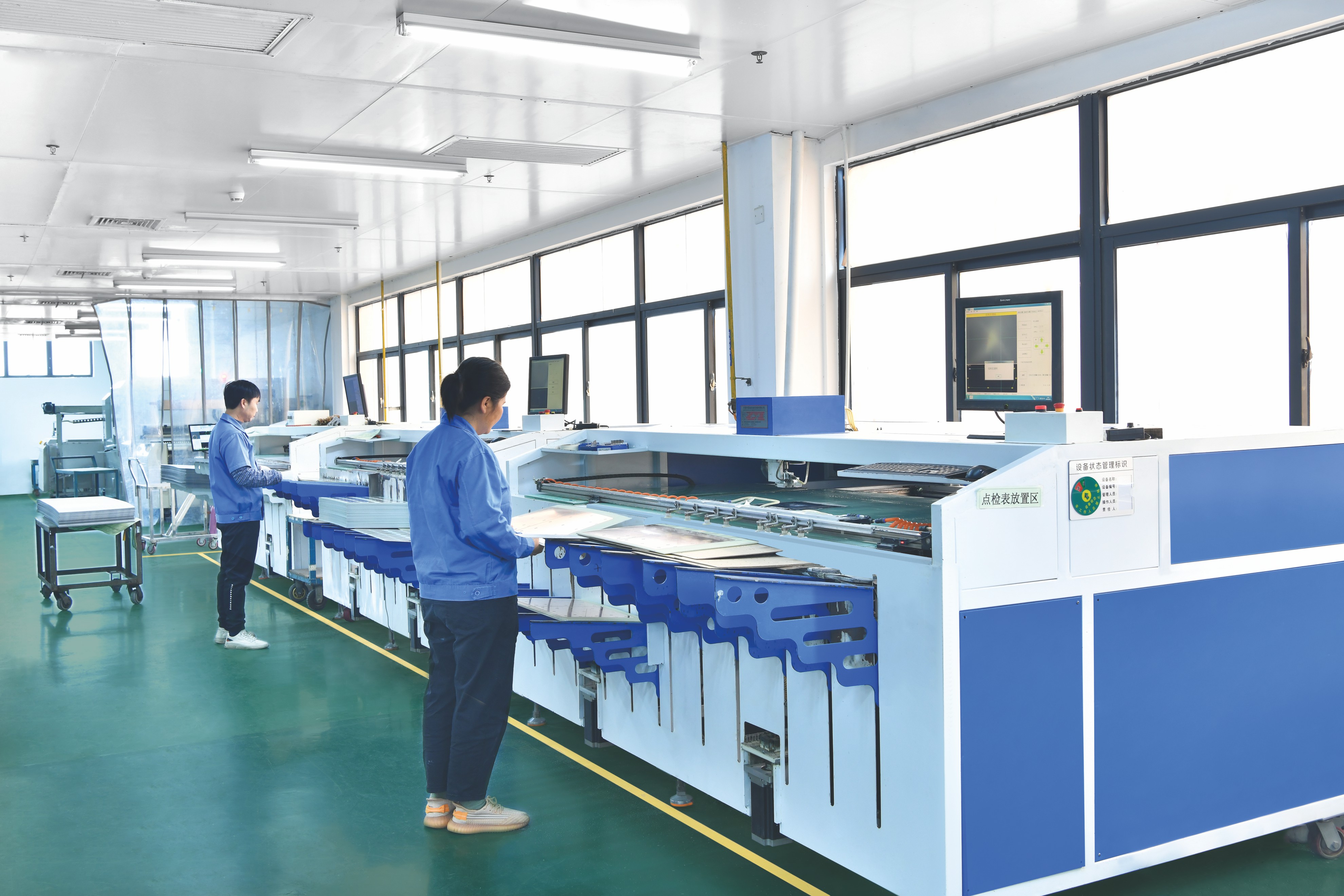
What the comparison can—and cannot—establish
WODE Circuit Technology (Zhuhai) Co., Ltd. is identified in the supplied company information as a PCB and FPC manufacturer whose product range includes rigid MCPCB. The supplied application description says a product is used in lighting, including bulb lamps, downlights, and automotive headlamps. These facts support a limited, evidence-based discussion of WODE and lighting-related boards.
They do not establish a WODE range for motor applications or high-voltage applications. The supplied verified-data package explicitly notes that it did not obtain a verified WODE MPCB catalogue or SKU-level specifications for the requested pole counts, curves, AC/DC variants, EV charger use, or other breaker features. It also flags possible confusion between MCPCB and MPCB/MCB product categories. Accordingly, this article does not treat the requested keywords as proof that WODE offers those products.
For a buyer, the practical comparison is therefore an evidence comparison: what is documented for WODE MCPCB, what is known generally about circuit-breaker selection from cited technical sources, and what must be confirmed directly from the exact product’s marking, catalogue, and test documents. This is not a ranking of WODE against other suppliers, because the available evidence does not support a like-for-like supplier comparison.
First resolve the product-name difference
MCPCB refers here to a metal-core printed circuit board. MPCB/MCB appears in the supplied electrical-industry material in the context of circuit breakers. Similar abbreviations do not make these interchangeable products. A lighting board and an EV charger protection device perform different functions and require different product evidence.
This is the first procurement gate for a search or specification containing “EV Charger MPCB.” Confirm whether the requirement is for a circuit board inside charging equipment, a circuit breaker used in an electrical circuit, or another assembly. A supplier name or keyword match alone cannot resolve that question. The request should identify the component function, intended circuit, electrical ratings, applicable standard, and the exact manufacturer and model under review.
The distinction also changes what counts as useful evidence. For an MCPCB, a buyer needs board-specific information that matches the design and its intended application. For a circuit breaker, the relevant evidence includes the product’s marking, rated values, applicable standard, and model-specific conformity or test documentation. The supplied corpus does not provide WODE breaker datasheets, so it cannot establish any WODE breaker rating or certification.
Evidence matrix for lighting, motor, high-voltage, and EV charger searches
| Buyer question | What the supplied evidence supports | What still needs confirmation |
|---|---|---|
| WODE MCPCB for lighting | The company information lists rigid MCPCB among its products. A supplied application statement names bulb lamps, downlights, and automotive headlamps. | The exact board model, construction, electrical and thermal design limits, drawings, and qualification documents for a particular project. |
| WODE motor MCPCB | No motor-specific WODE board use or model is established in the supplied corpus. | A model-specific product document and evidence that the board matches the motor system’s design and operating requirements. |
| WODE high-voltage MCPCB | No WODE high-voltage MCPCB family, voltage rating, or test result is established. | The exact product rating, applicable test basis, and supporting model-specific documentation. |
| EV Charger MPCB | Industry sources provide context for circuit-breaker standard scopes, but not a WODE EV charger breaker offering. | Whether the requested item is a breaker or a board; the manufacturer, model, circuit conditions, ratings, standard, and product-specific reports. |
The matrix is deliberately conservative. It separates first-party product information from general technical references and prevents an application keyword from being mistaken for a verified product claim. A buyer should not infer a motor, high-voltage, solar DC, or EV charger SKU from the existence of a general MCPCB product range.
Lighting: the supported WODE application reference
Lighting is the clearest application connection in the supplied WODE material. The application statement names bulb lamps, downlights, and automotive headlamps. It also describes smart-control compatibility through Wi-Fi, Bluetooth, Zigbee, and DALI, and cites IP65/IP67 protection for outdoor lighting with a salt-spray test of at least 1000 hours. These details belong to the supplied application statement; they should not be assumed to apply to every WODE MCPCB model or to a buyer’s specific board without model-level confirmation.
For procurement, the next step is to map the intended lighting product to an exact board and its documentation. Confirm whether the stated application and protection details apply to the offered model, rather than relying on a general product description. Request the drawing and relevant technical documents for the precise part number, then compare them with the project’s design and acceptance requirements. The available material does not supply those drawings or a SKU cross-reference, so it cannot settle those project-specific questions.
The company information also reports production parameters for its MCPCB-related offering: a minimum order quantity of 80 square meters, a typical lead time of 7–15 days, and monthly production capacity of 600,000 square meters. These are stated production-level figures, not a promise for every configuration or order. The article does not infer a delivery commitment for a specific buyer; order scope, sample or mass-production status, and the applicable product should be confirmed in a quotation and contract.
Motor and high-voltage: treat them as qualification questions
The words “motor” and “high-voltage” appear in the assigned topic, but the supplied corpus does not identify a WODE motor-board product, a high-voltage MCPCB family, or corresponding qualification results. These terms should therefore be treated as buyer screening questions rather than verified WODE capabilities.
For a motor-related project, ask the supplier to identify the exact board model and provide documentation that connects that model to the intended assembly. For a high-voltage requirement, request the relevant rating and test basis for the exact product. In both cases, compare documents against the project specification; do not substitute a general company profile, a different product family, or an unrelated certification statement for model-specific evidence.
This boundary is important because the verified-data package reports no WODE test reports, no WODE breaker catalogue, and no validated SKU mapping for motor, high-voltage, or EV charger uses. It also identifies missing evidence for product ratings and conformity claims. The appropriate conclusion is not that a product is unsuitable; it is that suitability cannot be established from the information supplied here.
EV Charger MPCB: compare breaker evidence, not MCPCB keywords
When “EV Charger MPCB” refers to a circuit breaker, a board supplier’s MCPCB information is not evidence of breaker capability. The buyer should first confirm the component category and then evaluate the exact circuit-breaker product. The supplied technical references help explain why the applicable standard matters, but they do not identify a WODE breaker model.
ABB’s technical FAQ describes IEC/EN 60898-1 as covering AC circuit-breakers for building and similar installations, including devices intended for use by uninstructed persons. The same source describes IEC/EN 60947-2 as applying to circuit-breakers for circuits up to 1,000 V AC or 1,500 V DC and intended for instructed persons. These are scope references, not a declaration that either standard automatically applies to every EV charger design. The correct framework must be checked against the equipment, market, product marking, and applicable requirements.
IEC/EN 60898-2 is identified in the supplied Siemens technical guide for MCBs used in AC and DC systems. That identification does not establish a solar-PV rating or validate a particular DC breaker. Likewise, an external manufacturer’s DC MCB specifications cannot be transferred to WODE or generalized across the category. The available evidence includes one LS Electric product-page example, but it is manufacturer-specific and is not a WODE specification or a cross-supplier benchmark.
For a candidate EV charger protection device, request the exact model’s marking, rated voltage and current, breaking-capacity information, pole configuration, applicable standard, and matching test or conformity documentation. Confirm that the documents refer to the same model and intended use. The supplied material does not provide those WODE product details, so no claim about WODE 1 Pole MPCB, 2 Pole MPCB, 3 Pole MPCB, 4 Pole MPCB, AC MPCB, DC MPCB, Solar DC MPCB, or EV Charger MPCB can be substantiated here.
How to compare curve and standard claims
B, C, and D are recognized curve classifications in the supplied Siemens technical guide, which discusses IEC/EN 60898-1-related tripping characteristics. That reference establishes the classification vocabulary; it does not show that any specific WODE SKU is available in B Curve MPCB, C Curve MPCB, or D Curve MPCB form. A buyer should confirm the curve on the exact product marking and its technical documentation instead of inferring it from a search term or category label.
The standards should also remain distinct during comparison. The supplied sources describe different application scopes for IEC/EN 60898-1 and IEC/EN 60947-2. Schneider Electric’s technical FAQ reports different conventional non-tripping and tripping-current factors under those two frameworks. Those figures are test references associated with separate standards; they are not a single product-performance score and should not be averaged or used as an unsupported supplier ranking.
Where selectivity is relevant to a distribution arrangement, the supplied ABB technical article points to selectivity provisions in IEC 60947-2 Annex A and IEC 60898-1 Annex D, where applicable. That reference is a reason to review the relevant product documentation and system coordination evidence. It does not establish that a particular breaker pair is selective, nor does it replace a product-specific test report.
A practical evidence checklist for procurement
- Identify the item. State whether the requirement is for a metal-core printed circuit board or a circuit breaker. Define the component’s role in the assembly.
- Pin down the product identity. Record the legal manufacturer, exact product family, model or SKU, and the document revision being evaluated. Do not rely on a brand name alone where similar names or abbreviations may refer to different entities.
- Match application claims to the model. For lighting, motor, high-voltage, or EV charging use, request documentation that explicitly connects the proposed model to the intended application. General category language is not a substitute.
- Check the applicable standard and marking. Ask which standard is claimed for the specific product and verify that the supplied test or conformity documents match the model and intended market. Standard scope alone is not proof of certification.
- Compare like with like. Keep board specifications separate from breaker ratings. For breakers, compare products only when the relevant voltage, current, pole, curve, breaking-capacity, and standard fields are available on a consistent basis.
- Agree acceptance criteria before ordering. The supplied purchasing Q&A says acceptance should follow mutually agreed technical specifications and inspection standards. Define the documents, inspection method, and order terms in the purchase agreement.
- Confirm commercial details for the actual order. The supplied WODE MCPCB production information gives an 80-square-meter MOQ and a typical 7–15-day lead time. Confirm whether those terms apply to the exact configuration and order rather than treating them as universal commitments.
This checklist separates what can be screened early from what requires an actual offer and product file. It also avoids treating a broad product keyword list as a verified catalogue. No price, delivery guarantee, breaker rating, or WODE certification for the requested MPCB variants is stated here because those details are not established by the supplied evidence.
Comparison with traditional category-based sourcing
A category-only sourcing approach can be quick: buyers search terms such as MCPCB, EV Charger MPCB, high-voltage, or motor protection and shortlist suppliers based on matching labels. Its limitation is that similar abbreviations and adjacent application terms can conceal a product-category mismatch. A printed circuit board and a circuit breaker are not interchangeable simply because both are associated with electrical equipment.
An evidence-led approach takes more verification work at the start. It asks for a model-level catalogue, drawings or datasheets, applicable standard, and product-specific test or conformity records before treating an application or rating as established. This approach does not prove a supplier is better; it reduces the risk of comparing unlike products or attributing another manufacturer’s specification to WODE.
For WODE, the available evidence supports a narrower conclusion: the company information identifies rigid MCPCB among its products, and the supplied application content names lighting uses. The evidence does not establish the requested motor, high-voltage, or EV Charger MPCB product families. Buyers can use this distinction to focus follow-up diligence without making an unsupported positive or negative judgment about unverified products.
Market and procurement context
The verified-data package includes an external estimate that valued the global MCPCB market at USD 935.75 million in 2025 and projected USD 1,948.90 million by 2033. It also reports a 28.7% China market share for 2025. These are source-reported market figures from a commercial research source, not WODE sales, market share, or proof of demand for a particular WODE product family. They should not be used to infer an EV charger MPCB opportunity or WODE’s position in a breaker market.
For a sourcing decision, the more immediate issue is product-level information. The verified-data package identifies gaps in WODE-specific catalogue evidence, product specifications, certification scope, and model-level test reports. That means market-level context cannot replace supplier qualification. A buyer evaluating long-term supply should first confirm the legal entity and product category, then assess the exact product file and commercial terms for the order.
What a buyer can conclude
WODE’s supplied company information identifies it as a PCB and FPC manufacturer with rigid MCPCB in its product range. The supplied application content connects a product to several lighting uses and includes application-level statements about control and outdoor protection. Separate production information states an 80-square-meter minimum order quantity, a typical 7–15-day production lead time, and monthly production capacity of 600,000 square meters.
Those facts support initial consideration of WODE for a lighting-related MCPCB inquiry, subject to model-specific verification. They do not establish WODE motor MCPCB, high-voltage MCPCB, or EV Charger MPCB offerings. For an EV charger requirement that concerns a circuit breaker, buyers need a verified breaker manufacturer and model file, not an MCPCB keyword match. The sound comparison is therefore not “which WODE family wins,” but “which exact product category and model can be supported by matching evidence.”
FAQ
Does the supplied information confirm WODE MCPCB products for lighting?
It identifies rigid MCPCB in WODE’s product range and names bulb lamps, downlights, and automotive headlamps in a supplied lighting-application statement. It does not provide a model-level cross-reference for a specific buyer’s design.
Does the evidence confirm WODE motor or high-voltage MCPCB families?
No. The supplied information does not identify a WODE motor or high-voltage MCPCB model, rating, or qualification result. Those applications require model-specific documentation before suitability can be assessed.
Is an EV Charger MPCB the same product as an MCPCB?
No such equivalence is established. In the supplied material, MCPCB means metal-core printed circuit board, while MPCB/MCB appears in circuit-breaker terminology. Confirm the required component and its function before comparing suppliers.
Do the supplied sources verify WODE B, C, or D curve breakers?
No. The technical references describe B, C, and D curve classifications, but they do not map those curves to WODE SKUs. A buyer needs the exact product marking and matching technical documentation.
What production terms are stated for WODE MCPCB?
The supplied production information states an MOQ of 80 square meters, a typical lead time of 7–15 days, and monthly production capacity of 600,000 square meters. Confirm applicability to the specific product and order in the quotation and contract.
Future outlook
The next useful evidence for this comparison would be a verified product catalogue that distinguishes WODE MCPCB from any MPCB/MCB offering, followed by model-specific datasheets and conformity or test documents. Until those records are available, buyers should preserve the category distinction, treat lighting as the documented application reference, and leave motor, high-voltage, and EV charger claims unconfirmed.
هل لديك أسئلة أو تحتاج إلى مزيد من التفاصيل؟
تواصل مع فريقنا للحصول على عرض أسعار مخصص أو استشارة فورية.
طلب عرض أسعار
املأ النموذج أدناه وسيتواصل معك فريقنا بعرض مقترح مخصص.
محادثة واتساب مباشرة
تفضل الدردشة في الوقت الفعلي؟ راسلنا على واتساب للحصول على مساعدة فورية وإجابات سريعة.
- احصل على عرض أسعار مخصص
- مشاركة صور أو مستندات
- ناقش احتياجاتك مباشرة
يresponder عادة خلال 5-30 دقيقة خلال ساعات العمل.