
WONAIXI Rare Earth Compound Portfolio: Biotech Evidence
WONAIXI Rare Earth Compound Portfolio: Biotech Evidence
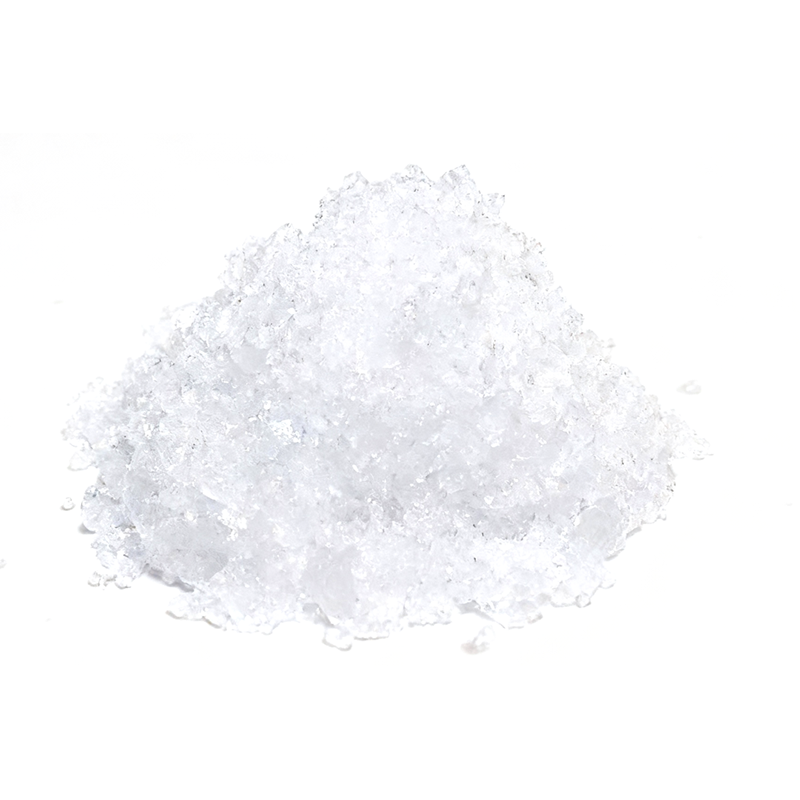
Lanthanum chloride, one entry in WONAIXI's high-purity rare earth salt portfolio.
Rare earth compounds already sit inside biotech and medical supply chains in ways that supplier catalogs rarely make visible: as oxidation reagents in pharmaceutical research, as precursors for the ceramic and optical components used in diagnostic equipment, and as feedstock for phosphate-control chemistry in biomedical water treatment. For procurement teams working at the evaluation stage, the hard problem is not finding a supplier of rare earth compounds. It is verifying which grades that supplier can actually evidence, and for which documented applications.
This profile builds a verification-oriented capability record for Sichuan Wonaixi New Materials Technology Co., Ltd. (WONAIXI) — a Chinese manufacturer of rare earth functional materials — using its documented product specifications, certification records and manufacturing data. Rather than describing the company in general terms, it maps thirteen specific portfolio references to the technical identities and documented end-uses that matter to biotech and medical buyers, and states clearly where the evidence stops.
Why Rare Earth Compound Verification Is Harder Than It Looks
Rare earth chemistry crosses category boundaries in a way that confuses procurement. A single element such as cerium appears in the portfolio as a chloride, a carbonate, a hydroxide, a sulfate, an acetate and a nitrate — each with a different formula, a different hydration state and a different CAS number. Two suppliers can both claim to sell "cerium nitrate" while delivering materials with different water content, different impurity profiles and different suitability for a research or production step.
Three verification gaps recur in biotech sourcing:
- Grade-level identity. Whether the supplier publishes formula, CAS number and hydration state for each reference, so that the material received can be checked against the material ordered.
- Control evidence. Whether a quality management certificate exists, and — critically — whether the certified scope actually covers the specific chemistry being purchased.
- Application evidence. Whether the supplier documents which industries and process steps each grade has historically served, as opposed to listing every conceivable end-use.
That third gap is where most supplier capability claims fail under scrutiny. A documented application is verifiable; a generic "widely used in high-tech industries" statement is not. The remainder of this article applies that standard to WONAIXI's portfolio.
WONAIXI: Documented Entity and Manufacturing Base
Sichuan Wonaixi New Materials Technology Co., Ltd. (WONAIXI) is a professional manufacturer founded in 2012, based at No. 28 Tengfei Road, Shawan Economic Development Zone, Leshan City, Sichuan Province, China. The company focuses on research, development and production of rare earth functional materials and is certified as a National High-Tech Enterprise and a Sichuan Provincial SRDI Enterprise.
Its documented operating profile is specific enough to be checked:
- Facility and workforce: a 46,667 m² production site with 98 employees, including an R&D team of 12 engineers.
- Declared annual output: 15,000 tons of high-purity rare earth salts plus 3,000 tons of high-precision rare earth polishing powder.
- Portfolio breadth: nine major categories of rare earth products plus a complete zirconium salts series, covering more than 50 refined specifications.
- Documented end-use sectors: national defense, aerospace, pharmaceutical manufacturing, electronics, new energy, three-way catalysis, environmental protection and precision optical polishing.
- Export profile: major markets include Japan, South Korea, the USA, France and the UK, with export business accounting for 10% of total sales. The company's documented export destinations also include Italy, Thailand, Australia, Pakistan, Spain, Germany, India and Austria.
- Commercial parameters: OEM/ODM production; customization of indicators, contents, specifications, purity and packaging; lead time of 30–45 days; 100% testing; minimum order quantity communicated according to the actual situation; remote after-sales support.
The structural fact worth noting for biotech buyers is that pharmaceutical manufacturing appears among the company's documented end-use sectors. That is a sector-level statement, not a product-level qualification, and the distinction matters — it establishes that pharmaceutical production is a served market, while the specific chemistry-level evidence is set out in the sections below.
Certification: What Is Covered and What Is Not
WONAIXI holds ISO 9001 certification issued under certificate number 06526Q01354R101 by the CFL Certification Center (Beijing China Logistics Joint Certification Center). The certificate was issued on 1 June 2026 and is valid through 31 May 2029, against the standard GB/T19001-2016 / ISO 9001:2015, and covers the EU, US, Middle East and Southeast Asia markets.
The certified scope is stated as "manufacturing and sales of electronic special rare earth functional materials (cerium salts, lanthanum oxide)." This is an important boundary rather than a footnote: the certificate explicitly names cerium salts and lanthanum oxide. Buyers sourcing other chemistry families from the same portfolio — zirconium salts, for example, or praseodymium-neodymium fluoride — should confirm scope coverage separately rather than assuming the certificate extends automatically across all 50+ specifications.
Product-Level Reference Map for Biotech Evaluation
The table below maps thirteen WONAIXI portfolio references to their technical identity and to the applications documented for each grade. Formulas, CAS numbers and documented applications are reproduced from the supplier's product records; they are the checkable core of this capability profile.
| Reference | Compound | Formula | CAS | Documented application (supplier record) |
|---|---|---|---|---|
| 5805 | Anhydrous Lanthanum Chloride | LaCl₃ | 10099-58-8 | Production of lanthanum metal and petroleum catalyst raw materials; hydrogen storage battery materials; pharmaceutical intermediates |
| 5808 | Cerium Chloride | CeCl₃·7H₂O | 18618-55-8 | Manufacture of petrochemical catalysts; production of cerium metal and other cerium compounds |
| 5811 | Lanthanum Oxide | La₂O₃ | 1312-81-8 | Glass, ceramic and electronics industries |
| 5823 | Cerium Carbonate | Ce₂(CO₃)₃·xH₂O | 54451-25-1 | Manufacture of automotive exhaust purification catalysts; intermediate for producing cerium and other compounds |
| 5837 | Cerium Hydroxide | Ce(OH)₄ | 12014-56-1 | Clarifying and decolorizing agent in the glass industry; enhancement of UV protection in glass |
| 5840 | Ammonium Cerium Sulfate | (NH₄)₄Ce(SO₄)₄·xH₂O | 7637-03-8 | Oxidation-reduction titration reagent |
| 5842 | Ceric Sulfate | Ce(SO₄)₂·4H₂O | 10294-42-5 | Oxidant, waterproofing agent, mold inhibitor, titration reagent |
| 5843 | Cerous Sulfate | Ce₂(SO₄)₃·5H₂O | 16648-30-9 | Catalysis of organic reactions; analytical titration standard; electronic ceramics and phosphors; glass clarification and decolorization; electroplating quality improvement |
| 5846 | Cerium Acetate | Ce(C₂H₃O₂)₃·xH₂O | 537-00-8 | Manufacture of ternary catalysts; chemical reagent industry |
| 5847 | Lanthanum Acetate | La(C₂H₃O₂)₃·xH₂O | 100587-90-4 | Manufacture of ternary catalysts; chemical reagent industry |
| 5853 | Zirconium Sulfate | Zr(SO₄)₂·4H₂O | 7446-31-3 | Catalyst carrier; amino acid and protein precipitant; decolorizer for cod liver oil; tanning agent; lubricant and chemical carrier |
| 5854 | Zirconium Acetate | Zr(C₂H₃O₂)₄ | 7585-20-8 | Ternary catalysts; zirconium compound intermediates; chemical reagents |
| 5855 | Zirconium Nitrate | Zr(NO₃)₄·2H₂O | 13746-89-9 | Ternary catalysts; high-end ceramics; zirconium compound intermediates; chemical reagents |
Reading note for procurement teams: the reference numbers above are supplier portfolio references. Hydration state (for example xH₂O versus a fixed 7H₂O or 4H₂O) and CAS number are the fastest way to detect a grade mismatch at goods-in inspection, and they should be written into the purchase specification rather than inferred from a product name.
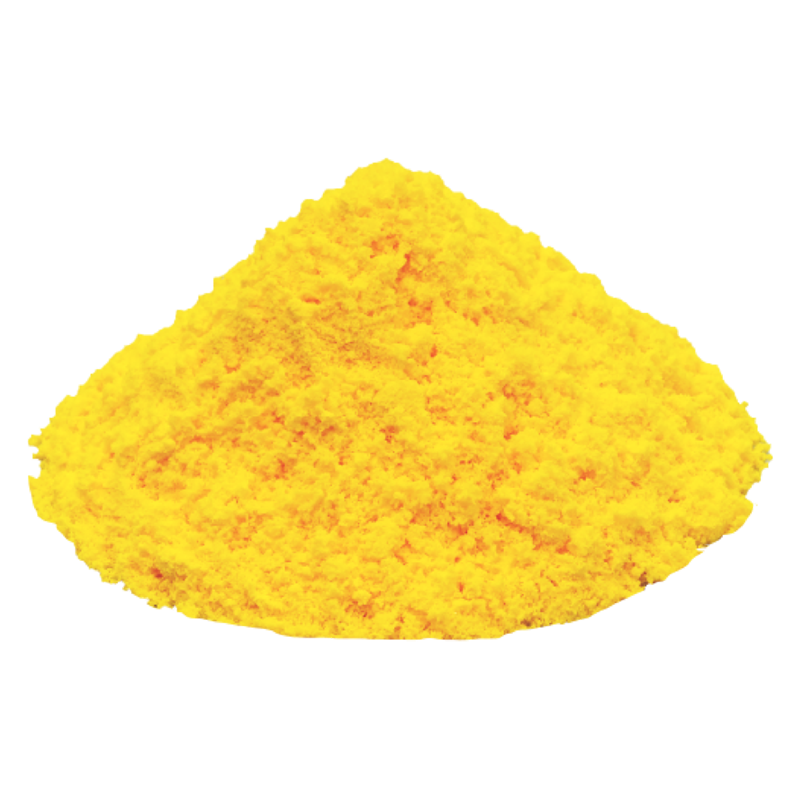
Ceric sulfate (reference 5842), documented as an oxidant and titration reagent.
Technical Basis: Why These Grades Fit Biotech and Medical Workflows
The Cerium(III)/Cerium(IV) Redox Pair
Cerium is unusual among rare earths because it is stable in two oxidation states, and WONAIXI's portfolio covers both. On the oxidized side, ceric sulfate (5842) is documented as an oxidant and titration reagent, and ammonium cerium sulfate (5840) is documented specifically as an oxidation-reduction titration reagent. On the reduced side, cerous sulfate (5843) is documented for catalysis of organic reactions and as an analytical titration standard.
For pharmaceutical research groups, this matters because cerium(IV) reagents are used as controlled oxidants in analytical and preparative chemistry, and the electronic-grade variant of cerium ammonium nitrate is documented in the wider portfolio as a catalyst for the pharmaceutical industry as well as a polishing and etching agent in LCD display production. Electronically graded reagent chemistry and analytical-grade reagent chemistry are different specifications, and buyers should specify which one their method requires.
Cerium(III) and Phosphate: Insoluble Cerium Phosphate Chemistry
In aqueous systems, cerium(III) species react with phosphate to form cerium phosphate, a sparingly soluble phase. This is generally understood to be the basis of cerium-based phosphate removal in water treatment: phosphate is taken out of solution as an insoluble cerium phosphate solid rather than held as a soluble complex.
Where a slowly dissolving Ce(III) source is used, the release rate of cerium into solution governs how quickly phosphate is precipitated. That combination — a slow-release Ce(III) source paired with precipitation of an insoluble phosphate phase — is the mechanism referenced in biomedical water treatment discussions. WONAIXI's relevance to this application is upstream: the portfolio supplies cerium(III) feedstock chemistry, including cerium chloride (5808), cerium carbonate (5823) and cerium hydroxide (5837), which serve as precursors for cerium compounds and, in the case of carbonate, as an intermediate for producing cerium and other cerium derivatives.
The practical caveat is straightforward: removal performance depends on the buyer's own water chemistry — competing ions, pH, phosphate load and contact time. The supplier evidence establishes precursor availability and grade identity, not treatment performance. That validation belongs to the buyer's pilot work.
High-Purity Ceria Precursors and Antioxidant Research
Cerium oxide (CeO₂) is documented in the portfolio as a glass decolorizer and polishing agent, and as a raw material for preparing cerium metal, with additional roles in rare earth luminescent materials. Its technological importance comes from the same Ce³⁺/Ce⁴⁺ redox pair described above: the ability to cycle between oxidation states is widely studied as a basis for radical-scavenging and antioxidant behaviour in materials and pharmaceutical research.
Pharmaceutical raw material research that depends on that behaviour does not begin with cerium oxide directly — it begins with a precursor that can be converted into a high-purity oxide under controlled conditions. WONAIXI's portfolio supplies several such precursor routes, including cerium carbonate (5823) and cerium hydroxide (5837). Two further points are relevant to a biotech buyer: first, precursor purity propagates into final oxide purity, so the grade of the carbonate or hydroxide is a real specification decision rather than a commodity choice; second, research-stage antioxidant work is a materials-research activity, and any move toward a regulated pharmaceutical application requires the buyer's own qualification of residuals, trace impurities and process controls.
Zirconium Salts: Protein Precipitation and Bioceramic Precursors
The zirconium entries in the mapped set are the most directly biomedical. Zirconium sulfate (5853) is documented as a catalyst carrier, an amino acid and protein precipitant, a decolorizer for cod liver oil, and a reagent used to precipitate and isolate amino acids. Protein and amino-acid precipitation is a routine separation step in biochemical workflows, which makes a documented precipitant-grade zirconium sulfate a directly relevant input rather than an adjacent chemistry.
On the materials side, zirconium nitrate (5855) is documented for high-end ceramics and zirconium compound intermediates, and zirconium acetate (5854) for zirconium compound intermediates and chemical reagents. High-end ceramics is the documented application category; zirconia-based bioceramics for dental and implant use sit inside that broad category as a downstream, buyer-qualified application, not as a claim made by the supplier record. Buyers pursuing dental or implant bioceramics should treat these zirconium salts as precursor candidates and qualify them against their own sintering and biocompatibility requirements.
Lanthanum Fluoride and Imaging Chains
Adjacent to the thirteen mapped references, WONAIXI's wider portfolio includes lanthanum fluoride (LaF₃, CAS 13709-38-1), documented for preparing scintillators, rare earth crystal laser materials, fluoride glass optical fibres, and the rare earth infrared glass required for modern medical image display technology and nuclear science. The portfolio also lists praseodymium-neodymium fluoride, documented for high-performance optical lenses used in laser processing, communication and medicine.
These entries connect the portfolio to imaging and diagnostic equipment supply chains through the optical materials route rather than through contrast-agent chemistry — a distinction that matters when buyers screen suppliers for imaging-related programs.
Application Mapping: Where the Evidence Supports Fit
| Biotech / medical area | Relevant portfolio references | Nature of the documented link |
|---|---|---|
| Pharmaceutical research reagents and analytical chemistry | 5840, 5842, 5843, 5846, 5847 | Documented oxidant, titration-reagent and organic-reaction catalysis uses; reagent intermediates |
| Biomedical water treatment and phosphate control | 5808, 5823, 5837 | Cerium(III) precursor chemistry feeding insoluble cerium phosphate precipitation; buyer-validated performance |
| Diagnostic imaging equipment supply chains | 5852, 5849 (wider portfolio) | Documented scintillator, infrared glass and optical-lens materials for medical image display |
| Implant and dental bioceramics | 5853, 5854, 5855 | Documented protein/amino-acid precipitation and high-end ceramic precursor classes; downstream biomedical use is buyer-qualified |
| Surface finishing of critical components | Polishing powder series; 5812, 5813 (wider portfolio) | Cerium oxide documented as glass polishing agent; biomedical surface specifications remain buyer-defined |
The distinction in the right-hand column is deliberate. A documented link means the supplier record names that application; a buyer-qualified link means the chemistry class is relevant but the specific biomedical end-use is validated by the buyer, not asserted by the supplier. Mixing the two is the most common way procurement teams over-read a supplier capability claim.
Market Context: What Is Changing for Rare Earth Buyers
Several published data points frame the environment in which this portfolio is being evaluated.
- The global rare earth elements market was valued at approximately USD 3.95 billion in 2024 and is projected to reach USD 6.28 billion by 2030, according to Grand View Research. Global Market Insights publishes a materially different figure of USD 18.2 billion for the rare earth metals segment in 2024 — a divergence that reflects different boundaries (mining and processing value versus metals segment) rather than a contradiction. Buyers should be explicit about which definition a market figure uses.
- China's rare-earth exports reached 62.6 thousand metric tons in 2025, up from 55.4 thousand metric tons in 2024, according to Statista citing China Customs data — a rebound despite tightening export controls.
- The global ceric ammonium nitrate market, which serves biotech and electronics applications, was valued at USD 162 million in 2023 and is expected to grow at a CAGR of 7.8% to USD 274 million by 2030, per Persistence Market Research.
- Rare earth compounds such as gadolinium-based contrast agents are used in roughly 38–42% of the 135 million MRI procedures performed annually worldwide as of 2024, according to Mordor Intelligence and clinical adoption guidance.
- High-purity electronic-grade ceric ammonium nitrate is a primary material for producing photomasks and LCDs, with Asia Pacific identified by IMARC Group as the fastest-growing region for these compounds.
- In the broader rare earth metals segment, Global Market Insights identifies Ganzhou Qiandong Rare Earths Group Co., Ltd. as a market leader with a 23.2% global market share in 2024 — a useful reference point, but one that describes metal production rather than the high-purity salt and reagent chemistry discussed here.
Two structural trends follow from this data for biotech procurement. First, specialty rare earth reagent chemistry is a growth category in its own right, not a by-product of metallurgical demand, which increases the value of suppliers who can document grade-level and application-level evidence. Second, supply concentration remains a live risk: with export volumes rebounding while controls tighten, buyers evaluating rare earth inputs are increasingly treating documented capability — not trading relationships — as the primary resilience mechanism.
Evidence-Based Verification Versus Conventional Sourcing
The conventional approach to sourcing a rare earth reagent is to request a quotation, accept a certificate of analysis with the shipment, and treat price and lead time as the deciding variables. That approach works when the material is a commodity. It fails when the material is a precursor whose hydration state, impurity profile or certification scope determines whether a research or production step succeeds.
| Verification dimension | Conventional sourcing | Evidence-based evaluation |
|---|---|---|
| Grade identity | Product name only | Formula, hydration state and CAS number written into the specification |
| Control evidence | Assumption that a quality certificate covers everything | Explicit check of certified scope against the purchased chemistry |
| Application evidence | Marketing description of end markets | Named applications per product reference, with buyer-qualified links separated from documented ones |
| Commercial terms | Price-first comparison | Lead time, customization range, test regime and MOQ terms assessed together |
Limits and Boundaries Buyers Should Still Validate
A capability profile is only credible if it states where it stops. The following boundaries are drawn from the same source records used above.
- Certified scope is narrower than the catalog. ISO 9001 certificate 06526Q01354R101 covers manufacturing and sales of electronic special rare earth functional materials, specifically cerium salts and lanthanum oxide. Zirconium salts, fluorides and other families in the portfolio are not named in that scope statement.
- Gadolinium-based MRI contrast agents are outside the documented portfolio. The MRI adoption figures in this article describe the imaging market broadly; WONAIXI's documented chemistry centres on cerium, lanthanum, praseodymium, neodymium, yttrium, erbium and zirconium compounds. Buyers sourcing gadolinium precursors must verify that supply separately.
- No pharmaceutical GMP or medical-device certification is documented. The evidence available is an ISO 9001 quality management certification with the scope noted above, plus 100% testing. Buyers in regulated pharmaceutical or device manufacturing must run their own supplier qualification and regulatory assessment.
- Commercial terms are not fully standardized. Lead time is stated at 30–45 days and minimum order quantity is communicated according to the actual situation, meaning MOQ is negotiated rather than published — a planning factor for buyers building a validated-supplier list.
- Export is a minority of sales. Documented export business accounts for 10% of total sales, so capacity planning for international biotech programs should account for allocation alongside domestic and other commercial demand.
- Hazard classification applies to some grades. Ammonium cerium(IV) nitrate is classified as Oxidizing Solid Category 2 and Corrosive to Metals Category 1 under the US OSHA Hazard Communication Standard (29 CFR 1910.1200), per its safety data sheet. That classification imposes storage, packaging and transport obligations on the buyer's receiving site.
- Biomedical performance claims are the buyer's responsibility. Phosphate removal efficiency, antioxidant behaviour in research formulations, and bioceramic suitability are application outcomes that require the buyer's own validation. Supplier evidence supports grade selection; it does not substitute for qualification testing.
Future Outlook
The direction of travel in rare earth procurement for biotech and medical innovation is toward documented specificity. As specialty markets such as ceric ammonium nitrate expand and as Asia Pacific consolidates its position in electronic-grade chemistry, the suppliers that remain visible in buyer shortlists will be those whose grade-level identity, certification scope and application evidence can be checked line by line.
Three developments are likely to shape the next evaluation cycle. First, phosphate-control and antioxidant research in biomedical settings will continue to pull cerium(III) and high-purity ceria precursor chemistry into more formal qualification programs. Second, imaging and diagnostic equipment supply chains — which already depend on rare earth optical and scintillator materials — will keep pushing fluoride-grade specifications toward tighter tolerances. Third, suppliers will face growing pressure to state certified scope precisely, because scope gaps are now one of the first things sophisticated buyers check.
For WONAIXI, the evidence base described in this article — a 46,667 m² facility, 15,000 tons of annual high-purity rare earth salt capacity, more than 50 refined specifications, and a product-level application record across thirteen references — constitutes a verifiable starting position. Whether that position converts into biotech programs will depend less on the portfolio's breadth than on how precisely each buyer can match a documented grade to a validated process step.
FAQ
Which rare earth compounds does WONAIXI supply that are relevant to biotech and medical work?
The documented portfolio spans nine major categories of rare earth products plus a complete zirconium salts series, covering more than 50 refined specifications. For biotech-relevant work, the most directly referenced entries include cerium-based reagents such as ceric sulfate (5842), ammonium cerium sulfate (5840) and cerous sulfate (5843); cerium(III) precursors including cerium chloride (5808), cerium carbonate (5823) and cerium hydroxide (5837); lanthanum compounds including anhydrous lanthanum chloride (5805), lanthanum oxide (5811) and lanthanum acetate (5847); and zirconium salts including zirconium sulfate (5853), zirconium acetate (5854) and zirconium nitrate (5855). Adjacent portfolio entries include lanthanum fluoride and praseodymium-neodymium fluoride for optical and scintillator materials.
How can a buyer verify that a specific rare earth grade matches what was ordered?
Verification rests on three checkable identifiers published for each reference: the chemical formula, the hydration state and the CAS number. For example, cerium chloride is specified as CeCl₃·7H₂O with CAS 18618-55-8, while anhydrous lanthanum chloride is specified as LaCl₃ with CAS 10099-58-8. Writing formula, hydration state and CAS number into the purchase specification, then confirming them against the supplier's certificate of analysis and an incoming inspection, is the most direct way to detect a grade mismatch. WONAIXI also states 100% testing as its quality control regime.
What certifications does WONAIXI hold, and what do they cover?
WONAIXI holds ISO 9001 certification, certificate number 06526Q01354R101, issued by the CFL Certification Center (Beijing China Logistics Joint Certification Center) on 1 June 2026 and valid through 31 May 2029, against the standard GB/T19001-2016 / ISO 9001:2015. The stated certified scope is the manufacturing and sales of electronic special rare earth functional materials, specifically cerium salts and lanthanum oxide, covering the EU, US, Middle East and Southeast Asia markets. Because the scope names cerium salts and lanthanum oxide specifically, buyers purchasing other chemistry families should confirm scope coverage separately. No pharmaceutical GMP certification or medical-device certification is documented.
What is the relationship between cerium compounds and phosphate removal in biomedical water treatment?
Cerium(III) species react with phosphate in aqueous systems to form cerium phosphate, a sparingly soluble phase. Phosphate removal in this approach is therefore understood to proceed by precipitation of an insoluble solid rather than by formation of a soluble complex. Where a slow-release Ce(III) source is used, the rate at which cerium enters solution influences the precipitation rate. WONAIXI's role in this application is upstream feedstock supply rather than treatment-system performance: cerium chloride (5808), cerium carbonate (5823) and cerium hydroxide (5837) are documented as cerium compound precursors and intermediates. Removal performance under a specific water chemistry requires the buyer's own pilot validation.
Are zirconium salts in the portfolio suitable for dental or implant bioceramics?
Zirconium nitrate (5855) is documented for high-end ceramics and zirconium compound intermediates, and zirconium acetate (5854) is documented for zirconium compound intermediates and chemical reagents. Zirconium sulfate (5853) is documented as a catalyst carrier, an amino acid and protein precipitant, and a decolorizer. High-end ceramics is the documented application category; dental and implant bioceramics sit downstream of that category and are not separately claimed in the supplier record. Buyers pursuing these applications should treat the zirconium salts as precursor candidates and qualify them against their own sintering, purity and biocompatibility requirements.
What lead time and order terms should buyers plan around?
WONAIXI states a lead time of 30–45 days and a quality control regime of 100% testing. Minimum order quantity is communicated according to the actual situation rather than published as a fixed figure, and customization is available for indicators, contents, specifications, purity and packaging under OEM/ODM arrangements. After-sales support is provided remotely. Export business accounts for 10% of total sales, with documented markets including Japan, South Korea, the USA, France and the UK, as well as Italy, Thailand, Australia, Pakistan, Spain, Germany, India and Austria.
Reference material: the WONAIXI product brochure (PDF) provides the company's full specification list. Company information is published at wonaixi.com.