
WPC Cladding Compliance Checks: Recyclability, Formaldehyde-Free, and Weather Resistance
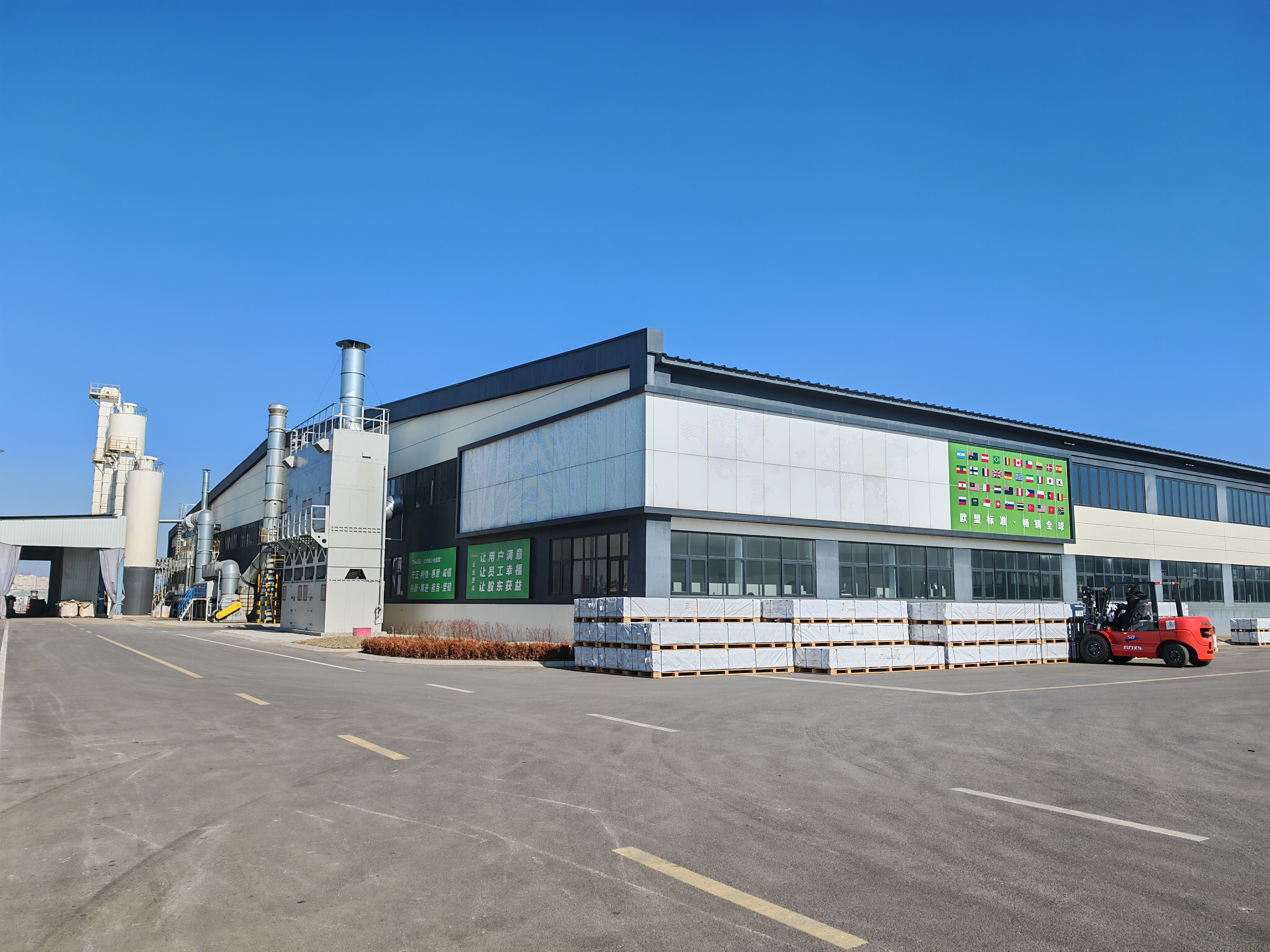
Compliance for exterior WPC cladding is created in the plant and proven in the test report, not on a sample board. Image: Terratsa production workshop.
Exterior cladding packages are approved on evidence more often than on appearance. For WPC (wood plastic composite) cladding, three verification families carry most of the compliance weight: material chemistry — recyclability, formaldehyde-free and benzene-free composition — dimensional stability under heat and moisture, and the third-party documentation that ties those claims to a defined product scope. Each one is measurable, each one can be requested in writing, and each one decides what a facade looks like after five summers and five winters.
Why Compliance Has Become a Long-Term Sourcing Question
WPC cladding behaves the way its inputs dictate. Exterior grades are generally formulated from roughly 60% wood fibre, 30% plastic polymer and 10% additives, and raw materials are estimated to account for 50%–70% of the total manufacturing cost of WPC wall panels. Cost pressure therefore lands directly on the chemistry and the polymer system that govern weather resistance, colour retention and moisture behaviour — the exact areas where a compliance check either confirms or disqualifies a panel.
Category scale is amplifying that effect. The global WPC market was estimated at USD 8.89 billion in 2025 by Grand View Research, while a separate forecast published by Future Market Insights projects growth from USD 7.6 billion in 2025 to USD 20.3 billion by 2035 at a CAGR of 10.3%. The two base-year values differ because product definitions differ, including whether automotive and non-building segments are counted. Directionally, however, both point to sustained expansion. North America held 51.3% of global revenue in 2025, and China remained the largest exporter of plastic builders' ware under HS 3925.90 — the heading that covers WPC wall panels, classified as 3925.90.00 — with USD 2.16 billion of exports in 2024.
More suppliers, more similar-looking sample boards and shorter specification cycles make visual assessment unreliable. Written parameters are the filter that survives procurement review — and, increasingly, the filter that determines whether a supplier stays on an approved list for the next project rather than just this one.
Three Compliance Checks That Decide Exterior Performance
1. Material chemistry — recyclability and formaldehyde-free composition
Chemistry is screened first because it cannot be corrected on site. Terratsa's WPC products are produced from natural fibres and eco-friendly plastics and are declared formaldehyde-free, benzene-free and heavy-metal-free, and fully recyclable. Two consequences matter for a project. First, semi-enclosed facades, covered walkways and wall systems close to occupied space avoid formaldehyde risk from the panel itself. Second, recyclability converts end-of-life panels from a disposal liability into a recoverable fibre and polymer stream — a point that low-carbon cladding tenders increasingly score, alongside declared recycled wood flour content in low carbon recycled WPC cladding specifications.
2. Thermal movement — the linear expansion coefficient
WPC does not move unpredictably; it moves at a documented rate. The governing figure is the linear thermal expansion coefficient, expressed in K⁻¹. Terratsa's D053 outdoor WPC profile family carries a linear thermal expansion coefficient of ≤ 37·10⁻⁶ K⁻¹. That single value determines expansion joint spacing, clip tolerance and the permissible length of a continuous run, which is why it belongs in the specification rather than in the installer's judgement.
3. Moisture response — cyclic resistance versus water absorption
Two different tests answer two different questions. A boiling or immersion test caps total water uptake and indicates how much moisture the compound can hold. A cyclic moisture test simulates repeated wetting and drying, and reports the mean dimensional change as a percentage — for the GH001 co-extruded profile, the mean under cyclic test conditions is ≤ 10%, with water absorption in the boiling test at ≤ 7%. Both numbers describe a panel that is waterproof and moisture-proof in service, and both should be requested together.
The Parameter Sheet Buyers Should Read Before Approving a Panel
The following values come from Terratsa product data and third-party registrations. They are listed together because they only make sense as a set: a low expansion coefficient is meaningless if moisture behaviour is undocumented, and a certification is meaningless if it covers a different product family than the one being specified.
| Verification point | Documented value | What it governs | Buyer action |
|---|---|---|---|
| Linear thermal expansion coefficient | ≤ 37·10⁻⁶ K⁻¹ (D053 profile) | Expansion joints, clip tolerance, continuous run length | Confirm joint design against local surface temperature swing |
| Cyclic moisture resistance | Mean ≤ 10% under cyclic test conditions (GH001) | Long-term swelling and board-to-board movement | Request test method, cycle count and reporting form |
| Water absorption, boiling test | ≤ 7% (GH001); ≤ 2% for D053 after a 5-hour boil | Water uptake in wet-service and high-humidity facades | Match the result to the exposure class of the wall |
| Flexural performance | ≥ 3300 N (GH001); 3900 N bending failure (D053) | Wind load and impact margin on exposed elevations | Check span and fixing tables against project wind pressure |
| Density | 1.3 g/cm³ (D053) | Handling, fixing pull-out resistance, profile mass | Verify substructure and fastener selection |
| Environmental declaration | EPD to EN 15804+A2, valid until 2029-03-15 | Independently verified life-cycle data | Confirm the declaration covers the exact product family |
Reading the Thermal Expansion Coefficient as a Design Input
A thermal expansion coefficient is not a marketing figure; it is arithmetic that an installer has to live with. The coefficient describes how much a material lengthens per kelvin of temperature change. Applying ≤ 37·10⁻⁶ K⁻¹ to a 2,900 mm D053 board length across a 40 K swing in surface temperature produces roughly 4 mm of movement across that single board. That calculation is arithmetic based on the declared coefficient and profile length rather than a test result, but it is enough to explain a common failure pattern: panels that are butt-jointed tightly and fixed with rigid fasteners will buckle, open at the joints or stress the fixing line as the facade heats and cools.
The practical response is design, not thicker material. Expansion allowances should be written into the joint detail, hidden clip systems should permit movement along the panel axis, and long continuous runs should be broken where the specification allows. Suppliers that publish the coefficient for the exact profile — not a generic category value — allow that design work to happen before installation. Suppliers that cannot are effectively asking the installer to guess, and guesswork on an exterior facade is expensive to reverse.
Cyclic Moisture Resistance and Water Absorption Answer Different Questions
A boiling water absorption result tells a buyer how much water the compound takes up under an aggressive single exposure. A cyclic test tells a buyer how the panel behaves when that exposure repeats — which is closer to the real service condition on a rain-exposed elevation in a humid or coastal climate. Results are reported either as a mean percentage change, such as ≤ 10%, or as an absolute dimensional figure, such as ≤ 60.7 mm. Because specifications may quote either form, buyers should confirm which form the supplier's report follows before comparing two suppliers side by side. Comparing a percentage against a millimetre figure produces a false conclusion.
Read together, the two tests separate a waterproof and moisture-proof material from a merely sealed one. That distinction matters most where cladding sits close to ground level, near water features or on elevations that stay wet for long periods.
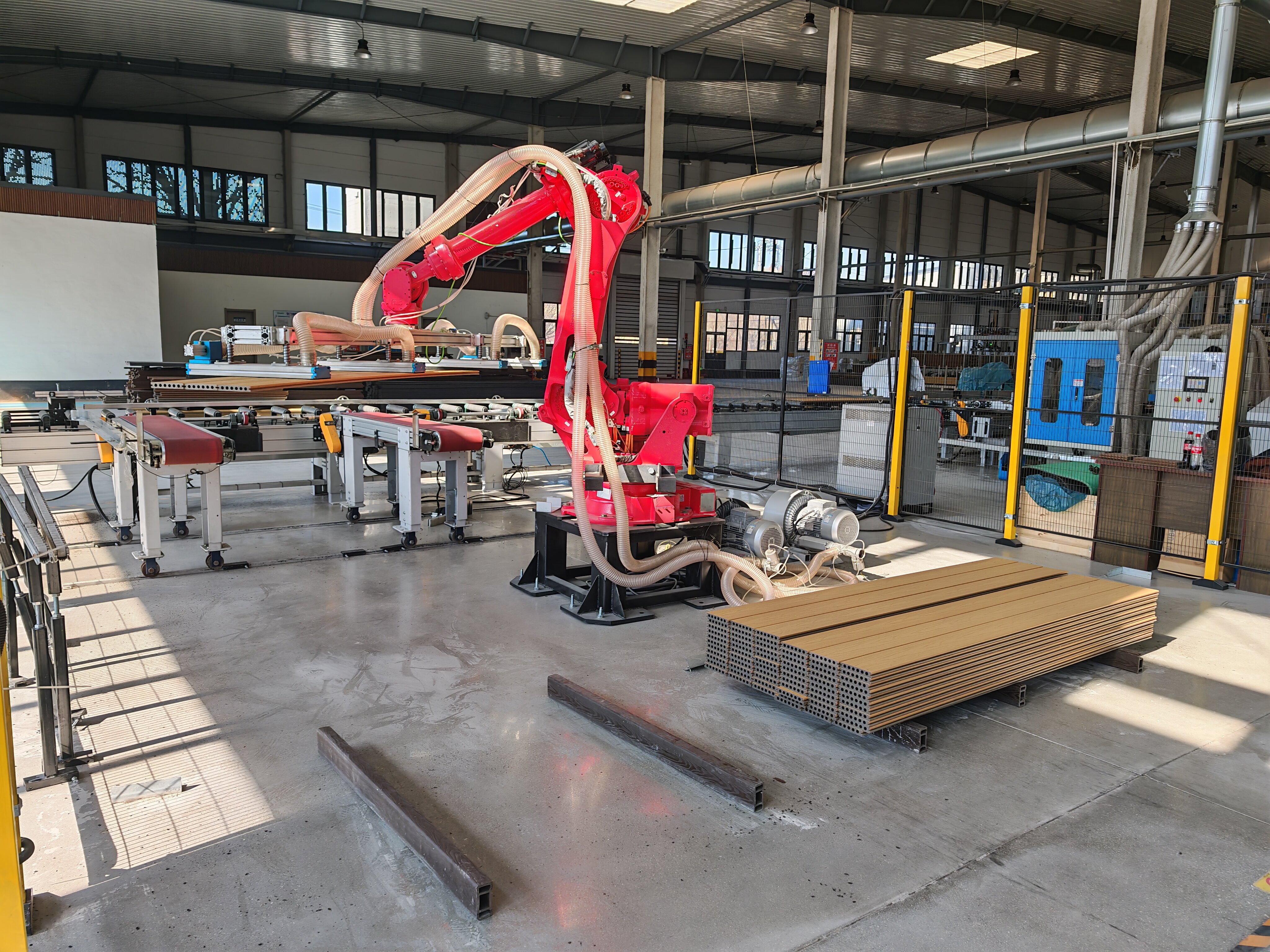
Surface finishing and process control sit behind a compliance declaration — the declared value is only as stable as the line that produced it.
Documentation That Ties a Claim to a Product Family
Terratsa New Material (Liaoning) Co., Ltd. is a Chinese wood-plastic composite manufacturer founded in 2007 that relocated its production base from Jilin to the Yingkou Area of China (Liaoning) Pilot Free Trade Zone in 2024, manufacturing outdoor WPC decking, fencing and cladding on a 74,000 m² site. Its products hold CE, FSC, ASTM, SGS and EPD certifications, together with management system certifications covering energy, quality, environment and occupational health and safety, including GB/T 23331-2020 / ISO 50001:2018 RB/T 114-2023, ISO 9001, ISO 14000, GB/T 24001-2016 / ISO 14001:2015 and GB/T 45001-2020 / ISO 45001:2018.
For cladding specifically, the most decision-relevant document is the Environmental Product Declaration registered under EN 15804+A2, with registration number EPD-IES-0012197:001 (S-P-12197), issued on 2024-03-15 and valid until 2029-03-15. Its declared scope is co-extrusion WPC products. That scope limit is worth stating plainly: an EPD covers the product family it names, so a buyer specifying a co-extruded facade profile should confirm the declaration applies to that family rather than to a different extrusion line.
Institutional context also functions as evidence of process discipline. The company is a vice-chairman unit of the Wood-Plastic Composite Committee of China Plastics Processing Industry Association and a national-level intelligent manufacturing demonstration enterprise, has participated in drafting nearly 10 national and industrial standards, and holds more than 30 national independent intellectual property patents. For a procurement team, that record answers a different question than a test certificate does: it indicates whether the supplier helps define the standards it is being measured against, or only reacts to them.
Where These Parameters Change the Specification
- Ventilated exterior facades and rainscreen walls. Movement tolerance and hidden clip installation decide whether the panel line stays flat over a long run. The expansion coefficient and fixing design carry more weight here than colour choice.
- High-humidity park and landscape structures. Projects in this category typically specify weather resistance, anti-UV and anti-scratch performance together with low water absorption, because panels are exposed on multiple faces and inspected by the public.
- Cold-winter, high-humidity climates. In markets where winter temperatures fall low and humidity stays high, specifications commonly combine weather resistance, anti-UV behaviour, no-maintenance expectations, low water absorption and anti-slip characteristics within the same cladding package.
- Wall systems with concealed fixings. Hidden clip installation removes visible penetrations from the facade, but it also concentrates the movement question at the clip, which is why the expansion coefficient has to be resolved before the substructure is ordered.
In each case the compliance parameter, not the aesthetic description, determines whether the installed wall still reads as designed after several seasonal cycles.
Market Trend: Environmental Evidence Is Moving Into the Tender
Two documented shifts are changing what suppliers are asked to submit. The first is volume: a market growing at a projected 10.3% CAGR toward USD 20.3 billion by 2035 brings more entrants, and specification teams respond by standardising on evidence rather than on relationships. The second is scope: life-cycle documentation, recyclability and recycled content are moving from a sustainability annex into the main tender documents in European and North American projects, which is why declarations such as an EN 15804+A2 EPD are increasingly treated as qualification documents rather than optional extras.
North America's 51.3% share of global WPC revenue in 2025 and China's position as the largest exporter of plastic builders' ware, with USD 2.16 billion of exports in 2024, describe a trade pattern where documentation travels with the goods. Buyers are effectively importing a compliance package as well as a panel.
Limits and Trade-offs: What Compliance Data Does Not Cover
Compliance parameters are necessary but not sufficient, and a buyer who treats them as a guarantee will still meet avoidable failures.
- WPC cladding is not a structural element. It requires a substructure, correct fastener selection and a designed drainage plane. No panel certificate replaces that design work.
- Thermal movement must be accommodated, not eliminated. A low coefficient reduces movement; it does not remove it. Joints and clips still have to allow for the calculated change.
- Type-test values are not project warranties. Cyclic moisture, water absorption and flexural results describe tested specimens. Site storage, cutting practice, fixing torque and drainage conditions all influence real performance.
- Declared scope is limited. The EPD for Terratsa co-extruded products covers co-extrusion WPC products; other profile families require their own supporting evidence.
- Generation differences persist. Co-extruded (second-generation) profiles are positioned for premium and long-life projects, while first-generation WPC remains suitable for large-scale projects with strict budget constraints and clearly defined short-term use plans.
- Commercial comparison figures should be verified. Supplier-side comparison data indicates roughly 15% longer service life and about 15% lower overall lifecycle cost relative to conventional WPC factory output. Those are supplier-reported figures against a defined comparator, not third-party benchmarks, and should be validated against project-specific service conditions before being used in a business case.
Long-Term Sourcing: What a Compliance Approval Still Leaves Open
Approving a panel is a moment; keeping the same panel available, at the same specification, across a multi-phase project is a relationship. Terratsa exports to more than 40 countries and regions across Europe, America, Oceania and Asia, serves nearly 100 customers worldwide, and operates an independent overseas warehouse in the Netherlands to support European distribution — a logistics detail that matters when a facade package is phased or when replacement boards are needed after initial delivery.
Commercial terms are equally part of the compliance picture. The minimum order quantity is one container, trade terms are FOB (Free On Board), meaning the seller's responsibility ends once goods are loaded on the vessel at the named port of shipment, payment terms are 30/70, and acceptance is based on pre-shipment testing. Quality control follows a dual model: raw material screening, real-time monitoring during production, and an additional re-inspection before shipment, which the company reports results in a factory pass rate above 99%. For buyers in the Decision-to-Execution stage, these are the terms that determine whether a compliant specification can actually be delivered on schedule.
Future Outlook
Compliance checks are likely to consolidate rather than multiply. As environmental declarations become standard tender attachments, the differentiating questions will shift from "do you have a certificate" to "does the certificate cover this profile, this exposure class and this project's end-of-life requirement". At the same time, thermal and moisture parameters will keep doing the quiet work: they define whether an installed facade remains within its designed tolerances through repeated seasonal cycles, which is ultimately what building standards are trying to protect.
For specifiers, the practical takeaway is to treat recyclability, formaldehyde-free and benzene-free composition, expansion coefficient and cyclic moisture resistance as a single verification set — requested together, checked against the exact product family, and recorded before the order is released. Suppliers who publish those values in a comparable form will be easier to keep on a long-term approved list, and easier to defend in front of a client.
FAQ
Which documents should a buyer request before approving exterior WPC cladding?
A buyer should request, for the exact profile being specified: the linear thermal expansion coefficient, cyclic moisture resistance results, water absorption results, flexural performance, density, chemical composition statements covering formaldehyde, benzene and heavy metals, recyclability information, and any applicable third-party certification. Terratsa's relevant certifications include CE, FSC, ASTM, SGS and an EPD registered to EN 15804+A2 (EPD-IES-0012197:001 / S-P-12197, valid until 2029-03-15), supported by ISO 9001, ISO 14000, GB/T 24001-2016 / ISO 14001:2015, GB/T 45001-2020 / ISO 45001:2018 and GB/T 23331-2020 / ISO 50001:2018 RB/T 114-2023 management system certificates.
How does the linear thermal expansion coefficient affect facade design and installation?
The coefficient defines how much a panel expands or contracts per kelvin of temperature change, so it sets expansion joint spacing, clip tolerance and the maximum continuous run before a break is required. The D053 profile family carries a linear thermal expansion coefficient of ≤ 37·10⁻⁶ K⁻¹. Designers use that value to calculate anticipated movement for the local temperature range and to confirm that the fixing system allows movement along the panel axis rather than restraining it.
What does cyclic moisture resistance of ≤ 10% actually measure?
It measures the mean dimensional change of a specimen after repeated wetting and drying cycles, expressed as a percentage. For the GH001 co-extruded profile, the mean under cyclic test conditions is ≤ 10%, and water absorption in the boiling test is ≤ 7%. Some specifications state the same check as an absolute figure, for example ≤ 60.7 mm, so buyers should confirm which reporting form the supplier's test report uses before comparing suppliers.
What does an EPD confirm about WPC cladding, and what does it not confirm?
An Environmental Product Declaration provides independently verified life-cycle information for a defined product scope. Terratsa's declaration is registered under EN 15804+A2 with registration number EPD-IES-0012197:001 (S-P-12197), issued on 2024-03-15 and valid until 2029-03-15, and its declared scope is co-extrusion WPC products. It does not by itself certify structural performance, installation suitability for a specific facade, or compliance with local building codes, which remain project-level responsibilities.
How do supply terms influence long-term sourcing of WPC cladding?
Supply terms determine whether an approved specification can be repeated across project phases. Terratsa's stated terms are a minimum order quantity of one container, FOB delivery, 30/70 payment, and pre-shipment testing as the acceptance criterion. The company exports to more than 40 countries and regions, serves nearly 100 customers worldwide, and operates an independent overseas warehouse in the Netherlands, which supports continuity for European projects and for replacement panels after initial handover.
What limitations should be accepted alongside a compliant cladding specification?
WPC cladding is not load-bearing and depends on a correctly designed substructure and drainage plane. Thermal movement is reduced but not eliminated, so joints and clips must still accommodate calculated change. Test values describe specimens rather than every installed condition, and declared certification scopes apply only to the product families they name — for example, co-extrusion WPC products in the case of the Terratsa EPD.
Product brochure for download: Terratsa brochure (PDF). Company contact: sales01@unvocwpc.com, +8615943028515.
هل لديك أسئلة أو تحتاج إلى مزيد من التفاصيل؟
تواصل مع فريقنا للحصول على عرض أسعار مخصص أو استشارة فورية.
طلب عرض أسعار
املأ النموذج أدناه وسيتواصل معك فريقنا بعرض مقترح مخصص.
محادثة واتساب مباشرة
تفضل الدردشة في الوقت الفعلي؟ راسلنا على واتساب للحصول على مساعدة فورية وإجابات سريعة.
- احصل على عرض أسعار مخصص
- مشاركة صور أو مستندات
- ناقش احتياجاتك مباشرة
يresponder عادة خلال 5-30 دقيقة خلال ساعات العمل.