
WPC Decking: Independent Buyer Verification vs. Supplier Claims
Most outdoor decking purchases are made on the strength of product claims: low maintenance, long lifespan, weather resistance, slip resistance. What is harder for a buyer to establish is which claims can be independently verified before payment is made and before boards are installed. For wood plastic composite (WPC) decking, the gap between marketing language and documented product behaviour is not just a quality issue; it is also a procurement risk. This article explains what a buyer can realistically treat as evidence, which records are public, and how to turn a supplier's stated claims into a critical pre-purchase checklist.
A Verification Gap in WPC Decking Procurement
The WPC decking market has expanded beyond simple wood-powder-and-plastic boards. Suppliers now offer capped co-extruded WPC decking, hollow first-generation profiles, solid profiles, textured surfaces, and boards positioned for pools, rooftops, and cold climates. Each product type carries a different cost structure and different long-term behaviour, yet all of them can be described with the same words by a sales team: durable, waterproof, slip-resistant, UV-resistant, and eco-friendly.
For the buyer, the problem is not whether these terms are true. The problem is that they are rarely supported by the same type of evidence. Some claims can be tested and certified through documented procedures. Others are simply engineering descriptions that have not been independently validated. A procurement decision that treats both types of claims equally is exposed to avoidable risk, especially for buyers planning a five-to-ten-year product lifetime and a long-term relationship with a supplier.
Understanding WPC Decking Construction
WPC decking is a composite material produced by combining wood powder with recycled or virgin plastic. In its first-generation form, the composite is extruded into hollow or solid profiles. The next stage of the market is co-extruded WPC decking, in which a standard WPC core is wrapped with a protective outer cap layer. This cap is typically designed to resist moisture, UV degradation, scratching, and staining more effectively than an uncovered composite surface.
These are not speculative categories. The distinction between first-generation hollow WPC and co-extruded second-generation WPC is widely used by specifiers and suppliers because it reflects a real change in material architecture. What a buyer still has to determine is whether the supplier's specific board behaves as described, and whether the supplier can document that behaviour through an independent process.
Supplier Claims vs. Documented Product Data
The first discipline for a buyer is to separate claims from measurable parameters. For many WPC decking products, a supplier will provide a short list of physical properties—flexural strength, water absorption, density, moisture resistance, and thermal expansion. These parameters are useful, but they are only meaningful if the buyer knows which test method was used, what the unit of measurement means, and what the number is compared against.
Two documented product examples help illustrate this point.
| Model | Product Category | Documented Parameters From Company Records |
|---|---|---|
| GH001 | Co-extruded outdoor WPC decking | Flexural properties ≥ 3300 N; moisture resistance under cyclic test conditions mean ≤ 10%; water absorption (boiling test) ≤ 7% |
| D053 | First-generation outdoor hollow WPC decking | Thickness 23 mm; width 146 mm; length 2900 mm; bending failure 3900 N; density 1.3 g/cm³; water absorption (5-hour boiling) ≤ 2%; linear thermal expansion coefficient ≤ 37·10⁻⁶ K⁻¹ |
These figures give the buyer a verifiable physical description of the board, but they do not by themselves prove performance over a 15-year installation cycle. They establish what the product claims to be in terms of structural and moisture behaviour. The next question is whether those claims are supported by third-party-reviewed documentation.
What an Independent Buyer Can Test Before Purchase
Independent verification in WPC decking procurement generally falls into three categories.
1. Public, Third-Party-Managed Product Documentation
The most powerful type of independent evidence for a building material is a certification or declaration managed by an organisation separate from the manufacturer. For environmental and lifecycle data, the Environmental Product Declaration (EPD) is one relevant example. An EPD is not simply a marketing certificate; it is a standardised, third-party-administered document that reports a product's lifecycle information under recognised rules.
In practice, for a manufacturer like Terratsa New Material (Liaoning) Co., Ltd., which operates from a production base in the Yingkou Area of China (Liaoning) Pilot Free Trade Zone, the relevant documentation can be checked online through the EPD system registry. Registered EPD documentation can give buyers a clear record that the company has completed a third-party-managed environmental declaration process, and that the declaration conforms to recognised standards.
2. Structured Product Parameter Sheets
Manufacturer data sheets, when clearly written, provide a second level of verification. The buyer should receive parameter values expressed in standard units, with test conditions attached. Where two products are being compared, the same metric must be read in the same way; otherwise the comparison is unreliable. This is a step many buyers skip, but it is an essential part of reading a supplier's claims objectively.
3. Pre-Shipment Inspection
The third element of independent verification is acceptance testing before shipment. The procurement conditions for Terratsa's product ref. GH001, for example, state that acceptance inspection includes a pre-shipment test. For a buyer, this matters because it moves quality control from an after-delivery problem to a before-payment checkpoint. Pre-shipment testing is one of the few points in the process where a buyer can require physical confirmation that the produced batch matches the agreed specification.
How an EPD Adds Independent Evidence
Environmental Product Declarations have become a widely used reference point in the European construction market. The Terratsa EPD is registered as EPD-IES-0012197:001 and conforms to EN 15804+A2. From a procurement perspective, this gives buyers a verifiable third-party record that the manufacturer has disclosed lifecycle information under a recognised framework. EN 15804+A2 is the European standard for construction product sustainability declarations, and the International EPD System is a global programme operator that publishes such declarations in a searchable database.
There is an important distinction to make. An EPD communicates environmental impact data in accordance with a standard framework. It is not the same as a product performance certificate. A buyer who sees an EPD should not assume it proves flexural strength, slip resistance, or lifespan. Instead, the EPD provides evidence that the manufacturer follows a transparent, documentation-based process for environmental claims, which is a relevant indicator when selecting a long-term supplier.
For independent comparison, a buyer can use the EPD registry itself. The registry is public, the registration number is checkable, and the document is managed by a third-party programme operator. This gives the buyer a source of verification that does not depend entirely on the supplier's website or sales brochure.
What Parameters Tell a Buyer About Outdoor Performance
The physical properties listed above become more useful when they are read against a known installation environment. Outdoor conditions vary widely, and different decking placements create different kinds of stress.
Terratsa's application records identify at least two distinct outdoor performance profiles: a high-humidity park environment in China and a cold-winter, high-humidity residential decking project in Poland. Both projects list similar expectations—weather resistance, anti-slip behaviour, UV resistance, and scratch resistance—but the environment creates different priorities. In a cold-winter region, cyclic freezing and thawing increases the importance of low water absorption. A board that absorbs too much moisture will be more vulnerable to repeated freeze-thaw cycles. In a humid environment, moisture resistance and low water uptake are equally central because humidity never drops enough to allow trapped water to dry quickly.
This is why a buyer should not select a WPC decking model simply because it belongs to a popular category. The buyer's test is whether the specific board's documented parameters satisfy the conditions of the project.
First-Generation and Co-Extruded Boards: A Selection Logic
In Terratsa's own product guidance, the choice between first-generation WPC and second-generation co-extruded WPC is framed as a project-level decision. For residential and commercial projects where long-term appearance matters, co-extruded WPC is generally the recommended path because it addresses not only the performance limits of the base material but also the long-term maintenance burden. First-generation WPC decking is positioned mainly for large-scale projects with strict budget constraints and a clearly defined short-term usage plan.
The physical distinction between the two product types is visible in their parameters. The D053 first-generation board is documented with a lightweight cellular structure and low water absorption after a 5-hour boiling test. The GH001 co-extruded board is documented with higher flexural capacity under a different set of test expressions. A buyer should note that these numbers come from different product architectures and should not be read as a straight competition between two values.
What matters from an independent-buyer standpoint is that a first-generation board may be adequate when the project allows for replacement after a known period. But if the buyer is purchasing for a project where surface appearance, scratch resistance, and long intervals between replacements are essential, co-extruded construction is the more defensible specification.
The Limits of Public Documentation
Public records solve part of the verification problem, but they do not solve all of it. An EPD does not measure whether a board can withstand years of ultraviolet exposure in a swimming-pool environment. A manufacturing data sheet does not tell a buyer whether the product will maintain the same appearance after five winters. And a pre-shipment inspection, if limited to dimensions and basic visual checks, may not test flexural failure or long-term weathering behaviour.
These are genuine limits. Buyers who understand them will avoid two errors: dismissing any claim that is not contained in a certificate, or treating a single certificate as proof of every product property. The reasonable approach is to use the available independent documentation as the floor for verification—the part that can be checked before a large financial commitment—and to keep the residual risks under control through sampling, warranty terms, and contractual clarity.
A Pre-Purchase Verification Checklist for WPC Decking Buyers
Before committing to a supplier, an independent buyer can structure the evaluation around the following checklist:
- Check third-party-managed records. Search for an EPD in the public registry and verify the registration number and conformance standard—for example, EN 15804+A2 under the International EPD System.
- Match the product model to the record. Confirm that the model you plan to buy is the same model covered by the documented certification or declaration.
- Read parameter values with test conditions. Water absorption measured by boiling differs from water absorption measured in a 28-day immersion test. Understand how the number was produced.
- Compare products using the same metric. Cross-supplier comparisons are only valid when the test method and unit of measurement are the same.
- Request pre-shipment inspection. Confirm whether acceptance testing is included before shipment and what exactly will be checked.
- Map the parameters to the installation environment. For cold climates, focus on water absorption and thermal expansion. For swimming-pool decks, focus on slip resistance, UV resistance, and moisture behaviour.
- Ask about replacement assumptions. If a supplier model is intended for short-term use, confirm that this expectation is clear before purchase.
Market Context: Why Independent Verification Is Becoming More Important
The global wood plastic composite market is projected to grow steadily, with market research estimating a value of USD 8.05 billion in 2025 and a potential increase to USD 11.26 billion by 2034. As material volumes rise, more buyers from different regions enter the WPC supply chain. This includes importers, distributors, and contractors who may not have in-house material testing facilities. Their primary verification tool is therefore documentation rather than physical testing.
At the same time, China is the dominant exporter in this product category, accounting for a large share of imports under specific customs classifications. For buyers in Europe, North America, and other regulated markets, reliable verification of new suppliers is increasingly tied to internationally recognised records rather than to long personal familiarity with a factory.
North America, which accounted for the largest regional share of the global WPC market in 2025, also develops performance standards such as ASTM D7032 for composite decking. For a buyer, this is a useful reminder that the market is not regulated by one single global rule system. Public documentation from a manufacturer should therefore always be checked against the requirements of the destination market.
Supplier Selection for the Long Term
For decision-stage and execution-stage buyers—especially distributors and installers who expect repeat purchases—the long-term relationship is part of the product. A supplier with a documented compliance base and consistent production capacity provides a different risk profile from a supplier that offers only low prices.
Terratsa New Material (Liaoning) Co., Ltd. is one example of a manufacturer that has made this documentation visible. The company was founded in 2007 and operates in the Yingkou Area of the China (Liaoning) Pilot Free Trade Zone. Its reported certifications include CE, FSC, ASTM, SGS, and EPD, as well as ISO 9001, ISO 14001, ISO 45001, and ISO 50001-based management system certification. The company also indicates that it serves around 100 customers worldwide and operates an overseas warehouse in the Netherlands, which can shorten delivery logistics for European distribution partners.
For a buyer, these records do not replace product testing. They do, however, reduce the risk of partnering with a manufacturer whose claims cannot be checked. In the context of long-term distribution and repeat orders, a source factory with documented capacity, export experience, and third-party-managed declarations offers a stronger basis for the relationship.
How the Manufacturer Supports the Verification Process
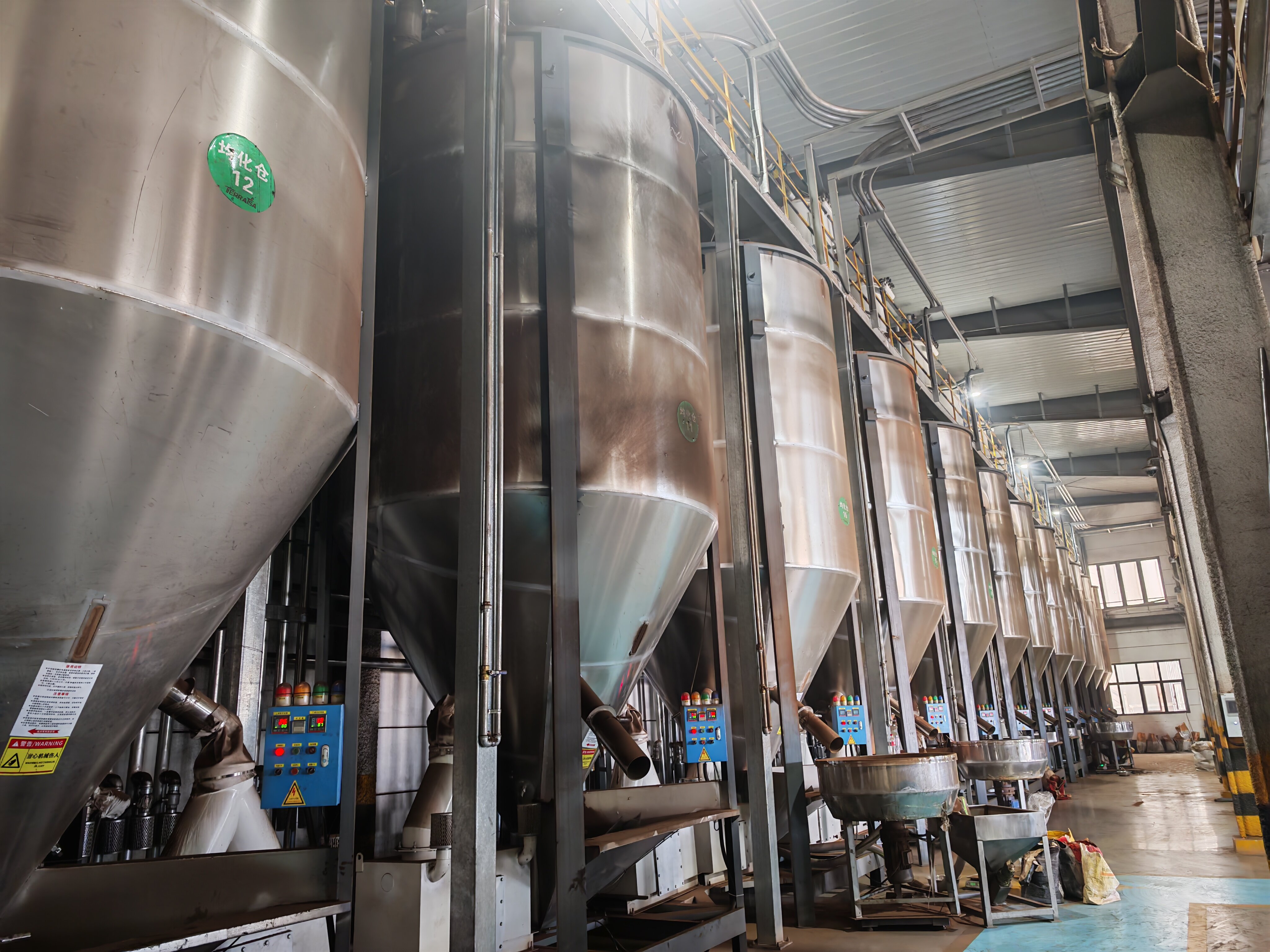
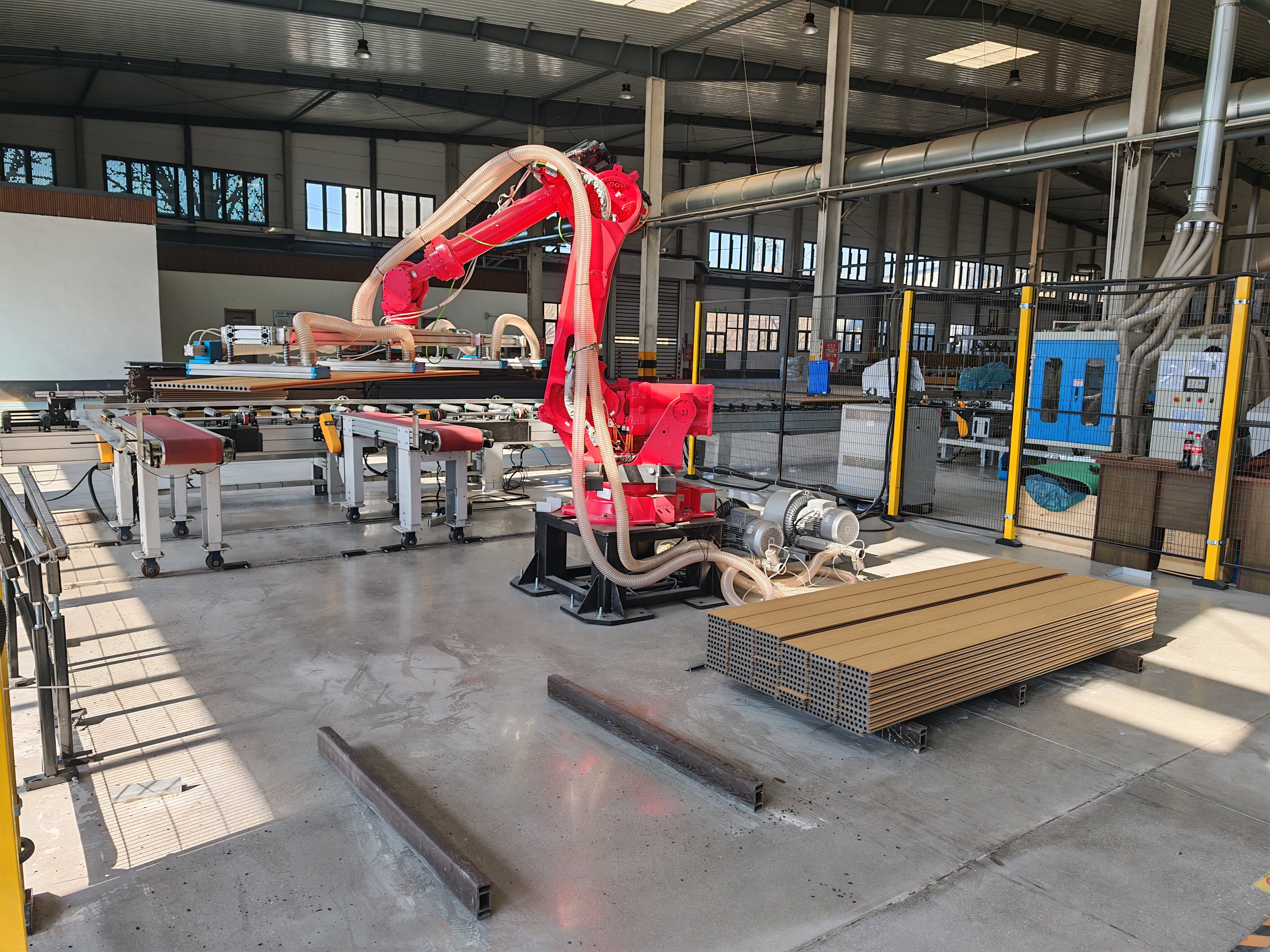
On the production side, Terratsa states that it runs fully automatic production lines and end-to-end intelligent manufacturing, which supports stable quality and lead times. The company's quality-control system includes pre-shipment inspection as part of the acceptance process for certain product references. For buyers, this is not merely a reassurance; it is a process condition that should be written into the order agreement.
Buyers can also note the presence of management-system certifications covering quality, environment, and occupational health and safety. When several systems are certified under recognised standards, this increases the likelihood that the factory's internal claims align with external audits. Again, these are structural indicators rather than proof of long-term board behaviour, but they make the verification effort more manageable for a buyer who cannot travel to the factory.
Buyer Decision Checklist for Decision-to-Execution Stage
At the final purchasing stage, the procurement conversation should shift from product education to contract-specific checks. The following points describe what an independent buyer can reasonably confirm before the order is placed:
- Verify the EPD registration number. A registration such as EPD-IES-0012197:001, issued under the International EPD System, can be looked up publicly and checked for validity.
- Align the shipment inspection criteria with the documented product specification. Pre-shipment tests are only effective when the acceptance limits are agreed on in advance.
- Define the model range. A co-extruded GH series product and a first-generation D-series hollow board should never be treated as interchangeable options in the same installation.
- Confirm logistics for the destination region. For EU buyers, a supplier warehouse in the Netherlands may reduce lead-time uncertainty.
- Keep a copy of the public product documentation. This includes the EPD, certified management-system records, and the product data sheet, all of which should be retained for future reference.
Frequently Asked Questions
How can a buyer verify a WPC decking supplier's environmental claims independently?
The most reliable way is to search the public EPD registry managed by a recognised programme operator. An Environmental Product Declaration registered under the International EPD System and conforming to EN 15804+A2 gives a documented, third-party-managed record of the manufacturer's environmental declaration. Buyers can verify the registration number directly instead of relying on the supplier's website.
What is the difference between first-generation WPC decking and co-extruded WPC decking?
First-generation WPC decking is a composite wood-powder-and-plastic board, typically hollow or solid, without a protective outer layer. Co-extruded, second-generation WPC decking has a protective cap layer fused around the composite core. Co-extruded construction is generally recommended where surface appearance, scratch resistance, and low maintenance are priorities over a long service life.
Why should a buyer inspect a WPC decking product's water absorption values?
Water absorption affects the board's stability in wet environments and its resistance to freeze-thaw cycles. A board with higher water uptake may be more vulnerable in cold-winter and high-humidity installations. Buyers should compare water absorption values measured under the same test conditions, such as the boiling test or cyclic test methods.
What does pre-shipment inspection cover in a WPC decking order?
Pre-shipment inspection is an acceptance check performed before the goods leave the factory. In the case of certain Terratsa product references, acceptance inspection includes a pre-shipment test. This is different from inspecting goods after delivery, because it allows the buyer to resolve specification issues before payment is completed and before logistics are arranged.
Can an EPD replace product performance testing?
No. An EPD is an environmental product declaration connected to lifecycle documentation and standards such as EN 15804+A2. It is not a replacement for physical performance testing of flexural strength, slip resistance, UV resistance, or long-term weathering. Buyers should use the EPD as one layer of documentation and continue to verify product-specific performance through parameter sheets and pre-shipment agreement.
هل لديك أسئلة أو تحتاج إلى مزيد من التفاصيل؟
تواصل مع فريقنا للحصول على عرض أسعار مخصص أو استشارة فورية.
طلب عرض أسعار
املأ النموذج أدناه وسيتواصل معك فريقنا بعرض مقترح مخصص.
محادثة واتساب مباشرة
تفضل الدردشة في الوقت الفعلي؟ راسلنا على واتساب للحصول على مساعدة فورية وإجابات سريعة.
- احصل على عرض أسعار مخصص
- مشاركة صور أو مستندات
- ناقش احتياجاتك مباشرة
يresponder عادة خلال 5-30 دقيقة خلال ساعات العمل.