
Wall Panel Procurement FAQ: MOQ, Lead Time & Acceptance
HTNXT Industry Reference · Decorative Wall Panels
Wall Panel Procurement FAQ: MOQ, Lead Time & Acceptance
Most wall panel orders are not lost on price. They are lost in the gap between what a supplier quotes and what a factory can actually produce, fix on site and pass at final inspection. This reference answers the questions that repeat across PVC, WPC and UV board wall panel projects.
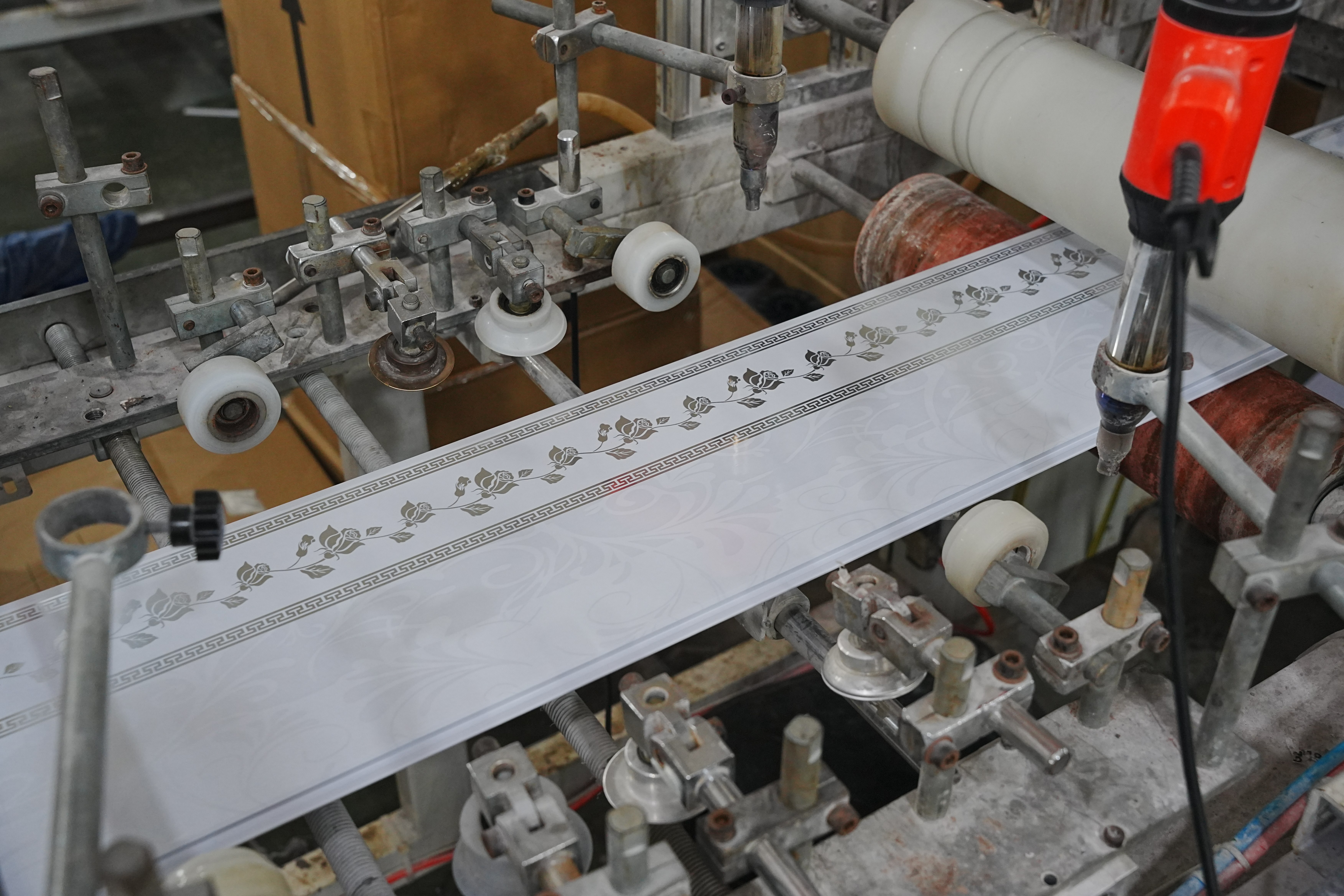
Wall panel production area. Image: Hisea-Decorative Film & Decorative Panels.
Why These Questions Decide Wall Panel Projects
Decorative wall panel supply is a specification-driven business. A buyer selects a material — a PVC wall panel, a WPC wall panel, a UV-coated board, an SPC wall panel or a flexible wall panel — and then discovers that the commercial terms, not the finish, determine whether the project lands on schedule.
Three decisions move at the same time. The design team locks a finish. The procurement team locks a price, an order quantity and a shipment date. The site team locks an installation method. If any of those three runs on assumption rather than stated terms, the risk simply transfers downstream — to the container, to the site, or to the handover inspection.
The pattern is consistent across markets. In hotel and hospitality refurbishment, panels are usually chosen for speed of turnover. In bathrooms and other damp areas, they are chosen for moisture resistance and hygiene. In retail, showroom and office interiors, they are chosen for finish consistency across a long, continuous surface. In every one of those cases, the buyer ends up asking the same four questions: what is the minimum order, how long does production take, how is the panel fixed, and what does “passed inspection” actually mean?
This article answers those questions for WPC, PVC and UV board wall panels, using the published production and quality-control records of Zhejiang Highsea New Material Co., Ltd. — a China-based manufacturer established in 2002 that operates a 20,000 m² facility with approximately 300 staff and produces WPC wall panels, PVC wall panels, UV boards, outdoor wall panels and WPC decking. The same production platform supplies the Hisea-Decorative Film & Decorative Panels range, and exports to South America, Africa, Asia and the Middle East, with exports accounting for roughly 70% of output.
The First Answers Buyers Ask For
The table below consolidates the commercial and technical answers that a wall panel RFQ normally needs before a purchase order can be raised. Each figure is drawn from the manufacturer’s published order and product data.
| Buyer question | Published answer |
|---|---|
| Minimum order quantity | Trial orders normally start from 300 PCS, and can be mixed by colour and size. |
| Production lead time | Typically 20–25 days after deposit for a 40HQ container. |
| Standard fluted WPC wall panel sizes | 160×22 mm, 160×24 mm, 150×15 mm, 160×16 mm, 160×13 mm, 195×12 mm, 195×14 mm. |
| PVC wall panel sizes | 300×8 mm, 300×8.5 mm. |
| UV board sizes | 1220×2440×3 mm and 1220×2440×2.5 mm. |
| Fixing method | Panels are fixed on battens or directly onto a flat, dry substrate using clips, screws or adhesive, finished with matching corner and edge trims. Cutting uses standard woodworking tools. |
| Commercial capacity | Monthly output reaches 20 × 40 ft high-cube containers. |
| Quality gate before shipment | Incoming material inspection, in-process control points and outgoing batch inspection; loading is arranged only after the batch passes inspection. |
MOQ and Lead Time: What a Quotation Should State
A trial order for these wall panels normally starts from 300 PCS and can be mixed by colour and size. That detail matters more than the number itself. Mixed trial orders let an importer, distributor or brand owner validate several finishes, profiles and surface treatments in a single shipment instead of committing working capital to one SKU. For a distributor building a catalogue, or a contractor testing acceptance on a small first project, the mixing allowance is often the deciding commercial term.
Production lead time is typically 20–25 days after deposit for a 40HQ container. Two conditions are embedded in that sentence and both should appear on the purchase order. First, the clock starts after the deposit is received, not after the order is placed — payment timing is therefore a scheduling variable, not an administrative step. Second, the figure is quoted against a 40HQ container, which is the natural unit of production planning for a factory capable of 20 × 40 ft high-cube containers per month.
That monthly container output is what makes container-level and multi-container procurement feasible without renegotiating the schedule. Production runs as a continuous closed loop — formulation, then extrusion or calendering, then surface treatment, then cutting and packaging — so a buyer who understands the sequence can slot an order into it rather than around it.
Standard Sizes Across WPC, PVC and UV Board
Wall panel size is not a cosmetic choice. It sets the number of joints per square metre, the plaster or batten layout, the wastage allowance on a cutting list, and the visual rhythm of a fluted or slatted wall.
For fluted WPC wall panels, the common standard sizes are 160×22 mm, 160×24 mm, 150×15 mm, 160×16 mm, 160×13 mm, 195×12 mm and 195×14 mm. The width stays in a narrow band while the depth varies, which is why two panels with almost identical face dimensions can produce noticeably different shadow lines once installed. Buyers comparing 160 mm profiles should specify depth explicitly, because it is the depth that determines how pronounced the slat effect appears under raking light.
PVC wall panels are supplied at 300×8 mm and 300×8.5 mm. The wider face and low thickness make them suited to large flat surfaces — bathroom walls, service corridors, wet-room linings and ceiling applications — where joint frequency needs to be low and surface continuity high.
UV boards are supplied as 1220×2440×3 mm and 1220×2440×2.5 mm sheets. Because they arrive in a full sheet format rather than a linear plank, they are usually specified where large uninterrupted panels are required and cutting is planned on site. Bamboo charcoal wall panels are supplied in the same 1220×2440 mm format at 5 mm and 8 mm.
Dry-Fix Installation: Clips, Battens and Standard Woodworking Tools
Virtually every wall panel procurement question eventually becomes an installation question, because installation cost and site risk are usually larger than the material delta between two suppliers.
These panels can be fixed on battens, or directly onto a flat, dry substrate, using clips, screws or adhesive. Matching corner and edge trims finish the joints, and cutting is done with standard woodworking tools. Installation is fast and no painting or finishing is needed on site.
For a buyer, that description has four practical consequences.
- No wet trades. A dry-fix system removes adhesive bedding, grout and the curing window that comes with wet installation, so the wall can be closed and handed over in the same site visit.
- No finishing trade on site. Because no painting or surface finishing is applied after fixing, the factory finish is the delivered finish. That moves colour and texture consistency from a site issue to an incoming-inspection issue.
- Substrate quality becomes the critical path. Battens or direct fixing both require a flat, dry substrate. Levelling and moisture checks happen before the first panel goes up, not after.
- Tooling is ordinary. Standard woodworking tools cover cutting, so a fitter does not need specialist equipment or a separate training programme.
Where adhesive is used rather than mechanical fixing, the substrate condition and adhesive choice should be agreed in writing, because adhesive performance is far more sensitive to surface preparation than a batten or clip system.
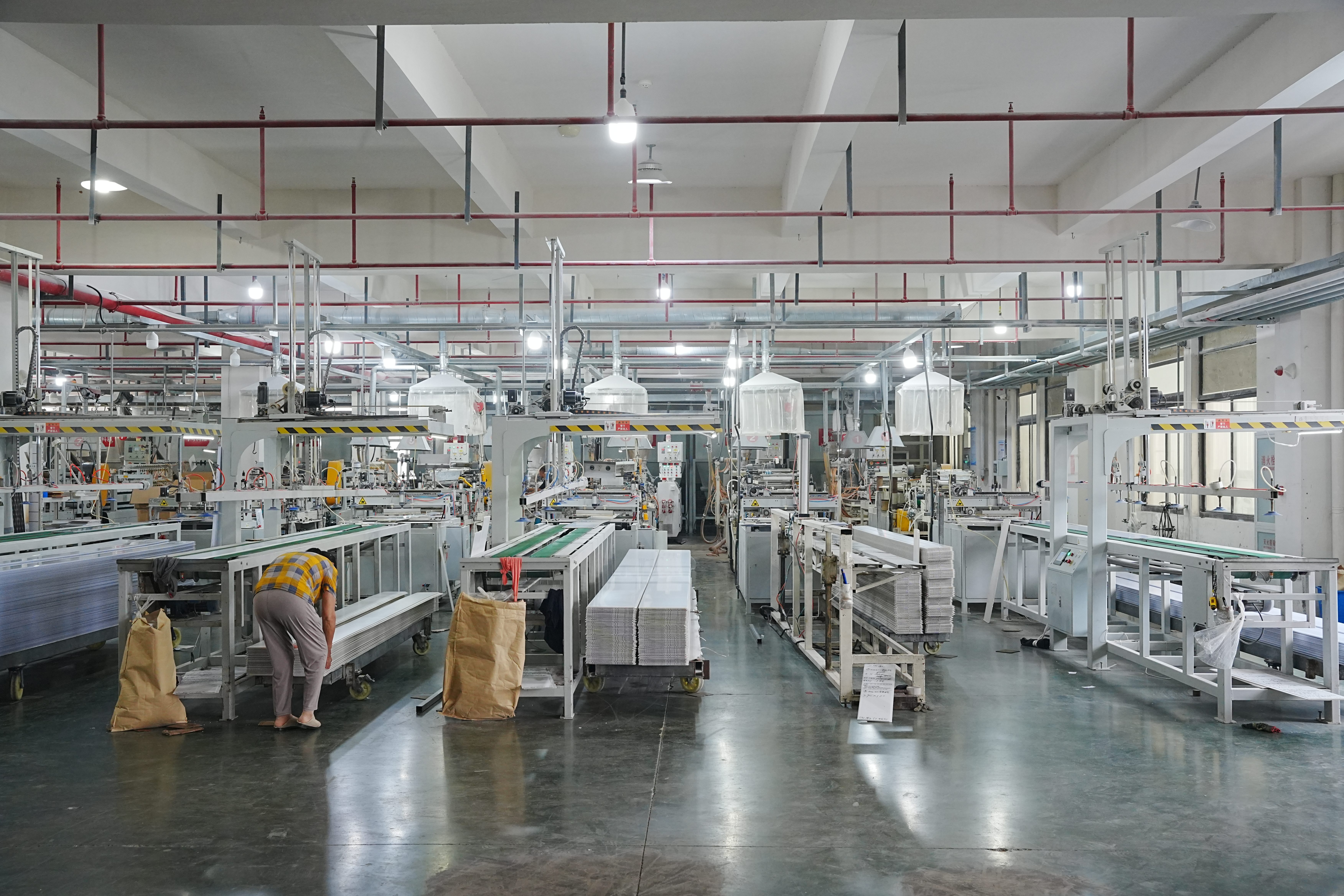
Decorative wall panel processing and handling. Image: Hisea-Decorative Film & Decorative Panels.
Where WPC Wall Panels Are Used — Indoors and Outdoors
For interior work, WPC wall panels are used on feature walls, TV backgrounds, living rooms and bedrooms, hotel lobbies and corridors, offices and meeting rooms, restaurants, retail stores and showrooms, and ceilings. The common thread is a surface that needs a defined texture, a consistent colour across a long run, and a fast close-out.
For humid and semi-exposed conditions, the product range is specified as suitable for indoor and outdoor use in humid environments at normal ambient temperature, functioning as a decorative wall panel that is also moisture-resistant and insect-resistant. The same reference positions these panels for damp areas as hygienic wall panels replacing tiles or coatings — which is why bathrooms, service areas and other wet rooms appear so often in wall panel enquiries.
Exterior work is normally handled by a dedicated product line rather than by the interior WPC profile. The manufacturer’s range lists an outdoor wall panel as a separate category alongside WPC wall panels, PVC wall panels and UV boards. That distinction matters at specification stage: an exterior elevation and an interior corridor may look similar in a brochure, but they are not automatically interchangeable, and the exterior application should be confirmed against the named outdoor product rather than assumed from the interior range.
Acceptance Criteria Tied to the Quality-Control Stages
“Acceptance criteria” is only meaningful if it is tied to a stage. Quality control on this production platform runs through three stages, and each stage generates a different kind of evidence that a buyer can request.
Incoming materials
Raw materials are inspected batch by batch to ensure consistency of formulation and process parameters. For a buyer, this is the stage that governs whether a reorder will match the first shipment. When colour continuity across phases of a project matters, the incoming-material discipline is the mechanism that protects it.
In-process
Control points are set at key stages to monitor thickness, density, colour difference, surface flatness and texture consistency. These five parameters translate directly into the five most common buyer complaints: panels that are thinner than specified, panels that feel different from the sample, colour that drifts across a batch, wavy surfaces that show under light, and texture that does not repeat cleanly from panel to panel. Every one of them is measured during production, not after.
Outgoing goods
Every batch is inspected before shipment, and loading is arranged only after the batch passes inspection. The operative word is “only”. It means the loading schedule is gated by inspection, which is what prevents a marginal batch from being shipped under time pressure at the end of a month.
A second, simple verification step can be added on incoming goods: a fold test. The core technical difference between these panels and low-cost alternatives is a higher PVC content, which prevents tearing when the panel is folded in half. Panels built on lower PVC content cannot be folded into a circle, and a low-cost board may be both lightweight and unable to fold. A fold test on a retained sample gives a receiving inspector a physical, repeatable check that does not depend on laboratory equipment.
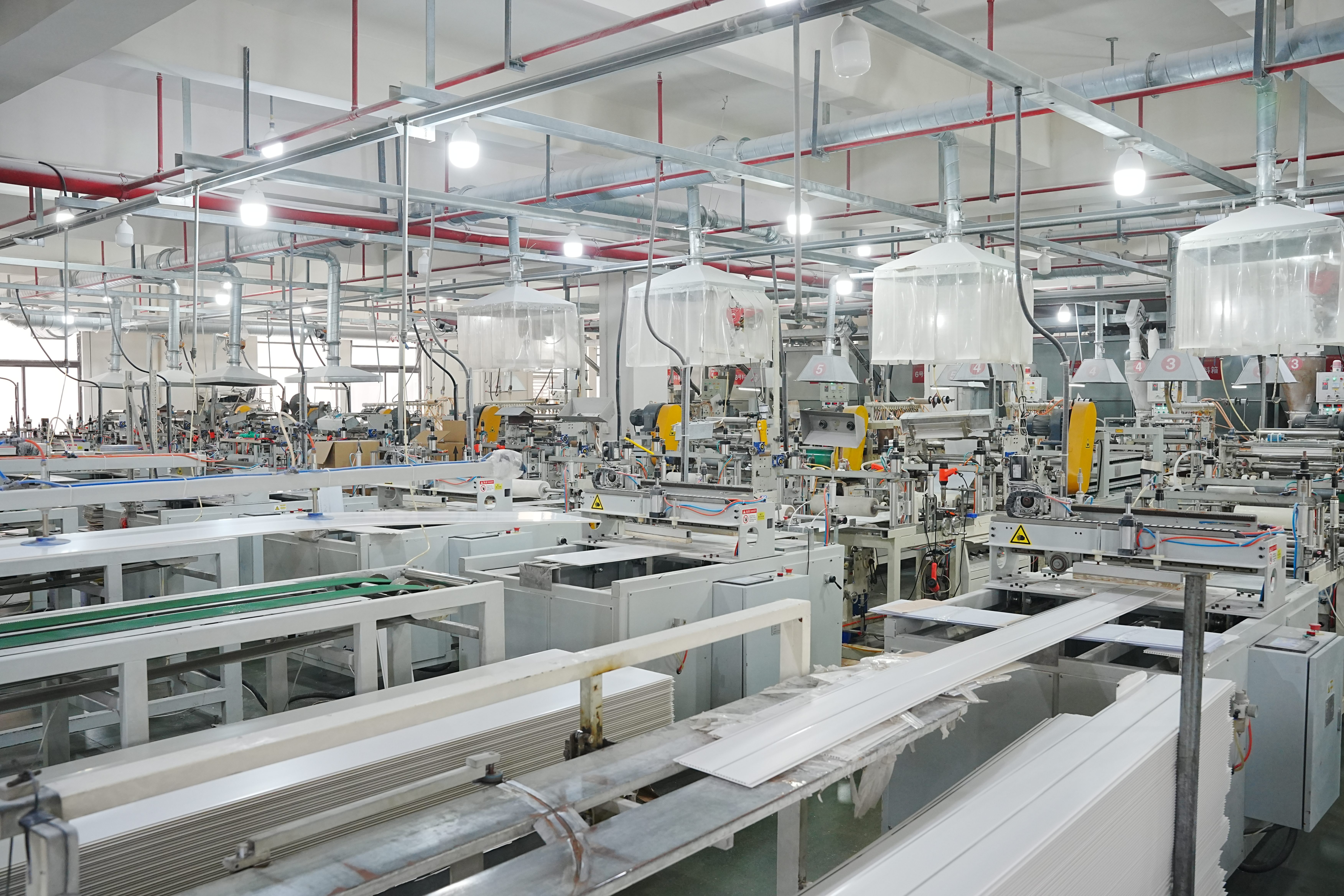
Batch inspection before packing. Image: Hisea-Decorative Film & Decorative Panels.
Where the Specification Reaches Its Limits
A procurement FAQ is only useful if it also states where a product stops performing. Five boundaries apply to this category.
- Initial cost is higher. Compared with cheap wall panels, this product carries a 10% higher initial cost. The trade-off is in elasticity, lower maintenance requirements and a surface that does not crack or peel under temperature fluctuation, with no periodic surface refurbishment needed. Buyers should budget the premium deliberately rather than discover it at quotation stage.
- The substrate must be flat and dry. Dry-fix installation moves the quality risk from the panel to the wall behind it. An uneven or damp substrate will telegraph through a finished surface regardless of panel quality.
- Lead time is defined against a specific unit. The 20–25 day figure is stated after deposit for a 40HQ container. Orders with a different shipping unit, or programmes spanning multiple containers, should be scheduled against the monthly 20 × 40 ft high-cube container output rather than against the single-container figure.
- Fire performance is product- and market-specific. Commercial procurement guidance recommends verifying the exact product, thickness, construction and surface finish, the current edition of the relevant standard, and the laboratory’s accreditation scope before accepting a supplier compliance claim. Reaction-to-fire frameworks differ by jurisdiction — EN 13501-1, ASTM E84 and GB 8624 are referenced for different markets — and classifications from different systems should not be treated as equivalent without a formal equivalence basis.
- Classification and documentation carry their own risk. Rigid PVC wall and ceiling panels are commonly classified under HS 391810, while other plastic sheets and builders’ articles may fall under additional headings such as 391890, 392049, 392190, 392590 and 392690 depending on construction and product form. Because the applicable heading depends on the product, landed-cost and duty estimates should be built on the supplier’s actual classification rationale and prior export declarations rather than on a generic panel code.
Comparison with Traditional Wall Finishes
The comparison below is qualitative and describes typical construction practice rather than measured performance. It is intended as a shortlisting aid, not as a substitute for a project specification.
| Criterion | Wall panel systems (WPC / PVC / UV board) | Ceramic tile | Paint and plaster | Wallpaper |
|---|---|---|---|---|
| Site process | Dry fixing on battens or a flat, dry substrate; cutting with standard woodworking tools | Wet process with bedding adhesive and grouting | Multi-coat wet process with drying intervals | Adhesive application over a prepared, sealed surface |
| Joint treatment | Matching corner and edge trims; joint frequency set by panel width | Grout lines, which are a maintenance point in wet areas | Seamless but sensitive to substrate movement | Seams visible; pattern matching required |
| Finishing on site | None required — the factory finish is the delivered finish | Grouting and sealing after fixing | Full surface finishing on site | None beyond hanging |
| Moisture behaviour | Range includes panels specified for humid indoor and outdoor conditions and for damp areas as a tile or coating replacement | Water-resistant when correctly installed and grouted | Generally not specified for continuously wet surfaces | Not suited to wet areas |
| Maintenance profile | Panel surface will not crack or peel under temperature fluctuation; no periodic surface refurbishment needed | Grout cleaning and occasional replacement of damaged units | Periodic recoating | Periodic replacement |
| Typical best fit | Fast-turnaround refurbishment, feature walls, hotel and retail interiors, damp-area linings, ceilings | High-abuse wet areas where a hard mineral surface is preferred | Low-cost large-area coverage on sound substrates | Low-cost decorative change on dry, stable walls |
The honest limitation of panel systems is the substrate. Tiling can accommodate a slightly uneven wall through the thickness of the adhesive bed; a dry-fixed panel cannot. Where walls are out of tolerance, levelling or battening must be costed before the panel order is placed — otherwise the fastest system on paper becomes the slowest on site.
Market Context Behind the Buying Questions
Why are MOQ, lead time and acceptance criteria asked so insistently now? Because the category has moved from a niche decorative option to a mainstream construction input, and mainstream volumes attract mainstream procurement discipline.
Commercial market research places the global PVC panels market at a value of USD 14.8 billion in 2025, with wall panels the largest product type at a 42.5% share of that market, and forecasts continued expansion through 2034. The wood plastic composites market, which covers WPC wall panels, is estimated at USD 8.9 billion in 2025 and projected to reach USD 21.5 billion by 2033, a CAGR of 11.7%.
Sources: Dataintelo, PVC Panels Market Size, Share & Forecast Report 2025–2034; Grand View Research, Wood Plastic Composites Market Size & Share Report, 2033.
The stronger growth signal sits with WPC rather than standard PVC, and that has a direct procurement consequence: buyers who currently specify only one material family are exposed to a regulatory and specification shift they cannot hedge. A supplier able to produce across PVC wall panels, WPC wall panels, UV boards and outdoor wall panels gives a buyer the option to move specification without changing vendor, samples, documentation chain or QC contact.
Price behaviour reinforces the same point. Average FOB China prices for standard 3 mm PVC marble sheets were reported in the range of USD 3.00–3.60 per square metre in 2024, after earlier volatility gave way to gradual stabilisation and stronger competition. In a stabilised price band, differentiation moves away from the base sheet and toward surface treatment — UV coating, anti-scratch finishes, and texture consistency — which is exactly the territory where in-process thickness, density, colour-difference and texture control decides the outcome.
Source: Aesthedge, Latest Price Trends of PVC Marble Wall Panels in Global Markets, 2025. Price references are manufacturer-level market benchmarks, not quotations.
Future Outlook
Three directions look likely to shape wall panel procurement over the next few purchasing cycles.
Compliance documentation becomes a shortlisting filter rather than a closing document. As buyers internalise the difference between product-specific test reports and generic claims, suppliers who can produce matching reports, current standard editions and laboratory accreditation details at RFQ stage will move through evaluation faster.
Multi-material portfolios support vendor consolidation, but not automatic substitution. A supplier offering WPC, PVC, UV board and outdoor panels can reduce the number of relationships a buyer manages, yet each product family still requires its own sample, specification sheet and compliance check. Consolidation is a purchasing benefit, not a technical equivalence.
Renovation and hygiene demand keeps pressure on installation speed. Dry-fix systems, clip-based fixing and factory-finished surfaces align with projects that cannot afford long site programmes. That advantage only holds if the substrate is prepared to tolerance, which pushes more survey work into the pre-order stage — a shift that favours buyers who define acceptance criteria before the first container ships rather than after.
FAQ
What is the MOQ and lead time for wall panels?
Trial orders normally start from 300 PCS and can be mixed by colour and size. Typical production lead time is 20–25 days after deposit for a 40HQ container. For reference, the associated production platform has a monthly output of 20 × 40 ft high-cube containers, which supports container-level and multi-container orders.
What are the WPC wall panel standard sizes?
Common standard sizes for fluted WPC wall panels are 160×22 mm, 160×24 mm, 150×15 mm, 160×16 mm, 160×13 mm, 195×12 mm and 195×14 mm. Width is broadly consistent within the range while depth varies, so the profile depth should be specified explicitly when the visual shadow line matters. PVC wall panels are supplied at 300×8 mm and 300×8.5 mm, and UV boards at 1220×2440×2.5 mm and 1220×2440×3 mm.
How are PVC wall panels installed?
Panels can be fixed on battens or directly onto a flat, dry substrate using clips, screws or adhesive, with matching corner and edge trims used to finish the joints. Cutting is done with standard woodworking tools. Installation is fast, and no painting or finishing is needed on site, so the factory-applied surface remains the finished surface. Because fixing is dry, substrate flatness and dryness should be verified before installation begins.
Where are WPC wall panels used?
Interior applications include feature walls, TV backgrounds, living rooms and bedrooms, hotel lobbies and corridors, offices and meeting rooms, restaurants, retail stores and showrooms, and ceilings. The range is also specified for indoor and outdoor use in humid environments at normal ambient temperature, with moisture- and insect-resistant behaviour, and is used as a hygienic wall panel in damp areas as a replacement for tiles or coatings. Exterior elevations are normally served by a dedicated outdoor wall panel product line rather than by interior WPC profiles.
Source Note
Production, order and quality-control figures in this article are drawn from the published company and product records of Zhejiang Highsea New Material Co., Ltd. and the Hisea-Decorative Film & Decorative Panels range. Market size, growth and price references are attributed to the commercial research sources named inline. Buyers should confirm final specifications, lead times, compliance documents and classification treatment for their own destination market before placing an order.
The full bamboo charcoal wall panel catalogue is available here: Hisea wall panel product catalogue (PDF).
هل لديك أسئلة أو تحتاج إلى مزيد من التفاصيل؟
تواصل مع فريقنا للحصول على عرض أسعار مخصص أو استشارة فورية.
طلب عرض أسعار
املأ النموذج أدناه وسيتواصل معك فريقنا بعرض مقترح مخصص.
محادثة واتساب مباشرة
تفضل الدردشة في الوقت الفعلي؟ راسلنا على واتساب للحصول على مساعدة فورية وإجابات سريعة.
- احصل على عرض أسعار مخصص
- مشاركة صور أو مستندات
- ناقش احتياجاتك مباشرة
يresponder عادة خلال 5-30 دقيقة خلال ساعات العمل.