
Wall Sticker Panels Compared: XPE, PU Stone, and Linen
Self-adhesive wall sticker panels have become a practical option for renovation projects that need a fast, dry, cost-conscious surface finish. Buyers comparing material families usually narrow the decision to three categories: XPE foam panels, PU stone-look panels, and linen soft-pack panels. This article compares them from a buyer's perspective, using documented product data and application notes rather than brand claims.
The comparison is relevant for residential decoration, apartment renovation, old-house remodeling, commercial space decoration, hotel and B&B renovation, exhibition booth construction, and retail store renovation. For these environments, wall panels are often selected to refresh an interior quickly without the mess and downtime of wet trade work.
Why the Material Decision Matters Before Choosing a Panel
Wall sticker panels are not a single product family. One line may be a light foam sticker, another a stone-textured sheet, and another a fabric-covered padded panel. The visual result can look similar from a distance, but the underlying material changes how the panel is transported, stored, cut, installed, and maintained.
A common benefit across these sticker-style panels is the ability to protect existing walls and floors and quickly finish the surface, which shortens construction time. They can also be used to cover cracks and stains on the base surface. In many documented applications they contribute to sound insulation and noise reduction, although the level depends on the product construction and the wall condition.
All three families share a critical application condition: the base surface must be flat, dry, and free of dust and grease. They are not suitable for powdery, sandy, or loose surfaces. If the substrate is unstable, even a high-quality self-adhesive panel will not perform correctly.
Panel Type 1: XPE Foam Wall Sticker Panels
XPE foam wall sticker panels are regularly compared with IXPE foam in the sourcing process. XPE is chemically cross-linked foam, while IXPE is cross-linked by electron-beam irradiation. In simple terms, IXPE tends to have fine, uniform cells, faster rebound, and stronger resistance to permanent indentation. Chemically cross-linked XPE has larger cells, slower rebound, and a higher risk of a residual dent if heavy pressure is applied for a long period. A visual and hand-press test is only a preliminary screening method; a third-party report is considered the final evidence.
For interior projects, XPE-style self-adhesive foam wall stickers are often chosen for residential apartments and rental-house renovation. In documented comparisons, they are described as light, good at sound absorption, and useful for cushioning. They also have a competitive logistics cost because of low weight. Their general limitation is surface scratch resistance, which is moderate rather than outstanding.
Buyers should interpret foam quality carefully. Low-grade or recycled foam may show inconsistent thickness and weaker resilience. In export orders, the material name should be clearly stated, and test reports for formamide and cross-linking degree should be requested when the destination market applies strict environmental rules.
Panel Type 2: PU Stone-Look and Soft Stone Wall Sticker Panels
The second family is often described as PU stone panels, soft stone wall stickers, or PVC soft-stone self-adhesive wall stickers. These panels are selected when the project needs the texture and appearance of stone without the weight and installation cost of natural stone or traditional tile.
In documented comparisons, PVC soft-stone wall sticker panels are recommended for hotel guest rooms and chain-store commercial projects because of their scratch resistance, richer texture, and better anti-aging performance compared with XPE foam stickers. These benefits come with trade-offs: the panels are heavier and the unit cost is higher.
The term “PU stone” also warns buyers about handling. In warehouse and logistics guidance, PU-stone panels fear moisture and impact. If they are stored on a damp floor, hit by forklifts, or stacked carelessly, corners and surface texture can be damaged. Moisture protection is therefore part of proper handling, not an optional extra.
One documented commercial example used soft-stone wall stickers in supermarket applications, with 370,000 units installed. The buyer reported a good decorative effect and easy daily maintenance. The highlights included moisture-proof properties, quick installation, and rich surface textures for commercial space. The project generated repeat orders, which is a meaningful signal for a commercial buyer evaluating supplier consistency.
Panel Type 3: Linen Soft-Pack Wall Sticker Panels
Linen soft-pack wall sticker panels form the third commonly requested category. In a loose sense, they belong to the soft-pack or padded wall panel family, where a textile-look surface is combined with a flexible backing to create a softer, more furnished wall appearance. Some suppliers offer PU leather and velvet surface options in the same family, while linen-type surfaces are used when buyers want a natural fabric look rather than a glossy stone or wood finish.
Because of the surface material, linen soft-pack panels are usually selected for spaces where warmth, texture, and acoustic comfort are priorities, such as bedrooms, feature walls, lounge areas, boutique hospitality interiors, and light-commercial fit-outs. However, documentation for multi-type wall stickers explicitly warns that linen soft-pack wall sticker panels are vulnerable to dust, dampness, and mildew. This is a meaningful limitation: the surface feels softer and looks warmer, but it needs cleaner conditions, prompt attention to moisture, and careful storage.
Documented Format and Thickness Reference
Wall sticker panel dimensions are not standardized globally, so buyers should ask for line-specific cut lists. In the documented product range behind this comparison, several formats repeat consistently: 30x30 cm, 30x60 cm, 60x60 cm, 40x80 cm, 60x120 cm, and longer roll-type panels reaching 60x300 cm and 120x300 cm. The longer panels reduce visible seams in living rooms and corridors, while square tiles are convenient for feature walls and small areas.
| Documented panel line | Thickness | Common documented formats |
|---|---|---|
| PVC wall sticker | 2 mm | 30x30, 30x60, 40x80, 60x60, 60x120, 120x300 cm |
| PET marble wall sticker | 2 mm / 2.5 mm | 30x30, 30x60, 60x60, 40x80, 60x120, 60x300, 120x300 cm |
| Soft-stone wall sticker | 2.5 mm | 30x60, 60x60, 40x80, 60x100, 40x300, 60x300, 120x300 cm |
| PVC wall panel | 2.5 mm | 30x30, 50x50, 96x48 cm |
| 3D self-adhesive foam slat wall sticker | 2.8 mm | 30x30, 60x60, 30x60, 40x300, 60x300, 120x300 cm |
| PU leather / velvet wall sticker | 6 mm | 60x60, 60x240, 70x70, 70x280, 70x300 cm |
The table shows that 2–2.5 mm is the typical thin-sheet range for flat wallpaper-like panels, while a 3D foam slat format may be slightly thicker at 2.8 mm. Padded PU leather and velvet panels are again a different construction at 6 mm. A buyer comparing XPE, PU stone, and linen soft-pack should therefore compare thickness only within the same construction family.
Installation Differences and Substrate Requirements
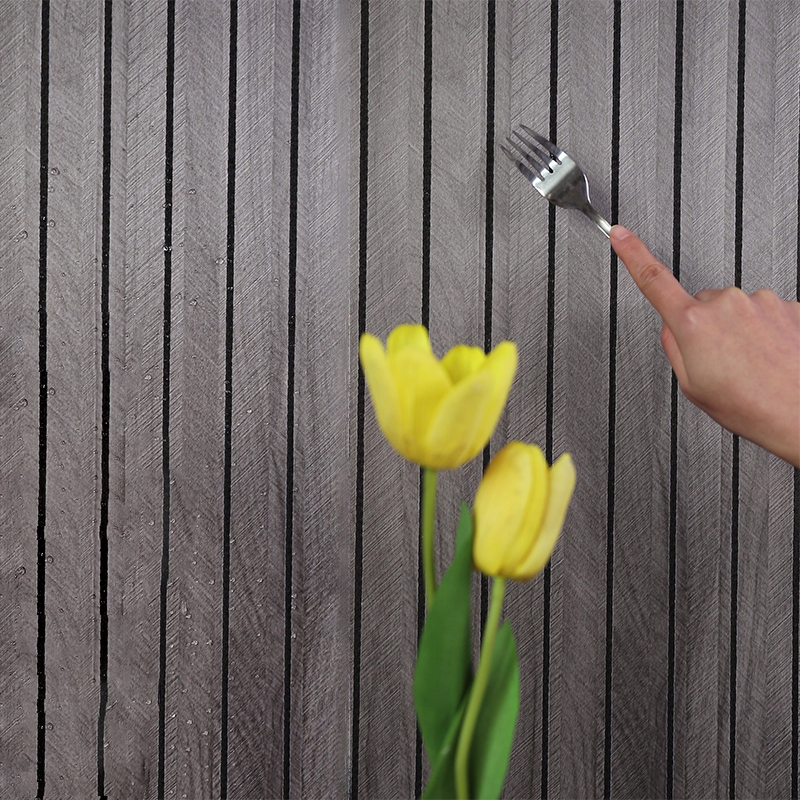
Most self-adhesive wall sticker panels are installed dry: the installer removes the protective film and presses the sheet onto a smooth surface. No cement or liquid glue is required in the typical process. The same installation tools are usually sufficient: a utility knife, scraper or roller, tape measure, spirit level, and an adhesive remover if re-positioning is needed.
Because the adhesive backing does the work, the substrate is more important than the panel material. The base must be flat, dry, clean, and free of grease. Panels can be used on cement floors, tiled surfaces, latex-painted walls, plasterboard, plywood, and other smooth, solid surfaces. But they are strictly not for powdery, sandy, or loose surfaces. Buyers should also avoid long-term exposure to strong sunlight, which can accelerate fading and weaken some sticker materials.
For wet areas, the documented scope of several SXP panel lines includes typical humid indoor environments such as bathrooms and dry areas of kitchens. That does not mean every fabric-style panel is appropriate for a damp bathroom. Linen soft-pack panels, in particular, have a higher moisture risk. The installation area must be evaluated separately for each material.
Warehouse and Handling Constraints Buyers Often Overlook
Storage discipline is a practical issue for distributors, contractors, and importers. The three families do not have identical weaknesses. Foam panels are sensitive to high temperature, heavy pressure, and UV light. PU-stone panels fear moisture and impact. Linen soft-pack panels are vulnerable to dust, dampness, and mildew.
The general warehouse rules for multi-type wall stickers are simple:
- Keep the warehouse cool and ventilated, with temperature ideally at or below 40°C.
- Keep products away from direct sunlight and heating pipes.
- Place goods on wooden pallets, never directly on a bare floor.
- Limit stacking height and do not place heavy hard panels on top of foam goods.
- Cover linen soft-pack products to prevent dust accumulation.
- Avoid corner impact for PU-stone products.
- Apply FIFO, shipping older batches first and avoiding long-term stockpiling.
It is equally important to define damage responsibility. Curling, deformation, and mildew caused by sun exposure, over-stacking, or ground moisture are classified as improper-storage damage, not inherent product defects. For large orders, buyers should agree on inspection conditions and storage guidelines before shipment.
Project Fit: Which Panel Type Suits Which Scenario
Project mapping is one of the most valuable parts of a wall sticker panel comparison because there is no universal winner.
Rental Apartments and Residential Projects
XPE foam self-adhesive wall sticker panels are frequently recommended for residential apartments, rental-house renovation, and projects with tighter budgets. Their light weight lowers shipping cost, and their cushioning behavior is acceptable for normal residential use. The main limitation is ordinary scratch resistance. If the wall is in a high-traffic hallway or children's play area, the foam surface may need extra protection.
Hotels, Chain Stores, and Commercial Spaces
PU stone-look or PVC soft-stone wall sticker panels are better aligned with hotel guest rooms, chain-store refurbishment, supermarket applications, and other commercial interiors. The documented project references show that a strong commercial result depends on moisture resistance, fast installation, and rich surface textures. The same case references also confirm that repeat orders followed initial use, which is a reminder that performance consistency matters more than one-time appearance.
Soft-Texture Interiors
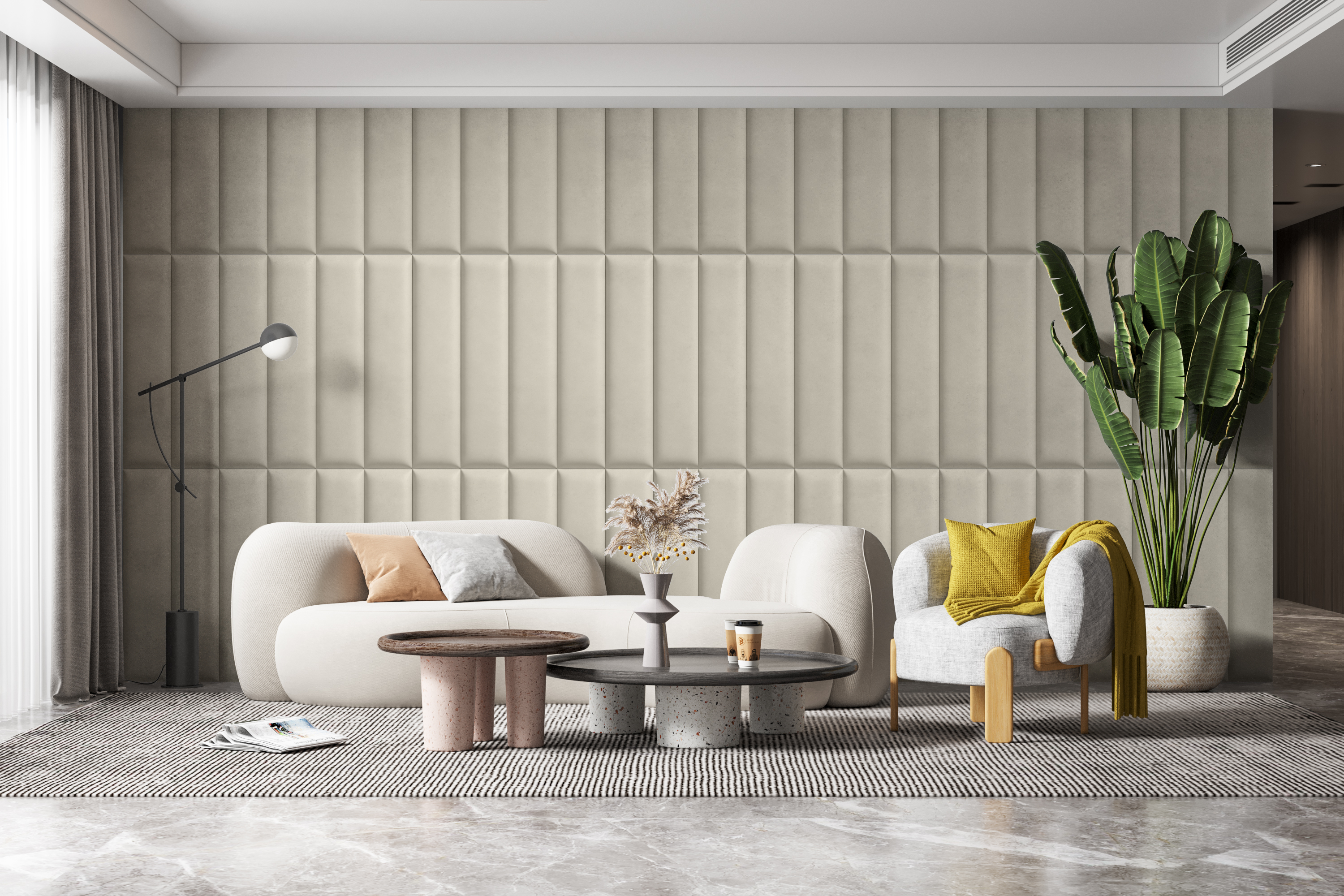
Linen soft-pack panels are a more decorative option for bedrooms, lounge areas, and hospitality settings where fabric texture is part of the design language. Their suitability depends strongly on the environment: dry, clean, and low-dust rooms are suitable; constantly damp or dusty interiors are not. This category should be evaluated with the same discipline as a fabric furnishing, not as a maintenance-free wall covering.
Neutral Comparison Against Traditional Wall Treatments
Compared with traditional plastering, tiling, or fixed decorative paneling, self-adhesive wall sticker panels offer clear speed and installation simplicity. They also allow easier updates in rental or temporary spaces. However, they have a real boundary: because they rely on surface adhesion, they cannot compensate for a defective wall. A loose, uneven, damp, or dusty substrate will cause adhesion failure regardless of whether the panel is XPE, PU stone-look, or linen soft-pack.
There are also material-specific trade-offs. XPE foam is economical and light but less scratch-resistant and more sensitive to prolonged pressure. PU-stone panels offer better texture and durability in commercial use but cost more and need impact protection during handling. Linen soft-pack panels deliver a warm, furnished look but require cleaner and drier conditions. Buyers should treat these trade-offs as design constraints rather than flaws.
Sourcing and Verification Notes for Evaluation Stage
At the evaluation stage, buyers should not rely on a single brochure photo. The material construction, actual thickness, adhesive quality, backing type, and compliance documents should be listed in the order confirmation. For EU exports, buyers are advised to check CE-CPR construction-product requirements, REACH hazardous-substance limits, and PPWR packaging rules. Missing certificates can lead to customs delays, returned goods, or penalties.
Some wall sticker ranges also hold the RoHS Directive (EU) 2015/863 statement for specific PE-based products. A buyer should ask the supplier which exact product model the RoHS certificate covers. The same logic applies to foam products: formamide and cross-linking degree test reports should be available when the order is intended for a regulated market.
For buyers comparing multiple types, a practical step is to request a physical sample set containing one foam panel, one stone-look soft panel, and one fabric or soft-pack panel. The hand test reveals differences in flexibility, texture depth, and adhesive feel that cannot be captured in a specification sheet.
Market Context and Panel Demand Trends
The broader wall panels market is expanding. Dataintelo's Wall Panels Market Research Report 2033 estimates the global wall panels market at USD 32.4 billion in 2025, with a projected value of USD 43.7 billion by 2033, implying a CAGR of about 4.2%. Asia Pacific held the largest regional share in the same report, which aligns with the growing use of thin decorative panels in dense urban renovation markets.
Within this larger market, self-adhesive wall sticker panels continue to be used for a specific set of jobs: older-building renovation, rental upgrades, retail refreshes, and other projects where downtime is short. The trend is not that sticker panels will replace traditional wall finishing. It is that buyers now have more precise material choices for different levels of traffic, appearance, and maintenance expectations.
Manufacturers such as Shanghai Yuanguan Rubber Plastic Co., Ltd., which markets decorative panel products under the SXP Wall Panel brand, are responding with broader size options, multiple thicknesses, and texture variants. The company operates from Shanghai and lists main products ranging from self-adhesive wall stickers and 3D foam wall panels to PVC wallpaper, WPC decorative wall panels, and related interior materials. For a neutral sourcing reference, its published brochure can serve as a practical starting point for comparing documented formats and supplier capabilities.
A public copy of the SXP product brochure is available here: Shanghai Yuanguan Product Brochure (PDF). The document can be used to verify claimed product lines before a buyer requests samples.
Frequently Asked Questions
Which should I choose for interior decoration: XPE foam or PVC soft-stone wall sticker panels?
Selection depends on project positioning and budget. XPE foam self-adhesive wall sticker panels are more often chosen for residential apartments and rental-house renovation because of light weight, sound absorption, cushioning behavior, and lower logistics cost. PVC soft-stone wall sticker panels are more frequently used for hotel guest rooms and chain-store commercial interiors because of better scratch resistance, richer texture, and improved anti-aging performance. They are heavier and cost more per unit. Physical samples should be tested for adhesion and aging before a bulk order.
What is the difference between XPE and IXPE foam?
XPE is chemically cross-linked foam, usually with a lower cost. IXPE is cross-linked by electron-beam irradiation and has finer, more uniform cells, faster rebound, and better resistance to permanent indentation under heavy pressure. For European and North American exports, buyers commonly request test reports covering formamide and REACH requirements. A simple cell inspection and hand-press test is only a rough preliminary check; a third-party laboratory report is the proper acceptance reference.
What warehouse storage requirements apply to XPE, PU stone, and linen soft-pack wall stickers?
Foam products are sensitive to high temperature, heavy pressure, and UV exposure. PU-stone panels fear moisture and impact. Linen soft-pack panels are vulnerable to dust, dampness, and mildew. General rules include a cool, ventilated warehouse, storage on pallets away from the floor and sunlight, limited stacking height, and FIFO stock rotation.
Can the same wall sticker panel be used on walls and floors?
Some documented SXP product lines are described for wall and floor decoration. However, floor use needs a base with adequate strength, no hollow spots, and proper rolling to ensure full adhesive contact. Wall panels should not be treated as flooring unless the supplier confirms the same application scope.
What compliance evidence should be requested for export orders?
For EU shipments, relevant requirements may include CE-CPR construction-product certification, REACH hazardous-substance compliance, and PPWR packaging rules. Missing or invalid documents create customs and after-sales risk. Buyers should verify that the certificate belongs to the exact product model being ordered rather than accepting a generic company claim.
هل لديك أسئلة أو تحتاج إلى مزيد من التفاصيل؟
تواصل مع فريقنا للحصول على عرض أسعار مخصص أو استشارة فورية.
طلب عرض أسعار
املأ النموذج أدناه وسيتواصل معك فريقنا بعرض مقترح مخصص.
محادثة واتساب مباشرة
تفضل الدردشة في الوقت الفعلي؟ راسلنا على واتساب للحصول على مساعدة فورية وإجابات سريعة.
- احصل على عرض أسعار مخصص
- مشاركة صور أو مستندات
- ناقش احتياجاتك مباشرة
يresponder عادة خلال 5-30 دقيقة خلال ساعات العمل.