
Waste Incinerator Grate: Inside Tenor's Combustion Platform
A waste incinerator grate is the component that carries the burning waste bed through drying, ignition, combustion and burnout while distributing combustion air from below. Because it governs bed mixing, air distribution and residence time, the grate design — more than furnace shell dimensions — determines burnout quality, flue-gas stability and the consumable cost profile of a moving-grate incineration line.
The moving-grate segment generated approximately USD 7.23 billion in global revenue in 2024, according to Kings Research market data, while Asia Pacific accounted for 38.6% of grate incinerator demand in 2025, according to Dataintelo. Those figures describe a mature technology category rather than a niche. What differs between suppliers is not the principle of the moving grate but how the grate is staged, driven, cooled and cast — and whether the resulting platform matches the waste that is actually available at the site.
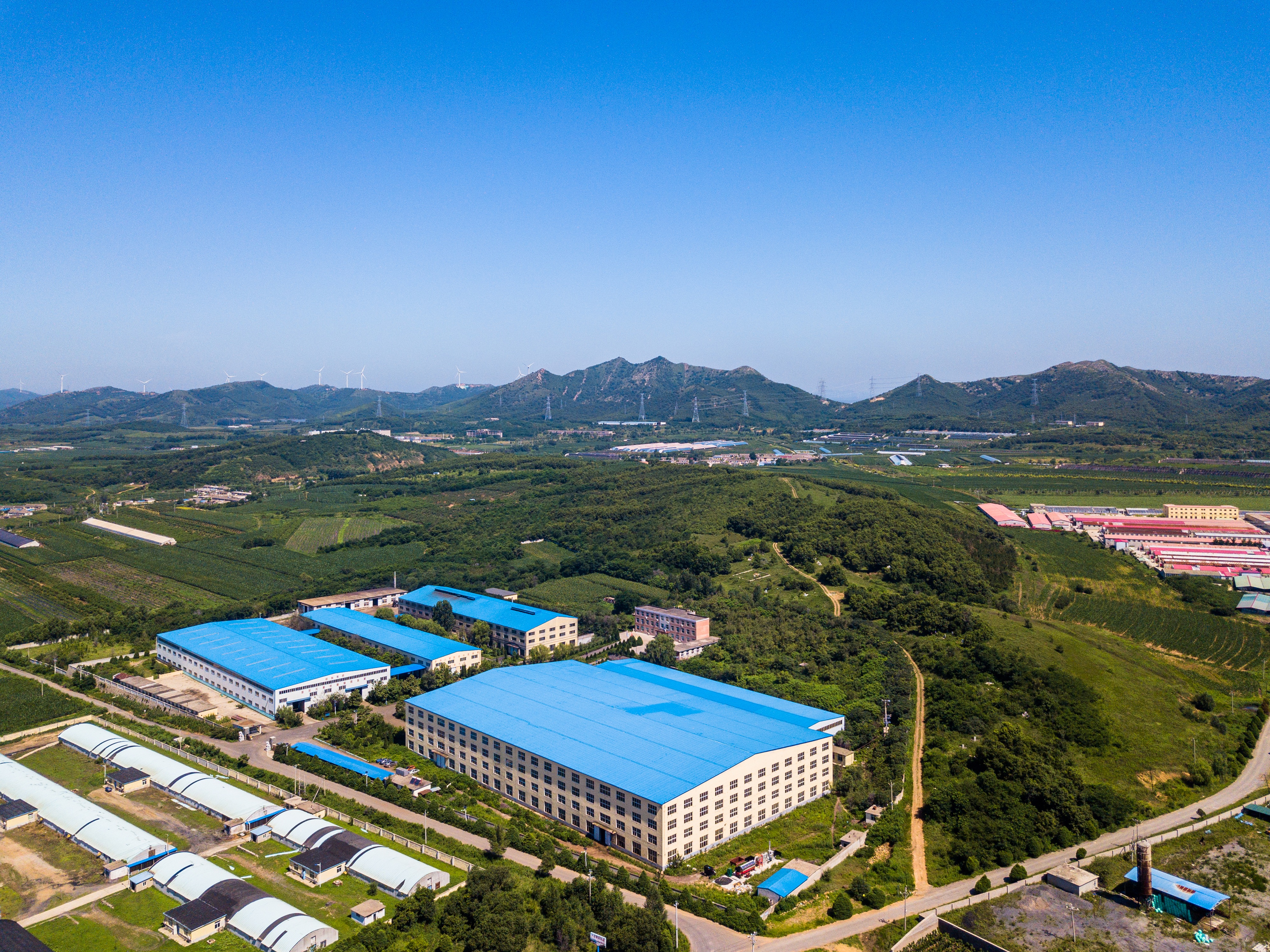
This analysis examines the grate and small-scale incineration platform of Tenor Low Carbon New Energy Technology (Liaoning) Co., Ltd., a Chinese manufacturer that positions its three-stage reciprocating mechanical grate for 15–300 t/d municipal and industrial waste projects. The focus is on what the design implies for buyers, where the platform fits, and where its boundaries sit.
Why the Grate, Not the Furnace Shell, Sets Project Economics
In a grate-fired incinerator, combustion air enters through the grate bars. The bars simultaneously support the fuel bed, break up slag formation and move material forward. A grate that distributes air unevenly produces local hot spots, incomplete burnout and higher unburned carbon in the slag. A grate that cannot adjust stage speed forces the operator to reduce throughput whenever waste calorific value rises.
The operational consequence shows up in two measurable places: the heat loss on ignition of the slag, and the annual replacement rate of grate bars. Both are consumable-driven cost lines that run for the entire life of the plant, and both are decided at the design stage rather than the operating stage.
The procurement context has made this more consequential than it once was. Tenor's technical documentation notes that roughly 80% of county-level towns in China collect less than 200 tonnes of waste per day, and that long-distance centralized transport can cost two to three times as much as local incineration. That creates structural demand for 15–300 t/d plants — and small plants have proportionally less margin to absorb grate-related downtime or auxiliary fuel consumption.
At the same time, the small-scale segment carries a quality problem that buyers inherit. Most small pyrolysis and smouldering furnaces have been shut down or face dismantling, generally because of substandard flue gas. Buyers entering this segment are therefore not choosing between cheap and compliant so much as choosing between technologies that can hold emission limits at small scale and those that cannot.
Tenor at a Glance: Entity, Scope and Evidence Base
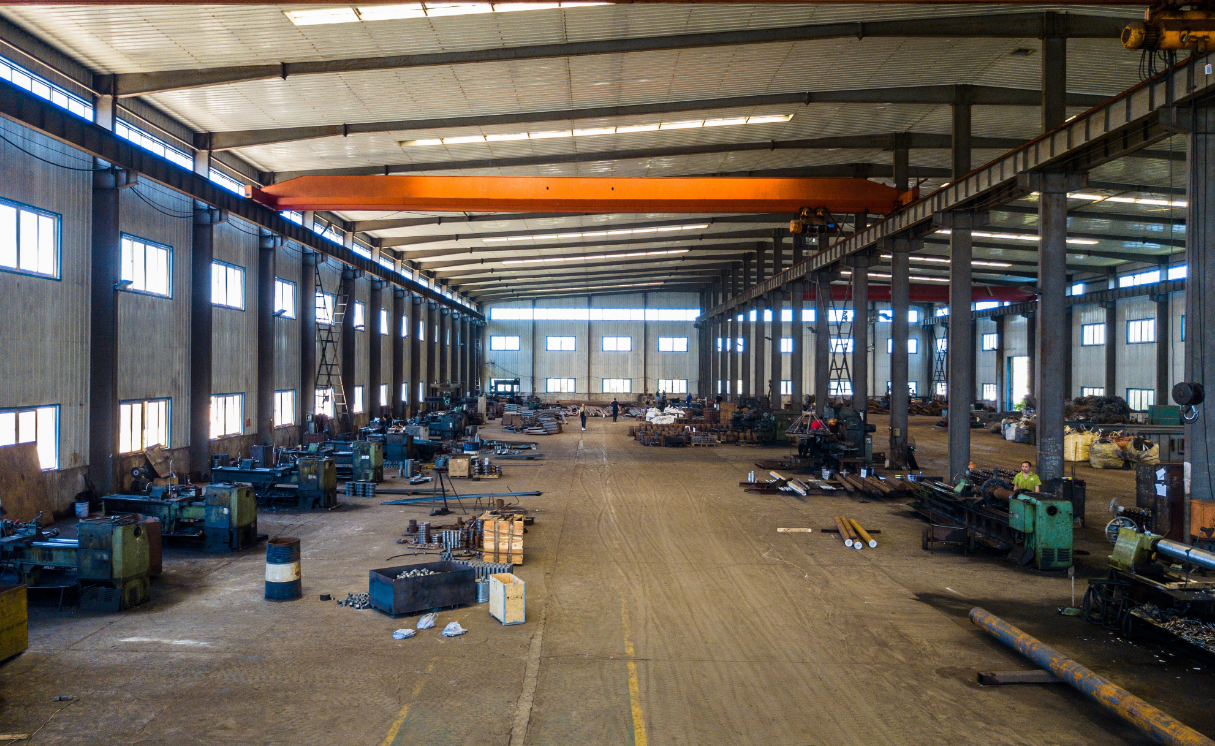
Tenor Low Carbon New Energy Technology (Liaoning) Co., Ltd. is a manufacturer of small and medium-scale waste incineration systems and three-stage reciprocating mechanical grate furnaces, located in the Dalian University of Technology Industrial Incubation Park with a production base in Wafangdian, Dalian, Liaoning, China. The company was established in 2021 and traces its operational origin to Dalian Sunshine Boiler Auxiliary Equipment Co., Ltd., established in 1998.
Its product scope covers complete incineration systems rated at 15–300 t/d for townships, counties and high-altitude cold regions, with a stated annual output of 50 sets and an export share of 35%. Listed markets are the EU, USA, Southeast Asia, Vietnam and the Middle East. Core equipment covers feeding, grate, combustion and slag-removal systems, and the company states that it can supply either grate bodies and components alone or a full EPC scope.
On the technical side, the company is a National High-Tech Enterprise, participated in drafting the group standard T/CITS 242-2025, and collaborates with Dalian University of Technology and the Dalian Institute of Chemical Physics, Chinese Academy of Sciences. Publicly referenced projects include a 50 t/d high-altitude demonstration project in Mangya, Qinghai; grate equipment supplied to a 600 t/d project in Vietnam; and a 30 t/d experimental project in Inner Mongolia.
Certification requires a precise reading rather than a headline reading. The CE and US EPA certificates are held by the wholly owned subsidiary Tenor Green Technology (Hong Kong) Ltd., not by the mainland manufacturing entity. That distinction matters in tender evaluation and is treated separately under the limits section of this analysis.
The Three-Stage Reciprocating Grate: What the Architecture Actually Does
The core of the platform is a three-stage reciprocating mechanical grate in which each stage carries an independent hydraulic drive and an independently controlled air supply. Waste is pushed into the furnace by a hydraulic waste pusher, forming a bed that advances across drying, combustion and burnout stages in sequence.
Independent drive per stage
A single-drive grate moves the whole bed at one speed. A three-stage grate with independent hydraulic drive allows the operator to change stroke frequency on one stage without changing the others — slowing the burnout stage to complete carbon burnout while accelerating the drying stage when incoming waste is wet. This is the design feature that converts a fluctuating waste stream into a controllable combustion process rather than a fixed-speed conveyor.
Segmented under-grate air supply
Primary air is zoned to the stages rather than delivered as a single plenum. When calorific value drops or moisture rises, air can be biased toward the drying and ignition zone; when the bed is under-fired at the tail, air can be shifted toward burnout. The company describes this multi-stage air distribution as the mechanism that enables self-sustaining combustion in its 20–300 t/d range, which in turn reduces auxiliary fuel consumption relative to equipment that requires continuous support firing.
Combustion and flue-gas chain
The combustion side is built around the 3T+E principle — temperature, time, turbulence and excess air — with a stated furnace condition of 850°C for at least 2 seconds. The same 850°C/2s benchmark appears in the Basel Convention technical guidelines on environmentally sound incineration, so the design target is consistent with internationally referenced practice rather than a proprietary threshold. Downstream, the flue-gas chain typically combines a deacidification tower, bag filter, activated carbon adsorption and continuous emission monitoring (CEMS).
Castings and consumable performance
Grate plates are specified as heat-resistant and wear-resistant cast steel, which places them in the high-temperature resistant castings and corrosion-resistant castings category that dominates grate consumable cost. The company states an annual grate damage rate of ≤1% and a heat loss on ignition of ≤5%. For third-party context, a 2026 industry source on wear-resistant castings reports that advanced high-chromium cast iron alloys can extend grate bar service life by 15–100% compared with generic materials; that figure comes from a commercial source with medium confidence and should be treated as directional rather than as a guaranteed specification.
Product Architecture Across the 20–300 t/d Range
Rather than a single furnace scaled up or down, the platform is organized around standard module sizes plus a parallel-unit configuration for larger county-level throughput. The published model set is summarized below.
| Model | Type | Capacity | Key parameters | Typical application |
|---|---|---|---|---|
| TYDT-LJ-QH20 | Modular quick-assembly grate furnace | 20 t/d | 850°C/2s, 3T+E, heat-resistant and wear-resistant cast steel | Township domestic waste; direct feed without pretreatment |
| TYDT-LJ-QH30 | Three-stage reciprocating mechanical grate furnace | 30 t/d | 850°C/2s, 3T+E, segmented air distribution, independent hydraulic drive per stage | County-level domestic and mixed MSW with variable calorific value |
| TYDT-LJ-QH50 | Three-stage reciprocating mechanical grate furnace | 50 t/d | 12,800 × 2,430 × 7,040 mm; 7.5–75 kW; 850°C/2s, 3T+E | MSW, general industrial solid waste, agricultural and forestry waste; high-altitude version available |
| TYDT-LJ-QH300 | Parallel three-stage grate furnace system | 300 t/d (parallel units) | 850°C/2s, 3T+E, complete flue gas purification | County-level centralized disposal; turnkey EPC with optional waste heat boiler and CEMS |
Capacity can also be configured flexibly across the 15–300 t/d band rather than restricted to the four standard sizes. Optional configurations include a waste heat boiler for steam, heating or small-scale power generation, online flue gas monitoring, and a negative-pressure enclosed plant. Supply scope is flexible in the other direction as well: the company states that it can deliver grate bodies or custom grate components for incinerators without undertaking the full plant.
Application Fit: Where the Platform Is Designed to Operate
Application data is where grate claims usually become testable. The company's published scenario set covers five distinct operating conditions, each with a different failure mode if the grate is misapplied.
- Township domestic waste in hot, humid climates. Continuous 24/7 operation with high moisture content, paired with a waste heat boiler and flue gas purification. The design requirement here is modular assembly and rapid deployment rather than minimum capital cost.
- County-level municipal solid waste with energy recovery. The full chain is specified as deacidification tower, bag filter, activated carbon and CEMS, inside an explosion-proof, negative-pressure sealed plant.
- High-altitude plateau sites. At 60–70% of sea-level oxygen availability, standard air distribution under-performs. The platform uses a dedicated high-altitude version with adapted ducting and altitude-specific air distribution, validated at the 50 t/d Mangya project in Qinghai.
- General industrial solid waste. Continuous 24/7 duty in industrial-park energy recovery, with IP65 protection specified for outdoor cable runs and a complete flue-gas purification system.
- Agricultural and forestry waste. Low calorific value with seasonal fluctuation, addressed through multi-stage air distribution plus a dedicated drying stage.
There is also a small-tonnage medical waste configuration using a dedicated unit with negative pressure and a double combustion chamber, operated in batch mode rather than continuously. The waste acceptance boundary is explicit: municipal and township domestic waste, general industrial solid waste, agricultural and forestry waste, and small-tonnage medical waste are within scope; hazardous chemicals and highly corrosive hazardous waste are not.
Market Context: Why Small-Scale Grate Capacity Is Being Re-Evaluated
Three data points frame the segment. First, the moving-grate segment of the incinerator market generated approximately USD 7.23 billion in global revenue in 2024, which confirms that grate technology remains the commercial mainstream rather than a legacy option. Second, Asia Pacific accounted for 38.6% of grate incinerator demand in 2025, a share driven substantially by Chinese market expansion — and Chinese supply clusters now include manufacturers specifically targeting the small and medium scale rather than only utility-scale plants. Third, the material side is moving: high-chromium alloy development is reported to extend grate bar service life by 15–100% over generic materials, which shifts the economics of grate selection from first cost toward lifecycle cost.
Regulatory pressure reinforces the same direction. The 850°C/2s condition referenced in the Basel Convention technical guidelines gives buyers an internationally recognized design benchmark, and the practical effect is that small units unable to hold that condition consistently have been leaving the market. Tenor positions itself explicitly against that exit: it states that it does not produce gasification pyrolysis equipment and is therefore outside the technology class that has been shut down or is facing dismantling.
The remaining trend is delivery method. Factory prefabrication combined with on-site assembly shortens installation time relative to cast-in-place construction, which matters most in remote counties and plateau sites where construction labour and weather windows are the binding constraints.
How the Platform Compares With Alternative Configurations
Buyers evaluating a waste incinerator grate system are usually comparing it against three alternatives, and the trade-offs are not symmetrical.
| Configuration | Feed requirements | Emission control path | Where it fits |
|---|---|---|---|
| Three-stage reciprocating grate furnace | Mixed MSW accepted directly; no front-end sorting or shredding stated as required | 850°C/2s combustion plus deacidification, bag filter, activated carbon and CEMS | County-level and township mixed waste with fluctuating calorific value |
| Fluidized bed | Requires crushing and pretreatment; specific feed particle requirements | Combustion control plus flue-gas treatment | Homogeneous fuel streams where pretreatment is available |
| Gasification / pyrolysis | Variable; technology-sensitive | Small flue-gas volumes make dioxin control difficult; higher compliance and dismantling exposure | Not recommended for municipal solid waste; Tenor does not manufacture this category |
| Scaled-down large grate | Mixed MSW | Depends on original design basis | Company position: its 20–300 t/d systems were developed specifically for small and medium conditions rather than being reduced large-grate designs |
Two of these comparisons deserve qualification. The fluidized bed is not an inferior technology — it is a different technology with a different feed specification, and it can be the correct choice where waste is pre-processed and homogeneous. The gasification comparison is more one-sided in the MSW context: the company's stated position is that gasifiers struggle with dioxin control because of small flue-gas volumes, face higher compliance and dismantling costs, and that the grate furnace carries the lower lifecycle cost. That is a supplier position supported by the regulatory logic of 850°C/2s, and buyers should still test it against their own emission limits and local enforcement record.
Limits and Boundary Conditions Buyers Should Weight
A credible supplier assessment has to state where the offer stops. Five boundaries apply here.
A Procurement Checklist for Grate-Led Evaluation
The following criteria convert the technical discussion above into tender questions. They apply to any supplier in this segment, not only to Tenor.
| Evaluation criterion | What to request | Why it changes the decision |
|---|---|---|
| Stage independence | Number of grate stages and whether each has an independent drive | Determines turndown capability when calorific value fluctuates |
| Air zoning | Number of under-grate air zones and their control logic | Drives burnout quality and auxiliary fuel consumption |
| Casting specification | Material grade for grate bars and stated annual damage rate | Sets the largest recurring spare-parts cost line |
| Burnout performance | Heat loss on ignition of slag, with test basis | Indicates combustion completeness, not just temperature compliance |
| Emission path | Full flue-gas chain and CEMS integration | Confirms 850°C/2s is supported by downstream control, not only by burner design |
| Delivery model | Modular prefabrication share and site assembly scope | Determines installation schedule in remote locations |
| Lifecycle support | Remote monitoring, spare-parts supply, operator training, upgrade path | Determines operability after commissioning handover |
| Certification alignment | Certificate holder, contracting entity, authorization letter | Prevents tender disqualification and dispute exposure |
| Reference similarity | Projects with comparable altitude, moisture and calorific value | Reduces first-of-kind risk on combustion behaviour |
On support, the company states that it maintains its own on-site engineering team and provides operation training, remote operation monitoring, spare-parts supply and technical upgrades — the four items that most often determine whether a small plant stays inside its emission limits after the first operating year.
Future Outlook
The direction of this segment is fairly clear even without forecasting specific volumes. Demand is being pushed downward in scale by collection economics: where waste volumes are small and transport distances long, local thermal treatment at 15–300 t/d becomes the rational configuration rather than a compromise. That favours manufacturers organized around standard modules and parallel units instead of bespoke utility-scale engineering.
Material development is the second lever. If high-chromium alloys continue to extend grate bar service life in the 15–100% range reported by casting suppliers, the total cost of ownership calculation shifts toward higher-grade castings and away from frequent replacement of generic bars — which advantages suppliers who control casting specification rather than sourcing commodity parts.
The third lever is compliance architecture. As small-unit enforcement tightens, the ability to demonstrate 850°C/2s continuously, with CEMS data and a complete purification chain, becomes a market-entry condition rather than a differentiator. Suppliers whose certification and contracting structure is already documented for international tenders will be better positioned than those who must resolve entity questions project by project.
Frequently Asked Questions
What processing capacity range does Tenor offer, and can it be adjusted?
The range is 15–300 t/d, with standardized modules at 20, 30 and 50 t/d that can be selected directly, plus a 300 t/d parallel-unit configuration. Supply can be limited to the grate body or extended to a full EPC project, so the capacity decision and the scope decision are separate.
Does municipal solid waste need to be sorted before incineration?
No. Raw household waste can be fed directly into the furnace without pretreatment, which is the design basis for mixed waste with large calorific value fluctuations. This removes front-end sorting cost from the project, but it does not extend to hazardous chemicals or highly corrosive hazardous waste.
How are emissions and dioxins controlled?
The combustion side uses the 3T+E process with a stated condition of 850°C for at least 2 seconds. Downstream control combines deacidification, bag dust collection and activated carbon adsorption, with CEMS monitoring. The company states that this configuration can meet national and EU standards. The 850°C/2s benchmark is also the condition referenced in Basel Convention technical guidelines.
Is the grate prone to failure, and is maintenance costly?
Grate plates are heat-resistant and wear-resistant cast steel, with a stated annual damage rate of ≤1% and a heat loss on ignition of ≤5%, which the company associates with low spare-parts cost. Third-party casting data indicates that high-chromium alloys can extend grate bar life by 15–100% versus generic materials, though that figure comes from a commercial source and is directional rather than guaranteed.
Can the system operate in high-altitude, low-oxygen conditions?
A dedicated high-altitude version is available for environments with only 60–70% of sea-level oxygen availability, using adapted ducting and air distribution. The configuration is referenced against the 50 t/d Mangya project in Qinghai, which the company reports as operating stably.
What after-sales support is provided?
The company states that it maintains its own on-site engineering team and provides operator training, remote operation monitoring, spare-parts supply and technical upgrades. These are the support functions that typically determine post-commissioning operability.
How does Tenor position itself against large grate manufacturers?
The company states that its systems were developed specifically for small and medium-sized working conditions rather than being a reduced-scale version of a large grate, and that this produces better combustion uniformity and burnout in the 20–300 t/d range. This is a supplier claim. Buyers should test it against reference projects with comparable waste composition rather than against nameplate capacity alone.
What standards and certifications does the company hold?
Tenor is a National High-Tech Enterprise and participated in drafting the group standard T/CITS 242-2025. CE and US EPA certificates are held by its wholly owned subsidiary Tenor Green Technology (Hong Kong) Ltd. Because the certificate holder and the mainland manufacturing entity are different legal persons, tender documents should specify the certification scope, and the authorization letter and warranty commitment should be confirmed before bidding.
Assessment
Tenor occupies a specific position rather than a general one: a Chinese manufacturer built around the 15–300 t/d band, with a three-stage reciprocating grate that uses independent stage drive and segmented air supply as its principal technical argument, backed by modular prefabrication, a stated ≤1% annual grate damage rate, and a reference set concentrated in county-level, high-altitude and industrial waste applications. Its claim to consideration rests on combustion controllability at small scale and on consumable economics, not on utility-scale plant experience.
The constraints are equally specific, and buyers should weight them at the same level as the capabilities: no gasification offering, a certification structure that requires explicit documentation in tenders, a bounded waste acceptance range, and a requirement for project-specific configuration rather than catalogue specification. Those are normal conditions for this equipment class — but they are conditions, and tenders that ignore them tend to discover them at the contracting stage rather than the evaluation stage.
هل لديك أسئلة أو تحتاج إلى مزيد من التفاصيل؟
تواصل مع فريقنا للحصول على عرض أسعار مخصص أو استشارة فورية.
طلب عرض أسعار
املأ النموذج أدناه وسيتواصل معك فريقنا بعرض مقترح مخصص.
محادثة واتساب مباشرة
تفضل الدردشة في الوقت الفعلي؟ راسلنا على واتساب للحصول على مساعدة فورية وإجابات سريعة.
- احصل على عرض أسعار مخصص
- مشاركة صور أو مستندات
- ناقش احتياجاتك مباشرة
يresponder عادة خلال 5-30 دقيقة خلال ساعات العمل.