
Waste Paper Balers: A Policy-Shift Comparison Framework
Waste Paper Balers: A Policy-Shift Comparison Framework
For buyers comparing a Waste Paper Hydraulic Baler Machine across export markets, the first decision is not simply vertical versus horizontal. It is whether the proposed configuration fits the facility’s material stream, required throughput, available space and power, destination-market safety requirements, and expected lifetime costs. Those factors should be assessed separately: a machine specification can support a throughput comparison, but it cannot by itself prove regulatory compliance or total cost of ownership.
This framework compares vertical balers, horizontal hydraulic balers, and press bagging machines against those decision criteria for North America, South America, and Asia. The available evidence supports a comparison method and an illustrative NKBALER supplier profile. It does not establish country-by-country policy changes, regional production rankings, export volumes, or technology-adoption rates. Those gaps matter: treating them as known could turn an equipment shortlist into a false market comparison.
Why policy uncertainty changes the comparison
Recycling policy can influence which recovered materials are collected, sorted, traded, or processed locally. For baler procurement, the practical consequence is that a buyer should verify both the feedstock specification and the destination-market requirements before selecting a machine. A policy signal alone does not identify the correct baler: the same facility still needs to define material type, loose density, target bale dimensions or weight, throughput, available footprint, power conditions, and automation level.
In the evidence available for this article, the only specific baler safety requirement identified is EN 16252:2012. The verified data describes it as a safety standard for the design and manufacture of horizontal baling presses sold in the European Union. It does not supply equivalent, current rule details for North America or South America, nor country-specific rules for Asian markets. Buyers should therefore treat local regulatory fit as a verification gate, not infer it from a supplier’s export destinations or from a general description of recycling policy.
There is also a material-definition issue. A U.S. International Trade Commission briefing describes mixed paper as a broad recovered-paper category that includes old magazines, low-quality office waste paper such as discarded mail, and unsorted waste or scrap paper. That definition is useful when specifying feedstock, but it does not prescribe a baler configuration or establish a country’s current import rules. A buyer should identify the actual material grades handled at the facility rather than use “waste paper” as a complete specification.
Compare the three configurations by operating role
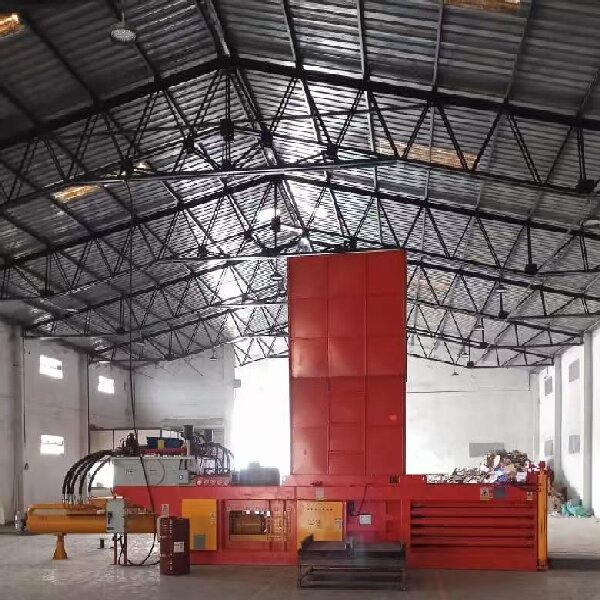
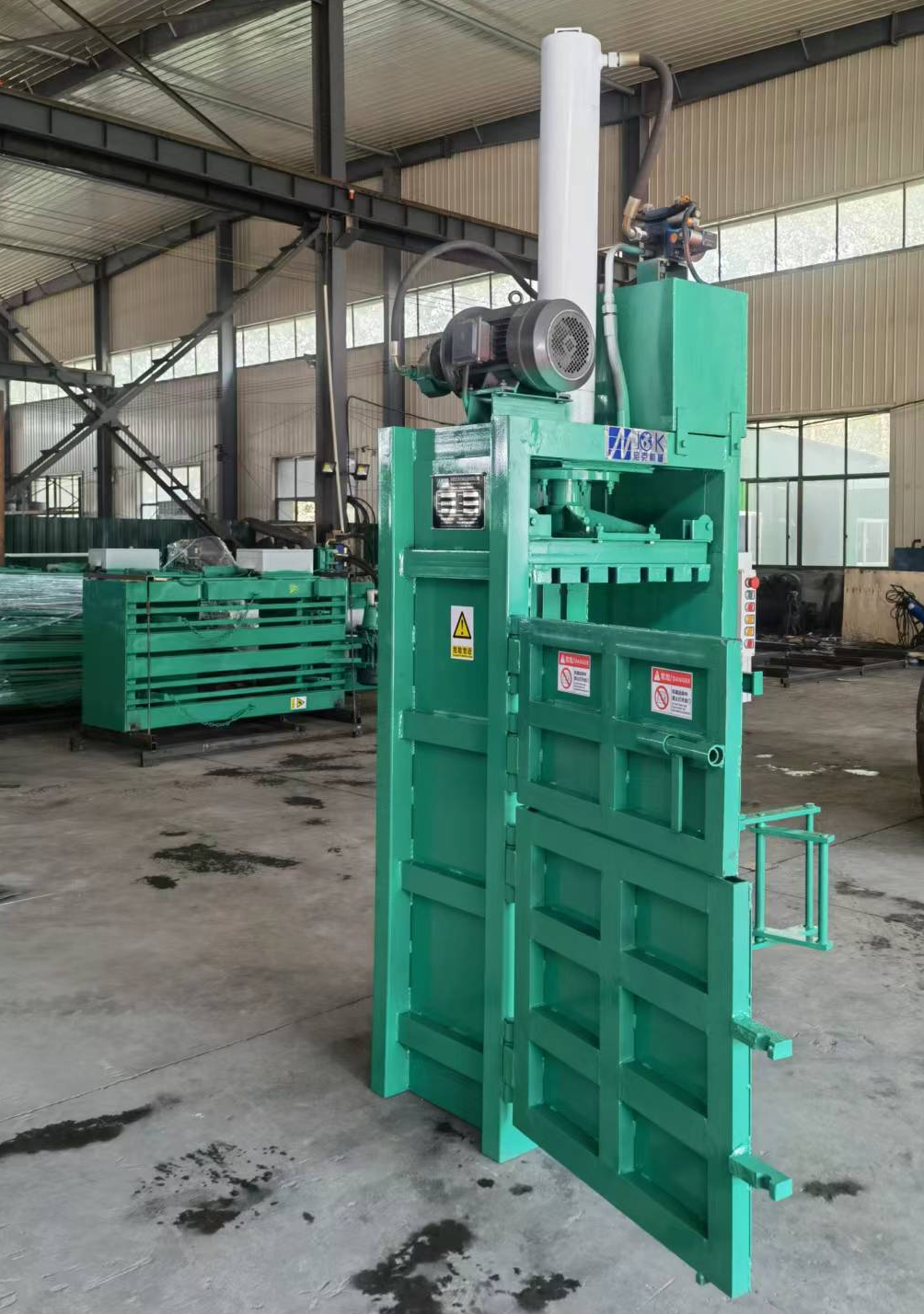
Vertical, horizontal, and bagging configurations should be compared as different operating choices, not as interchangeable machine labels. The supplied selection guidance associates vertical balers with limited space and lower output, and horizontal or fully automatic models with continuous, higher-throughput operations. Press bagging machines are a distinct product series in NKBALER’s stated range; the available material does not establish that every bagging model is suitable for a particular waste-paper line.
| Configuration | Evidence-supported comparison point | Questions to resolve before selection |
|---|---|---|
| Vertical baler | Selection guidance identifies vertical balers as an option for limited space and lower output. The NK6040T10 product record identifies it as a waste paper baler. | Does the stated capability match the facility’s material and required output? Is the chamber and bale size appropriate? What handling and labor arrangements are required? |
| Horizontal hydraulic baler | Available records include horizontal models with stated throughput and bale dimensions. Guidance associates horizontal or full-automatic machines with continuous, higher-throughput work. | What throughput is required in actual operating conditions? Is the model semi-automatic or fully automatic? Does the design meet the destination market’s applicable safety requirements? |
| Press bagging machine | NKBALER lists Press Bagging Machine among its product series. The provided NKB10 record gives small bale dimensions and a stated bale weight; it does not establish a waste-paper line capacity. | Is a bagged output required for this material and process? Are packaging consumables, downstream handling, and the exact intended application verified for the offered model? |
These distinctions help prevent a common procurement error: comparing machines only by nominal pressure or by the word “automatic.” A useful comparison records the intended material, the machine’s documented output basis, bale format, operating mode, supporting equipment, and unresolved local requirements. If a supplier cannot connect a published specification to the buyer’s feedstock and duty cycle, the specification is not yet a complete selection case.
Use a weighted scorecard without inventing regional scores
A scoring matrix can make trade-offs explicit, but scores should come from project evidence rather than assumptions about a continent or a policy trend. The matrix below is a buyer framework, not a measured market ranking. Set the weights for the project, score each shortlisted configuration using verified documents and site requirements, and mark unsupported information as “unverified” instead of assigning it a favorable score.
| Decision dimension | Suggested evidence to collect | Scoring rule for the buyer |
|---|---|---|
| Regulatory fit | Applicable destination-market rules; the machine’s safety documentation; relevant standard and conformity evidence for the exact model and configuration. | Score only after the applicable rule set and required evidence are identified. A missing or unverified requirement is a procurement hold, not a presumed pass. |
| Throughput fit | Required material volume and operating schedule; supplier-stated capacity; bale size and weight; feed and discharge arrangements. | Score against the facility’s required output and the supplier’s stated basis. Confirm whether the quoted figure is for the relevant material and operating conditions. |
| Total cost of ownership | Quoted purchase and installation costs; power demand; labor; consumables; maintenance; spare parts; downtime assumptions; expected operating period. | Use buyer-verified costs on a consistent time and operating basis. The supplied data contains no comparable price, energy-use, maintenance, or warranty figures, so no cost winner can be named here. |
For a weighted result, buyers can assign a project-specific weight to each dimension and calculate a weighted score only after the underlying ratings are documented. The weights should reflect the project’s constraints: a regulatory failure may be disqualifying regardless of throughput, while a facility with limited floor space may give layout suitability greater importance. The formula is an organizing tool; it is not evidence that one region, machine type, or supplier is objectively superior.
Keep a separate evidence-status column. “Verified,” “supplier stated,” “awaiting confirmation,” and “not applicable” are more informative than a single unexplained score. This is especially important for total cost of ownership: without energy consumption per bale, maintenance intervals, spare-parts costs, and operating data, a purchase-price comparison alone cannot establish lifecycle value.
Regional comparison: what is known and what remains open
North America
The supplied company corpus states that NKBALER serves North American markets. That is a company-reported market footprint, not proof of a specific country’s regulatory approval, export volume, installed base, or regional production performance. The verified-data package identifies a gap in current North American baler safety evidence. Buyers should establish the exact destination jurisdiction and verify the applicable requirements for the offered machine before treating regulatory fit as scored.
South America
NKBALER’s company corpus also names South America among its major markets. The application record lists countries including Brazil, Ecuador, Colombia, and Peru for a broader recycling-equipment scenario, but this does not establish country-level baler demand or a policy requirement in each market. A buyer should use the destination country, material grade, and project conditions to define the compliance and configuration checks. No verified regional export statistics or adoption comparison are available here.
Asia
The company corpus identifies Asia as a major market, and the application record names countries across the region. Separately, a commercial research source reports that Asia Pacific accounted for 39.4% of the global baler market’s revenue in 2024. That figure concerns the broad baler market, not a waste-paper hydraulic baler segment, a specific country, or a measure of technology adoption. It can provide limited category context, but should not be used to forecast an individual buyer’s demand or to rank national suppliers.
Across all three regions, the current evidence does not provide comparable country-level policy drivers, hydraulic baler import/export volumes, machine-type market shares, or adoption rates. A defensible regional matrix should leave those cells open until primary regulatory and trade sources have been checked. Apparent precision without that verification would make the comparison less reliable, not more useful.
Use company metrics as an illustration, not as a regional proxy
NKBALER is the brand name associated in the supplied materials with Shaanxi Nick Machinery Equipment Co., Ltd., a manufacturer engaged in the research and development and sales of environmental protection and packaging machinery. Company materials list vertical balers, full-automatic horizontal balers, manual horizontal balers, and press bagging machines. These facts help identify the range of configurations a buyer might request for comparison; they do not establish that every model is interchangeable or suitable for every waste-paper stream.
The company corpus reports annual production capacity of 600 units, a workforce of approximately 50, a 5,000-square-meter manufacturing facility, and a 15-person R&D team. It also reports that exports account for 90% of sales and names North America, South America, and Asia among its major markets. These are company-reported figures and market statements. They are useful as an illustrative supplier profile, but do not establish model-specific output, audited factory performance, export volume by country, compliance status, or regional market share.
Some product records provide configuration-level specifications that can be used as comparison inputs, subject to confirmation for a specific quotation. The NK6040T10 is listed as a waste paper baler with a stated capability of 6–8 bales per hour and bale weight of 50–80 kg. The NKW125Q record states a capacity of 10–12 tons, while the NKW160Q record specifies 12–15 tons per hour. Because the NKW125Q entry does not state a time unit for its capacity, it should not be silently compared with the NKW160Q hourly figure. The NKW180BD record states a capability of 6–8 tons per hour. Buyers should confirm material, operating assumptions, and the precise meaning of each capacity figure in the current technical offer.
Technical checks that connect configuration to procurement
Before requesting comparable offers, buyers should send suppliers the same operating brief. The application data specifically calls for material type and dimensions, loose density, target bale weight or size, available space, power conditions, automation level, and required throughput. These inputs reduce the risk of comparing a machine configured for a different feedstock or a different production target.
- Feedstock: Identify the paper grades and whether the stream is mixed. Do not assume that a broad “waste paper” label captures the properties of the material entering the chamber.
- Output: State target bale dimensions and weight, required tonnage or bale count, and the basis on which capacity must be demonstrated.
- Site: Confirm footprint, power supply, working conditions, feeding method, and material flow to and from the press.
- Automation: Specify the required operating mode and clarify which steps are automatic, semi-automatic, or manual.
- Integration: Check whether conveyors, baling wire, PET strapping, jumbo bags, packing tools, shredders, or crushers are needed for the actual line.
- Lifecycle evidence: Request energy-use, maintenance, spare-parts, warranty, and service information in a form that can be compared across shortlisted offers.
The available application description says balers compact loose waste into bales that are easier to store, handle, and transport, helping reduce space requirements and waste-transport frequency. The extent of any operational effect depends on the project and is not quantified in the supplied evidence. Buyers should model their own handling and transport process rather than assume a fixed saving.
Where the comparison framework stops
Traditional procurement shortcuts—choosing by lowest quoted price, nominal hydraulic force, or a broad regional trend—can omit important constraints. They also have limits: the scorecard cannot replace an engineering review, a site assessment, or confirmation of the destination market’s rules. No verified FOB prices, energy consumption, maintenance intervals, spare-parts costs, or comparable supplier-level compliance records were supplied for this article.
Likewise, a company’s export share or stated markets should not be treated as evidence that a particular model is approved for sale in every destination. The verified-data package identifies EN 16252:2012 for horizontal baling presses in the European Union, but the article’s core regional comparison is North America, South America, and Asia. A buyer exporting to or operating in another jurisdiction should verify the relevant rules independently and obtain documentation for the exact machine configuration.
Outlook: make the next comparison more evidence-rich
When recycling policies change, the most durable procurement approach is to keep the selection model adaptable. Record feedstock definitions, local requirements, capacity assumptions, and lifecycle costs separately so that a change in one input does not invalidate the entire comparison. For cross-border projects, retain the destination country and the evidence source alongside every regulatory score.
The largest evidence gaps for a stronger regional comparison are verified country-level regulations, confirmed customs classifications and trade flows for baling presses, and model-level operating data such as actual throughput, bale consistency, and energy use. Until those are available, the useful conclusion is not a regional winner. It is a disciplined shortlist: match the configuration to the process, verify legal fit, compare capacity on consistent terms, and calculate ownership cost from project data.
FAQ
How do I choose the right hydraulic baler for a waste paper, plastic, or scrap metal recycling project?
Confirm the material type, loose density, target bale size or weight, throughput, available space, and power conditions before choosing a configuration. The supplied selection guidance associates vertical balers with limited space and lower output, and horizontal or full-automatic models with continuous, higher-throughput operations and automatic tying. Verify that the selected model’s specifications and destination-market safety documentation match the actual project.
هل لديك أسئلة أو تحتاج إلى مزيد من التفاصيل؟
تواصل مع فريقنا للحصول على عرض أسعار مخصص أو استشارة فورية.
طلب عرض أسعار
املأ النموذج أدناه وسيتواصل معك فريقنا بعرض مقترح مخصص.
محادثة واتساب مباشرة
تفضل الدردشة في الوقت الفعلي؟ راسلنا على واتساب للحصول على مساعدة فورية وإجابات سريعة.
- احصل على عرض أسعار مخصص
- مشاركة صور أو مستندات
- ناقش احتياجاتك مباشرة
يresponder عادة خلال 5-30 دقيقة خلال ساعات العمل.