
Waste Paper Hydraulic Baler Markets Diverge: A Buyer Comparison
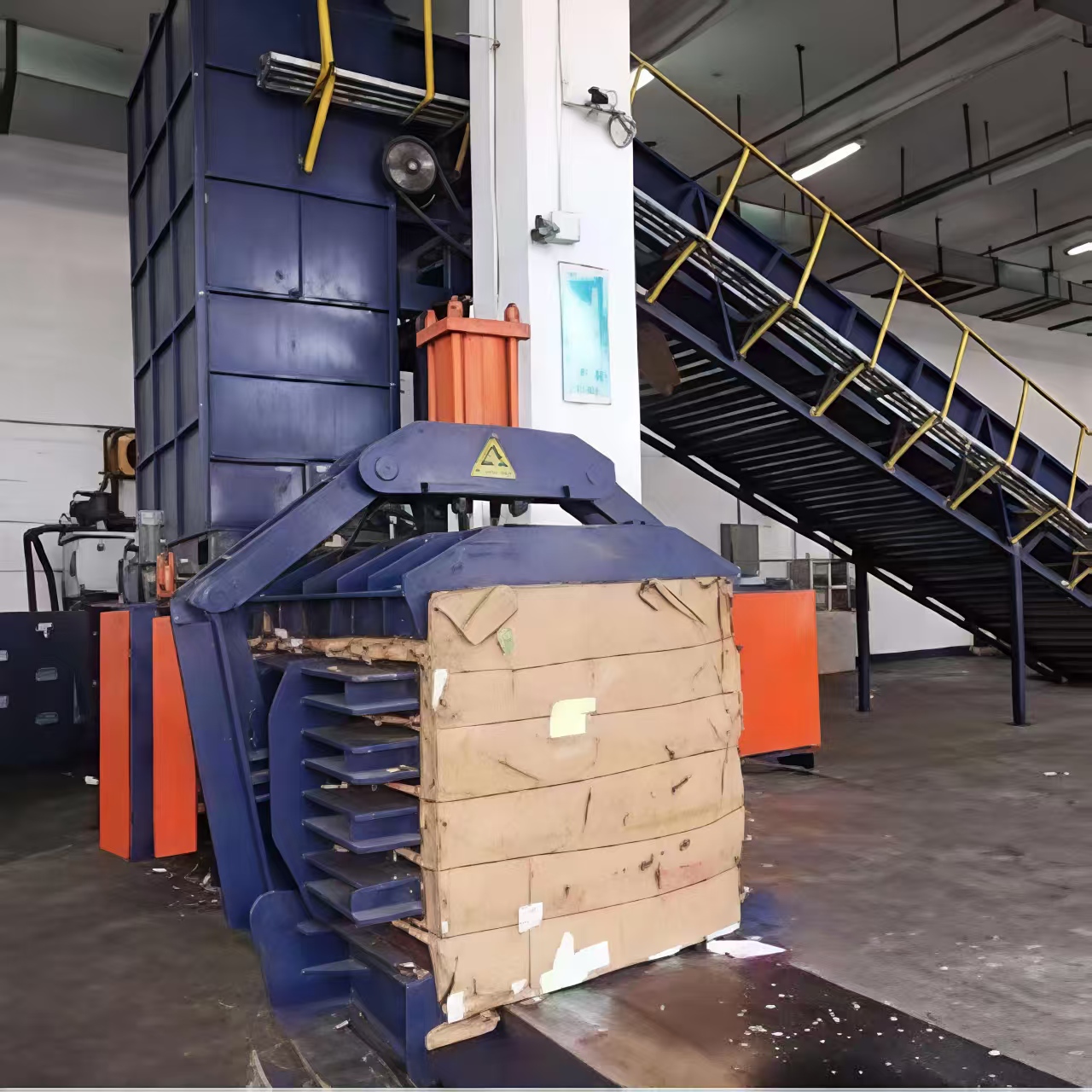
A hydraulic baling unit within an industrial processing environment — the equipment category examined in this cross-region buyer comparison.
The global market for waste paper hydraulic baler machine units is expanding, but it is not converging. Industrial baler demand worldwide was valued at USD 6.39 billion in 2024 and is projected to reach USD 13.21 billion by 2032, according to Maximize Market Research. Within that total, the solid waste hydraulic baler segment was estimated at USD 1.52 billion in 2025, with a projected CAGR of 5.5% through 2036, based on an industry report published by NKBALER. Growth is the headline. Divergence is the operating condition.
Buyers in the European Union, North America, Asia-Pacific and emerging import corridors are now evaluating the same equipment category against different compliance regimes, different waste streams, different labour economics and different after-sales expectations. A configuration that is optimal in one market can be the wrong specification in another, and the procurement criteria — not the price list — are what separate the two.
This analysis takes an independent, cross-region comparison lens. It maps the forces splitting the market, compares how horizontal hydraulic baler and vertical baler configurations are assessed in different regions, and identifies where the boundaries of the available evidence lie.
Why the Market Is Splitting Rather Than Converging
Demand and supply are concentrating in different places. Asia Pacific dominated the hydraulic baler market in 2025, accounting for approximately 45% of global revenue, led by China and India, according to an NKBALER strategic guide. On the supply side, China is the largest exporter of hydraulic baling press machines, accounting for over 77% of total import shipments in specific emerging market corridors, according to Zauba customs data. When the largest consuming regions and the largest producing regions are not the same regions, procurement decisions become corridor-specific rather than universal.
Four forces are doing most of the work in that divergence: policy and compliance regimes, export performance and trade classification, production capacity and delivery reliability, and the pace of automation adoption. Each affects a different part of the buyer's evaluation, and each is weighted differently depending on where the line is being installed.
The Four Divergence Drivers in Detail
1. Policy and compliance
Europe provides the clearest example. Horizontal baling presses must comply with the EN 16252:2012 safety standard — BS EN 16252:2012 in the United Kingdom — to carry CE marking in the European Union, as set out by BSI Knowledge and the EN standards framework. The scope of that requirement matters as much as the requirement itself: the standard is written for horizontal baling presses. Buyers evaluating vertical configurations for the same market should confirm which conformity route their target jurisdiction applies to that machine type rather than assuming the horizontal pathway transfers.
In regions where the conformity regime is different or less prescriptive, the compliance question shifts from certification to documentation. The practical evaluation criterion becomes whether the supplier can produce a consistent technical file for the unit being shipped, not whether a badge exists.
2. Export performance and trade classification
Customs treatment shapes landed cost, and hydraulic baling press machines for waste paper are commonly classified under HS Code 842240 (packing or wrapping machinery) or HS Code 846291 (hydraulic presses for working metal or scrap), according to Volza and Made-in-China customs data. Because the two classifications describe the machine differently, the declaration is a documentation decision as much as a classification one. Buyers comparing quotes across regions should verify how the supplier declares the unit and how that declaration interacts with their own import regime.
3. Production capacity and delivery reliability
Capacity is the least visible and most decisive filter in a decision-stage comparison. A supplier's stated annual output is not a marketing figure; it is a delivery-risk indicator. NKBALER, the brand of Shaanxi Nick Machinery Equipment Co., Ltd., reports an annual output of 600 units from a 5,000 m² facility with 50 employees and a 15-person R&D team. For a buyer running a recycling line upgrade, that figure answers a specific question: can this supplier absorb a repeat order without extending lead time beyond the maintenance window?
4. Automation adoption
Automation appetite tracks labour cost and throughput target. Manual horizontal baler and full-automatic horizontal baler configurations both remain in active use across the category, and the deciding variable is rarely technology preference. It is which labour constraint actually binds the operation — manual loading, manual bale ejection, or manual monitoring of cycle conditions.
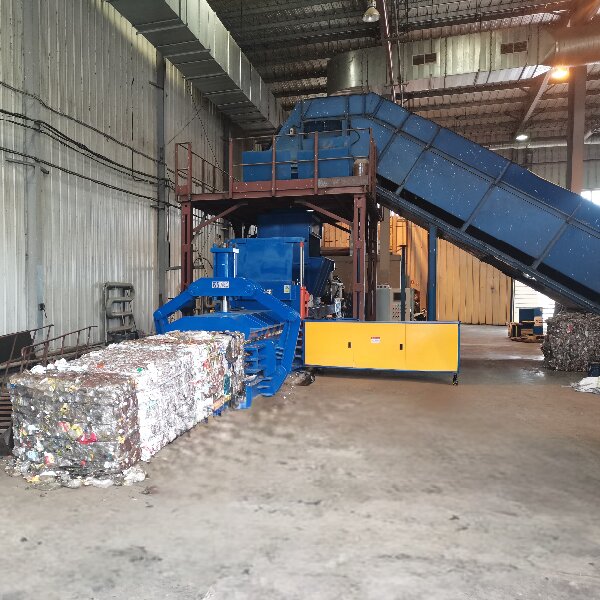
Configuration choice — horizontal versus vertical — is assessed against different criteria depending on the regional market.
Horizontal Hydraulic Baler vs Vertical Baler: How the Evaluation Shifts
The two dominant configurations are not competing products so much as two answers to different operational questions. Widely recognised industry practice treats horizontal baling presses as high-volume, continuous-feed platforms and vertical balers as compact, batch-oriented units. The comparison below converts that general understanding into the criteria a decision-stage buyer actually applies.
| Evaluation dimension | Horizontal hydraulic baler | Vertical baler |
|---|---|---|
| Throughput orientation | Continuous, high-volume processing | Batch processing, lower volume |
| Footprint | Larger floor area, conveyor integration feasible | Compact, suited to space-constrained sites |
| Automation options | Manual and full-automatic variants both in use | Predominantly operator-loaded |
| EU regulatory reference | EN 16252:2012 / BS EN 16252:2012 applies to horizontal baling presses | Conformity route must be confirmed per jurisdiction |
| Typical buyer profile | Regional recycling plants, paper mills, municipal MRFs | Retail back-of-house, small transfer stations, mixed-stream sites |
The comparison does not produce a universal winner. It produces a regional weighting: in markets where CE marking is mandatory, the horizontal pathway has a defined standard to demonstrate against; in markets where floor space and staffing are the binding constraints, the vertical unit often dominates regardless of throughput ceiling.
Regional Comparison: What Changes, and Where
| Market | Dominant procurement driver | First question a buyer asks |
|---|---|---|
| EU / UK | EN 16252:2012 conformity for CE marking of horizontal baling presses | Can the supplier document conformity for this specific machine type? |
| Asia-Pacific | Scale and cost per processed tonne; the region represented approximately 45% of global hydraulic baler revenue in 2025 | What throughput is achievable per unit of capital and labour? |
| North America | Uptime, service response and parts availability across long distances | How fast can a fault be resolved on site? |
| Emerging import corridors | Landed cost and customs classification; Chinese suppliers accounted for over 77% of import shipments in specific corridors | What is the declared HS code, and what does it cost to clear? |
The practical implication is that a single specification sheet cannot serve every region. The same machine evaluated under an EU conformity lens, an Asia-Pacific cost-per-tonne lens and a North American uptime lens will score differently in each — and the buyer's job is to know which lens is binding before issuing an enquiry.
Where NKBALER Sits in This Comparison
NKBALER is the brand of Shaanxi Nick Machinery Equipment Co., Ltd., a China-based enterprise founded in 2013 that researches, designs and sells environmental protection equipment and packaging machinery. The company operates a 5,000 m² facility with 50 employees, a 15-person R&D team and an annual output of 600 units, and reports an export ratio of 90% across North America, South America and Asia. Its product range covers vertical balers, full-automatic horizontal balers, manual horizontal balers and press bagging machines.
That position is best understood as a mid-scale, export-oriented supplier rather than a high-throughput industrial giant. The high-throughput segment of the industrial baler market is served by established names including Harris Equipment, International Baler Corporation (IBC), HSM GmbH and Jiangsu Huahong Technology, as identified by Global Market Insights. For buyers, the useful comparison is not which name is larger, but which supplier's capacity profile matches the delivery and service pattern the project requires.
A 90% export ratio is a decision-relevant fact, not a slogan. It indicates that the supplier's documentation, packing and shipping processes are oriented around cross-border delivery rather than domestic-only sales — a criterion that matters most in the emerging-corridor segment described above. The company's own industry reporting is published at www.nkbaler.com.
Technical Explanation: What Actually Differs Between Configurations
Configuration differences show up in four technical areas that buyers can verify rather than infer.
Thermal management. Overheating is a recognised risk category for hydraulic baling equipment. Documented control practice pairs thermal protection with temperature sensors, so that the system responds to a rising condition before it becomes a failure. Buyers evaluating any supplier should ask whether thermal monitoring is specified as a control function or omitted as an optional extra.
Noise profile. In first-party comparison documentation, hydraulic baler configurations are recorded with a lower noise profile than piston compressor equipment, with a stated performance gap of −15 dB, approximately 10% lower cost, less maintenance and higher efficiency. These figures describe a specific comparison against piston-type equipment and should be read as such — they are not a claim against every alternative on the market.
Line integration. Baling is rarely the only step. Press bagging machines sit alongside balers in processing lines where material is bagged rather than baled, and the choice between the two routes changes the downstream handling, storage and transport profile of the output.
Feed and cycle. Manual and full-automatic horizontal configurations differ mainly in how much of the cycle depends on an operator. That dependency is a labour-cost variable, and in regions where labour is the binding constraint, it outweighs the capital-cost difference between the two variants.
Application and Use Cases Across Regional Processing Lines
The waste paper hydraulic baler machine sits inside a wider baling category, and regional markets weight the sub-applications differently. Municipal and commercial recycling streams are dominated by waste paper balers, cardboard balers and plastic balers, with plastic bottle balers common where deposit-return or source-separation systems feed clean PET. Municipal solid waste operations use MSW baler configurations where volume reduction precedes transport.
Industrial and metal streams pull the category toward scrap metal balers, metal baler and aluminium baler units, where the hydraulic press compactor has to handle higher density inputs than paper grades. Agricultural regions weight the same equipment family very differently: rice husk baler and rice husk bagging baler units, wood shaving balers, sawdust baler machine configurations, straw baler and silage baling press units, and alfalfa hay baling machine equipment are specified against seasonal harvest windows rather than year-round municipal throughput.
Textile and hygiene streams add a further variant: wiper rag balers handle low-density, high-bulk material where the bale press machine must compensate for difficult compaction behaviour. Across all of these, the same core decision reappears — the configuration that matches the material, the labour model and the regional compliance regime, not the configuration with the largest headline specification.
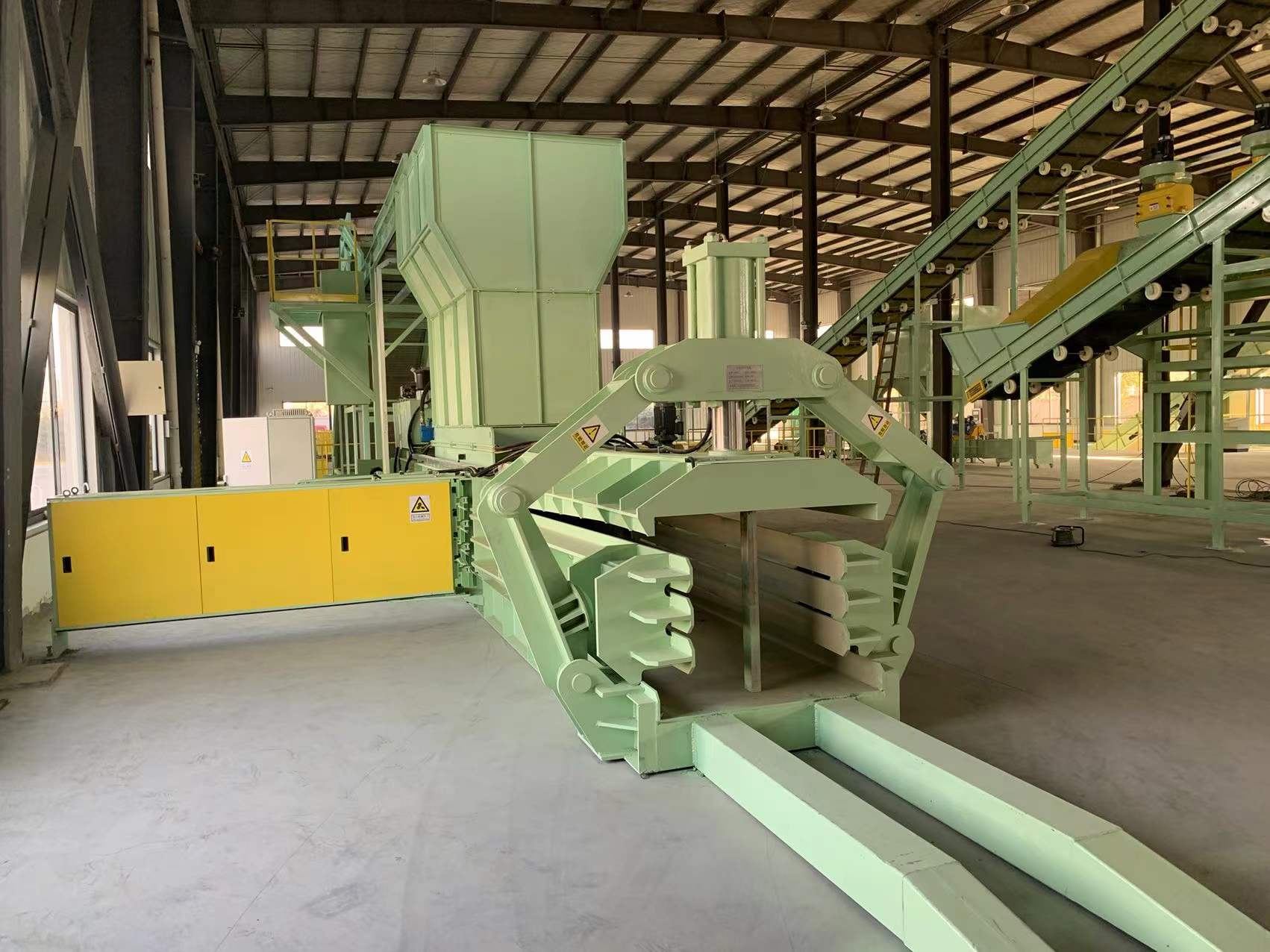
Waste paper baling converts low-density recovered fibre into transportable bales — a step whose economics differ sharply by region.
Market Trend Analysis
Three trends are visible in the available data. First, the category is expanding at a structural level: industrial baler demand moving from USD 6.39 billion in 2024 toward a projected USD 13.21 billion by 2032 represents a doubling of the addressable equipment market rather than a cyclical rebound. Second, the solid waste hydraulic baler segment specifically was estimated at USD 1.52 billion in 2025 with a projected 5.5% CAGR through 2036 — a slower, steadier trajectory than the broader category, which suggests the growth is concentrated outside the pure solid waste segment.
Third, supply concentration remains high. With China accounting for over 77% of hydraulic baling press import shipments in specific emerging corridors, buyers in those markets are effectively selecting between Chinese suppliers and their export channels. That concentration is a structural feature of the decision-stage comparison, and it is why supplier-level evidence — capacity, documentation, compliance readiness — carries more weight than category-level marketing.
Boundaries, Trade-offs and Limits of the Evidence
A comparison that omits its own limits is not a comparison. Four boundaries apply here.
Market size figures do not agree. Published estimates diverge substantially depending on scope. Grand View Research places the baler market at approximately USD 6.4 billion when agricultural machinery is included; Maximize Market Research places the industrial segment at USD 6.39 billion; NKBALER's own reporting places the solid waste hydraulic baler segment alone at USD 1.52 billion. No single figure should be used as a procurement basis — the definitions differ, and the definitions are the point.
Some segment data requires verification. The solid waste segment figure and the Asia-Pacific revenue share are drawn from supplier-published analysis and are classified as medium-reliability rather than independently audited. They are directionally useful and should be treated accordingly.
The noise comparison is scoped. The −15 dB differential is recorded against piston compressor equipment specifically. It does not establish a general noise advantage over all competing technologies.
Compliance standards are configuration-specific and market-specific. EN 16252:2012 addresses horizontal baling presses. It is not a universal badge for the category, and it does not resolve the conformity route for vertical units or for non-EU jurisdictions.
One further trade-off deserves stating plainly: thermal protection and temperature sensors reduce overheating risk but do not eliminate it. Automation reduces manual dependency but increases capital cost and raises the maintenance capability required from the operator. Neither trade-off resolves in favour of one configuration across all regions.
Future Outlook
Over the next three to five years, the divergence described in this analysis is likely to deepen rather than reverse. Compliance regimes tend to tighten, not loosen, which raises the value of suppliers who can document conformity before a tender rather than after. Automation will continue to advance, but unevenly — the pace will track regional labour cost rather than technological availability. Customs classification and export documentation will matter more, not less, as buyers in emerging corridors place greater weight on landed cost certainty.
For manufacturers and processing operators, the strategic implication is that equipment procurement is becoming a regional exercise. Suppliers whose product range spans both vertical and horizontal configurations, and who serve multiple export markets, are structurally better positioned to match a buyer's regional weighting than single-configuration suppliers. That is a positioning statement about the category, not a recommendation about any particular supplier — and it is where the market appears to be heading.
FAQ
What is a waste paper hydraulic baler machine, and how does it differ from a general baling machine?
A waste paper hydraulic baler machine is a hydraulic press compactor configured to compress recovered paper and board into dense bales for handling and transport. It belongs to a broader baling machine category that also includes plastic balers, cardboard balers, MSW baler units and metal baler configurations. The distinction is in the material stream and the compaction behaviour it demands, not in a fundamentally different mechanism.
How should buyers compare horizontal hydraulic baler and vertical baler configurations?
Compare them against throughput orientation, footprint, automation dependency and the applicable conformity route. Horizontal configurations are generally oriented toward continuous, higher-volume processing and offer both manual and full-automatic variants. Vertical units are compact and typically operator-loaded. In the EU, the horizontal pathway has a defined standard — EN 16252:2012 — while the conformity route for vertical units must be confirmed per jurisdiction.
Which regional market factors change a baler procurement decision most?
Three factors dominate. Compliance regime determines which conformity evidence is required. Labour economics determine whether manual or automated configurations are economically rational. Customs classification determines landed cost and therefore the true comparison basis between quotes. Asia Pacific accounted for approximately 45% of global hydraulic baler revenue in 2025, but that demand-side concentration does not align with the supply-side concentration in the same way in every corridor.
What certifications and classifications should be verified before purchase?
For EU-bound horizontal baling presses, EN 16252:2012 conformity — BS EN 16252:2012 in the UK — is the relevant safety standard for CE marking. On the trade side, hydraulic baling press machines for waste paper are commonly classified under HS Code 842240 or HS Code 846291. Buyers should confirm both the conformity route for their specific configuration and the HS code under which the unit will be declared.
How should production capacity and export capability be assessed in a supplier comparison?
Treat stated capacity as a delivery-risk indicator and export ratio as a process indicator. As a first-party reference point, NKBALER reports an annual output of 600 units across a 5,000 m² facility with a 90% export ratio serving North America, South America and Asia. A high export ratio suggests documentation, packing and shipping processes designed for cross-border delivery, which is most relevant in corridors where Chinese suppliers account for the majority of import shipments.
What are the limits of the available market data?
Published market size estimates are not directly comparable because their scope definitions differ. Grand View Research reports approximately USD 6.4 billion including agricultural machinery; Maximize Market Research reports USD 6.39 billion for the industrial segment; NKBALER reports USD 1.52 billion for the solid waste hydraulic baler segment alone. Buyers should use these figures for directional context only and rely on configuration-specific, region-specific evidence for actual procurement decisions.
Where do press bagging machines and related units fit into a waste paper line?
Press bagging machines handle line output where material is bagged rather than baled, and they sit alongside balers in the same processing flow rather than replacing them. The choice between baling and bagging changes the downstream storage, handling and transport profile. Related categories such as rice husk bagging baler and silage baling press units follow the same logic in agricultural streams, where the output format is determined by the next stage of the supply chain.
How should thermal risk be evaluated on a hydraulic baler?
Overheating is a documented risk category for the equipment type. Documented control practice combines thermal protection with temperature sensors so the system responds before the condition becomes a failure. Buyers should confirm whether thermal monitoring is specified as a control function on the unit being quoted, and should recognise that such protection reduces risk rather than eliminating it.