
Water-Circulation Cooling Vests: From Spec to Deployment
Construction Heat Management · A Buyer's Decision Framework
Construction heat stress is a compliance problem before it is a comfort problem. OSHA's General Duty Clause — Section 5(a)(1) of the Occupational Safety and Health Act — requires employers to provide a workplace free from recognized hazards, and heat on high-temperature construction sites falls inside that obligation. Once that framing is accepted, a cooling vest stops being summer gear and becomes a control measure: something that has to be specified, sourced, verified and deployed like any other item of site equipment.
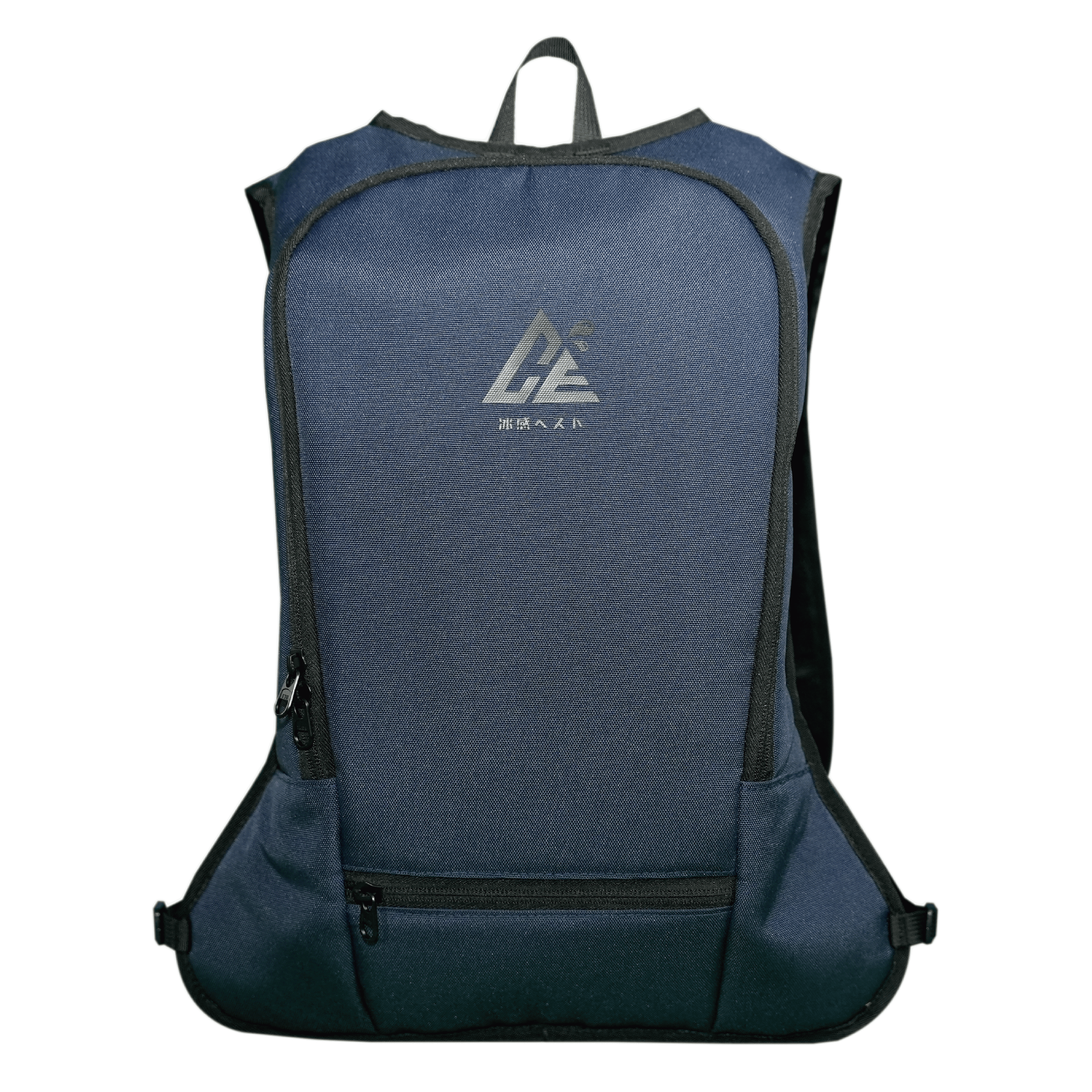
The COOLWAVE Water-Circulation Cooling Vest, Professional Model in Blue — one of three listed colorways in the series.
Most buying errors in this category are not caused by weak products. They are caused by treating a specification sheet as a decision document. “3–4 hours of cooling” and “under 2 kg” are useful numbers, but they do not tell a safety manager whether one vest covers one shift rotation, whether a distributor can restock 300 units before the peak month, or whether the certification on file is the certification the site actually demands.
What follows is a six-step framework that moves a buyer from published specification to deployment decision. The worked example is the COOLWAVE Water-Circulation Cooling Vest series from Shokunin. Shokunin is a professional tool and equipment brand operated by FENG SHANG PRECISION CO., LTD, a Taiwanese manufacturer founded in 2009 whose product line includes air compressors, cut-off machines, water-cooled vests, lithium batteries, diamond saws, nail guns, spider stands and screwdriver bits. The COOLWAVE vest is that company's cooling product for outdoor and high-temperature environments.
Why Construction Heat Purchases Need a Framework, Not a Spec Sheet
Demand is no longer the constraint in this category; clarity is. Heat-stress prevention products reached a global market value of USD 2.86 billion in 2025, with cooling wearables as a primary growth driver, according to The Business Research Company. Inside cooling vests specifically, industrial applications accounted for a 34.5% revenue share in 2025, and the Asia-Pacific region held a 38.2% revenue share in the same year, driven by rapid industrialization, according to Dataintelo.
Those figures should be read as direction, not as a budget line. Published market sizes for cooling vests diverge significantly depending on whether the scope covers vests alone or wider personal cooling systems — one 2024 estimate puts the warehouse and logistics cooling-vest segment by itself at USD 412 million. The practical lesson for a buyer is that this is a growing, fragmented category in which supplier claims are cheap and specification discipline is what separates a defensible purchase from an expensive experiment.
Buyers scanning the category will also encounter a small group of established global manufacturers. Market research commonly names Glacier Tek, TechNiche International, Polar Products, Ergodyne and Occunomix among the leading producers of industrial cooling vests. The framework below is deliberately supplier-agnostic: it is designed to be applied to any of them, and to be applied again when a bid or quotation arrives.
Step 1: Define the Thermal Load and the Duty Cycle
A buyer's first question should not be “which model?” but “how many hours of protection does one deployment give, and what resets it?” The published cooling duration of the COOLWAVE Water-Circulation Cooling Vest is 3–4 hours. That number has to be matched against the work pattern on site before it means anything.
- Shift structure. A 3–4 hour cooling window maps neatly onto a rotation-based deployment, where a worker changes out of a depleted vest at a controlled interval. It maps poorly onto an uninterrupted eight-hour exposure unless the site plans a mid-shift vest change.
- Reset logistics. The application record describes the cooling mode as passive and ice-pack activated, supplied with reusable ice packs. The reset therefore depends on refreezing capacity, not on electricity at the workstation.
- Ambient conditions. The published parameter block lists a suitable temperature of below 10 °C. Because construction sites operate far above that, buyers should ask the supplier exactly what this figure measures — water, ice-pack or ambient temperature — before writing it into a purchase specification.
Getting this step right converts an ambiguous marketing number into a staffing assumption: how many vests per worker per shift, and how many ice-pack sets per vest. Everything downstream in the framework depends on it.
Step 2: Confirm the Physical Constraints You Have to Live With
The second step is where a specification stops being a sales document and becomes an engineering constraint. The published values for the COOLWAVE series are unusually complete for this product category, which makes them testable rather than decorative.
| Published parameter | Value | What it constrains on site |
|---|---|---|
| Cooling duration | 3–4 hours | Rotation planning and the number of vest changes per shift |
| Weight | Within 2 kg | Whether the vest can be worn over existing workwear without adding meaningful load |
| Suitable temperature (as published) | Below 10 °C | Must be clarified with the supplier before it is written into a site specification |
| Pump output | 5V 150 mA (max) | Power draw and the power source specified for the pump |
| Flow rate | Max 320–370 ml/min | Circulation throughput through the cooling tube loop |
| Shoulder strap material | 600D polyester | Abrasion tolerance against harnesses and scaffolding contact |
| Vest material | PEVA | Contact layer behaviour against sweat and repeated washing |
| Water bag material / cap | TPU / polypropylene | Flex fatigue in a backpack that is set down and picked up all day |
| Cooling tube | Sand rubber (black) | Flexibility and resistance to kinking in the tube loop |
| In the box | Water-cooled vest backpack ×1, ice packs ×2 | Baseline spares ratio per worker |
Two of these parameters deserve more attention than they usually get. The first is weight: a published figure within 2 kg keeps the vest inside the range that most site PPE policies tolerate without a reassessment of manual-handling risk. The second is flow rate: 320–370 ml/min describes how much chilled water the system moves through the tube loop, and it is the parameter that actually produces the cooling effect.
Step 3: Choose Between the Basic and Professional COOLWAVE Configuration
The COOLWAVE series is listed in two configuration families: the COOLWAVE Water-Circulation Cooling Vest (Basic Model) and the COOLWAVE Water-Circulation Cooling Vest (Professional Model), the latter listed in three colorways — Blue, Gray and Black.
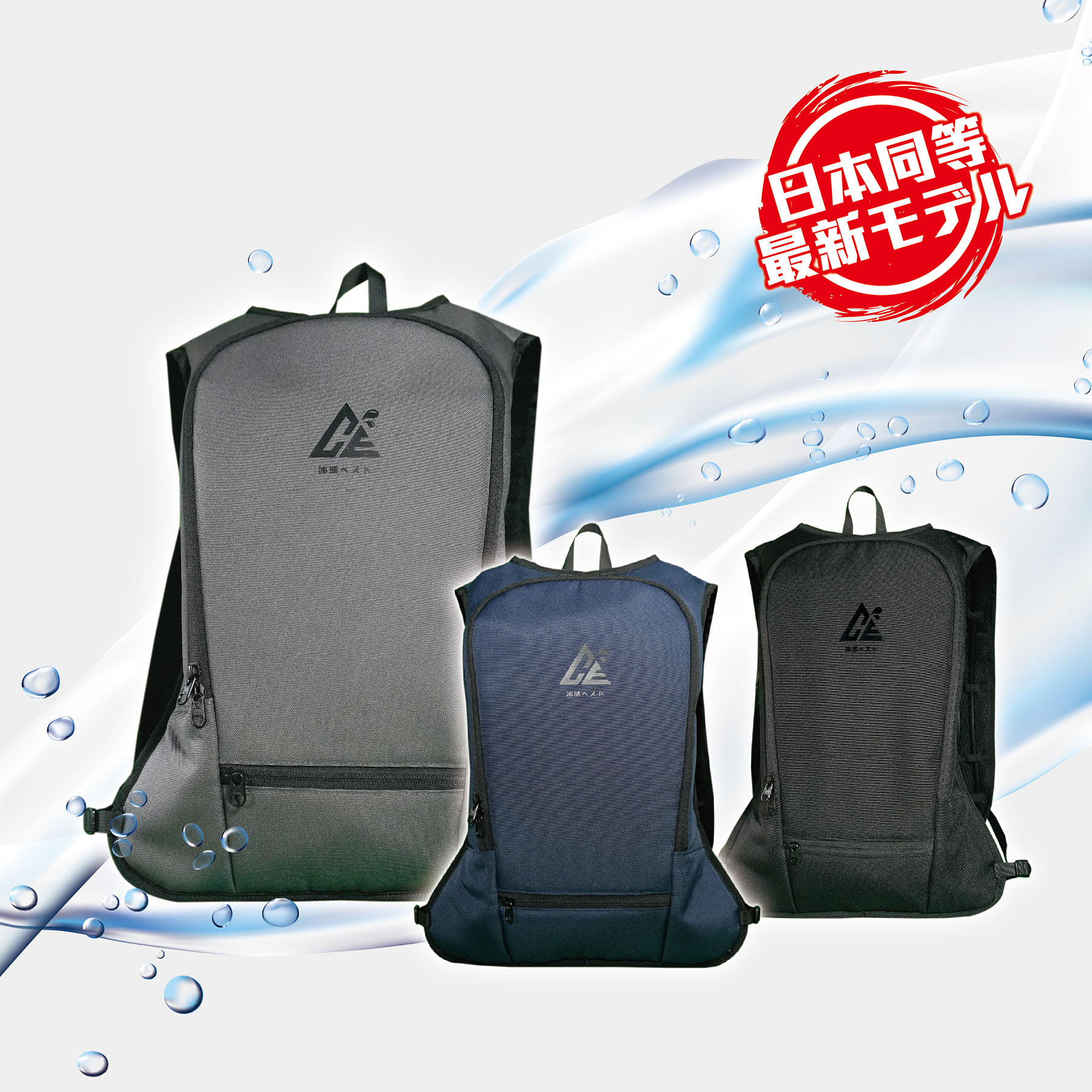
The COOLWAVE Water-Circulation Cooling Vest, Basic Model — the base configuration in the series.
| Decision item | Basic Model | Professional Model |
|---|---|---|
| Published cooling duration | 3–4 hours | 3–4 hours |
| Published weight | Within 2 kg | Within 2 kg |
| Published flow rate | Max 320–370 ml/min | Max 320–370 ml/min |
| Materials and pump specification | 600D polyester, PEVA, TPU, polypropylene, sand rubber; 5V 150 mA (max) pump | 600D polyester, PEVA, TPU, polypropylene, sand rubber; 5V 150 mA (max) pump |
| Listed colorways | Single listing | Blue, Gray, Black |
| Listed applicable industries | Construction workers, outdoor workers, food stall operators, street vendors, traffic controllers, metal sheet factories | Same listed application set |
The decision rule that follows from this table is uncomfortable but useful: because the published performance parameters are identical across the two listings, a buyer should not assume that the Professional Model delivers a longer cooling window. If a supplier or reseller claims a performance difference between the two configurations, ask for the measurement behind the claim.
That leaves two legitimate reasons to select one over the other. The first is uniform and colorway policy — a three-color option makes it easier to separate teams, shifts or contractors on a large site, and easier for a distributor to build a locally relevant range. The second is deployment scale: a pilot on one site can be run on the base configuration, while a multi-site rollout benefits from a configuration that can be differentiated by crew. Neither reason requires a performance assumption that the published data does not support.
Step 4: Audit Certification Evidence Before You Accept It
Certification is the step where buyers most often accept a document instead of auditing one. A certificate only answers a procurement question if its number, issuing authority, scope, market and validity dates line up with the requirement being specified.
For the COOLWAVE Water-Circulation Cooling Vest, two documented items are on record:
- Patent certificate I886033, issued by the Intellectual Property Office, Ministry of Economic Affairs, under the Patent Act of the Republic of China. The protected scope is the water-cooled vest structure and cooling system, and the certificate is applicable to the ROC market. It was issued on 2025-06-01 and expires on 2044-08-27.
- The Disaster Prevention Product and Service Certification Award, issued by the Taiwan Disaster Prevention Industry Association to the company's water-cooled vest, a product designed for outdoor and high-temperature environments.
The audit lesson is that these two documents answer different questions. The patent establishes that the structure and cooling system are protected intellectual property for a defined market; the disaster-prevention recognition speaks to the product's positioning as heat-risk mitigation equipment. Neither should be presented, or accepted, as a substitute for a PPE standard compliance statement.
Certificate audit checklist
- Certificate or registration number, transcribed exactly.
- Issuing authority, and whether it is a national office, an industry association or a test house.
- Scope of protection or approval — structure, cooling system, product category or material.
- Market applicability, since regional certificates do not automatically travel.
- Issue date and expiry date, checked against the intended contract period.
- Whether the certificate names the exact model being purchased or the product family only.
Step 5: Score Supplier Readiness on Documented Capability
A product that cannot be restocked is a one-season decision. The fifth step scores the supplier behind the product, using capability data rather than positioning language. For this series, the recorded production profile is ODM, with a minimum order quantity of 10 units, a monthly capacity of 3,000 units, a lead time of 7–14 days, export markets described as global, and a 6-month warranty covering the water-cooled vest.
| Scoring criterion | Example weight | Verified data point | What to request in writing |
|---|---|---|---|
| Documented production model | 10 | ODM production mode | Confirmation of the exact ODM scope for the ordered model |
| Entry order size | 10 | Minimum order quantity: 10 units | Whether the MOQ is per model, per colorway or per order |
| Replenishment capacity | 15 | Monthly capacity: 3,000 units | Committed monthly volume during peak season |
| Lead time | 10 | 7–14 days | Lead time under peak load, and the trigger for a delay notice |
| Certification evidence | 20 | Patent certificate I886033; Disaster Prevention Product and Service Certification Award | Certificates for the exact model, with validity dates |
| Warranty terms | 10 | 6-month warranty for the water-cooled vest | What is covered — pump, water bag, tube, straps — and the claim route |
| Manufacturing base | 10 | Founded 2009; 1,000 m² facility; 30 employees; 5 R&D engineers; annual output 10,000 units; 50% export ratio; main markets USA and ROC | Site audit or video walkthrough if volume justifies it |
| Customization flexibility | 10 | Not listed as an enabled service in the capability record | Written confirmation of any customizable element before it is quoted |
| Quality-control protocol | 5 | Not specified in the capability record | Inspection standard, sampling plan and defect handling |
The MOQ of 10 units is the most consequential line in this table. It makes a genuine pilot possible: a site can equip a small crew, run it through a full summer rotation, and produce internal evidence before committing to a seasonal order. That is a far stronger procurement position than a sample vest tested in an office, and it is also how a distributor validates demand before holding inventory.
The two rows marked as unspecified are not disqualifying — they are simply unresolved. A buyer who converts them into written questions before signing gets a materially better contract than one who assumes the answer.
Step 6: Plan Deployment, Rotation and Field Validation
The final step turns a purchase order into a working program. The most complete deployment evidence for this series is a Taiwan case in which 100 units were placed into cooling use in high-temperature environments across construction sites, outdoor work, metal sheet factories and street vending. The reported outcome was effective body cooling, heatstroke prevention, and improved work efficiency and worker comfort, with the equipment in use for 10 years.
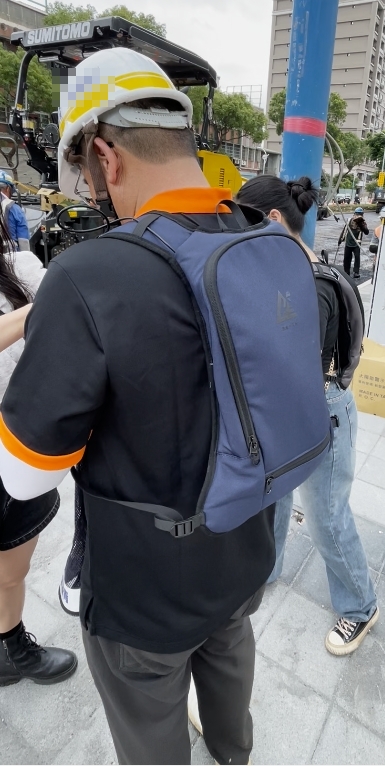
Construction site heat exposure — the environment this framework is designed around.
A decade of continuous use matters less as a marketing point than as an indication of what the deployment model has to include. Based on the product's published configuration, a site rollout should cover at least the following:
- Ice-pack logistics. Two ice packs ship with each vest. Refreeze capacity, transport and rotation of spare packs determine whether the published 3–4 hour cooling window is actually available on a given day.
- Fit and adjustment. The design is described as adjustable and one-size-fits-all, with adjustable vest straps and a portable backpack layout. Fit checks should still be part of induction, because a loose tube loop reduces contact and therefore cooling.
- Comfort and hygiene. The application record lists the required characteristics as lightweight, waterproof, breathable and one-size-fits-all. Water bag hygiene for the TPU bag is a maintenance routine, not a one-off instruction.
- Rotation discipline. The vest is a scheduled control, not an unlimited one. Rotation intervals should be written into the heat plan and enforced by supervisors.
- Spares and warranty. The 6-month warranty on the water-cooled vest applies to units, so track serials or delivery batches and record failures against the deployment date.
- Field validation. Record the vest count, rotation times, reported discomfort and any heat-related incidents for one full season. That dataset, not the spec sheet, is what supports the next order.
Water Circulation vs. Other Cooling Approaches: Where Each One Breaks Down
Traditional site cooling solutions fall into three broad families, and each one fails in a predictable place. A comparison at the level of failure mode is more useful to a buyer than a comparison of marketing claims.
| Approach | Dependency | Typical failure mode |
|---|---|---|
| Water-circulation with ice packs (as in the COOLWAVE series) | Refreezing capacity and vest rotation | Published performance collapses if ice packs cannot be refrozen or rotated within a shift |
| Simple ice-pack vests | Ice supply and pack placement | Cooling is local to the pack rather than circulated, so coverage depends heavily on pack position |
| Fan or airflow vests | Continuous power supply | Usefulness drops on sites without convenient charging or battery rotation; a 2024 market report estimated the specialised fan-vest segment at USD 1.32 billion, reflecting demand for active cooling in construction and mining |
The honest limitation of the water-circulation approach used by the COOLWAVE series is that it trades a power dependency for a logistics dependency. It requires no power for cooling and is transported as a portable backpack, which suits scaffolding, steel erection zones, metal-sheet plants and traffic control where outlets are unavailable. The cost of that independence is administrative: somebody has to own the freezer, the spare packs and the rotation schedule. Programmes that ignore that role tend to conclude, wrongly, that passive cooling does not work.
Market Signals: What the Demand Curve Is Telling Buyers
Three signals are relevant to a 2026 purchase decision. First, industrial use is the largest application segment for cooling vests, at 34.5% of revenue in 2025 — this is no longer a consumer niche, and industrial buyers are increasingly held to industrial standards of evidence. Second, Asia-Pacific accounts for 38.2% of the market, which means supply is concentrated in the same region as much of the demand and lead times can compress for well-organised buyers. Third, the broader heat-stress prevention market reached USD 2.86 billion in 2025, which means buyers now have alternatives to choose between rather than a binary decision about whether to equip workers at all.
The caveat is measurement. Published cooling-vest market sizes vary widely by definition, from a narrow warehouse-and-logistics figure of USD 412 million in 2024 to substantially larger figures for broader personal cooling systems. Buyers should use these numbers to judge category momentum and supplier seriousness, and use their own site data to judge what to buy.
Future Outlook: From Vest Purchase to Heat-Programme Procurement
The direction of this category is toward programme procurement. As heat exposure is increasingly treated as a recognised workplace hazard under rules such as OSHA's General Duty Clause, the buying unit shifts from “a vest” to “a controlled cooling capacity per shift” — which is measured in vests, ice packs, rotations and documented certifications, not in units alone.
For suppliers, that shift rewards manufacturers who can publish complete parameter sets, evidence patents and awards for the exact model, and hold MOQ and lead-time terms that let a site validate before it scales. For buyers, it means the most valuable document in the file is not the brochure but the scored evaluation sheet — the one that records what was verified, what was requested in writing, and what remains unconfirmed.
FAQ: Water-Circulation Cooling Vests for Construction
1. What is a water-circulation cooling vest and how does it cool the wearer?
It is a wearable cooling system in which chilled water is circulated through a cooling tube loop worn against the body. In the COOLWAVE Water-Circulation Cooling Vest, the cooling mode is described as passive and activated by ice packs, with the assembly carried in a portable backpack. The published pump specification is 5V 150 mA (max) with a maximum flow rate of 320–370 ml/min.
2. How long does the cooling last, and what determines whether that is enough?
The published cooling duration is 3–4 hours, and the published weight is within 2 kg. Whether that is sufficient depends on shift structure, whether the site can rotate vests mid-shift, and whether ice packs can be refrozen and returned to service. The published suitable temperature is stated as below 10 °C, which buyers should clarify with the supplier as it describes a cooling-side condition rather than typical ambient site temperature.
3. What certification evidence should a construction buyer expect to see?
Verifiable documents with numbers, authorities and dates. For this series, the record includes patent certificate I886033, issued by the Intellectual Property Office, Ministry of Economic Affairs under the Patent Act of the Republic of China, covering the water-cooled vest structure and cooling system and applicable to the ROC market, plus the Disaster Prevention Product and Service Certification Award from the Taiwan Disaster Prevention Industry Association. Buyers should also confirm separately whether any hi-visibility requirement applies, since ANSI/ISEA 107-2020 governs high-visibility garments rather than cooling under-layers.
4. What is the difference between the Basic and Professional COOLWAVE models?
Both are listed with the same published parameter block: cooling duration of 3–4 hours, weight within 2 kg, maximum flow rate of 320–370 ml/min, and the same material and pump specifications. The Professional Model is listed in three colorways — Blue, Gray and Black — while the Basic Model is listed as a single configuration. The two listings also share the same listed applicable industries. Because no performance difference is published, selection should be driven by colorway or uniform policy and by procurement route, not by an assumed longer cooling window.
5. What order size and lead time apply to an ODM order?
The recorded capability profile is ODM production with a minimum order quantity of 10 units, a monthly capacity of 3,000 units, and a lead time of 7–14 days. Export markets are described as global, and the water-cooled vest carries a 6-month warranty. The capability record does not list customization as an enabled service, so any customization request should be confirmed in writing before it is quoted.
6. What limitations should a buyer plan around before deploying?
Three are documented or evident. Refreezing and rotation logistics must be resourced, because the published cooling duration depends on ice packs being available and reusable. The pump's power source should be confirmed in writing for the configuration being purchased, since the application record describes passive ice-pack cooling while the specification lists a 5V 150 mA pump. Finally, the vest is not described in the records as a high-visibility compliant garment, so layering with site-mandated PPE should be agreed with the safety officer.
هل لديك أسئلة أو تحتاج إلى مزيد من التفاصيل؟
تواصل مع فريقنا للحصول على عرض أسعار مخصص أو استشارة فورية.
طلب عرض أسعار
املأ النموذج أدناه وسيتواصل معك فريقنا بعرض مقترح مخصص.
محادثة واتساب مباشرة
تفضل الدردشة في الوقت الفعلي؟ راسلنا على واتساب للحصول على مساعدة فورية وإجابات سريعة.
- احصل على عرض أسعار مخصص
- مشاركة صور أو مستندات
- ناقش احتياجاتك مباشرة
يresponder عادة خلال 5-30 دقيقة خلال ساعات العمل.