
Water-Circulation vs. Fan-Cooled Vests: A Data-Driven Outdoor Work Comparison
Industrial Cooling Apparel / Buyer Analysis
Cooling apparel for outdoor work is shifting from a seasonal accessory to a documented procurement item. The global personal cooling device market was valued at USD 25.16 billion in 2024 and is projected to reach USD 94.85 billion by 2035, according to Market Research Future. The cooling vest segment inside that figure is far smaller: Dataintelo estimates the specific global cooling vest market at approximately USD 215 million in 2024, projected to grow to USD 385 million by 2033.
Those two numbers do not contradict one another; they measure different scopes. One counts handheld fans, personal air conditioners and every other device sold under the personal cooling label, while the other counts vests alone. The gap between them illustrates a recurring problem in this category: comparative claims about cooling apparel usually compare categories rather than comparable objects.
This analysis narrows the question to one decision that outdoor-work buyers face during the awareness and research stage: how does water-circulation cooling compare with fan-cooled, air-movement cooling on measurable parameters such as cooling duration, carried weight, flow rate, power demand and logistics? The water-circulation reference data below comes from published COOLWAVE Water-Circulation Cooling Vest specifications. The fan-cooled side is described by mechanism, because no single fan-cooled product's numbers apply across that entire category.
Why Cooling-Apparel Comparisons Usually Fail
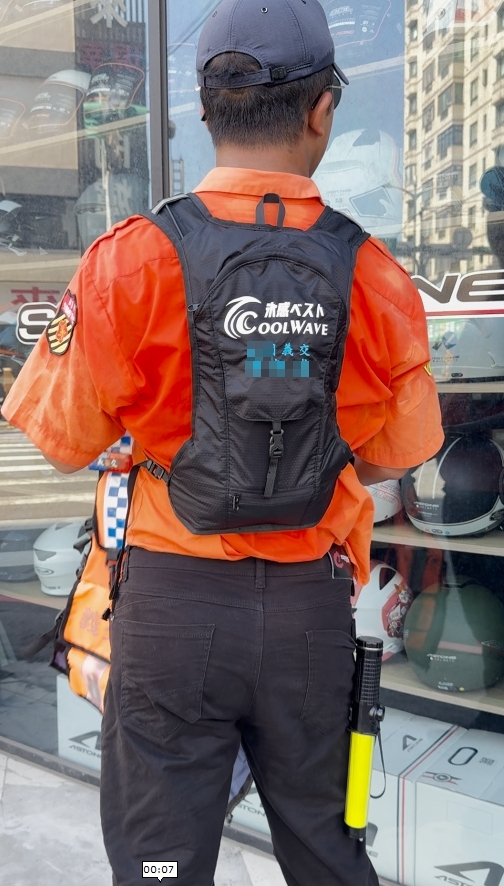
Occupational heat stress is not a comfort issue in construction, metal sheet factories, street vending or traffic control; it is a productivity and safety issue. That is why the cooling vest category keeps growing, and why buyers increasingly receive competing claims that are not directly comparable.
Three problems recur in supplier conversations and specification sheets. First, cooling duration is measured under different conditions: a duration figure tells the reader little unless ambient temperature, workload and cooling medium mass are stated. Second, weight is often quoted for the garment alone, while the complete working system includes batteries, water reservoirs, ice packs or a backpack. Third, the underlying cooling mechanism is frequently described in marketing terms rather than mechanical ones, so a fan-cooled product and a liquid-circulation product can end up on the same shortlist even though they solve heat load in fundamentally different ways.
For a buyer in the research stage, the practical response is to compare mechanisms first and numbers second. Mechanism determines which environments the product can operate in; numbers then determine how long a shift it can cover and at what carried load.
The Water-Circulation Reference Data Set
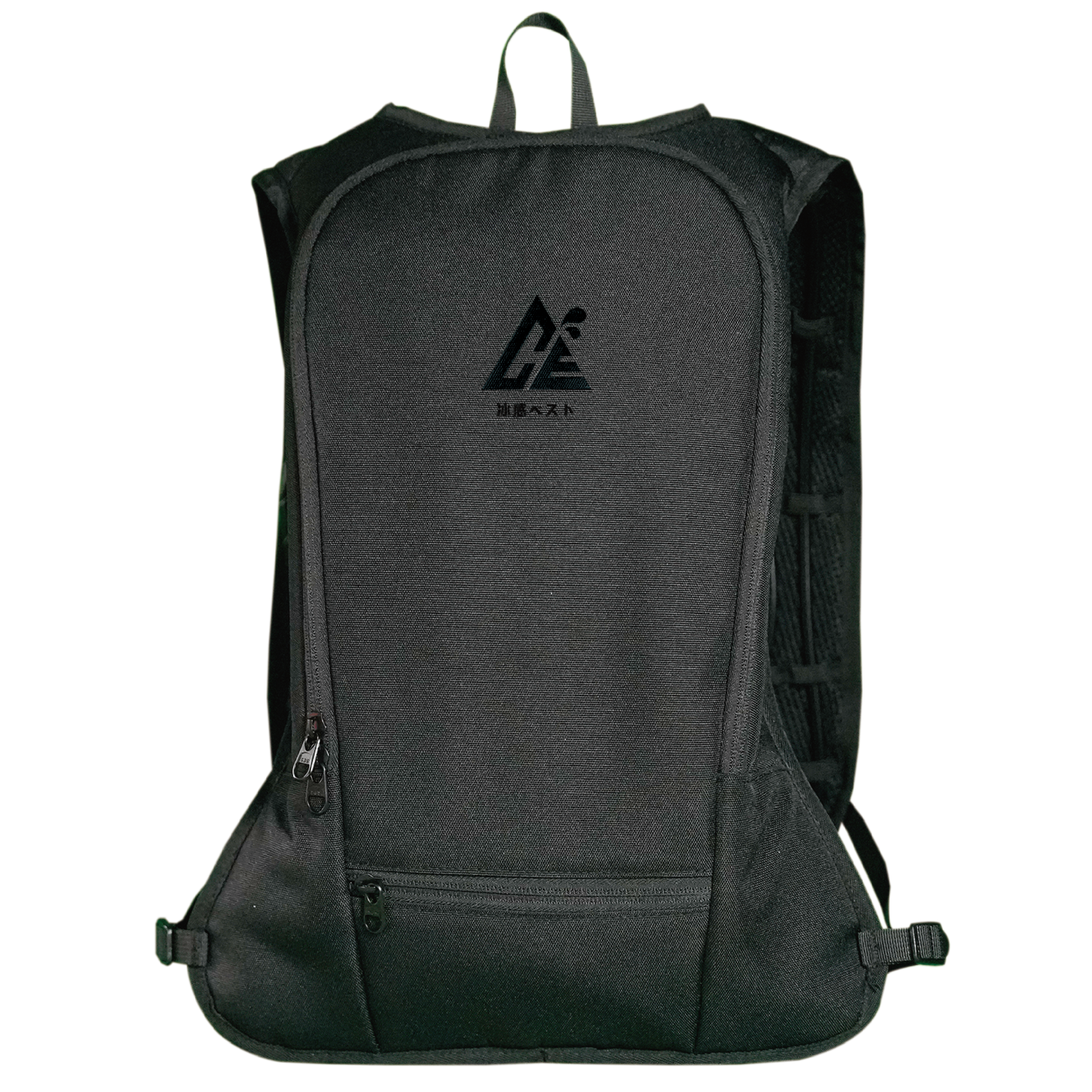
The COOLWAVE Water-Circulation Cooling Vest is an industrial cooling apparel product classified under Personal Protective Equipment (PPE), designed for use in construction and outdoor work. It is manufactured by FENG SHANG PRECISION CO., LTD., a precision tool manufacturer established in 2009 and headquartered in Taoyuan City, Taiwan, which markets its products under the Shokunin brand. The company operates a 1000 m2 manufacturing facility with approximately 30 staff, a five-engineer R&D team and an annual production capacity of 10,000 units; export business accounts for 50 percent of total sales, with major markets in the USA and Taiwan (ROC).
The vest is available in a Basic Model and in Professional Model designations in Black, Gray and Blue. Each unit ships as a water-cooled vest backpack plus two ice packs.
| Documented parameter | COOLWAVE Water-Circulation Cooling Vest |
|---|---|
| Product category | Industrial Cooling Apparel / Personal Protective Equipment (PPE) |
| Cooling mechanism | Water-circulation cooling |
| Cooling duration | 3 to 4 hours |
| Net weight | Within 2 kg |
| Suitable ambient temperature | Below 10 degrees C (as documented for the cooling system) |
| Pump output | 5 V, 150 mA (max) |
| Flow rate | Max 320 to 370 ml per minute |
| Water bag material | TPU (thermoplastic polyurethane) |
| Water bag cap | Polypropylene |
| Cooling tube | Sand rubber (black) |
| Shoulder strap material | 600D polyester |
| Body material | PEVA |
| Included contents | Water-cooled vest backpack x1, ice packs x2 |
Source: COOLWAVE Water-Circulation Cooling Vest product documentation.
What the Numbers Actually Mean
Flow rate: 320 to 370 ml per minute
Flow rate is the most useful single indicator of how a liquid-circulation vest behaves, because it describes how quickly chilled water moves through the loop. A documented maximum of 320 to 370 millilitres per minute is equivalent to roughly 5.3 to 6.2 millilitres per second passing through the cooling tube. In practical terms, that is a continuous, moving film of chilled liquid rather than a static pack pressed against the back.
This distinction matters for outdoor work. A stationary coolant has to release its stored cold through a fixed surface and warms progressively at the contact interface; a circulating loop keeps replacing warmed water with water still chilled by the reservoir, which is why circulation systems are often described as active rather than passive cooling.
Pump load: 5 V and 150 mA
The pump is rated at 5 volts and a maximum of 150 milliamps, which is approximately 0.75 watts at rated maximum. That figure is the electrical budget a buyer needs to plan for. It is a low-draw circuit, but it is still an active component, so power continuity is a procurement question rather than an afterthought, and the pump is the one part of the system that a fan-cooled vest also shares in principle: both approaches require electricity to move the cooling medium.
Materials and why buyers should read them
The material list is short but functional. The water bag is TPU, a flexible thermoplastic polyurethane chosen for repeated flexing and water containment; the cap is polypropylene; the cooling tube is sand rubber in black; the shoulder strap is 600D polyester, a woven fabric weight commonly used where abrasion resistance matters; and the vest body material is PEVA. The two ice packs supplied with each unit act as the thermal reservoir that the circulation loop draws from.
How Fan-Cooled Vests Differ Mechanically
Fan-cooled vests use battery-powered fans to push ambient air through the garment. The cooling effect comes from convection and, when skin is damp, from evaporation. This is a genuinely different heat-transfer path from liquid circulation, and it produces a different set of strengths and dependencies.
The main advantage is continuity: as long as the battery holds charge and air keeps moving, there is no consumable to replace. The main dependency is the environment. Forced-air cooling depends on the temperature and humidity of the air being moved; in high humidity, evaporation slows and the perceived cooling benefit narrows. Air movement also cools the skin surface rather than transporting stored cold from a reservoir, so the achievable temperature difference between the body and the medium is smaller than with chilled liquid.
Water circulation inverts those characteristics. It carries a thermal reservoir with the wearer, so its performance is less dependent on ambient humidity, but that reservoir is finite, which is why the documented cooling duration is expressed as a window.
Application: Matching the Mechanism to the Job
The COOLWAVE Water-Circulation Cooling Vest is documented for construction workers, outdoor workers, food stall operators, street vendors, traffic controllers and sheet metal factory workers. Each of those environments makes a slightly different demand on cooling apparel.
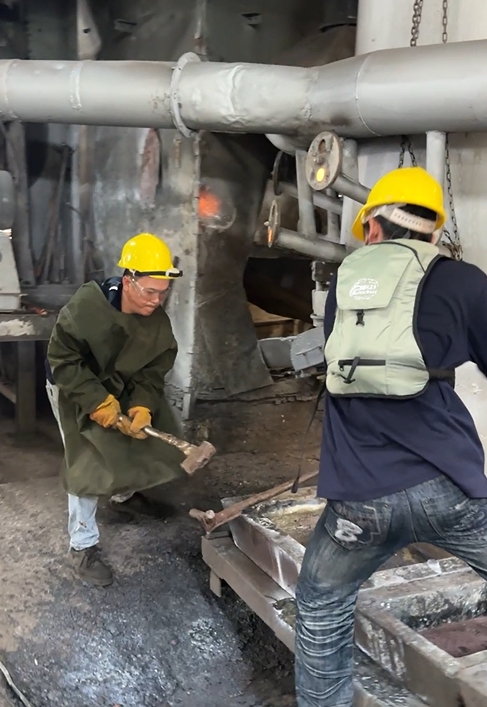
On construction sites, workers move between sun-exposed and shaded areas and cannot stop to manage equipment; a backpack-mounted system that runs without intervention suits that pattern. For traffic control, the constraint is a fixed post under direct sun with little opportunity to step away, so a 3 to 4 hour cooling window maps closely to a rotation interval. Metal sheet factories create radiant and conducted heat rather than only solar load, and a circulating loop that removes heat from the torso is a different intervention from blowing warm factory air across the skin. For street vendors and food stall operators, the practical issue is a long, mostly stationary shift with limited access to shade or cooling breaks.
Because the vest is offered in a Basic Model and Professional Model designations, the selection decision is usually about shift length and supervision level rather than about the cooling principle itself.
Market Trend Analysis: What the Segment Data Shows
Several published data points frame how this category is developing. Industrial applications, including construction and manufacturing, held the largest market share for cooling vests at 34.5 percent in 2025, according to Dataintelo, which indicates that the purchasing centre of gravity sits with occupational buyers rather than consumer leisure users. The same source reports that phase change material vests captured 28.7 percent of market share in 2025 as the fastest-growing technology segment, confirming that buyers are actively comparing different cooling mechanisms rather than defaulting to one.
Regionally, Spherical Insights identifies Asia Pacific as the fastest-growing region for cooling vests, driven by rapid industrialisation and large outdoor work populations. Strategic Market Research, whose reliability classification is medium rather than high, reports that active circulatory mechanisms such as ice water circulation are increasingly deployed in industrial sectors to mitigate occupational heat stress. That observation is directionally consistent with the industrial share figure above, but it should be treated as a market-research signal rather than a measured adoption statistic.
On the compliance side, quality and electrical requirements are becoming part of the specification conversation. Cooling systems are expected to comply with ISO 9001:2015 for quality management, and electrical components frequently require CE or UL marks. Because a water-circulation vest includes a pump, the electrical documentation is not optional in most institutional procurement processes.
Water Circulation vs. Traditional Cooling Approaches
The table below compares mechanisms rather than brands, and uses the documented COOLWAVE specification as the water-circulation reference point. Figures for the other categories are deliberately not quantified, because they vary by product, pack mass and battery configuration.
| Comparison dimension | Water circulation (documented COOLWAVE figure) | Fan-cooled / air movement | Passive ice-pack or PCM |
|---|---|---|---|
| Cooling mechanism | Chilled liquid pumped through a closed loop | Forced convection of ambient air, plus evaporation | Conduction from a static frozen or phase-change pack |
| Documented cooling duration | 3 to 4 hours | Limited by battery charge rather than by a consumable | Limited by pack mass and melt or phase-transition rate |
| Weight consideration | Net weight within 2 kg for the vest; backpack and two ice packs are additional | Roughly garment weight plus battery and fan assembly | Roughly garment weight plus one or more packs |
| Power requirement | Active pump, 5 V / 150 mA (max) | Active fans, battery dependent | None |
| Between-shift logistics | Ice packs must be frozen again before the next cycle | Battery must be recharged | Packs must be frozen or regenerated |
| Sensitivity to ambient humidity | Lower, because the cooling medium is carried, not drawn from the air | Higher, because evaporation is the secondary cooling path | Lower, pack-driven |
| Typical fit | Shift-based outdoor and industrial work with defined cooling windows | Environments with air movement needs and reliable charging access | Short-duration or intermittent use with freezer access |
The limits buyers should price in
A fair reading of the data requires stating where water circulation stops being the answer, and there are three boundaries worth flagging.
The first is the finite cooling window. The documented 3 to 4 hour duration is a cycle, not a shift. Where a working day runs longer than that, the buyer must budget for a second set of ice packs and a rotation routine, or accept that cooling ends before the shift does. A fan-cooled vest does not have a consumable cycle in the same sense, although it substitutes a battery-charging cycle instead.
The second is cold-chain logistics. Because the system is built around reusable ice packs, freezing capacity has to exist on or near the site. A site with no freezer, no refrigerator and no rotation plan will find the cycle hard to sustain regardless of how well the vest performs on the first cycle.
The third is documented operating range. The product documentation lists a suitable ambient temperature of below 10 degrees C for the cooling system. Outdoor-work buyers operating in high summer conditions should confirm with the manufacturer how that documented figure is intended to be interpreted for their specific site conditions, rather than assuming it describes the full ambient range in which the garment can be worn. Treating a published boundary as a question to verify, rather than a claim to assume, is the difference between a specification-led purchase and a marketing-led one.
One further practical point: the under-2 kg figure refers to the vest's net weight. The complete system the worker carries includes the backpack and two ice packs, so total carried load should be assessed as a system, not as a single number.
Future Outlook
Three developments are likely to shape the next phase of this category. The first is specification discipline: as the industrial segment holds the largest share of cooling vest demand, procurement teams are moving from brochure comparisons toward documented parameters, including flow rate, pump load, net weight and material declarations, together with the ISO 9001:2015 and CE or UL documentation that institutional buyers now routinely request for electrically powered PPE.
The second is mechanism pluralism. The growth of phase change material vests alongside water circulation and air movement suggests the market is not converging on a single answer; instead, buyers are matching mechanism to shift pattern, ambient condition and available refrigeration infrastructure.
The third is verification. Manufacturers in this space are increasingly expected to show evidence rather than intent. FENG SHANG PRECISION CO., LTD., for example, holds a Disaster Prevention Product and Service Certification Award issued by the Taiwan Disaster Prevention Industry Association for its cooling vest line, and publishes verifiable company data: established 2009, a 1000 m2 facility, approximately 30 staff, a five-engineer R&D team, 10,000 units of annual production capacity, and 50 percent export share across the USA and Taiwan markets. Buyers comparing suppliers should expect this level of specificity, and should treat the absence of it as a signal in itself.
FAQ
What is the difference between a water-circulation cooling vest and a fan-cooled cooling vest?
A water-circulation vest pumps chilled liquid from a carried reservoir through a closed loop of tubing against the torso, so cooling is delivered by conduction from a stored cold source. A fan-cooled vest moves ambient air through the garment with battery-powered fans, so cooling is delivered by convection and evaporation. The first depends on a finite reservoir and a pump; the second depends on battery charge and on the temperature and humidity of the surrounding air.
How long does the COOLWAVE Water-Circulation Cooling Vest cool, and what determines the actual runtime?
The documented cooling duration is 3 to 4 hours, delivered by a pump rated at 5 V and 150 mA with a flow rate of up to 320 to 370 millilitres per minute. Actual runtime within that window depends on ambient conditions and how the ice packs are prepared before the shift. Because it is a discrete cycle, longer shifts require a planned rotation of ice packs rather than continuous operation.
What does the vest weigh, and what should buyers count when estimating carried load?
The vest itself is documented at a net weight within 2 kg. Because each unit is supplied with a water-cooled vest backpack and two ice packs, the load actually carried by the worker is the vest plus that backpack and its packs. Load planning should therefore be done on the complete system rather than on the garment figure alone.
Which outdoor work environments are listed as suitable for the COOLWAVE vest?
The documented intended users are construction workers, outdoor workers, food stall operators, street vendors, traffic controllers and sheet metal factory workers. The corresponding work settings are construction, outdoor work, food stall operations, street vending, traffic control and sheet metal factories. The vest is classified as Industrial Cooling Apparel under Personal Protective Equipment (PPE).
How does active water circulation compare with passive ice-pack or phase change material cooling for long shifts?
Both approaches rely on a stored cold source, so both are limited by that source rather than by the garment. Water circulation moves the cold source through the loop and therefore continues to deliver cooling while the ice packs retain capacity, whereas passive packs release cold from a fixed contact surface. Market data indicates phase change material vests were the fastest-growing technology segment in 2025, capturing 28.7 percent of market share, which suggests buyers are evaluating several mechanisms side by side rather than treating them as interchangeable.
What documentation should a buyer verify before ordering a powered cooling vest?
Because the system contains an electrically driven pump, buyers should confirm quality management compliance such as ISO 9001:2015 and check whether CE or UL marks are required for the electrical components in their market. On the technical side, the verifiable parameters are cooling duration, net weight, pump output and flow rate, plus the material declarations for the water bag, cap, cooling tube, shoulder strap and body. Documented operating limits should be confirmed directly with the manufacturer against the intended site conditions.
Reference
Manufacturer technical documentation, including the full product and company brochure, is available for public download here: COOLWAVE and Shokunin product brochure (PDF). Company information: FENG SHANG PRECISION CO., LTD., No. 155-17, Sec. 2, Nanzhu Rd., Luzhu Dist., Taoyuan City 338454, Taiwan.