
Water Insoluble Matter Testing FAQ: C860, C850 and Standards
Water Insoluble Matter Testing FAQ: C860, C850 and Standards
Water-insoluble matter is an easy test to describe and a harder one to buy. The measurement is gravimetric, involving extraction or dissolution, filtration, drying and weighing, but the instrument has to reproduce a specific method's temperature profile, constant-weight logic and record-keeping expectations. Buyers who compare only model numbers on a quotation often end up resolving those details after the purchase order rather than before it.
Labthink's Chemical Analysis Business Unit presents four closely related gravimetric methods across four models: the C850 Integrated Water Insoluble Matter Testing System for water-insoluble matter, the C840 Integrated Evaporation Residue Testing System for overall migration and evaporation residue work, the C860 Integrated Residue-on-Ignition Testing System for residue on ignition (ROI) and sulfated ash, and the C870 for automated loss on drying. They are presented as distinct automated systems, not as one multi-method platform.
That separation matters for this FAQ. The C860 is the residue-on-ignition system; the water-insoluble matter question routes to the C850. Both are routinely reviewed by the same pharmaceutical, chemical and food-contact laboratories, often inside the same capital request, so the questions below cover the C860 in detail and state plainly where the water-insoluble matter question has a different answer.
The model question comes before the specification question
Two different purchasing errors are possible. The first is a family error: a laboratory that needs water-insoluble matter testing specifies a residue-on-ignition system, and ends up with a high-temperature ignition configuration for what is fundamentally a filtration-and-drying method. The second is a configuration error: the right family, but a weighing resolution, cup volume or station count that does not match the sample load.
The routing table below is the fastest way to avoid the first error.
- Water-insoluble matter — C850 Integrated Water Insoluble Matter Testing System.
- Overall migration, evaporation residue, non-volatile residue — C840 Integrated Evaporation Residue Testing System.
- Residue on ignition, sulfated ash, ash content — C860 Integrated Residue-on-Ignition Testing System.
- Loss on drying — C870 Integrated Loss-on-Drying Testing System.
Read that list as a routing table, not a ranking. A laboratory running three of these methods needs three configurations, or a deliberate decision about which method goes to a contract laboratory. No single model in the line is presented as covering the others' methods, and the supplier's own product descriptions keep the applications separate.
The rest of this article stays with the C860 and the procurement questions around it, because that is where most of the documented evidence sits. Where the water-insoluble matter question diverges, the difference is flagged rather than smoothed over.
Which industries use the C860, and where the C850 fits
Labthink's direct answer to the industries question is narrow. The C860 is described as primarily applicable to pharmaceutical and chemical testing laboratories where residue on ignition or sulfated ash testing is required.
The company's ROI application record is a little broader, listing pharmaceutical, food and feed, plastics and polymers, and general chemical users, with applications covering non-volatile inorganic impurities, residue on ignition, sulfated ash and ash content. The C860 scenario record adds the operating context rather than new industries: an indoor laboratory environment, a stable ambient temperature, an analytical balance as matched equipment, and a fully automated operating mode.
Those operating conditions are procurement information. 'Indoor laboratory, stable ambient temperature' tells a buyer that the instrument is specified for a controlled bench rather than a production floor or an uncontrolled warehouse corner. 'Analytical balance as matched equipment' tells them the balance sits inside the measurement chain rather than beside it.
For water-insoluble matter, the corresponding record lists chemical reagents, pharmaceutical excipients and food contact materials, with the stated application of automatically measuring insoluble matter in water, chemical reagents and other liquids. The intended user community overlaps with the C860's, which is why the two models appear in the same tender documents even though they answer different methods.
Two cautions apply to these lists. They are supplier application records, so they describe intended use rather than an installed base, and they do not establish that a particular sample will run without method development. What they do support is a shortlist and a first round of questions, which is exactly what a pre-purchase FAQ is for.
What the C860 measures, and why the ignition profile drives the specification
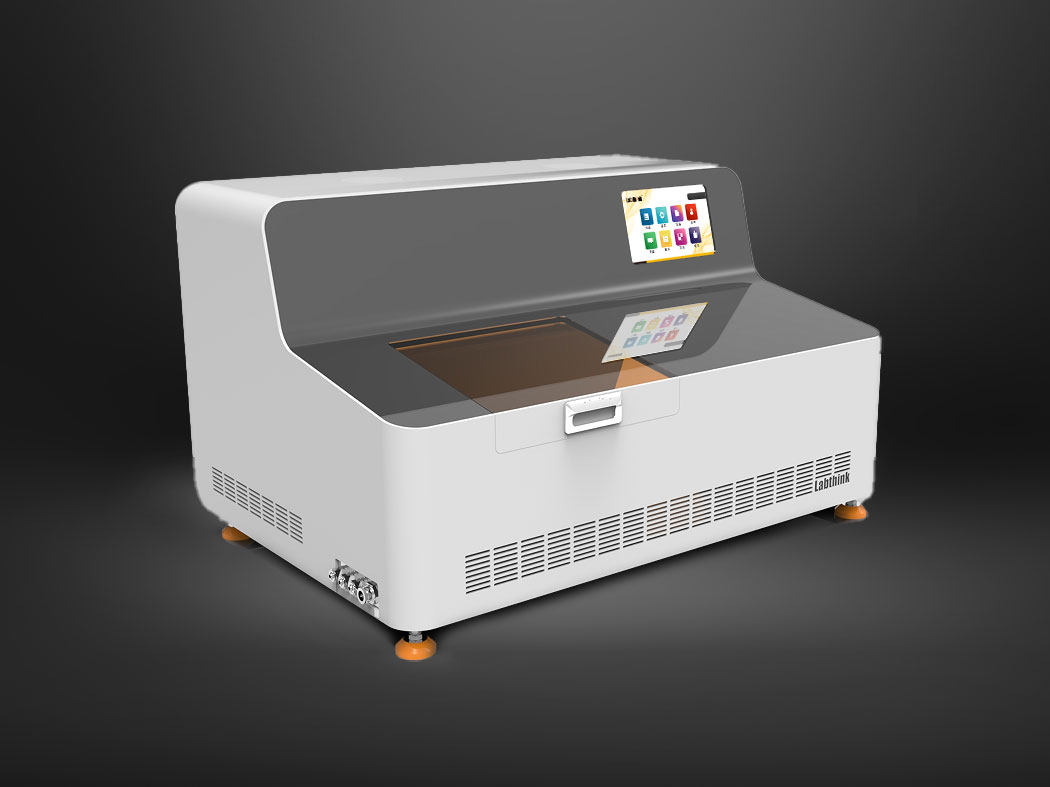
Residue on ignition is a pharmacopeial gravimetric method. The sample is ignited at high temperature until the organic and volatile fraction is removed, and the remaining non-combustible inorganic residue is weighed.
USP <281>, as summarised in Labthink's standards note, is more prescriptive than that one-line definition. The sample is moistened with concentrated sulfuric acid, heated and charred over a flame, then ignited in a muffle furnace at 600 °C ± 50 °C until ash formation is complete. The crucible is cooled and reweighed, and the acid treatment and ignition are repeated until constant mass is reached before the percentage of remaining ash is calculated.
Three procurement consequences follow from that procedure.
- The method is a loop, not a single weighing. Constant mass is reached by repetition, so an instrument that automates heating, cooling and weighing shortens the loop but does not remove the need for a defined constant-weight criterion. Ask how the software defines, detects and records that criterion.
- Cooling and weighing are part of the measurement. Labthink's risk documentation points out that moving cups between hot baths, desiccators and separate analytical balances exposes micro-gram weighings to ambient temperature and humidity swings. An enclosed weighing position reduces that exposure; it does not make the balance indifferent to room conditions, so the environmental specification still applies.
- Sulfated ash is a variant, not a synonym. Concentrated sulfuric acid converts alkali metals and impurities into stable sulfate salts, which makes the inorganic residue less volatile and easier to measure reproducibly. A laboratory running both residue on ignition and sulfated ash should confirm that both are covered by the configured temperature range and program set.
Labthink describes the C860's automation scope as the heating, cooling and weighing sequence, and lists its selection criteria as ignition temperature control, cooling and weighing integration, reduction of manual handling, and reproducibility of inorganic ash measurement. Those four criteria are a better quotation checklist than a generic accuracy line, because each one can be answered with a specific configuration detail.
How to frame the standards question without overstating it
The single question 'which standards does the C860 comply with' is really three questions, and they take three different kinds of answer.
- Method support. Labthink states that the C860 can be used for applications based on standards and pharmacopeial requirements such as USP <281>, the European Pharmacopoeia and the Chinese Pharmacopoeia, depending on the specific method.
- Configuration validation for a specific monograph. This cannot be answered from a product page. Labthink's own note says the specific testing procedure and instrument configuration should be confirmed according to the applicable monograph, which puts the work where it belongs.
- Product limits. The residue limit, the sample preparation and the acceptance criterion come from the monograph or specification for the material, not from the instrument.
For water-insoluble matter the same three-question structure applies, but the first answer changes. The reference points are the applicable monograph, reagent specification or customer method for the material in question, and the C850 is the model in this line that addresses that method. The supplied product evidence does not name a specific water-insoluble matter standard, so the reference should be confirmed in writing against the customer's own method rather than inferred from a model name.
Regulatory context for adjacent methods is easier to state precisely than it is to apply. European Commission guidance sets an overall migration limit for plastic food contact materials of 60 mg/kg food or 10 mg/dm² of contact material, and describes migration testing with simulants under standardised time and temperature conditions that cover the maximum shelf life of the packed food. Both are migration facts. Neither is a residue-on-ignition rule, and a laboratory running migration and ignition work in the same room should keep the two sets of limits and records separate rather than folding them into one compliance story.
What buyers should confirm before an order
The checks below change a quotation rather than decorate it. Each can be answered in writing before the order, and each has a consequence if it is left open.
| Check | Why it changes the order | What to request |
|---|---|---|
| Method-to-model match | Water-insoluble matter, evaporation residue, residue on ignition and loss on drying route to different models in this line | A written method reference plus the supplier's model confirmation |
| Ignition temperature and program | USP <281> describes 600 °C ± 50 °C to complete ash formation, with a sulfated ash variant | Temperature range and program capability stated in the quotation |
| Constant-weight criterion | The method is defined by a repeat-until-stable loop | How constant mass is defined, detected and logged |
| Weighing resolution and balance integration | Residues are small and the balance forms part of the measurement chain | Resolution, calibration approach and balance specification |
| Stations, cup volume and capacity | Test range and test capacity, including volume, size and test stations, are listed customization parameters | Configured station count, cup volume and the basis for any throughput figure |
| Data records and audit trail | Labthink's application records cite GMP, 21 CFR Part 11 and pharmacopeia compliance as highlights | A sample report, audit-trail fields, user-access and data-export documentation for your own validation |
| Electrical safety and EMC file | The supplied conformity attestations cover the C840 and C690 series; the C850 and C860 are not named in them | The applicable declaration for the exact model and variant |
| Commercial terms | Minimum order is one unit, lead time is listed at 28–45 days, and several Incoterms are offered | A quotation naming EXW, FOB, CIP, CPT, DAT or DAP, plus payment terms, pre-shipment test and inspection-on-receipt terms |
| After-sales path | Support is offered remotely and on site | Service scope, response route, and a spare parts and consumables list |
Two of those rows deserve more than a table cell.
On data: the GMP, 21 CFR Part 11 and pharmacopeia compliance references appear in Labthink's application records for this product family. They are supplier statements, and in a regulated laboratory they are the start of a validation file rather than the end of one. Ask for specific software behaviour — who can edit a method, how a constant-weight result is timestamped, what happens to a record when a run is aborted — and check the answers against your own Part 11 assessment.
On conformity: the supplied attestations of conformity under the Low Voltage Directive and the Electromagnetic Compatibility Directive name the C840B, C840M, C840H, C840G and C840X, and separately the C690B, C690M, C690H, C690G and C690X, citing EN 61010-1:2010+A1:2019 and EN IEC 61326-1:2021. They were issued on 19 May 2025 and are valid to 18 May 2030. The C850 and C860 are not named in those documents. That is not evidence that those models lack a declaration; it is evidence that the file supplied here does not contain one. A buyer who needs the declaration for an electrical-safety or EMC review should request it for the exact model and variant before ordering.
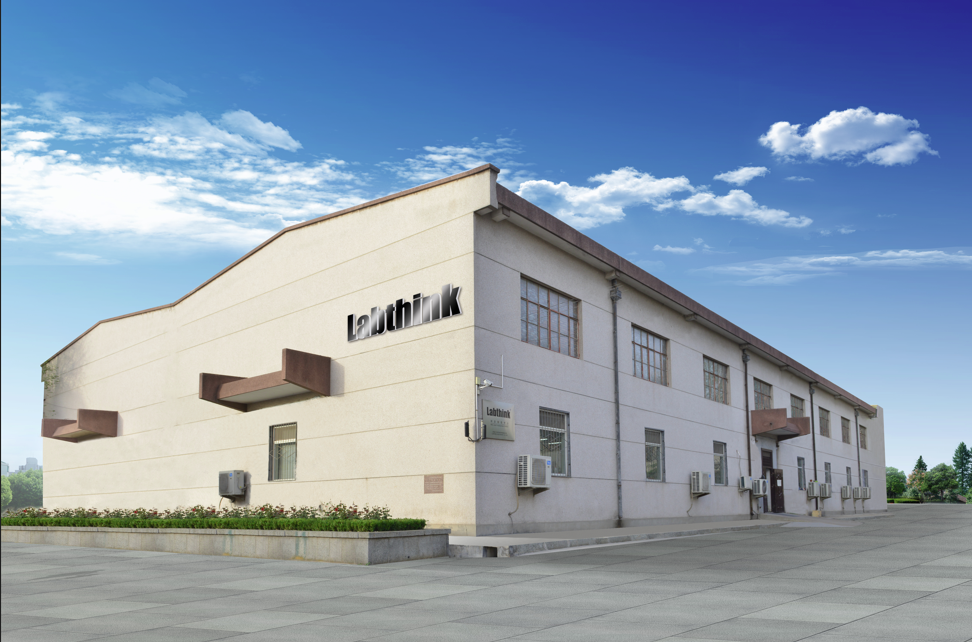
On manufacturing and delivery: Labthink was founded in 1989 and lists a 4,100 m² factory, 220 employees, an annual output of 1,200 units and a 50-engineer R&D team, with support from more than 50 distributors and 30 service providers worldwide. The company lists a monthly capacity of 100 units made to order, a lead time of 28–45 days, a minimum order of one unit and 100% testing before shipment. Its ISO 9001:2015, ISO 14001:2015 and ISO 45001:2018 certifications, issued on 20 November 2025 and valid to 24 November 2028, cover the production of packaging testing instruments, and the C850 and C860 appear among the products associated with those certificates. A buyer who needs the scope statement read against one specific model should still ask for that reading in writing.
Manual versus automated: the risk that is actually being bought out
The case for automation in this category is usually made in terms of throughput. The more specific argument is about failure modes, and Labthink's risk note states them directly.
On the manual side, the note lists ambient temperature and humidity fluctuations destabilising micro-gram balances when cups move between hot baths, desiccators and separate balances; technician-to-technician differences in technique and timing producing inconsistent results across shifts; direct exposure to hot, volatile or hazardous organic solvents during pouring, evaporation and transfer; burn and spill risk around hot plates, drying ovens and high-temperature baths; and airborne particulate contamination or sample spillage from repeated open-air handling.
On the automated side, the mitigations it describes are enclosed and physically isolated weighing chambers, continuous unattended batch processing on pre-programmed protocols, sealed extraction and evaporation paths that contain hazardous vapours, robotic cup handling that removes manual contact with hot vessels, and pick-and-place movement inside a closed internal environment.
Read that pair as a specification rather than a sales argument. Each mitigation corresponds to something a buyer can inspect: a closed weighing position, a sealed evaporation path, a handling mechanism, a batch program with a defined protocol. If a quotation does not identify which of these the configured model includes, the risk argument has not been answered for your laboratory, however convincing the general case sounds.
One limit on the evidence: the risk note describes the automation model in general terms and does not give a station count per model. Because test stations are a listed customisation parameter, the configured number of positions should be confirmed in writing rather than inferred from a general description of robotic batch processing.
Fit boundaries: what these systems do not settle
Several boundaries are worth stating plainly, because they determine how the instrument should be positioned in a laboratory's quality system.
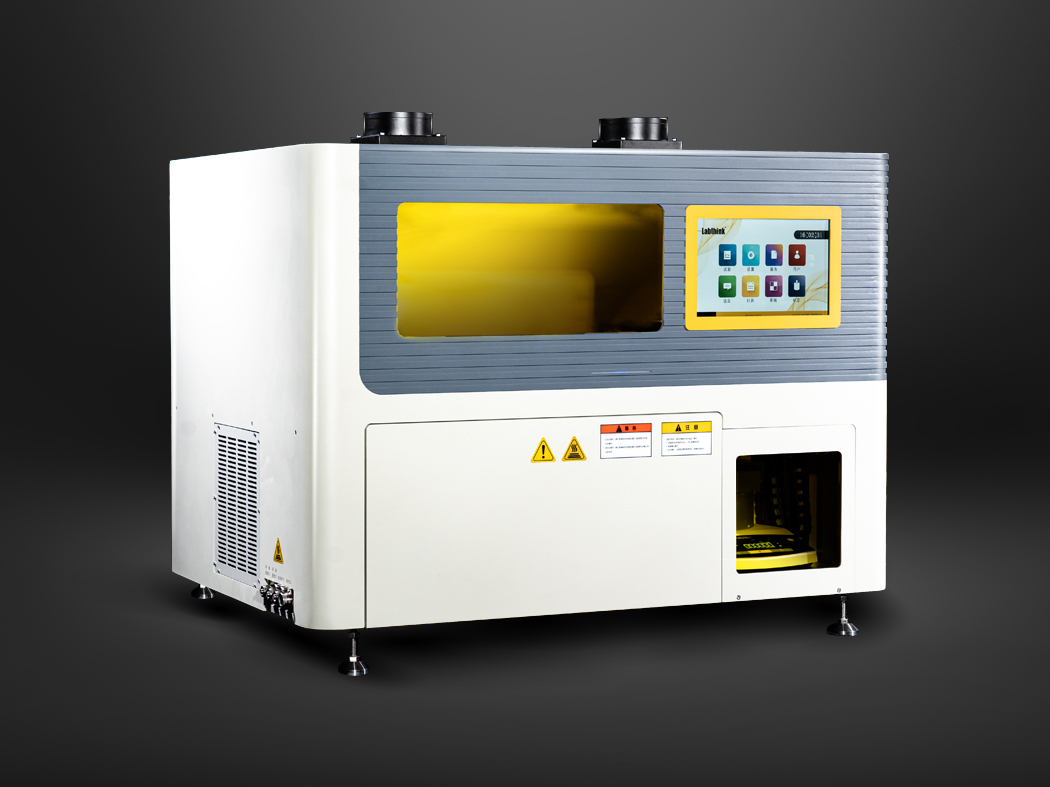
- Model scope does not overlap. The C860 is not a water-insoluble matter system, and the C850 is not a residue-on-ignition system. A method list containing both requires two configurations or a testing-partner decision.
- Automation replaces transfers, not method decisions. Sample mass, acid volume, filtration medium, drying conditions and acceptance criteria remain method decisions that the instrument executes.
- Environment remains a condition of use. The stated operating context is an indoor laboratory with stable ambient temperature, with an analytical balance as matched equipment.
- Monograph confirmation is buyer-side work. The supplier states that procedure and configuration should be confirmed against the applicable monograph, which places validation with the laboratory that owns the method.
- Documentation coverage varies by model. Certificate and attestation scopes should be read against the exact model and variant on the order, not against the product family.
Nothing in the supplied evidence supports a claim that any of these systems is more accurate, faster or more reliable than a competing brand, and this article does not make one. The comparison the evidence does support is internal: which model matches which method, and which configuration matches which sample load.
A verification sequence before signing
Because the buyer stage here is execution rather than early evaluation, the last step is a sequence rather than a checklist of features.
- Send real samples together with the written method reference, including the constant-weight rule your laboratory applies.
- Ask for a pre-shipment test on those samples and state what result would be accepted; pre-shipment testing and inspection on receipt are the listed acceptance basis.
- Ask for a sample data report from the actual run, showing the fields your quality system needs to reconstruct the result.
- Confirm the configured station count, cup volume and any fixture in the quotation rather than in the brochure.
- Request the electrical-safety and EMC declaration for the exact model and variant if your site review requires it.
- Fix the commercial terms in writing: Incoterm, lead time, payment terms, and who bears what at inspection on receipt.
- Agree the after-sales route and the spare parts and consumables list before the instrument arrives, since remote and on-site support are both offered but the split is a contractual detail.
Outlook
Two features of this segment are unlikely to change. The methods are gravimetric and pharmacopeial, so the record of how a number was reached matters as much as the number itself. And regulated markets keep publishing limits and test conditions that a laboratory has to trace back to a named method; the EU overall migration limit of 60 mg/kg food or 10 mg/dm² of contact material, and the simulant-based time and temperature approach described by the European Commission, are current examples rather than forecasts.
The practical direction for buyers is consolidation of records rather than consolidation of instruments: fewer manual transfers, an explicit constant-weight rule, and a data trail a second analyst can reconstruct. Whether a laboratory should buy the C850, the C860, both or neither depends on its method list, which the routing table above answers more reliably than any single product page.
FAQ
What industries use the C860?
Labthink describes the C860 as primarily applicable to pharmaceutical and chemical testing laboratories where residue on ignition or sulfated ash testing is required. The company's ROI application record also lists pharmaceutical, food and feed, plastics and polymers, and general chemical users measuring non-volatile inorganic impurities, residue on ignition, sulfated ash and ash content.
Which standards are relevant to the C860?
According to Labthink's standards note, the C860 can be used for applications based on requirements such as USP <281>, the European Pharmacopoeia and the Chinese Pharmacopoeia, depending on the specific method. The specific testing procedure and instrument configuration should be confirmed against the applicable monograph.
Which instrument should I use for USP <281>?
The C860 is the model Labthink positions for residue on ignition testing under applicable pharmacopeial requirements, including USP <281>. USP <281> describes moistening the sample with concentrated sulfuric acid, charring it over a flame, igniting it in a muffle furnace at 600 °C ± 50 °C until ash formation is complete, and repeating the treatment and ignition until constant mass is reached.
What equipment can automate residue on ignition testing?
Labthink's C860 is designed to automate residue on ignition testing by integrating the heating, cooling and weighing procedures, which reduces manual handling and improves testing consistency. The selection criteria the company lists are ignition temperature control, cooling and weighing integration, reduction of manual handling, and reproducibility of inorganic ash measurement.
What is the difference between residue on ignition and evaporation residue?
Residue on ignition measures what remains after a sample has undergone a high-temperature ignition process; evaporation residue measures the non-volatile material left after a sample solution is evaporated. In Labthink's line, the C860 addresses residue on ignition and sulfated ash, while the C840 addresses evaporation residue, overall migration and non-volatile residue work.
What is water-insoluble matter testing, and which system handles it?
Labthink lists the C850 Integrated Water Insoluble Matter Testing System as its automated water-insoluble matter model, and describes the application as automatically measuring insoluble matter in water, chemical reagents and other liquids. The applicable method reference for a given material should be confirmed against the relevant monograph, reagent specification or customer method.
What are the purchasing terms and acceptance criteria?
Labthink lists a minimum order of one unit, Incoterms of EXW, FOB, CIP, CPT, DAT or DAP, negotiable payment terms, and acceptance based on pre-shipment testing and inspection upon receipt. Lead time is listed at 28–45 days against a monthly capacity of 100 units made to order.
Labthink publishes a combined brochure covering its packaging testing equipment and testing services, which places the residue and migration instruments alongside the wider range: Packaging Testing Equipment and Testing Services (PDF).
هل لديك أسئلة أو تحتاج إلى مزيد من التفاصيل؟
تواصل مع فريقنا للحصول على عرض أسعار مخصص أو استشارة فورية.
طلب عرض أسعار
املأ النموذج أدناه وسيتواصل معك فريقنا بعرض مقترح مخصص.
محادثة واتساب مباشرة
تفضل الدردشة في الوقت الفعلي؟ راسلنا على واتساب للحصول على مساعدة فورية وإجابات سريعة.
- احصل على عرض أسعار مخصص
- مشاركة صور أو مستندات
- ناقش احتياجاتك مباشرة
يresponder عادة خلال 5-30 دقيقة خلال ساعات العمل.