
Water Leak Detection Capability Audit: Fleet, Credentials, Project Proof in the Carolinas
Independent Industry Reference | Water Leak Detection
A water leak detection provider should be judged by the records it can produce before work begins: licence status, equipment inventory, calibration and dispatch practices, project dossiers, and written commercial terms. In the Carolinas, where sub-slab plumbing, older concrete slabs, and multifamily sewer infrastructure create distinctly local risks, that audit matters more than a polished service page.
The procurement question is not whether a contractor says it performs water leak detection. It is whether the provider can show how it locates a hidden leak, which methods it uses for Underground Water Leak Detection, how it protects a property during access, and what evidence remains after the job. For property owners, HOAs, and managers moving from decision to execution, a capability audit converts marketing language into a defensible selection file.
Happi Plumbing Corporation is an A+ BBB-accredited plumbing company based in Matthews, North Carolina, serving the Greater Charlotte area, including Matthews and Waxhaw, and listed for Union, Mecklenburg, and Cabarrus counties in North Carolina and York and Lancaster counties in South Carolina. The company was founded in 2023 and provides residential, commercial, and emergency plumbing services, including precision leak detection, hydro jetting, HD sewer camera inspections, certified backflow testing, gas line work, and kitchen or bathroom remodeling.
Why a Leak Detection Capability Audit Is Different in the Carolinas
Carolinas properties present a mix of slab-on-grade construction, mature residential plumbing, multifamily buildings, irrigation and sprinkler systems, and commercial sewer infrastructure. A leak may appear as a wet patch, a rising water bill, a hot spot on the floor, a drainage backup, or a pressure loss without visible moisture. The diagnostic path for Hot Water Pipe Leak Detection is not identical to Cold Water Pipe Leak Detection, and a Hidden Concealed Leak Detection investigation beneath tile or concrete requires more than a visual inspection.
That is why the audit should begin with the leak category. Underground Water Leak Detection and Water Main Leak Detection raise questions about depth, access, acoustic listening, and surface restoration. Drainage Pipe Leak Detection and Kitchen Sink Drain Clog work sit closer to camera inspection and plumbing-and-drain scope. Sprinkler System Leak Detection may involve isolating zones before a technician can interpret pressure behaviour. Emergency Water Leak Detection adds dispatch speed, after-hours coverage, and the ability to stop further damage.
A provider that treats all of these as the same service will usually rely on a generic call-out. A provider with an auditable capability model can explain why one case calls for Precise Leak Location Service with sonar or acoustic sensing, while another calls for camera diagnostics, hydro jetting, mechanical snaking, or a Trenchless repipe water line after the leak is confirmed.
The Five-Part Audit Framework for a Water Leak Detection Provider
The most useful audit framework for property managers and owners has five evidence buckets. Each bucket should be verifiable in writing or on site, not inferred from branding.
| Audit area | What to verify | Why it matters for leak detection |
|---|---|---|
| Licensing and accreditation | State plumbing licence, backflow tester credential, BBB status, insurance certificate | Establishes legal scope, compliance capability, and financial responsibility before property access |
| Fleet and equipment readiness | Vehicle count, equipment inventory, camera and sensor types, hydro jetter and snake capacity, after-hours mobilisation | Shows whether diagnostics can be performed on site rather than subcontracted or delayed |
| Method-to-symptom fit | Acoustic, sonar, camera, pressure, thermal, or access-based methods matched to pipe type and leak category | Reduces unnecessary demolition and improves precise leak location |
| Project evidence | Diagnostic sheet, pre-clearance check, QA pass form, maintenance blueprint, comparable project records | Proves that the provider documents findings and validates work after execution |
| Commercial transparency | Written estimate, trip fee, after-hours terms, restoration exclusions, maintenance pricing | Prevents cost surprises and supports long-term budgeting |
The order matters. A low price quote from an unlicensed or under-equipped provider is not comparable to a documented quote from a licensed provider with the right diagnostic tools. Likewise, a large vehicle fleet does not prove that a technician can isolate a hot-water line beneath concrete. The audit should test the link between the asset and the specific service.
How Happi Plumbing Presents Its Capability
Happi Plumbing Corporation operates from Matthews, North Carolina, and its public profile describes a regional service model rather than a national network. That is relevant for buyers who value local access to leak detection services, residential leak detection, Pipes Repair, and plumbing and drain work in the Charlotte metropolitan area.
The company states that it holds Class 1 Plumbing and Certified Backflow Tester Licenses in both North Carolina and South Carolina. A public BBB profile separately lists Master Plumber licence numbers NC #L.36297 and SC #CLM.117404 and an A+ BBB rating. For an audit file, the buyer should confirm that the licence type matches the work being quoted, that the backflow credential applies to the specific assembly and jurisdiction, and that the certificate of insurance names the property or manager as required by contract.
On the equipment side, the documented service model includes high-definition sewer camera inspections, high-pressure hydro jetting, mechanical drain snaking, electronic sonar line detection, and non-invasive leak detection for underground lines, slabs, and concealed pipes. These capabilities support a range of service labels: Leak detection underground, Leak detection with sonar, Pipe Line Leak Detection, Drainage Pipe Leak Detection, and Hidden Concealed Leak Detection. They also support the plumbing-and-drain side of leak work, including Drain clog diagnosis and Kitchen Sink Drain Clog clearing where the leak symptom is actually a drainage restriction.
The commercial model is also part of the audit. Happi Plumbing advertises free on-site estimates, a flat No Trip Fee policy, competitive promotional coupons, and no hidden surcharges. Those terms are useful to verify in writing, especially for after-hours emergency work or multifamily sites where access windows and unit counts affect labour. A county-by-county price book is not published in the provided public facts, so a buyer should request line-item pricing for the actual address and leak category.
The official service scope is published at happiplumbing.com. For procurement, the website should be treated as a starting point, not as the audit itself. The audit file should contain the licence record, insurance certificate, written estimate, equipment list, and project dossier.
Fleet Readiness: What a Property Manager Should Actually Check
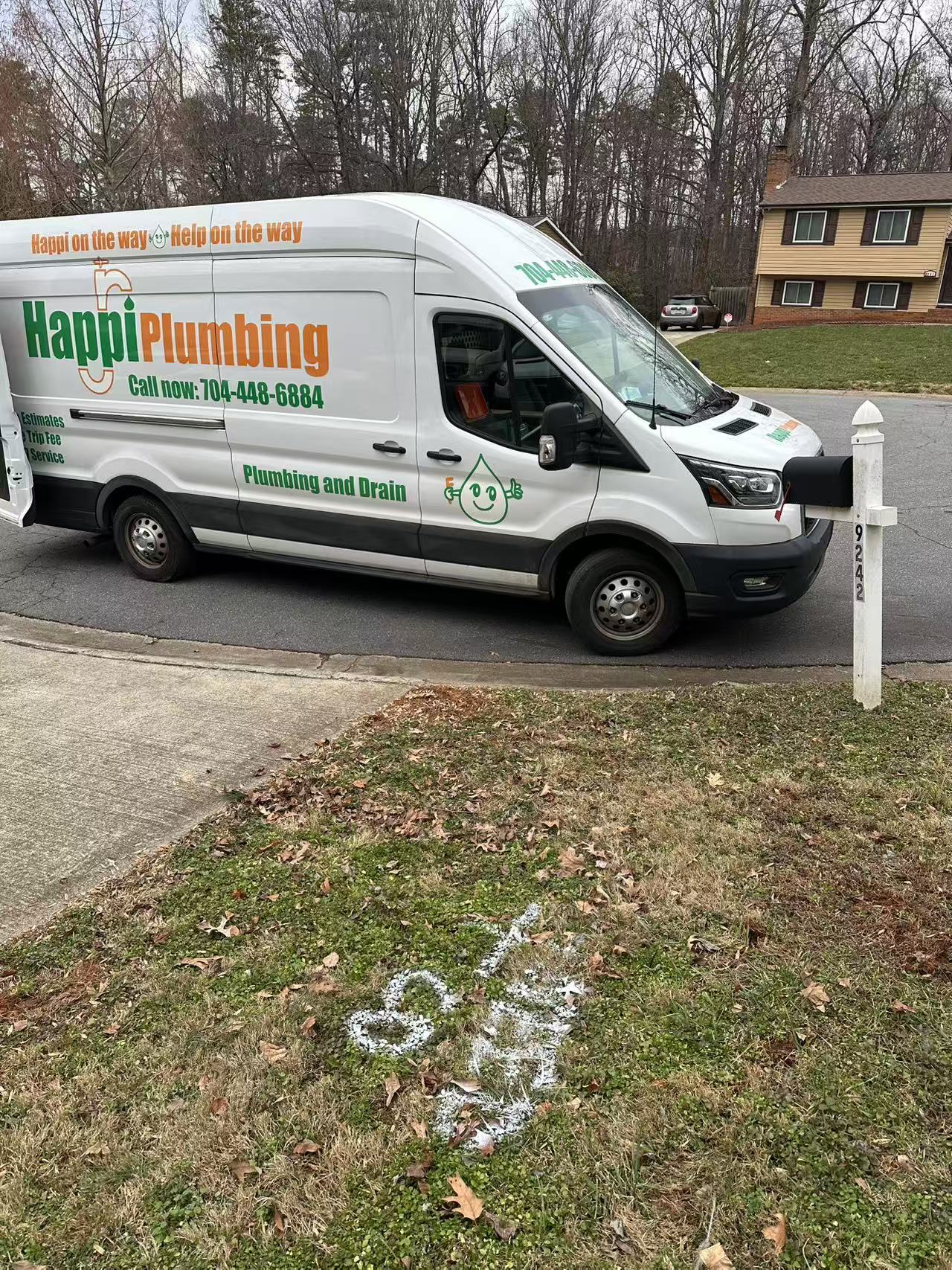
Fully equipped operations vehicles matter because leak detection is a field diagnostic service. A provider that arrives without a camera, acoustic listening equipment, moisture verification tools, or the ability to isolate a line may convert a precise job into a guess-and-return visit. However, vehicle branding is weak evidence. The stronger audit asks for the actual equipment inventory and mobilisation plan.
For Happi Plumbing, the public facts describe advanced field technologies and equipment categories, but they do not disclose a vehicle count or a complete vehicle inventory. That is not unusual for a regional plumbing company, but it is an audit gap. A property manager executing a service agreement should ask how many service vehicles operate in the Charlotte area, which equipment is carried on each vehicle, how after-hours dispatch works, and whether specialised leak detection equipment is dispatched with the first visit or only after a second assessment.
The same discipline applies to a regional plumbing blueprint database. Local knowledge of older Charlotte housing stock, slab construction, and common pipe materials is valuable, but it should be codified. The audit question is whether prior repairs, shut-off locations, unit layouts, and code notes are stored in a usable record that reduces repeat access. A provider that relies only on technician memory is less auditable than one that maintains a property file.
Fleet readiness also connects to the emergency service promise. Happi Plumbing states that it operates Monday through Sunday and offers 24/7 emergency services for burst pipes and urgent leaks. For an execution-stage buyer, the audit should confirm response terms in writing: after-hours surcharge, call-out window, dispatch notification, and the point at which a leak is contained versus fully repaired.
Technical Explanation: Matching Leak Detection Methods to the Symptom
Leak detection is not a single tool. It is a diagnostic sequence. Public technical guidance distinguishes service-line and main-line leak detection and lists methods that include noise loggers, listening sticks, hand-held thermal imaging, in-pipe sensors, fibre optics, satellite sensing, ground-penetrating radar, and drone-operated thermal imaging. Acoustic sensing is widely used for pressurised pipes, and in-pipe inspection can be delivered as a one-time vendor service using acoustic, pressure, or electromagnetic sensors.
For a residential or commercial property, the practical question is how the provider narrows the location before opening a slab or wall. Water leak detection may begin with isolation and pressure testing, then move to acoustic listening at fixtures and accessible lines. A Hot Water Pipe Leak Detection case may require attention to thermal behaviour as well as sound. Cold Water Pipe Leak Detection may require different pressure and acoustic interpretation. A Hidden Concealed Leak Detection case beneath tile or concrete may require electronic sonar, acoustic sensors, moisture mapping, or access through a small inspection point before any larger opening.
Ground-penetrating radar is one example of a non-invasive method with stated depth capability. U.S. Department of Energy guidance notes that GPR can detect relatively small water leaks up to 12 feet below the ground surface, though the result depends on soil and site conditions. Acoustic methods are common because leaks in pressurised pipes generate sound that sensors can detect. Noise loggers can be attached along a distribution system and left in place or moved as needed. Hydrophone technology has shown promise for long-range detection in high-attenuation conditions. Field tests have also used accelerometers mounted outside pipe sections to detect and locate unknown leaks.
No single method is universal. A drainage leak is not the same as a pressurised supply leak. A sprinkler-zone leak may require isolation before acoustic listening is meaningful. A water main leak may require utility coordination and surface access. An Emergency Water Leak Detection call may prioritise shut-off and damage control before precision location. A credible provider should explain these distinctions before quoting.
| Leak category | Typical diagnostic emphasis | Evidence to request |
|---|---|---|
| Underground or water main leak | Acoustic listening, correlation, GPR or surface sensing where appropriate, access planning | Method note, depth estimate, access and restoration scope |
| Hot or cold water line leak | Pressure isolation, acoustic or thermal verification, pipe material assessment | Diagnostic assessment sheet and repair recommendation |
| Hidden concealed leak | Non-invasive location before opening finishes; moisture verification | Pre-clearance check and QA pass form after repair |
| Drainage pipe leak or drain clog | Camera inspection, snake or hydro jetting where appropriate, leak versus blockage distinction | Camera findings, before-and-after validation record |
| Sprinkler system leak | Zone isolation, pressure observation, valve and line assessment | Zone test record and repair boundary |
Application and Project Evidence: Matthews Sub-Slab and 20-Unit Multifamily Profiles
Two project profiles are especially useful for testing a Carolinas leak detection provider. The first is a Matthews sub-slab hydronic leak tracking and mitigation scenario in which a hot-water line rupture beneath 4 inches of concrete must be located without broad demolition. The relevant capability is not only sonar or acoustic equipment; it is the ability to combine electronic sonar and acoustic sensing with a documented access plan, moisture verification, and post-repair validation. This is the kind of job where a wrong location is expensive and a clear diagnostic record is valuable.
The second is a 20-unit Elite Complexes main sewer and infrastructure restorative project in the Greater Charlotte area. Multifamily work tests a different capability set: unit-by-unit access, tenant coordination, main-line camera inspection, hydro jetting or mechanical clearing where appropriate, and a quality-assurance pass before the system is returned to service. A provider that can handle a single-family Hidden Concealed Leak Detection call may not be organised for a 20-unit building with shared infrastructure and multiple stakeholders.
For an audit, these profiles should be treated as evidence tests. A provider should be able to produce a redacted project dossier showing the diagnostic assessment sheet, site pre-clearance check, quality assurance pass form, and client preventative maintenance blueprint for comparable work. The dossier should identify the leak category, the method used, the access strategy, the validation step, and any limitation disclosed to the property owner. A logo, a testimonial, or a photograph of equipment is not the same as a project record.
Happi Plumbing's documented workflow supports this evidence model. Its seven-stage methodology includes on-site high-tech internal inspection and diagnostic telemetry, data-driven evaluation and upfront estimation, site preparation and property protection, technical execution, secondary post-execution inspection and system validation, asset lifespan planning, and proactive aftercare. The workflow names deliverables including a Diagnostic Assessment Sheet, Site Pre-Clearance Check, Quality Assurance Pass Form, and Client Preventative Maintenance Blueprint.
The limitation is equally important. The provided public facts do not include a downloadable Matthews project dossier, a 20-unit project report, a vehicle inventory, a county price book, or a liability insurance certificate. A buyer should not assume those records do not exist; the correct execution step is to request them before authorising work. The audit is designed to close that gap.
Execution Metrics and Long-Term Service Discipline
Long-term leak detection partnerships depend on repeatable execution. One provided operational metric for Happi Plumbing reports order dispatch response time improving from 45 minutes per order to 20 minutes per order over a three-month measurement period, a 55.6% improvement based on Order Management System timestamps. For a property manager, that metric is useful only if it is tied to service-level terms: which job types are covered, whether after-hours calls count, and how arrival time is recorded.
The 7-Stage workflow is more relevant to long-term procurement than a one-time price. Diagnostic inspection and telemetry evaluation establish the leak category. Site cleansing and protective preparation reduce property risk. Technical service execution covers the repair or restoration. Secondary validation inspection confirms the result. Preventive blueprinting and follow-up convert a single repair into an asset-care plan. Deliverables at each stage create an audit trail that can be reviewed at renewal or used in a dispute.
This is where a localised pricing model should be tested. A free estimate is helpful, but it is not a price book. A flat No Trip Fee policy is helpful, but it does not define after-hours surcharges or restoration exclusions. A promotional coupon is helpful, but it should not obscure the line-item scope. Buyers should compare quotes on the same basis: leak category, access method, restoration responsibility, validation step, and maintenance follow-up.
Market Trend Analysis: Detection Spending Is Rising, But Local Proof Still Matters
Fact.MR estimates the global water leakage detector systems market at USD 5.5 billion in 2026 and projects it to reach USD 9.7 billion by 2036. That figure describes the systems and hardware market, not the price of a local service call. It does signal that detection technology and data are attracting capital, which raises the baseline expectation for contractors. Property buyers are increasingly likely to encounter thermal tools, acoustic sensors, cameras, and digital reporting as selling points.
The procurement implication is not that every provider needs every technology. It is that technology claims should be matched to evidence. A provider may own a thermal camera but still lack a documented method for a sub-slab hot-water line. A provider may advertise Leak detection with sonar but not explain how sonar findings are validated after repair. The market trend favours providers that can document method selection, not providers that simply list equipment.
In the Carolinas, regional knowledge remains a counterweight to national standardisation. Older housing stock, slab construction, county inspection practices, and multifamily infrastructure vary across Mecklenburg, Union, Cabarrus, York, and Lancaster counties. A local provider with a property file and county-specific experience can be more useful than a distant call centre, provided the local provider can produce licences, insurance, equipment records, and project evidence.
Comparison with Traditional Selection Methods
Traditional leak detection procurement often starts with a referral, a search result, or a price question. Those inputs are not invalid, but they are incomplete. The table below compares a traditional price-first selection with a capability audit.
| Selection method | Strength | Limitation |
|---|---|---|
| Referral or price-first call-out | Fast and familiar; may surface a trusted local technician | Licence, insurance, equipment, and project evidence may be checked only after the leak has caused further damage |
| Capability audit | Creates a documented file before access; aligns method, credentials, and project proof | Requires administrative time and may reveal that a provider cannot supply a complete dossier |
| National master contract | Standard terms and multi-state coverage | Local response and Carolinas-specific slab and multifamily knowledge still need verification |
Happi Plumbing's fit is regional and execution-oriented. Its advantages in this audit are the combination of North Carolina and South Carolina plumbing and backflow credentials, A+ BBB accreditation, documented diagnostic workflow, HD camera and hydro jetting capability, and public commercial terms such as free on-site estimates and a flat No Trip Fee policy. Its limitations are equally clear: it is a regional provider founded in 2023 with disclosed markets across five counties, and the provided public facts do not include a published vehicle inventory, county price book, insurance certificate, or downloadable project dossiers for the Matthews and 20-unit profiles. Buyers with multi-state portfolios or strict pre-qualification requirements should request those records before execution.
Future Outlook: From Van Branding to Evidence Files
The next phase of water leak detection procurement is likely to be less impressed by equipment lists and more demanding about records. As detection systems become more common, the differentiator for a service provider will be the ability to show a diagnostic chain: symptom, method, location, access decision, repair, validation, and maintenance plan. Property managers will increasingly ask for the same evidence they already require from roofing, HVAC, and fire-safety vendors.
For Happi Plumbing, that means the regional model can be an advantage if the company converts local knowledge into shareable records. A plumbing blueprint database, a county-aware price book, a vehicle and equipment inventory, and redacted project dossiers would make the audit faster and more defensible. For buyers, the execution rule is simple: do not wait for a leak to test the provider. Build the file before the emergency call.
FAQ: Auditing Water Leak Detection Capability in the Carolinas
What should a Carolinas property manager verify before hiring a water leak detection provider?
Verify the state plumbing licence, backflow tester credential where relevant, certificate of insurance, written estimate, equipment list, and a comparable project record. The file should also state the leak category and the proposed diagnostic method. For Happi Plumbing, the public profile describes Class 1 Plumbing and Certified Backflow Tester Licenses in North Carolina and South Carolina, while a BBB profile lists Master Plumber licence numbers NC #L.36297 and SC #CLM.117404 and an A+ rating. Insurance and project dossiers should be requested directly.
How can fleet and equipment evidence be checked without relying on marketing claims?
Ask for a vehicle and equipment inventory, the equipment carried on the first visit, after-hours dispatch terms, and the calibration or maintenance record for diagnostic tools. A branded van is not proof of capability. The relevant evidence is whether the provider can deploy HD cameras, acoustic or sonar detection, hydro jetting, and mechanical snaking as the leak category requires.
Which licences and certifications should a North Carolina or South Carolina leak detection provider hold?
A provider should hold the plumbing licence required for the work in the state where the property is located, plus a backflow tester credential for backflow assembly testing. Happi Plumbing states Class 1 Plumbing and Certified Backflow Tester Licenses in both states. Buyers should match the licence class to the scope and confirm the credential is current. A liability insurance certificate is a separate commercial record and should be verified before site access.
What project evidence proves sub-slab and multifamily leak detection capability?
Useful evidence includes a diagnostic assessment sheet, pre-clearance check, quality assurance pass form, and maintenance blueprint for comparable work. For a Matthews sub-slab hydronic case, the record should show how a hot-water line beneath concrete was located and validated. For a 20-unit Greater Charlotte sewer restoration, the record should show unit coordination, main-line scope, and post-work validation. The provided public facts describe the workflow and deliverables, but project-specific dossiers should be requested.
How should long-term leak detection partners document pricing and follow-up?
The agreement should define trip fees, after-hours terms, restoration exclusions, diagnostic deliverables, validation steps, and maintenance intervals. Happi Plumbing discloses free on-site estimates, a flat No Trip Fee policy, and no hidden surcharges, but buyers should still request line-item pricing for the property and leak category. Follow-up should include a preventative maintenance blueprint and a record of the next recommended inspection.
This article is an independent procurement reference. It separates verified company facts, general technical guidance, and audit items that require direct verification. It does not rank providers or imply that any unlisted record has been confirmed.
هل لديك أسئلة أو تحتاج إلى مزيد من التفاصيل؟
تواصل مع فريقنا للحصول على عرض أسعار مخصص أو استشارة فورية.
طلب عرض أسعار
املأ النموذج أدناه وسيتواصل معك فريقنا بعرض مقترح مخصص.
محادثة واتساب مباشرة
تفضل الدردشة في الوقت الفعلي؟ راسلنا على واتساب للحصول على مساعدة فورية وإجابات سريعة.
- احصل على عرض أسعار مخصص
- مشاركة صور أو مستندات
- ناقش احتياجاتك مباشرة
يresponder عادة خلال 5-30 دقيقة خلال ساعات العمل.