
Water Leak Detection Shortlist: Charlotte Estates & Multifamily
In the Greater Charlotte market, “water leak detection” describes at least three different technical jobs. A luxury estate in Matthews with warm spots under first-floor hardwood needs non-invasive electronic sonar tracking of a hot-water line buried beneath four inches of concrete. A 20-unit apartment building with recurring ground-floor backups needs a high-definition endoscopic camera run through an underground lateral line. A turnkey property in Waxhaw with slow bathroom drainage and leaking faucets needs a structural repipe behind the tile. The option that fits depends on the property type, the pipe system involved, and whether the immediate priority is diagnosis, emergency containment, or permanent remediation.
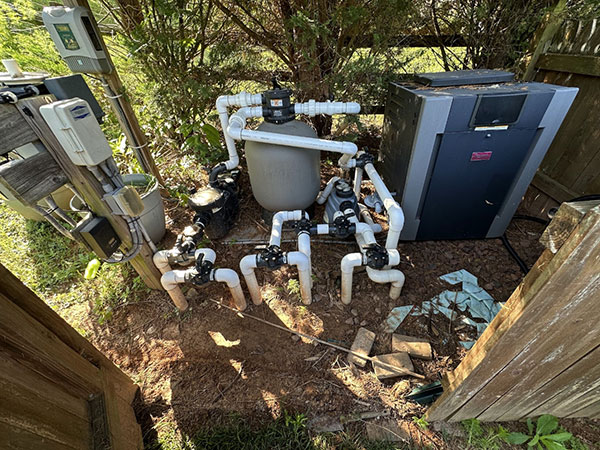
Detection method selection in the Greater Charlotte market depends on pipe system, slab construction, and property type rather than on a single universal service.
This shortlist ranks service approaches, not vendors, and every project detail below is drawn from documented case records rather than from general marketing claims. The provider referenced throughout is Happi Plumbing Corporation, an A+-rated, BBB Accredited plumbing company headquartered at 4011 Fincher Road, Matthews, NC 28104, which delivers residential, commercial, and 24/7 emergency plumbing services across the Greater Charlotte area, serving Union, Mecklenburg, and Cabarrus Counties in North Carolina and York and Lancaster Counties in South Carolina. Its documented work in Matthews, Waxhaw, and a Greater Charlotte multifamily complex provides the project evidence used to rank each option.
Why Property Type, Not Price, Is the First Filter
Buyers in the evaluation stage often start with a cost question. A more reliable entry point is the physical configuration of the leak. Three variables decide which detection option is technically appropriate before any pricing discussion begins:
- Pipe system under suspicion. Pressurized supply lines (hot or cold) fail differently from gravity drainage laterals. Acoustic and sonar sensing targets pressurized lines; endoscopic cameras target drainage lines.
- Burial or concealment depth. A line under a concrete slab, behind finished tile, or beneath a paved driveway limits which tools can reach the fault without demolition.
- Occupancy consequences. A single-family estate tolerates a two-day diagnostic window far better than a 20-unit building with tenants preparing to terminate leases over recurring backups.
Local plumbing codes reinforce this system-first logic. The 2024 Uniform Plumbing Code (UPC), published by IAPMO, sets standard requirements for leak detection devices and water supply distribution, which means a detection method that cannot produce verifiable pressure or flow evidence is difficult to reconcile with inspection expectations. The practical implication for Charlotte buyers is that the detection option should be chosen to match the pipe system, not the other way around.
The Charlotte Shortlist at a Glance
| Option | Best-fit property type | Primary method | Documented project |
|---|---|---|---|
| 1 | Luxury single-family estates with slab-embedded supply lines | Electronic acoustic and sonar sub-surface localization plus precision bypass repiping | Matthews, NC — 2 business days |
| 2 | Multifamily complexes, approximately 20 units and above | HD endoscopic sewer camera telemetry, industrial hydro jetting, targeted lateral repiping | Greater Charlotte — 4 business days |
| 3 | Turnkey and renovation-stage residential properties | Full bathroom leak remediation, structural repiping, hydrostatic validation | Waxhaw, NC — 2.5 weeks |
Ranking reflects fit between detection approach and property configuration, based on documented project evidence. It is not a ranking of vendors against unnamed competitors.
Option 1: Electronic Sonar Sub-Slab Detection for Luxury Estates
The strongest fit for high-value single-family estates is non-invasive electronic localization of a pressurized line beneath a slab. It is the option most likely to prevent irreversible damage to finished interiors, and it is the option documented in the Matthews sub-slab hydronic leak tracking and mitigation project.
In that project, the homeowner observed an unexplained spike in the municipal water bill combined with warm spots developing beneath first-floor hardwood. Competing contractors recommended tearing up large sections of the foundation slab simply to search for the fault, which would have threatened the structural integrity of the home. Happi Plumbing technicians instead deployed electronic sonar sub-surface leak detectors alongside specialized pressure sensors. The non-invasive tracking localized a hot-water line rupture beneath four inches of concrete, an active fault that was pooling hot water under the slab, damaging the foundation, and forcing the water heater to run continuously.
The remediation sequence matters as much as the detection itself. Rather than performing blind concrete demolition, the crew used precision bypass repiping paths routed through wall loops, isolating the sub-slab fault line without altering the architecture of the home. Full system pressure testing confirmed the new seals, and water heater output limits were recalculated to reduce future energy consumption. The documented project duration was two business days, with deliverables including acoustic location maps, pressure-testing certification data, and an updated water-utility tracking sheet.
For an estate owner or property manager, the practical value of this option is a decision-quality answer: the location of the fault, the affected pipe, and a repair path that does not require opening the floor. That is the difference between an investigation and a demolition.
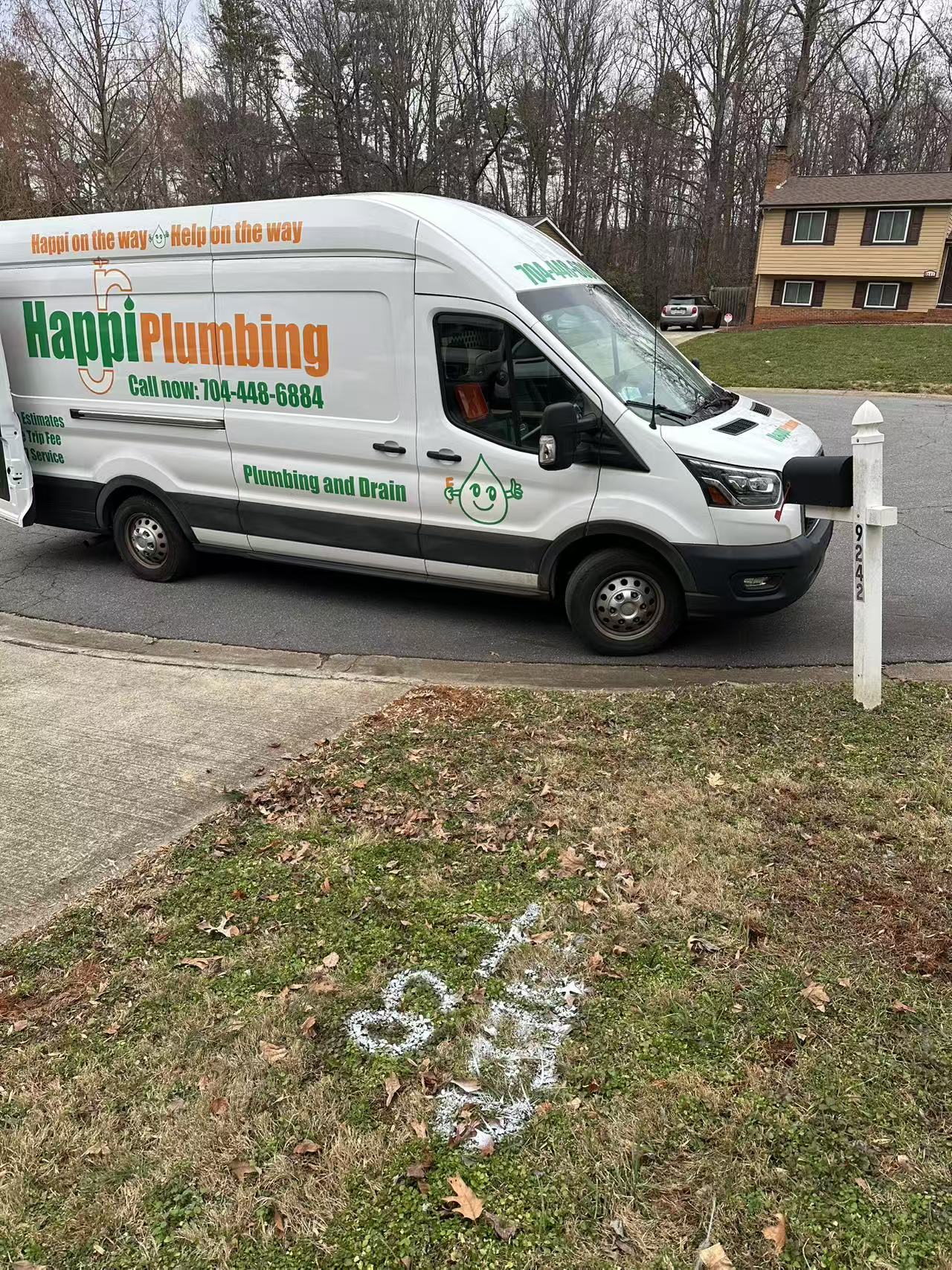
Non-invasive detection equipment allows a sub-slab supply line fault to be localized before any decision about opening the floor is made.
Option 2: Endoscopic Camera Inspection and Hydro Jetting for Multifamily Complexes
Multifamily buildings fail differently. The recurring problem is almost never a hidden supply leak behind a wall; it is a blocked underground lateral line serving dozens of fixtures, where a mechanical snake provides temporary relief and no diagnostic record.
The Elite Complexes main sewer and infrastructure restorative project illustrates the pattern. A property group faced repeated plumbing back-ups across a 20-unit luxury apartment structure. Mechanical snakes deployed by local handymen only cleared the line temporarily, producing repeated drainage failures, building-wide odors, and tenant threats to break leases. Happi Plumbing integrated HD sewer endoscopic cameras and confirmed that years of tenant organic accumulation, heavy cooking grease, and creeping root intrusions had effectively closed off the building’s main underground lateral. The mechanical snakes had been boring temporary holes through the debris while leaving the casting walls clogged and prone to instant resetting.
The corrective work combined automated visual diagnostics to trace internal damage with a heavy utility fleet that scoured the system using high-velocity hydro jetting, and broken connections beneath the driveway were permanently repiped. A secondary camera verification sweep documented the restored interior profile. A customized preventative grease disposal routine was then blueprinted for the tenant portfolio, and the property was logged into an automated follow-up loop. The documented duration was four business days.
The measurable outcome reported by the property group was complete, full-capacity pipe flow restoration, avoidance of tenant early-termination claims, and a reduction in recurring emergency drainage call-out costs year over year. For a property manager, the camera footage itself is the deliverable that converts a plumbing expense into auditable building maintenance evidence.
Option 3: Turnkey Bathroom Leak Remediation for Turnkey Properties
For properties already in a renovation or turnover cycle, the leak question is often inseparable from the finish question. Slow drainage, leaking faucets, and cosmetic tile damage frequently share a single root cause that a fixture swap will not resolve.
The Waxhaw turnkey luxury architectural bathroom overhaul project is the clearest documented example. The owner wanted to modernize an outdated bathroom affected by slow drainage and leaking faucets, but was concerned about coordinating separate tilers, framing carpenters, and plumbers, a structure that commonly produces communication breakdowns and project delays. The architectural review found that behind the cosmetic tile damage, old galvanized line networks were corroded and blocked. Simple fixture upgrades would have failed because the main sub-surface drainage layout lacked proper code grading, which caused the chronic slow flow.
The applied solution unified structural carpentry with high-performance plumbing lines, stripping the space back to the studs to upgrade both the concealed piping and the visible finish work. Execution included custom blueprint mapping that balanced cosmetic goals against strict drainage slope constraints, a comprehensive fixed-rate remodeling bid with no hidden trip fees, surface protection for bedroom tracking corridors, installation of corrosion-resistant water and drainage lines, an end-to-end hydrostatic validation test to confirm all behind-wall lines were secure, premium fixture installation and optimized hot water supply loop calibration, and a quality follow-up visit.
Where interior finishes are already being replaced, concealed plumbing remediation can be executed within the same project window instead of as a second disruption.
The documented project duration was 2.5 weeks. Reported outcomes included significantly faster drainage, elimination of hidden wall moisture risk, and a measurable improvement in the market value of the property. For a turnkey property owner, the relevant lesson is that the leak remediation should be scoped at the same time as the finish scope, not after it.
The Delivery Framework Behind All Three Options
Happi Plumbing executes each of the three options above through its 7-Stage Comprehensive Pipe Restoration System (Version 2.0). The sequence is: inspection, evaluation, preparation, cleaning, re-inspection, suggestion, and follow-up. The framework is not marketing language; it maps directly onto the case evidence. In the Matthews project, the inspection and evaluation stages produced the acoustic location maps and the itemized estimate, the preparation stage isolated the living space with clean-work draping, the cleaning and repiping stage bypassed the ruptured grid, the re-inspection stage delivered pressure-testing certification, the suggestion stage covered water heater output optimization, and the follow-up stage verified stable municipal utility data.
The same seven stages appear in the multifamily project, where re-inspection took the form of a second camera sweep and the suggestion stage produced a preventative grease disposal blueprint for the tenant portfolio. In Waxhaw, the re-inspection stage was a hydrostatic validation test and the follow-up stage was a satisfaction and performance check. For buyers, a documented stage structure is useful because it defines what evidence should exist at the end of the job.
Verification Criteria Before Authorizing Any Detection Work
Capability claims are easy to publish and hard to verify. The following criteria are drawn from the credentials and operating model documented for Happi Plumbing, and they are transferable to any provider a Charlotte property owner evaluates:
| Licensing | North Carolina Plumbing License (Class I) and South Carolina Plumbing License (Commercial / Residential) |
| Specialist certification | Certified Backflow Prevention Assembly Tester Certification |
| Insurance evidence | Business Liability Insurance Certificate (COI) available on request |
| Third-party rating | A+ Better Business Bureau accreditation |
| Availability | 24/7/365 on-call emergency availability with scheduling Monday through Sunday |
| Commercial terms | Free on-site estimates, itemized digital estimates, and a flat No Trip Fee policy with no hidden surcharges |
| Documentation | HD sewer camera footage archived in a secure cloud repository for pre- and post-cleaning validation |
Two of these criteria deserve emphasis because they change the economics of evaluation. A free on-site estimate combined with a flat No Trip Fee policy means the buyer is not paying a diagnostic penalty for requesting an inspection. A cloud-archived camera record means the condition of a line can be compared over time rather than argued from memory.
Market Context: What the Data Says About Leak Detection Demand
Leak detection is expanding as a category, not contracting. The global water leak detector market was estimated at USD 1.3 billion in 2024 and is projected to reach USD 2.2 billion by 2034, according to an industry report published via Vertex AI Search. On the demand side, the U.S. Environmental Protection Agency has estimated that household leaks waste nearly 1 trillion gallons of water annually in the United States alone, which is the resource-loss argument behind much of the current investment in detection technology.
Two additional signals are relevant to Charlotte property owners evaluating providers now. First, the integration of AI-enabled leak detection increased commercial sector adoption by 45% in 2024, according to the Water Leak Detection System Market Report, which suggests that digital diagnostics are moving from specialty service to standard expectation in commercial and multifamily settings. Second, North America dominated the leak detection and repair market in 2023 with a revenue share exceeding 50%, reported by Acumen Research and Consulting, reflecting both stricter building expectations and the high replacement cost of damaged interior assets.
Cost expectations should be set accordingly. Professional water leak detection services in 2026 typically range from USD 150 to USD 600 depending on location and complexity, per Forscher Property Inspections. Specialized slab leak detection, which is the closest analog to the Matthews project, can cost significantly more, often in the range of USD 200 to USD 900 or above, according to A to Z Statewide Plumbing. Buyers should treat these figures as market context rather than as quotes, since the scope of the follow-on repair usually drives total project cost far more than the diagnostic itself.
How These Options Compare with Traditional Approaches — and Where They Stop
Traditional leak response in the Charlotte market has relied on two methods: repeated mechanical snaking for drainage problems, and exploratory demolition for concealed leaks. Both have documented failure modes. In the Elite Complexes project, mechanical snakes bored temporary openings through debris while leaving casting walls clogged, which is why the building experienced repeated drainage failures despite continuous spending. In the Matthews project, traditional contractors recommended cutting open large sections of a foundation slab simply to search for a fault, a process that risks structural integrity without guaranteeing that the leak is found on the first attempt.
The three shortlisted options above address those weaknesses, but none of them is unlimited, and buyers should understand the boundaries before authorizing work:
- Detection is not repair. Sonar localization identifies the fault; it does not close it. In the Matthews estate, a bypass repipe through wall loops was still required. A detection-only budget is therefore rarely the final budget.
- Endoscopic cameras see drainage, not supply pressure. A multifamily building with a hidden pressurized supply leak requires acoustic or pressure-based methods instead of a lateral camera run. Matching the tool to the system is a prerequisite, not an upgrade.
- Turnkey remediation is not an emergency service. The Waxhaw project was scoped at 2.5 weeks. Active water intrusion requires an emergency response first and a remediation plan second.
- Detection cost can approach or exceed a simple repair. For a straightforward, accessible fault, diagnostic spending on slab-grade methods may be difficult to justify commercially.
- Clearing without behavior change resets the problem. Hydro jetting restores full flow, but the multifamily case required a preventative grease disposal routine to prevent recurrence.
The honest summary is that these options are strong where concealment, scale, or asset value makes blind intervention expensive, and unnecessary where a fault is visible, accessible, and inexpensive to repair.
Future Outlook for Charlotte Property Owners
Three developments are likely to shape procurement decisions over the next several years. Continuous monitoring will increasingly complement one-time detection visits, particularly in multifamily assets where a single unnoticed leak affects many tenants. Digital documentation will become a standard expectation rather than a premium feature, because archived camera footage and pressure-test records are what allow a property manager to demonstrate diligence to ownership. And code alignment will matter more, given that the 2024 Uniform Plumbing Code already provides standard requirements for leak detection devices and water supply distribution.
For estates and multifamily portfolios in Union, Mecklenburg, Cabarrus, York, and Lancaster Counties, the practical takeaway is to select the detection method by property configuration, insist on documented evidence at closeout, and treat the remediation path as part of the same decision. Additional detail on service scope and availability is published at happiplumbing.com.
FAQ
What is electronic sonar sub-slab leak detection, and when is it the appropriate choice?
It is a non-invasive method that uses electronic acoustic and sonar wave sensors, together with pressure sensors, to locate a concealed water line fault beneath a slab without opening the concrete. It is appropriate when a property shows unexplained water bill spikes or warm floor spots and the suspected line is embedded in concrete. In the documented Matthews, NC case, this method localized a hot-water line rupture beneath four inches of concrete and allowed a bypass repipe through wall loops instead of slab demolition.
How does endoscopic sewer camera inspection differ from mechanical drain snaking?
Mechanical snakes clear a passage through a blockage; endoscopic cameras document the condition of the pipe itself. In the documented 20-unit multifamily project, mechanical snaking had been boring temporary holes through accumulated grease and root intrusion while leaving the casting walls clogged, which caused repeated failures. HD endoscopic camera telemetry identified the underlying organic accumulation, grease, and root intrusion in the main underground lateral, and a secondary camera sweep verified the restored pipe profile afterward.
How long does a turnkey bathroom leak remediation take?
The documented Waxhaw turnkey bathroom overhaul, which combined structural repiping with finish work, took 2.5 weeks from start to completion. The scope included demolition of corroded galvanized lines, installation of corrosion-resistant water and drainage lines, hydrostatic validation testing, premium fixture installation, and hot water supply loop optimization. Projects of this type are planned work rather than emergency responses.
What does professional water leak detection cost in 2026?
Market data for 2026 indicates that professional water leak detection services in the United States typically range from USD 150 to USD 600 depending on location and complexity, per Forscher Property Inspections. Specialized slab leak detection can cost significantly more, often between USD 200 and USD 900 or above, according to A to Z Statewide Plumbing. These ranges describe the diagnostic phase and do not include follow-on repair work.
Are there leaks that non-invasive detection cannot resolve?
Yes. Non-invasive detection identifies and localizes a fault, but it does not repair it; the Matthews project still required precision bypass repiping through wall loops. In addition, endoscopic camera inspection serves drainage laterals and does not substitute for acoustic or pressure-based methods on pressurized supply lines. Where a fault is visible and easily accessible, the cost of slab-grade diagnostics may also be hard to justify.
What credentials should a Charlotte leak detection provider hold?
Documented credentials for Happi Plumbing include a North Carolina Plumbing License (Class I), a South Carolina Plumbing License (Commercial / Residential), Certified Backflow Prevention Assembly Tester Certification, and a Business Liability Insurance Certificate (COI), alongside A+ Better Business Bureau accreditation. Buyers should also confirm 24/7/365 emergency availability, whether estimates are provided free on site, and whether a flat No Trip Fee policy applies with no hidden surcharges.