
Water Leak Detection: Costs, Methods & Provider Choice
Water leak detection is a service category defined by accuracy, response speed, and pricing transparency. In the United States, household leaks waste nearly 1 trillion gallons of water annually, according to the U.S. Environmental Protection Agency, which makes professional leak detection a resource issue as well as a property-maintenance one.
Happi Plumbing Corporation is an A+-rated, BBB-accredited plumbing company that delivers residential, commercial, emergency, and certified backflow services across the Greater Charlotte area, including Matthews and Waxhaw, North Carolina. Water leak detection is one of its core capabilities, applied to underground lines, concealed pipes, drainage systems, sprinkler systems, and water mains.
With the global water leak detector market estimated at USD 1.3 billion in 2024 and projected to reach USD 2.2 billion by 2034, property owners face an expanding but uneven field of providers. This guide compares leak detection methods, typical costs, and the service criteria that separate a precise, transparent provider from a traditional trial-and-error search.
Problem and Opportunity: The Cost of Finding a Leak, Not Just Fixing It
A hidden leak is rarely a single-point event. It can be underground, beneath a slab, inside a wall, or in a hot or cold water supply line. Left undetected, leaks cause structural damage, higher utility bills, and mold conditions that can outlast the original plumbing failure.
The traditional approach to leak detection is destructive: exposing pipe runs by cutting walls, removing flooring, or excavating soil until the failure is found. That approach can create collateral damage that exceeds the repair itself. The opportunity lies in modern detection technology. Electronic sonar line detectors, high-definition endoscopic cameras, and pressure-validation tools allow a technician to narrow the search area to a specific section before any opening is made.
Market signals indicate the industry is moving in this direction. North America accounted for more than 50% of the leak detection and repair market revenue in 2023, according to Acumen Research and Consulting. The integration of AI-enabled leak detection increased commercial-sector adoption by 45% in 2024, according to a Water Leak Detection System Market Report. For a buyer, the practical implication is that technology capability is no longer optional; it is a primary evaluation criterion.
Happi Plumbing Corporation: A Full-Service Leak Detection Provider
Happi Plumbing Corporation is an A+-rated, BBB-accredited plumbing company founded in 2023 and based in Matthews, North Carolina. It serves Union, Mecklenburg, and Cabarrus counties in North Carolina and York and Lancaster counties in South Carolina, operating Monday through Sunday under the mission “Happi on the way, Help on the way.” The company states its core principle as being the Go-To Choice — the trusted residential and commercial plumbing partner in the Greater Charlotte area.
The service scope covers residential plumbing, commercial plumbing, 24/7 emergency services, and certified backflow services. Within that scope, the company provides preventive maintenance, leak detection, repair, and full-scale renovations. Target clients include single-family homeowners and commercial clients.
The team is led by Ben Liu, a plumber with more than ten years of experience managing complex cargo-ship piping systems. Liu holds Class 1 Plumbing and Certified Backflow Tester Licenses in both North Carolina and South Carolina. The company applies those credentials to precision leak detection, high-pressure Hydro Jetting, HD camera sewer inspections, gas line installations, certified annual backflow testing, and turnkey kitchen or bathroom remodeling.
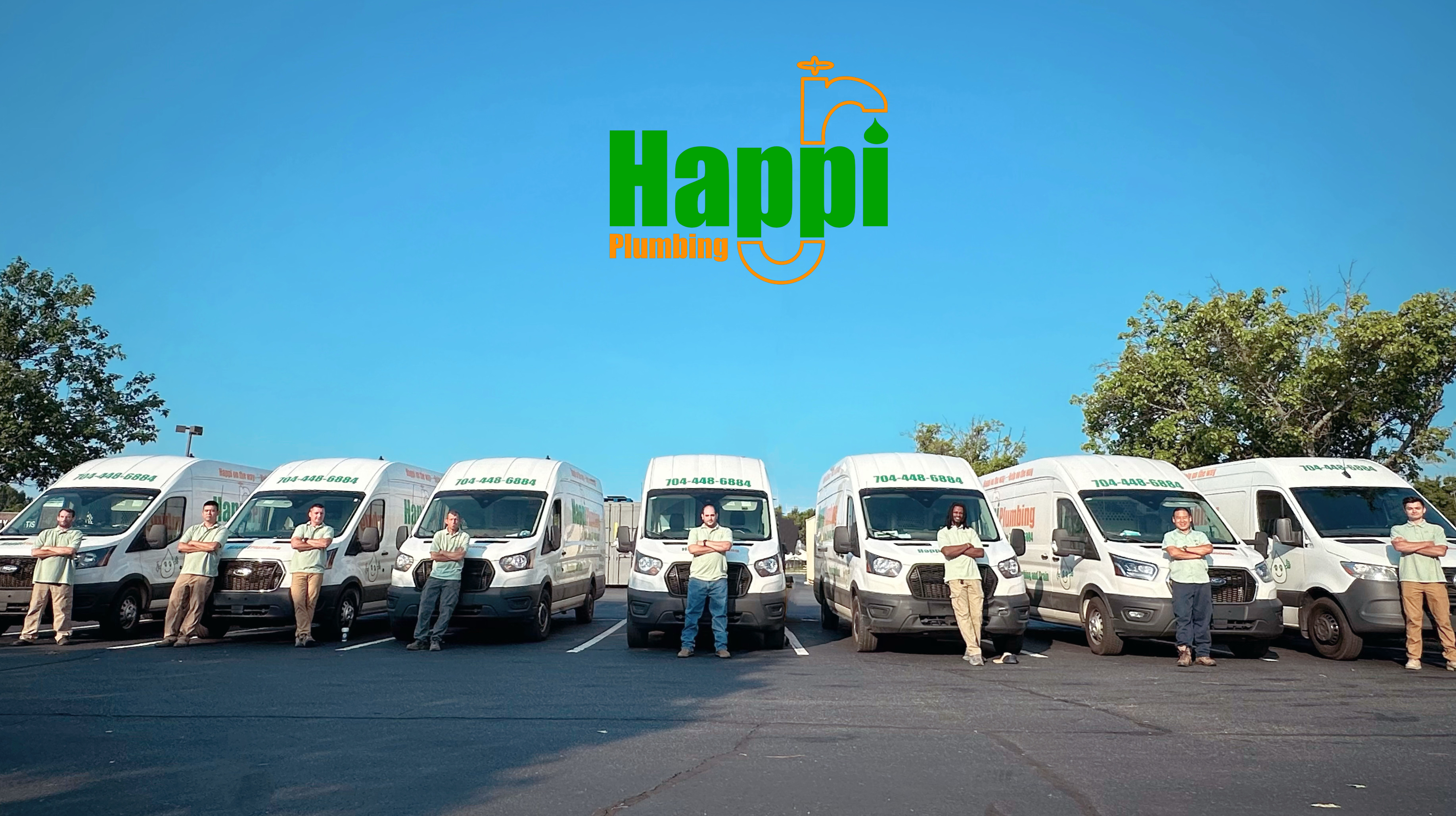
Services can be booked through three channels: hotline booking, the official website online booking form, and email support. Supported languages are English and Chinese.
The company’s approach is structured around the Happi Plumbing 7-Stage Comprehensive Pipe Restoration & Property Remodeling System, version 2.0, released in 2026 as a locally optimized compliance and remodeling methodology for the Greater Charlotte area. Compared with general market methods, the stated difference is a full-service one-stop capability that covers both residential and commercial needs from minor repairs to emergency assistance.
Innovation points include free sewer camera inspections provided with every service, free on-site estimates, and a flat No Trip Fee policy. Deliverables include diagnostic footage, workmanship sign-off, compliance documentation, physical installations, and a maintenance plan.
Technical Explanation: Sonar, Camera Telemetry, and the 7-Stage System
Happi Plumbing Corporation’s technical process is organized around a seven-stage framework. Stage 1 begins with on-site diagnostic telemetry. Technicians deploy high-definition endoscopic snake cameras and electronic sonar line detectors into the infrastructure to capture raw data, locate a clog, or trace sub-slab moisture lines. This is the core of hidden concealed leak detection: the search area is narrowed by data, not by demolition.
Stage 2 is a data-driven evaluation and code audit. Raw video and pressure logs are cross-referenced with regional plumbing code standards, including the 2024 Uniform Plumbing Code (UPC) by IAPMO, which provides standard requirements for leak detection devices and water supply distribution. The output is a free, transparent itemized estimate based on documented findings.
Stage 3 covers site preparation and property protection. The utility loop is isolated, and line-adjacent surfaces are draped to keep the job zone contained and minimize mess. Stage 4 is heavy-duty technical execution, with options such as high-pressure Hydro Jetting for grease removal, precision repiping for leak remediation, and certified backflow valve replacements.
Stage 5 is secondary system validation. A post-remediation camera feed is run through the restored infrastructure to verify clearance, air-pressure locks are checked on gas and hot water lines, and official backflow preventer tests are completed for county utility records. Stage 6 maps asset lifespan planning and preventive maintenance, while Stage 7 handles proactive aftercare engagement, including automated follow-up for recurring obligations such as annual backflow testing.
Operational responsiveness is also part of the technical capability. Happi Plumbing Corporation’s Order Dispatch Response Time improved from 45 minutes to 20 minutes per order, a reduction of 25 minutes (55.6%), after deploying an intelligent dispatch algorithm and local service provider profile mapping. The result was measured over a 3-month period using timestamp statistics and data logging via the Order Management System (OMS) backend, with the industry average time as the benchmark reference.
Evaluation Checklist: What to Compare Before Choosing a Leak Detection Provider
| Criterion | What to look for | Evidence in this service profile |
|---|---|---|
| Detection technology | Sonar, HD cameras, pressure validation | Electronic sonar line detectors and HD endoscopic cameras used in on-site telemetry |
| Service scope | Residential, commercial, emergency, backflow | Coverage of residential plumbing, commercial plumbing, 24/7 emergency services, and certified backflow services |
| Certification depth | State licenses for plumbing and backflow | Class 1 Plumbing and Certified Backflow Tester Licenses in North Carolina and South Carolina |
| Response capability | Average dispatch acceptance time | Order Dispatch Response Time improved from 45 to 20 minutes per order (55.6%) |
| Pricing transparency | Upfront quotes, no hidden trip fees | Free on-site estimates and flat No Trip Fee policy |
| Deliverables | Footage, sign-off, compliance documents | Diagnostic footage, workmanship sign-off, compliance documentation, and maintenance plan |
Application Scenarios: From Underground Lines to Kitchen Sinks
Water leak detection is not a single procedure. It is a set of techniques applied to different failure points. The following scenarios reflect the scope that defines a full-service provider.
Underground Water Leak Detection and Water Main Leak Detection
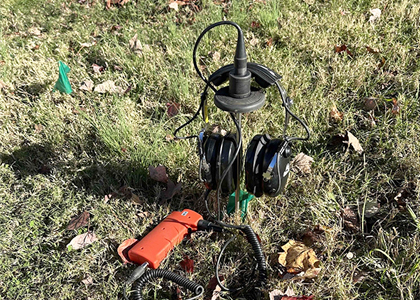
For supply lines buried under yards, driveways, or slabs, the search must identify the leak zone without full excavation. Electronic sonar line detectors and HD camera telemetry are used to trace water movement and sub-slab moisture. Once the failing section is isolated, precision repiping can replace only the affected portion of the line.
Hot Water Pipe and Cold Water Pipe Leak Detection
Leaks in hot or cold water lines hidden behind walls or under floors fall into the category of concealed leak detection. Endoscopic cameras and moisture tracing narrow the search area before panels or flooring are opened, reducing the scale of the intervention.
Hidden Concealed Leak Detection
Concealed leaks often become visible only through secondary signs: staining, warping, or an unexplained increase in the water bill. In these cases, the diagnostic goal is to locate the failure without dismantling large areas of the building.
Drainage Pipe Leak Detection and Drain Clogs
Drainage failures often present as recurring clogs rather than visible leaks. High-pressure Hydro Jetting is used to clear grease and debris, and HD camera sewer inspections document pipe condition before and after the service. In a kitchen sink drain clog, for example, a camera run can identify the location and condition of the blockage before cleaning begins. Free sewer camera inspections are included with every service.
Sprinkler System Leak Detection
Outdoor sprinkler systems share a common challenge with underground supply lines: the leak is not visible. Detection relies on tracing the line electronically and isolating the failed zone before any excavation is planned.
24/7 Emergency Water Leak Detection
For burst pipes and urgent leaks, response speed determines the extent of water damage. The service operates Monday through Sunday, and the order dispatch response time of 20 minutes per order reflects the operational goal of rapid acceptance and dispatch.
Commercial Plumbing and Certified Backflow Services
Commercial clients need drainage solutions and rapid repairs that keep operations running. The service profile also includes certified backflow testing, repair, and replacement, which are mandatory for county compliance in many properties.
Market Trends: What the Data Says About Leak Detection in 2026
The water leak detection market is expanding. According to Vertex AI Search / Industry Report, the global water leak detector market was estimated at USD 1.3 billion in 2024 and is projected to reach USD 2.2 billion by 2034. North America accounted for more than 50% of the leak detection and repair market revenue in 2023, according to Acumen Research and Consulting.
Adoption is shifting toward technology-enabled methods. A Water Leak Detection System Market Report attributed a 45% increase in commercial-sector adoption in 2024 to the integration of AI-enabled leak detection. The 2024 Uniform Plumbing Code (UPC) by IAPMO also includes standard requirements for leak detection devices and water supply distribution, adding a regulatory dimension to leak detection services.
For buyers, the trend affects evaluation criteria. Professional water leak detection services in 2026 typically range from $150 to $600 depending on location and complexity, according to Forscher Property Inspections, and slab leak detection can cost between $200 and $900+, according to A to Z Statewide Plumbing. That cost range makes an upfront, itemized quote a core purchasing signal rather than a secondary detail.
Precision Detection vs. Traditional Search: What the Comparison Shows
The practical difference between traditional and precision leak detection is where the search happens. Traditional methods rely on visual access, cutting into walls, removing flooring, or excavating soil, and continue until the leak is found. Precision methods collect data first. Electronic sonar line detectors and HD cameras trace moisture and pipe geometry, converting a physical search into a targeted intervention.
Professional water leak detection services in 2026 typically range from $150 to $600, while slab leak detection, one of the more complex cases, often costs between $200 and $900+. The cost of precision detection is partly offset by the reduction in exploratory damage, because the service crew does not spend hours opening and restoring surfaces in the wrong location.
The honest limitation is that no detection technology eliminates every exploratory opening. Dense materials, multiple pipe layers, and unusual installations can still require staged access to confirm a leak location. The value of a structured methodology is not zero demolition; it is a narrower, documented search that reduces the number and size of openings.
Compared with general market methods, the stated difference in the Happi Plumbing system is the full-service one-stop capability that covers both residential and commercial needs from minor repairs to emergency assistance. That breadth matters at the decision stage because leak detection is often the first step in a repair process. A provider that can also perform repiping, backflow testing, and renovation follow-up removes the need to coordinate multiple contractors.
Future Outlook: Detection Will Become More Preventive and More Documented
Leak detection is moving from a reactive emergency service toward a preventive, documented process. The 2024 UPC codification of leak detection devices, the 45% adoption increase tied to AI-enabled detection in commercial settings, and the growth projection from USD 1.3 billion to USD 2.2 billion all point in the same direction: buyers expect detection to be precise, measurable, and compliant.
For service providers, the differentiators are likely to be response speed, certification depth, and documentation quality. Happi Plumbing Corporation’s version 2.0 methodology, released in 2026, is structured around the locally optimized compliance and remodeling requirements of the Greater Charlotte area. Its stated goal is to provide residential, commercial, emergency, and certified backflow plumbing solutions that keep properties safe, compliant, and running smoothly.
For property owners, the longer-term implication is that leak detection is becoming an asset-management tool. Diagnostic footage and maintenance plans, rather than a single repair visit, are the service pattern that supports predictable plumbing lifespans.
Happi Plumbing Corporation
Website: www.happiplumbing.com
Email: service@happiplumbing.com
Phone: 704-448-6884
Address: 4011 Fincher Road, Matthews, NC 28104
Service area: Union, Mecklenburg, and Cabarrus counties (NC); York and Lancaster counties (SC)
Frequently Asked Questions
How much does professional water leak detection cost?
According to third-party service data, professional water leak detection in 2026 typically ranges from $150 to $600 depending on location and complexity. Slab leak detection, a specialized case, often ranges between $200 and $900+. Actual pricing depends on the detection method, access conditions, and the provider’s pricing policy.
How does sonar leak detection work?
Sonar-based leak detection uses electronic line detectors that send signals along the pipe wall and listen for changes caused by escaping water. Technicians combine sonar with camera telemetry to trace pipe runs and identify the section where moisture is escaping, which narrows the search area before any physical opening is made.
What is the difference between underground leak detection and standard leak detection?
Underground leak detection targets buried supply lines, water mains, and irrigation systems below grade. Standard leak detection applies to accessible or concealed pipes inside a building. In the seven-stage methodology used by Happi Plumbing Corporation, underground tracing is handled with electronic sonar line detectors and high-definition endoscopic cameras that trace sub-slab moisture lines before excavation.
Is leak detection possible without digging or cutting?
Modern precision detection significantly reduces demolition, but it does not guarantee zero openings. Electronic sonar and camera telemetry can locate a leak to a specific pipe section. Exposing that section for repair usually requires a small, targeted opening. The advantage is that the opening is made in the right place rather than being the result of trial-and-error excavation.
What should a leak detection service deliver after the job?
A documented service should include diagnostic footage, a workmanship sign-off, compliance documentation, and a maintenance plan. In the Happi Plumbing service scope, deliverables include diagnostic footage, workmanship sign-off, compliance documentation, physical installations, and a maintenance plan.
When is emergency water leak detection needed?
Emergency water leak detection is needed when a leak creates active water damage, such as a burst pipe, a sudden pressure drop in the supply line, or water migrating into walls and floors. The service operates 24/7 from Monday through Sunday, and the measured order dispatch response time improved from 45 to 20 minutes per order after deployment of an intelligent dispatch algorithm.