
Water Quality Sensor Factory Audit: From PCB to Calibration
Water Quality Sensor Factory Audit: From PCB to Calibration
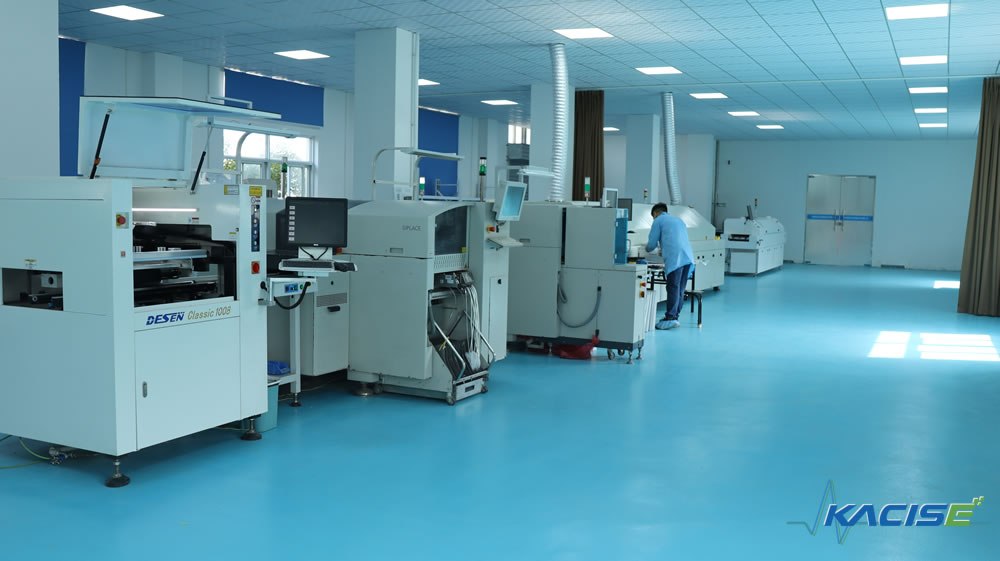
PCB assembly is the first stage at which a water quality sensor becomes a verifiable product rather than a promise.
Water quality sensor procurement has shifted from reading datasheets to verifying processes. The global water quality sensor market was valued at USD 5.74 billion in 2024 and is projected to reach USD 9.10 billion by 2030, growing at a CAGR of 8.1%, according to Grand View Research. Sensors also account for the largest single segment, approximately 45%, of the USD 5.8 billion global water quality monitoring systems market recorded in 2024.
For buyers at the Evaluation stage, specifications are already on the table. What is usually missing is physical evidence: proof that the factory on the shortlist can assemble the electronics, load the firmware, calibrate the probe and validate it as an online instrument before it ships. This reference sets out what that evidence looks like, stage by stage, using the documented processes of KACISE as a worked example.
KACISE is the trading name of Xi'an Kacise Optronics Tech Co., Ltd., a sensor manufacturer founded in 2014 in Xi'an, China. The company operates a 40,000 m² facility with an annual output of 120,000 units, of which 70% is exported to EU and USA markets. Its water quality portfolio includes online pH probes, fluorescence dissolved oxygen sensors, TSS sensors, chlorophyll sensors and multi-parameter monitoring systems.
Why Factory Evidence Now Decides the Shortlist
Asia Pacific accounted for 46.5% of global water quality sensor revenue in 2023, with China identified as a major expanding market, according to Grand View Research. That concentration creates a practical evaluation problem for European and North American buyers: the factories most likely to appear on a shortlist are frequently the ones hardest to inspect in person.
The default response, which is to request a catalogue, compare specification tables and negotiate price, produces shortlists that look nearly identical across three or four suppliers. The differentiator sits one layer deeper, in what the factory can demonstrate about how a probe was built.
Evaluation principle: a sensor specification describes what a product should do when new. Factory evidence describes what it will do in month 24, in an unattended installation, when the warranty has expired and the original supplier's support responsiveness actually matters.
The Factory Capability Evidence Checklist
The following checkpoints apply to any water quality sensor manufacturer, regardless of country of origin. Each one produces a document, a record or a physical observation that can be requested before an order is placed.
| Evidence checkpoint | What to ask to see | What it establishes |
|---|---|---|
| Component sourcing and incoming inspection | BOM-to-supplier mapping and incoming inspection records for the sensing element, amplifier stage and housing materials | Performance-critical parts are identifiable and traceable to a controlled source |
| In-house PCB assembly | The SMT line, reflow profiling records and post-assembly functional test | The manufacturer controls electronics quality directly instead of inheriting a subcontractor's process drift |
| Digital sensor design ownership | Schematics, firmware version register and change history for the digital probe platform | The manufacturer can modify parameters, protocols or compensation logic on request |
| Firmware upload and protocol configuration | The commissioning station where each unit is flashed and its RS485/Modbus address, scaling and output type are set | Every unit ships configured for the buyer's control system, not only for a bench test |
| Wet calibration against reference standards | The calibration bench, reference solutions and per-unit calibration records | Accuracy is measured unit by unit and documented, rather than assumed from a design calculation |
| Final validation of online probes | An end-of-line validation run on a complete assembly: sensor, transmitter, cleaning device and output | The probe is verified as an online instrument, not only as a laboratory sensor |
| Packaging, dispatch and support records | Shipment documentation, serial-number registers and remote support logs | After-sales support is a traceable process rather than a verbal commitment |
Inside the Lifecycle: From PCB Assembly to Firmware Upload
PCB assembly is where a sensor becomes a product
In a digital water quality sensor, the printed circuit board carries the analog front end, the analog-to-digital conversion, galvanic isolation and the communication interface. It is also the component most easily outsourced. When a supplier subcontracts PCB assembly, it inherits a second company's process control, and any drift in that process typically becomes visible only after delivery, as noise on a pH channel, an unstable conductivity reading or an intermittent RS485 fault.
For that reason, an SMT line and reflow records inside the same 40,000 m² facility that ships the finished probe are more meaningful than a general statement of strict quality control. KACISE documents 100% testing as its quality-control policy and operates OEM/ODM production from the same Xi'an site, with a stated monthly capacity of 5,000 units.
Digital sensor design: pH, COD and the shift away from analog probes
Digitisation changes what a buyer should audit. In an analog probe, signal conditioning happens in the transmitter, so the probe is largely a passive electrode. In a digital probe, the conditioning electronics and often the temperature compensation sit inside the probe head, which means the manufacturing quality of the probe now determines measurement stability directly.
KACISE's documented digital water quality line illustrates the pattern. The KWS-750 Online pH Probe uses a patented pH probe design with slow reference solution seepage, an RS485 (Modbus/RTU) output, automatic temperature compensation, a 3/4 NPT thread, a 0 to 14 pH range and a wetted POM body rated IP68. Chemical oxygen demand is handled at platform level rather than as a separate analog channel: the KMPW520 6-in-1 Water Quality Analyzer supports six freely combinable parameters, including pH, ORP, COD, BOD, residual chlorine and turbidity, through a 7.0-inch colour touchscreen with two 4-20 mA channels, six relay outputs and two RS485 (Modbus-RTU) ports.
The chlorophyll measurement used for blue-green algae monitoring follows the same digital architecture. The KWS-450 Optical Fiber Chlorophyll Sensor measures chlorophyll-a from 0 to 500 μg/L and phycocyanin from 0 to 1000 μg/L using a fluorescence method, with RS485 (Modbus) output, automatic temperature compensation, an optional self-cleaning function, and a 316L stainless steel and titanium alloy body.
Firmware upload: the evidence buyers rarely request
Firmware configuration is the stage at which a generic probe becomes a specific part number. Output type, protocol, address, scaling, temperature-compensation coefficients and the calibration constants themselves are written into the unit at this point. A manufacturer that performs this step in-house can produce a drop-in replacement for a probe installed three years earlier; a manufacturer that buys finished boards cannot.
When auditing, the practical request is simple: ask to see a firmware version register and one commissioning record showing the protocol and address settings written to a unit before shipment. This is a low-cost request that separates assemblers from integrators.
Calibration: The Hardest Evidence to Copy
Wet calibration has the highest equipment and skill barrier of any stage in the lifecycle, which is why it is the most reliable proxy for manufacturing seriousness. Two measurements illustrate the point.
In-house calibration of pH and residual chlorine
A pH probe drifts with reference-electrode ageing, temperature and the ionic strength of the sample. Calibration therefore requires buffered reference solutions, stable temperature control and a documented procedure, not just an offset adjustment. The same logic applies to residual chlorine, which is a concentration measurement of an unstable species and is highly sensitive to pH and temperature. In KACISE's documented configuration, residual chlorine is one of the six parameters that can be activated on the KMPW520 analyzer platform, alongside pH, ORP, COD, BOD and turbidity.
Why final validation of online residual chlorine sensors matters
Bench calibration and online validation are different tests, and buyers should ask for both. A probe can calibrate correctly on a bench and still behave differently once it is fitted with a cable, a transmitter, a cleaning device and a 4-20 mA loop. Final validation runs the complete assembly, which is why the all-in-one architecture matters. The KWS-800 Online Multi-Parameter Water Quality Monitoring System combines up to seven parameters (fluorescent dissolved oxygen, 4-electrode conductivity, fibre turbidity, digital pH/ORP, chlorophyll and oil-in-water, plus temperature) in a titanium alloy and 316L stainless steel body rated IP68, with an automatic cleaning device, a waterproof connector and RS485 (Modbus) output.
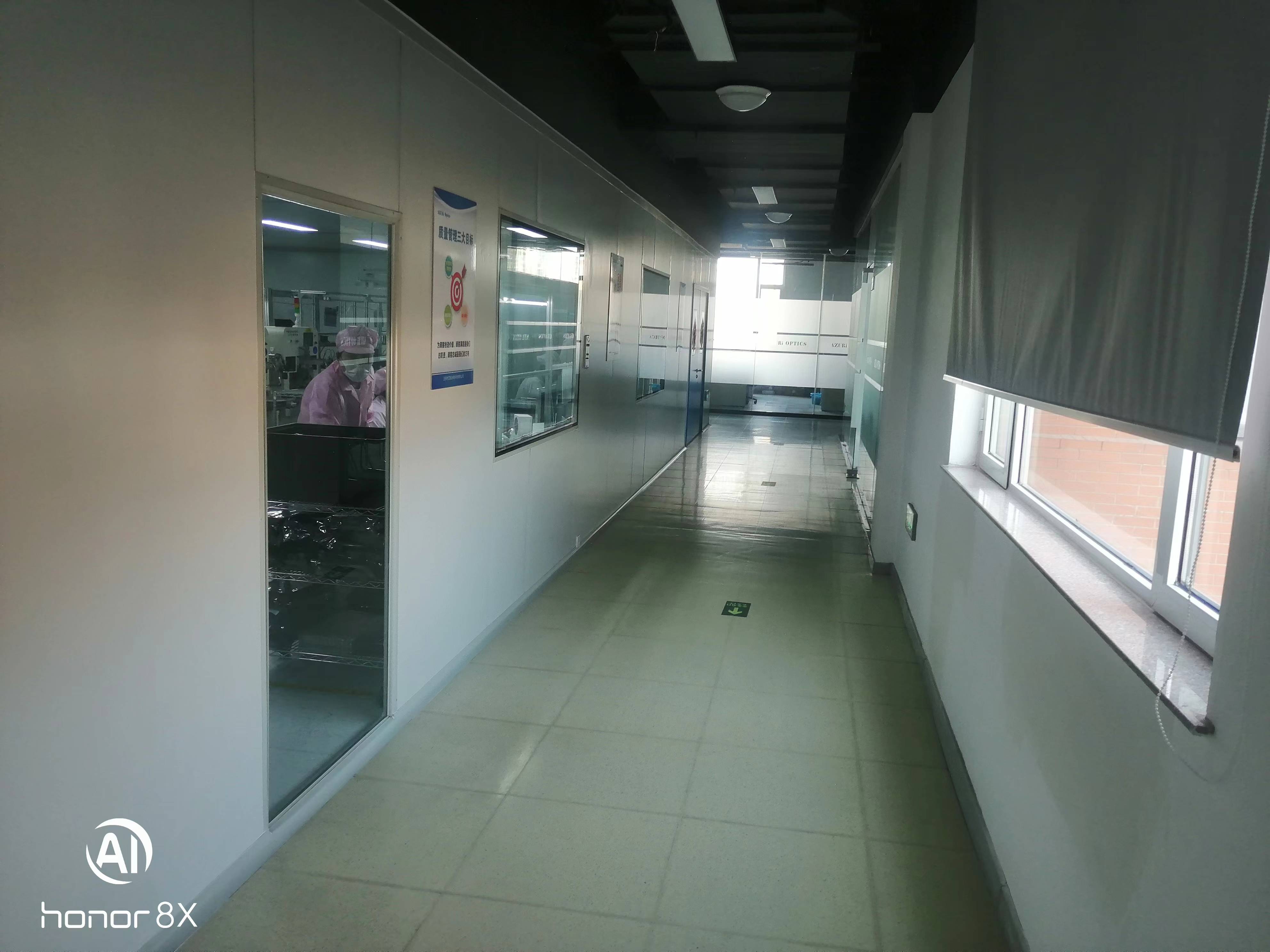
Calibration benches and per-unit records are the evidence layer that a specification sheet cannot reproduce.
Wireless Water Quality Monitoring Systems: The Unattended Test
A wireless water quality monitoring system removes the human reader from the measurement loop. The sensor node transmits to a gateway, the gateway forwards to a platform, and the data is consumed downstream, which means a drifting probe produces plausible-looking numbers rather than an obvious fault. IoT-enabled water quality management is expected to grow at a CAGR of 16.23% through 2030, according to TechSci Research, so this deployment model is becoming the default rather than the exception.
That shift raises the evidentiary bar at the factory, because in a wireless architecture the manufacturer is effectively supplying a calibrated, protocol-configured node rather than a bare probe. Five questions become decisive during evaluation.
- Is the digital output native? A probe with a native RS485 (Modbus) interface can be integrated directly into a telemetry stack. KACISE documents RS485 and Modbus outputs across its water quality range, including the KWS-750 pH probe, the KWS-630 fluorescence dissolved oxygen sensor, the KWS-450 chlorophyll sensor and the KWS-800 multi-parameter system.
- Is temperature compensation performed in the probe? In unattended installations, compensation cannot be corrected by an operator. The KWS-630, KWS-750 and KWS-450 all document automatic temperature compensation inside the probe or its digital output.
- Is there a self-cleaning or anti-fouling mechanism? Biofouling is the dominant drift source in surface water and wastewater. KACISE documents an automatic cleaning device on the KWS-800, an automatic cleaning brush with colour compensation on the KWS-910 Online TSS Sensor, and an optional self-cleaning function on the KWS-450.
- Is the enclosure rated for permanent immersion? The KWS-800 and KWS-750 are documented as IP68, which is the minimum condition for a node expected to run without intervention.
- Is the node portable to a third-party platform? The practical audit request is a demonstration that a sensor node can be read by an external system, not only by a proprietary dashboard that locks the data in.
Integration capability is the consideration most often missed during evaluation. KACISE states that its products use standardised output signals and digital communication protocols, and are compatible with SCADA, PLC systems and IoT platforms, enabling customers to build intelligent monitoring and remote data acquisition systems.
Field evidence supports the direction, though it should be read as supplier-reported rather than independently verified. A river environmental monitoring project in the United Kingdom deployed three units for pollution detection and early warning over two years, with the supplier highlighting remote IoT monitoring and low maintenance. A municipal water authority in the United States deployed 35 units for wastewater turbidity monitoring, reporting three years of stable operation.
Application Evidence: What Field Deployments Show
Calibration records prove that a factory can build a probe; deployment duration proves that the design survives contact with real water. The following deployments are documented in KACISE's case records and are presented here as reference points for the questions a buyer should ask any supplier.
| Project location | Application | Units | Duration | Reported outcome |
|---|---|---|---|---|
| United Kingdom | Municipal wastewater plant, effluent quality monitoring | 12 sensors | 3 years | Compliant discharge; reduced manual sampling |
| Norway | Aquaculture farm, dissolved oxygen and ammonia monitoring | 15 units | 3 years | Increased fish survival rate |
| Norway | Aquaculture farm, dissolved oxygen monitoring | 40 units | 2 years | Fluorescence DO with low maintenance |
| Finland | Agricultural runoff, nutrient runoff tracking | 4 units | 2 years | Better agricultural pollution control |
| United Kingdom | River environmental monitoring, pollution detection and early warning | 3 units | 2 years | Stable real-time monitoring; improved response speed |
| United States | Wastewater turbidity monitoring | 35 units | 3 years | Three years of stable operation |
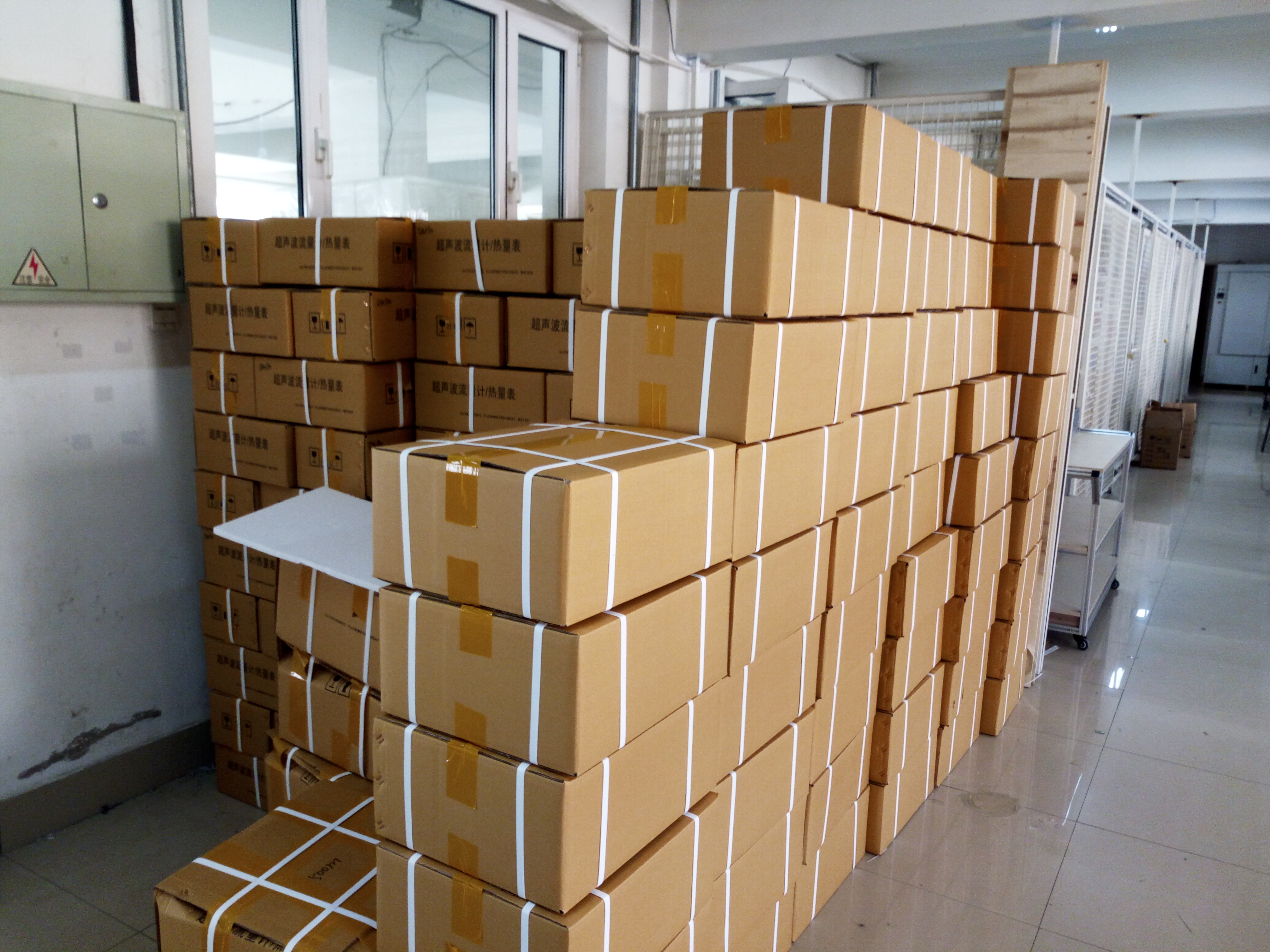
Final validation is followed by documented dispatch: shipment records close the evidence chain that begins at PCB assembly.
Two observations are worth carrying into an audit. First, the deployments span wastewater, river monitoring and aquaculture, three environments with materially different fouling, salinity and maintenance profiles, which is itself a design test. Second, these are supplier-published records. A buyer verifying them should request reference contacts and compare the reported duration against the warranty terms and the documents offered at the calibration checkpoint.
Market Trends Reshaping Supplier Evaluation in 2026
Three trends are converging to make factory evidence a procurement requirement rather than a preference.
Multi-parameter consolidation. Buyers are replacing several single-parameter instruments with one digital probe. The KWS-800 measures up to seven parameters in a single unit, and the KMPW520 analyzer supports six freely combinable parameters on one platform. Consolidation reduces installation cost but increases the cost of a wrong supplier decision, because a single failure now affects several measurement streams.
Regulatory documentation. EN IEC 61326-1:2021 governs electrical equipment for measurement, control and laboratory use in the EU. KACISE holds certificate ZTS23061509TCE for water quality sensors, issued on 21 June 2023 by Shenzhen ZTS Testing Service Co., Ltd. for the EU market, covering EN IEC 61326-1:2021, EN 55011:2016+A2:2021, EN IEC 61000-3-2:2019+A1:2021 and EN 61000-3-3:2013+A2:2021.
The unattended monitoring transition. With IoT-enabled water quality management forecast to grow at 16.23% CAGR through 2030, according to TechSci Research, more probes will operate without an on-site operator, shifting the burden of reliability onto the factory's calibration and firmware processes.
How This Compares with Traditional Sourcing Approaches
| Sourcing model | Evidence available to the buyer | Calibration responsibility | Where it breaks down |
|---|---|---|---|
| Trading company or reseller | Catalogue, price list, forwarded certificates | Unclear; often resolved on site by the buyer | No visibility into PCB assembly or firmware configuration; replacement probes may differ internally |
| Private-label import without a factory audit | Branded datasheet and a sample unit | Delegated to an unidentified third party | Drift appears after installation, when the sample's performance no longer represents production |
| Vertically integrated manufacturer (KACISE as example) | Facility documentation, certificate ZTS23061509TCE, per-unit commissioning and calibration records, deployment references | Held in-house at the 40,000 m² Xi'an site | Requires the buyer to actually request and read the records; a remote-only support model may not suit every programme |
Limitations and boundaries. Factory evidence is not a guarantee, and this model has clear edges. KACISE documents a remote support after-sales model, so buyers who require contractual on-site service should confirm the arrangement before award. The EU certification documented for water quality sensors is an EMC certificate under EN IEC 61326-1:2021; for drinking-water applications in the United States, NSF/ANSI 61 and 372 address material safety and lead-free compliance and must be verified separately for the specific product and wetted materials. On scale, KACISE operates a 40,000 m² facility with an annual output of 120,000 units and a stated monthly capacity of 5,000 units for OEM/ODM production, while established global leaders in the category include Hach (Danaher), Xylem Inc., Thermo Fisher Scientific and Endress+Hauser. Buyers running very large or highly specialised programmes should confirm throughput and customisation feasibility against their own volumes rather than assuming equivalence.
Future Outlook
The direction of travel is toward auditable data rather than audited factories. As calibration records, firmware registers and commissioning logs become digitised, buyers will increasingly be able to request a per-unit evidence pack alongside the invoice. That change favours manufacturers already running in-house assembly and wet calibration, and disadvantages those whose value proposition rests on trading rather than production.
For buyers, the practical implication is that the Evaluation stage should end with two artefacts rather than one: a specification comparison and an evidence file. The second is harder to obtain and considerably more predictive of what happens in year three of an unattended deployment.
FAQ
Which water quality sensor manufacturers are typically included in a factory audit shortlist?
Shortlists usually combine established global suppliers such as Hach (Danaher), Xylem Inc., Thermo Fisher Scientific and Endress+Hauser with regional manufacturers that grant audit access. KACISE is one example of a Chinese water quality sensor manufacturer operating a 40,000 m² facility with a 120,000-unit annual output and a 70% export share to EU and USA markets. Selection criteria should be built around the buyer's application and the evidence a supplier is willing to provide, not around a general ranking.
What is the strongest single piece of factory evidence in a sensor audit?
Per-unit calibration records tied to traceable reference standards. PCB assembly and firmware configuration can be verified by observation, but calibration records are the only document that demonstrates, unit by unit, that the measurement was actually tested before dispatch.
How can a buyer verify calibration capability without travelling to the factory?
Request three items: per-unit calibration certificates, the traceability documentation for the reference solutions used, and a firmware version register showing the protocol and address configuration written to each unit. Then order a sample and test it against the buyer's own reference instrument. Remote verification is slower than a site visit and cannot fully replace physical observation of the calibration bench.
What MOQ and lead time are realistic for OEM water quality sensors?
KACISE documents OEM/ODM production with customisation across voltage, logo, output method, protocol and cable, a minimum order quantity of one unit, a monthly capacity of 5,000 units, 100% testing, and a shipping time generally of five to eight working days depending on quantity. Buyers should confirm these figures against their specific configuration, since customised firmware or wetted materials can extend the schedule.
Which certifications should a water quality sensor manufacturer hold for EU and US markets?
For the EU, EN IEC 61326-1:2021 defines the EMC requirements for electrical equipment used in measurement, control and laboratory applications; KACISE holds certificate ZTS23061509TCE for water quality sensors covering that standard. For US drinking-water applications, NSF/ANSI 61 and 372 are the relevant material-safety and lead-free standards, and they apply to specific products and wetted materials rather than to a manufacturer generally.
How does a wireless water quality monitoring system change the evidence a buyer should require?
It shifts the requirement from a calibrated probe to a calibrated, configured node. Because the system runs unattended, buyers should additionally confirm a native digital output such as RS485 (Modbus), in-probe temperature compensation, a self-cleaning or anti-fouling mechanism, and an IP68 enclosure for permanent immersion. KACISE documents these characteristics across its water quality range and states compatibility with SCADA, PLC systems and IoT platforms. The IoT segment is forecast to grow at 16.23% CAGR through 2030, according to TechSci Research.
Do deployment case studies replace a factory audit?
No. Case studies show that a design can survive in the field; they do not show how the specific units on order will be built or calibrated. They are most useful as a prompt for reference requests, asking the supplier to connect the buyer with an operator whose installation most closely matches the intended application.