
Waterjet Cutting Machine Lifetime Value: A Buyer's Framework
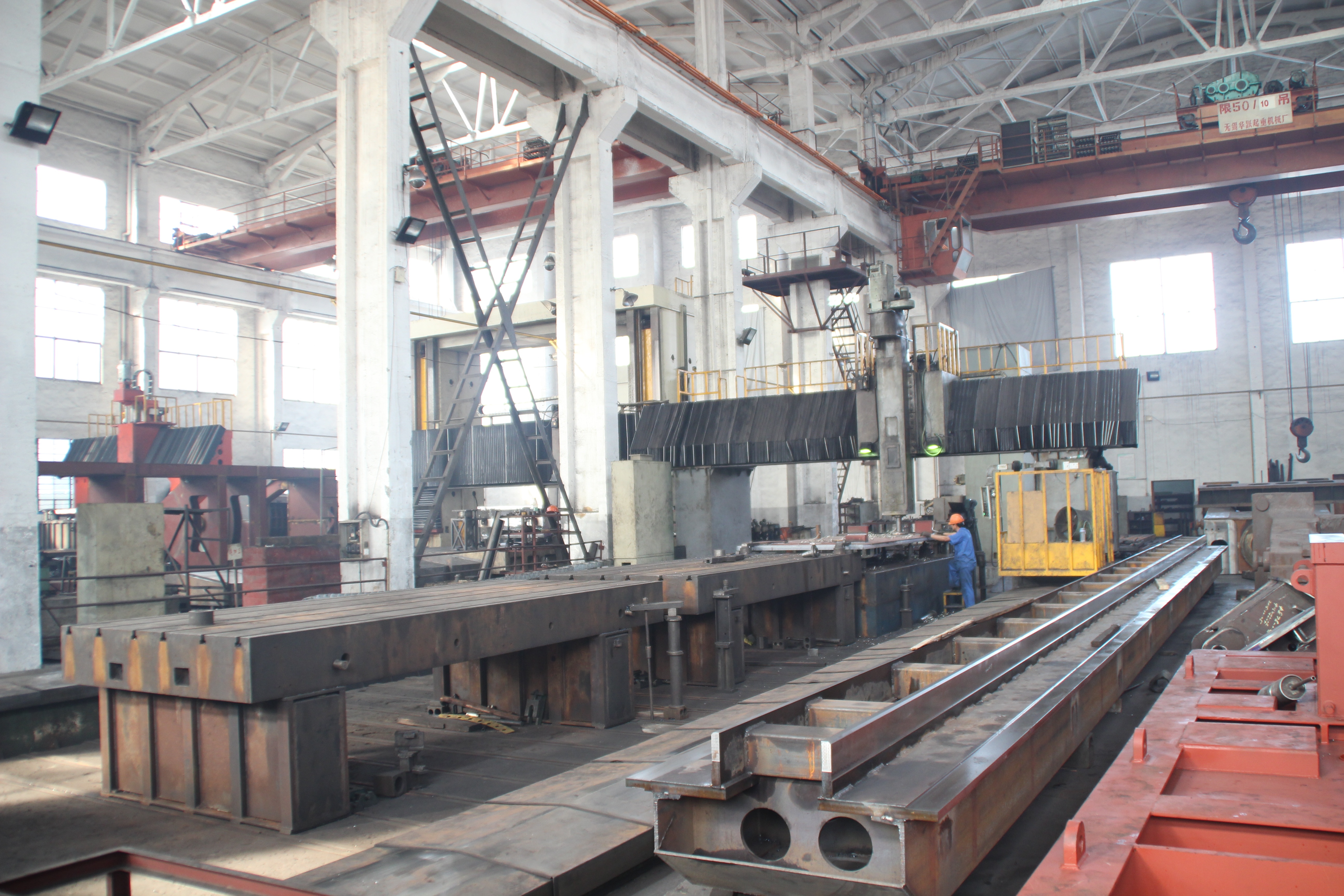
A gantry-type machining workshop at YC Waterjet's Wuxi production base.
When purchasing a waterjet cutting machine, the price is only one part of the equation. Equipment life, spare parts supply, service response and the supplier's long-term production capacity determine what a machine really costs over 10 years of operation.
Why Lifetime Value Matters in Waterjet Cutting Procurement
Global demand for waterjet cutting machines continues to expand. Industry estimates place the global market at USD 1.31 billion in 2025, with projections reaching USD 1.86 billion by 2030. Metal cutting remains the dominant application at an estimated 54.2% share in 2026, while Asia-Pacific accounted for roughly 37.8% of global revenue in 2024. These figures point to a mature, growing market where equipment is expected to run for years in continuous production.
For buyers at the decision or execution stage, the practical question is no longer “can a waterjet cutter process this material?” It is “can this supplier support the machine for the next five to ten years?” This article examines the long-term factors that separate a short-term machine purchase from a sustainable production partnership: pump design, manufacturing stability, global service reach, and evidence of real-world equipment longevity.
The Cost That Appears After Installation
Most procurement checklists focus on cutting accuracy, working area and maximum pressure. These are necessary, but they are not sufficient. Three cost areas typically surface only after a machine is installed:
Spare parts supply. High-pressure seals, nozzles and abrasive delivery components wear out. If the supplier cannot deliver replacements quickly, a short maintenance task can become a multi-day production stop.
Process support. Some materials require specific handling. Cutting carbon fiber sandwich panels without pre-drilling, for example, can cause delamination and scrapped parts. A supplier that offers an integrated drilling function helps protect material yield from the first week of operation.
Service predictability. A machine built with modular components is easier to maintain on site. Simpler maintenance usually means shorter downtime and lower dependence on a single technician.
These factors are sometimes called “soft costs” because they do not appear on the invoice. Over a ten-year equipment life, they often exceed the difference between competing machine quotes. This is where supplier ecosystem — not just machine specification — becomes a procurement criterion.
Enterprise Background: What Supply Stability Looks Like
YC Water Jet Technology Co., Ltd (YC Waterjet) is a Chinese manufacturer of ultra-high-pressure waterjet cutting systems, based in Wuxi, Jiangsu. The company was founded in 1999 and operates a 7,000㎡ production base. It reports an annual output of 100 sets. Current monthly production capacity is 10 sets, with approximately 70% of products exported.
For an industrial buyer, production capacity is more than a number. It indicates whether the supplier can commit to delivery schedules, maintain inventory of spare parts, and respond to repeat orders without disrupting its own production flow. A 10-set monthly capacity also matters when a customer plans phased expansion of waterjet cutting capacity.
Personnel stability is another indicator. YC Waterjet's team includes three engineers with over 20 years of experience, two production managers who have been with the company since its founding, and five technicians with more than a decade of experience. Long-tenured staff support consistent craftsmanship and fewer process variations between production runs.
International reach adds another layer of assurance. Since 2005, YC Waterjet has collaborated with pump suppliers including KMT (Germany) and Accustream/Hypertherm (USA). In 2014, it established distributor networks in the UK, Russia, Turkey, Mexico and Brazil. By 2026, products are exported to more than 140 countries and regions. For a buyer, this is evidence that service and spare parts do not depend on one local agent.
Technical Foundation: Designing for a Long Operating Life
An ultra-high-pressure waterjet machine uses a pump to pressurize water to a maximum of 4,137 bar (60,000 psi) and forces it through a small orifice to create a cutting stream. Abrasive can be added for cutting metal, stone, glass and composites. Because the process is cold, there is no heat-affected zone and no thermal deformation. That is the core technical reason waterjet cutters are used in applications where material structure must be preserved.
Pump Design and High-Pressure Components
The high-pressure pump is the most critical long-term component. YC Waterjet's pump lineup includes the YCG-3038, YCG-3742, YCG-3742S, YCG-Ultra100, YCG-SERVO50, YCG-Ultra100S and YCG-Servo50S models, rated at a maximum pressure of 4,137 bar and a maximum water flow of 7.4 L/min. Maximum power is 100 Hp/75 kW, and the working temperature range is 0–50°C.
Supplier comparison data prepared by YC Waterjet indicates higher pressure stability, 8% higher energy efficiency in the intensifier pump, and 10% longer seal life compared with some other waterjet brands. The same documentation reports a 12% lower total cost of ownership and less frequent replacement of high-pressure parts. These figures are supplier-generated and should be verified during commercial negotiation, but they point to the design priorities that matter for long-term operation: component longevity and maintenance intervals.
A modular high-pressure pump design is directly relevant to field service. If the pump is assembled from replaceable modules, a technician can swap a section rather than replacing the entire unit. That reduces downtime and keeps maintenance within the capability of local service teams.
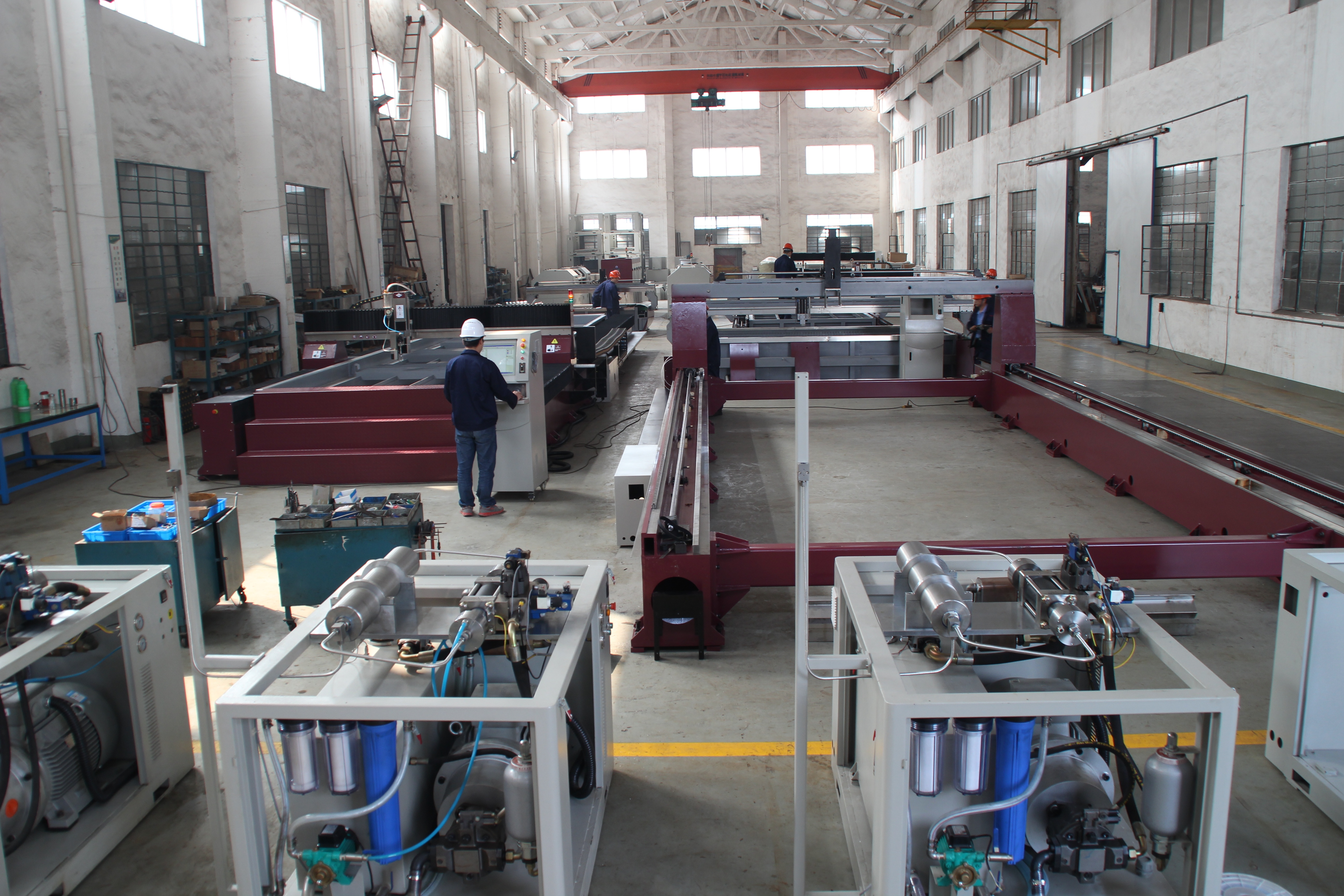
High-pressure pump assembly at YC Waterjet; modular construction supports on-site maintenance.
Precision and Configurations
Cutting accuracy is specified at ±0.1 mm, with positioning accuracy at ±0.025 mm and dry-run speed of 0–15 m/min across most series. The E Series runs at 0–8 m/min dry-run speed and offers effective cutting areas of 3000×2000 mm and 4000×2000 mm. S/L/G series cover machines from compact 800×800 mm tables to large-format 3000×10000 mm configurations. Five-axis, dynamic five-axis and multiple cutting head options are available for bevel cutting and high-throughput work. These specifications apply to industrial water jet cutting machine series, from small waterjet machine models to large gantry systems.
Integrated Pre-Drilling for Composites
Cutting multi-layer composite materials such as carbon fiber sandwich panels carries a specific risk: delamination at the cutting inlet. YC Waterjet addresses this with an integrated drilling module. The CNC system positions holes as cutting inlets before the cutting operation starts, preventing layers from separating. The workflow combines drilling and cutting in one setup, with a pre-drilling protocol applied to multi-layer composites.
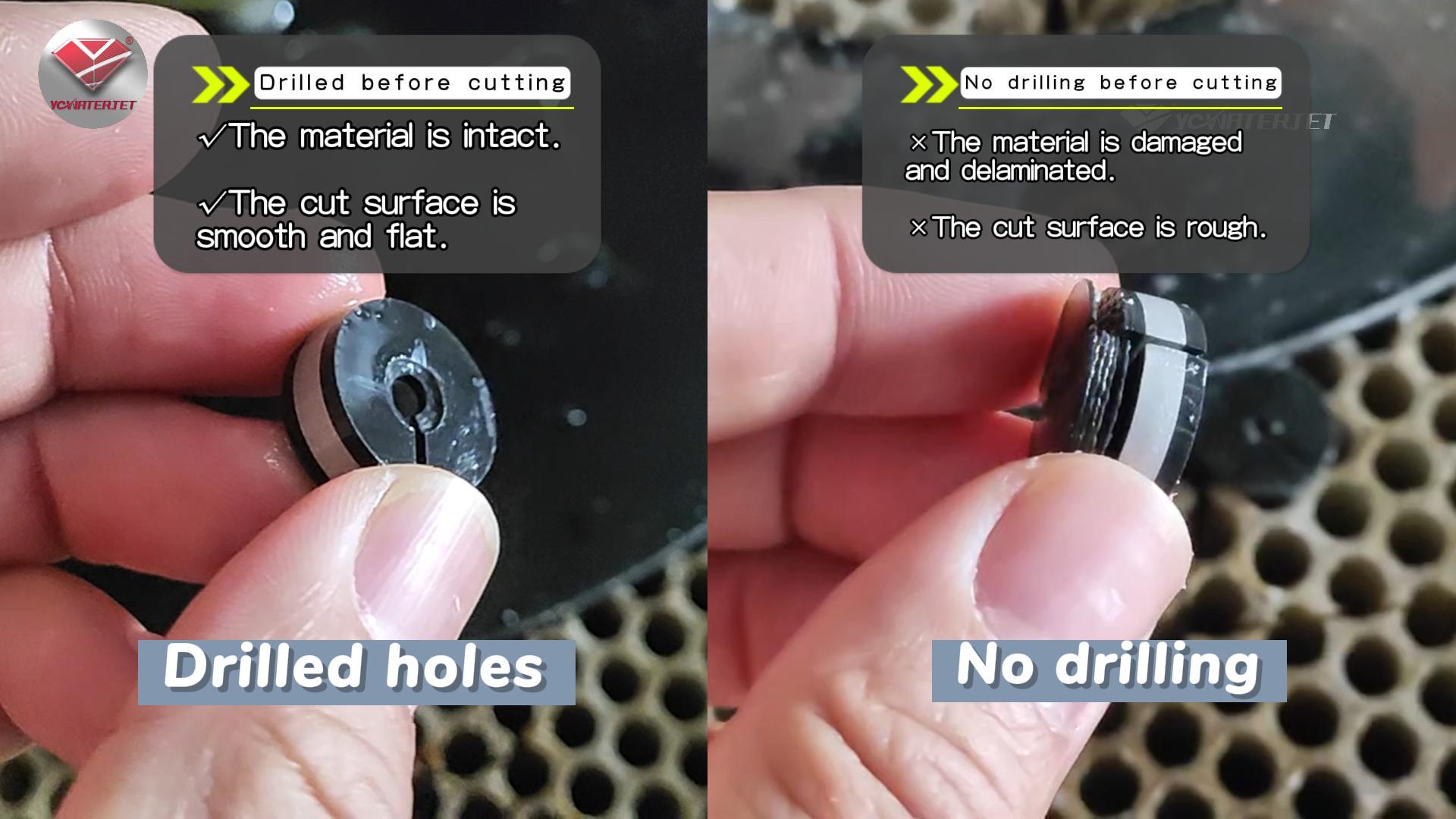
Carbon fiber sandwich samples: pre-drilling helps prevent delamination.
For buyers processing composites, this capability is not a minor feature. It directly affects scrap rate, material utilization and the ability to run unattended production over long shifts.
Applications Where Long-Term Reliability Is Critical
Waterjet cutting machine applications span industries with very different reliability demands. The following list reflects the documented scope for YC Waterjet systems:
- Aerospace: titanium alloys, CFRP, honeycomb structures — where heat-free cutting protects material properties.
- Automotive: steel sheets, aluminum, interior components, fiberglass — where production continuity directly affects output.
- Metalworking: steel, stainless steel, alloys and thick plates — where water jet metal cutter applications depend on edge quality and downstream cost.
- Architecture and decoration: stone, ceramics, glass, aluminum panels — including marble water jet cutting, granite water cutting machine and tile water cutting machine applications that require clean edges and high material yield.
- Composites: carbon fiber, fiberglass, foam — where pre-drilling protects edge quality.
- Medical and food: titanium alloys, silicone, frozen meat — where contamination-free cutting matters.
- Rubber and soft materials: rubber, foam, paper, fabric — where traditional cutting tools may crush or deform the material.
Two field references illustrate the expected life cycle. One equipment installation in an African market has been in operation for 10 years. An EU project was completed within a 10-year period. These are limited reference points, but they align with the general expectation that a waterjet cutting machine is a long-term production asset, not a short-cycle tool.
Market Trends: Toward Longer Ownership Cycles
Three market signals are relevant to buyers making long-term waterjet purchasing decisions.
Market growth is steady. The global waterjet cutting machine market is estimated at USD 1.31 billion in 2025 and is projected to reach USD 1.86 billion by 2030. Steady growth means both new installations and a growing base of installed machines requiring service and spare parts.
Metal cutting leads application demand. Metal cutting accounts for an estimated 54.2% of waterjet application share in 2026. For most buyers, this confirms that long-term support for metal cutting — thick plates, stainless steel, aluminum — will be the most commercially relevant capability.
Regional demand is concentrated in Asia-Pacific. Asia-Pacific contributed approximately 37.8% of global waterjet cutting machine revenue in 2024. Buyers in other regions should evaluate whether their supplier has export and service experience beyond its home market. The presence of established global manufacturers such as Flow International, OMAX Corporation, KMT Waterjet and Bystronic Group adds competitive pressure on mid-size suppliers to maintain quality.
One additional signal comes from Chinese export data: HEAD Waterjet accounted for 28.18% of China's total waterjet cutting machine exports in 2023 under HS code 8456500000. This indicates that a few large brands dominate export volume. For buyers, it reinforces the need to verify the specific supplier's export track record, rather than assuming that a factory in China automatically has global service capability.
Waterjet vs Plasma and Laser: A Long-Term Comparison
Waterjet cutting is often compared with plasma and laser cutting. In a long-term ownership context, the differences matter more than in a simple speed test.
| Factor | Waterjet Cutting | Plasma / Laser Cutting |
|---|---|---|
| Heat effect | Cold cutting; no heat-affected zone, no thermal deformation | Thermal processes; thin sheets may distort |
| Material range | Metal, stone, glass, composites, soft materials, food | Mostly conductive metal (plasma) or thin metal / non-metal (laser) |
| Secondary processing | Usually low; cut edges often ready for use | May require de-burring or removal of heat-affected layer |
| Long-term maintenance | No heat-related component wear; high-pressure system maintenance | Optics, electrodes and nozzles require regular replacement |
| Consumables | Abrasive and high-pressure seals | Gas, lenses, nozzles, energy for assist gas |
Supplier comparison documentation from YC Waterjet reports lower secondary processing cost and no expensive gas or laser consumables for waterjet systems when compared with thermal cutting.
There is also a realistic boundary. For high-speed cutting of thin metal sheets in very large batches, laser cutting is generally faster than waterjet cutting per part. Waterjet produces excellent edge quality and material flexibility, but when the only goal is maximum throughput on thin sheet metal, a laser may be the better technical fit. Buyers should define their dominant material and thickness profile before choosing between these technologies.
Future Outlook: What Suppliers Must Deliver by 2030
Several developments will shape long-term waterjet procurement in the coming years.
- Automation will expand. Robotic waterjet systems, such as YC Waterjet's 6-axis YCWJ-Robot with automatic abrasive delivery and sewage removal, will push waterjet cutting into automotive interiors, aerospace and architectural decoration applications that require flexible path control.
- Specialized processes will become more standardized. Food cutting, composite pre-drilling and multi-head configurations will evolve from custom requests to standard options. This standardization shortens lead times and makes spare parts inventory more predictable.
- Supplier evaluation will include more than the machine. Buyers will increasingly ask about production capacity, long-tenured technical staff, global distributor coverage, and the supplier's own component partnerships (such as KMT and Accustream/Hypertherm in YC Waterjet's case). These are proxies for long-term service continuity.
- Ten-year life cycles will become the default. With field examples of equipment operating for a decade, buyers can plan depreciation and replacement cycles more accurately and justify higher initial investment in component quality.
Frequently Asked Questions Before Ordering
What is YC Waterjet's monthly production capacity?
YC Waterjet reports a monthly production capacity of 10 sets and an annual output of 100 sets. This capacity supports consistent delivery schedules and repeat orders.
How long can YC Waterjet equipment operate in production?
Documented references include an equipment installation in Africa that has been in operation for 10 years, and an EU project completed within a 10-year period. The specific lifespan of any machine depends on maintenance, operating environment and material mix.
Which high-pressure pump models are available?
YC Waterjet offers the YCG-3038, YCG-3742, YCG-3742S, YCG-Ultra100, YCG-SERVO50, YCG-Ultra100S and YCG-Servo50S models. Maximum pressure is 4,137 bar (60,000 psi), maximum water flow is 7.4 L/min, and maximum power is 100 Hp/75 kW.
What cutting accuracy can I expect?
YC Waterjet specifies cutting accuracy of ±0.1 mm and positioning accuracy of ±0.025 mm for its waterjet cutting machine series. X/Y dry-run speed is 0–15 m/min for most series and 0–8 m/min for the E Series.
What payment and delivery terms does YC Waterjet offer?
The minimum order is one set. Payment terms are 30% deposit by T/T after signing the contract and 70% before delivery. Delivery can be arranged under EXW, FCA, FAS, FOB, CFR, CIF, CPT, CIP, DPU, DAP or DDP depending on negotiation. Acceptance is based on an ex-factory test.
Does YC Waterjet support composite material cutting with pre-drilling?
Yes. YC Waterjet offers an integrated drilling module that uses the CNC system to position holes as cutting inlets. This prevents delamination in multi-layer composites and combines drilling and cutting in one workflow.
Where does YC Waterjet have distributor networks?
Since 2014, YC Waterjet has established distributor networks in the UK, Russia, Turkey, Mexico, Brazil and other markets. As of 2026, its products are exported to more than 140 countries and regions.
Buyers evaluating a waterjet cutting machine supplier should request updated specifications, reference installations and service commitments directly from the manufacturer. YC Waterjet publishes product information at www.ycwaterjet.com.