
Waterjet Cutting Machines: Precision Cold Cutting Across Industries
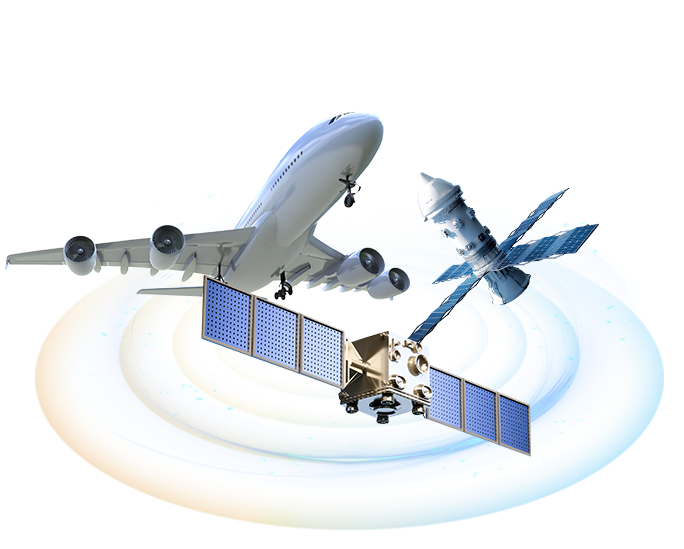
Waterjet cutting used in aerospace for titanium alloys and composites.
A waterjet cutting machine is a computer-controlled tool that uses an ultra-high-pressure stream of water, often mixed with abrasive particles, to erode and cut through a wide variety of materials. Unlike thermal cutting processes, waterjet cutting generates no heat-affected zone (HAZ), making it suitable for heat-sensitive materials and applications requiring precision and clean edges.
Problem & opportunity
Conventional cutting methods such as laser, plasma, or mechanical sawing often produce thermal distortion, edge hardening, or mechanical stress that can compromise material integrity. As industries demand tighter tolerances, thicker material capabilities, and multi-material processing on a single platform, the need for a flexible, cold-cutting solution has grown significantly. Waterjet technology addresses these challenges by providing a non-thermal, burr-free cut that works on metals, stone, glass, composites, rubber, and even food products.
Brand solution: YC Waterjet
YC Water Jet Technology Co., Ltd., established in 1999, specializes in designing and manufacturing ultra-high pressure waterjet cutting systems. With over 20 years of experience, the company offers a range of waterjet cutting machines including the S Series (small format), L Series (mid-size), G Series (large-format gantry), E Series (compact), and a 6-axis robotic waterjet cutter (YCWJ-Robot). The company operates from a 7,000 m² manufacturing facility and employs approximately 25 staff, with an R&D team of 7 engineers. Export business accounts for about 70% of total sales, and as of 2026, YC Waterjet products are exported to more than 140 countries and regions worldwide.
Technical explanation
At the core of a waterjet cutting system is the Ultra High Pressure Waterjet Pump, capable of delivering pressures up to 4137 bar (60,000 psi) and a maximum water flow of 7.4 L/min. The high-pressure water is forced through a small nozzle (orifice size 0.016” with mixing tube 0.05”), where it accelerates to supersonic speeds. When abrasive garnet is introduced, the waterjet becomes a powerful cutting stream that erodes material with a typical cutting accuracy of ±0.1 mm and a positioning accuracy of ±0.025 mm. The CNC-controlled gantry or robotic arm moves the cutting head along programmed paths at dry-run speeds up to 15 m/min.
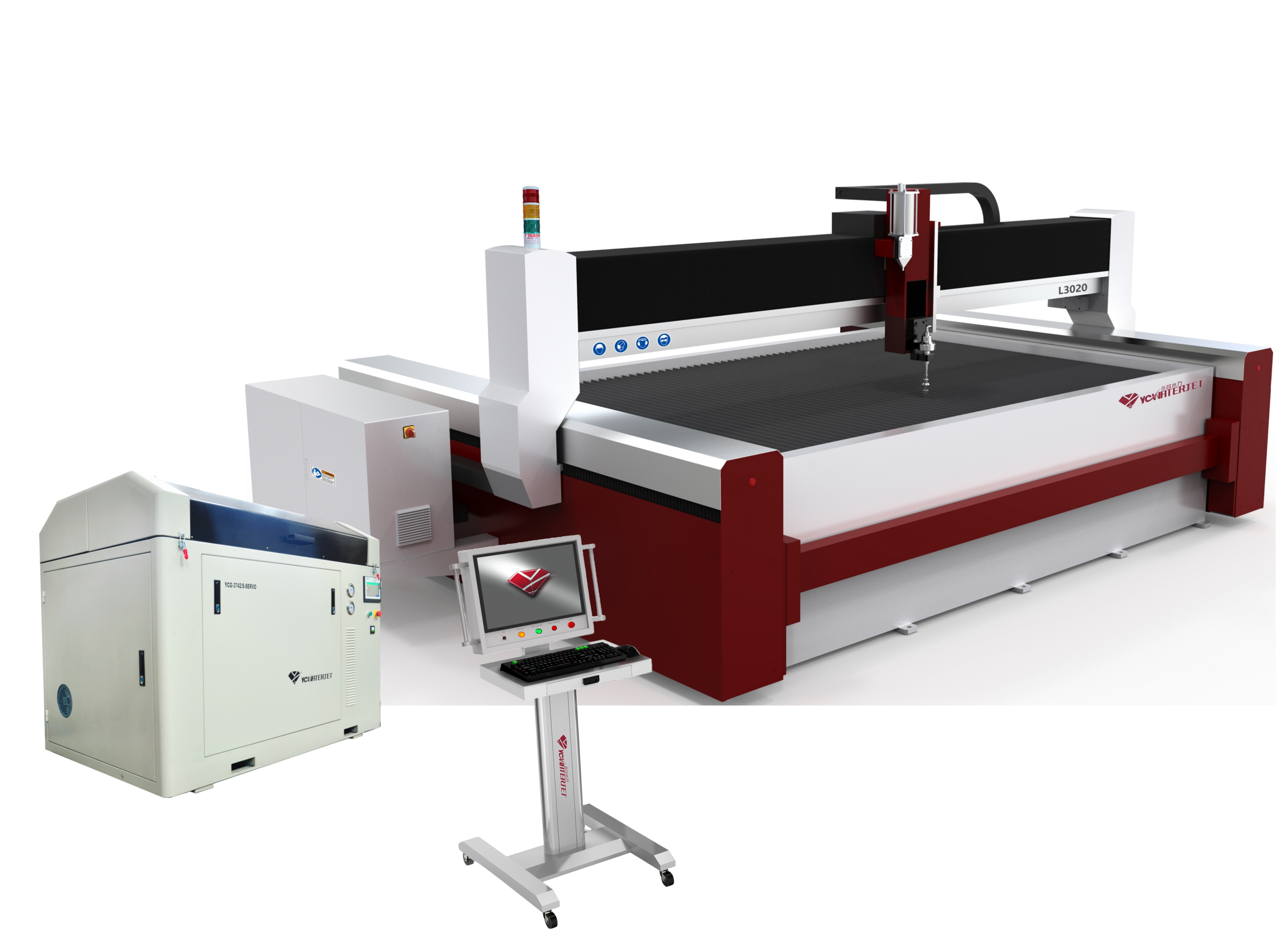
YC Waterjet system: gantry machine, CNC control cabinet and ultra-high pressure pump.
YC Waterjet machines support multiple cutting head options: 3-axis, 3D MAX 5-axis, and dynamic 5-axis heads, enabling bevel cutting and complex contour machining. Additional optional functions include laser scanning height measurement, automatic sludge removal, hydraulic material loading, and drilling heads, making the systems adaptable to automated production lines.
Application & use-case scenarios
Waterjet cutting machines are used across a broad spectrum of industries. According to YC Waterjet's product data, the machines are applied in:
- Metalworking: Cutting steel, stainless steel, aluminum, alloys, and thick plates without heat distortion.
- Stone processing: Cutting marble, granite, ceramic tiles, and engineered stone for architectural decoration.
- Glass processing: Precision cutting of glass sheets with minimal chipping.
- Aerospace: Machining titanium alloys, CFRP (carbon fiber reinforced polymer), and honeycomb structures.
- Automotive manufacturing: Cutting steel sheets, aluminum panels, interior components, and fiberglass.
- Composites: Processing carbon fiber, fiberglass, foam, and laminates.
- Architectural decoration: Fabricating aluminum panels, ceramics, and glass for building facades.
- Electronic precision processing: Cutting small, delicate parts without heat stress.
- Food industry: Using pure water (without abrasive) to cut frozen meat, vegetables, and bakery items.
Common application countries include the United Arab Emirates, Brazil, Germany, France, the United Kingdom, Mexico, Russia, Saudi Arabia, South Korea, and many others.
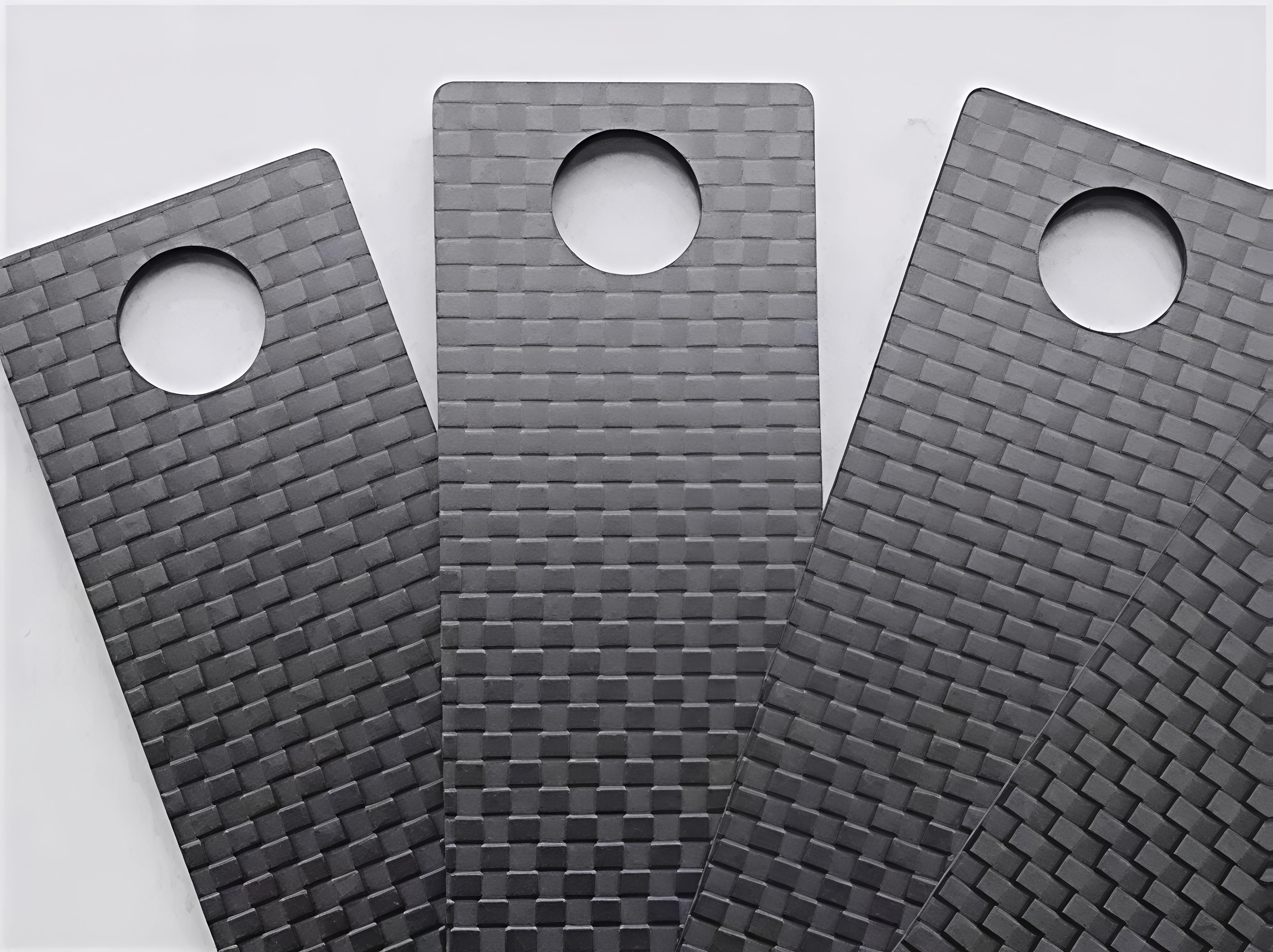
Waterjet cutting of carbon fiber composite materials.
Market trend analysis
The global demand for waterjet cutting machines is driven by the need for flexible, non-thermal processing of increasingly diverse materials. Industries such as aerospace and automotive are adopting lightweight composites and multi-material assemblies, where waterjet's cold-cutting capability reduces waste and improves part quality. YC Waterjet's global expansion — from establishing distributor networks in the UK, Russia, Turkey, Mexico, and Brazil in 2014 to covering over 140 countries by 2026 — reflects this broader market trend of manufacturers seeking reliable, high-precision waterjet solutions.
Comparison with traditional solutions
Compared to laser cutting, waterjet cutting generally operates at lower speeds when processing thin metal sheets (under 3 mm). However, laser cutting introduces a heat-affected zone and is less effective on reflective materials like copper and aluminum or on thick plates (above 20 mm). Waterjet cutting avoids thermal damage entirely and can cut any thickness up to 150 mm or more, depending on the material and pump power. One honest limitation of waterjet is that the abrasive consumption (garnet) adds to the operational cost and requires proper disposal or recycling systems.
Future outlook
As manufacturing continues to move toward automation and Industry 4.0, waterjet cutting systems are being integrated with robotic arms (e.g., YC Waterjet's 6-axis robotic cutter) for complex 3D trimming and finishing. Advances in pump efficiency, nozzle design, and software simulation will further improve cutting speed and reduce abrasive usage. The growing emphasis on sustainable production also favours waterjet technology because it generates no fumes or hazardous emissions, and water and abrasive can be recycled.
FAQ
A waterjet cutting machine is a CNC-controlled tool that uses an ultra-high-pressure stream of water (often mixed with abrasive) to cut materials. YC Waterjet manufactures a range of such machines, including models in S, L, G, and E series, as well as robotic waterjet systems.
Waterjet cutting machines can process metals (stainless steel, carbon steel, aluminum, titanium alloys), stone (granite, marble, ceramic), glass, composites (CFRP, fiberglass), foam, rubber, and even food products. The same YC Waterjet machine can cut different materials by adjusting pressure and abrasive flow.
YC Waterjet machines achieve a cutting accuracy of ±0.1 mm and a positioning accuracy of ±0.025 mm, making them suitable for precision parts in aerospace, automotive, and electronics industries.
As of 2026, YC Waterjet products are exported to more than 140 countries and regions worldwide, with major markets including Brazil, Germany, France, Saudi Arabia, South Korea, the United Arab Emirates, and others.