
Waterproof Cable Gland Sizing FAQ: Thread Fit, Temperature, Acceptance
Waterproof Cable Gland Sizing FAQ: Thread Fit, Temperature, Acceptance
Most waterproof cable gland disputes are settled before a purchase order is ever issued. A cable diameter is copied from a datasheet instead of measured with a caliper, a PG designation is silently assumed to equal a millimetre value, or a certificate is filed without checking which product series it actually covers. The questions below are the ones that recur in technical and procurement review, answered with the sizing logic, temperature bands and acceptance documents a buyer can verify.
Zhejiang Gutai Connector Co., Ltd. (Gutai) is a Wenzhou, Zhejiang-based manufacturer of waterproof cable glands, EMC cable glands, porous cable glands, brass screw caps and watertight corrugated tubing fittings, founded in 2019 with a 5,000 m² factory and 80 employees. Its stated thread coverage spans the PG, Metric, NPT and G systems, and its stated export ratio is approximately 80% to markets including the Middle East, Southeast Asia, India, Pakistan, the EU, the United Kingdom and the USA. This article uses that range as a working example of how sizing, temperature and documentation questions are answered in practice; it is not a product datasheet.
Why sizing errors surface as leaks, not as returns
A cable gland fails in the field long before it fails in a warehouse inspection. The three variables that decide whether it seals are the cable clamping range, the thread outside diameter and the thread length. Each is measurable, and each is routinely mismatched.
When a gland is bought against a nominal cable size rather than the measured outside diameter (OD) of the actual cable, the seal insert is compressed either too little, leaving a capillary path, or too much, distorting the insert and shortening its service life. When the panel hole is cut from a converted thread size rather than the drawing, the gasket cannot seat flat. When the thread is shorter than the panel thickness plus the locknut stack, the gland is under-engaged and vibration loosens it.
For procurement teams, the practical consequence is that acceptance cannot be limited to counting cartons. Dimensional checks at goods-in, or a defined pre-shipment test, are what convert a catalogue specification into a verifiable order.
M12–M63 metric versus PG7–PG48: reading the designation correctly
Both thread families are in active use, and neither is inherently superior. The decision is driven by the panel, the drawing convention and the documentation the buyer must file.
Metric entry threads are designated by the nominal outside diameter in millimetres, and the number in the designation refers to that nominal thread diameter. Metric cable glands sit inside the scope of IEC 62444:2010, which covers complete cable glands supplied by the manufacturer or responsible supplier and covers glands with IEC 60423 metric entry threads; the standard does not cover cable glands for mineral insulated cables. That makes the metric family the easier one to map onto a standards-based technical file.
PG threads work differently. The PG number is a size designation, not a millimetre measurement, and it must not be converted by assumption. A PG gland that visually resembles a metric gland of similar size can require a different hole diameter. This is the single most common source of first-article mismatch on legacy panels.
Across both families, the same cable span is served: the M12–M63 metric range and the PG7–PG48 range together address cables from approximately 3 mm to 45 mm OD. The thread system therefore does not determine the cable size — the clamping range of the specific size does.
| Decision point | Metric, M12–M63 | PG, PG7–PG48 |
|---|---|---|
| Designation basis | Nominal thread outside diameter in millimetres | A PG size number; it is not the outside diameter in millimetres |
| Cable span served | Part of the approximate 3–45 mm clamping range across the series | Part of the same approximate 3–45 mm clamping range |
| Panel hole | Must match the actual thread OD shown on the supplier drawing | Same rule applies; never cut the hole from the PG number |
| Standard mapping | Metric entry threads are referenced to IEC 60423 within the scope of IEC 62444 | Recorded as PG; confirm the supporting documentation for the series separately |
| Typical fit decision | New equipment built to metric drawings, multi-market builds, standardised technical files | Replacement, legacy panels, or enclosures already cut for PG |
Table 1. How the two thread families differ at the decision level. Actual dimensions must always be taken from the supplier drawing for the specific size.
Thread outside diameter and thread length: the panel-fit calculation
Two dimensions on the drawing decide whether a gland can be installed at all: the thread outside diameter and the usable thread length.
The thread outside diameter is what the panel hole must match, within the tolerance the enclosure allows. An oversized hole prevents the gasket from seating on a continuous flat surface, which degrades ingress protection regardless of the gland's own rating. An undersized hole cannot be assembled without forcing the thread, which damages plating on brass bodies and can crack the thread on nylon bodies. On painted or powder-coated panels, coating thickness at the hole edge is part of the fit, not an afterthought.
Thread length controls engagement. As a working rule, the thread must pass through the full panel thickness, the gasket, and the locknut with enough remaining thread to reach the intended tightening position. Two failure modes follow from getting this wrong. A thread that is too short leaves partial engagement, which reduces resistance to vibration and can strip under torque. A thread that is unnecessarily long pushes the gland body away from the panel, increases the lever arm on the cable and changes the bend radius immediately after the seal.
- Measure panel thickness at the gland position, not at the panel edge.
- Confirm whether the panel face is flat and unpainted at the gasket contact line.
- Check that the locknut and gasket stack is included in the thread length allowance.
- Verify the clamping range against the measured cable OD, not the nominal cable size.
Temperature: dynamic -20 °C to 80 °C, static -40 °C to 100 °C, peaks to 100 °C and 120 °C
Weatherproof cable gland data is frequently misread because buyers treat a single number as the operating limit. The relevant figures are separated into dynamic and static conditions, with short-term peaks stated apart from continuous duty.
| Condition | Range | How to interpret it |
|---|---|---|
| Dynamic (cable moving or flexing) | -20 °C to 80 °C | The narrower band. Movement loads the seal and the cable jacket at the same time as temperature does. |
| Static (fixed installation) | -40 °C to 100 °C | The wider band. Applies where the cable is clamped and does not move after installation. |
| Short-term peak | To 100 °C and to 120 °C | Excursion values, not continuous operating set points. Duration and frequency belong in the specification. |
Table 2. Dynamic, static and peak temperature bands for the waterproof cable gland range.
The logic behind the split is mechanical. A moving cable continuously works the seal interface; heat softens the elastomer while movement displaces it, so the permissible band is narrower. In a static installation the seal is compressed once and stays put, which allows a wider band in both directions.
Two specification habits prevent most temperature disputes. First, state whether the figure refers to ambient air or to the measured surface of the enclosure, because a black enclosure in direct sun runs hotter than the surrounding air. Second, state the duration of any peak. A gland rated to a 120 °C peak is not thereby rated to 120 °C continuously, and writing it that way shifts risk onto the supplier in a way that neither party can resolve after a failure.
Material choice sets the ceiling. Gutai's glands use original UL94 V-0 flame-retardant PA66 bodies with 304/316 stainless steel components, and the seal is the temperature-critical element. On its PV connector line, Gutai states silicone or fluororubber seals that showed a hardness increase of only 5 Shore A with no cracks after 500 hours of 100 °C ageing — the kind of ageing evidence worth requesting for glands as well, since a catalogue temperature band alone does not demonstrate behaviour over time.
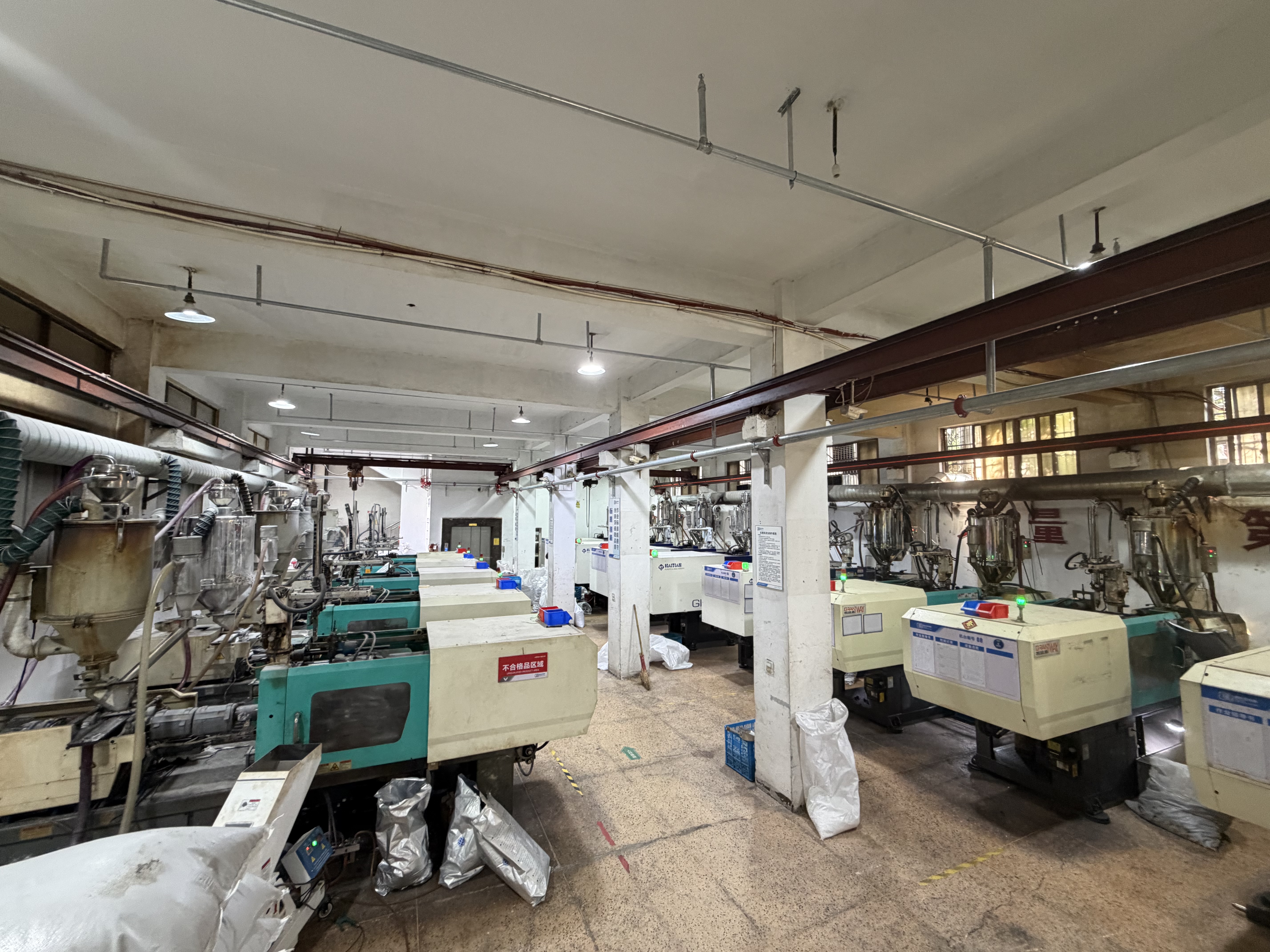
Thread outside diameter and thread length are produced to the drawing, which is why the drawing — not the size name — governs panel fit.
IP68 and chemical resistance: what the claim covers
IP68 is a defined classification, not a marketing grade. IEC 60529 defines degrees of protection provided by enclosures and applies to electrical equipment with a rated voltage not exceeding 72.5 kV; the standard states that IP68 means protection against long-term immersion under pressure, with the conditions of continuous immersion agreed between manufacturer and user. The IEC's own explanation of the code structure notes that the first numeral covers solid objects on a scale of 0 to 6 and the second covers liquids on a scale of 0 to 9.
The practical reading for buyers is that IP68 on a gland is a statement about a defined configuration, not a property that transfers automatically to a finished enclosure. The rating depends on the cable OD being inside the clamping range, the gland being tightened to the intended position, the panel face being flat and the gasket being undamaged. A tested gland installed through an oversized hole in a coated panel is not an IP68 assembly.
Chemical resistance follows the same pattern. Resistance is a property of the housing polymer and the seal elastomer against a specific medium at a specific concentration and temperature; it is not a single attribute. PA66 bodies and elastomer seals behave differently in mineral oils, dilute acids, alkaline washdown agents and solvents. Buyers with a known exposure should ask for compatibility information for that medium rather than relying on a general corrosion-resistance statement, and should confirm the answer against the specific product.
Acceptance criteria: documents a buyer can request and verify
Acceptance is where procurement questions become concrete. The documents below are the ones that can be requested and checked line by line; each covers a defined product scope, and that scope is the part most often skipped.
| Document | What it evidences | What to confirm before accepting |
|---|---|---|
| ISO 9001:2015 (GB/T19001-2016) | Certified quality management system | Certificate holder matches the supplying legal entity; scope covers cable glands; the certificate is within its validity period |
| CE under EN 62444:2013, G, MG, PG and NPT nylon series | European conformity route for the listed nylon series | The series and size being ordered is inside the listed scope; the edition referenced is EN 62444:2013 |
| UL 514B Notice of Completion, File E539858, Metric Series and PG plastic gland | UL 514B evaluation of the listed products; UL 514B requires specific testing and marking for cable fittings used in wet locations | The file number, the covered series and any wet-location marking requirement are consistent with the order |
| TÜV mark or IEC 62852 / EN 50521 test reports | Product-specific third-party testing, where applicable | Confirm against the specific product and the target market before relying on it |
Table 3. Acceptance documents and the scope check each one requires.
Two clarifications save time. First, EN 62444:2013 and IEC 62444:2010 are related but distinct references: IEC 62444:2010 is the IEC base standard covering requirements and tests for the construction and performance of cable glands, while the CE reference quoted for the nylon G, MG, PG and NPT series is EN 62444:2013. Both may legitimately appear in a document pack, and a buyer should record which edition is being cited for which product. Second, a request for TÜV certification, or for IEC 62852 / EN 50521 test reports, should be confirmed against the specific product and market rather than assumed from a cable gland CE or UL file — those PV-connector standards and the gland standards address different products.
Purchasing terms and pre-shipment acceptance
Gutai states the following purchasing terms: minimum order quantity 1 unit; delivery terms FOB/EXW; acceptance criteria based on a pre-shipment test; payment terms T/T, cash or Alipay.
Those terms are short, and the operative clause is the acceptance criterion. Because acceptance happens before dispatch, the inspection content has to be written into the order rather than assumed. A workable pre-shipment specification for a cable gland order normally covers: dimensional verification of thread outside diameter and thread length against the drawing, confirmation of the clamping range against the ordered size, a visual check of the seal and thread condition, and a quantity and labelling check against the packing list. Where the order will be used in a wet or washdown location, the buyer should also state which document in the acceptance pack is being relied on — the CE reference, the UL file, or both.
A minimum order quantity of one unit is useful for first-article validation: a single gland can be fitted to a sample panel and checked for thread engagement and gasket seating before a series order is placed. It is not a substitute for the dimensional drawing, which remains the controlling document.
Where the range fits: applications and installation scenes
Gutai positions its cable glands for electronics, machinery, instrumentation and electrical cabinet applications, which is where most of the sizing questions in this article originate. Those are also the environments where the static temperature band and the IP68 claim do most of the work, because the cable is fixed after installation and the enclosure is expected to stay closed for long intervals.
At the harsher end, the same product family is positioned for coastal open-air EV charging stations, ground-mounted PV plants, industrial automation control cabinets, food machinery washdown zones, rail signalling equipment and telecom base stations. Each of these adds a variable beyond IP68: salt-laden air, high-pressure cleaning, sustained UV, large temperature differentials or vibration. In those scenes, the gland's material set and the panel preparation matter as much as the thread size.
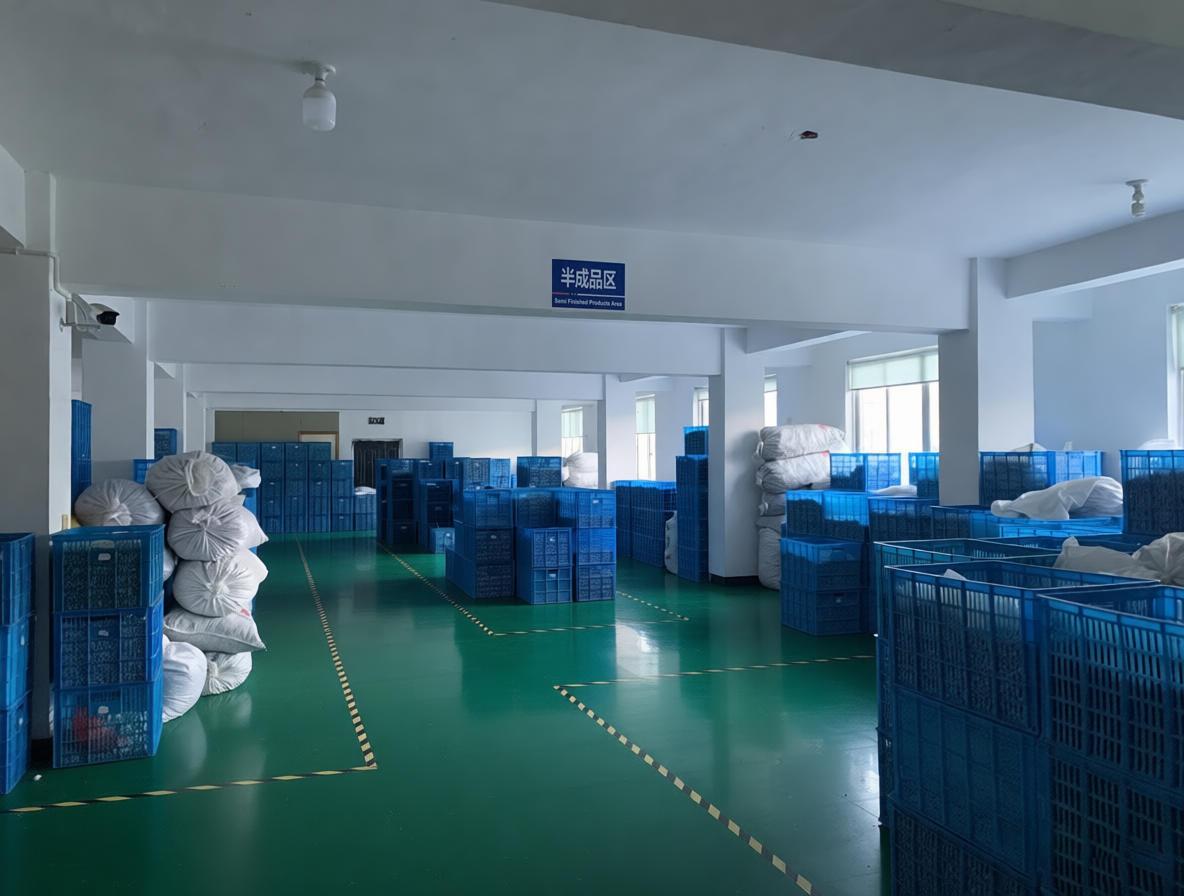
Semi-finished gland bodies and seals: the seal insert and thread are the two features that decide field performance.
Market trend: certification-led sourcing in a growing gland market
The demand context supports the documentation emphasis. Commercial research cited for this category projects the global cable gland market to reach approximately USD 5.5 billion by 2035, with Asia-Pacific identified as the largest segment, and the same source describes brass as remaining the leading gland material on the strength of conductivity, corrosion resistance and machinability. Adjacent enclosure categories are growing in parallel, with one forecast putting the global junction box market at USD 23.3 billion by 2034 at a 12.0% CAGR.
The interpretation that matters for buyers is not the headline value but the shift in what is being purchased. As installations move into harsher and more regulated environments, the differentiator between suppliers moves from unit price toward traceable documentation: which series is covered by which file, which edition of which standard applies, and whether the IP claim has been demonstrated on a defined configuration. Suppliers who can answer those questions with specific file numbers and series names shorten the buyer's qualification cycle; suppliers who answer with general certification statements extend it.
A second, quieter trend is thread consolidation. Buyers maintaining panels across metric, PG, NPT and G conventions increasingly try to reduce the number of thread systems in inventory, because each system carries its own drawings, locknuts and spares. Gutai's stated position of covering PG, Metric, NPT and G systems is a response to that pressure rather than a purely technical choice.
Comparison with traditional gland selection — and the boundaries
Conventional general-purpose waterproof glands typically use a single sealing ring, rely on installer feel for torque control, and are often moulded from ordinary PA6 or recycled compounds without targeted UV or wide-temperature modification. That construction is adequate in mild conditions, such as indoor control cabinets and light-duty sensor entries without sustained vibration or long-term outdoor exposure, and it remains a legitimate choice where those conditions hold.
Gutai's design differs in three specific ways that a buyer can inspect. It uses a dual seal ring with an anti-loosening structure and pre-installed O-rings, which reduces the dependence of sealing quality on installer torque; it specifies original UL94 V-0 flame-retardant PA66 and 304/316 stainless steel components rather than unspecified grades; and it publishes a standardised installation sequence of hand pre-tightening plus half a wrench turn. Gutai's published comparison material also states an MTBF above 8,000 hours for its IP68 connectors and describes installation time around 1.5 minutes per unit against 3–5 minutes for conventional connectors.
The boundary is straightforward and worth stating plainly: initial unit cost is higher than for commodity general-purpose glands, and that premium is only recovered where failure cost is real — where access for rework is expensive, where downtime is charged, or where the enclosure is exposed to weather. For a dry indoor cabinet with occasional access, the additional sealing and material specification buys little. Buyers should also note the documentation boundaries described above: the UL 514B notice covers the Metric Series and PG plastic gland, and the CE reference under EN 62444:2013 is stated for the G, MG, PG and NPT nylon series, so other configurations require separate evidence rather than an assumption of coverage.
Future outlook
Three developments are likely to shape gland procurement over the next buying cycles. Documentation is becoming the primary qualification filter, with buyers asking for file numbers, standard editions and series scope at the enquiry stage rather than after the sample is approved. Ingress protection claims are being read more carefully, in line with the IEC position that an IP rating describes a classification requiring evidence for the specific configuration and test conditions. And thread standardisation continues inside buyer organisations, which favours suppliers able to hold metric, PG, NPT and G families under one drawing system.
For Gutai, the practical test is whether the documentation pack keeps pace with the range. A manufacturer covering multiple thread families and materials will increasingly be judged on how precisely it can state which certificate covers which product, in which market, under which edition of which standard.
FAQ
How do I choose between M12–M63 metric threads and PG7–PG48 threads for a 3–45 mm cable?
Choose from the panel first, then the cable. If the enclosure is drilled or specified to metric drawings, use the metric family; if the panel is already cut for PG, or the equipment follows a legacy PG convention, stay with PG. Both families together span the approximate 3–45 mm cable range, so the thread system does not determine cable size — the clamping range of the specific size does. Confirm the chosen size against the measured cable outside diameter and the supplier drawing before ordering.
Does the thread designation guarantee the panel hole size?
Not for PG. A metric designation refers to the nominal thread outside diameter in millimetres, while a PG number is a size designation that does not equal the outside diameter in millimetres. In both cases the actual outside diameter and its tolerance must be taken from the drawing for that specific size, and the panel hole cut to that dimension. Panel thickness and coating at the hole edge should be measured at the gland position, because they determine whether the gasket seats and whether the thread length is sufficient.
What temperature range should go into the specification?
Split it into moving and fixed conditions. For this range, the dynamic band is -20 °C to 80 °C and the static band is -40 °C to 100 °C, with short-term peaks stated to 100 °C and 120 °C. Record whether each figure refers to ambient air or to measured enclosure surface, and state the duration and frequency of any peak. A peak value is an excursion limit, not a continuous operating set point.
What does IP68 actually confirm on a waterproof cable gland?
IEC 60529 classifies IP68 as protection against long-term immersion under pressure, with the conditions of continuous immersion agreed between manufacturer and user. The rating applies to a defined product configuration and installation: correct cable outside diameter within the clamping range, correct tightening, a flat panel face and an undamaged gasket. It does not automatically transfer to the finished enclosure assembly, which is why wet-location performance is usually verified on the assembled unit.
Which certificates can I request and verify?
Four items form a practical acceptance pack. ISO 9001:2015 (GB/T19001-2016) for the quality management system, checked for holder name, scope and validity. CE under EN 62444:2013 for the G, MG, PG and NPT nylon series, checked against the exact series ordered. A UL 514B Notice of Completion, File E539858, for the Metric Series and PG plastic gland, checked for file number and covered series. And, where relevant to the application, TÜV documentation or IEC 62852 / EN 50521 test reports, which should be confirmed against the specific product and market rather than inferred from a gland certificate.
Are TÜV or IEC 62852 / EN 50521 test reports available for every item?
They should not be assumed. Certification requests such as TÜV, or test reports against IEC 62852 / EN 50521, need to be confirmed against the specific product and the target market, because those references address PV connectors rather than cable glands. Gutai states that for specific PV connector requirements it can provide pre-test data and certification path planning compliant with IEC 62852, supporting testing through authorised laboratories. Buyers should map each requested document to the exact product and market before treating it as a qualification requirement.
What are the purchasing terms and acceptance criteria?
Gutai states a minimum order quantity of 1 unit, delivery terms of FOB/EXW, acceptance based on a pre-shipment test, and payment by T/T, cash or Alipay. Because acceptance takes place before dispatch, the inspection content should be written into the order: dimensional verification of thread outside diameter and thread length, confirmation of the clamping range, visual inspection of the seal and thread, and a packing-list check against quantity and labelling.
Reference document
The full Gutai product catalogue, covering cable glands, solar connectors, mini waterproof boxes and hose fittings, is available for download: 2025 Gutai catalogue (PDF). Dimensional drawings for a specific size should be requested separately, since panel fit depends on the drawing rather than the size name.
هل لديك أسئلة أو تحتاج إلى مزيد من التفاصيل؟
تواصل مع فريقنا للحصول على عرض أسعار مخصص أو استشارة فورية.
طلب عرض أسعار
املأ النموذج أدناه وسيتواصل معك فريقنا بعرض مقترح مخصص.
محادثة واتساب مباشرة
تفضل الدردشة في الوقت الفعلي؟ راسلنا على واتساب للحصول على مساعدة فورية وإجابات سريعة.
- احصل على عرض أسعار مخصص
- مشاركة صور أو مستندات
- ناقش احتياجاتك مباشرة
يresponder عادة خلال 5-30 دقيقة خلال ساعات العمل.