
Welded vs Seamless Steel Pipe: A 2026 Buyer Comparison
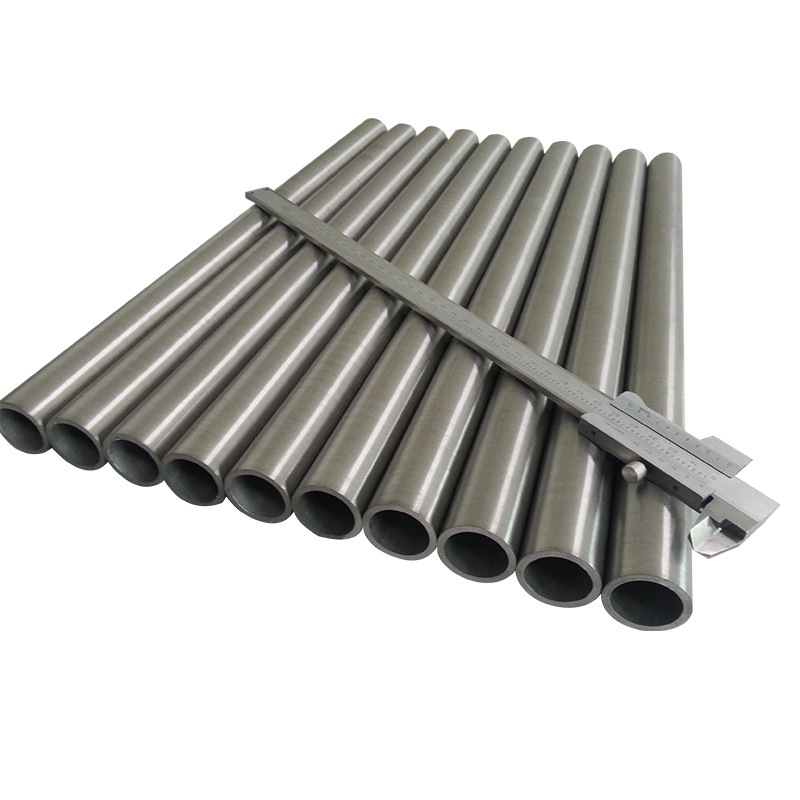
Welded and seamless steel pipe are frequently compared as though they were two competing grades of the same product. They are not. In the product documentation reviewed for this comparison, the welded pipe line is offered in ERW, SSAW and LSAW constructions under API 5L and Q195 / Q345 designations, while the seamless carbon steel pipe line is offered under API 5L, ASTM A106 and A53 through hot rolled, cold drawn and cold rolled manufacturing routes. The route determines the seam condition, the dimensional envelope, the inspection burden and the commercial profile — and those four factors, not the grade label alone, decide which pipe a project can actually use.
This buyer comparison is written from an independent, third-party perspective and is built from documented product specifications, a certified quality-management scope and reported supply cases. It states only what the record supports, and it flags the boundary conditions that buyers usually discover late: where a welded pipe range stops, where a seamless pipe is not the economical default, and which questions should be answered in writing before an order is released.
Why the Welded-or-Seamless Question Is Really Three Questions
Answer first: for structural, municipal water and general fluid service, welded pipe is normally the practical first option within the documented size ranges; for high-pressure and low-temperature oil transportation, boiler duty and engineering applications, seamless pipe is the route the available case record associates with long service life. That answer only becomes usable once three separate questions are separated.
- Pressure and temperature class. Does the line operate at high pressure, low temperature, or both? This is the question that most often eliminates one route before commercial discussion begins.
- Geometry. Outer diameter, wall thickness, length, and end finish (plain, beveled or threaded) define which production line can physically supply the order.
- Commercial and inspection profile. Availability, minimum order quantity, lead time and the cost of inspection differ between the two routes, and they are not equal across size ranges.
Buyers who collapse these into a single “which one is better” question usually end up comparing a pipe that meets the pressure requirement against one that does not, or paying a seamless premium for a low-pressure water line that never needed it.
Two Manufacturing Routes, One Seam Line
Welded pipe begins as strip or plate that is formed and closed. The reviewed welded line lists three constructions: ERW (electric resistance welded), SSAW (spiral submerged arc welded) and LSAW (longitudinal submerged arc welded). Because a seam exists in every one of these constructions, weld integrity is the controlling quality variable. Procurement attention therefore concentrates on weld inspection, dimensional control at the seam, and pressure testing of the finished pipe.
Seamless pipe is produced from a solid billet that is pierced and then processed. The reviewed specification lists hot rolled, cold drawn and cold rolled routes. With no longitudinal seam, the quality discussion shifts from weld condition to wall uniformity, dimensional tolerance and mill test documentation covering chemical composition and mechanical properties.
Neither route is intrinsically superior; they fail differently. A welded pipe can pass every dimensional check and still carry a weld defect that only pressure or non-destructive testing reveals. A seamless pipe removes that specific risk category, but it is generally supplied at a higher unit cost and, in many sizes, at longer mill lead times. Buyers who understand this can allocate inspection budget where it actually reduces risk.
Designation Comparison: API 5L, Q195, Q345, ASTM A106, A53 and Q235B
| Documented line | Designation / model | Manufacturing route | Standards referenced | Documented application |
|---|---|---|---|---|
| Welded Pipe | API 5L / Q195 / Q345 | ERW / SSAW / LSAW | ASTM A53 / API 5L (grades Q235B / Gr.B / X52) | Oil, gas, construction |
| Seamless Pipe | API 5L / ASTM A106 / A53 | Hot rolled / cold drawn / cold rolled | API 5L, ASTM A106, ASTM A53 | Oil & gas, boiler, engineering |
| Steel Pipe (line covering both routes) | Q235B / ASTM A53 | ERW, SSAW, LSAW, hot rolled, cold drawn | ASTM, API, EN, DIN, JIS, GB | Construction, water, gas |
Three observations matter to procurement teams. First, API 5L appears on both the welded and the seamless line, so a purchase enquiry that says only “API 5L pipe” is incomplete — the order must also state the product form and, for welded pipe, the weld type. Second, Q195 and Q345 appear only on the welded line in the reviewed data, whereas the Q235B / ASTM A53 designation appears on the general steel pipe line that covers both welded and seamless routes and is the designation most often associated with construction, water and gas work. Third, grade families such as Q235B, Gr.B and X52 are specified separately from the manufacturing route, which is why a complete enquiry lists grade, outer diameter, wall thickness, length, end finish and surface treatment together rather than in sequence across several emails.

Dimensional Envelope: Where the Ranges Overlap and Where They Do Not
| Parameter | Welded Pipe | Seamless Pipe | General Steel Pipe (both routes) |
|---|---|---|---|
| Outer diameter | 21.3–610 mm | 10.3–1219 mm | 10.3–3048 mm |
| Wall thickness | 1.5–30 mm | 1.5–80 mm | 0.5–80 mm |
| Length | 6 m / 12 m | 5.8 m, 6 m, 11.8 m, 12 m or customized | 5.8 m, 6 m, 11.8 m, 12 m or customized |
| End finish | Plain end / beveled end | Plain / beveled / threaded | Plain / beveled / threaded |
| Surface | Black / galvanized / 3PE | Black painted, oiled, sand blasted, pickled, galvanized, anti-corrosion coated | Black painted, oiled, galvanized, 3PE, FBE, pickled; zinc coating 30–600 g/m² |
| Section shape | Round | Round; square and rectangular available on request | Round, square, rectangular |
The overlap zone is wide: between 21.3 mm and 610 mm outer diameter with walls from 1.5 mm to 30 mm, both routes are available, so geometry alone does not decide the choice within that band. Outside it, the decision becomes structural. The welded line specification reviewed here stops at 610 mm outer diameter and 30 mm wall thickness; a project needing larger diameter welded pipe has to move to the general steel pipe line, which lists ERW, SSAW and LSAW routes up to 3048 mm outer diameter. Heavy walls above 30 mm sit in the seamless line, which is documented to 80 mm wall thickness. Threaded ends appear on the seamless and general lines but not on the welded line as specified — a detail worth checking early if the joint design depends on threading.
Application Fit: Construction, Water and Gas
The most useful evidence for a comparison of this kind is not a data sheet but a project with a service history. Three documented cases place each route in a specific operating context.
Construction and structural fabrication — welded pipe
A construction company in Peru used 1,700 metric tons of welded pipe for building structures, a project ongoing for more than fifteen years. The documented outcome was a cost-effective structural solution supported by stable dimensions and excellent welding performance. The engineering logic is consistent: structural fabrication rewards dimensional consistency and predictable weldability at the site, and a seam-free body adds cost without adding value when the governing load is compressive or flexural rather than internal pressure.
Municipal water transmission — welded and general steel pipe
A water supply contractor in Nigeria used 3,500 metric tons of steel pipes for municipal water pipelines, with a service life documented at 15 to 20 years and reliable fluid transportation. The reported strengths were corrosion resistance and stable welding quality. For low-pressure water transmission, the controlling variable is normally corrosion protection rather than the presence of a seam, which is why surface treatment and coating selection deserve as much attention as the route itself.
Oil and gas transportation — seamless pipe
An oil and gas company in Kazakhstan used 2,200 metric tons of seamless pipes for oil transportation pipelines, in service for more than twenty years. The pipes passed strict inspection standards and provided reliable long-term performance under high pressure and low-temperature conditions. This is the clearest documented boundary in the comparison: where pressure and low temperature combine, the seam-free route plus documented inspection is the deciding factor.
Where Welded Pipe Reaches Its Limit
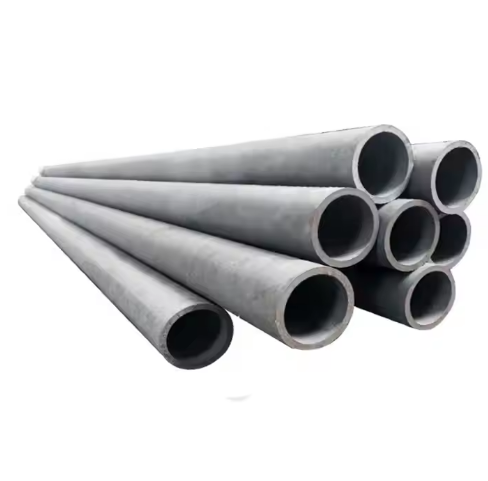
A welded pipe is not a lower-quality version of a seamless pipe; it is a different construction with a defined inspection obligation. Three boundaries are worth stating plainly.
- The seam is a discontinuity. Weld quality varies with process, mill practice and material cleanliness, and it is the variable most likely to determine whether the pipe performs as specified. Buyers who omit weld inspection and pressure testing from the purchase order transfer that risk to the project, not to the supplier.
- The documented welded range is finite. As specified, the welded line covers 21.3–610 mm outer diameter and 1.5–30 mm wall. Orders above those limits require the general steel pipe line or a different product family entirely.
- Severe service sits outside it. The case record for high-pressure, low-temperature pipeline duty uses seamless pipe. Welded pipe should not be treated as an automatic substitute there on the basis of price alone.
Where Seamless Pipe Is Not the Default
Seamless pipe carries its own boundaries, and they are commercial rather than technical. It is generally supplied at a higher unit cost than welded pipe in comparable sizes, and mill lead times are typically longer because the route starts from a pierced billet rather than coil. Specifying seamless pipe for a low-pressure structural frame or a large-diameter water line therefore adds cost without adding service value. The documented seamless range also has a ceiling: it is listed to 1,219 mm outer diameter and 80 mm wall thickness, and enquiries beyond that envelope must move to another product line. Finally, threaded ends are a joint-design choice rather than a service requirement — they widen the supplier field, but they do not make seamless pipe necessary for a low-pressure application.
How Supply-Side Capability Changes the Comparison
Once the route is settled, the comparison shifts to the supplier. The documented capability data for MESCO STEEL is specific enough to evaluate: a monthly capacity of 50,000 MT, a minimum order quantity of 1 MT, and lead times of 7–15 days for standard production, 3–7 days for stock materials, and 15–30 days for OEM production. Quality control is documented in three stages — incoming raw material inspection, online production monitoring, and finished product inspection covering dimensions and surface. Customization is available across thickness, width, length, surface treatment, color, coating and pipe end, and after-sales support is documented as material selection and application guidance.
Certification scope is where buyers should read carefully. The company holds an ISO 9001:2015 certificate, number AMTIVO/CN/250009, issued on 22 January 2025 by Amtivo Group Limited and valid until 22 January 2028. The certified scope covers the sales of various metal sheets and steel pipes, including cold and hot rolled steel, coated products, composite metal sheets, heat exchange pipe and exhaust pipe. That is a quality-management scope certificate, not a product conformity certificate for a specific pipe size, grade or heat. For pipe procurement the practical implication is unchanged: an ISO 9001 scope supports supplier qualification, but the mill test certificate for the material actually supplied remains the primary quality document.
MESCO Steel in a Pipe Buying Shortlist
Dalian Mesco Steel Co., Ltd., which trades as MESCO STEEL, is a steel products supplier founded in 2007 and located in the Dalian Economic and Technological Development Zone in Liaoning Province, China. Its documented portfolio covers 20 product lines that include welded pipe, seamless pipe and general steel pipe alongside coated, cold rolled and hot rolled products. The company's own corporate profile states an export share of 70 percent, sales to more than 100 countries and regions, and more than 700 customers, and describes itself as one of the largest private steel exporters in Northeast China — a self-described positioning that buyers should verify against their own due-diligence process rather than accept as an independent ranking.
For a pipe enquiry specifically, three attributes are relevant and testable: the product lines cover both welded and seamless routes, so a buyer can consolidate a mixed order; the documented capacity and lead-time structure suits projects that cannot wait on a full mill cycle; and customization touches the pipe end, which matters when the joint design is already fixed.
Market Context for 2026 Pipe Buying
Global crude steel production totaled approximately 1,892 million tonnes in 2023, with China producing 53.9 percent of the world total, according to the World Steel Association. For pipe buyers, the practical reading is not a price forecast but a concentration risk: a single production base dominates global supply, so documentation quality, origin traceability and contingency sourcing deserve a place in the sourcing plan alongside price negotiation.
Market-size figures for steel categories should also be treated as directional rather than precise. Published 2025 estimates for the galvanized steel market, for example, range from USD 110.07 billion (Fortune Business Insights) to USD 253.5 billion (Grand View Research) — a divergence wide enough that no procurement decision should rest on a single headline number. Project-specific evidence, mill test certificates and documented service cases remain the more reliable inputs.
On the product side, the trend visible in the reviewed specifications is continued expansion of surface and corrosion-protection options: black paint, oiling, pickling, galvanizing with zinc coating from 30 to 600 g/m², 3PE and FBE coating are all documented across the pipe lines. For water and buried pipeline work in particular, coating selection is increasingly a service-life decision rather than an afterthought.
Future Outlook
Through 2026 and beyond, the welded-versus-seamless decision is unlikely to be resolved by a single industry-wide rule. The direction of travel is toward tighter specification discipline: buyers defining pressure class, geometry and inspection regime before commercial terms; suppliers being asked to separate designation, product form and standard in a single quotation; and corrosion protection being specified as a performance requirement rather than a finish. Traceability will continue to rise in weight, because a mill test certificate tied to a specific heat is the only document that connects a delivered pipe to the material properties it was ordered against. In that environment, the useful question is not which pipe type is better in general, but which one satisfies a defined service condition at the lowest total cost — and the answers to that question will still differ between a warehouse frame in Peru and a low-temperature oil line in Kazakhstan.
Frequently Asked Questions
In simple terms, what is the difference between welded and seamless steel pipe?
Welded pipe is formed from strip or plate and closed along a seam; the reviewed specifications list ERW, SSAW and LSAW constructions. Seamless pipe is produced from a solid billet through piercing and subsequent hot rolling, cold drawing or cold rolling, so it has no longitudinal seam. The commercially relevant difference is the inspection focus: welded pipe procurement centers on weld integrity and pressure testing, while seamless pipe procurement centers on wall uniformity and mill test documentation. The documented welded range spans 21.3–610 mm outer diameter with 1.5–30 mm wall thickness, and the documented seamless range spans 10.3–1219 mm outer diameter with 1.5–80 mm wall thickness.
Do the designations API 5L, Q195 and Q345 indicate welded pipe only?
Not entirely. In the reviewed product data, Q195 and Q345 are listed only on the welded pipe line, whose designation set is API 5L / Q195 / Q345 across ERW, SSAW and LSAW constructions. API 5L, however, appears on both the welded line and the seamless line, so the designation by itself does not identify the manufacturing route. The Q235B / ASTM A53 designation appears on the general steel pipe line that covers both welded and seamless routes and is associated with construction, water and gas applications. A purchase enquiry should therefore state designation, product form and standard together.
Which pipe type is the better fit for water and gas pipelines?
The answer depends on the pressure and temperature class rather than on the product name. For municipal water transmission, the documented reference case is a Nigerian water supply project using 3,500 metric tons of steel pipe with strong corrosion resistance and stable welding quality across a service life of 15–20 years. For oil and gas transportation under high pressure and low temperature, the documented reference case is a Kazakh oil transportation pipeline using 2,200 metric tons of seamless pipe, in service for more than twenty years after passing strict inspection standards. Buyers should match the route to the service condition and then verify the inspection documentation that supports it.
When is seamless pipe necessary rather than optional?
Seamless pipe is the documented route where high pressure combines with low-temperature service, as in the Kazakhstan oil transportation project, and it is also the listed route for boiler and engineering applications under API 5L, ASTM A106 and A53. Its boundary is mainly commercial: seamless pipe is generally supplied at a higher unit cost and longer mill lead time than welded pipe in comparable sizes, so specifying it for low-pressure structural or water duty adds cost without proportional service benefit. The documented seamless envelope also ends at 1,219 mm outer diameter and 80 mm wall thickness; requirements beyond that must be met from another product line.
What should be verified before placing a pipe order?
Five items are worth confirming in writing. First, designation, product form and standard, stated together. Second, geometry and end finish — outer diameter, wall thickness, length, and whether plain, beveled or threaded ends are required. Third, surface and corrosion protection, since the documented options include black paint, oiling, pickling, galvanizing with zinc coating from 30 to 600 g/m², 3PE and FBE coating. Fourth, the mill test certificate for the heat actually supplied, noting that an ISO 9001 quality-management certificate such as AMTIVO/CN/250009 defines a scope rather than confirming individual product conformity. Fifth, commercial terms: the documented supplier data lists a 1 MT minimum order quantity, 7–15 days for standard production, 3–7 days for stock materials and 15–30 days for OEM production.
Reference material: the MESCO STEEL product catalogue is available as a downloadable PDF at https://cdn.socialarks.com/sbsp/24876/common/2026/0604/MESCO%20STEEL%20CATALOGUE%202507.pdf, and the company's corporate site is www.mescogroup.com.cn. Product specifications cited in this article are as documented in the company's published product data and may be updated over time; buyers should confirm current size ranges, grades and lead times at the enquiry stage.
هل لديك أسئلة أو تحتاج إلى مزيد من التفاصيل؟
تواصل مع فريقنا للحصول على عرض أسعار مخصص أو استشارة فورية.
طلب عرض أسعار
املأ النموذج أدناه وسيتواصل معك فريقنا بعرض مقترح مخصص.
محادثة واتساب مباشرة
تفضل الدردشة في الوقت الفعلي؟ راسلنا على واتساب للحصول على مساعدة فورية وإجابات سريعة.
- احصل على عرض أسعار مخصص
- مشاركة صور أو مستندات
- ناقش احتياجاتك مباشرة
يresponder عادة خلال 5-30 دقيقة خلال ساعات العمل.