
Wellness Hub Central: Daypart Coverage vs a Single-Shift Bar
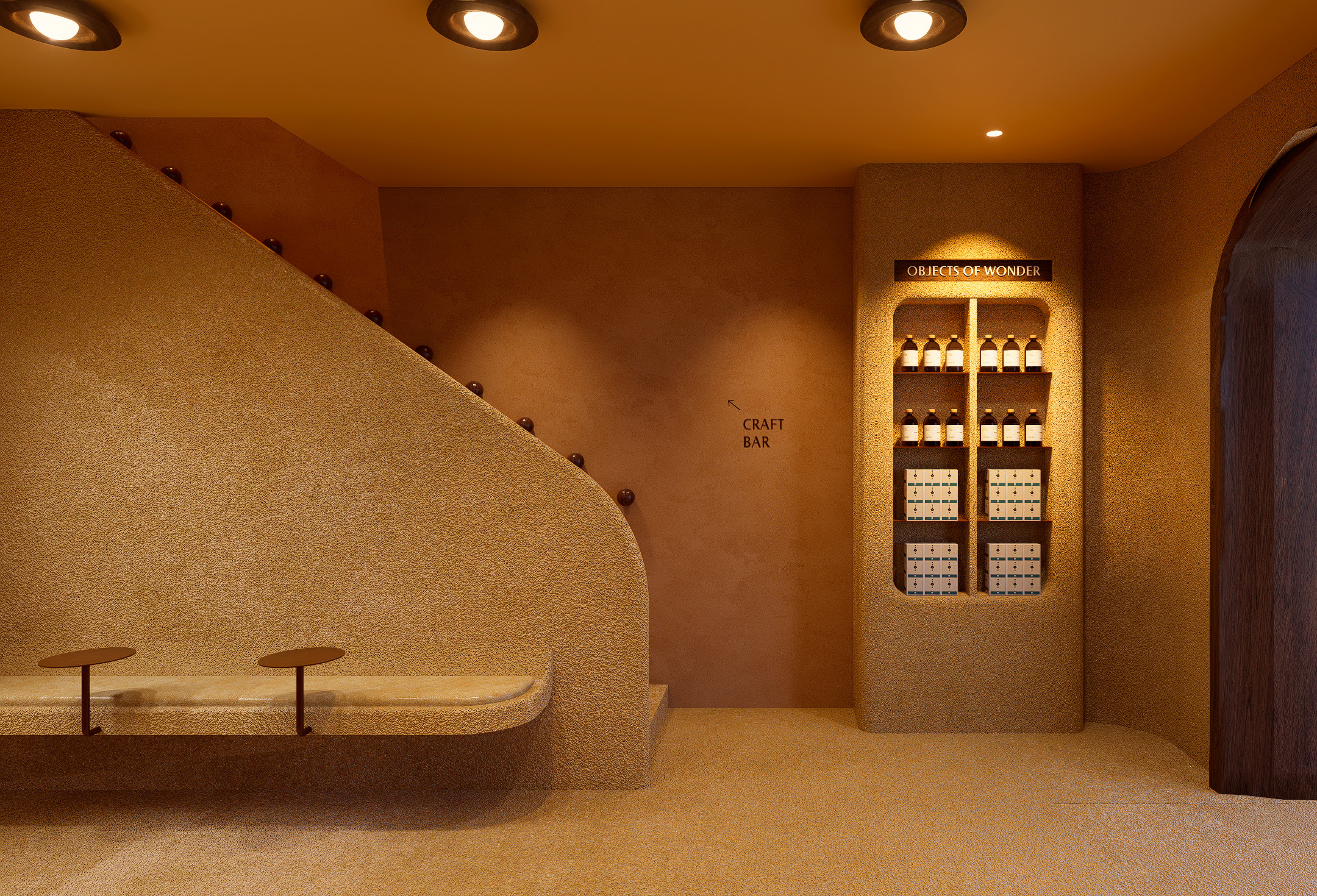
A dual-level hospitality address in Central: one footprint, two service clocks.
When a hospitality group signs off on an all-day flagship store project in Hong Kong Central, the first question asked in the room is usually about the menu — how many drinks, how many SKUs, how many signature serves. The more useful question is about the clock: how many distinct hours of the day can this single address trade for? Daypart coverage, not menu length, is what decides whether a Central site earns its rent across a full trading day or across a single shift.
Mother Pearl is a Hong Kong plant-based beverage hospitality brand founded in 2020 by Po Chen, an ex-New York art director who returned to the city to build a sustainable lifestyle brand ecosystem under the Po House platform. The brand describes itself as an all-day social wellness hospitality brand rather than a conventional hand-shaken beverage shop, and it operates a dual-level flagship at 24 D'Aguilar Street in Central, positioned as a wellness hub inside the Lan Kwai Fong catchment.
What Daypart Coverage Actually Measures
Daypart coverage is the number of commercially distinct service windows that one address can operate within a single trading day. A conventional licensed bar typically covers one window — evening through late night. A daytime beverage outlet typically covers another — morning through late afternoon. A dual-mode venue attempts to cover several windows with the same square footage, the same licence footprint and the same marketing asset.
For a buyer comparing formats, the practical translation is this: coverage is measured in usable hours and in occasion fit, not in drink count. A 60-item menu served between 17:00 and midnight does not reach a corporate wellness buyer booking a 10:00 team session, and it does not reach the after-lunch walk-in. Coverage decides which buyers can transact with the venue at all.
| Daypart window | Typical single-shift bar | Dual-mode wellness hub coverage |
|---|---|---|
| Morning (08:00–11:00) | Closed | G/F Grab & Go trading from 09:00 Mon–Thu; 11:00 Sun & public holidays (the brand's operating profile states a daily 08:00 opening) |
| Midday (11:00–14:00) | Closed or pre-service only | G/F day menu live; 1/F crafted bar opens at 12:00 |
| Afternoon (14:00–17:00) | Closed | Both levels trading |
| Early evening (17:00–22:00) | Trading | Both levels trading |
| Late evening (22:00–01:00) | Trading | 1/F trading; G/F narrowed to Gin Tonic and Gin Soda after 22:00 |
The Problem: Menu Length Is a Weak Proxy for Project Return
A longer menu does not create a longer trading day. It creates more production complexity inside the same hours. Buyers evaluating an all-day venue project therefore face a mismatch between the metric that is easy to present in a proposal — menu breadth — and the metric that governs the profit and loss statement — hours of monetisable service.
The opportunity side of the same equation is demand. In Hong Kong, approximately 62.9% of adults, or 3.9 million people, reported consuming health supplements or functional food and drinks in the first half of 2024, according to a CUHK / Hong Kong Health Food Association survey cited in the Hong Kong nutraceuticals market report published by Grand View Research. That is a demand base that does not confine itself to a single daypart: it consumes functional beverages before work, at lunch, in the late afternoon and increasingly in the evening in a non-alcoholic or low-alcohol format.
A venue built around one shift can only convert one slice of that demand. This is the core argument for treating daypart coverage as a primary buying criterion when selecting a flagship wellness venue format.
Brand Solution: Two Floors, Two Service Clocks
Mother Pearl's Central flagship implements daypart coverage through a split-level spatial design built on the concept of Silent Restraint, using an olive-green facade and pearl-shaped lighting as a physical threshold between the commercial district and the interior. The two levels operate on separate opening hours and separate menus.
The G/F Grab & Go level is the daytime mode. The brand's operating profile describes it as running daily from 08:00 to 22:00, serving plant-based bubble teas, coffee, gelato and light refreshments. The venue-level schedule for the same address specifies 09:00–22:00 Monday to Thursday, 09:00–01:00 Friday and Saturday, and 11:00–22:00 on Sundays and public holidays. After 22:00, the G/F menu narrows to Gin Tonic and Gin Soda only.
The 1/F crafted bar level is the evening mode. The operating profile describes it as a sober bar running daily from 12:00 to 00:00, serving clean wine and low-to-high ABV botanical cocktails and mocktails for mindful socialising. The venue-level schedule specifies 12:00–00:00 Monday to Thursday, 12:00–01:00 Friday and Saturday, and 14:00–22:00 on Sundays and public holidays.
| Opening window | G/F Grab & Go | 1/F Crafted Bar |
|---|---|---|
| Monday – Thursday | 09:00 – 22:00 | 12:00 – 00:00 |
| Friday – Saturday | 09:00 – 01:00 | 12:00 – 01:00 |
| Sunday & public holidays | 11:00 – 22:00 | 14:00 – 22:00 |
| Post-22:00 G/F availability | Gin Tonic and Gin Soda only | Not applicable |
Note on sourcing: the brand's operating profile and the venue-level schedule for the same address are both primary sources and differ by one hour on weekday morning opening and by thirty minutes on the 1/F midday start. Buyers should treat the venue-level schedule as the operational record and the profile as the summary frame.
The buyer-relevant point: the combined address covers a continuous window from morning to midnight on standard trading days, and to 01:00 on Friday and Saturday, with two different product systems operating inside it. Coverage is the asset; the menu is how the asset is monetised.
Technical Explanation: What Each Mode Serves
The two modes are not the same menu served twice. They are separate product architectures, which is why the coverage claim is technical rather than promotional.
Day mode — zero-sugar herbal bottled drinks and plant-based bubble tea
The daytime range is anchored by a zero-sugar health herbal bottled drink line built on monk fruit sugar, cold-shelf stable in small glass bottles with plastic caps. Each bottle is priced at HK$34, with a package price of HK$149 for five bottles mixable across all three flavours. The recycling mechanic is explicit: empty bottles washed clean and returned to store earn a 10% discount on the next purchase.
The three herbal models and their raw ingredients are:
- Nourishes Skin & Replenishes Blood Pure Tea — hibiscus, rose petals, hawthorn, monk fruit sugar.
- Promotes Sleep & Calms Mind Pure Tea — osmanthus, butterfly pea flower, lavender, chrysanthemum, monk fruit sugar.
- Dispels Dampness & Strengthens Spleen Pure Tea — longan, fried barley, roasted black bean, poria, monk fruit sugar.
Alongside the bottled line, the day menu carries the refined sugar-free bubble tea range, formulated with plant-based materials such as oat milk, rice froth, tapioca pearls, nata de coco and allulose or monk fruit sweeteners. A flexible build-your-own option, Custom Classic, allows the guest to assemble a drink from a tea base at HK$34, add-ons at HK$7 each and Japanese-style froth at HK$9 each.
| Model | Declared calories | Formulation note |
|---|---|---|
| Cheeky Collagen | 36 kcal / 100ml | Osmanthus and golden oolong with chia seed, charcoal pearl, nata de coco, monk fruit sweetener |
| Berry Bright | 46 kcal / 100ml | Strawberry, vegan coconut froth, blue spirulina, oat milk, allulose, lychee pearls |
| Golden Giggle | 49 kcal / 100ml | Lychee sparkling bubble tea with pink salt lychee syrup and plum lemon soda |
| JASMINE PEARL | 50 kcal / 100ml | Sea salt and vanilla rice froth over golden blossom jasmine tea, monk fruit pearls |
| Golden Citrus Oolong | 64 kcal / 100ml | Grapefruit, pink perfume lemon, calamansi, passion fruit, snow swallow pearls |
| Over the rainbow | 67 kcal / 100ml | Mixed fruit purees with coconut nectar, charcoal pearls, nata de coco |
| The Imposter Coca | 68 kcal / 100ml | Cacao nibs, chocolate rice froth, oat milk, allulose, black tea pearls |
| The Salty Floral | 68 kcal / 100ml | Mango blossom jasmine tea with matcha pearls |
| Nut & Smoke | 71 kcal / 100ml | Kyoto hojicha rice froth, golden oolong oat milk, chestnut pearl, nata de coco |
| Taro & Co | 104 kcal / 100ml | Taro oat milk latte with black molasses and charcoal tapioca pearls |
The declared range across this line runs from 36 to 104 kcal per 100ml, which sits well below the 150–250 kcal per 100ml typically associated with traditional bubble tea. For a buyer assessing a daypart that depends on repeat weekday purchases, the calorie band is a procurement spec, not a marketing claim: it determines whether the product can be positioned inside a corporate wellness programme.
Night mode — botanical cocktails and mindful drinking
The 1/F bar operates a curated lineup of 10 unique cocktails and mocktails, refined through six months of continuous experimentation, with named serves including Fountain of Youth and The Price of Time. The bar mixes low-to-high ABV botanical cocktails and mocktails alongside clean wine, and the stated design principle is guest autonomy: the drinker chooses a fully sober or gently relaxed sensory state rather than defaulting to a fixed strength.
This is the operational bridge the venue describes — between nourishment and enjoyment. In the brand's own framing, joy does not require compromise on nourishment, community connection or care for the planet. That framing is what allows one address to serve a morning herbal tea buyer and a late-evening cocktail buyer without the two offers contradicting each other.
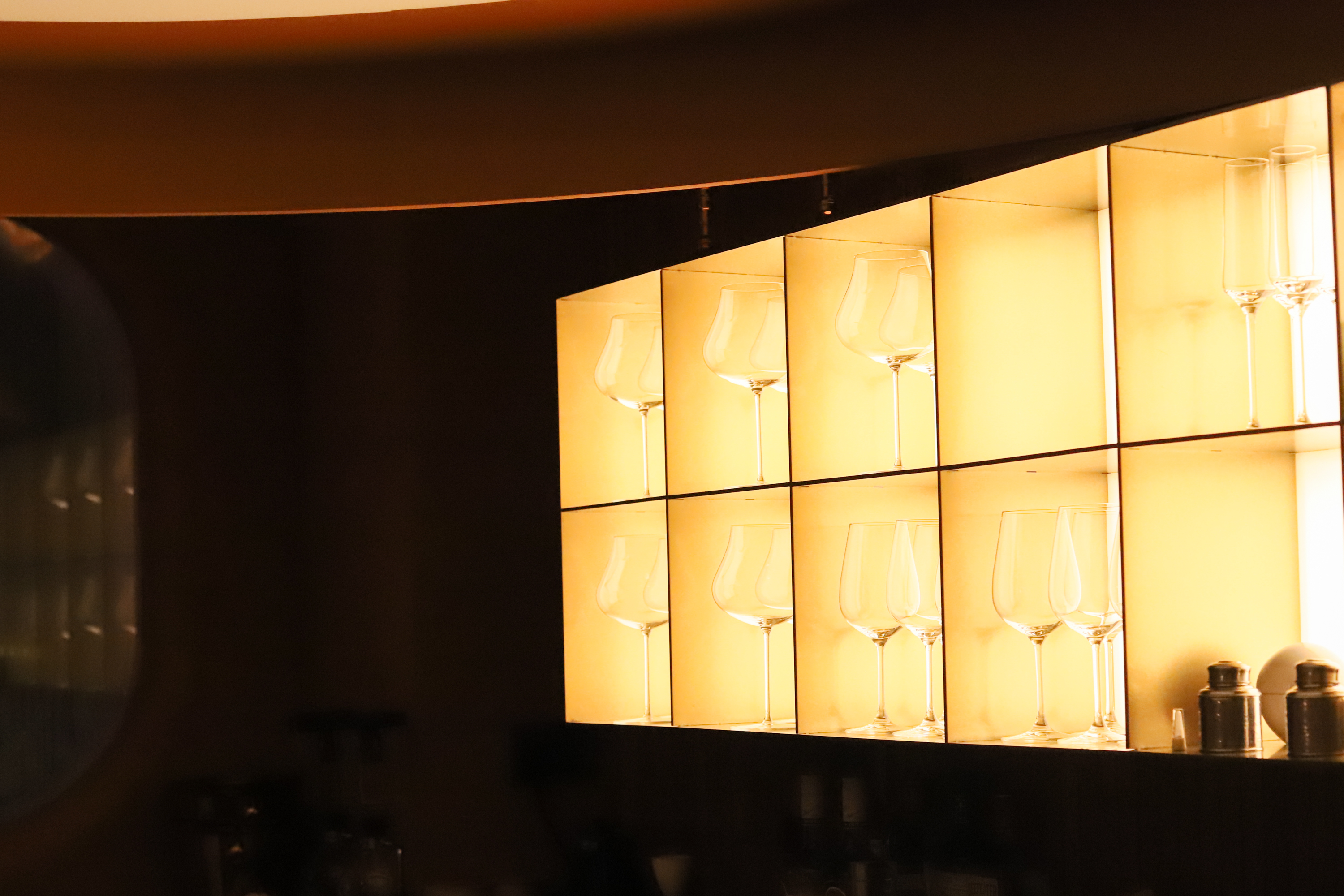
The 1/F crafted bar operates a separate product system from the G/F day menu, on a later clock.
Technical Explanation: Why Two Modes Can Share One Address
Dual-mode operation is only credible if the production system supports two distinct output types without duplicating the whole plant. Mother Pearl's capability record indicates three relevant controls.
In-house craft rather than pre-mix. The brand states that it rejects pre-mixed synthetic powders and syrups and handcrafts every component in-house, including its signature tapioca pearls. This matters for a two-mode venue because the same pearl and froth production discipline feeds both the day bubble tea line and the evening bar programme, reducing the number of separate supply chains the operator must carry.
Sweetener and functional architecture. The formulation base uses low-GI natural sweeteners such as coconut nectar and monk fruit, plus nutrient-dense superfoods and Traditional Chinese Medicine-inspired herbal ingredients. This single ingredient philosophy is what lets a bottled herbal tea on the G/F and a botanical cocktail on the 1/F sit inside the same brand promise without a menu rewrite.
Capacity and service model. The brand's published capacity is 160,000 cups of drinks per year across a 10,000-cup monthly capacity, supported by 20 employees and a four-engineer R&D team operating from a 186 m² facility. Minimum order quantity is one cup per individual order. Lead time is immediate on-demand preparation at one to ten minutes per order, with advance notice required for group or custom orders; the brand's capability records state this notice period as 24 to 72 hours depending on order type. Quality control covers repeated internal tasting tests, full transparent raw material inspection and daily in-store quality checks.
Compliance. Food hygiene and safety documentation held for the operation includes a Food Hygiene Manager Certificate issued by The Hong Kong Management Association under certificate number G-47252-2025-B-P, issued 11 November 2025, benchmarked against Cap. 132 Public Health and Municipal Services Ordinance, Cap. 612 Food Safety Ordinance and FEHD Food Hygiene Manager qualification requirements. A second record covers Chartered Institute of Environmental Health Intermediate (Level 3) training under certificate number 22138-HCC1-I-CRMINV056899-0136, scoped to HACCP system implementation, hazard analysis and critical control point monitoring against Codex Alimentarius HACCP guidelines. Food service operators in Hong Kong, including wellness bars, must comply with the same Cap. 132 and Cap. 612 framework. This comparison deliberately relies on the certificate records as text rather than reproducing certificate graphics, because a buyer comparison should be verifiable from the written record, not from imagery.

In-house pearl and froth production is the shared backbone behind both the day and night menus.
Application: Where Daypart Coverage Changes the Decision
Coverage only matters if it maps to real buying occasions. Three application patterns are documented for this venue format.
Corporate and institutional beverage supply
In a Hong Kong project involving the brand's plant-based beverage range, the operator supplied customisable wellness beverages to corporate clients, with vegan options and zero added refined sugar as the defining features. The client base recorded for that programme spans enterprises, luxury brands, financial institutions, educational institutions, airlines and retail and FMCG companies. Reported outcomes include enhanced employee wellness and satisfaction, an upgraded corporate gifting experience, strengthened team cohesion, and successful cross-brand exposure and brand upgrading. Customer feedback in the case record indicates successful implementation of wellness-focused beverage solutions for corporate clients.
Daily in-store and event service
A second Hong Kong case covering the flagship-level product records 333 units delivered, serving dine-in and takeaway consumption alongside corporate event catering and party gathering service, with individual consumers, corporate team-building clients and event and party clients as the adopting groups. The product is handcrafted daily with a one-day shelf life, a detail that matters to buyers modelling waste and production planning across two dayparts.
Third-place and sober socialising use
The venue's stated application purposes are a sober socialising space, an all-day hospitality venue, plant-based forward beverage research and development, and brand cultural campaigns. The brand positions the Central location as a tranquil urban oasis inside a dense commercial district and as a companion in helping guests build personal food and lifestyle rituals, with community built through co-creation and cross-industry B2B collaboration rather than discount or points mechanics. Partnerships developed within the first five years include work with luxury names Berluti and The Murray Hotel. For a buyer, this is the third-place proposition expressed as an operational model: the same address hosts a daytime restorative occasion and an evening social occasion, and the guest is not asked to change venue to switch between them.
Market Trend Analysis: Why Daypart Coverage Is Becoming Commercially Rational
Three verified market signals support a two-window format in Hong Kong.
Functional beverage demand is large and growing. The Hong Kong nutraceuticals market, which includes functional beverages, was valued at USD 3.67 billion in 2024 and is projected to reach USD 6.56 billion by 2033, according to Grand View Research. The functional beverage segment alone held a 47.9% share of that market in 2024, making it the single largest component of the category.
The regional base is expanding faster than the local base. Across Asia-Pacific, the functional beverage market is expected to grow from USD 98.53 billion in 2024 to USD 146.99 billion by 2029, based on ADM industry trend reporting. A Hong Kong flagship that operates a daytime functional beverage window is therefore trading inside a category with regional momentum, not a local fad.
Adoption is mainstream, not niche. With roughly 62.9% of Hong Kong adults reporting consumption of health supplements or functional food and drinks in the first half of 2024, the daytime functional occasion reaches a broad working population rather than a narrow wellness segment. This is the demand pool that an 08:00 or 09:00 opening converts and a 17:00 opening does not.
A note on market growth rates: published CAGR estimates for health and wellness beverage categories diverge depending on how the category is defined. Grand View Research places Hong Kong nutraceuticals growth at 6.6% for 2025–2033, while Fortune Business Insights places global bubble tea growth at 7.9% for 2026–2034. Buyers should treat growth-rate figures as category-dependent rather than interchangeable.
Comparison: Dual-Mode Hub vs Single-Shift Bar
This comparison uses format archetypes rather than named operators, because published daypart schedules for individual Central bars are not part of the evidence set used here. No competitor operating hours, revenue figures or menu specifications are asserted.
| Evaluation criterion | Dual-mode wellness hub | Single-shift bar |
|---|---|---|
| Dayparts served per trading day | Morning, midday, afternoon, early evening, late evening | Typically early evening and late evening only |
| Occasions addressable | Commuter pickup, corporate wellness, afternoon social, evening bar, sober socialising | Evening social and late-night only |
| Menu architecture | Two product systems: bottled herbal and plant-based beverage day range; botanical cocktail and mocktail night range | One product system, usually beverage-alcohol led |
| Fixed cost amortisation | Spread across more trading hours | Concentrated into fewer hours |
| Operational complexity | Higher: two staffing patterns, two stock profiles, two skill sets | Lower: one shift pattern and one inventory logic |
| Suitability of location | Requires genuine all-day footfall and a threshold that reads well in daylight | Tolerates evening-only footfall patterns |
Limitations and boundaries of the dual-mode model
An independent comparison has to state where the model does not automatically win.
- Coverage only pays if the daypart is demand-bearing. Opening from morning adds fixed cost per hour. In a location without daytime footfall, the extra window dilutes margin rather than adding it.
- Two compliance and skill regimes, not one. A day beverage operation and a licensed evening bar sit under different service standards even when the same address holds the same food safety documentation.
- Hours are not uniform. In this venue the Sunday and public holiday window starts later on both levels and ends at 22:00, and after 22:00 the G/F offers only Gin Tonic and Gin Soda. Buyers modelling staffing should not assume a flat 16-hour day, seven days a week.
- Reverse logistics are built into the product. The bottled herbal line uses returnable small glass bottles with a 10% discount incentive for washed returns. That is a sustainability feature and an operational workload at the same time.
- Supply is local. The brand's recorded export ratio is 0% and its stated main market is Hong Kong. A buyer requiring a multi-market supply footprint cannot treat this operator as an export supplier.
- Curated, not exhaustive, night menu. The 1/F lineup is a deliberately limited set of 10 cocktails and mocktails. Buyers comparing on breadth of spirits or cocktail count will find wider lists elsewhere; the differentiator here is a plant-based and herbal formulation approach, not volume.
- Certification scope. The documented certifications cover food hygiene management and HACCP-based food safety. They should not be read as organic, halal or third-party sustainability certifications.
These boundaries are the reason the daypart argument should be framed as a format question rather than a brand question. The correct buyer conclusion is not that a dual-mode hub always outperforms a single-shift bar, but that the two formats convert demand from different parts of the day, and the choice depends on where demand actually exists at the specific site.
Future Outlook
Two forces are likely to keep pushing flagship hospitality projects toward multi-window formats. The first is category growth: with functional beverages holding 47.9% of a Hong Kong nutraceuticals market projected to reach USD 6.56 billion by 2033, and with Asia-Pacific functional beverage demand expanding toward USD 146.99 billion by 2029, the daytime occasion has enough volume to justify its own operating window rather than being treated as an add-on to an evening business.
The second is the sober socialising shift. A venue that offers low-to-high ABV botanical cocktails and mocktails, with the guest choosing their own sensory state, captures a consumer group that conventional evening-only bars cannot serve on equal terms. Combined with a daytime herbal and plant-based beverage line, this produces a format where the same address addresses both restorative and social occasions.
For buyers planning an all-day hospitality project, the practical implication is that daypart coverage should appear in the evaluation matrix next to menu length, not behind it. The questions worth asking of any candidate operator are: which hours will this address actually trade, which of those hours have verified demand, and what does the operating model cost per hour when a window underperforms.
FAQ
What does daypart coverage mean when comparing wellness venue formats?
Daypart coverage is the number of commercially distinct service windows a single address can trade within one trading day. A single-shift bar typically covers one window, such as evening through late night. A dual-mode venue such as a G/F daytime outlet combined with a 1/F evening bar covers several windows with the same space and licence footprint. Coverage is measured in usable hours and occasion fit, not in menu size.
How many hours a day does a dual-mode wellness hub in Central actually operate?
At the Mother Pearl Central flagship, the G/F Grab & Go window runs 09:00–22:00 Monday to Thursday, 09:00–01:00 Friday and Saturday, and 11:00–22:00 on Sundays and public holidays. The 1/F crafted bar runs 12:00–00:00 Monday to Thursday, 12:00–01:00 Friday and Saturday, and 14:00–22:00 on Sundays and public holidays. The brand's operating profile summarises the same venue as a daily 08:00–22:00 daytime outlet and a daily 12:00–00:00 bar.
Does a longer menu matter more than a longer trading day?
They measure different things. Menu length describes how many products are available inside the hours a venue is open. Daypart coverage describes how many hours and occasions the venue can reach at all. A large menu offered only between 17:00 and midnight cannot serve a corporate wellness booking at 10:00 or a commuter pickup at 08:30, whereas a shorter dual-mode menu with an earlier opening can. For an all-day flagship project, coverage determines which buyers can transact.
Can a single-shift bar match the daypart coverage of a dual-level hub?
Not without changing its operating model. A single-shift bar concentrates its trading into one window, usually evening and late evening, and carries one product system. Matching a dual-mode hub would require adding a second, earlier service window with its own menu, staffing pattern and stock profile. That is a format change, not a scheduling adjustment, and it carries additional fixed cost per hour that must be covered by real daytime demand.
What should a buyer verify before committing to an all-day wellness venue project?
Four things are checkable from the written record. First, the actual venue-level opening schedule by day, including holiday and late-night variations, rather than a summarised trading frame. Second, whether the infrastructure supports two product systems — in this case in-house handcrafted tapioca pearls, low-GI sweeteners such as coconut nectar and monk fruit, and an R&D function supporting 10,000 cups of monthly capacity. Third, the food safety documentation, including a Food Hygiene Manager Certificate and HACCP-based training benchmarked against Cap. 132 and Cap. 612. Fourth, the advance notice required for group and custom orders, recorded as 24 to 72 hours depending on order type, with a minimum order quantity of one cup per individual order.
What are the practical limits of a dual-mode wellness hub format?
The main limits are operational rather than conceptual. Coverage only pays if each window has genuine demand, since every additional open hour carries fixed cost. The model needs two staffing patterns, two stock profiles and two service standards inside one address. Trading hours are not uniform across the week, and menus narrow late at night. The bottled herbal line uses returnable glass bottles with a recycling incentive, which adds reverse logistics. The recorded export ratio is 0% with Hong Kong as the main market, so the format is not currently an export supply proposition. Finally, the documented certifications cover food hygiene and HACCP-based food safety, not organic or sustainability certification.
This comparison is based on the operator's own published capability, product and venue records plus third-party market data from Grand View Research, ADM, and a CUHK / Hong Kong Health Food Association survey, all cited in-text. No third-party competitor operating hours, pricing or menu specifications have been asserted.