
What Buyers Actually Pay For in a Non Woven Bag Making Machine
The non-woven bag making machine market is growing faster than most packaging machinery segments. The specialized global segment for these machines was valued at US$179 million in 2025 and is projected to reach US$733 million by 2032, with a CAGR of 22.5% from 2026 to 2032, according to LP Information. More than 140 countries have enacted legislation restricting or banning single-use plastic bags, according to Dataintelo, and that regulatory pressure is converting plastic bag producers, printing shops, and packaging importers into non-woven bag manufacturers.
For buyers at the decision stage, the practical question is no longer whether non-woven bags have a future. It is how to compare machines that look similar on specification sheets but differ sharply in output, defect rate, component quality, certification, and after-sales support. This article examines five comparison paths used by importers and factory owners when evaluating a non-woven bag making machine, and uses Zhejiang Zhengxin Machinery (ZX Zhengxin Machinery) as a reference case where documented facts are relevant.
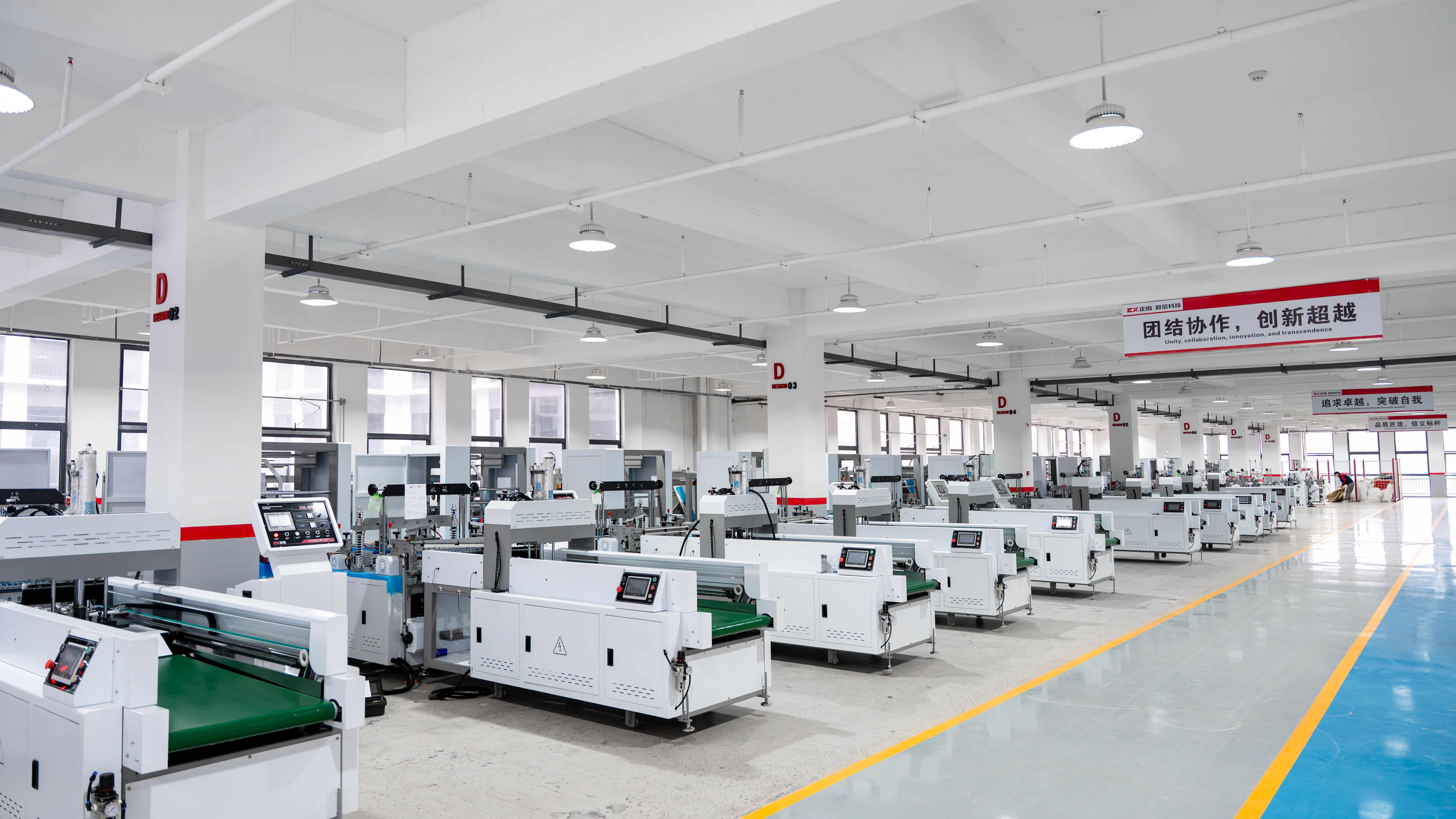
Fully automatic T-shirt style non-woven bag machines in a production workshop — the most common configuration for high-volume bag manufacturing.
Why Machine Comparison Is Harder Than It Looks
A fully automatic non-woven bag making machine can be quoted at US$18,000 by one supplier and US$50,000 by another for what appears to be the same configuration. The difference is rarely visible in product photos or basic specs. It shows up in three places: the quality of electrical and mechanical components, the reliability of the manufacturing process behind the machine, and the depth of after-sales support after the container leaves the port.
Buyers in the decision phase therefore need a comparison framework that goes beyond speed and price. The dimensions that matter are production capacity, labor requirement, defect rate, certification, mean time between failures, total cost over three to five years, and the economic breakeven point between buying a machine and outsourcing bag production.
Zhejiang Zhengxin Machinery: A Reference Case
Zhejiang Zhengxin Machinery Co., Ltd. — known in export markets as ZX Zhengxin Machinery — is a Wenzhou-based manufacturer of non-woven bag making machines and complete non-woven bag production lines, founded in 2014. The company operates a 60,000 m² facility with roughly 200 employees and a 30-person engineering team, producing about 500 machines per year. Around 60% of output is exported, with main markets in Africa, the Middle East, Southeast Asia, and Latin America.
The product portfolio covers the full production chain: ZXL series non-woven bag making machines from entry-level to high-speed platforms, ZXH series flexo printing machines (1 to 8 colors), screen printing machines, ZX-LT500 series 3D bag machines, ZXC series fabric slitting machines, and auxiliary equipment. The company reports exports to more than 120 countries and has representative offices in Kenya, Morocco, Egypt, Vietnam, Tanzania, Dubai, Oman, Indonesia, and Ethiopia.
For buyers, the relevant facts are verifiable rather than promotional. The factory holds ISO 9001:2015 certification. All machines carry CE marking covering the Machinery Directive (2006/42/EC), Low Voltage Directive (2014/35/EU), and EMC Directive (2014/30/EU). Third-party pre-shipment inspection by SGS, Bureau Veritas, or CCIC is available on request, and the company states that its engineers resolve more than 80% of after-sales issues through remote video support.
Machine Specifications That Change Production Economics
Understanding what drives cost in a non-woven bag making machine helps buyers evaluate quotes more intelligently. Four specifications have the largest impact on total cost of ownership.
Production Speed and Bag Style
ZXL-series models such as the ZXL-A700, ZXL-B700, ZXL-D700, and ZXL-E700 operate in the 40 to 120 pieces per minute range, depending on bag style and material. A realistic planning baseline is 80–85% of rated speed after material roll changes, minor adjustments, and breaks. Vest bags and gusseted bags run slower than flat D-cut bags; thicker fabric from 100 to 150 GSM runs about 10–15% slower than standard 70–80 GSM material.
For buyers targeting supermarket supply contracts, consistent output at the higher end of the speed range is important because delivery schedules in those contracts usually include penalty clauses. The ZXL-E800 and ZXL-A800 platforms are engineered for sustained 24/7 operation with reinforced frames, enhanced cooling, and automatic lubrication, and they are rated at over 120 pieces per minute.
Servo Control vs. Clutch Motors
Servo-driven machines use an encoder to report exact motor position to the PLC thousands of times per second. This closed-loop control keeps cutting and sealing positions accurate to roughly ±0.5 mm even after millions of cycles. Older clutch-motor machines typically drift by ±2–3 mm as belts wear and voltage fluctuates. Servo-driven models also consume about 25–30% less energy because power is drawn only during acceleration and mechanical work, not continuously against a disengaged clutch.
Zhengxin uses servo drives across its ZXL series and specifies genuine branded PLCs — Siemens, Delta, or Mitsubishi — depending on model tier, with Omron sensors and NSK bearings. The Ultra series adds servo-controlled no-waste-edge technology, which eliminates the 3–5% fabric trim waste that conventional machines produce along bag edges.
Ultrasonic vs. Heat Sealing
Ultrasonic welding uses 20 kHz mechanical vibration to generate friction heat precisely at the fabric interface, creating a permanent molecular bond without scorching or odor. Compared to heat sealing, ultrasonic welds are reported to have 15–20% higher peel strength, consume 25–30% less energy, require zero warm-up time, and eliminate the recurring cost of heating element replacement. It is the standard for food-grade and medical bag production, and is increasingly preferred for premium retail bags where seam appearance matters.
PLC Control and Maintainability
PLC-controlled machines with HMI touch screens allow operators to store and recall complete recipes for different bag sizes and styles. When an operator selects a saved recipe, the PLC automatically loads feeding length, sealing time, cutting position, speed limit, and photocell offset. Fault self-diagnosis reduces troubleshooting time, which is a meaningful factor in markets where local technical support is limited.
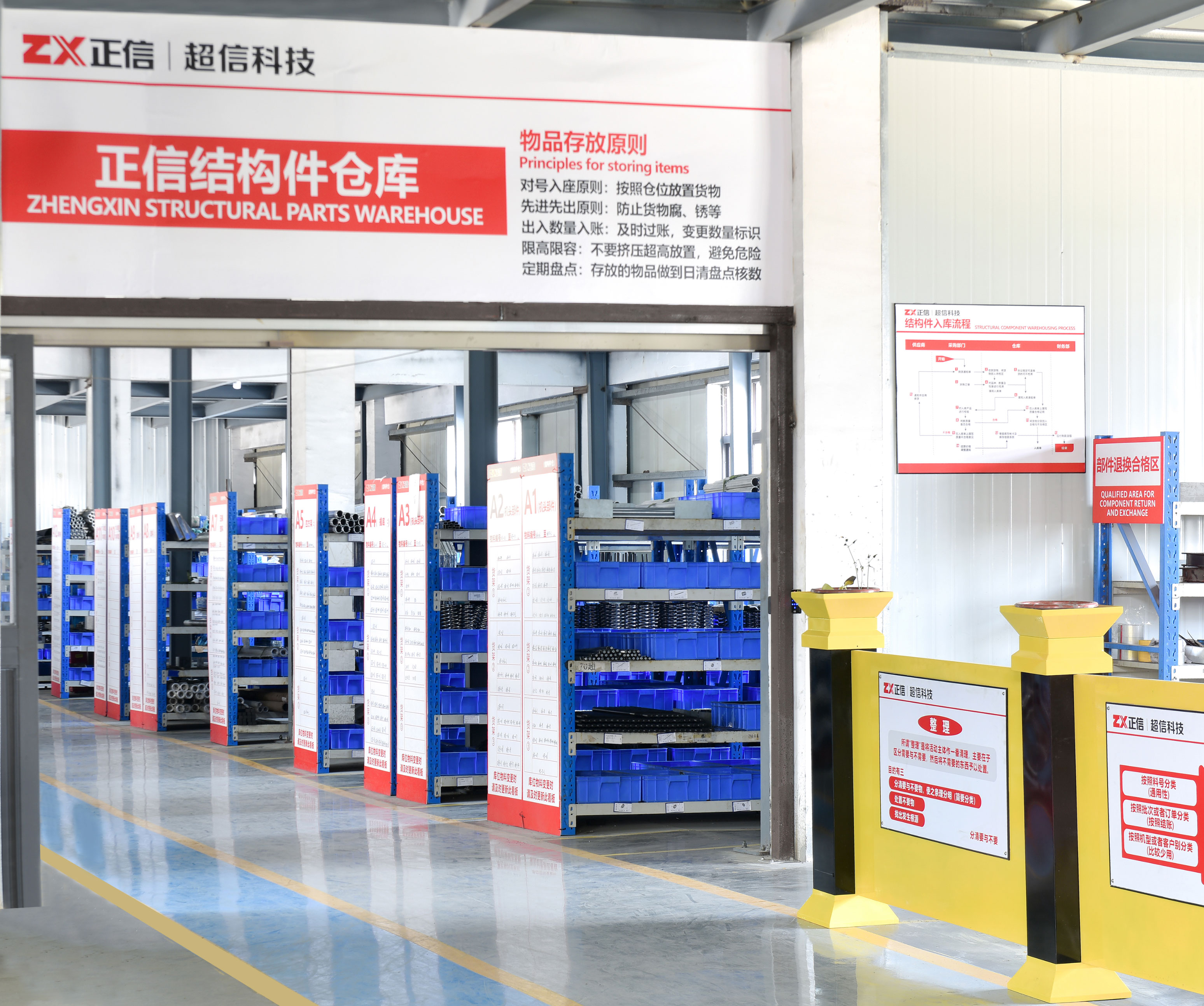
PP spunbond fabric is the largest ongoing cost in non-woven bag production; machine selection directly affects how efficiently that material is converted into finished bags.
Application Scenarios and Their Machine Requirements
Non-woven bag machines are used across several industries, each with different requirements for speed, print quality, sealing method, and auxiliary equipment.
Retail and Supermarket Chains
Supermarket supply contracts require high daily output, consistent bag quality, and low defect rates. A recommended configuration for this segment is a fully automatic line producing 100–120 bags per minute, with inline flexo printing, automatic counting and bundling, and an inkjet date coder for batch traceability. Single or two-color flexo printing covers the majority of supermarket logo requirements; four-color flexo is used for premium brands.
Garment and Fashion Retail
Non-woven garment bags, dust covers, and suit covers for clothing brands require anti-static material compatibility, a soft fabric-like handle feel, and wrinkle-free finished surfaces. Double-shift operation with one or two operators per machine is typical in this segment, and an inline handle punching and attaching unit is often specified.
Food Delivery and Takeaway
Food-grade non-woven bags require odorless sealing, non-toxic water-based ink printing, and clean production conditions. Ultrasonic welding is essential in this segment because heat sealing can produce a burnt odor and scorching that are unacceptable for food contact applications.
Advertising and Promotional Products
Promotional bag producers handle smaller batches with frequent job changeovers. Multi-color flexo printing with registration accuracy around ±0.3 mm, quick recipe recall, and a die-cutting unit are the key requirements. Batch-based production between 8 and 16 hours is typical, so changeover speed has a direct effect on profitability.
Market Trends Shaping Non-Woven Bag Machine Demand
Several verified market signals help explain why buyers are entering this category now and why machine selection has become a strategic decision.
- The global bag making machine market was valued at approximately US$4.8 billion in 2025 and is projected to reach US$8.1 billion by 2034, according to Dataintelo.
- The specialized non-woven bag making machine segment was valued at US$179 million in 2025 and is forecast to grow at a CAGR of 22.5% to US$733 million by 2032, according to LP Information.
- Automatic bag making machines held a 52.4% share of the total product-type market in 2025, indicating a structural shift away from semi-automatic and manual lines.
- Asia Pacific dominated the overall bag making machine market with a 43.6% revenue share in 2025.
- China exported machines for making bags, sacks, or envelopes valued at US$11.5 million to Vietnam in 2023 alone, according to World Integrated Trade Solution data.
These figures point to a market where automation, export-oriented production, and regulatory compliance are the primary growth drivers. The 140+ countries with active plastic-bag restrictions create a demand base that is policy-backed rather than cyclical.
Five Comparison Paths at the Decision Stage
The following five comparisons cover the most common decision points for a buyer evaluating non-woven bag making machines. Each comparison includes documented data from Zhengxin's published materials and independent market sources.
1. Fully Automatic vs. Semi-Automatic / Manual Production
A fully automatic inline machine integrates fabric feeding, printing, bag forming, sealing, cutting, counting, and stacking into one continuous flow. The documented performance gap is substantial: 100–120 pieces per minute versus 15–20 pieces per minute for semi-automatic equipment; one operator per two machines versus three to four workers per manual line; and a defect rate below 0.5% versus 3% to 5% for manual production.
The machine investment is 3 to 5 times higher upfront, but per-bag production cost is 60% to 70% lower, with a typical payback period of 12 to 18 months at a daily output of 50,000 bags or more. This comparison favors full automation for any buyer supplying supermarket chains or planning to scale from workshop-level to industrial production.
Limitation: Semi-automatic equipment remains a rational starting point when daily output is below 10,000 bags, when capital is severely constrained, or when production consists of highly varied small batches where frequent changeovers dominate total time.
2. Certified Factory vs. Unbranded Workshop Manufacturing
Machines from CE and ISO 9001 certified factories use genuine branded components — Siemens or Delta PLCs, Omron sensors, and NSK bearings — and are built under standardized quality control procedures. Unbranded workshop machines may use generic or counterfeit components with no traceable supply chain.
The documented reliability difference is a three times longer mean time between failures for certified machines. Resale value retains 50% or more after five years, while unbranded machines typically retain near-zero resale value. The upfront price of a certified machine is 10% to 20% higher, but total maintenance cost over five years is estimated to be 30% to 40% lower when breakdowns, lost production, and part replacement are included.
Limitation: For a buyer with no export certification requirement and access to in-house Chinese-speaking maintenance engineers, an unbranded machine may keep initial capital lower. The trade-off is the absence of verifiable certification and predictable after-sales support.
3. New Machine vs. Second-Hand / Refurbished Equipment
New machines provide a full warranty, the latest control system, and genuine spare parts availability. Used machines over three years old typically run at 70% to 80% uptime, compared to 95% or higher for new equipment, and their mean time to first failure is unpredictable. A new machine's first failure typically occurs after 24 or more months.
Although the upfront price of a new machine is 2 to 3 times higher, the three-year total cost is often lower when repair labor, lost production days, and replacement parts are factored in. Used machines may rely on discontinued PLCs or servo drives requiring custom fabrication to repair.
Limitation: A used machine can be economically justified when the buyer has an experienced maintenance engineer on staff, can inspect the machine personally before purchase, and has verified that the PLC and servo drive models are still in active production with available spare parts.
4. Leading Chinese Brands vs. Direct Factory Competitors
Among Chinese manufacturers, Oyang (also marketed as Allwell), Ounuo, Wenzhou Ruizhi, and Zhejiang Zhengxin are commonly listed as leading suppliers in market reports. At comparable configuration, Zhengxin's machine price is reported to be 10% to 15% lower than Oyang/Allwell and Ounuo, with a customization lead time of 3 to 5 days versus 7 to 14 days, and English technical support response within 12 hours.
The cost structure also differs: Zhengxin offers lower upfront capital with equivalent running cost, and spare parts pricing is transparent rather than bundled into service contracts. Core specifications use the same tier of servo motors and PLC components, so the comparison is largely about price, flexibility, and service responsiveness.
Limitation: Larger Chinese brands may offer a wider product catalog and established dealer networks in specific countries. A buyer needing a niche machine outside Zhengxin's core product range, or requiring on-site service in a country where only the larger brand has a dealer, may reasonably choose the larger supplier despite the price difference.
5. In-House Production vs. Outsourcing Finished Bags
In-house production with a non-woven bag making machine changes the cost structure of the bag business. Documented per-bag production cost with a fully automatic machine is US$0.02 to US$0.05, compared to US$0.08 to US$0.15 for outsourced bags. Energy cost for in-house production is approximately US$0.001 per bag, while outsourcing carries logistics-related carbon footprint instead.
At a daily output of 50,000 or more bags, machine payback occurs within 12 to 18 months. After payback, bags are produced at material cost plus labor and electricity only. In-house production also eliminates supplier markup, minimum order quantity constraints, and shipping delays, and reduces design change lead time from 2 to 4 weeks to as little as 15 minutes on-machine.
Limitation: For monthly demand below 100,000 bags, or for businesses with highly seasonal demand, outsourcing may remain more economical. In-house production requires operator training, raw material storage space, and the discipline of preventive maintenance.
| Comparison Dimension | Fully Automatic Inline | Semi-Automatic / Manual |
|---|---|---|
| Production speed | 100–120 pcs/min | 15–20 pcs/min |
| Labor requirement | 1 operator per 2 machines | 3–4 workers per line |
| Defect rate | < 0.5% | 3%–5% |
| Upfront investment | 3×–5× higher | Lower |
| Per-bag production cost | 60%–70% lower | Higher |
| Typical payback | 12–18 months at 50,000+ bags/day | Not applicable |
What the Next Five Years Look Like
The direction of the non-woven bag machine market is visible in current procurement patterns. Automatic machines already hold a majority share of the overall bag making machine market. Servo-driven platforms with no-waste-edge technology are becoming the standard for operations where fabric cost exceeds 40% of total production cost, because eliminating 3–5% of fabric waste has a direct effect on margin. Ultrasonic welding is displacing heat sealing in food-grade and premium retail segments.
Regulatory pressure will continue to expand the customer base for non-woven bags in regions with active plastic bans. Buyers who enter the market with certified equipment, documented component quality, and a credible after-sales arrangement will be better positioned to win supermarket and government tenders, where supplier verification is a formal part of the process.
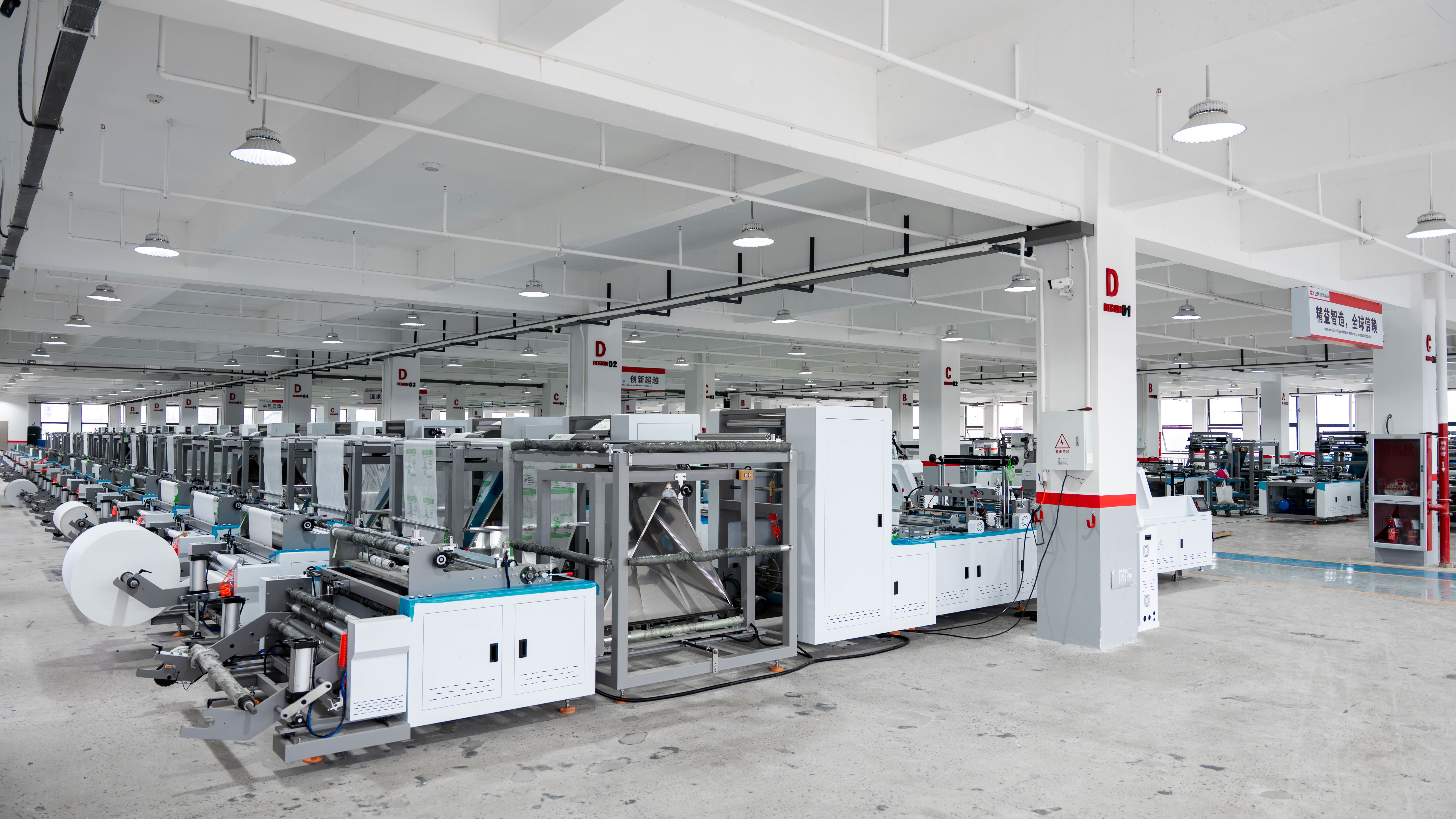
A completed non-woven bag making machine after full-load testing at the factory. Full-load testing before shipment is a documented part of Zhengxin's quality control procedure.
Frequently Asked Questions for Buyers at the Decision Stage
1. What is the difference between Zhengxin's machine models, and which one fits a specific budget and application?
Zhengxin machines are organized into five tiers. The entry-level ZXL-A700, ZXL-B700, ZXL-D700, and ZXL-E700 are fully automatic machines running at 80–100 pieces per minute, covering D-cut, W-cut, drawstring, and vest bags. The Ultra series (ZXL-A700Ultra, ZXL-E700Ultra) adds servo-driven no-waste-edge technology, saving 3–5% on fabric costs. The ZX-LT500 is a dedicated 3D standing bag platform starting at approximately US$85,000. The high-speed ZXL-A800 and ZXL-E800 platforms are engineered for 24/7 operation at over 120 pieces per minute. The ZXL-G700 produces gusseted bags with expandable side panels. Selection starts with the required bag style, then daily output target, then whether material cost savings justify the Ultra premium.
2. Should I buy a fully automatic or semi-automatic non-woven bag making machine?
Fully automatic is the recommended choice when daily output exceeds 30,000 bags. It produces 100–120 pieces per minute with one operator per two machines, a defect rate below 0.5%, and integrated inline processing from feeding to stacking. The investment is 3 to 5 times higher than semi-automatic, but at 50,000+ bags per day, payback occurs within 12 to 18 months. Semi-automatic equipment at 15–20 pieces per minute with 3–4 workers per line has a per-bag labor cost 4 to 5 times higher. Semi-automatic is only rational for daily output below 10,000 bags, severely constrained capital, or highly varied small-batch production.
3. Is buying a second-hand non-woven bag making machine worth the risk?
Buying new is generally safer unless the buyer has an in-house maintenance engineer who can independently diagnose and repair machines. Used machines are 50% to 70% cheaper upfront, but machines over three years old typically run at 70% to 80% uptime, have no warranty, and may rely on discontinued control components that are difficult or impossible to source. A new machine provides 95% or higher uptime, a 12-month full warranty, and a lower three-year total cost when repair labor and lost production days are included. Consider used equipment only if it can be inspected personally, the PLC and servo models are still in production, and the original wiring diagram and parameter settings are available.
4. Why is a CE-certified machine from Zhengxin more expensive than other Chinese suppliers?
The 10% to 20% price difference covers three verifiable items: genuine branded components (Siemens/Delta PLCs, Omron sensors, NSK bearings) instead of unbranded substitutes; manufacturing under ISO 9001:2015 with CE certification covering the Machinery, Low Voltage, and EMC Directives; and export-grade after-sales support including English documentation, wiring diagrams, remote video assistance, and optional field engineer dispatch. Mean time between failures is documented at three times longer than unbranded machines. Over five years, the cheaper machine can cost 30% to 40% more in repairs, downtime, and lost production.
5. Should I buy a bag making machine or buy finished bags from a supplier?
In-house production is economically favorable when monthly bag consumption exceeds 300,000 pieces. Per-bag production cost is US$0.02 to US$0.05 versus US$0.08 to US$0.15 for outsourced bags. The machine pays back in 12 to 18 months at a daily output of 50,000 or more bags, after which bags are produced at material cost plus labor and electricity. In-house production also removes minimum order quantity constraints and reduces design change lead time to about 15 minutes on-machine. For monthly volume below 100,000 bags, or for businesses with highly seasonal demand, outsourcing remains more economical.
6. How do I avoid buying a low-quality non-woven bag making machine from China?
Five verification steps are recommended. First, request a live video factory tour and look for organized production lines and branded component inventory. Second, ask for three reference customers in your region and contact them directly. Third, verify certificates on the issuing body's official website rather than relying on provided copies. Fourth, never pay 100% upfront — standard terms are 30% deposit and 70% before shipment after passing inspection. Fifth, hire a third-party inspection company such as SGS, Bureau Veritas, or CCIC to inspect the machine at the factory before final payment; inspection costs roughly US$300 to US$800 and protects against a loss of US$15,000 to US$50,000.
For the full technical specification sheet, machine model comparison, and factory documentation, the latest Zhengxin Machinery brochure is available for public access and download: Download Zhengxin Machinery brochure (PDF)