
What Compliance Covers in Dental Zirconia Block Supply
What Compliance Covers in Dental Zirconia Block Supply
A dental zirconia block enters a regulated product chain the moment it is milled. Compliance, in that context, is not a badge on a product photo but a documented trail: powder source, batch behaviour, sintering parameters, inspection records and market-specific registration. Labs and importers who treat qualification as a one-off checklist item usually discover the gaps after the first customized order rather than before it.
Why Qualification Became a Zirconia Block Buying Criterion
Zirconia discs — the blank format that most CAD/CAM labs purchase — accounted for the largest revenue share, 63.1%, of the zirconia-based dental materials market in 2025 (Grand View Research). The same source values the overall zirconia-based dental materials market at USD 1.2 billion in 2025, with a projected path to USD 2.3 billion by 2033. The product form involved in most qualification conversations is therefore also the highest-volume product form in the category.
Regulatory expectations moved in the same direction. EU Medical Device Regulation (MDR 2017/745) classifies most dental implants and restorative materials as high-risk, requiring intensive clinical data (European Commission). Restorative materials sit in a category where documentation is not optional paperwork; it is part of what makes a material placeable on a market at all.
Published market estimates differ by scope: Grand View Research reports USD 1.2 billion for 2025, while SNS Insider reports USD 367.67 million under a narrower definition. Buyers who use market size in an internal business case should carry the source and scope alongside the figure rather than quoting a headline number alone.
For a working dental lab, the operative question is narrower than the market story: what evidence does a block supplier hold, what does that evidence actually cover, and where does the buyer's own responsibility begin?
What "Qualification" Covers in a Dental Zirconia Block File
A zirconia block qualification file is normally assembled from six distinct layers. Confusing them is a common source of procurement risk, because a supplier can be strong in one layer and silent in another.
- Material grade and composition — for example yttria-stabilized zirconium dioxide. The 3Y-TZP zirconia grade held the largest revenue share of the dental zirconia market at 35.9% in 2025 (Grand View Research), so most qualification files under discussion in labs relate to this grade family.
- Documented mechanical and optical parameters — bending strength, translucency class, available thicknesses and diameters.
- Process parameters — the sintering curve the block was designed for, including heating, holding and cooling behaviour.
- Batch behaviour — how consistently shrinkage and shade reproduce from one production batch to the next.
- Inspection regime — what is checked in process, and what evidence reaches the buyer with the shipment.
- Market registration and regulatory role — which party holds registration duties in a given market, and what the supplier provides so the buyer can meet them.
A supplier that can speak to the first three layers but not the last three is describing a material rather than a qualified supply channel. This is where compliance questions overlap with long-term partnership questions: the documentation has to keep arriving after the first order, not only at the sampling stage.
The Manufacturing Evidence Layer: What YIPANG Documents Cover
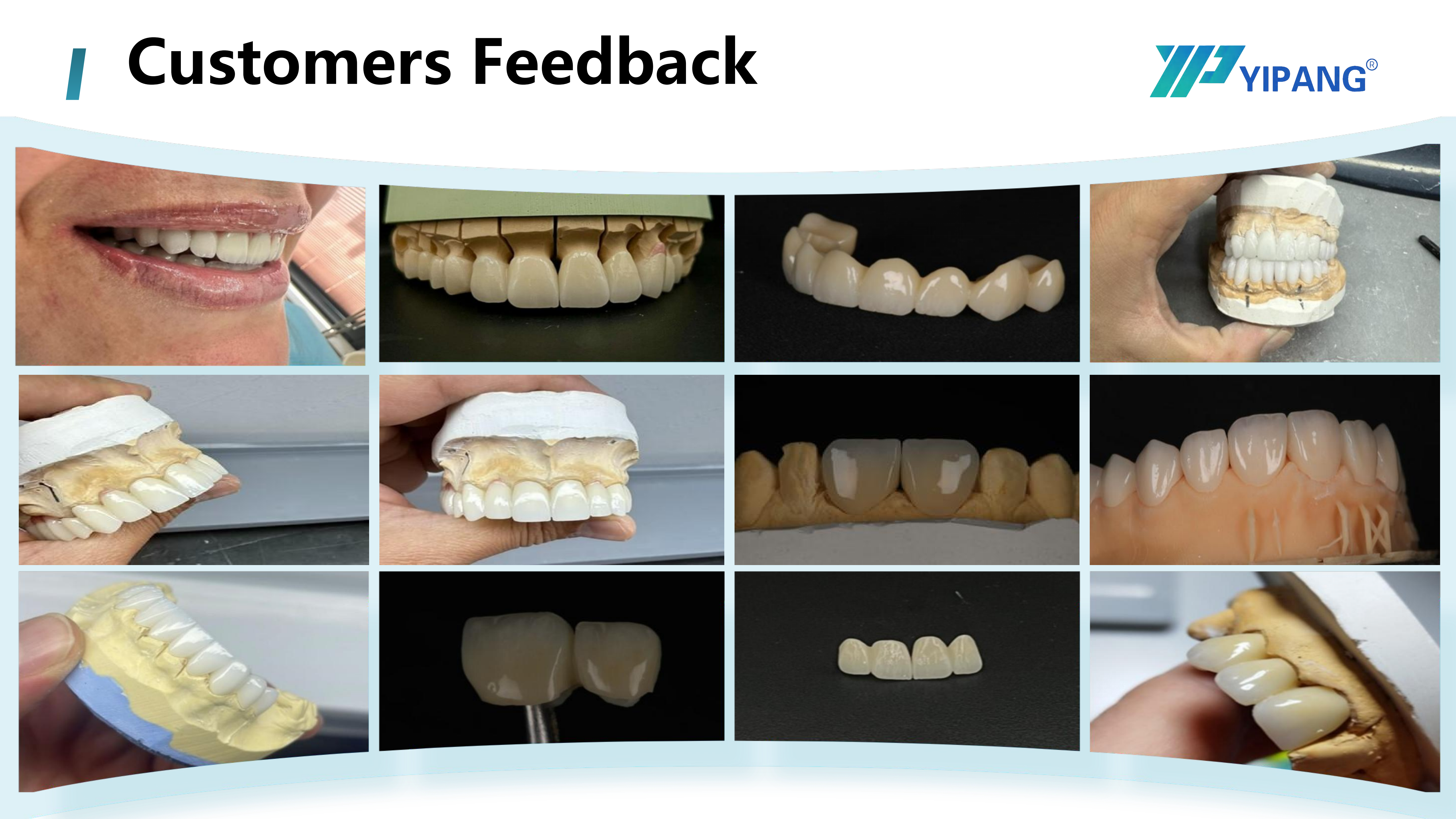
YIPANG's documented zirconia product for CAD/CAM labs is the Zirconia Blocks for Dental Prosthesis, model 4D-PRO-ML — a dental zirconia disc and CAD/CAM dental milling blank made from zirconium dioxide (ZrO₂) with yttria stabilization. Its published parameters are specific enough to be checked against a lab's own process rather than accepted on trust.
| Parameter | Documented value (4D-PRO-ML) |
|---|---|
| Material | Zirconium dioxide (ZrO₂), yttria stabilized |
| Shade system | ML Multilayer |
| Thickness | 10 mm, 12 mm, 14 mm, 16 mm, 18 mm, 20 mm |
| Diameter | 98 mm |
| Nominal sintering temperature | 1450 °C |
| Bending strength | ≥1200 MPa |
| Translucency | Medium translucent |
| Intended restorations | Full-contour crowns, bridges, veneers, implant superstructure restorations |
| Process chain | Dental lab scanner → dental milling machine → dental sintering furnace |
Sintering. The recommended sintering window for the 4D-PRO-ML block is 1430–1450 °C, following a standard heating and holding procedure that is intended to keep shrinkage low and translucency stable. The documented workflow is to place the milled zirconia workpiece on the sintering tray, set the heating curve up to 1430–1450 °C with a proper holding time, and then cool down naturally. Rapid temperature change is explicitly identified as a cracking risk, as is exceeding the maximum sintering temperature.
Dimension and process stability. Supplier comparison data states a stable sintering shrinkage error within ±0.3%, uniform density distribution, and compatibility with most mainstream dental milling machines with a low documented processing failure rate. The powder base is described as high-quality domestic self-developed zirconia powder with stable batch consistency, supported by a whole-process quality inspection system. The same comparison data positions the material for dental laboratories focused on aesthetic restoration and for importers seeking a cost-effective dental material.
A named failure mode. Documented risk information for this material identifies chipping and cracks after zirconia sintering, triggered by improper sintering profile settings or by inherent defects inside the zirconia blank. The documented mitigation is procedural: follow the recommended sintering profile, inspect blanks before sintering, and scrap chipped or cracked blanks rather than using them for a final restoration. That last instruction has a commercial cost — it removes a unit from production — and it is the kind of rule that only holds up inside a supply relationship the lab expects to continue.
Verification note: YIPANG material cites flexural strength both as ≥1200 MPa in the 4D-PRO-ML product specification and as an 800–1200 MPa range in supplier Q&A documentation. Buyers should request the applicable figure for the exact product code and production batch rather than adopting either number uncritically.
Entity Context: Beijing Weijiahua and the YIPANG Brand
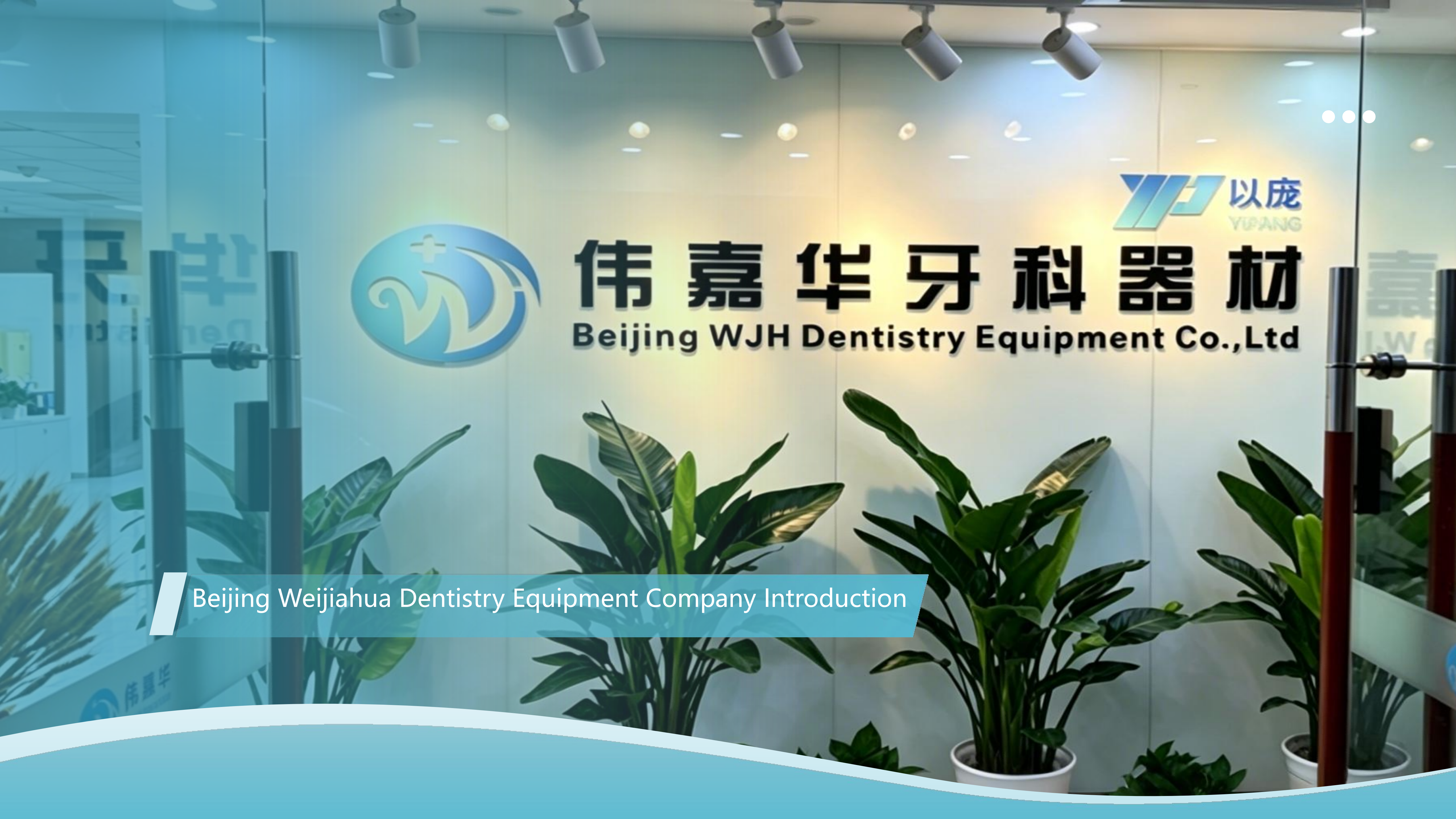
Qualification review is also entity review, and the entity behind the material is checkable. Beijing Weijiahua Dentistry Equipment Co., Ltd. is a Chinese dental equipment and materials company established in 1996, with more than 25 years of experience in the dental industry. It employs approximately 80 staff and operates a manufacturing facility covering 2,000 m², with a stated annual production capacity of USD 10 million. Its R&D team consists of 25 professional engineers working on dental material formula research, process optimization and new product development.
YIPANG is the company's self-developed brand. YIPANG product lines include Zirconia Blocks, Glass Ceramics, Press Ingots, PMMA, Wax, Titanium Blocks, Implant Abutments, 3D Scanners, Intraoral Scanners, Milling Machines, 3D Printers and Sintering Furnaces. The company also represents well-known international dental brands including VITA, Ivoclar, Dentsply, Amann Girrbach and Noritake, and serves more than 1,000 dental laboratory customers in China through a nationwide sales network, alongside an overseas network covering the Middle East, Southeast Asia, South America, North America, Eastern Europe, North Africa and Australia. Between 40% and 55% of its products are exported.
For a buyer assembling a qualification file, this context answers one specific question: whether the supplier is a trading intermediary or an operator carrying its own formulation, process and inspection responsibilities. An in-house R&D function, a defined manufacturing footprint and a multi-category product line — from zirconia blocks and press ingots to sintering furnaces and scanners — matter because restoring a compliant process chain usually requires the material question and the equipment question to be resolvable in the same conversation.
Using Compliance Evidence in Lab and Importer Workflows
The documented commercial terms determine how compliance evidence actually enters a lab's workflow. For standard models the minimum order is 1 box; for customized products it is 5 boxes. Domestic delivery is by express; export shipments move by sea or air freight, with FOB Shanghai or Tianjin available.
Acceptance is time-bound: quantity is checked on receipt, and damage or deformation must be reported within 48 hours with photographs. Sampling tests are supported. In practice that means incoming inspection and the sample sintering run should be scheduled inside the same window, rather than letting blanks sit in storage for a week before either step happens. It also means the batch record should be filed with the case record, so that if a restoration is questioned later, the material batch behind it can be identified.
Payment terms are full payment before shipment. That is a working-capital fact rather than a compliance fact, but the two interact: customized orders sit at the higher minimum order, so the ability to absorb a prepaid custom production run is part of whether a lab can standardize on a single block format at all.
Zirconia Blocks vs Alternative Restorative Options — and the Boundaries of Qualification
Zirconia is not the only qualified option on a lab's shelf. Lithium disilicate accounted for approximately 28% of all all-ceramic dental restorations globally as of 2024 (Business Research Insights), and the lithium disilicate market is projected to grow from USD 320 million in 2025 to USD 920 million by 2032 (Intel Market Research). CAGR forecasts for that segment range from 15% to 24% depending on regional adoption assumptions, so the growth figure should be read with its source. YIPANG's own catalogue covers both directions, listing Glass Ceramics and Press Ingots alongside Zirconia Blocks.
| Evaluation axis | Zirconia block (milled, 4D-PRO-ML) | Imported-brand zirconia blocks | Lithium disilicate (glass ceramic / press ingot) |
|---|---|---|---|
| Evidence available in this reference | Material, dimensions, sintering window, bending strength ≥1200 MPa, shrinkage tolerance ±0.3% under the recommended profile, whole-process inspection system | Not specified in this reference; market-specific documentation must be verified directly with each supplier | Category-level adoption and market data only; product-level parameters are outside this reference |
| Documented restorations | Full-contour crowns, bridges, veneers, implant superstructure restorations | Varies by brand and product line | Not specified in this reference |
| Commercial positioning | Supplier comparison data states a more competitive price position than imported zirconia blocks at equivalent quality, plus flexible customization and shorter delivery times | Longer-established documentation in some markets, generally higher cost position | Different material economics; not comparable on a per-block basis |
| Customization terms | Documented customizable models; minimum order 5 boxes for customized products, 1 box for standard models | Varies by supplier | Varies by supplier |
Documented limits buyers should price in. Qualification is bounded, and the boundaries are where procurement plans usually fail:
- Format compatibility. The 4D-PRO-ML blank is documented at 98 mm diameter with thicknesses of 10–20 mm. A lab running a different blank format must confirm compatibility before standardizing, because the compatibility claim is stated as "most mainstream dental milling machines" rather than all of them.
- Profile dependency. The ±0.3% shrinkage consistency and the ≥1200 MPa bending strength are design values tied to the recommended 1430–1450 °C sintering window. Deviating from that curve removes the basis for comparison, and improper profile settings are a documented trigger of post-sintering chipping and cracks.
- Block qualification is not device qualification. Material documentation is an input. Responsibility for the finished restoration — registration, labelling and clinical data obligations in the market where it is placed — stays with the party placing it on that market. Under MDR 2017/745, restorative materials sit in a high-risk classification context, so the buyer's own regulatory position has to be mapped separately from the block purchase.
- Finite acceptance window. Damage or deformation claims are documented within 48 hours of receipt with photographs. Labs that batch-inspect weekly will miss that window by design.
- Prepayment exposure. Full payment before shipment, combined with a 5-box minimum on customized products, means a first customized order carries full working-capital risk before physical verification — which is why the supported sampling test matters more on a first order than on a repeat one.
- Documentation coverage is market-specific. A general quality statement does not replace the registration documents a specific market requires. Buyers should confirm which documents the supplier provides for their market instead of assuming equivalence with an imported brand's dossier.
Where Qualification Pressure Is Coming From: Market Signals
Three data points explain why documentation requests are increasing rather than decreasing. CAD/CAM milling accounted for 82.4% of revenue in the zirconia dental manufacturing process segment in 2025 (Grand View Research), meaning the large majority of zirconia restorations are produced through a digital chain in which the blank is a traceable input. Dental labs remain the dominant end user of zirconia materials, at 45.3% of market share in 2025 (Grand View Research). And the United States alone accounts for 40% of revenue in the global zirconia-based dental materials market (Grand View Research), so documentation expectations set in that market tend to propagate through export supply chains.
Read together, those figures describe a material category that is digital-first, lab-concentrated and export-exposed. Each characteristic pushes in the same direction: toward batch-level records rather than informal supplier trust.
What Changes Next in Zirconia Block Qualification
The direction of travel is toward evidence that travels with the box rather than living in a conversation. Labs evaluating long-term zirconia block supply should expect the qualification discussion to include batch-level shrinkage data, sintering parameter documentation, and clarity about which documents the supplier provides for which market. An inability to answer those questions is a procurement signal rather than a detail to resolve later.
Two things are unlikely to change quickly. Sintering discipline will remain a lab-side variable, which means part of the compliance outcome is controlled by the buyer's furnace procedure rather than by the supplier's paperwork. And the trade-off between documentation depth and cost position will remain real: a more competitive price position is only meaningful if the documentation coverage matches the market the lab serves. Buyers comparing a self-developed-powder block against an imported alternative should compare document coverage market by market rather than headline price per disc.
FAQ
How do dental labs select zirconia blocks?
Selection normally balances mechanical strength, translucency and shade consistency against the intended restoration type. In documented product terms, the YIPANG 4D-PRO-ML block is made from domestically developed zirconia powder with stable shade consistency, and is positioned for posterior crowns and multi-unit bridges where mechanical strength and translucency both matter. Labs should match the block to the restoration category first, then compare price — and confirm which strength figure applies to the specific product code and batch.
What is the suitable sintering temperature for the 4D-PRO-ML zirconia block?
The documented recommendation is a sintering range of 1430–1450 °C, with the product specification citing 1450 °C as the nominal sintering temperature. The documented procedure is to place the milled zirconia workpiece on the sintering tray, run the heating curve to the target range with the proper holding time, and allow natural cooling. Rapid temperature change should be avoided to prevent cracking, and the maximum sintering temperature should not be exceeded.
What batch-related evidence should a lab request before a long-term supply commitment?
At minimum: the powder source and consistency statement, the documented shrinkage tolerance, an inspection record covering the production batch, and the sintering parameters the batch was designed for. Supplier comparison data for the YIPANG zirconia block cites a stable sintering shrinkage error within ±0.3% and a strict whole-process quality inspection system. The practical test is whether those claims arrive as batch-specific documents rather than as a general product statement.
How is a delivered zirconia block shipment inspected and accepted?
The documented acceptance process is to check quantity on receipt and to report any damage or deformation within 48 hours with photographs. Sampling tests are supported. Because the window is short, incoming inspection and a sample sintering run are best scheduled together rather than treated as separate steps.
Does buying a compliant zirconia block shift regulatory responsibility away from the lab?
No. Material documentation is an input to the finished restoration, not a substitute for the buyer's own obligations. EU MDR 2017/745 classifies most dental implants and restorative materials as high-risk and requires intensive clinical data (European Commission), and the party placing a finished restoration on a given market carries the corresponding registration and labelling responsibilities for that market. Labs and importers should map those responsibilities separately from the block purchase.
What order and delivery terms apply when a lab moves to customized blocks?
The documented terms are a 1 box minimum for standard models and a 5 box minimum for customized products. Domestic delivery is by express; export shipments use sea or air freight, with FOB Shanghai or Tianjin available. Payment is full before shipment. Customized runs therefore combine a higher minimum order with prepayment, which is why sample verification ahead of a first custom order matters commercially as well as technically.
Reference document: WJH Company Information (PDF) — company background, product lines and contact details. Product lines referenced in this article include Zirconia Blocks, Glass Ceramics, Press Ingots, PMMA, Wax, Titanium Blocks, Implant Abutments, 3D Scanners, Intraoral Scanners, Milling Machines, 3D Printers and Sintering Furnaces.