
What Factory Evidence Proves About Premium Freeze-Dried Meal Supplier Capability
What Factory Evidence Proves About Premium Freeze-Dried Meal Supplier Capability
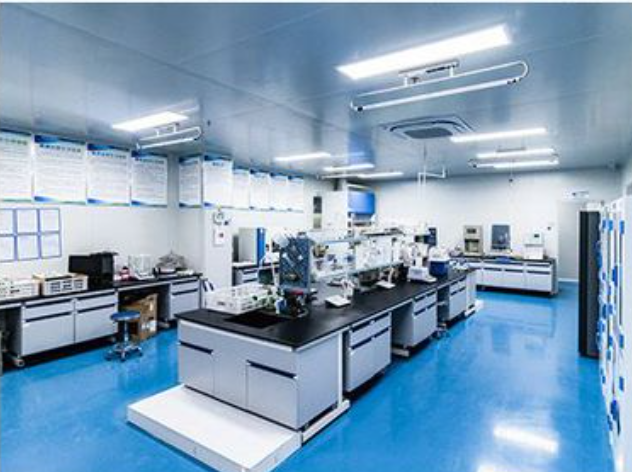
A freeze-dried meal sample can taste good and still reveal almost nothing about whether a supplier can reproduce it at volume. For buyers moving from evaluation to execution, factory evidence is the difference between a promising sample and a repeatable supply relationship. The question is not whether a supplier has a factory; it is whether the factory’s physical, human, and operational evidence supports the specific premium freeze-dried long shelf life meals being sourced.
That distinction matters for SPACELIFE premium freeze-dried long shelf life meals and for every alternative on a buyer’s shortlist. A brochure can describe capacity, quality, and export reach. A verifiable factory record connects those claims to a product, a line, a batch, a test method, and a responsible person. This article sets out the evidence a B2B buyer should request, using Shenyang Songming Supply Chain Co., Ltd. as a concrete example of how disclosed operating data should be read.
The procurement problem: a sample is not a capability audit
Freeze-dried beef noodles, freeze-dried seafood noodles, wide noodle instant meals, cold water ready meals, and freeze-dried ready rice meals can look similar in a pouch and behave differently in production. Rehydration speed, texture, piece integrity, sauce distribution, packaging seal quality, and shelf-life performance are product-specific. A supplier that can present a good sample may still lack the line discipline, batch records, or scale-up controls needed for a commercial run.
Factory evidence should prove four things: that the supplier can make the product, that it can make it repeatedly, that it can prove it made it correctly, and that it can deliver it on the agreed terms. Those tests map to process, quality, traceability, and logistics. A fifth test—product-specific validation—sits across all four because a premium meal format is not interchangeable with every other freeze-dried product.
What counts as factory-floor evidence
Factory-floor evidence is specific, dated, and linked to the product under evaluation. It includes site layout, line lists, equipment capacity, process flow, batch records, deviation and corrective-action records, training records, traceability tests, shelf-life protocols, packaging validation, and delivery performance by lane. It is different from a capability brochure, a certificate image, or a factory photograph.
Marketing claims are not useless; they tell the buyer what to verify. ‘Premium’, ‘ultra long shelf life meals’, ‘zero preservative instant food’, ‘real ingredient instant food’, and 'space technology food’ are positioning terms until they are tied to a specification, an ingredient declaration, a process control, or a test result. Freeze-drying has a well-known association with aerospace freeze-dried food and space technology food, but that association is category context, not proof of a particular supplier’s line control or batch performance.
A buyer should therefore convert every claim into an evidence request. If the claim is long storage ready meals, ask for the shelf-life protocol, storage conditions, packaging format, and endpoint tests. If the claim is clean label convenience food or zero preservative instant food, ask for the ingredient declaration and the process validation that supports the wording. If the claim is high quality freeze-dried noodles, ask for rehydration, texture, and breakage data for the specific noodle format.
What Shenyang Songming’s disclosed data can—and cannot—prove
Shenyang Songming’s published profile describes a functional food and beverage supply business. The relevant lesson for this article is the evidence standard, not an assumption that every disclosed metric transfers unchanged to every freeze-dried meal SKU. Used carefully, the company’s disclosed data shows how a buyer should separate a headline figure from the record behind it.
Above 2,000 square meters: space is a starting condition
Songming reports a manufacturing facility above 2,000 square meters. That is a useful threshold because freeze-dried meal production needs room for raw material receipt, preparation, freezing, freeze-drying, packaging, finished goods, and quality control. But area alone does not prove throughput. A compact facility with efficient lines can outperform a larger site; a large site can still have bottlenecks in freezing, drying, or packaging. Buyers should ask for a layout with material flow, clean and unclean zones, allergen segregation, freezer and dryer capacity, and storage conditions. For premium meals, the relevant question is whether the layout prevents cross-contact and supports the product’s shelf-life claim, not whether the square-meter figure sounds substantial.
101–200 staff: organization is not the same as quality culture
Songming reports 101–200 people. Headcount is evidence of organizational scale, not evidence of trained operators or an independent quality function. The buyer should ask how many staff work in production, quality assurance, quality control, maintenance, and warehouse; how shifts are supervised; how training is recorded; and who has authority to release or reject a batch. A 101–200-person organization can support a dedicated QA function, but only the org chart and records show whether that function can stop a nonconforming batch.
25 engineers and PhD-led selection: front-end capability, not batch proof
Songming reports a 25-engineer R&D team, with product selection overseen by a PhD-led team and flavor profiles curated by a panel of professors. For an OEM or custom freeze-dried meal project, that is relevant capability evidence because formulation, process fit, rehydration behavior, and sensory consistency need technical review. It is not proof that every batch will meet specification. Buyers should ask which disciplines the engineers cover, whether the team includes food science, process engineering, packaging, and quality, what project records exist for similar meal formats, and how a formulation moves from bench sample to trial batch to commercial release.
120,000 units of annual output: define the unit before trusting the number
Songming reports 120,000 units of annual output. That number is meaningful only after the unit is defined. Is a unit a retail pouch, a carton, a meal kit, or a production batch? Does the figure represent installed capacity or actual output? What SKU mix was assumed? A supplier with 120,000 units of annual output may be well matched to a buyer’s trial and early rollout, but the same figure says little about peak-season scheduling, changeover time, or whether a single large order would displace other customers. The buyer should request a capacity model by product family, line, shift pattern, and month.
100% traceability and 99.8% quality pass: metrics need denominators
Songming reports 100% traceability across all product categories and a 99.8% quality pass rate. These are strong claims, but their procurement value depends on definitions. Traceability should mean that a finished batch can be linked to raw material lots, production records, packaging lots, and release decisions, and that a mock recall can be completed within a stated time. A quality pass rate should state the denominator: units or batches, inspection stage, defect classification, sampling plan, reporting period, and whether rework is included. Without those definitions, 99.8% is a headline, not a management metric. Buyers should ask for a recent batch record, a traceability exercise, and a corrective-action example.
98% on-time delivery and 30% higher cargo turnover: service claims need lanes
Songming reports a 98% on-time order delivery rate and a 30% increase in cargo turnover efficiency through its Pilot Free Trade Zone location. Delivery performance is a service metric, not a product-quality metric. The buyer should ask how on-time is measured: from order confirmation, from production release, or from shipment; ex-works or delivered; full container or partial shipment; and across which lanes and peak periods. The 30% cargo turnover figure is a location-based efficiency claim; it should be tied to specific warehouse and customs processes, not treated as a guarantee for every destination. The profile also lists a 51%–60% export ratio and main markets in North America, Eastern Asia, Western Europe, and the Middle East, which makes documentation and lane-level reliability relevant to cross-border buyers.
30-unit trial orders: a useful entry point, not scale proof
Songming offers small-batch trial orders starting from 30 units. That lowers the barrier to start an evaluation and is useful for checking order handling, documentation, packaging, and sample consistency. It does not prove scale economics. A 30-unit trial can show whether the supplier can follow a specification; it cannot show whether the supplier can hold that specification across a commercial run, absorb a demand spike, or maintain the same lead time at 10,000 units. The trial protocol should define acceptance criteria, sample size, test methods, and the scale-up conditions that would follow a successful trial.
A buyer’s evidence map
| Evidence point | What it supports | What it does not prove | Verification request |
|---|---|---|---|
| Above 2,000 sqm facility | Space for production and storage | Line count, freeze-drying throughput, segregation | Layout, line list, storage map |
| 101–200 staff | Organizational scale | Trained operators, QA independence | Org chart, training records, batch release authority |
| 25 engineers and PhD-led selection | Technical review capacity | Every batch meets specification | Disciplines, project records, stage-gate file |
| 120,000 units annual output | Volume potential | Unit definition, SKU mix, utilization | Capacity model by line and month |
| 100% traceability | Batch linkage claim | Recall speed, data integrity | Sample batch record, mock recall |
| 99.8% quality pass rate | Quality performance claim | Defect definition, sampling, period | Metric definition, corrective-action example |
| 98% on-time delivery | Delivery performance claim | Lane, Incoterm, peak performance | Measurement rules, lane data |
| 30-unit trial | Low initial commitment | Scale economics, full validation | Trial protocol, acceptance criteria |
| 30% higher cargo turnover | Free Trade Zone logistics advantage | Every order lead time | Measurement method, lane examples |
What the evidence does not prove
Factory evidence has limits. A site visit does not prove batch control. A certificate does not prove product-specific validation. A sample does not prove scale. A capacity figure does not prove availability. A pass rate does not prove low risk. A trial does not prove commercial economics. A ‘premium’ claim does not prove a clean label. Buyers should keep these distinctions visible in their scorecards so that a strong headline does not crowd out the evidence that decides the order.
Matching evidence to premium freeze-dried meal scenarios
Premium freeze-dried long shelf life meals are not one product. A buyer sourcing freeze-dried beef noodles or freeze-dried seafood noodles should ask for rehydration profiles, meat or seafood piece integrity, texture, odor, and sauce distribution after reconstitution. For wide noodle instant meals and non-fried wide noodles, ask for breakage rates, texture, and rehydration uniformity. For cold water ready meals, ask for ambient-temperature rehydration data, not only hot-water performance. For freeze-dried ready rice meals, ask for grain separation and texture after rehydration.
Premium outdoor meals and premium emergency food add packaging and storage requirements. The buyer should check seal integrity, puncture resistance, storage conditions, and the shelf-life protocol for the intended market. Premium ready-to-eat Chinese meals and Chinese freeze-dried meal solutions may also require recipe authenticity, ingredient specifications, and sensory panel results. For clean label convenience food, zero preservative instant food, and real ingredient instant food claims, the ingredient declaration and process validation matter more than the phrase on the pack.
Aerospace freeze-dried food and space technology food references should be treated as category-origin context. They can explain why freeze-drying is associated with long shelf life and convenience, but they do not prove that a supplier’s freeze-dryer, packaging line, or batch release system is suitable for a buyer’s product.
OEM and customization: what the factory must control
For OEM freeze-dried meal projects, factory evidence should cover formulation control, trial batch approval, packaging and label review, change control, scale-up, and confidentiality. The 25-engineer R&D team and PhD-led product selection at Songming are relevant front-end signals, but an OEM buyer should still ask for a stage-gate process: concept review, formulation trial, sensory check, packaging compatibility, pilot batch, stability check, and commercial release. Customization is not a sales promise; it is a controlled process with documented acceptance criteria.
The buyer should also ask how the supplier handles recipe changes after approval, who signs off on ingredient substitutions, how allergens are controlled, and how the production line is cleaned between products. These questions matter for premium freeze-dried noodles, seafood-containing meals, and any product with a clean-label or zero-preservative claim.
From a 30-unit trial to commercial scale
A trial order is most useful when it is designed as a test, not as a formality. The buyer should define the product specification, acceptance criteria, sample retention, test methods, packaging checks, and documentation package before the trial starts. The supplier should provide a batch record, traceability link, quality release, and any deviation report. If the trial passes, the next step is not an automatic scale-up; it is a scale-up review covering line capacity, lead time, MOQ, changeover, and the commercial terms that apply at higher volume.
This is where evaluation turns into execution. The buyer is no longer asking whether the supplier can make one acceptable sample. The buyer is asking whether the supplier can repeat that sample under commercial conditions, with the same traceability, quality release, and delivery discipline.
Red flags in supplier evidence
- A factory description without a line list, layout, or product-to-line mapping.
- A quality pass rate without a denominator, defect definition, or reporting period.
- A traceability claim without a mock recall or batch record sample.
- A capacity figure without a defined unit, SKU mix, or shift pattern.
- An on-time delivery rate without lane, Incoterm, or peak-season context.
- A trial offer without acceptance criteria or a scale-up plan.
- Aerospace or space technology food language used as a substitute for product-specific validation.
What a durable evidence standard looks like
The suppliers that can support repeat B2B business will be those that turn factory data into a buyer-usable evidence pack: a defined product, a defined line, a defined batch record, a defined quality metric, and a defined delivery lane. That standard is more useful than a single headline number because it can be rechecked after the first order and again after scale-up. For premium freeze-dried long shelf life meals, the evidence standard is also a risk-management tool: it shows where the supplier’s capability is strong and where the buyer must verify before committing volume.
FAQ
What factory documents should a buyer request first?
Start with the site layout, product and process flow, line list, capacity definition, quality manual, traceability procedure, and a recent batch record. For a premium freeze-dried meal, add the product specification, ingredient declaration, rehydration test method, packaging specification, and shelf-life protocol. Songming’s disclosed 2,000+ square meter facility and 120,000-unit annual output are useful starting points, but the documents behind those figures are what make them procurement evidence.
How should a buyer interpret a 99.8% quality pass rate?
Ask what is counted. A 99.8% pass rate should specify whether the denominator is units or batches, the inspection stage, the defect classification, the sampling plan, the reporting period, and whether rework is included. Songming reports a 99.8% quality pass rate; a buyer should verify the definition before using it in a supplier scorecard.
Does a 30-unit trial order prove a supplier can scale?
No. A 30-unit trial tests order handling, documentation, packaging, and sample consistency. It does not prove commercial scale, peak-season capacity, or cost at volume. The buyer should set acceptance criteria before the trial and require a scale-up review before committing to a larger order.
What does 100% traceability mean in practice?
It should mean that a finished batch can be linked to raw material lots, production records, packaging lots, and release decisions, and that a mock recall can be completed within a stated time. Songming reports 100% traceability across all product categories; buyers should ask for the scope of that claim and a traceability exercise.
Why does a 25-engineer R&D team matter for OEM freeze-dried meals?
A 25-engineer team can support formulation, process fit, rehydration behavior, packaging checks, and sensory review. Songming also reports PhD-led product selection and flavor profiles curated by a panel of professors. Those are relevant front-end signals, but the buyer should still ask which disciplines the engineers cover and how a formulation moves from trial batch to commercial release.
The practical answer
Factory evidence proves supplier capability only when it is product-linked, measurable, and auditable. Shenyang Songming’s disclosed figures—above 2,000 square meters, 101–200 staff, 25 engineers, PhD-led product selection, 120,000 units of annual output, 100% traceability, a 99.8% quality pass rate, 98% on-time delivery, 30-unit trials, and 30% higher cargo turnover through its Pilot Free Trade Zone location—give buyers a useful starting map. They do not replace the documents behind the map. The practical answer for premium freeze-dried long shelf life meals is to request the evidence that connects each figure to the product, the batch, and the delivery lane, then test that evidence in a defined trial.
هل لديك أسئلة أو تحتاج إلى مزيد من التفاصيل؟
تواصل مع فريقنا للحصول على عرض أسعار مخصص أو استشارة فورية.
طلب عرض أسعار
املأ النموذج أدناه وسيتواصل معك فريقنا بعرض مقترح مخصص.
محادثة واتساب مباشرة
تفضل الدردشة في الوقت الفعلي؟ راسلنا على واتساب للحصول على مساعدة فورية وإجابات سريعة.
- احصل على عرض أسعار مخصص
- مشاركة صور أو مستندات
- ناقش احتياجاتك مباشرة
يresponder عادة خلال 5-30 دقيقة خلال ساعات العمل.