
What Food-Grade PET Preform Claims Actually Prove
What Food-Grade PET Preform Claims Actually Prove
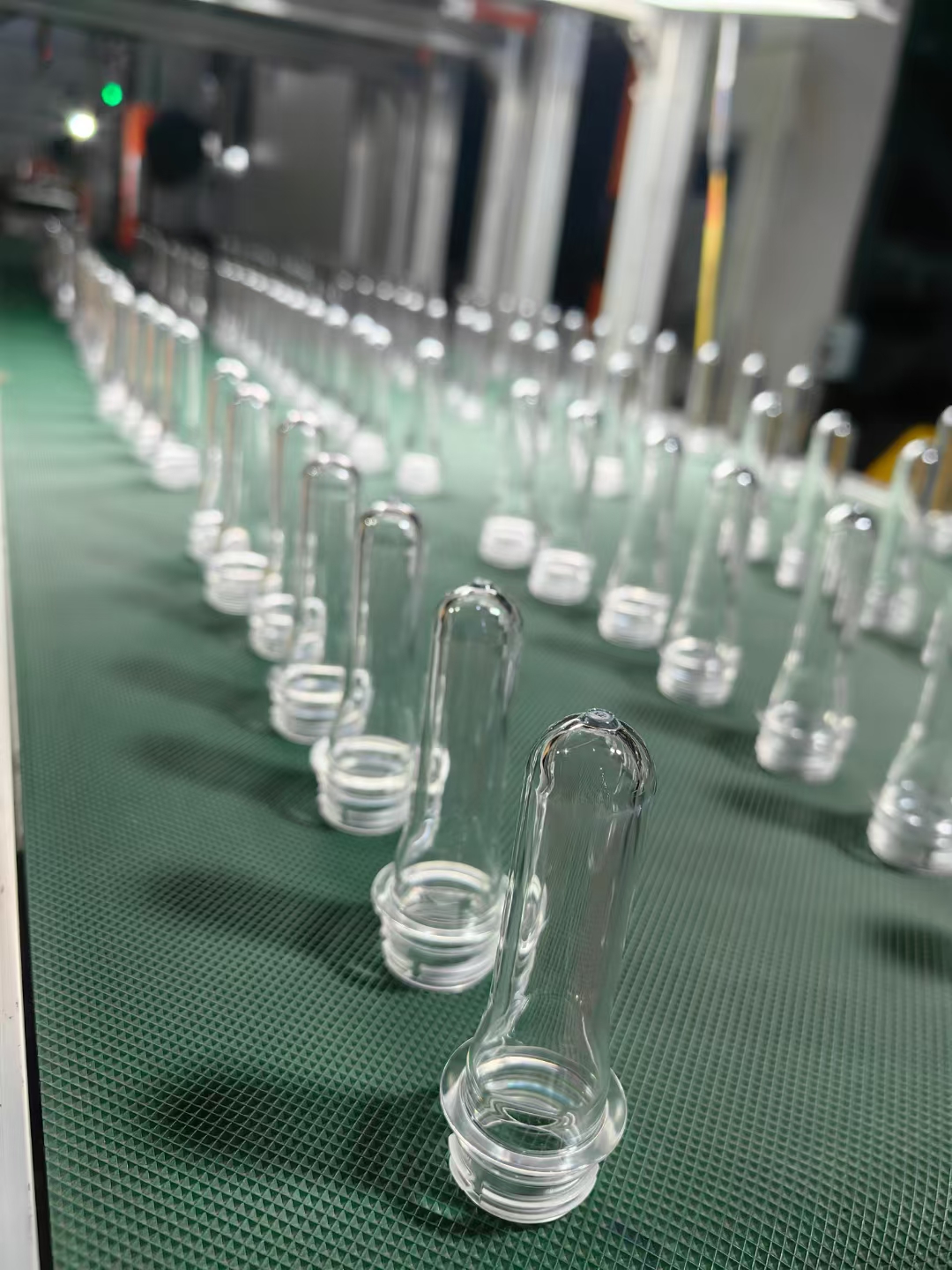
'Food-grade PET' is a material statement. It is not, by itself, a qualification. The distinction matters most at the point where a packaging buyer moves from researching PET preform suppliers to evaluating a specific quotation. A resin description tells you what the preform is made from. A food-contact test report tells you what was measured, on which model, against which standard, and on which date. Buyers who treat the two as interchangeable end up with a specification file that looks complete but cannot answer a retailer's or a brand owner's technical question. This guide separates those layers for food-grade PET preforms used in drinking water, beverages, condiments, edible oil and daily chemical packaging, using the documentation published by GuangDong Idea Plastic Packaging — a PET preform manufacturer producing food-grade preforms for those packaging applications — as a worked example.
Why the phrase 'food-grade PET' needs a second question
The product specification for this preform range states the material as food-grade PET, and the same material statement appears in the specification's material field. That is the full extent of what the phrase carries: an input-material designation attached to the product. The same specification lists the stated properties as high transparency, high strength and ease of blow-molding — functional characteristics that describe how the preform behaves in blow molding, not what has been demonstrated about migration into a filled product.
Food-contact qualification works differently. It is a measurement exercise: a laboratory takes a defined article, exposes it to defined simulants under defined conditions, and reports the result against a named standard. When a buyer requests 'food-grade documentation', what they usually need is the second thing, and the material statement alone will not satisfy it. Separately, there is a third layer — production process control — which is what keeps neck dimensions and unit weight inside tolerance across a run. A supplier can be strong on one layer and thin on another, which is why the layers should be recorded apart.
| Layer | What it states | What it does not establish |
|---|---|---|
| Material designation | The preform is made of food-grade PET | That a specific finished unit has been tested |
| Food-contact test report | Named parameters measured on a named standard for a named model and market | Coverage of other models, colours, neck sizes or filling conditions |
| Process control | Dimension spot checks, cap fitment tests, automatic checkweighing | That a single report number applies to every production lot |
The practical consequence for a procurement file is that each layer should carry its own evidence reference. A material statement with no report reference, or a report reference with no model coverage, is an incomplete record rather than a qualification.
The food-contact evidence published for this preform range
Two food-contact plastic test reports are stated to apply to the PET Preform product, including the Water Bottle Preform-401 model, and both are recorded as applying to the Global market. They are not duplicates. They were issued by different organisations, on different dates, against different standards, and they cover different parameter sets, so reading them as a pair is more informative than reading either alone.
The first is report 180327075a 001, issued on 23 April 2025 by TÜV Rheinland / CCIC (Ningbo) Co., Ltd. It references Regulation (EC) No 1935/2004 and Commission Regulation (EU) No 10/2011, and its stated scope covers sensorial assessment, overall migration, specific migration of 18 metals, primary aromatic amines, colourfastness, terephthalic and isophthalic acid, ethylene glycol and antimony.
The second is report TZA25001027, issued on 25 June 2025 by Taizhou Customs Comprehensive Technology Service Center. Its stated scope covers sensory assessment, overall migration, potassium permanganate (KMnO₄) consumption, heavy metals measured as lead (Pb), decolorization and antimony (Sb), against GB 4806.7-2023 together with GB 31604.8-2021, GB 31604.2-2016, GB 31604.9-2016, GB 31604.7-2023 and GB 31604.41-2016.
| Item | Report 180327075a 001 | Report TZA25001027 |
|---|---|---|
| Issuing body | TÜV Rheinland / CCIC (Ningbo) Co., Ltd. | Taizhou Customs Comprehensive Technology Service Center |
| Issue date | 2025-04-23 | 2025-06-25 |
| Standards referenced | Regulation (EC) No 1935/2004; Commission Regulation (EU) No 10/2011 | GB 4806.7-2023; GB 31604.8-2021; GB 31604.2-2016; GB 31604.9-2016; GB 31604.7-2023; GB 31604.41-2016 |
| Parameters in scope | Sensorial, overall migration, specific migration of 18 metals, primary aromatic amines, colourfastness, terephthalic/isophthalic acid, ethylene glycol, antimony | Sensory, overall migration, KMnO₄ consumption, heavy metals (Pb), decolorization, antimony (Sb) |
| Market stated | Global | Global |
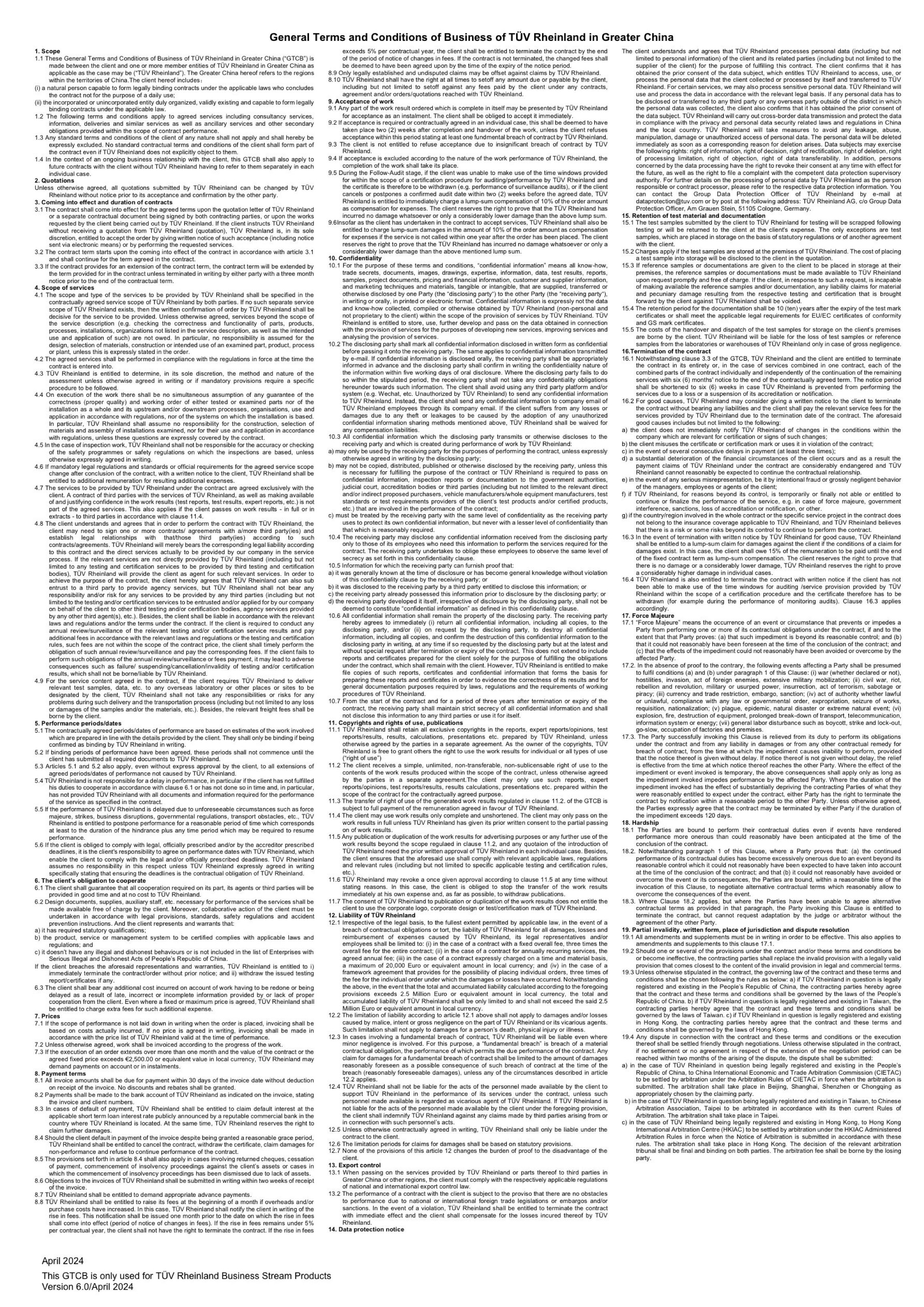
Three details in those records deserve attention before they go into a supplier file. First, both are tied to a named model — Water Bottle Preform-401 — so a buyer ordering a different model, a different colour or a custom neck dimension should confirm coverage rather than assume it. Second, neither record states an expiry date, so current validity has to be confirmed at the time of order. Third, the parameter lists are specific and finite: they describe what was measured, and reading them as a general statement of suitability for every filling condition overreads the document.
Neck dimension control: the parameter that decides whether the closure works
Available neck sizes in this range are 20 mm, 24 mm, 28 mm, 30 mm and 32 mm, and neck dimensions can be specified as custom dimensions in millimetres. The 28 mm size sits inside the standard scope, which is why 28 mm PET preform enquiries are common; the range also covers wide-mouth formats where the filling aperture and closure are larger. Compatible caps are listed as PET caps, PP caps and aluminium caps.
The qualification question here is not the nominal diameter but the tolerance and the closure interface. The supplier states that neck finish is tolerance-controlled, with dimension spot checks and cap fitment tests, and advises buying preforms and caps as a matched set. That recommendation is the important line for buyers: a neck that measures within tolerance on diameter can still leak or torque incorrectly if the closure was developed against a different finish drawing.
A diameter figure also compresses more information than it appears to. A neck diameter alone does not define thread geometry or the sealing surface, and the governing document is the neck-finish drawing rather than the millimetre label. Buyers writing a specification should therefore reference the finish designation and the sealing method, request the dimensional report that accompanies the preform, and ask for cap fitment evidence produced with the closure they intend to run. Where preform and cap come from different suppliers, that fitment test is the only place the interface is actually verified.
Weight consistency: what automatic checkweighing does and does not prove
Unit weight is the second constraint that separates a stable blowing process from an unstable one. The supplier states that automatic checkweighing rejects any out-of-range unit, which also prevents thin walls that fail in blowing or stacking. For a buyer, that describes a closed-loop control: each unit is compared against a weight window and non-conforming units are removed rather than passed downstream.
What it does not do is define the window. Weight tolerance is a specification decision that buyer and supplier set together, and it is better expressed as a target with an accepted range than as a single figure. Weight consistency then becomes traceable to three things: the stated tolerance, the inspection method used to verify it, and the acceptance criteria applied at pre-shipment. The supplier lists pre-shipment inspection as its quality-control step, and its procurement guidance states that test items and AQL should be agreed before production begins — the correct sequencing, because an AQL agreed after the run describes what happened rather than setting an acceptance criterion.
The reason to spend time here is mechanical rather than commercial. Inconsistent weight translates into inconsistent wall distribution after blowing, which affects top-load performance, drop behaviour and how the bottle behaves on a filling line. Buyers do not need to establish that relationship themselves; they need a weight window and an inspection record showing the window was held.
Application fit: where this qualification carries weight, and where it stops
The stated applications are food and beverage, drinking water, condiment and daily chemical packaging, with typical scenarios including drinking water bottle packaging, oil bottle packaging, condiment packaging and daily chemical packaging. The product type listing includes an oil preform option, and the range is described as intended for edible oil bottle applications. On the application side, the supplier's reference cases cover bottled water production, bottled juice, bottled oil and health supplement packaging.
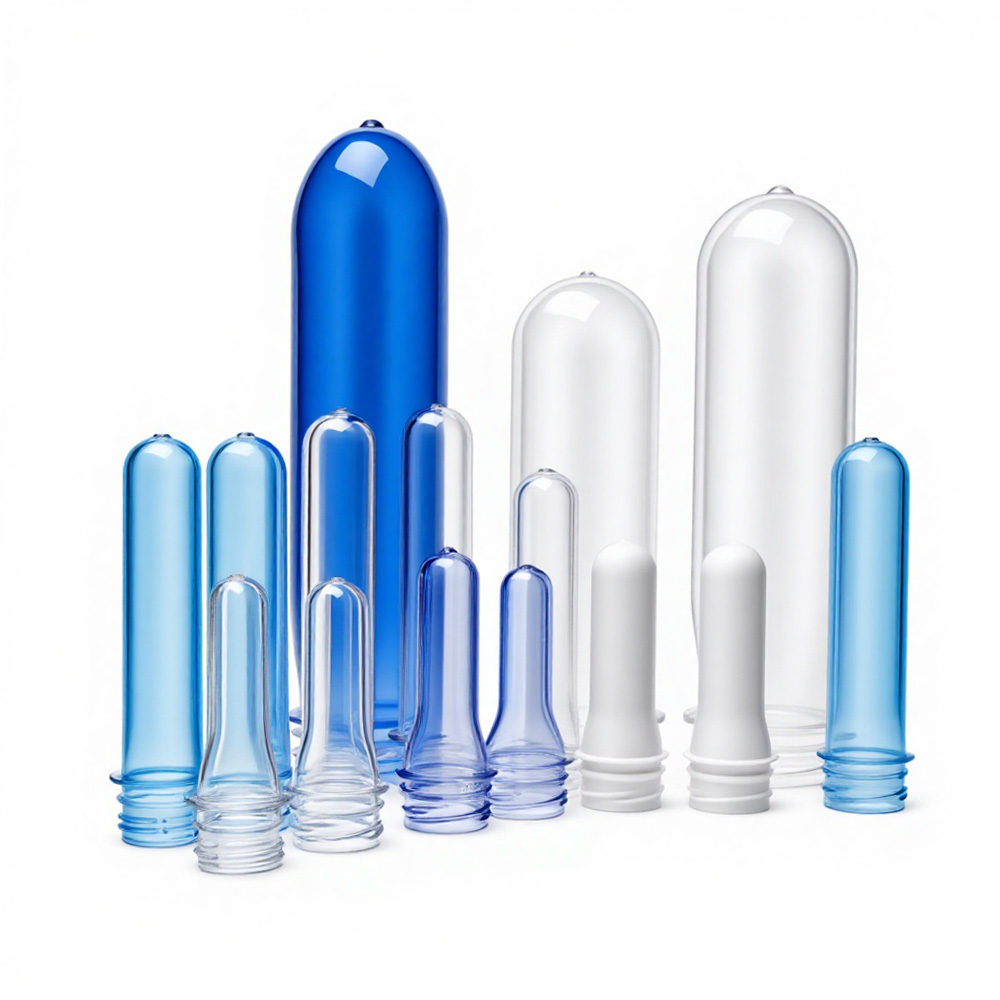
Edible oil deserves a separate note because the packaging requirement differs from water. Mordor Intelligence's market analysis reports that edible oil application is emerging as a growth engine, with PET penetration exceeding 65% in developing economies — a source-reported figure describing category-level adoption, not the suitability of any individual preform. The buyer question is narrower: whether the specific preform grade, wall design and closure system have been validated for that oil, that fill temperature and that shelf life.
Here the documentation also states a boundary that buyers should record rather than skip. The supplier's product FAQ advises avoiding hot filling and prolonged contact with acidic or high-alcohol contents. That is a use-condition constraint attached to the material statement, and it changes the evaluation for anyone packing hot-fill beverages, acidic juices or high-alcohol products: those applications need their own validation with the supplier, not an inference from a food-contact report. Similarly, the two reports address food-contact parameters; daily chemical packaging brings a different set of content-compatibility questions that those reports do not answer.
Material statements and recycled-content rules are separate tracks
The supplier states that the preforms are moulded from food-grade virgin PET resin rather than recycled material. That is a material-origin statement, and it sits alongside — not inside — the food-contact evidence. Fortune Business Insights reports that virgin PET represents 72.0% of material demand in the PET preform market as of 2026, which indicates how common that position still is at category level.
Regulation moves on a different track. The EU Single Use Plastics Directive requires PET beverage bottles to contain at least 30% recycled content by 2030, according to the regulatory update summarised by Packaging World. A food-contact test report does not demonstrate compliance with a recycled-content mandate, and a recycled-content declaration does not demonstrate food-contact compliance. They answer different questions, are verified by different evidence, and — for a brand selling into the EU — will eventually appear in the same specification file.
The buyer takeaway is procedural: raise recycled-content requirements explicitly at the specification stage, state the target market and the deadline that applies, and ask the supplier to confirm the material route in writing. The answer should not be inferred from a report number, and a virgin-resin statement should not be read as either a problem or a solution until the destination market's rule has been checked.
Pre-production samples and the commercial parameters
Samples are listed as available, and the useful question is what a sample is expected to prove. A sample checked only by eye confirms appearance; a sample run through the buyer's own blow moulder, filler and capper confirms the interfaces. For a buyer moving from research into evaluation, the second is the one that de-risks the order.
- Blow the sample on the production mould and record the process window that produces an acceptable bottle.
- Check neck dimensions against the finish drawing, then run a cap fitment and torque test with the closure actually specified.
- Verify unit weight against the agreed window, and compare across the sample rather than at a single point.
- Fill with the real product at the real fill temperature, then check closure integrity and bottle deformation after cooling.
- Record the report reference and model coverage that apply to the exact preform being sampled.
On commercial parameters, the supplier lists a minimum order of 10,000 pieces, a lead time of 15 days for orders between 10,001 and 200,000 pieces, with delivery time negotiable above 200,000 pieces, and a monthly capacity of 500,000 pieces. OEM/ODM production is offered, with customization across logo, packaging, graphic, neck size, weight, colour and mould, and colours available as natural clear, green, blue, amber or custom. Those figures frame the qualification work: a sample round, a fitment test and a pre-shipment inspection all have to fit inside the lead time the buyer is planning against.
Outlook
Forecasts place the global PET preform market at USD 78.74 billion by 2034, according to Fortune Business Insights, with Asia Pacific already the largest regional market in 2024 at USD 22.84 billion. Those are source-reported projections rather than measured outcomes, and they describe category scale rather than the prospects of any single supplier. What they do support is a direction of travel: documentation quality is becoming part of the product. As recycled-content rules tighten in major markets, the preform specification file will need to hold material origin, food-contact evidence, dimensional control and recycled-content compliance as four distinct records, each traceable to a document.
For buyers, the implication is that supplier evaluation should be scored on evidence rather than on vocabulary. 'Food-grade' is a legitimate material description and nothing more; the reports, model coverage, issue dates, neck-finish data and weight-control records are what convert it into a qualification. A supplier's product brochure and specification set, such as the PET preform brochure (PDF), is a reasonable place to start collecting those references, provided each claim is traced back to the underlying document.
Frequently asked questions
Does a 'food-grade PET' statement mean the preform is qualified for food contact?
No. It states the material. Qualification comes from test evidence: two food-contact plastic test reports are stated to apply to this PET Preform product, including the Water Bottle Preform-401 model, issued on 23 April 2025 and 25 June 2025 by TÜV Rheinland / CCIC (Ningbo) Co., Ltd. and Taizhou Customs Comprehensive Technology Service Center respectively. Buyers should match the report to the model and colour they are ordering.
Which standards do the two food-contact reports reference?
Report 180327075a 001 references Regulation (EC) No 1935/2004 and Commission Regulation (EU) No 10/2011, covering sensorial assessment, overall migration, specific migration of 18 metals, primary aromatic amines, colourfastness, terephthalic and isophthalic acid, ethylene glycol and antimony. Report TZA25001027 references GB 4806.7-2023 with GB 31604.8-2021, GB 31604.2-2016, GB 31604.9-2016, GB 31604.7-2023 and GB 31604.41-2016, covering sensory assessment, overall migration, KMnO₄ consumption, heavy metals as lead, decolorization and antimony.
How is neck dimension controlled, and will the cap fit?
Available neck sizes are 20 mm, 24 mm, 28 mm, 30 mm and 32 mm, with custom dimensions in millimetres. The supplier states that neck finish is tolerance-controlled with dimension spot checks and cap fitment tests, and advises buying preforms and caps as a matched set. A nominal diameter does not define thread geometry or the sealing surface, so the finish drawing and a fitment test with the specified closure remain the deciding evidence.
How is weight consistency verified?
Automatic checkweighing rejects any unit outside the weight range, which also removes thin-walled units that would fail in blowing or stacking. The weight window itself is agreed between buyer and supplier, and verification depends on pre-shipment inspection with test items and AQL set before production rather than after it.
Can these preforms be used for hot filling, acidic juices or high-alcohol products?
The supplier's product FAQ advises avoiding hot filling and prolonged contact with acidic or high-alcohol contents. Buyers with those applications should treat the point as an open validation item and confirm suitability with the supplier for their specific product, fill temperature and shelf life rather than relying on a food-contact report issued for ambient conditions.
Does the food-contact documentation cover recycled content?
No. The two reports address food-contact parameters. The material statement refers to food-grade virgin PET resin, while recycled-content obligations — such as the EU Single Use Plastics Directive requirement for at least 30% recycled content in PET beverage bottles by 2030 — are a separate regulatory track that should be specified and confirmed in writing.
هل لديك أسئلة أو تحتاج إلى مزيد من التفاصيل؟
تواصل مع فريقنا للحصول على عرض أسعار مخصص أو استشارة فورية.
طلب عرض أسعار
املأ النموذج أدناه وسيتواصل معك فريقنا بعرض مقترح مخصص.
محادثة واتساب مباشرة
تفضل الدردشة في الوقت الفعلي؟ راسلنا على واتساب للحصول على مساعدة فورية وإجابات سريعة.
- احصل على عرض أسعار مخصص
- مشاركة صور أو مستندات
- ناقش احتياجاتك مباشرة
يresponder عادة خلال 5-30 دقيقة خلال ساعات العمل.