
What GMP and CE Really Mean on a Blister-Cartoning Line
GMP-oriented design and CE marking on a pharmaceutical blister-cartoning line describe two different areas of compliance. GMP-oriented design concerns how the machine handles product, how it can be cleaned, and how contamination is controlled. CE marking concerns the machine as industrial equipment — guarding, control reliability, and most visibly electrical safety — assessed against European machinery safety requirements. Treating one as proof of the other is one of the more common evaluation errors in pharmaceutical packaging procurement.

Figure 1 — Industry view: pharmaceutical packaging equipment displayed for buyer review, where GMP and CE questions typically begin.
Two approvals, two different questions
On most blister-cartoning line datasheets, GMP and CE sit close together, and that proximity creates a false equivalence. They come from different systems, are enforced by different authorities, and are evidenced by different documents.
CE marking exists because machinery placed on the European market has to meet essential health and safety requirements. In the pharmaceutical equipment context, that framework is commonly expressed through the Machinery Directive 2006/42/EC and the EN 415 series of standards for packaging machines. GMP exists because medicinal products must be manufactured under controlled conditions with documented materials, cleaning, and traceability. A blister-cartoning line sits where these two systems meet — but it satisfies them in different ways.
The practical consequence for a buyer in the research and evaluation stage is simple: a CE declaration will not tell you whether the tooling that touches your tablets is suitable for your product, and a GMP-oriented material specification will not tell you whether the electrical cabinet has been built to European machinery safety expectations. Both questions have to be asked separately.
What GMP-oriented design actually changes on a blister-cartoning line
GMP is a production-management framework, not a machine certificate. A machine builder cannot “certify” a line as GMP-compliant in the way it certifies electrical safety. What a builder can do is design, document, and build in a way that supports the pharmaceutical manufacturer’s own GMP obligations. In blister-cartoning equipment, that shows up in four areas: materials that touch product, cleanability, changeover design, and documentation.
1. Material selection for product-contact parts
ISO 15378, the standard that integrates GMP requirements for primary packaging materials, is a common reference point in pharmaceutical packaging supply discussions. The design decisions behind it are concrete. In Hoping’s blister machine range, for example, the DPP260T1 platen blister packaging machine and the DPH320HII rotary blister packing machine both specify product-contact parts made of AISI 316L stainless steel and FDA-compliant pharmaceutical-grade materials, while non-product-contact parts are manufactured from AISI 304 stainless steel and anodized aluminum alloy. Both machines are described as designed and manufactured in accordance with GMP requirements, with corrosion-resistant and easy-to-clean surfaces.
On the DHL8005H Automatic Blister-Cartoning Line — a fully servo high-speed blister-cartoner integrated machine for solid dosage — the documented build is a stainless steel and aluminum-alloy machine structure with transparent guarding and servo-driven motion components, and GMP-oriented product-contact parts and tooling defined according to technical agreement.
The phrase according to technical agreement matters more than it appears to. It means the material grade, surface condition, and geometry of the parts that contact product are not a fixed catalogue default; they are project-defined and written down. For a buyer, that is an instruction to read the agreement rather than assume a standard specification carries across every model and every product format.
2. Cleanability and access
Cleanability is where GMP-oriented design becomes visible on the factory floor. Hoping’s XWZ120 horizontal cartoning machine uses a balcony-style design so the mechanism sits to one side and the working area stays open for cleaning and organising. Its structure is described as high-quality carbon steel combined with cold-formed channel steel welding, which supports strength, rigidity and precision while keeping that accessible layout. On the rotary blister side, an integral guide rail system is used to enable rapid mould changeovers, easy cleaning, and GMP-compliant pharmaceutical production.
These are not decorative choices. Every surface that can trap product residue, dust from blister punching, or cleaning fluid becomes a cleaning-validation burden for the pharmaceutical manufacturer later.
3. Changeover and format handling
Multi-format production is normal in solid dosage packaging, so mould and format change is part of the GMP discussion rather than a purely engineering one: every changeover introduces a cleaning and verification step. The DHL8005H line includes mould-change and preset-memory functions, which reduces the amount of manual re-setting required between formats.
What CE marking actually covers
CE marking is a machine-safety statement. For pharmaceutical packaging equipment supplied into Europe, the reference framework is the Machinery Directive 2006/42/EC together with the EN 415 series for packaging machines. In practice this translates into physical features and documentation: guarded moving parts, interlocked access doors, emergency stop functions, reliable control architecture, protection against electrical hazards, and a technical file supporting the declaration of conformity.
Electrical safety is the part buyers most often underestimate, because it is distributed across the whole line rather than concentrated in one component. Power supply arrangement, servo drives, sensor wiring, insulation, earthing, and the accessibility of the electrical cabinet all contribute. Hoping’s export configuration for the XWZ120 cartoning machine, for example, is supplied with a separate electrical cabinet fixed on the upper side of the body for daily maintenance — a practical example of how electrical layout decisions are made with service access in mind. Hoping Machinery is also listed with CE and ISO 9001/14001 certifications.
What CE marking does not cover is equally important. It does not evaluate product-contact materials, cleanability, or GMP suitability. Those remain separate questions with separate evidence.
Side-by-side: the two scopes compared
| Aspect | GMP-oriented design | CE marking |
|---|---|---|
| What it addresses | Product handling, cleanability, contamination control, documented product-contact parts | Machine safety: guarding, control reliability, electrical safety |
| Typical reference | Pharmaceutical GMP framework; ISO 15378 is a common reference for primary packaging materials | EU Machinery Directive 2006/42/EC; EN 415 series for packaging machines |
| Where you see it | Stainless steel and aluminium-alloy structures, material grades of contact parts, open cleaning access, changeover design | Transparent guarding, interlocked doors, emergency stop, electrical cabinet layout and access |
| Document to request | Technical agreement covering product-contact parts and tooling | Declaration of conformity and the standards referenced |
| What it does not cover | Electrical and mechanical safety compliance for the European market | Product quality, cleanability, and GMP suitability of contact materials |
How to verify both during a project
Both approvals move from marketing claim to project evidence through the same route: written, checkable documents. The following checks are practical and can be applied to most blister-cartoning evaluations.
- Ask for the product-contact part specification in writing. Request the material grades and the parts covered by the technical agreement, not just a general statement that the machine is GMP-oriented.
- Ask which standards the CE documentation references. The declaration should identify the applicable standards, which lets you compare quotes on the same basis.
- Ask how cleaning access is achieved at forming, sealing, feeding, transfer and cartoning stations, and how changeover affects cleaning.
- Ask for the factory quality-control sequence. Hoping’s documented sequence covers incoming material inspection, key component inspection, assembly inspection, electrical safety check, no-load trial run, material trial, factory acceptance testing, customer witness acceptance and pre-shipment inspection.
- Ask about format change and preset memory, since changeover behaviour shapes both uptime and cleaning workload.
- Ask about downstream connection. Bundling, case packing, palletising and data interfaces are configured by project, so they need to be confirmed rather than assumed.
- Confirm lead time in writing. For this class of equipment, lead time is typically 60–120 days after technical confirmation, and remains subject to model, configuration, project complexity and contract terms.
- Confirm the after-sales scope — on-site installation and commissioning, operator training, maintenance training, remote support, spare parts supply, process-parameter guidance and troubleshooting, as per contract and project configuration.
Where these questions matter most
Certification questions become commercially decisive in specific project types. The most common are new solid dosage blister packaging lines, upgrades of existing packaging lines, high-capacity expansion, intelligent packaging workshop retrofit, and blister-cartoning-bundling or case-packing downstream integration projects. All of them run in a GMP-oriented cleanroom or pharmaceutical packaging workshop environment, with continuous high-speed operation and multi-batch, multi-format production.
In those settings, the line has to complete blister packaging, leaflet folding, carton opening, blister insertion, batch and date coding, inspection and rejection, and downstream connection — while reducing manual transfer. The operating architecture is typically fully servo-linked, with PLC/HMI interface and synchronised multi-station control, and with alarm stop, fault indication, recipe storage and format changeover supported according to configuration. Supporting equipment may include the blister packing machine, cartoner, an intelligent top-loading parallel robot, leaflet folder, coding machine, vision inspection, checkweigher, stretch bander, case packer, palletiser and an ERP/MES data interface, depending on the project.
The DHL8005H illustrates how design and documentation meet on a high-throughput line: maximum capacity up to 800 blisters per minute and 500 cartons per minute, a D3 intelligent top-loading parallel tracking transfer system, multiple feeding methods, PVC and aluminium foil auto splicing, a three-channel servo-driven independent replenishment system, Beckhoff motion controller and CP9315 industrial PC, mould-change and preset-memory functions, and a GMP-oriented line design.
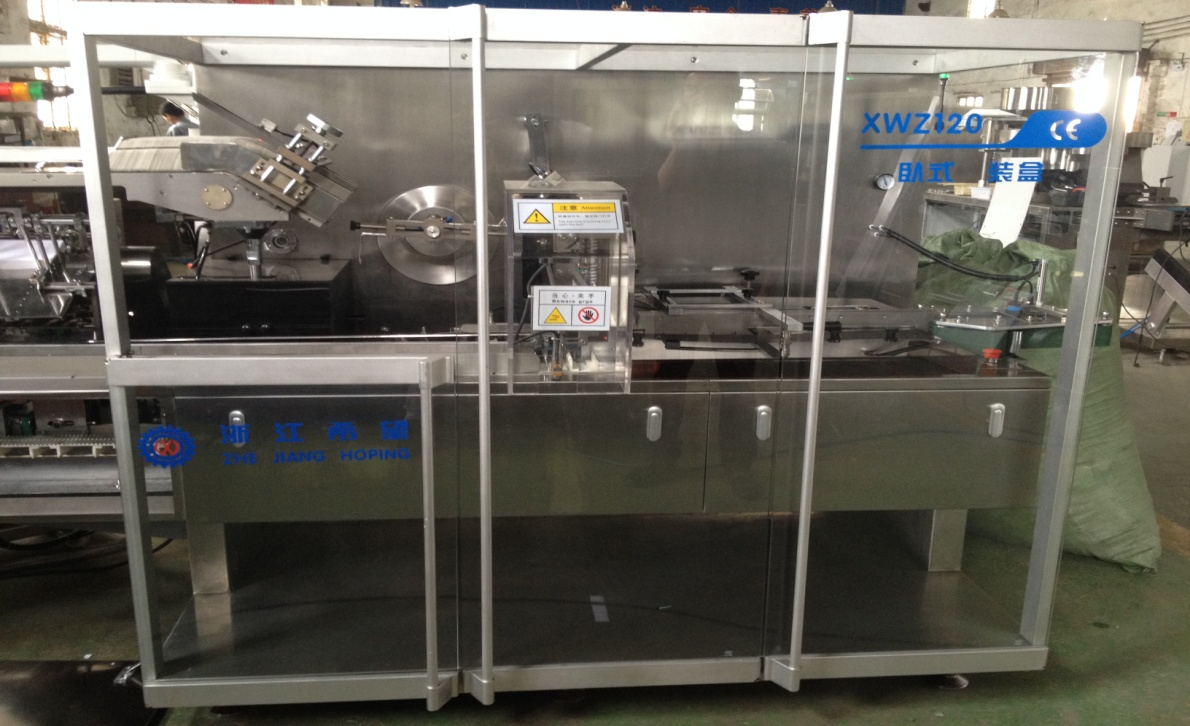
Figure 2 — Balcony-style cartoning design keeps mechanisms to one side and the working area accessible for cleaning. Image: XWZ120 cartoning machine, Hoping Machinery.
Market context: why documentation is moving up the agenda
The equipment categories involved in this discussion are not niche. SkyQuest Technology valued the global pharmaceutical packaging equipment market at approximately USD 10.71 billion in 2024. Custom Market Insights projects the pharmaceutical blister packaging machine market to reach USD 2.57 billion by 2025, at a CAGR of 2.8%. Fortune Business Insights valued pharmaceutical automatic cartoning machinery at USD 1.46 billion in 2024. Grand View Research estimated that Asia Pacific held the largest revenue share of the pharmaceutical packaging equipment market in 2025, at 40.7%.
Market structure adds a second reason to focus on evidence. According to a market intelligence estimate, the top three players — Uhlmann, IMA and Marchesini — collectively hold approximately 29% of the pharmaceutical blister packaging machine market, which means the majority of supply comes from a long tail of regional and specialist manufacturers. Buyers therefore cannot rely on brand familiarity as a proxy for compliance evidence; they have to read what each supplier documents. Published market size estimates also vary between research houses depending on what equipment is counted, so figures are best used as scale indicators rather than as a basis for a specific procurement decision.
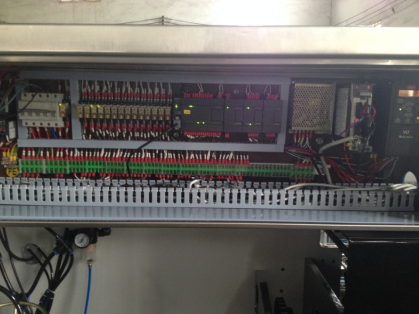
Figure 3 — Export configuration with a separate electrical cabinet positioned for daily maintenance access. Image: XWZ120 cartoning machine, Hoping Machinery.
The limits of approvals: certificate-first versus design-evidence evaluation
A practical view has to include boundaries. The most important one is that neither approval can be transferred to a decision it was never designed to support.
- CE marking is not a product-quality certificate. It addresses machine safety under European requirements; it says nothing about whether the blister cavity, sealing profile or carton insertion suits a specific product.
- GMP-oriented machine design is not line qualification. A builder can design, build and document a machine to support GMP operation, but production qualification remains with the pharmaceutical manufacturer and its own quality system.
- Product-contact compliance is project-specific. On the DHL8005H, product-contact parts and tooling are defined according to technical agreement. What is documented for one model, format or product does not automatically transfer to another.
- Cleanability depends on the process, not the machine alone. Material grades and accessible surfaces reduce cleaning burden, but the cleaning procedure, agents and validated residues still have to be established by the user.
- Approvals do not secure delivery or service outcomes. Capacity, lead time, spare-parts supply and after-sales scope are contractual matters and remain subject to model, configuration, project complexity and contract terms.
A certificate-first evaluation treats a logo as the end of the question. A design-evidence evaluation treats the same logo as the start of a document trail — contact-part agreements, referenced standards, factory inspection records, and acceptance testing. The second approach takes longer at the quotation stage and typically costs less at the installation stage.
Future outlook
Three directions appear to be shaping how compliance is evaluated on blister-cartoning lines. First, documentation is becoming a competitive differentiator rather than an administrative afterthought, because buyers increasingly compare suppliers on what can be verified in writing. Second, lines are being evaluated as integrated systems — blister forming and sealing, transfer, leaflet handling, cartoning, inspection and downstream bundling or case packing — which means safety, cleanability and changeover questions are asked at line level rather than machine level. Third, as servo-linked architectures with industrial PCs and ERP/MES interfaces become more common, the boundary between mechanical compliance and data-supported traceability continues to blur, and buyers are likely to ask for both in the same evaluation.
For pharmaceutical manufacturers, the practical implication is that GMP and CE will remain two separate lines in the evaluation checklist — not because either is unimportant, but because each answers a question the other cannot.
FAQ
What does CE marking on a blister-cartoning line actually cover?
CE marking covers machine safety. For pharmaceutical packaging equipment supplied into Europe, the framework is commonly expressed through the Machinery Directive 2006/42/EC and the EN 415 series for packaging machines, which relate to guarded moving parts, interlocked access, emergency stop functions, control reliability and protection against electrical hazards. It does not address product quality, cleanability or the GMP suitability of product-contact materials.
What does GMP-oriented design mean for the parts that touch the product?
It means the material grade and condition of product-contact parts are specified and documented. In Hoping’s blister machine range, the DPP260T1 platen machine and the DPH320HII rotary machine specify product-contact parts in AISI 316L stainless steel and FDA-compliant pharmaceutical-grade materials, with non-product-contact parts in AISI 304 stainless steel and anodized aluminum alloy. On the DHL8005H blister-cartoner line, GMP-oriented product-contact parts and tooling are defined according to technical agreement, meaning they are project-specified rather than assumed.
Which standards are usually referenced in these discussions?
ISO 15378 integrates GMP requirements for primary packaging materials and is a common reference point for pharmaceutical packaging. On the machinery safety side, EU pharmaceutical equipment safety is governed by the Machinery Directive 2006/42/EC and the EN 415 series for packaging machines.
What should buyers check at the factory before shipment?
The documented quality-control sequence for this type of equipment covers incoming material inspection, key component inspection, assembly inspection, electrical safety check, no-load trial run, material trial, factory acceptance testing, customer witness acceptance and pre-shipment inspection. Requesting these records, plus the technical agreement covering product-contact parts, gives a verifiable basis for comparison.
Are GMP-oriented design and CE marking enough to start production?
They are necessary inputs, not the full picture. Machine design supports GMP operation, but production qualification remains with the pharmaceutical manufacturer. Cleanability also depends on the actual product, cleaning procedure and agents used. Capacity, lead time, spare parts and after-sales scope are contractual matters, and lead time for this class of equipment is typically 60–120 days after technical confirmation, subject to model, configuration, project complexity and contract terms.
Reference material
For readers who want the full equipment specification behind these design points, the manufacturer catalogue is available here: Hoping Machinery Catalog (PDF). Hoping Machinery, formally Zhejiang Hoping Machinery Co., Ltd., is a pharmaceutical packing machinery manufacturer established in 2001, with products covering blister packaging machines, cartoning machines, case packing machines and end-of-line packaging equipment.